作者: admin

  • Top US immigration officials testify before Congress as pressure mounts

    Top US immigration officials testify before Congress as pressure mounts

    Top U.S. immigration officials appeared before Congress on Tuesday amid escalating tensions over enforcement tactics that have sparked nationwide debates. The congressional hearing followed two fatal shootings by federal officers in Minneapolis that intensified criticism of President Donald Trump’s aggressive immigration crackdown.

    In a notable shift, Trump conceded that immigration enforcement might require ‘a softer touch’ following the Minneapolis incidents. The administration subsequently announced tactical concessions, including the withdrawal of hundreds of federal officers from the Midwestern city where recent operations had triggered widespread protests.

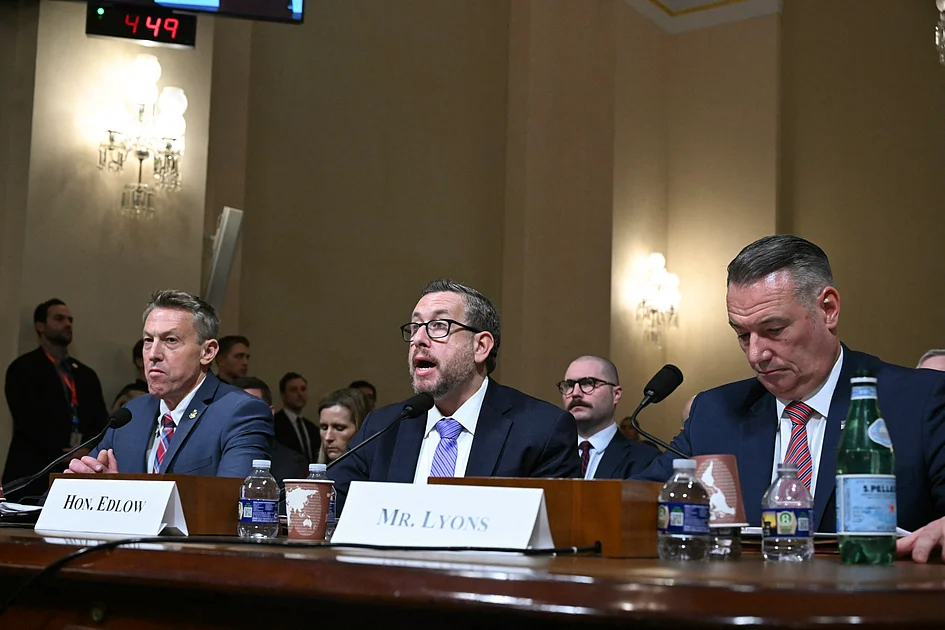
    Immigration and Customs Enforcement (ICE) Acting Director Todd Lyons defended the administration’s approach in prepared testimony, stating: ‘The president tasked us with mass deportations, and we are fulfilling that mandate. Thanks to the resources provided by Congress, we are ramping up detention capacity and removal flights daily. In the last year alone, we conducted over 475,000 removals.’

    Lyons testified alongside Customs and Border Protection (CBP) Commissioner Rodney Scott and Citizenship and Immigration Services Director Joseph Edlow during the Department of Homeland Security oversight hearing. Scott highlighted border security achievements, claiming CBP had ‘spent the last year rebuilding a devastated border’ and ‘fundamentally reversed years of open-border policies, achieving record-low illegal entries.’

    However, the officials faced rigorous questioning from Democratic lawmakers regarding the scale and methods of immigration operations in multiple U.S. cities. The Minneapolis operations, described by administration officials as targeted actions against criminals, have resulted in detentions across broad immigrant categories and occasionally affected U.S. citizens.

    The fatalities of Renee Good and Alex Pretti, both U.S. citizens shot by federal officers within a three-week period last month, generated substantial public outrage and intensified calls for operational reforms. Democratic legislators are demanding structural changes to ICE protocols, including terminating mobile patrols, prohibiting facial concealment by agents, and requiring judicial warrants for operations.

    Congressional Democratic leaders simultaneously threatened to block the 2026 DHS funding bill unless significant reforms are implemented. While the White House has expressed willingness to negotiate, opposition leaders characterized initial Republican proposals as ‘incomplete and insufficient.’ House Minority Leader Hakeem Jeffries and Senate Minority Leader Chuck Schumer jointly criticized the administration’s response as inadequate in addressing ‘concerns Americans have about ICE’s lawless conduct.’

    The standoff creates potential funding complications for DHS, which could face financial shortfalls starting Saturday if negotiations fail. While CBP and ICE operations could continue using previous congressional allocations, other critical agencies including FEMA might experience operational impacts.

  • Indonesia plans to send up to 8,000 troops to Gaza in support of Trump’s Board of Peace

    Indonesia plans to send up to 8,000 troops to Gaza in support of Trump’s Board of Peace

    In a significant development for international peacekeeping efforts, Indonesia is contemplating the deployment of up to 8,000 military personnel to Gaza. This potential move would position the world’s largest Muslim-majority nation as the inaugural contributor to the proposed international stabilization force (ISF) tasked with executing the second phase of former US President Donald Trump’s peace framework.

    General Maruli Simanjuntak, Chief of Staff of the Indonesian Army, emphasized that the plan remains provisional, with final numbers yet to be determined. The announcement’s timing carries substantial diplomatic significance, following closely after Indonesian President Prabowo Subianto received an invitation to attend the inaugural leadership summit for the Gaza ‘Board of Peace’ in the United States on February 19. The upcoming visit also presents opportunities for enhanced bilateral relations, including the potential signing of a trade agreement between Indonesia and the US.

    The Board of Peace, which counts Indonesia and Vietnam as its sole Southeast Asian members, is designed to provide strategic supervision and coordinate international resources for Gaza’s stabilization. According to General Maruli, the contemplated deployment would consist of approximately one brigade-sized force, with personnel primarily dedicated to humanitarian assistance and reconstruction initiatives rather than combat operations.

    Despite the ambitious planning, implementation challenges persist. A United Nations Security Council resolution adopted in November authorized the creation of the Board of Peace and its associated stabilization force. However, the ceasefire initiated in October has stagnated in its initial phase, with subsequent stages facing significant obstacles. Both Israeli and Hamas representatives remain deeply divided on critical aspects of the proposed next phase, with mutual accusations of violations continuing to undermine progress.

    While the intensity of hostilities has diminished since the ceasefire’s implementation, daily aerial bombardments persist. United Nations assessments depict increasingly dire living conditions for Gaza’s population, with over 80% of essential infrastructure reportedly destroyed, complicating both immediate humanitarian response and long-term reconstruction planning.

  • Moderna says FDA refuses its application for new mRNA flu vaccine

    Moderna says FDA refuses its application for new mRNA flu vaccine

    In a significant regulatory development, Moderna announced Tuesday that the U.S. Food and Drug Administration has declined to review the company’s application for an innovative mRNA-based influenza vaccine. The decision represents the latest indication of intensified FDA oversight under Health Secretary Robert F. Kennedy Jr., who has consistently expressed skepticism toward mRNA technology both before and after assuming his current position.

    The FDA issued a ‘refusal-to-file’ letter citing concerns about Moderna’s clinical trial design, which involved 40,000 participants comparing the new vaccine against a standard flu shot. While the study demonstrated superior efficacy in adults aged 50 and older, FDA vaccine director Dr. Vinay Prasad determined the application lacked an ‘adequate and well-controlled trial’ because it didn’t compare the vaccine to ‘the best-available standard of care in the United States at the time of the study.’

    According to Moderna, FDA officials under the Biden administration had provided 2024 guidance indicating that while another brand specifically recommended for seniors would be preferable for participants aged 65 and older, the company’s chosen standard-dose vaccine remained acceptable. Moderna proceeded with the original study design with FDA’s conditional approval.

    The company emphasized that the FDA identified no specific safety or efficacy concerns with their product and noted they had submitted additional data from a separate trial comparing the vaccine against a licensed high-dose shot for elderly patients. Moderna CEO Stephane Bancel stated the decision ‘does not further our shared goal of enhancing America’s leadership in developing innovative medicines.’

    This regulatory action occurs against a backdrop of significant policy shifts under Kennedy’s leadership, including the rollback of COVID-19 shot recommendations, additional warnings for leading mRNA COVID vaccines, and the removal of administration critics from FDA advisory panels. Kennedy previously announced the cancellation of over $500 million in contracts and funding for mRNA vaccine development.

    The refusal marks a departure from decades of FDA practice allowing vaccine manufacturers to update annual flu shots based on immune response data rather than long-term efficacy studies. Prasad’s internal memo last year indicated this streamlined approach would no longer be permitted, prompting criticism from more than a dozen former FDA commissioners.

    Moderna has requested an urgent meeting with the FDA while pursuing regulatory approval for the vaccine in Europe, Canada, and Australia.

  • Close Maduro ally pardoned by Biden once again a target of US criminal investigation

    Close Maduro ally pardoned by Biden once again a target of US criminal investigation

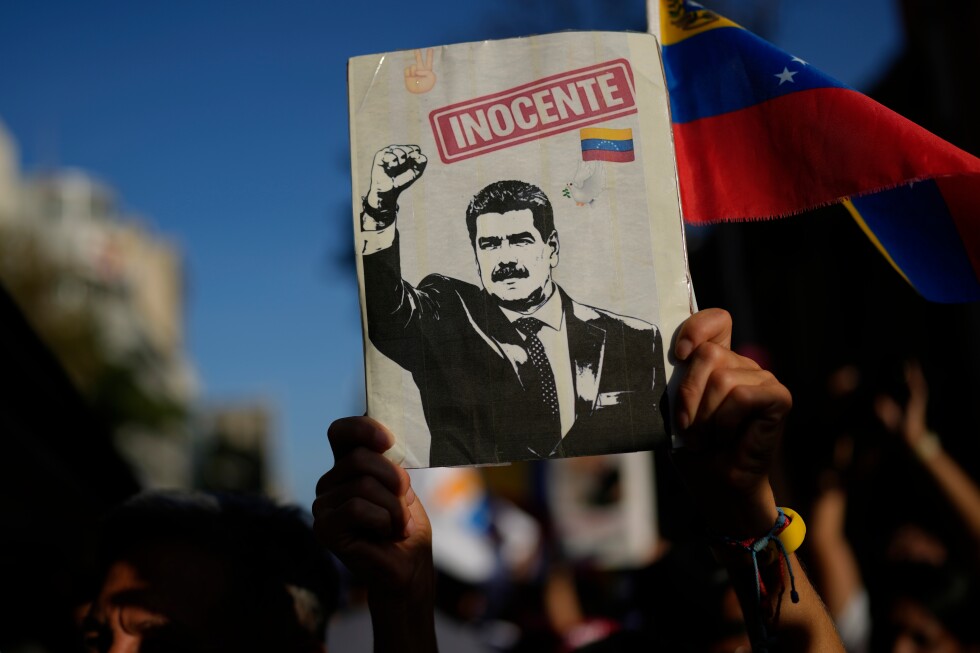
    MIAMI — In a significant reversal, the U.S. Justice Department has reignited its investigation into Alex Saab, a prominent businessman and close associate of Venezuelan leader Nicolás Maduro, according to an Associated Press report. This development comes less than three years after President Joe Biden granted Saab a presidential pardon as part of a prisoner exchange agreement.

    The renewed probe, conducted by federal prosecutors, focuses on Saab’s alleged involvement in a bribery conspiracy related to Venezuelan government contracts for food imports. Two former law enforcement officials, speaking anonymously due to the sensitivity of the ongoing investigation, revealed that prosecutors have been examining Saab’s activities for several months.

    Saab, a 54-year-old Colombian-born entrepreneur who amassed considerable wealth through government contracts, was previously described by U.S. authorities as Maduro’s primary financial conduit. His situation deteriorated significantly following the recent political transition in Venezuela that saw Maduro replaced by acting President Delcy Rodríguez, who subsequently removed Saab from her cabinet and stripped him of his influential position.

    The current investigation originates from a 2021 case brought by the Justice Department against Saab’s longtime business partner, Alvaro Pulido. The case centers on Venezuela’s CLAP program, a social welfare initiative established by Maduro to provide essential food items to impoverished citizens struggling amid hyperinflation and economic collapse.

    This renewed scrutiny represents a dramatic turnaround for Saab, who had previously avoided prosecution for an unrelated bribery scheme thanks to Biden’s 2023 pardon, which secured the release of several Americans imprisoned in Venezuela. Legal experts note that bringing fresh charges against pardoned individuals is unusual and only permissible for crimes falling outside the specific scope of the original pardon.

    Frank Bowman, professor emeritus at the University of Missouri School of Law, emphasized that Saab’s pardon was specifically tailored to a 2019 indictment and included conditions requiring him to remain outside the United States and refrain from committing further crimes against the country. “This is a voidable pardon,” Bowman noted.

    The investigation unfolds against the backdrop of shifting U.S.-Venezuela relations and the Trump administration’s efforts to stabilize ties with the oil-rich nation. Should Saab be returned to U.S. custody, former law enforcement officials suggest he could become a valuable witness against Maduro, given his extensive knowledge of corruption within Maduro’s inner circle and previous cooperation with the Drug Enforcement Administration.

    Neither U.S. officials nor Venezuela’s acting government have commented on the ongoing investigation. Saab’s current whereabouts remain unknown following conflicting reports about his possible detention in Venezuela.

  • Iran security chief meets Oman ruler after US talks

    Iran security chief meets Oman ruler after US talks

    Iran’s Supreme National Security Council Secretary Ali Larijani conducted high-level meetings with Omani leadership in Muscat on Tuesday, marking a significant diplomatic movement following the resumption of indirect negotiations between Tehran and Washington. The discussions with Sultan Haitham bin Tariq focused on recent developments in Iranian-American relations, with both parties emphasizing the critical importance of sustained dialogue to achieve a balanced and mutually acceptable agreement.

    The Oman News Agency confirmed the diplomatic engagement, noting that the conversations explored pathways toward constructive negotiations. Larijani additionally met with Omani Foreign Minister Badr Albusaidi, who facilitated Friday’s groundbreaking talks—the first direct engagement between the two nations since the brief Iran-Israel conflict in June 2025 that involved US military participation.

    In a parallel development, Larijani held discussions with Mohammad Abdulsalam, spokesperson for Yemen’s Houthi rebels, who maintain close ties with Tehran. This multifaceted diplomatic mission continues as Larijani prepares to travel to Qatar, according to statements from Iran’s foreign ministry spokesperson Esmaeil Baqaei.

    The United Arab Emirates has publicly expressed support for these diplomatic efforts, hoping they yield positive regional outcomes. The renewed dialogue represents a potential thaw in longstanding tensions, with Oman continuing its traditional role as mediator in complex Middle Eastern geopolitics.

  • This Dubai-based designer is building a sustainable fashion label between Italy, India, and the UAE

    This Dubai-based designer is building a sustainable fashion label between Italy, India, and the UAE

    Dubai-based fashion innovator Shivin Singh is redefining sustainable luxury through his transnational label Absent Findings, which seamlessly merges Italian craftsmanship with Indian cultural heritage while maintaining its operational base in the United Arab Emirates. The brand has rapidly gained international recognition for its distinctive approach to contemporary fashion that prioritizes environmental consciousness without compromising aesthetic excellence.

    Singh’s creative journey began with formal training at Florence’s prestigious Polimoda institute, followed by professional experience in Gucci’s Women’s Handbags merchandising department. This European foundation profoundly shaped his design sensibilities before he returned to Dubai to establish his own venture. Absent Findings distinguishes itself through its commitment to circular fashion principles, utilizing exclusively deadstock fabrics from European luxury houses and repurposing heirloom saris from his family archive.

    The designer’s multicultural background plays a pivotal role in the brand’s identity. His Bengali and Punjabi heritage informs the brand’s distinctive draping techniques and structural elements, particularly inspired by Chandigarh’s architectural legacy. Meanwhile, Dubai’s cosmopolitan environment provides the perfect incubator for his global perspective, allowing him to develop what he describes as a ‘cohesive visual language’ that resonates across international markets.

    Recent milestones include successful presentations at Dubai Fashion Week and upcoming digital showcases at Milan Fashion Week FW26/27. The brand has earned recognition from established institutions including Lineapelle and the Black Carpet Awards, while maintaining strong connections to Middle Eastern platforms like BRED Abu Dhabi and Sole DXB.

    Singh emphasizes that his production remains entirely UAE-based, with all design, pattern making, and sampling conducted in-house at his Dubai studio. This local commitment reflects his confidence in the region’s emerging fashion ecosystem and its growing community of creative talent. Looking forward, the designer maintains that his primary objective remains staying true to his distinctive vision rather than pursuing mass appeal, focusing on creating meaningful work that resonates with ‘creatives and obsessives’ who share his values.

  • India look forward to Pakistan ‘challenge’ after T20 World Cup U-turn

    India look forward to Pakistan ‘challenge’ after T20 World Cup U-turn

    In a dramatic reversal that has electrified the cricketing world, Pakistan’s government has rescinded its boycott order for the highly anticipated T20 World Cup match against arch-rivals India, scheduled for February 15th in Colombo. The decision ends a week-long standoff that had threatened to cancel what is widely considered the most lucrative and passionately followed contest in international cricket.

    The breakthrough came following intensive diplomatic efforts involving multiple cricket boards and governments. International Cricket Council officials and Bangladesh Cricket Board representatives engaged in urgent talks with the Pakistan Cricket Board in Lahore on Sunday. This was complemented by formal appeals from both the Bangladeshi and Sri Lankan governments urging Pakistan to reconsider its position.

    India’s coaching staff expressed measured enthusiasm about the development. Assistant coach Ryan Ten Doeschate acknowledged the competitive challenge, noting: ‘We are delighted to have another opportunity to face a quality side in the tournament’s initial phase. Our preparation remained consistent throughout the uncertainty, though the quick turnaround presents a logistical challenge as we complete our match against Namibia in New Delhi before traveling to Sri Lanka.’

    The geopolitical dimensions of the decision were acknowledged by the Islamabad government, which cited ‘multilateral discussions and requests from friendly nations’ as factors in their reversal. Their official statement emphasized protecting ‘the spirit of cricket’ as a central motivation.

    Cricket legends and analysts universally welcomed the resolution. Former Indian cricketer Madan Lal described it as ‘beneficial for cricket’s global appeal,’ while veteran journalist Pradeep Magazine noted that ‘sound judgment ultimately prevailed on all sides.’ Financial considerations undoubtedly played a role, as the India-Pakistan match generates hundreds of millions in broadcasting rights, advertising revenue, sponsorship deals, and tourism income that would have been lost to all ICC member nations.

    The tournament has been shadowed by political tensions since Bangladesh withdrew citing security concerns, being replaced by Scotland. Pakistan’s initial boycott order was positioned as a protest gesture, though forfeiture would have cost them two critical points in Group A standings.

    Indian captain Suryakumar Yadav had previously maintained his team’s readiness to travel to Colombo regardless of the outcome, demonstrating the squad’s commitment to the competition structure. With the match now confirmed, fans worldwide can anticipate the spectacle that defines cricket’s most intense rivalry.

  • Why are most of Dubai’s off-plan property owners holding onto their assets?

    Why are most of Dubai’s off-plan property owners holding onto their assets?

    Dubai’s real estate market is experiencing a significant behavioral shift as the majority of off-plan property investors are choosing to retain their assets rather than pursue immediate resale opportunities. This trend emerges despite the market showing signs of normalization following five years of unprecedented growth.

    According to Cavendish Maxwell’s comprehensive 2025 Dubai Residential Market Performance Report, the emirate’s property sector achieved historic milestones with over 200,000 transactions totaling Dh541.5 billion. Sales volume increased by 19% compared to 2024, while transaction values surged by 27%. The off-plan segment continued to dominate, accounting for 73% of all sales activity and generating Dh395.7 billion in value—a 32% year-on-year increase.

    Market experts identify multiple factors influencing investor behavior. Zacky Sajjad, Director and Head of Business Development at Cavendish Maxwell, notes that only 10-20% of off-plan unit owners are currently pursuing resales. This retention strategy appears driven by investors awaiting optimal returns that continue to outperform many global markets, despite recent modest price adjustments.

    The market’s underlying fundamentals remain robust. Geopolitical stability continues to attract international buyers, while record tourism numbers and population growth sustain demand. The Property Monitor Index, tracking 41 freehold communities, indicates three consecutive months of marginal decline, suggesting a controlled cooling period rather than a sharp correction.

    Supply dynamics also play a crucial role. While 110,500 new units are forecast for delivery in 2026, historical completion rates suggest actual deliveries may range between 33,000-50,000 units—a significant reduction from initial projections that could support property values.

    Ronan Arthur, Head of Residential Valuation at Cavendish Maxwell, characterizes the current phase as a transition toward market normalization. ‘After another record-breaking year, rising supply and slowing price growth indicate more balanced conditions emerging in 2026,’ Arthur observed. ‘Future performance will increasingly depend on absorption rates, buyer sentiment, and the market’s ability to digest upcoming completions.’

    This holding pattern among investors reflects a maturation of Dubai’s property market, with participants demonstrating increased sophistication and long-term perspective compared to previous market cycles.

  • Palestinian citizens of Israel rally against state inaction as crime surges

    Palestinian citizens of Israel rally against state inaction as crime surges

    Thousands of Israeli citizens of Palestinian descent converged on Jerusalem in a motorized procession this Sunday, staging one of the largest demonstrations in recent history to protest escalating violent crime and perceived state indifference toward their communities. The protest marks the culmination of weeks of nationwide activism that began last month in Sakhnin and Tamra before gaining momentum across the country. Last week’s gathering in Tel Aviv drew approximately 100,000 participants—an unprecedented mobilization highlighting the community’s growing desperation.

    The crisis has reached alarming proportions with at least 36 Palestinian citizens of Israel killed in crime-related incidents since January, maintaining a near-daily fatality rate. This disturbing trend follows 2025’s record violence that claimed 252 lives across 218 separate incidents according to monitoring by the Abraham Initiatives NGO. Criminologist Dr. Walid Haddad notes that fatalities have quadrupled over the past decade, with 2016 recording approximately 50 victims compared to projections exceeding 300 this year.

    Protesters and experts alike accuse Israeli authorities of systematic neglect and discriminatory enforcement. They argue that law enforcement agencies respond decisively to criminal networks in Jewish communities while demonstrating ineffective interventions in Palestinian areas. National Security Minister Itamar Ben Gvir—previously convicted of inciting racism against Arabs—has overseen continued violence since assuming office in 2023. The community also recalls former police commissioner Kobi Shabtai’s controversial 2023 statement suggesting crime in Arab communities was “in their nature.”

    Beyond organized crime, many perceive the violence as part of broader systemic discrimination. Palestinian citizens of Israel—descendants of those who remained after the 1948 Nakba—constitute approximately 20% of Israel’s population yet face decades of discriminatory practices. During Israel’s recent military operations in Gaza, expressions of solidarity were heavily restricted, and historical precedents show violent state responses to Palestinian protests.

    Human rights advocate Ahmed Khalifa describes the situation as “deliberate negligence” aimed at internally dismantling the community. Rawyah Handaqlu, founder of the Center for Advancing Security in Arab Society, warns that the crisis threatens to displace families seeking safety, potentially creating lasting social fragmentation. As armed gangs operate with impunity and illegal weapons proliferate, many neighborhoods have transformed into virtual battlefields, forcing citizens to confront both criminal elements and what they perceive as institutional complicity.

  • Dubai introduces region’s first system for 15-minute health inspections for ships

    Dubai introduces region’s first system for 15-minute health inspections for ships

    Dubai has pioneered a groundbreaking maritime health inspection system that dramatically reduces vessel clearance times from two hours to just 15 minutes. The Health Inspection Management Application (HIMA), unveiled at the World Health Expo, represents the region’s first integrated digital solution for combating cross-border health threats through advanced automation and data analytics.

    The innovative system operates through pre-arrival digital integration, where ship tracking technologies provide comprehensive data including the vessel’s last ten ports of call and medical logs before docking. According to Ali Thani Al Mehairi, Consultant at Dubai Health Authority’s Public Health Protection Department, this preemptive data collection enables inspectors to conduct risk assessments prior to physical arrival, transforming the inspection process into a verification procedure rather than a discovery mission.

    HIMA’s intelligent alert system automatically flags vessels with medical incidents exceeding 3% of personnel, prioritizing high-risk ships while expediting clearance for others. The completely digitized workflow eliminates traditional paperwork, allowing ship agents to submit requests and receive approvals through a seamless online platform.

    The phased implementation commenced immediately at Port Rashid and Al Shindagha Port, with comprehensive coverage across all Dubai maritime ports scheduled by late 2026. Authorities confirmed expansion plans for land border crossings by 2027 and are exploring adaptations for air travel security.

    Dr. Alawi Alsheikh-Ali, Director General of DHA, characterized HIMA as “a qualitative leap in the emirate’s public health framework” that reinforces Dubai’s leadership in deploying digital solutions for community safety. The system’s Arabic namesake, meaning “securing your borders,” reflects its core mission of strengthening public health defenses while ensuring uninterrupted commercial operations through smart data utilization and automated risk management.