作者: admin

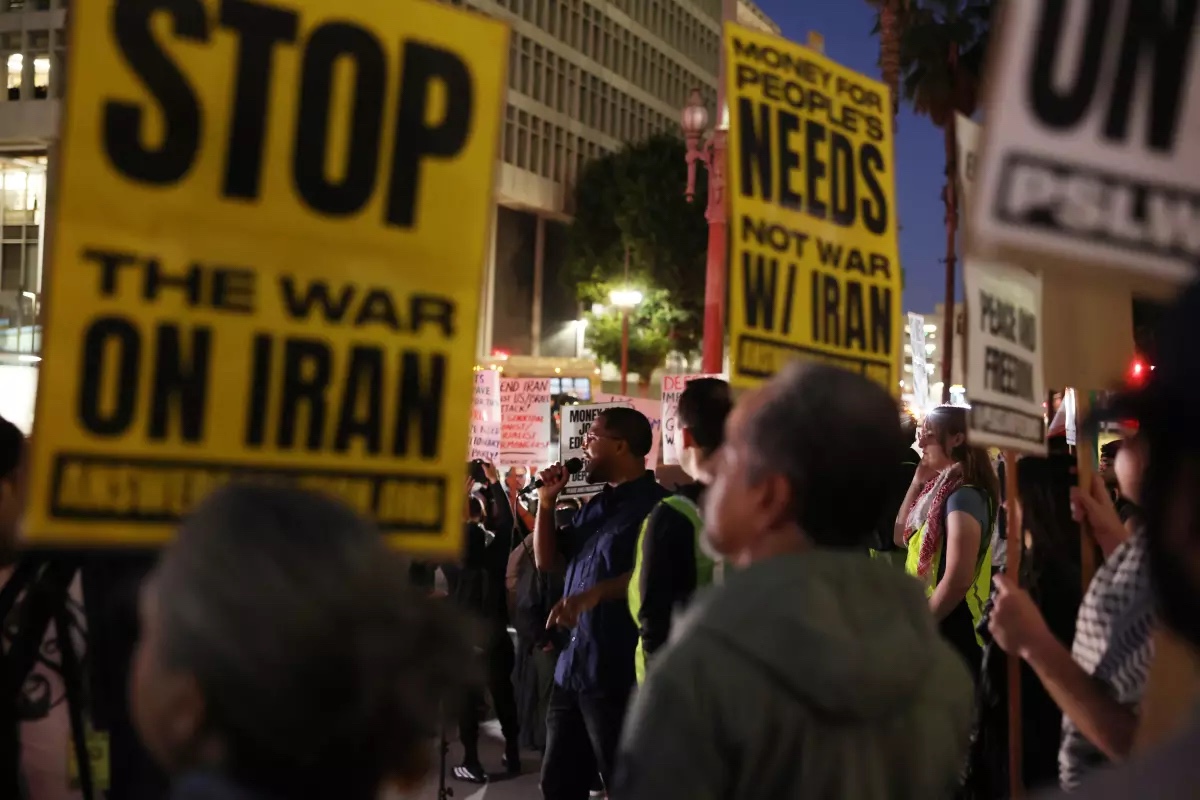
  • What Americans think of Trump’s war on Iran

    What Americans think of Trump’s war on Iran

    A profound national division has surfaced among Americans regarding the escalating military engagement with Iran, revealing stark contrasts along demographic and political lines. The conflict, initiated through joint US-Israel airstrikes on February 28th, has rapidly expanded regionally, testing President Donald Trump’s 2024 campaign pledge of “no new wars.

    Recent polling data from Economist/YouGov conducted March 2nd indicates significant public ambivalence toward military objectives. With administration messaging oscillating between preventing nuclear proliferation, destroying missile capabilities, and advocating regime change, public consensus remains elusive. The survey reveals only 32% of Americans support using military force to overthrow Iran’s government, while 45% explicitly oppose such action.

    The demographic breakdown reveals striking patterns: racial disparities show 37% white support versus merely 7% among Black respondents. Gender divides are equally pronounced with 37% of men supporting compared to 26% of women. Generational gaps are particularly dramatic—only 21% of 18-29 year-olds endorse military action while 40% of those over 65 support it. Educational attainment further influences perspectives, with 34% support among non-college graduates versus 27% among degree holders.

    Political affiliation reveals the most extreme polarization. A mere 8% of Democrats support military action compared to 64% of Republicans. The MAGA constituency demonstrates the strongest war support at 75%, while liberal respondents oppose at near-total levels. Moderates occupy middle ground with 25% support and 50% opposition.

    This polarization carries significant implications for the upcoming midterm elections. While the president maintains strong loyalty within his base—particularly valuable given his policy reversals—electoral mathematics favor opposition forces. With Democrats and Independents constituting approximately 60% of the electorate, and widespread concern about presidential conduct, Republicans face substantial challenges in maintaining congressional control.

    Political analysts suggest that regardless of conflict outcomes, the administration’s popularity appears insufficient to prevent potential losses in both House and Senate chambers come November.


  • Equipment makers eye US data centers

    Equipment makers eye US data centers

    LAS VEGAS – The explosive growth in US data center construction is generating substantial opportunities for China’s premier heavy machinery manufacturers, who showcased their specialized capabilities at North America’s largest construction equipment exhibition this week.

    At CONEXPO-CON/AGG, the premier industry trade show running through March 7 in Las Vegas, companies including SANY America and XCMG Group demonstrated how their expanding equipment portfolios align with the unprecedented demand driven by artificial intelligence infrastructure development.

    David Nicoll, CEO of SANY America, revealed that the company recently supplied multiple SY500H excavators – among their largest models – to a major data center project. “We see data center demand as exceptionally strong in the US,” Nicoll stated. “These are substantial capital projects requiring larger equipment, and SANY offers a comprehensive range from compact machinery to 330-ton cranes.”

    The market expansion is supported by significant industry projections. According to construction consultancy MOCA Systems, the US data center construction sector is anticipated to reach $86 billion in 2026, representing an eightfold increase from 2022 levels. A separate Fortune Business Insights report identified data center construction as a primary catalyst for broader construction equipment demand, fueled by accelerated digitalization and AI adoption.

    Nicoll explained that data center projects typically involve multiple contractors and diverse machinery requirements, creating opportunities across SANY’s product lines including large excavators, wheel loaders, motor graders, and cranes. The temporary nature of these projects – typically spanning six to twelve months – also generates robust rental sector demand as contractors often prefer leasing equipment rather than making capital purchases.

    Meanwhile, XCMG Group unveiled its new PRO series at the exhibition – premium construction machines featuring advanced human-machine interaction capabilities including fault self-diagnosis and intelligent control systems. Feng Ruoyu, XCMG’s senior brand manager, reported immediate market interest with several major North American dealers submitting preliminary orders.

    “The rapid expansion of AI in the United States has created substantial infrastructure demand,” Feng noted. “Whether constructing large server centers or expanding power capacity, both require significant construction machinery. While domestic brands currently dominate this market, we identify considerable opportunities.”

    The exhibition coincides with SANY’s 20th anniversary in the North American market, during which the company has established a 230-acre manufacturing and distribution campus in Georgia and expanded its dealer network to 72 dealers operating across 191 locations. Industry outlook for 2026 remains constructive according to Nicoll, who cited ongoing infrastructure, data center, and renewable energy projects as sustaining historically high equipment demand.

  • Iceland proposes August 29 referendum on resuming EU membership talks

    Iceland proposes August 29 referendum on resuming EU membership talks

    Iceland’s government has announced plans for a national referendum on August 29 to determine whether to resume European Union membership negotiations that were formally terminated in 2015. Foreign Minister Thorgerður Katrín Gunnarsdóttir confirmed she will present the formal proposal to parliament early next week, though government support remains uncertain.

    The Nordic nation initially applied for EU membership in 2009 following the catastrophic collapse of its financial sector. Negotiations commenced in 2010 but were suspended after parliamentary elections in 2013, with the subsequent conservative government completely terminating the process two years later.

    The proposed referendum will pose a direct question to Icelandic citizens: ‘Should negotiations on Iceland’s accession to the European Union continue?’ Voters will have binary options—either endorsing or rejecting the resumption of talks.

    Prime Minister Kristrún Frostadóttir asserted that Iceland’s current economic strength and national self-confidence create an ideal environment for this consequential decision. The center-left coalition government had previously committed to holding such a vote before the end of 2027.

    Notably, 27 of the required 33 negotiation chapters had been opened before talks stalled, with 11 already concluded. The critically important fisheries chapter—particularly sensitive given Iceland’s determination to maintain control over its marine resources—remains unaddressed.

    Minister Gunnarsdóttir emphatically stated she would ‘never sign an agreement that entails ceding Iceland’s control over its resources,’ particularly fishing grounds. She emphasized that renewed negotiations would immediately tackle the most challenging aspects while reviewing previously completed chapters for necessary updates.

    Both leaders highlighted how geopolitical realities have transformed since initial negotiations. Prime Minister Frostadóttir noted increased focus on Arctic and North Atlantic cooperation, while referencing concerns sparked by former US President Trump’s interest in acquiring Greenland. The minister also expressed apprehension about potential Russian interference in the referendum process, citing pattern of meddling in other nations considering EU alignment.

    EU Enlargement Commissioner Marta Kos acknowledged Iceland’s upcoming ‘significant decision,’ describing the country as ‘already a strong and strategic partner’ that could benefit from the EU’s ‘values, prosperity and security’ in an increasingly competitive global landscape.

  • Indonesia to ban social media and other online platforms for under 16s

    Indonesia to ban social media and other online platforms for under 16s

    Indonesia has announced sweeping restrictions prohibiting children under 16 from accessing major social media platforms, positioning itself as the first non-Western nation to implement age-based digital access controls. Communications Minister Meutya Hafid confirmed the policy will take effect March 28th, targeting platforms deemed “high risk” including YouTube, TikTok, Facebook, Instagram, Threads, X, Bigo Live, and Roblox.

    The groundbreaking decision stems from growing concerns about children’s exposure to online dangers. Minister Hafid cited multiple threats including pornography distribution, cyberbullying incidents, financial scams, and particularly platform addiction. “Our children face increasingly real threats,” Hafid stated, emphasizing that government intervention would help parents combat “algorithm-driven platform giants.”

    Support for the measure comes from worrying statistics. UNICEF’s 2023 research revealed approximately half of surveyed Indonesian children had encountered sexual content on social media. Parental responses have been largely positive, with working mother Amanda Kusumo expressing relief: “With government regulations like this, it really helps ease our worries.”

    However, the policy faces nuanced criticism from both youth and digital rights advocates. Seventeen-year-old Matt Joseph acknowledged screen time management issues but suggested more nuanced approaches than outright bans. Meanwhile, Nurul Izmi of the Institute for Policy Research and Advocacy emphasized that effective child protection requires more than age restrictions, highlighting the need for “safety by design” principles and cautioning about data collection implications through age verification processes.

    Indonesia joins a global movement addressing children’s digital safety, following Australia’s December 2023 implementation of similar restrictions. Other nations including Spain and the United Kingdom are considering comparable measures, though concerns persist about technological implementation challenges and potential impacts on information access rights.

  • Israel unleashes its Gaza-tested AI killing machine on Iran

    Israel unleashes its Gaza-tested AI killing machine on Iran

    A growing chorus of experts is raising urgent concerns about the military application of artificial intelligence following Israel’s unprecedented use of autonomous targeting systems in recent conflicts. The debate has intensified as evidence emerges of AI-driven targeting with minimal human oversight in both Gaza and Iran.

    Trita Parsi, executive vice president at the Quincy Institute for Responsible Statecraft, highlighted disturbing parallels between Israeli operations in Gaza and Tehran. “In both cases, it appears Israel is using AI without any human oversight,” Parsi stated on social media platform X. He cited the bombing of a Tehran park mistakenly identified as a police facility due to its name—’Police Park’—which AI systems apparently targeted based on keyword association rather than actual military function.

    Technology journalist Jacob Ward has characterized Israel’s post-Gaza AI deployment as “lethal beta” testing, describing Gaza as the “prototype” and Iran as the “launch.” This approach represents what Ward calls “a live-fire, live-ordnance lab experiment on people” that has subsequently become “a big industry in Israel” with export potential worldwide.

    The controversy centers on systems like Habsora, an Israeli AI platform capable of automatically selecting airstrike targets at exponentially faster rates than traditional methods. According to intelligence sources, this technology has transformed military operations into what one insider described as a “mass assassination factory” prioritizing “quantity over quality” of targets.

    Recent investigations reveal troubling operational protocols. Following the October 2023 Hamas-led attack, mid-ranking IDF officers received authorization to target any Hamas fighter regardless of rank, with initial civilian casualty limits of 20 per airstrike and 500 daily being quickly abandoned. Senior commanders occasionally approved strikes expected to kill over 100 civilians when targeting high-value objectives.

    One particularly devastating AI-assisted strike on Jabalia refugee camp in October 2023, targeting a single Hamas commander with multiple 2,000-pound bombs, killed at least 126 people including 68 children while wounding 280 others. Hamas reported that seven hostages also perished in the attack.

    The United States has similarly advanced its AI warfare capabilities, with the Washington Post reporting that Palantir’s Maven Smart System—incorporating Anthropic’s Claude AI language model—assisted US commanders in selecting 1,000 Iranian targets within the conflict’s first 24 hours.

    Paul Scharre of the Center for a New American Security emphasized the critical need for human oversight: “AI gets it wrong… We need humans to check the output of generative AI when the stakes are life and death.”

    The rapid militarization of AI has prompted international response. Academics and legal experts recently convened in Geneva for UN-sponsored talks on lethal autonomous weapons systems, examining risks posed by machines that can select and engage targets without meaningful human control. Craig Jones, a military targeting researcher at Newcastle University, warned that “the current failure to regulate AI warfare, or to pause its usage until there is some agreement on lawful usage, seems to suggest potential proliferation of AI warfare is imminent.”

    Contrary to claims that AI reduces civilian harm, Jones stressed that “there is no evidence that AI lowers civilian deaths or wrongful targeting decisions—and it may be that the opposite is true.”

    The technological infrastructure enabling these systems includes Project Nimbus, a $1.2 billion cloud-computing and AI contract between the Israeli government and tech giants Amazon Web Services and Google Cloud. The agreement specifically prohibits the companies from refusing service to Israeli military or intelligence agencies.

    As autonomous weapons systems continue evolving without comprehensive international regulation, the ethical and practical implications of AI-driven warfare remain among the most pressing security concerns of the modern era.

  • EU suspends visa-free travel for Georgian diplomats and officials over democratic backsliding

    EU suspends visa-free travel for Georgian diplomats and officials over democratic backsliding

    BRUSSELS — The European Union has imposed significant diplomatic sanctions against Georgia, suspending visa-free travel privileges for the country’s officials and diplomats for a minimum of one year. This decisive action comes in response to what EU leadership characterizes as systematic democratic regression and human rights violations by the Georgian government.

    EU Foreign Policy Chief Kaja Kallas issued a stern declaration: “When a government initiates attacks against its citizens, suppresses journalistic freedom, and restricts fundamental liberties, there must be consequences.” The statement underscores the EU’s firm stance against the erosion of democratic principles.

    The current political crisis emerged following the ruling Georgian Dream party’s abrupt termination of EU accession negotiations in November 2024—a surprising reversal given that European integration is constitutionally mandated as a national priority. This controversial decision ignited widespread public demonstrations that were met with aggressive police responses and mass detentions.

    The European Commission cited Georgia’s “deliberate and persistent violation” of commitments under its visa-free arrangement with the EU, specifically highlighting the suppression of protestors, opposition figures, and independent media outlets. These actions, according to the Commission, constitute clear breaches of fundamental rights and international legal standards.

    The travel suspension will remain effective until March 6, 2027, with provisions for a potential two-year extension should Georgian authorities fail to address critical governance and rule of law deficiencies. Additionally, the Commission has advised member states to implement enhanced scrutiny for all Georgian nationals entering European territory, warning that officials attempting to bypass restrictions using personal passports could face entry bans.

    Kallas emphasized the nuanced nature of the sanctions: “While the Georgian people continue to have our unwavering support, those representing oppressive regimes will find no welcome within our union.” The measures specifically target government representatives while preserving travel rights for ordinary Georgian citizens.

  • German media group Axel Springer will buy the publisher of UK’s Daily Telegraph for $766 million

    German media group Axel Springer will buy the publisher of UK’s Daily Telegraph for $766 million

    In a transformative development for the international media landscape, German publishing conglomerate Axel Springer has finalized a £575 million (approximately $766 million) acquisition of Telegraph Media Group. The landmark agreement, announced jointly on Friday, concludes extensive negotiations surrounding the ownership of Britain’s prestigious conservative-leaning publications.

    This strategic acquisition represents Axel Springer’s triumphant reentry into British media after two decades of pursuit. Chief Executive Mathias Döpfner characterized the deal as the realization of a long-held ambition, noting the company’s unsuccessful attempt to acquire The Telegraph over twenty years prior.

    The transaction effectively terminates competing bids, including a £500 million offer from Daily Mail’s parent company and a previous proposal from RedBird IMI consortium. The latter, backed by Abu Dhabi royal family member Sheikh Mansour bin Zayed Al Nahyan, faced substantial opposition from UK authorities concerned about foreign state influence on British media.

    Axel Springer, which maintains an extensive portfolio including Bild, Welt, and Politico, has articulated ambitious plans for the historic publication. The German media giant intends to significantly invest in expanding The Telegraph’s digital footprint and conservative editorial voice across English-speaking markets, with particular emphasis on accelerating penetration into the United States media landscape.

    The ownership transition follows financial difficulties within the Barclay family, previous proprietors who placed the media group on the market in 2023 to address outstanding debts. In a related development, right-leaning publication The Spectator, formerly part of the Telegraph group, underwent separate acquisition by British hedge fund investor Paul Marshall in 2024.

  • Iran drone strike on Azerbaijan raises fears of Mideast war spreading to Caucasus

    Iran drone strike on Azerbaijan raises fears of Mideast war spreading to Caucasus

    A recent drone assault originating from Iranian territory has struck Azerbaijan’s Nakhichevan exclave, injuring four individuals and damaging an airport near a school. This aggressive act has dramatically heightened geopolitical tensions, raising alarming prospects of the Middle East conflict expanding into the strategically vital Caucasus region.

    Azerbaijani President Ilham Aliyev has condemned the incident as a deliberate ‘terrorist act’ and placed the nation’s armed forces on maximum alert, authorizing preparations for retaliatory measures. Simultaneously, Baku has withdrawn its diplomatic personnel from Iran, signaling a severe deterioration in bilateral relations.

    Iran has officially denied responsibility, instead attributing the attack to Israeli provocation aimed at destabilizing Muslim nations. Tehran maintains longstanding suspicions that Israel utilizes Azerbaijani territory for intelligence operations and potential offensive actions against Iran.

    Security analysts highlight concerning ambiguities within Iran’s military command structure as a critical factor. The country’s dual military architecture—featuring both conventional armed forces and the powerful Islamic Revolutionary Guard Corps (IRGC)—creates significant operational unpredictability. According to regional experts, the IRGC particularly views Azerbaijan with hostility, perceiving the nation as an extension of Israeli influence.

    The escalation carries profound implications for global energy security. Azerbaijan’s crucial Baku-Tbilisi-Ceyhan oil pipeline, which transports approximately one-third of Israel’s petroleum imports, now faces potential vulnerability to drone strikes. Energy analysts warn that above-ground infrastructure along this route could become targets in any expanded conflict.

    Despite the aggressive posturing, most observers believe Azerbaijan prefers defensive preparedness over initiating armed conflict with its powerful neighbor. The nation’s response will likely depend on Iran’s subsequent actions, with Baku simultaneously preparing for multiple escalation scenarios while seeking to avoid direct military confrontation.

  • Xbox confirms new console is coming – but can it revive the brand?

    Xbox confirms new console is coming – but can it revive the brand?

    Microsoft’s Xbox division has officially unveiled plans for its next-generation gaming console, internally designated as Project Helix. This announcement marks a significant strategic shift for the tech giant as it seeks to reestablish its prominence in the competitive gaming hardware market.

    The forthcoming device promises to deliver unparalleled performance capabilities while bridging the gap between console and PC gaming ecosystems. In a departure from traditional hardware approaches, Project Helix will support both Xbox and PC game libraries, representing Microsoft’s ambitious vision for a hybrid gaming platform.

    This revelation comes amid ongoing industry speculation regarding Microsoft’s hardware direction, particularly following its controversial decision to release previously exclusive titles on competing platforms from PlayStation and Nintendo. The company’s new gaming chief executive, Asha Sharma, characterized the announcement as demonstrating Microsoft’s “renewed commitment to the Xbox brand’s resurgence.”

    Despite generating considerable excitement within the gaming community, Project Helix details remain notably scarce. Microsoft has withheld critical information regarding technical specifications, design aesthetics, pricing structure, and anticipated release timeline. These omissions raise legitimate concerns given current market challenges, including rising costs for essential components like RAM and storage devices across the electronics industry.

    The component shortage crisis has already impacted other industry players, notably forcing Valve to delay its own hybrid PC-console launch earlier this year. Manufacturing approaches also remain uncertain, with Microsoft potentially following its recent strategy of partnering with external hardware specialists, as demonstrated with last year’s ROG-built Xbox handheld device.

    Microsoft’s hardware announcement occurs against a backdrop of corporate turbulence within its gaming division. The company’s monumental $69 billion acquisition of Activision Blizzard in 2023 capped an aggressive studio acquisition strategy that included prominent developers like Bethesda and Playground Games. However, recent financial performance reveals concerning trends, with gaming revenue declining 9% and hardware sales plummeting 32% according to latest earnings reports.

    The division has simultaneously implemented multiple workforce reductions, canceled several anticipated projects, and shuttered established studios, generating substantial fan criticism. While Microsoft’s Game Pass subscription service continues its expansion across platforms, questions persist regarding its long-term profitability and impact on traditional game sales.

    Industry analysts offer mixed perspectives on Microsoft’s announcements. Games industry expert Mat Piscatella noted on Bluesky that Microsoft has been discussing new hardware initiatives “for months,” suggesting the Project Helix revelation isn’t entirely unexpected. Former Edge magazine editor Nathan Brown predicted a “messy” transitional period for the brand under Sharma’s leadership.

    Sharma, who previously oversaw Microsoft’s AI initiatives, has emphasized placing console hardware at the center of her strategy while simultaneously reaffirming the company’s “play anywhere” philosophy of making games available across multiple devices. This apparent contradiction highlights the challenging balance Microsoft must strike between hardware exclusivity and software accessibility.

    Xbox executive Matt Booty maintains confidence in the company’s “strong pipeline of established franchises and new projects,” pointing to anticipated 2026 releases including the fantasy adventure Fable. The gaming community remains divided between enthusiasts declaring “Xbox is back” and skeptics awaiting concrete details beyond strategic positioning statements.

    Further revelations are expected during next week’s Game Developers Conference in San Francisco, where Microsoft may address critical questions about Project Helix’s implementation amidst ongoing industry challenges.

  • Pakistani Shiites rally to denounce US-Israeli strikes on Iran as US Embassy issues a security alert

    Pakistani Shiites rally to denounce US-Israeli strikes on Iran as US Embassy issues a security alert

    Pakistani authorities deployed extensive security measures across major cities on Friday as hundreds of Shiite protesters demonstrated against the killing of Iranian Supreme Leader Ayatollah Ali Khamenei in U.S.-Israeli operations. The protests remained largely contained following violent clashes earlier this week that resulted in multiple casualties.

    In Islamabad, approximately 300 demonstrators staged a sit-in under heavy police surveillance, displaying portraits of the late Iranian leader while chanting anti-American and anti-Israeli slogans. Security forces preemptively blocked access routes to the U.S. Embassy using shipping containers, with protesters agreeing to maintain a 3-kilometer distance from diplomatic facilities.

    The port city of Karachi witnessed similar demonstrations, though protesters maintained a 4-kilometer buffer from the U.S. Consulate where violent confrontations occurred days earlier. Previous clashes in Karachi involved attempts to storm the consulate, resulting in police using batons, tear gas, and live ammunition that left 10 protesters dead and numerous injured. Additional fatalities were reported in northern regions including Skardu and Gilgit.

    Smaller Sunni Muslim groups also organized separate protests against U.S.-Israeli military actions in Iran, though these gatherings occurred at a distance from American diplomatic installations and concluded without violence.

    The U.S. Embassy issued multiple security advisories warning American citizens to restrict unnecessary movement and avoid travel to Balochistan province, Khyber Pakhtunkhwa, and Kashmir regions due to heightened risks of terrorism and kidnapping. Khamenei’s death has resonated deeply among Pakistan’s Shiite minority, which constitutes approximately 15% of the country’s 250 million population, reflecting the late leader’s significant religious influence across global Shiite communities.