作者: admin

  • Israeli airstrikes hit S. Beirut after full evacuation warning

    Israeli airstrikes hit S. Beirut after full evacuation warning

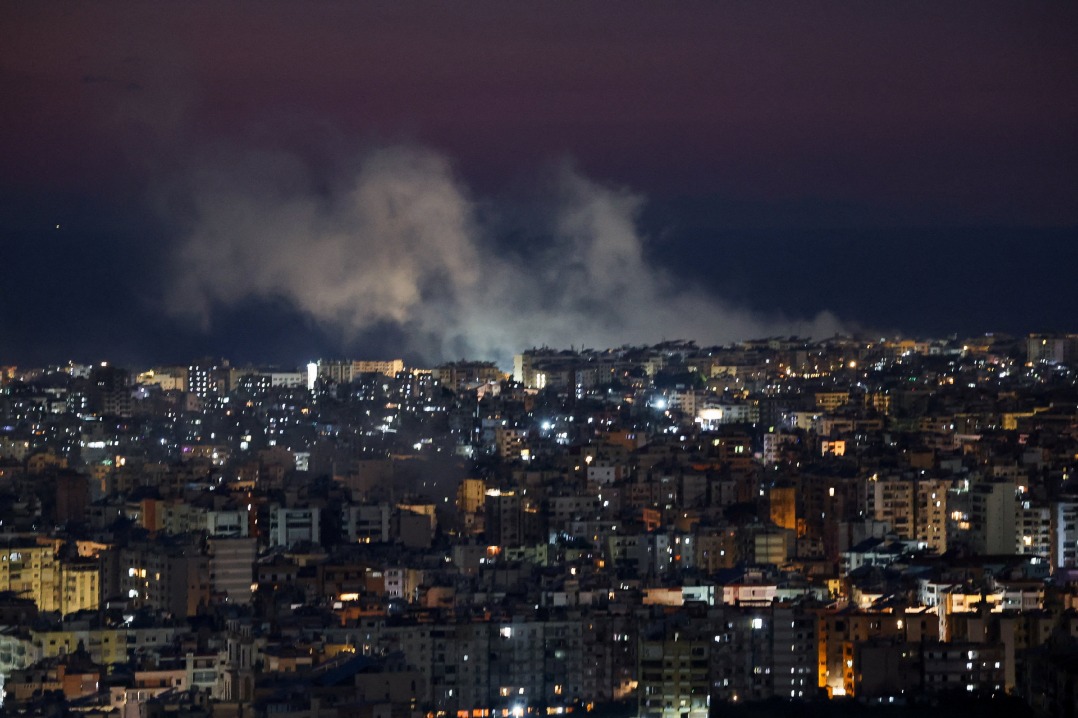
    BEIRUT – In a significant escalation of hostilities, Israeli warplanes conducted a new series of airstrikes on the southern suburbs of Beirut late Thursday. The military action followed an unprecedented full-scale evacuation warning issued by Israel for the entire Dahieh area, a known Hezbollah stronghold.

    The Israeli military’s urgent directive, demanding immediate departure of all residents from Beirut’s southern periphery, marked the first instance of such a comprehensive evacuation order for the region. The subsequent aerial bombardment created plumes of smoke visible across the city, as documented from vantage points in Baabda.

    Lebanese health authorities reported a mounting humanitarian toll, with official figures indicating 123 fatalities and 683 injuries resulting from Israeli operations since Monday. The violence has created a rapidly deteriorating security situation throughout southern Lebanon.

    Diplomatic channels saw intensified activity as Lebanese President Joseph Aoun engaged in urgent discussions with French President Emmanuel Macron. President Aoun detailed the deteriorating security conditions and specifically appealed for French intervention to prevent Israeli strikes on the southern suburbs of Beirut following the evacuation threats.

    In parallel developments, President Macron also conferred with Lebanese Parliament Speaker Nabih Berri. The French leader communicated his government’s readiness to initiate necessary diplomatic contacts and provide urgent humanitarian assistance to Lebanon, according to statements from the National News Agency.

    The current escalation cycle began when Hezbollah launched missile and drone attacks against Israel on Monday, characterizing the offensive as retaliation for the killing of Iran’s Supreme Leader Ali Khamenei and repeated Israeli military actions on Lebanese territory. Israel responded with extensive airstrikes targeting Hezbollah positions and deployed ground forces into southern Lebanon, signaling a potential expansion of the conflict.

  • Why India’s Narendra Modi chose to back Israel over Iran

    Why India’s Narendra Modi chose to back Israel over Iran

    In a significant geopolitical development, Indian Prime Minister Narendra Modi’s diplomatic engagement with Israel has sparked intense scrutiny regarding New Delhi’s strategic positioning amid escalating Middle Eastern tensions. The timing of Modi’s visit to Israel, occurring just days before joint US-Israeli military operations against Iran, has raised critical questions about India’s foreign policy orientation and its implications for regional stability.

    The context of this diplomatic maneuver unfolds against the backdrop of devastating conflict in Iran, where approximately 1,000 casualties have been reported alongside widespread disruption throughout the Gulf region. This confrontation represents one of the most consequential Middle Eastern military engagements in recent decades, pitting Iran against what it perceives as Israeli expansionist ambitions.

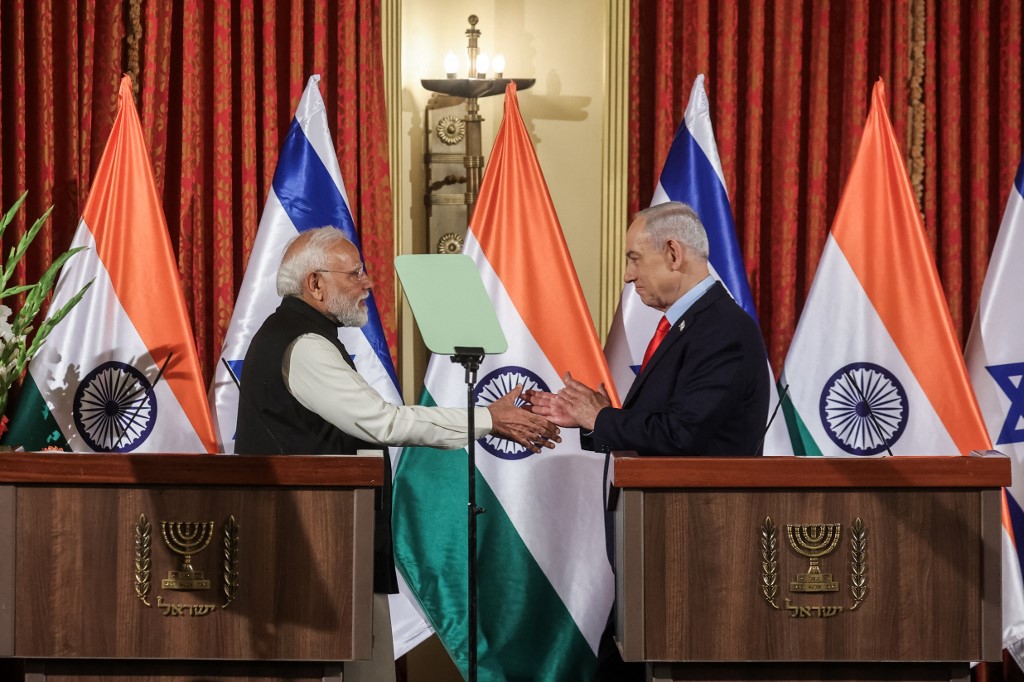
    During Modi’s high-profile meeting with Israeli Prime Minister Benjamin Netanyahu, bilateral relations were elevated to a ‘Special Strategic Partnership for Peace, Innovation and Prosperity.’ The Indian leader received a specially created Knesset medal recognizing his service to Israel, raising questions about prior knowledge of impending military actions. India’s subsequent response—or lack thereof—to the assassination of Iranian Supreme Leader Ayatollah Ali Khamenei and the torpedoing of an Iranian naval vessel by US forces has drawn criticism from diplomatic circles, with former officials describing these developments as ‘strategic embarrassments’ damaging to India’s regional credibility.

    This geopolitical repositioning reflects deeper ideological transformations within India’s political landscape. Since assuming power in 2014, the Modi administration has progressively advanced the concept of Hindu Rashtra (Hindu state), a vision supported by the ideological framework of the Rashtriya Swayamsevak Sangh (RSS). Analysts observe that this domestic transformation has corresponding international dimensions, particularly in shaping India’s Middle East policy.

    Author and political analyst Suchitra Vijayan notes: ‘New Delhi increasingly frames its interests through a civilizational, anti-terror lens that aligns with US and Israeli security discourses. Islamophobia has become institutionalized in foreign policy, effectively replacing non-alignment with a principle of strategic annihilation of Muslims.’

    This philosophical shift manifests in practical cooperation: Indian delegations frequently study Israeli approaches to governance, dissent management, and security commodification. Israeli tactical methodologies are increasingly visible in India’s domestic security operations, including protest suppression in Haryana, surveillance of political figures in Delhi, and demolition operations in Kashmir.

    India’s stance on Iran must be contextualized within its broader position on Gaza. Over the past thirty months, during which approximately 200,000 Palestinians have been killed or injured, India has provided military equipment (including combat drones), labor replacement for Palestinian workers, and consistent diplomatic protection for Israel at the United Nations. New Delhi initially hesitated to endorse the Gaza ceasefire resolution and declined to support arms embargo measures, citing national interest considerations.

    External Affairs Minister Subrahmanyam Jaishankar defended this orientation: ‘Israel represents a nation with which we maintain robust national security cooperation. It has consistently supported India during periods of national security vulnerability.’

    This alignment carries significant economic implications. With Iran restricting maritime movement through the Strait of Hormuz, India faces energy security challenges given its limited emergency reserves. Approximately nine million Indian workers in Gulf states (particularly UAE, Qatar, Saudi Arabia, and Kuwait) face uncertain prospects, potentially disrupting remittance flows critical to India’s economy.

    Despite these risks, India appears to be hedging its strategic bets. The US recently granted India a 30-day waiver for Russian oil purchases, while New Delhi has gradually distanced itself from initiatives like the Chabahar Port project in Iran following American pressure. Major Indian conglomerates—including those led by Adani, Ambani, and Tata—maintain deep infrastructure, logistics, and defense partnerships with Israel, positioning them to capitalize on potential post-conflict economic opportunities.

    India’s integration into US-Israeli strategic frameworks continues through participation in the I2U2 grouping (India, Israel, UAE, US) and the India-Middle East-Europe Economic Corridor. Prime Minister Netanyahu’s announcement of a ‘hexagon alliance’ against ‘radical axes’ reportedly includes India as a key participant alongside Greece, Cyprus, and unspecified Arab, African, and Asian states.

    While this foreign policy orientation has drawn criticism from opposition parties, independent media, and activist organizations, the absence of robust political challenges to the government’s Hindu nationalist agenda suggests continuity in India’s strategic alignment. As Vijayan concludes: ‘Very few nations demonstrate both governmental and popular anti-Palestinian and anti-Muslim sentiment simultaneously. India represents one such case.’
  • Tiny possum and glider thought extinct for 6,000 years found in remote West Papua

    Tiny possum and glider thought extinct for 6,000 years found in remote West Papua

    In a groundbreaking scientific revelation, researchers have confirmed the existence of two marsupial species previously believed extinct for six millennia. The extraordinary discovery in West Papua’s remote rainforests includes the pygmy long-fingered possum and a ring-tailed glider, both surviving against all scientific expectations.

    The pygmy long-fingered possum, characterized by distinctive stripes and weighing approximately 200 grams, possesses a remarkable anatomical adaptation: its fourth finger extends to twice the length of other digits. This specialized feature enables the marsupial to extract wood-boring insect larvae from trees, constituting its primary food source. The second rediscovered species, the ring-tailed glider, demonstrates exceptional arboreal capabilities with a prehensile tail that grasps branches, similar to its Australian relatives.

    Published in the Records of the Australian Museum journal, the research represents what scientists term a ‘lazarus taxon’ discovery—referencing biblical resurrection—where species presumed extinct reappear. Professor Tim Flannery, prominent Australian scientist and co-author of the study, described the dual discovery as ‘remarkable,’ noting that finding one such species would already qualify as exceptional.

    The breakthrough resulted from meticulous interdisciplinary investigation combining fossil analysis, historical specimens, and rare photographic evidence. Critical to the success was collaboration with indigenous Tambrauw and Maybrat communities, whose traditional knowledge and guidance proved indispensable. According to co-author Rika Korain, a Maybrat woman, local elders provided essential insights, particularly regarding the ring-tailed glider which they consider sacred and refrain from hunting or even naming.

    Despite this triumphant rediscovery, conservation concerns immediately emerged. Professor Flannery highlighted increasing threats from logging activities encroaching upon the glider’s habitat. This has prompted scientific organizations and wildlife groups to advocate for native land title recognition, ensuring future logging requires local consent and potentially safeguarding these rediscovered species from human-induced threats.

  • Dow drops 800 after the US job market weakens and oil prices jump to the highest since 2024

    Dow drops 800 after the US job market weakens and oil prices jump to the highest since 2024

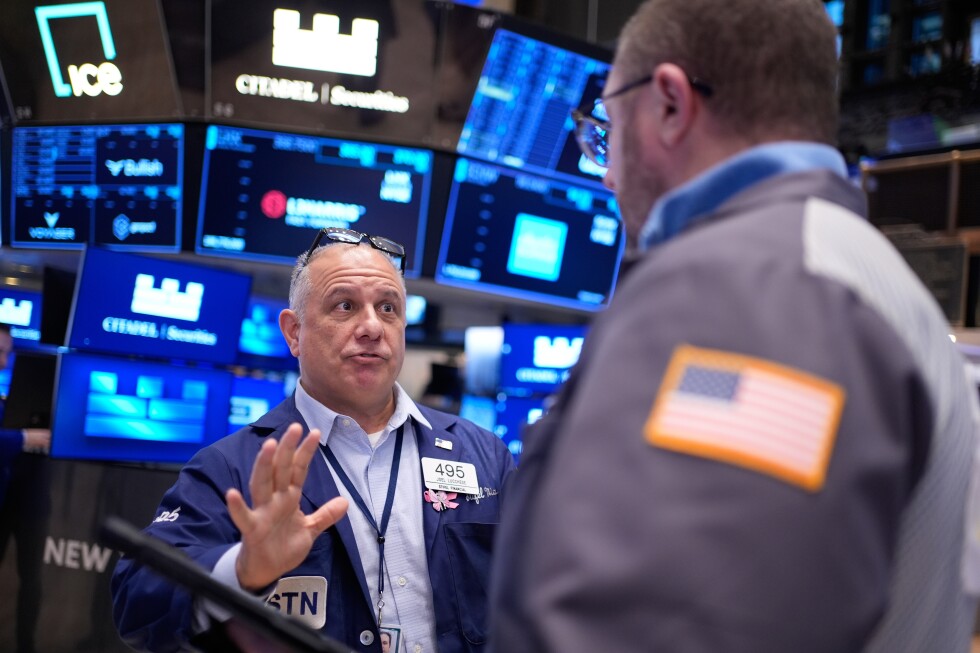
    Financial markets on Wall Street experienced a severe downturn Friday as investors confronted a toxic economic combination: rising inflation pressures alongside clear signals of economic weakening. The catalyst was a dual blow from economic reports showing an unexpected contraction in U.S. employment alongside surging oil prices reaching multi-year highs.

    The S&P 500 index plummeted 1.6% while the Dow Jones Industrial Average witnessed a dramatic drop of 823 points (1.7%) during morning trading. The Nasdaq composite followed suit with a 1.4% decline. This market reaction reflects growing anxiety that the economy may be entering a period of stagflation – the economic phenomenon where stagnation coincides with persistent inflation.

    Brian Jacobsen, Chief Economic Strategist at Annex Wealth Management, noted the concerning nature of the data: “You can’t sugarcoat this report. A negative payrolls number combined with a big jump in oil prices will have traders worrying about stagflation risks.”

    The employment report revealed a surprising loss of 92,000 jobs last month, pushing the unemployment rate to 4.4%. Compounding these concerns, retail sales figures underperformed expectations, suggesting American consumers – the primary engine of economic growth – may be reaching their spending limits.

    Energy markets exacerbated the situation as Brent crude, the international benchmark, surged 6.9% to $91.35 per barrel – its highest level since April 2024. U.S. crude benchmark prices jumped even more dramatically, climbing 9.2% to $88.45. This price spike is directly linked to Middle East tensions affecting critical energy transportation routes, particularly the Strait of Hormuz which handles approximately one-fifth of global oil shipments.

    The convergence of these factors creates a policy dilemma for the Federal Reserve, which typically responds to economic weakness with interest rate cuts. However, with inflation pressures mounting due to energy price increases, the central bank’s flexibility appears constrained. Market expectations have consequently shifted, with traders now anticipating potentially just one rate cut this year instead of multiple reductions.

    Market volatility has become increasingly frenetic, with dramatic intraday swings occurring hour-by-hour. The Russell 2000 index of small-cap companies fell a market-leading 2.2%, reflecting particular vulnerability among firms dependent on borrowing and domestic economic strength. Transportation and travel sectors suffered most acutely, with Old Dominion Freight Line sinking 7%, Norwegian Cruise Line Holdings falling 6.1%, and Southwest Airlines losing 5.7%.

    International markets showed mixed reactions, with European indices declining while Asian markets posted gains, highlighting the uneven global impact of these economic developments.

  • Ohtani hits a grand slam as Japan routs Taiwan 13-0 in a game stopped after 7 by mercy rule

    Ohtani hits a grand slam as Japan routs Taiwan 13-0 in a game stopped after 7 by mercy rule

    In a spectacular display of offensive power, Team Japan launched their World Baseball Classic campaign with a resounding 13-0 mercy-rule victory over Taiwan at a packed Tokyo Dome on Friday. The game, halted after seven innings under tournament regulations, showcased two-way superstar Shohei Ohtani’s extraordinary talents before his home nation fans.

    The offensive explosion centered around a monumental second inning where Japan batted around the order, scoring ten runs in a 28-minute offensive showcase. After loading the bases with three consecutive runners, Ohtani stepped to the plate and delivered a crushing grand slam to right field off Taiwanese starter Hao-Chun Cheng. The Los Angeles Angels phenom would add a single later in the same inning, finishing with three hits and five RBIs in just two frames.

    While Ohtani’s batting heroics captured attention, Japan’s pitching staff maintained complete control. Starting pitcher Yoshinobu Yamamoto, last season’s World Series MVP with the Dodgers, earned the victory with three scoreless innings, striking out three while allowing no hits despite some third-inning control issues that required reliever Shoma Fujihira to escape a bases-loaded jam.

    The victory positions Japan firmly as Pool C favorites as they pursue their second consecutive WBC championship. The team continues pool play Saturday against regional rivals South Korea, while Taiwan faces the Czech Republic in a critical matchup for quarterfinal qualification.

    In other Pool C action, Australia remained undefeated with a 5-1 victory over the Czech Republic behind Chicago White Sox infielder Curtis Mead’s third-inning three-run homer. The Australians improved to 2-0 and appear poised to challenge Japan for pool supremacy.

  • Australian sharemarket hammered as Middle East conflict sparks global stagflation fears

    Australian sharemarket hammered as Middle East conflict sparks global stagflation fears

    Australia’s financial markets experienced a severe downturn, shedding over $100 billion in value during the past week as escalating Middle East tensions sparked fears of global economic stagnation. The benchmark ASX 200 index closed Friday’s session down 1.0 percent, equivalent to 89.30 points, while the broader All Ordinaries index declined 0.87 percent to 9,085.10 points.

    The market weakness reversed February’s robust 3.7 percent rally, dragging quarterly performance into negative territory with a 4.1 percent decline. The sell-off was predominantly driven by concerns that prolonged conflict in the Middle East could trigger stagflation—a dangerous combination of stagnant economic growth and rising inflation.

    Commodity markets witnessed dramatic movements, with Brent crude oil recording its most significant weekly surge since 2022, climbing 16 percent to approximately $120 AUD per barrel. This surge followed supply disruptions stemming from Middle Eastern hostilities, though prices moderated slightly after statements from U.S. officials regarding potential supply stabilization measures.

    Sector performance revealed stark contrasts: technology stocks emerged as the sole bright spot, rallying 4.57 percent overall. Wisetech Global led the surge with a remarkable 10.83 percent gain, while Xero and Technology One advanced 4.46 percent and 3.92 percent respectively. Conversely, materials and mining sectors faced substantial pressure as BHP declined 4.24 percent, Rio Tinto fell 3.59 percent, and Fortescue dropped 0.72 percent amid weakening commodity prices.

    Financial institutions mirrored the bearish sentiment, with all four major banks closing lower. The Commonwealth Bank dipped 0.11 percent, NAB declined 1.08 percent, Westpac dropped 0.89 percent, and ANZ decreased 0.34 percent.

    AMP economist My Bui highlighted the dual threat posed by elevated oil prices: “Higher commodity prices raise household energy costs and manufacturing input costs while reducing discretionary consumption. Simultaneously, increased geopolitical uncertainty causes households and businesses to delay major purchases and investment plans.”

    Despite the volatility, Morningstar market strategist Lochlan Halloway characterized market reactions as “rational” given the unprecedented nature of the geopolitical situation, noting that “markets are pricing a broad spectrum of risk, ranging from a brief disruption to, in the extreme case, an oil shock with no modern precedent.”

    Individual company movements included Magellan Financial’s 9.27 percent surge following news of billionaire Frank Lowy’s family acquiring a 5.1 percent stake, while Deep Yellow plummeted 11.79 percent due to significant half-year losses. Defence contractor DroneShield gained 10 percent amid heightened demand for counter-drone technology in conflict zones.

  • Vote counting begins in Nepal after a peaceful parliamentary election

    Vote counting begins in Nepal after a peaceful parliamentary election

    KATHMANDU, Nepal — Nepal embarked on a critical phase of democratic transition Friday as election authorities commenced meticulous vote counting following Thursday’s landmark parliamentary elections. This electoral exercise represents the first nationwide poll since September’s youth-led uprising that successfully toppled the previous administration.

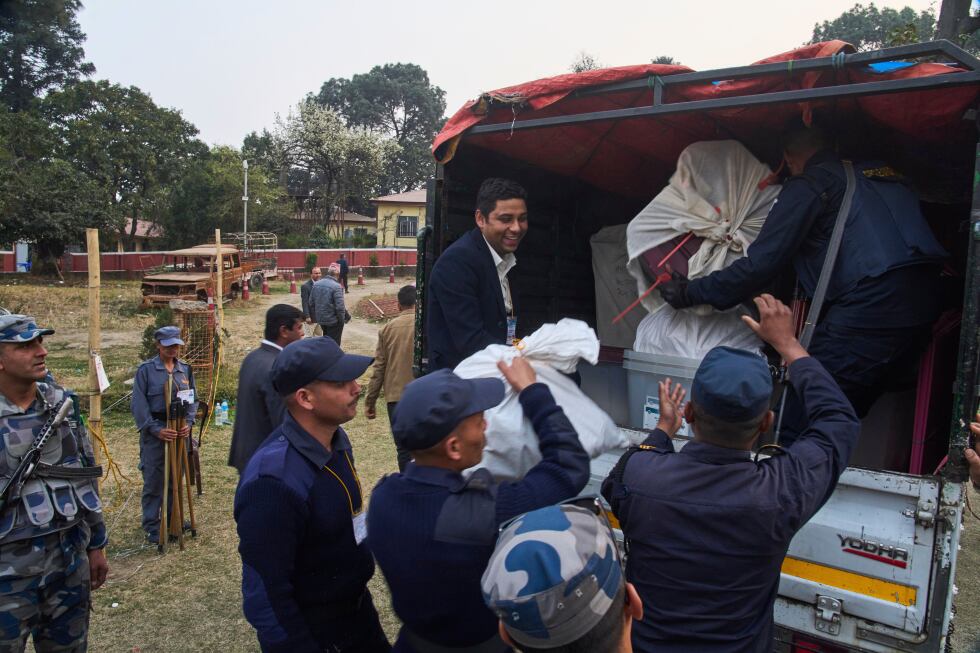
    The Election Commission confirmed the initiation of tallying processes across 53 of the 165 constituencies by Friday morning, with remaining districts scheduled to commence operations before nightfall. The complex logistical undertaking involves transporting ballot boxes from remote mountain villages—some accessible only through multiday treks—via helicopter to centralized counting facilities.

    Electoral officials project final results will emerge by weekend’s end, with preliminary data indicating approximately 60% voter participation. The electoral mechanism combines direct voting for 165 House of Representatives seats with proportional representation allocating the remaining 110 positions in the 275-member parliamentary body.

    Outside counting centers nationwide, particularly in the capital Kathmandu, enthusiastic supporters gathered chanting slogans and demonstrating vocal support for their preferred candidates. The election has fundamentally transformed into a triangular contest between the emergent National Independent Party and the traditionally dominant Nepali Congress and Communist Party of Nepal (Unified Marxist–Leninist).

    Political analysts identify the 2022-established National Independent Party as the probable frontrunner, capitalizing on widespread public discontent regarding systemic corruption and demands for enhanced governmental accountability. The party’s prime ministerial candidate, 35-year-old Balendra Shah—a former rapper who secured Kathmandu’s mayoralty in 2022—emerged as a prominent leader during the 2025 uprising that unseated former Prime Minister Khadga Prasad Oli.

    Shah’s campaign strategically emphasized healthcare and educational reforms for underprivileged Nepalis, harnessing substantial public frustration toward established political entities. The 2025 protests originated from opposition to social media restrictions before escalating into comprehensive anti-government demonstrations marked by tragic violence that resulted in numerous fatalities and hundreds injured during clashes between protesters and security forces.

    While traditional parties maintain dedicated voter bases, Shah’s movement has demonstrated superior mobilizing capacity during campaign events, reflecting particularly strong resonance among younger demographics seeking substantive political alternatives.

  • A Lagos rave rewrites the rules of nightlife, drawing young Nigerians priced out of club culture

    A Lagos rave rewrites the rules of nightlife, drawing young Nigerians priced out of club culture

    LAGOS, Nigeria — In a striking departure from Nigeria’s conventional club scene, thousands of young Lagosians are flocking to underground raves that prioritize communal experience over financial status. The movement represents a cultural shift in Africa’s most populous nation, where traditional ‘table culture’ nightlife has increasingly excluded youth grappling with record inflation.

    At Group Therapy—a pioneering rave event in the upscale Lekki district—revelers experience a radically different social environment. The venue operates without the hierarchical seating arrangements that dominate mainstream clubs, featuring instead a unified dance floor where attendees dance shoulder-to-shoulder under pulsating green strobe lights. A single, modestly-priced bar replaces the multi-tiered bottle service endemic to Lagos nightlife.

    Founder DJ Aniko explained the philosophy behind the movement: ‘Raves restore the essential element missing from conventional parties—actual space for dancing and genuine human connection. Typical Lagos venues require reservations and complicated bookings, transforming leisure into a competitive financial performance.’

    Economic realities drive this cultural transformation. Traditional clubs often charge between 100,000 naira ($72.34) to one million naira for bottled drinks, effectively pricing out most young Nigerians. By contrast, Group Therapy charges a flat 21,000 naira ($15.19) entrance fee without pressure for additional purchases.

    Cultural analyst Oluwamayowa Idowu of Culture Custodian notes: ‘This demonstrates declining purchasing power among youth. Raves offer democratic alternatives where enjoyment isn’t predicated on financial display. People now seek authentic experiences rather than performing affluence.’

    The events feature continuous, high-tempo house music infused with African sonic elements—a trend that gained momentum post-pandemic through cross-pollination with South African genres. This musical choice deliberately avoids mainstream Nigerian artists who typically control club playlists, ensuring the focus remains on collective experience rather than celebrity culture.

    Attendee Yetunde Onikoyi, 28, describes the appeal: ‘Since discovering raves last year, I’ve been completely captivated. The environment creates genuine connection through shared musical experience.’

    Consultant Dayo Williams echoes this sentiment: ‘Finding spaces that prioritize human aspects over materialism feels like a blessing in today’s climate.’

    The phenomenon represents both a cultural rebellion against Nigeria’s conservative social norms and an adaptive response to economic pressures, signaling a broader redefinition of leisure and community among urban youth.

  • Bondi hero Ahmed Al Ahmed sells tobacco store, business reopens with new owners

    Bondi hero Ahmed Al Ahmed sells tobacco store, business reopens with new owners

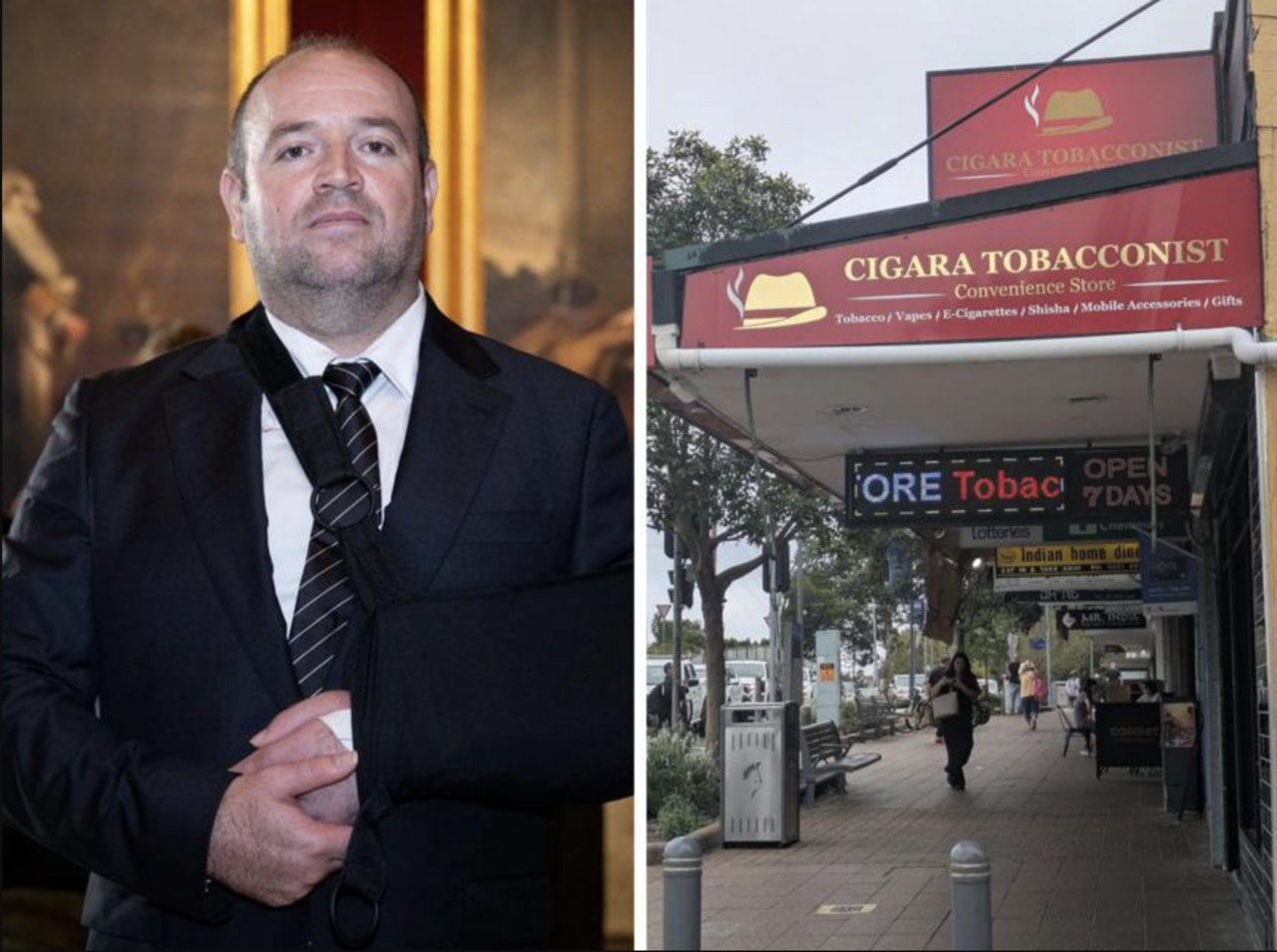
    Ahmed Al-Ahmed, the civilian hailed as a national hero for his bravery during Australia’s deadliest terrorist attack at Bondi Beach, has made a significant life change by selling his tobacco business. The 42-year-old, who was filmed confronting gunman Sajid Akram and wrestling a firearm from him during the December 14 rampage, has parted ways with Cigara, his tobacco store in Sutherland on the Old Princes Highway.

    The attack, which targeted Jewish celebrants at a Chanukah by the Sea event, claimed fifteen innocent lives including 10-year-old Matilda who attended with her family. Al-Ahmed’s intervention during the deadly assault is widely credited with preventing further casualties, though he sustained five bullet wounds to his shoulder during the struggle. Despite multiple surgeries and a two-week hospital recovery, two bullets remain lodged in his arm, causing ongoing pain and limited finger mobility according to former employee Salman Habib.

    Following the attack, Al-Ahmed’s shop became an impromptu shrine covered in floral tributes and cards from grateful citizens. The business has now reopened under new ownership, marking a new chapter for the hero who received over $2 million in public donations and was honored with numerous awards including the Canterbury Bankstown Local Hero designation for 2026 and the first ever keys to the city. His remarkable journey continued with a trip to New York alongside Rabbi Ulman to attend a Jewish awards ceremony, symbolizing his extraordinary transition from shopkeeper to national symbol of courage.

  • Ukraine accuses Hungary of taking ‘hostage’ bank staff carrying $40 mn

    Ukraine accuses Hungary of taking ‘hostage’ bank staff carrying $40 mn

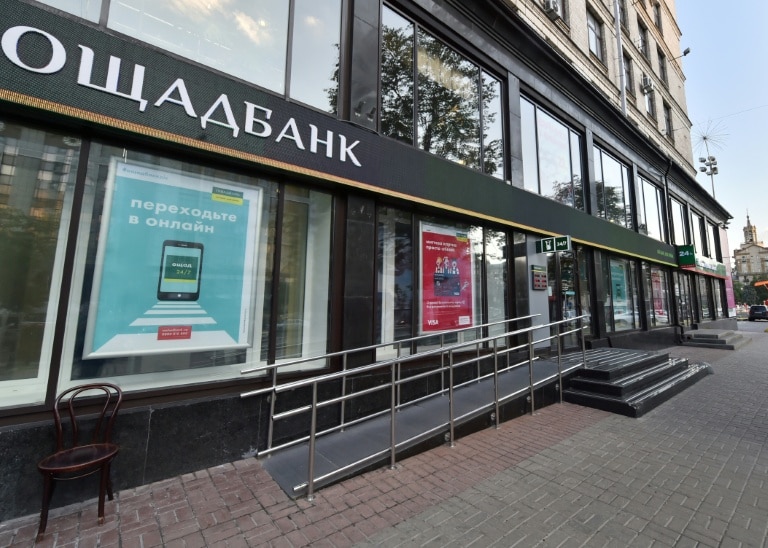
    A significant diplomatic crisis has erupted between Ukraine and Hungary following the detention of seven Ukrainian bank employees in Budapest. The incident, which Ukrainian officials have characterized as an act of ‘state terrorism,’ involves staff from the State Savings Bank of Ukraine (Oschadbank) who were transporting a substantial consignment of $40 million in cash and nine kilograms of gold.

    Ukrainian Foreign Minister Andrii Sybiha publicly accused Hungarian authorities on Friday of taking the individuals ‘hostage.’ In a series of posts on social media platform X, Sybiha detailed that the employees were operating two armored vehicles on a routine transit route between Austria and Ukraine, a standard service between state financial institutions. The minister vehemently denounced the action, stating, ‘We are talking about Hungary taking hostages and stealing money. This is state terrorism and racketeering.’

    The detention occurs against a backdrop of persistently strained relations between the two nations. Hungary has notably distanced itself from broader European Union consensus, maintaining close diplomatic and economic ties with Russia throughout the ongoing conflict in Ukraine. The government of Prime Minister Viktor Orbán has consistently opposed military aid packages for Kyiv and has been critical of EU sanctions imposed on Moscow.

    Oschadbank confirmed the incident but expressed grave concern as the precise location of its employees remains unknown. Data from GPS signals indicates the bank vehicles are stationed in central Budapest, reportedly near a Hungarian law enforcement facility. As of the latest reports, the Hungarian government has not issued an official statement or responded to requests for comment from international news agencies, deepening the mystery surrounding the legal basis for the detention.