作者: admin

  • European Union launches tech sovereignty initiative to boost chips, cloud and AI at home

    European Union launches tech sovereignty initiative to boost chips, cloud and AI at home

    BRUSSELS – Growing anxiety over excessive European reliance on non-domestic technology providers has spurred European Union leaders to launch an ambitious new initiative designed to build up homegrown alternatives to foreign Big Tech and critical hardware. On Wednesday, the 27-nation bloc announced its comprehensive “tech sovereignty” package, a set of policy measures crafted to nurture local European competitors for the U.S.-dominated AI and cloud computing sectors and reduce heavy dependence on Asian microchip manufacturing.

    The push for greater technological autonomy has gained urgent momentum in recent years, as EU policymakers have raised alarms that foreign control of critical digital and hardware infrastructure could be weaponized against European interests. These concerns were solidified by a high-profile incident several years ago, when the Trump administration imposed sanctions on the International Criminal Court’s top prosecutor, prompting U.S. tech giant Microsoft to terminate the prosecutor’s corporate email account. The episode fueled widespread fears across the bloc that foreign technology services could include hidden “kill switches” that would allow external powers to disrupt critical European operations at will.

    “Europe wants to be in the position to make its own choices, avoiding risky dependencies on single dominant suppliers, one company or one third country,” Henna Virkkunen, European Commission Executive Vice-President responsible for overseeing the bloc’s tech sovereignty agenda, told reporters in Brussels. “Because we live in a world where geopolitics and technology go hand in hand. Those who champion technological innovation will shape the future, and we must ensure that Europe plays a leading role in this.”

    A core pillar of the new package is an expansion of the EU’s landmark 2023 Chips Act, which was originally introduced to boost local semiconductor output. The updated rules will further streamline burdensome regulatory red tape for new semiconductor fabrication plants, while working to build a fully integrated, self-sustaining European chipmaking ecosystem. These measures were prompted in part by a 2023 power struggle at Nexperia, a Chinese-owned chipmaker headquartered in the Netherlands, which laid bare how vulnerable Europe’s fragmented semiconductor supply chain is to global geopolitical shifts, given most of the world’s advanced chip manufacturing is concentrated in East Asia.

    The second major component of the initiative focuses on shoring up Europe’s domestic cloud infrastructure and artificial intelligence development capacity. The bloc has laid out a formal target to triple its total regional data center capacity over the next five to seven years, a move intended to keep pace with the explosive global AI boom that has driven a sharp, sustained surge in demand for high-capacity cloud computing services.

    The policy package was drafted and released by the European Commission, the EU’s executive branch. It now moves to the bloc’s two other governing institutions — the European Parliament and the Council of the European Union — for debate and final approval before any measures can go into effect.

  • Motorists using medicinal cannabis no longer to be automatically penalised in NSW

    Motorists using medicinal cannabis no longer to be automatically penalised in NSW

    A landmark policy shift is set to transform the lives of hundreds of thousands of registered medicinal cannabis users across New South Wales (NSW), Australia, after the state Labor government unveiled long-awaited reforms that eliminate automatic penalties for motorists who test positive for trace amounts of THC after lawful use of their prescription medication.

    Announced to the public on Thursday, the reform package will be tabled before NSW parliament with the explicit goal of introducing what government officials describe as a “commonsense approach” to balancing the needs of legitimate medicinal cannabis patients and non-negotiable road public safety. The plan introduces a graduated three-strike framework, designed to account for the reality that even compliant patients can retain measurable THC levels in their system for days or weeks after lawful use, without experiencing any driving impairment.

    Under the new rules, all motorists will still undergo standard roadside drug testing, and any driver who tests positive for THC will face an immediate 24-hour driving suspension while lab analysis confirms the exact concentration of the compound. If test results show THC levels fall below the official maximum threshold, no criminal charges or further disciplinary action will be taken against the driver, provided the patient is enrolled in the official registration scheme.

    For drivers who record THC levels at or above the legal threshold, the new graduated penalty structure applies: a first or second positive detection within a 24-month window will only result in an official warning letter. A third positive detection within two years will carry a fine of up to AU$704 and a minimum three-month driver’s license suspension. If alcohol, additional illicit substances, or multiple drugs are detected alongside THC, standard driving under the influence penalties will apply as usual.

    Currently, an estimated 1 million Australians across the country rely on legally prescribed medicinal cannabis to manage chronic pain and other health conditions, with roughly one third of all national users based in NSW. Industry data also shows the number of approved cannabis-based medicinal products has nearly doubled over the past 12 months, reflecting growing clinical acceptance of the treatment. The reforms have therefore been framed as a critical update to out-of-date legislation that failed to keep pace with modern medical practice.

    NSW Premier Chris Minns emphasized that while the reforms represent a major shift, road safety would remain the core priority of every element of the policy rollout. “For thousands of people, medically prescribed cannabis is life-changing medication that is necessary for people to go about their daily lives,” Minns said. “Our current laws enable people to safely and legally drive while taking a wide range of prescription medications but that doesn’t include cannabis prescribed by a medical practitioner. These changes strike a careful balance of providing a more practical approach for medicinal cannabis users while maintaining strong road safety protections for the community.”

    NSW Police Minister Yasmin Catley echoed this commitment, stressing that the changes do not weaken law enforcement’s ability to remove impaired drivers from public roads. “These reforms do not change the ability of NSW Police to take dangerous drivers off our roads,” Catley said. “NSW Police will operationalise this reform as part of their role to enforce our laws, including roadside drug testing and action against impaired drivers. Every driver has a personal responsibility to know what they are taking and never get behind the wheel impaired.”

    The new framework aligns directly with recommendations put forward by the state’s 2025 Drug Summit, and fulfills a longstanding demand from patient advocacy groups. Following the summit, Unions NSW publicly called on the government to speed up regulatory changes that would place legally prescribed cannabis on equal footing with other controlled prescription medications for road law purposes.

    To qualify for the new protections, motorists must meet strict eligibility criteria. Drivers must register as a legitimate medicinal cannabis user with Transport for NSW, provide official documentation of a valid medical prescription, and complete a mandatory online education program covering the interaction between cannabis use and driving safety. The reforms only apply to NSW motorists holding full unrestricted driver licenses: learner drivers, provisional P-plate drivers, and commercial vehicle operators are explicitly excluded from the new protections. Registered users will still be required to undergo blood or urine testing following any serious motor vehicle crash, and will still face full criminal charges if they are proven to be driving while impaired.

    To ensure the policy works as intended, the entire regulatory framework will be subject to a full formal review one year after it is implemented, to adjust any provisions as needed based on real-world outcomes.

  • Trump-backed candidate in Iowa loses primary

    Trump-backed candidate in Iowa loses primary

    In a stunning upset that has upended expectations for 2026 Iowa Republican politics, three-term U.S. Congressman Randy Feenstra — a longtime loyal ally of Donald Trump who entered the race as the clear frontrunner and secured a last-minute endorsement from the former president — has conceded defeat in the state’s GOP gubernatorial primary. His challenger, Zach Lahn, a farmer and small business owner, ran an unapologetically populist, Trump-aligned campaign centered on slogans like “Make Iowa Healthy Again” and “Iowa First,” and capitalized on deep grassroots frustration with Washington political insularity.

    Lahn’s platform centered heavily on restricting foreign and out-of-state entities from purchasing Iowa agricultural land, paired with fiery rhetoric criticizing what he frames as out-of-touch “global elites” exerting undue influence over state policy. His campaign drew institutional support from Turning Point USA, the prominent conservative organization, as well as a coalition of Iowa grassroots conservative activists who painted Feenstra as too embedded in the Washington establishment to deliver meaningful change for Iowa voters.

    The upset marks a rare black mark on what had been an unbroken winning streak for Trump’s political endorsements in 2026 primary contests. Just weeks prior, Trump-backed challengers unseated incumbents including Kentucky Congressman Thomas Massie and Senator Bill Cassidy, while Texas Attorney General Ken Paxton secured the state’s Republican Senate nomination over incumbent John Cornyn — a race where polling already pointed to a Paxton victory even before Trump’s backing.

    The outcome also comes amid a quiet stretch for Trump, who has largely stepped back from public appearances over the past six days, limiting his public output to pre-taped interviews with conservative aligned media outlets and posts on his social platform Truth Social. One recent Truth Social post claimed that negotiations with Iran over the ongoing regional conflict have “been going on continuously,” though multiple diplomatic sources have indicated the talks have produced little tangible progress to date.

    Domestically, it has already been a difficult week for Trump: his team recently scrapped plans for a proposed $1.8 billion “anti-weaponization” fund that was designed to compensate people who claimed they were targeted for political investigation by prior presidential administrations.

    Political analysts note the Iowa result may signal a growing erosion of Trump’s political standing in a state that has backed him in three consecutive presidential elections, but where shifting economic realities have soured voter opinion. Trump’s broad trade tariffs on Chinese goods, and China’s resulting retaliatory tariffs, hit Iowa’s critical agricultural sector particularly hard. More recently, the ongoing U.S.-Iran conflict following Israeli military operations has driven sharp increases in fuel and fertilizer costs, delivering a second economic blow to the state’s farming community. A recent joint poll from YouGov and The Economist puts Trump’s net approval rating at negative 20% among Iowa voters.

    For Iowa Democrats, the opening has sparked new optimism about flipping the open governorship in November’s general election, where Lahn will now face Democratic State Auditor Rob Sand. Democrats are also competitive in the race for open U.S. Senate seat being vacated by retiring Republican Joni Ernst: centrist Paralympian Josh Turek, who earned backing from national Democratic party leadership, won his party’s primary nomination and will face Republican former Congresswoman Ashley Hinson in the fall.

    Nonpartisan election analysis groups have reclassified both the gubernatorial and Senate races as either toss-ups or leaning Republican, a shift that reflects the newly competitive landscape in Iowa. Once a reliably Democratic-leaning state, Iowa has shifted sharply red in federal and statewide elections over the past 15 years, but the current political shifts mean the Hawkeye State could now hold the key to Democratic control of Congress and key governor’s mansions heading into the next election cycle. With control of national political majorities hanging in the balance, Iowa’s upcoming general election contests are set to be among the most closely watched in the nation this cycle.

  • Striker Rasmus Hojlund completes permanent move to Napoli from Man United

    Striker Rasmus Hojlund completes permanent move to Napoli from Man United

    In a high-profile move that reshapes both Manchester United’s attacking line and Napoli’s frontline for the upcoming season, Danish striker Rasmus Hojlund has finalized a permanent transfer to Italian Serie A side Napoli, following a standout one-year loan at the Naples-based club last season. The 2023-24 campaign proved transformative for Hojlund, who found consistent first-team football at the Stadio Diego Armando Maradona and delivered eye-catching results: he found the back of the net 16 times across 44 appearances in all competitions, playing a pivotal role in guiding Napoli to a second-place finish in Italy’s top-flight league and automatic qualification for the 2025-26 UEFA Champions League. Hojlund first arrived at Manchester United in 2023, joining from Italian club Atalanta for a transfer fee of $82 million, and was immediately hailed as one of the most exciting young attacking prospects in European football. However, a flurry of forward acquisitions by Manchester United last transfer window pushed the Dane well down the club’s attacking depth chart, with new signings Benjamin Sesko, Bryan Mbeumo and Matheus Cunha all preferred ahead of him for first-team minutes. Unable to compete for a regular starting spot at Old Trafford, Hojlund secured a loan move to Napoli last season, and his consistent goal-scoring form convinced the Serie A side to make the move permanent. According to industry reports, the permanent transfer commands an upfront fee of approximately $58 million, capping off a dramatic year of change for the Danish international. For Napoli, the move locks in a proven goalscorer who has already adapted to Serie A’s physical and tactical demands, while Manchester United clears salary and roster space after the departure of a player who could not break into the first team following their attacking rebuild.

  • Norway teen was in UK to ‘undertake a hit’ – court

    Norway teen was in UK to ‘undertake a hit’ – court

    A high-stakes trial opened this week at London’s historic Old Bailey, where 19-year-old Norwegian national Johannes Natland has pleaded not guilty to a charge of conspiracy to murder, amid serious allegations that he was recruited by an Iranian-linked Swedish organized crime network to carry out a targeted killing in the United Kingdom.

    Prosecutors laid out detailed allegations before a jury outlining how the alleged plot unfolded in March 2025. According to opening arguments from lead prosecutor Alistair Richardson, Natland was recruited by the Foxtrot network, a criminal group that the prosecution claims is controlled and used by the Iranian regime for extra-territorial targeted attacks. The plot was activated after the originally assigned assassin pulled out of the planned operation, prompting senior figures in the network to scramble for a replacement.

    Court documents and messaging logs presented to the jury show that coded conversations on encrypted platforms between two co-conspirators, using the usernames ‘Generalen’ and ‘Agent 47’, reveal an urgent request for a foreign-based assassin to carry out a hit in the UK for a payout of €25,000. By March 15, Generalen had brought Natland into the plot, with the teenager telling his girlfriend he was embarking on a ‘crazy mission’, according to the prosecution.

    Complications arose early when the group discovered Natland’s passport had expired. Within two days, he secured an emergency travel document and booked a flight from Stavanger Airport in Norway to Manchester Airport in northern England. Even after being warned that Generalen, one of his key recruiters, had already been arrested in connection with the conspiracy, Natland chose to proceed with the plan, Richardson told the jury.

    On arrival at Manchester Airport, UK Border Force officials detained Natland after noting he carried only £40 in cash, had no pre-booked accommodation and no return ticket to Norway. When officers offered to contact his mother, the 19-year-old claimed he was a legal adult and declined assistance. Though border officials initially intended to refuse entry, they granted temporary permission to stay in the country for four days while arranging a return flight – a decision the prosecution described as surprising.

    The following day, acting on instructions from Agent 47, Natland took a taxi to the West Yorkshire town of Huddersfield and checked into the Briar Court Hotel for a three-night stay. Via the encrypted messaging app Signal, he was directed to a hidden weapons cache at the base of a tree in a nearby wooded area, where prosecutors say he retrieved two working firearms: a semi-automatic pistol and a revolver, alongside 12 rounds of live ammunition.

    After collecting the weapons, Natland purchased three pairs of rubber gloves from a local supermarket and was directed to a stolen vehicle that the prosecution alleges was intended to be used for the planned killing the following day. When a friend messaged Natland asking if he had completed the assassination, he replied ‘No tomorrow.’ When asked if he had test-fired the weapons, Natland responded, ‘Hell no. They will be tested on the guy,’ according to messaging logs presented to the court.

    In the early hours of the morning before the planned attack, specialist counter-terrorism firearms officers raided Natland’s hotel room, Room 207, and took him into custody. Prosecutors told the jury that as Natland answered the door, he mimicked holding a gun and pretended to fire at the arresting officers. A search of the room turned up the two loaded weapons, 12 live rounds, and £2,000 in cash linked to the planned hit.

    Natland has already entered a guilty plea to charges of illegal possession of the two firearms and the 12 rounds of ammunition, but he maintains his innocence on the core charge of conspiracy to murder. Prosecutors emphasized that the intended target of the planned killing has not been identified, but that the evidence clearly shows Natland had committed to carrying out the attack.

    ‘The defendant’s response to those warnings [of Generalen’s arrest] was not to pull out of what he was doing. Not to stop,’ Richardson told the jury. ‘He had signed up to, and intended to commit murder.’

    The trial, which is being held at the Old Bailey, is expected to continue for approximately three weeks as the prosecution and defense present evidence and witness testimony to the jury.

  • UK PM slams violence over police handcuffing of dying student

    UK PM slams violence over police handcuffing of dying student

    Tensions have erupted in southern England following the conviction of a murderer and the release of bodycam footage showing dying 18-year-old Henry Nowak being handcuffed by police, with far-right activists triggering violent clashes that have drawn sharp condemnation from Prime Minister Keir Starmer. The controversy began on Monday, when 23-year-old Vickrum Digwa was sentenced to a minimum of 21 years in prison for stabbing Nowak to death with an 8-inch ceremonial knife during a dispute over a mobile phone in Southampton. Digwa, a Sikh man, misled responding officers by falsely claiming Nowak had racially abused him, leading police to initially restrain the fatally wounded teenager rather than provide urgent medical aid. Bodycam footage from the December incident captured Nowak repeatedly telling officers he could not breathe as he lay bleeding, before he lost consciousness moments later. The case has become a flashpoint for political polarization in the UK, after far-right figures including former UKIP leader Nigel Farage and ex-English Defence League leader Tommy Robinson (real name Stephen Yaxley-Lennon) seized on the incident to push their unsubstantiated claim of so-called “two-tier policing” — the false assertion that British police treat ethnic minority suspects more leniently than white people. Farage went so far as to call on the public to respond to Nowak’s death with “pure cold rage”, a comment Starmer labeled unforgivable. On Tuesday, a protest organized by far-right figures descended into chaotic violence in Southampton, despite an explicit plea from Nowak’s father not to use his son’s murder to fuel “further division, hatred or tension”. Agence France-Presse reporters on the scene documented that roughly 100 protesters tore down residential garden fences, hurled bricks, flares and chairs at officers, and rolled a burning bin toward police lines. Eleven officers were injured in the clashes, and two protesters were arrested by the end of the night. More than 1,000 people attended the wider rally, many waving Union Jack and English flags, where Robinson told the crowd that white British people are treated as “second-rate citizens” by UK law enforcement. Addressing lawmakers in Parliament on Wednesday, Prime Minister Starmer stressed that regardless of public grief over Nowak’s death, there is no excuse for the violence that unfolded. “No matter the pain we feel, there is no justification for more violence and disorder,” Starmer said. “This is a time for serious work, not rage. We will ensure anyone found engaging in disorder meets the full force of the law.” The prime minister, a former Director of Public Prosecutions for England and Wales, described the police bodycam footage of Nowak’s final moments as “harrowing” and acknowledged there are “serious questions” that must be answered about the officers’ handling of the incident. An investigation by the Independent Office for Police Conduct (IOPC), the UK’s policing watchdog, is already underway and is expected to release its findings within three months. Hampshire Police confirmed three of the four officers involved in the incident remain in active service, while one resigned for reasons unrelated to Nowak’s murder. Starmer and his newly elected Labour government have flatly rejected far-right claims that two-tier policing exists in the UK, and he accused Farage — whose Reform UK party currently leads national opinion polls ahead of the next general election — of exploiting the tragedy for political gain. “Farage is exploiting this tragedy to create grievance and division,” Starmer told parliament. In a surprising development that has amplified the controversy, American tech billionaire Elon Musk has announced he will fund a private prosecution against police over their handling of the case. Amid the growing political pressure, the National Police Chiefs Council (NPCC) announced it would review its existing Race Action Plan, guidance introduced last year to address well-documented racial disparities in British policing. Official statistics show Black people in the UK are more than twice as likely to be arrested as white people, leading the NPCC to introduce guidance that stated the organization’s commitment to racial equality “does not mean treating everyone ‘the same’ or being ‘colour blind’”. Far-right activists have misrepresented this guidance as proof of preferential treatment for ethnic minority suspects. NPCC chair Gavin Stephens said the organization would address legitimate concerns about the wording of the guidance and make adjustments where needed. “We are listening to legitimate concerns about how some of these commitments are worded or phrased, and where needed we can and will make changes, but this should not detract from the intent, which is to improve the quality of policing,” Stephens said. UK Policing Minister Sarah Jones backed the review, saying it was “right” that the guidance be re-examined.

  • Seven African players to watch at World Cup 2026

    Seven African players to watch at World Cup 2026

    The 2026 FIFA World Cup, co-hosted by the United States, Mexico and Canada, will make history off the pitch before a single ball is even kicked: an unprecedented 10 African nations have qualified for the expanded 48-team tournament, marking the largest representation the continent has ever secured at football’s global showpiece. Building on the iconic legacy of Morocco’s 2022 Qatar run, where they became the first African side to reach a World Cup semi-final, this year’s cohort mixes tournament debutants, long-awaited returnees, and a new generation of elite talent ready to challenge for the sport’s biggest prize. Among the standout squads, Cape Verde will make their first-ever World Cup appearance, while DR Congo returns to the finals for the first time since 1974. BBC Sport Africa has narrowed down the field to seven players whose performances could shape their nations’ journeys from the group stage through to knockout football this summer, running from June 11 to July 19.

    Leading the list is Ghanaian forward Antoine Semenyo, who heads into the tournament fresh off a career-defining season with English Premier League giants Manchester City. Though the 26-year-old London-born attacker narrowly missed out on a league title with City, his moment of individual brilliance delivered the winning goal against Chelsea in this year’s FA Cup final, capping off a standout campaign. Since joining City from Bournemouth in January 2026, Semenyo has found his finishing touch, notching seven of his 15 total top-flight goals in just five months. With Ghana’s star attacker Mohammed Kudus of Tottenham ruled out through injury, Semenyo is set to carry the Black Stars’ attacking hopes in Group L, where they face England, Croatia, and Panama. This marks Semenyo’s second World Cup appearance after he made limited substitute appearances during Ghana’s 2022 group-stage exit, and he will be hungry to bag his first ever goal at a major tournament, after Ghana failed to qualify for the 2025 Africa Cup of Nations.

    Next is 19-year-old Ivorian attacking talent Yan Diomande, who has taken the German Bundesliga by storm in 2025-26. The Elephants are returning to the World Cup for the first time since 2014, and Diomande is their brightest emerging prospect. He claimed the Bundesliga’s Rookie of the Season award after scoring 12 goals and notching 8 assists, powering RB Leipzig to a third-place finish and a return to the UEFA Champions League. His impressive form has already linked him to multi-million pound transfers to top Premier League sides including Liverpool and Chelsea. Diomande started four of Ivory Coast’s five matches at the 2025 Africa Cup of Nations, and his elite one-on-one skill makes him a constant attacking threat: he completed more dribbles and won more individual duels than any other player in the Bundesliga this past season. Ivory Coast will face Germany, Ecuador, and debutants Curacao in Group E, and Diomande’s dynamic play could give his side a critical edge against elite competition.

    For South Africa, who are making their first World Cup appearance since hosting the tournament in 2010, all eyes will be on captain and goalkeeper Ronwen Williams. Bafana Bafana have never advanced past the group stage in their World Cup history: they suffered early exits in 1998 and 2002, and infamously became the first host nation to fail to clear the group stage back in 2010. Led by Williams, who plies his trade for African club powerhouse Mamelodi Sundowns, the side will be looking to break that streak this year. The 34-year-old Williams has built a reputation as a penalty-saving specialist, famously stopping four spot kicks in a dramatic shootout against Cape Verde during the 2023 Africa Cup of Nations quarter-finals. He adds a wealth of big-game experience to the squad, fresh off lifting the African Champions League title with Sundowns earlier this year. Williams says he “cherishes” the opportunity to lead his nation out at the World Cup, and his experience will be critical as South Africa kicks off the entire tournament against co-host Mexico on June 11, before facing Czech Republic and South Korea. This will be Williams’ first World Cup appearance.

    Another debutant to watch is Roberto Lopes, the experienced center-back who has been central to tiny Cape Verde’s incredible rise to the World Cup. The Dublin-born 33-year-old, who plays his club football for Irish side Shamrock Rovers, was first scouted by Cape Verde’s national team via LinkedIn – and he initially ignored the outreach because the message was written in Portuguese. He made his international debut in 2019, and missed just one qualifying match as the small Atlantic archipelago secured their first ever World Cup spot, an achievement that has been called “the biggest thing since Cape Verde’s independence” by fans across the country. Lopes has led a defensive unit that guided Cape Verde to the 2023 Africa Cup of Nations quarter-finals and saw them finish above continental heavyweight Cameroon in World Cup qualifying. Cape Verde faces a daunting test in Group H against 2010 winners Spain, two-time champions Uruguay, and Saudi Arabia, and Lopes’ leadership and experience at the back will be the foundation of any potential upset for the debutants.

    Morocco playmaker Brahim Diaz will head to his first World Cup hungry for redemption after a heartbreaking 2025 Africa Cup of Nations final. The 26-year-old Real Madrid attacker was Morocco’s standout star at the tournament, scoring five goals to lead the host nation to the final. But with the match tied 0-0 deep into second-half stoppage time, he saw his attempted Panenka penalty saved by Senegal goalkeeper Edouard Mendy, after a lengthy delay caused by a Senegal walk-off in protest of the penalty award. Diaz was substituted early in extra time and was spotted in tears after Senegal went on to win 1-0, though the result remains contested: a CAF appeals board later awarded the title to Morocco, and Senegal has since taken the case to the Court of Arbitration for Sport. A former Spain Under-21 international who only made his Morocco debut in 2024, this will be Diaz’ first World Cup, and he will be eager to prove his quality on the global stage after the final heartbreak. Morocco open Group C against five-time record winners Brazil, before facing Scotland and Haiti.

    Senegal winger Ismaila Sarr heads into the 2026 tournament in the best club form of his career, with 21 goals for Crystal Palace in 2025-26, a new career high. Nine of those strikes came in the UEFA Conference League, where Sarr helped Palace lift their first ever European trophy. This will be Sarr’s third consecutive World Cup appearance: Senegal were eliminated on fair play tiebreakers in the 2018 group stage, before falling 3-0 to England in the 2022 round of 16. As the reigning (on-pitch) African champions, Senegal face a tough Group I draw against two-time world champions France, Erling Haaland’s Norway, and Iraq. Sarr will be hoping to replicate his club form on the global stage, and will be part of a Senegal side looking to repeat their iconic 2002 World Cup upset, when they beat eventual champions France 1-0 on their way to the quarter-finals on their tournament debut.

    Rounding out the list of stars to watch is Egyptian forward Omar Marmoush, who is set to make his first World Cup appearance with the Pharaohs. The 27-year-old joined Manchester City from Eintracht Frankfurt for $79.5 million in January 2025, and though he has yet to secure a regular starting spot in the Premier League (he started just eight games in 2025-26), he helped Guardiola’s side lift both the League Cup and FA Cup this season. Marmoush is a staple in Egypt’s national side, having scored twice as the North Africans finished fourth at the 2025 Africa Cup of Nations. Egypt, the first African nation ever to qualify for a World Cup, are still chasing their first ever win at the tournament: a round of 16 loss in 1934 was followed by group-stage exits in 1990 and 2018. With captain Mohamed Salah still recovering from an injury that limited his form at Liverpool this past season, Egypt’s coach Hossam Hassan will be counting on Marmoush to deliver goals and lead the attack for the Pharaohs.

  • The Revolutionary War’s chief villain is being rehabilitated — just in time for America’s 250th

    The Revolutionary War’s chief villain is being rehabilitated — just in time for America’s 250th

    As the United States prepares to mark its 250th year of independence, a long-held popular portrayal of King George III – the man Americans were taught to see as a tyrannical, mad monarch who drove the colonies to revolution – is undergoing a long-overdue reassessment by historians and cultural institutions.

    For generations, American popular culture has cemented this one-note image of George III: the maniacal villain of the Broadway megahit *Hamilton*, the central figure of *The Madness of King George*, and the tyrant referenced in the classic educational song *No More Kings* who imposed unfair taxes without colonial consent. But new archival access and modern scholarship are upending this long-accepted narrative, revealing that the founding story’s iconic villain was far more complex than wartime propaganda depicted.

    Leading British historian Andrew Roberts, author of the 2021 biography *The Last King of America*, argues that the simplified caricature of George III grew from wartime misinformation, a pattern common to most conflicts. “Truth became the first casualty of the American War of Independence, as it is in most wars,” Roberts notes, pointing out that 25 of the 27 grievances against the king listed in the Declaration of Independence collapse under historical scrutiny. In his view, the American Revolution was not a reaction to fabricated tyranny of George III, but rather a reflection of colonists’ deep desire for political autonomy.

    Even in 1972, decades before this recent wave of reappraisal, then-Prince Charles (now King Charles III) pushed back against the pervasive narrative in a foreword to a George III biography. “If the average schoolchild remembers anything about history after leaving school, he will remember that George III was mad,” Charles wrote. “If he is American as well then madness is often given as a reason for the ‘irrational’ behavior of the King toward the Colonists, making it necessary for them to declare independence.” He closed with a hope that Americans would one day see the true king without centuries of bias.

    Historical context confirms that George III, who inherited the British throne in 1760 at just 22 years old, was a constitutional monarch operating within existing British political structures. As is still the case in the modern UK, all legislation and taxation were approved by Parliament, not imposed unilaterally by the crown. While George stood with Parliament as tensions escalated – from the 1765 Stamp Act to the 1773 Coercive Acts that responded to the Boston Tea Party – his role was largely ceremonial, bound by the will of elected lawmakers. When the first shots of the revolution rang out at Lexington and Concord in 1775, the conflict was as much a dispute between Parliament and colonial assemblies as it was a rejection of the monarchy itself.

    A major catalyst for this historical shift came in 2015, when Queen Elizabeth II oversaw the public release and digitization of 280,000 uncatalogued Georgian Papers from Windsor Castle’s archives. The complete record revealed a meticulous, engaged monarch who tracked everything from crop yields to parliamentary politics in detailed journals and notes, and offered new granular insight into his long-debated medical condition. The long-popular theory that George suffered from the genetic metabolic disorder porphyria has now been discredited; modern medical analysis of the new records points to Type 1 bipolar affective disorder, which only caused severe, extended manic episodes after 1788 – more than a decade after the Revolutionary War ended.

    That finding confirms a core claim of the reassessment: George III was not experiencing mental instability during the revolution, a point that cultural institutions across the U.S. are now highlighting as part of 250th anniversary programming. The Library of Congress’ major exhibit *The Two Georges* frames the revolution as a clash between two contemporary leaders – George III and George Washington – rather than a battle against a mad tyrant. Philadelphia’s Museum of the American Revolution opens its core exhibit by acknowledging that, in the 15 years before the revolution, many colonists held George III in such high regard that they widely referred to him as “the king of liberty” and displayed royal symbols on everyday household objects and public buildings.

    This new framing received a high-profile public validation in April 2024, when current King Charles III twice referenced his five-times great-grandfather George III during a visit to Washington D.C., marking the upcoming 250th anniversary. Speaking from the U.S. Congress rostrum, he lightheartedly endorsed the “Tale of Two Georges” exhibit theme, joking: “King George never set foot in America, and, please rest assured, I am not here as part of some cunning rear-guard action.” The assembled lawmakers reacted with no hostility, and Charles repeated the reference that evening during a White House state dinner, noting “As the direct descendant of King George III, I know this is a nation that never gives up.”

    Still, historian Roberts is skeptical that the traditional caricature will fade entirely from American popular memory. When asked if his scholarship had shifted broader public perception, he wrote via email: “Nothing will dislodge the Americans from their desire to see GIII as an evil dictator.”

  • CBS News fires correspondent Scott Pelley from 60 Minutes

    CBS News fires correspondent Scott Pelley from 60 Minutes

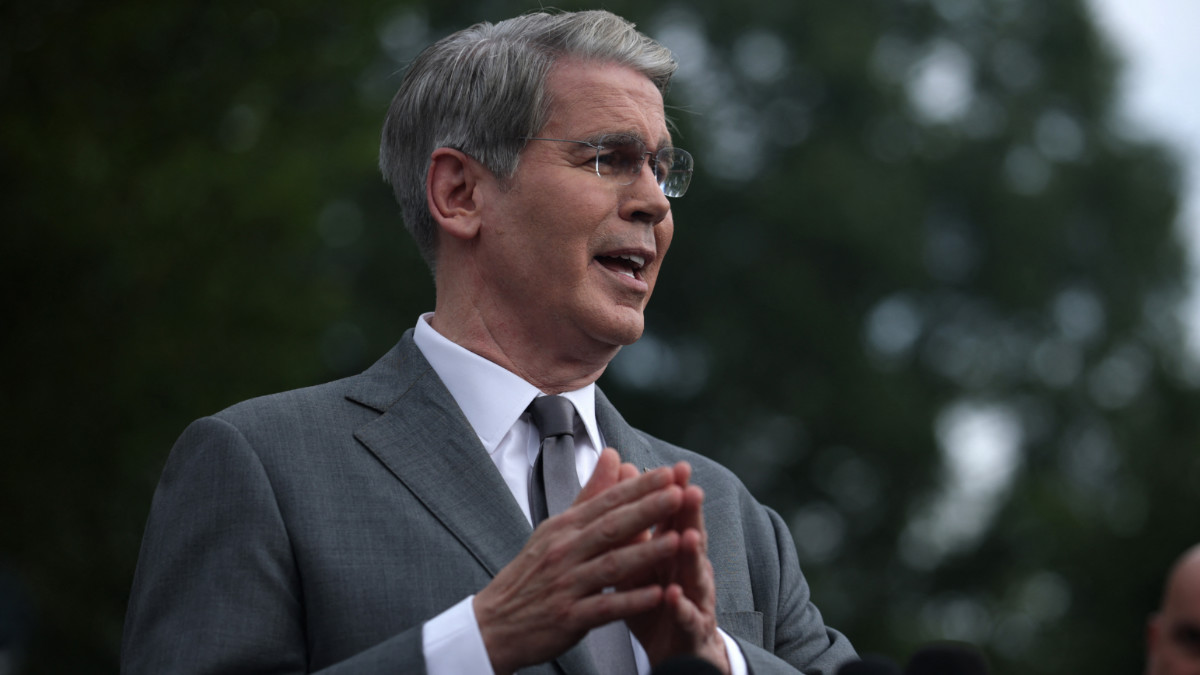
    In a high-profile shakeup that has sent ripples through American media, veteran ’60 Minutes’ anchor Scott Pelley was terminated by CBS News on Tuesday evening, becoming the latest high-profile departure amid sweeping organizational changes pushed by new ownership and leadership. Pelley’s immediate termination for cause was outlined in a formal letter from new ’60 Minutes’ executive producer Nick Bilton, who accused the long-serving anchor of open hostility, refusal to collaborate, and a stated lack of investment in the program’s future under new management. Tensions between the two dated back to Bilton’s arrival at the helm of the iconic news magazine in late May, with Bilton claiming Pelley rejected an introductory dinner invitation and displayed consistent coldness from the outset. The conflict boiled over during a Monday staff meeting, where Bilton alleged Pelley hijacked the discussion to launch a public, uncivil attack on his credentials, leadership, and vision for the program. Bilton added that even after the heated exchange, Pelley refused to engage in productive dialogue to resolve their differences, making his antipathy toward the new direction of the show undeniable. In a separate internal memo to the full ’60 Minutes’ staff, Bilton emphasized he had made repeated attempts to open lines of communication with Pelley but was unable to reach any mutually acceptable middle ground, framing the termination as an unavoidable outcome after Pelley rejected efforts to find common ground. This latest staff shakeup is far from an isolated incident: organizational upheaval at CBS began months before Pelley’s ousting, tracing back to August 2025 when David Ellison, a close political ally of former U.S. President Donald Trump, completed his acquisition of Paramount Global, CBS’s parent company. Last week alone, three other key figures exited the program: Tanya Simon, Bilton’s predecessor as executive producer, and veteran ’60 Minutes’ correspondents Sharyn Alfonsi and Cecilia Vega, all of whom were terminated. The sweeping changes are being spearheaded by Bari Weiss, who was installed as CBS News’ editor in chief immediately following Ellison’s takeover. According to media outlet Status, which first reported details of the Monday confrontation, Pelley publicly accused Weiss of destroying the legacy of ’60 Minutes’ during the staff meeting clash, claiming she lacked the professional qualifications to lead the iconic program. The BBC, which maintains a content-sharing partnership with CBS News while retaining full editorial independence, has reached out to both CBS and Pelley to request comment on the termination, with no official response from either party released as of yet. The series of abrupt terminations at one of America’s most respected and long-running news programs has sparked widespread discussion about the impact of new ownership and political alignment on editorial independence in mainstream U.S. media.

  • The end of Trump’s ‘weaponisation’ fund is another sign Republicans are fighting back

    The end of Trump’s ‘weaponisation’ fund is another sign Republicans are fighting back

    Just two weeks after it was first unveiled, a controversial $1.8 billion taxpayer-funded plan backed by former and current President Donald Trump to compensate his political allies has been formally scrapped by the U.S. Department of Justice, collapsing under overwhelming bipartisan pushback that included open revolt from members of Trump’s own Republican Party.

    The proposal, labeled the “anti-weaponisation” fund, emerged from a legal settlement that ended a lawsuit Trump had brought against the Internal Revenue Service. The initiative framed its payouts as compensation for Americans the Trump administration deemed wrongfully targeted by the prior Biden administration, and included a controversial provision that permanently blocked new tax audits of Trump, his family members, and his business entities. While the White House maintained the fund was open to applicants from all political parties, administration officials repeatedly refused to rule out extending payouts to rioters who participated in the January 6, 2021 attack on the U.S. Capitol, triggering immediate outrage from lawmakers on both sides of the aisle.

    The swift rejection of the plan from congressional Republicans marked one of the most high-profile examples of growing intraparty pushback against Trump in his second term, showing that the president does not hold unchallenged control over his own party even after returning to the White House. Lawmakers across the GOP warned that the proposal represented an unforced political error at a moment when Trump and the party were already grappling with major headwinds: an unpopular ongoing military conflict in Iran, soaring domestic gasoline prices, and Trump’s persistently low approval ratings that threaten to undermine Republican prospects in the upcoming midterm elections.

    “This was a total self-inflicted wound and completely unnecessary,” a senior anonymous former Trump adviser told reporters, adding that the controversy highlighted “the president’s myopic view sometimes — he’s going to do what he wants to do regardless of whether it hurts Republicans.”

    Intra-GOP criticism boiled over days after the plan was announced, during a tense closed-door May 21 meeting between Senate Republicans and Acting Attorney General Todd Blanche, who has served as the public face of the fund initiative. Texas Republican Senator Ted Cruz described the meeting on his podcast, noting “multiple senators yelling at the attorney general, saying this feels like self-dealing.”

    To escalate their pressure, congressional Republicans halted progress on a critical, long-delayed immigration spending bill that would fund U.S. Immigration and Customs Enforcement and Customs and Border Protection, two agencies central to Trump’s immigration policy agenda. Bipartisan opposition further mounted as Senate Majority Leader John Thune publicly urged the White House to abandon the plan, and Democrats pledged to block the immigration bill indefinitely until the fund was scrapped. Multiple advocacy groups also filed federal lawsuits to block the initiative, and a federal judge issued an order last Friday forcing the DOJ to suspend the fund pending legal review.

    On Monday, the Department of Justice announced a temporary suspension of the program, citing the court order. But critics including many Republicans demanded a full, permanent cancellation. On Tuesday, Blanche formally confirmed to House lawmakers that “we’re not moving forward with the fund,” bringing the short-lived initiative to a close. Even so, the controversy is far from over: Blanche declined to commit to a formal written end to the plan, leading many critics to argue the door remains open for the Trump administration to revive the proposal at a later date. Legal challenges from advocacy groups will also move forward, even after the administration’s announcement.

    “Litigation provides a safeguard to make sure” Trump cannot resurrect the scheme, explained Norm Eisen, co-founder of the Democracy Defenders Fund, which is one of the plaintiffs in the ongoing legal action against the administration. Senate Democrats have already announced plans to pass a permanent legislative ban on the program, framing the fund as a corrupt “MAGA slush fund” that enables tax fraud by the president and his allies. Senate Minority Leader Chuck Schumer argued that the administration’s verbal commitment to end the plan is not enough, saying “Blanche and Trump’s words are worthless. The only way to stop Trump’s nearly $2 billion MAGA slush fund and his blank check to commit tax fraud is to abolish it by law – permanently.” The issue is already set to become a central campaign talking point for Democrats ahead of the fall midterm elections, as the party looks to flip control of Congress from Republican hands.

    This latest controversy follows a string of recent breaks between Trump and congressional Republicans in his second term. Last month, multiple Senate Republicans joined Democrats to pass a war powers resolution aimed at limiting the duration of the Iran conflict. Last year, Republicans also joined Democrats to force the DOJ to release sealed documents related to the late convicted sex offender Jeffrey Epstein, after months of pressure that ultimately forced Trump to concede to the release.