作者: admin

  • Somalia ex-PM says attacked by govt forces in Mogadishu

    Somalia ex-PM says attacked by govt forces in Mogadishu

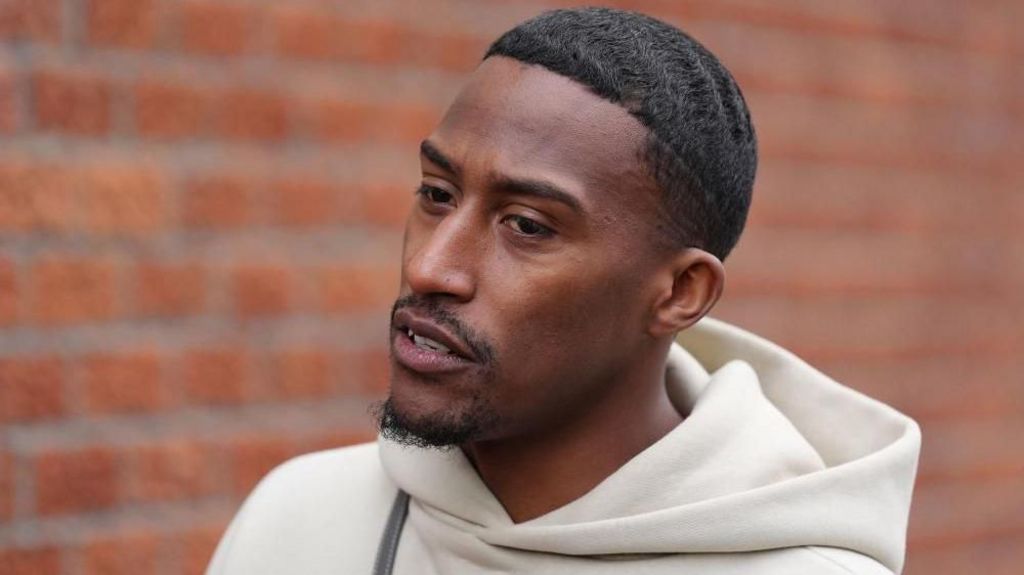
    A fresh wave of political violence has shaken central Mogadishu, after Somalia’s former prime minister Hassan Ali Khaire accused government forces of launching a targeted attack against his compound just 24 hours before planned mass opposition demonstrations against President Hassan Sheikh Mohamud’s controversial term extension. The outbreak of heavy gunfire on Wednesday has deepened a months-long political crisis that has split the fragile Horn of Africa nation, pitting the federal government against a united bloc of opposition figures and regional leaders.

    The current crisis ignited after Mohamud’s presidential mandate was scheduled to expire on May 15. Instead of stepping down or holding a long-promised national election, the president pushed through a parliamentary vote in March that approved a new constitutional framework extending his tenure by an additional 12 months. Opposition groups have uniformly rejected this move, labeling it an unconstitutional power grab, and organized large-scale peaceful protests set to take place across the capital on Thursday.

    In preparation for the demonstrations, Khaire relocated from his secured residence in the airport-adjacent Green Zone, a heavily fortified area that houses most international missions and senior government officials, to his private home in the capital’s Howl Wadaag district. Shortly after his arrival, heavy weapons fire erupted across the neighborhood. In an urgent social media statement following the clash, Khaire confirmed the confrontation was an unprovoked attack ordered by the presidency.

    “An attack was launched against us by forces commanded by the president whose term has expired,” Khaire wrote, noting that his group had been making preparations for a “peaceful demonstration” against Mohamud’s power grab. Reporters from Agence France-Presse on the ground captured footage of panicked residents fleeing the area, with continuous gunfire audible in the background. Multiple witnesses confirmed the clash involved armed opposition supporters and Somali federal police, with heavy weaponry including rocket-propelled grenades deployed during the 15-minute confrontation.

    “The shooting lasted for about 15 minutes before it subsided. They even used RPGs, and the sound of the explosions could be heard across the surrounding neighbourhoods,” local resident Saleban Mahad told AFP.

    Mohamud has framed his term extension as a necessary step to complete a years-long transition to full democratic elections, replacing the country’s long-standing clan-based power-sharing system. He argues that the March parliamentary approval of the new constitutional framework gives his extra year in office full legal legitimacy, allowing the government time to organize inclusive national polls across the country. Critics, however, point out that little progress has been made on election organizing outside a handful of small local districts: large swathes of southern Somalia remain under the control of al-Shabaab, a violent Islamist insurgency, and deep political divides between rival clan factions have stalled all efforts to unify the country around a shared electoral process.

    Opposition and regional leaders argue Mohamud’s power grab is a deliberate attempt to consolidate centralized power at the expense of regional autonomy and democratic representation. Another senior opposition figure, former president Sharif Sheikh Ahmed, has also relocated to central Mogadishu to join Thursday’s protests, and he issued a sharp rebuke of the attack on Khaire in a post on X. Ahmed called the assault proof that Mohamud, who he says holds no legitimate mandate, is willing to escalate bloodshed to hold onto power, adding that the violence would not deter demonstrators from gathering.

    “This attack will not stop the demonstrations by residents of the capital who are protesting against injustice, displacement, and the abuse of government power,” Ahmed wrote.

    This is not the first time a Somali president has extended his term beyond the official end of his mandate to hold onto power. In 2021, former president Mohamed Abdullahi Farmaajo stayed in office for more than a year after his mandate expired, triggering widespread violence and broad international condemnation. International powers including the United States and United Kingdom have attempted to mediate negotiations between Mohamud’s government and the opposition bloc to find a peaceful resolution to the current crisis, but those efforts have so far failed to produce any breakthrough.

  • Gaza records highest death toll in six months as Israel intensifies bombing

    Gaza records highest death toll in six months as Israel intensifies bombing

    Seven months after a U.S.-brokered ceasefire was supposed to end the ongoing conflict in the Gaza Strip that launched in October 2023, rising violence has pushed monthly Palestinian fatalities to their highest level of 2024, according to official Palestinian health data. The Palestinian Ministry of Health confirmed Tuesday that Israeli forces killed at least 119 Palestinians across Gaza in May, a toll that includes 19 children and 10 women.

    The surge in deaths comes amid a clear escalation of Israeli bombardment and ground operations across the blockaded enclave, with multiple ceasefire violations recorded on a near-daily basis. Local Palestinian media outlets documented 11 separate Israeli breaches of the truce agreement in just a 24-hour period, each leaving a trail of deaths and injuries among civilian populations. On Wednesday morning, fresh attacks were reported: Israeli military vehicles opened heavy fire on locations in eastern Khan Younis, a densely populated area in southern Gaza, while separate strikes hit eastern zones of the Jabalia refugee camp in the northern part of the territory.

    Cumulative data from Gaza’s Government Media Office paints a far broader picture of sustained violence since the ceasefire took effect. Officials report more than 3,000 total Israeli violations across all of Gaza, encompassing everything from heavy shelling and precision air strikes to direct targeting of civilian communities, the complete demolition of entire residential neighborhoods, and ongoing ground incursions into populated areas. These violations have already killed more than 933 Palestinians, wounded an additional 2,868, and left at least 82 people abducted by Israeli forces since the truce went into effect.

    The mounting death toll from these attacks pushes the total number of Palestinians killed since the outbreak of hostilities in October 2023 to 72,942, with thousands more still unaccounted for, trapped and presumed dead under the rubble of destroyed buildings across Gaza.

    Gaza’s de facto governing authority Hamas has issued multiple sharp condemnations of the continued Israeli operations, labeling them ongoing “crimes and violations” of the ceasefire. In a pre-recorded address released Tuesday, Abu Obeida, the movement’s military spokesperson, denounced the persistent daily killing of Palestinian civilians and resistance fighters, noting that Israeli forces have assassinated several high-ranking Hamas leaders over the past month.

    “If our cowardly enemy imagines that it can weaken us by assassinating our leaders, then their blood is the fuel that propels our ship through difficulties and proof of the truth of our cause, our leadership, our unity with our people, and our willingness to sacrifice ourselves for them,” Abu Obeida said in his speech.

    In a separate statement, Hamas spokesperson Hazem Qassem pushed back against recent claims that the movement refuses to cede administrative control of Gaza, dismissing the allegations as “misleading lies aimed at providing cover for the occupation to continue its aggression.” Qassem placed blame for the stalled administrative transition squarely on Israel and Nickolay Mladenov, director-general of the American Board of Peace, saying the two parties have blocked a proposed technocratic committee from entering Gaza to take over governance from Hamas.

    Critics note that Israeli actions extend far beyond military strikes to undermine the terms of the truce. Beyond ongoing attacks and territorial incursions that have seen Israel seize additional land across Gaza, the Israeli government has also severely restricted the flow of humanitarian aid into the besieged enclave, worsening an already catastrophic humanitarian crisis for the 2 million Palestinians trapped in the territory. These combined actions have effectively derailed progress toward the second phase of the ceasefire agreement, which was intended to cement a lasting end to hostilities.

  • Four sentenced to death for killing worshippers at Catholic church in Nigeria

    Four sentenced to death for killing worshippers at Catholic church in Nigeria

    In a landmark ruling that has drawn national attention, a Nigerian court has handed down death sentences to four men convicted of involvement in the 2022 deadly attack on St Francis Catholic Church in Owo, Ondo State, a mass shooting that killed 41 worshippers and wounded more than 100 others during an ongoing Pentecost service. A fifth defendant accused of funding the attack was cleared of all charges due to a lack of sufficient evidence.

    The convicted men — Idris Abdulmalik Omeiza, Al Qasim Idris, Jamiu Abdulmalik, and Abdulhaleem Idris — were also handed an additional 20-year prison sentence on separate charges of belonging to a banned terrorist organization, according to the ruling delivered at the Abuja-based court by presiding judge Emeka Nwite. Under Nigerian law, all death sentences require formal presidential assent before execution can proceed, and the country has not carried out any executions in several years.

    Justice Nwite noted in his judgment that the prosecution’s evidence against the four convicts remained unshaken and uncontradicted throughout the entire cross-examination process. After the high-profile trial launched in August 2025, the judge ordered an accelerated hearing to deliver a timely ruling. He confirmed that prosecutors had met the legal standard of proving guilt beyond a reasonable doubt, with multiple eye-witnesses to the attack testifying in court. One key witness was a woman who survived the attack but suffered catastrophic injuries: both of her legs were amputated below the knee, and she lost her left eye in a dynamite blast set off by the attackers. One witness also confirmed she was able to identify two of the defendants as direct participants in the shooting.

    The four men were convicted on all nine criminal counts laid out by prosecutors, which included membership in a terrorist organization, conspiracy to commit murder, and directly carrying out the mass killing. Following the ruling, lead prosecutor Ayodeji Adedipe released a statement affirming that justice had been served for the 41 worshippers killed in cold blood. However, defense counsel for the convicted men announced they would file an appeal against the verdict and sentences, noting that their clients had alleged torture during detention — including claims of being hung from the ceiling, repeated beatings, and electric shock abuse to their genitals.

    The fifth defendant, Momoh Otuho Abubakar, who was accused of coordinating funding for the attack by allegedly receiving two transfers totaling 800,000 Nigerian naira (equivalent to roughly £440 or $590) from a still-at-large suspect before distributing the funds to the attackers, was fully discharged and acquitted. Abubakar testified during the trial that the funds in his bank account came from legitimate farming operations and his local cooperative society, and he denied ever transferring any money to the four other defendants.

    The 2022 Owo church attack was a turning point that sparked national outcry over Nigeria’s worsening security crisis. In the years following the attack, the country has continued to face a rising tide of violent attacks targeting religious sites across multiple states. The case has also drawn international attention: former U.S. President Donald Trump has publicly criticized Nigeria for failing to adequately protect Christian communities from jihadist violence. On Christmas Day, U.S. military forces carried out airstrikes targeting two jihadist group camps in northwestern Nigeria, issuing a threat that more strikes would follow if attacks on civilians continued.

    Claims that Christians are facing a targeted genocide in Nigeria have gained traction in right-wing political circles in the United States, but independent organizations that track political and insurgent violence in the country note that the majority of victims killed by jihadist groups in Nigeria are actually Muslim. The Nigerian federal government has repeatedly rejected claims that the country engages in or permits targeted persecution of Christian communities.

  • FBI shoots dead the man who took multiple hostages in California bank

    FBI shoots dead the man who took multiple hostages in California bank

    A more than 24-hour hostage crisis at a downtown Bakersfield, California, bank reached a violent conclusion Wednesday when a suspect holding multiple people captive was shot and killed by FBI agents during a standoff, local law enforcement confirmed.

    The Bakersfield Police Department announced the fatality was the result of an officer-involved shooting involving personnel from the Federal Bureau of Investigation, wrapping up a tense siege that began Tuesday afternoon.

    The incident first unfolded just after 1 p.m. PST, when emergency dispatch received multiple 911 calls reporting a bomb threat at a multistory building that houses a ground-floor Chase Bank branch, along with reports that an armed man had barricaded himself inside the structure alongside several people he was holding against their will.

    In the hours after the initial response, two of the captives were released during ongoing telephone negotiations between law enforcement negotiators and the suspect. By Wednesday morning, all remaining hostages had been freed without injury, police confirmed.

    To ensure public safety during the standoff, local authorities evacuated and locked down nearby critical infrastructure, including Bakersfield City Hall and the Bakersfield Police Department headquarters, as well as closing surrounding commercial buildings and multiple major surface streets in the area.

    Speaking to reporters Tuesday, Bakersfield Police Sergeant Eric Celedon outlined the full scope of resources deployed to resolve the situation peacefully. “Every single resource is at the site’s disposal,” he said. “SWAT team, bomb squad, K9 team, gang unit, negotiators, drone team. Every single asset we have to bring this to the safest conclusion is out here right now.”

    The FBI also deployed its elite Hostage Rescue Team to the scene to assist local law enforcement, according to CNN, supplementing the extensive local response already in place.

    In a statement released early in the standoff, a representative for JPMorgan Chase confirmed that the bank was aware of the ongoing emergency at the building that hosts its branch. “The branch is currently empty, and we are working with authorities,” the spokesperson told CBS News, the BBC’s U.S. partner.

    Bakersfield Mayor Karen Gow also confirmed Tuesday that she was receiving regular updates and actively monitoring the evolving situation closely as it unfolded.

    The deadly conclusion of the standoff has left local residents shaken, and authorities have not yet released additional details about the suspect’s identity, motive, or what led to the decision to use deadly force to end the siege.

  • Xi closes the door after promising US CEOs to open wider

    Xi closes the door after promising US CEOs to open wider

    When a cohort of billionaire U.S. CEOs traveled to Beijing alongside former U.S. President Donald Trump just one month ago, many departed optimistic about new opportunities for deeper economic and technological cooperation between the world’s two largest economies. Today, that optimism has curdled into disillusionment, as Beijing’s policy shifts directly contradict the pledges of greater economic openness Chinese leader Xi Jinping made to the visiting American business leaders.

    Trump’s own inconsistent approach to China has already left many U.S. business leaders off-balance: he built two presidential campaigns around confronting Chinese trade practices, only to rebrand himself as an open admirer of Xi, shifting abruptly between hardline and conciliatory policy stances with little advance warning. But the more abrupt disappointment stems from the gap between Xi’s promises and Beijing’s current actions. During the summit, Xi assured the visiting executives that China would “open wider” to foreign investment and create “broader prospects” for U.S. firms in sectors from tech to consumer markets. Those assurances, given to leaders including Apple’s Tim Cook, Tesla’s Elon Musk and Nvidia’s Jensen Huang, now look like an empty feint.

    Far from expanding openness, Beijing has moved in recent weeks to tighten controls on cross-border capital flows, wall off its domestic artificial intelligence sector from global collaboration, and roll back transparency for foreign investors. A key new restriction has drawn particular global criticism: a ban on overseas travel for most Chinese AI industry experts, a policy that echoes Soviet-era restrictions on movement for academics and technical talent. Observers note the move makes it far less likely China will be able to tap into the ongoing global tech sector rally, and it has sent a deeply negative signal to international markets.

    The impact of these shifts is already visible in China’s underperforming equity markets. As of mid-2026, the benchmark CSI 300 index has gained just 7% year-to-date, a return that pales in comparison to peer Asian markets: South Korea’s main index has surged 108%, Taiwan’s is up 57%, and Japan’s has gained 33% even amid energy market disruptions stemming from Middle East tensions. China’s markets are now clearly lagging far behind their global competitors.

    These new controls are part of a broader policy response to a record surge in capital outflows. In 2025, China recorded $1 trillion in net capital outflows, double the 2021 level and the largest annual outflow since official data collection began in 2006. To stem accelerating outflows and protect foreign exchange reserves, Beijing has allowed the yuan to strengthen far more than currency analysts expected, with the yuan gaining more than 3% against the U.S. dollar in 2026 to date.

    This managed yuan appreciation serves three core strategic goals for Beijing. First, it reduces the risk that heavily indebted Chinese property developers will default on their offshore debt obligations. Second, it advances Xi’s long-term goal of positioning the yuan as a credible alternative reserve currency to the U.S. dollar. Third, it eases tensions with the Trump White House, which has repeatedly criticized China for currency manipulation to boost exports.

    Some economists argue a stronger yuan could also be supported by domestic fundamentals. Macquarie Group economist Larry Hu notes that if domestic demand strengthens in response to new government stimulus, the yuan carry trade will unwind as business confidence improves and the yield gap between the U.S. and China narrows, creating natural momentum for further yuan appreciation against the dollar.

    The shifting global currency landscape has also been shaped by growing fiscal instability in the U.S., where the national debt is now approaching $40 trillion – twice the size of China’s entire annual gross domestic product. Chatham House economist Creon Butler notes that since Trump returned to office in early 2025, his administration’s policies on trade, energy security, climate change and financial stability have broken sharply with the post-WWII global economic consensus. This so-called “Trump shock” has pushed China to accelerate its plans to distance itself from key established international economic norms. While Butler notes China is far from the only country deviating from these norms, its status as the world’s second-largest economy makes its shifts uniquely disruptive to global markets.

    This trend toward de-dollarization has reached a notable milestone this week: the European Central Bank confirmed that gold has now overtaken U.S. Treasury securities as the largest reserve asset held by global central banks. Gold now makes up 27% of global official foreign reserves, compared to 22% for U.S. Treasuries. ECB President Christine Lagarde attributed the shift to growing geopolitical fragmentation and rising tensions, which have driven strong demand for safe-haven gold among central banks. Short-term demand has also been boosted by global inflation fears, with HSBC analysts noting that ongoing conflict in the Middle East and the prolonged closure of the Strait of Hormuz have created a “super-squeeze” in commodity markets that will only intensify if the chokepoint remains closed.

    For Xi, these policy shifts stand in stark contrast to pledges he made more than a decade ago, when he first took power in 2013 and promised to let market forces play a “decisive role” in China’s economic development. Thirteen years later, China’s economy presents a striking paradox: on one hand, its industrial and tech policies have delivered major breakthroughs, with electric vehicle giant BYD overtaking Tesla in global sales and domestic AI startup DeepSeek emerging as a serious competitor to Silicon Valley incumbents. On the other hand, Xi’s ambitions for global tech leadership are being undercut by a fragile financial system and deep structural headwinds that are slowing long-term growth.

    Hong Kong University of Science and Technology economist Keyu Jin explains this paradox by noting that China is undergoing a deep structural transition, not just a temporary cyclical slowdown. “It’s among the world’s most dynamic technological powers, producing breakthroughs in AI, electric vehicles, and advanced manufacturing at an accelerating pace, yet economic growth continues to slow,” Jin says. “The old model is giving way to a new one, which has yet to take hold.”

    The biggest drag on growth remains the troubled property sector, which holds roughly 70% of Chinese household wealth. Stabilizing the housing market is a prerequisite to reviving consumer spending and sustaining the government’s 5% annual growth target. Without bold, credible action to support housing prices and boost consumer confidence, persistent deflationary pressure will continue to drag on expansion.

    Beijing also faces a long list of other urgent structural challenges: it must build more dynamic, transparent domestic capital markets, reduce stubbornly high youth unemployment, rein in unsustainable local government debt, curtail the outsize dominance of state-owned enterprises, and expand the social safety net to encourage households to shift from saving to spending. Most analysts also agree that granting greater independence to the People’s Bank of China and moving toward full currency convertibility are critical steps to building a modern, resilient economy.

    Yet Xi’s recent policy moves suggest Beijing is focusing on managing short-term symptoms rather than addressing deep-rooted structural causes. Analysts point to unresolved investor uncertainty from the 2020 crackdown on Chinese tech giants that began with the assault on Alibaba co-founder Jack Ma, which still lacks a clear public justification. That uncertainty now hangs over new restrictions on cross-border capital movement and AI expert travel, leaving global investors skeptical that Beijing has learned the lessons of past policy missteps.

    For the U.S. CEOs who traveled to Beijing with high hopes last month, the contrast between Xi’s promises of greater openness and Beijing’s new push for tighter control could not be clearer. What was billed as a new era of economic cooperation has instead turned into a stark demonstration of China’s growing turn inward.

  • ‘We’re still behind’ in Congo’s Ebola outbreak even as testing improves, WHO says

    ‘We’re still behind’ in Congo’s Ebola outbreak even as testing improves, WHO says

    The ongoing Ebola outbreak in eastern Democratic Republic of the Congo (DRC) continues to pose a severe public health challenge, with global health authorities acknowledging they are playing catch-up after the virus gained an unchallenged head start in the vulnerable region. World Health Organization (WHO) Director-General Tedros Adhanom Ghebreyesus told reporters Wednesday that while incremental progress has been made through improved diagnostic testing, response efforts still lag behind the spread of the disease.

    The outbreak, caused by the rare Bundibugyo strain of Ebola for which no licensed vaccine or targeted treatment exists, was first formally announced in mid-May. As of the latest official data from Congolese health authorities, 344 confirmed cases and 60 confirmed deaths have been recorded across three eastern provinces: Ituri, North Kivu, and South Kivu. The number of pending suspected cases has dropped sharply from 906 to 116, a shift that reflects expanded testing capacity rather than a sudden decline in transmission. The outbreak has already spilled across the border into neighboring Uganda, where the country’s ministry of health confirmed 15 cases and one fatality as of Tuesday.

    Long before the outbreak was officially confirmed, the virus circulated undetected for weeks in a region already crippled by years of armed conflict and systemic instability. Medical resources including personal protective equipment for frontline workers have been urgently deployed to the affected zone, but multiple structural barriers continue to hinder an effective response. One small bright spot has emerged: at least five patients have already recovered from infection, offering rare encouragement to response teams.

    Even as diagnostic capabilities improve, one of the most critical tools for stopping Ebola—contact tracing to identify and isolate new potential cases early—remains far below the threshold needed to contain transmission. Tedros noted that only around 45% of known contacts of confirmed cases are currently being actively monitored. To stop chains of transmission, public health experts agree that contact tracing coverage needs to exceed 90%. Persistent insecurity, mass population displacement, and the highly mobile nature of communities in the border region have made systematic contact tracing extraordinarily difficult.

    Eastern DRC has long been plagued by active armed insurgencies, including the Rwanda-backed M23 rebel group that captured major urban centers Goma and Bukavu more than a year ago, and the Allied Democratic Forces, an Islamist insurgent group aligned with the Islamic State that operates across the DRC-Uganda border. Decades of ongoing violence have left millions of displaced people living in overcrowded, under-resourced settlements that create ideal conditions for infectious disease to spread. Beyond security challenges, response teams also face community resistance: misinformation that claims Ebola is not a real threat has kept some residents from seeking urgent medical care, and angry community members have attacked health facilities in disputes over access to the bodies of loved ones who died from the virus.

    Doctors Without Borders (MSF) warned Monday that the true scale of the outbreak remains unclear, urging caution when interpreting official case counts due to extremely limited testing access and inability to safely reach many affected areas. The road to bringing a safe, effective vaccine to the region could take months, according to public health experts. Congolese epidemiologist Dr. Aruna Abedi, who has led responses to previous Ebola outbreaks in the country, told the Associated Press that developing and deploying a vaccine that meets rigorous scientific safety and efficacy standards cannot be rushed.

    When asked about the controversial U.S.-operated Ebola quarantine facility in Kenya that has sparked widespread public protests, Tedros declined to criticize the operation, noting that “based on their risk assessment … they can do whatever they think is right for them.” The facility, which is reserved exclusively for U.S. citizens exposed to Ebola in the DRC outbreak, has drawn pushback from Kenyan activists and community leaders who argue it represents unnecessary risk and unequal treatment.

  • Nigerian court sentences four men to death over 2022 Catholic church attack

    Nigerian court sentences four men to death over 2022 Catholic church attack

    ABUJA, Nigeria – In a landmark ruling delivered Wednesday, a Nigerian federal court has sentenced four armed militants to death by hanging for their roles in the horrific 2022 terror attack on a Catholic church in southwestern Nigeria that left at least 50 people dead, including multiple children. The brutal assault unfolded on June 5, 2022, as worshippers were wrapping up Sunday mass at St. Francis Catholic Church in Owo, a small community located in Ondo State. In addition to the scores of fatalities, dozens more people suffered critical and minor injuries, pushing local hospital capacity to its breaking point and leaving medical staff scrambling to treat victims amid chaos.

    All four convicted men were found guilty on multiple charges of terrorism. The judge also ruled in favor of the defense for a fifth co-defendant, dismissing all charges against them after prosecutors failed to present sufficient evidence tying the individual to the attack. According to case filings from prosecution teams, the four convicted attackers are confirmed members of the al-Shabab militant network, operating out of a hidden cell based in Kogi State, a north-central Nigerian region roughly 200 kilometers from the country’s capital Abuja.

    Wednesday’s sentencing marks the latest high-profile conviction in Nigeria’s ongoing push to crack down on domestic terror activity. Earlier this year in April, the country concluded a sprawling four-day mass terrorism trial that resulted in convictions for more than 300 suspected militants connected to various insurgent groups across the nation.

    The verdict comes as Nigeria continues to grapple with a persistent, multifaceted security crisis that has stretched across more than a decade, with the worst instability concentrated in the country’s northern regions. For over 10 years, a violent insurgency by non-state armed groups has simmered, with frequent attacks on civilian communities, government targets, and religious sites, alongside widespread kidnappings for ransom that have become a booming illicit enterprise for militant networks.

    Several major Islamic extremist groups currently operate within Nigeria’s borders. The two most prominent are Boko Haram, the long-established insurgent movement, and its breakaway faction, the Islamic State West Africa Province (ISWAP), which is formally aligned with the global Islamic State terror network. In the country’s northwest, which shares a porous border with the Niger Republic, the IS-affiliated Lakurawa group has also expanded its control over remote border communities in recent years, carrying out repeated attacks on local security forces and civilian populations.

  • Ex-UK political aide and Biden cabinet secretary lead California governor primary vote count

    Ex-UK political aide and Biden cabinet secretary lead California governor primary vote count

    One day after California’s 2026 gubernatorial primary election wrapped up, the race to succeed term-limited Democratic Governor Gavin Newsom remains too close to call, with former British Conservative advisor and Fox News host Steve Hilton and ex-Biden Health and Human Services Secretary Xavier Becerra holding the top two spots in a historic field of more than 60 candidates.

    Under California’s unique jungle primary system, the top two vote-getters advance to the November general election regardless of partisan affiliation. However, the state’s heavy reliance on postal ballots means a final result will not be confirmed for several more days, as election workers continue processing the large volume of ballots cast on Tuesday.

    Becerra, a longtime California Democrat who previously served in Congress and as California’s Attorney General before joining President Joe Biden’s cabinet, has positioned himself as a staunch opponent of former President (and current President-elect) Donald Trump, matching the state’s deep liberal base. His key policy pledges include a freeze on health insurance and utility rates to address soaring cost-of-living pressures for state residents. Trailing the leading two candidates is billionaire Democratic climate activist Tom Steyer, who has poured unprecedented personal funds into his campaign as vote counting continues.

    Hilton, a British-American conservative who served as a senior strategic advisor to former UK Prime Minister David Cameron during the Brexit period before moving to California and launching a media career on Fox News, secured the endorsement of Donald Trump for the governor’s race. He has campaigned on a platform of upending the state’s long-dominant Democratic political establishment, proposing broad tax cuts and regulatory rollbacks to make the state more affordable for working and middle-class households. On key contentious issues, Hilton has vowed to address the state’s intractable homelessness crisis, roll back California’s longstanding sanctuary immigration policies, and increase cooperation with the federal government on immigration enforcement. If he advances to the general election, analysts expect Hilton will face an steep uphill fight: Democratic registered voters outnumber Republicans by a roughly 2-to-1 margin in California, and the state has not elected a Republican governor since Arnold Schwarzenegger left office in 2011.

    What was widely expected to be a straightforward Democratic hold of the governor’s office devolved into chaotic intraparty competition after Newsom’s term-limit-induced exit opened up the seat. With no clear consensus Democratic frontrunner to clear the field, more than a dozen Democratic candidates jumped into the race, splitting the party’s voter base. High-profile Democratic contenders included former congresswoman Katie Porter, San Jose Mayor Matt Mahan (who earned significant financial backing from Silicon Valley), and billionaire Steyer, whose massive ad spending pushed the race to become the most expensive gubernatorial contest in California history. The race was further upended in April when leading Democratic candidate Congressman Eric Swalwell dropped out of the race and resigned his congressional seat following unproven sexual assault allegations that he has repeatedly denied.

    The split in Democratic support sparked widespread anxiety among state party leadership, who warned that a fractured vote could result in two Republican candidates advancing to the general election in the deep-blue state. The unusually large candidate field even included a longshot hopeful who legally changed his name to Barack Obama Shaw.

    Alongside the high-stakes gubernatorial primary, California voters also participated in a closely watched Los Angeles mayoral primary. Incumbent Democratic Mayor Karen Bass secured enough support to guarantee her spot in the November general election, but the second place spot remains undecided as counting continues. The contenders fighting to advance against Bass are Democratic City Councilmember Nithya Raman and Republican reality TV star Spencer Pratt.

    As the most populous state in the United States and the world’s fifth-largest national economy, California’s gubernatorial race carries national political significance. The state has been at the center of America’s most divisive policy battles in recent years, from immigration regulation and climate action to the ongoing homelessness and housing affordability crises. Currently, Californians are also grappling with record-high gasoline prices, driven in part by ongoing tensions from the U.S.-Iran conflict and the state’s status as having the highest fuel taxes in the country. Outgoing Governor Gavin Newsom, who is term-limited from running for re-election, is widely rumored to be planning a potential 2028 presidential campaign.

  • Sabalenka implodes as Shnaider books French Open semi with Chwalinska

    Sabalenka implodes as Shnaider books French Open semi with Chwalinska

    The 2025 French Open delivered one of its most dramatic quarterfinal days in recent memory on Wednesday, as world No. 1 and pre-tournament favorite Aryna Sabalenka suffered a stunning mental and physical collapse that saw her crash out of the competition at the hands of 25th seed Diana Shnaider. The result leaves the women’s draw guaranteed to crown a first-time Grand Slam singles champion, with the men’s draw already set for the same outcome following earlier upsets of top contenders.

    Sabalenka entered her quarterfinal clash on Court Philippe Chatrier as the overwhelming favorite to claim the maiden Roland Garros title that had long evaded her. All of her biggest title rivals — including defending champion Iga Swiatek, 2024 finalist Coco Gauff, and world No. 2 Elena Rybakina — had already exited the tournament in earlier rounds, leaving the top-ranked Belarusian with a clear path to the trophy. But what followed was a stunning unraveling that mirrored her collapse in last year’s French Open final, where Gauff fought back from a set down to claim the title.

    Shnaider got off to a fast start, taking the opening set 6-3. Sabalenka battled back, however, grabbing a double break in the second set and appeared poised to turn the match around. But Shnaider kept her composure, clawed her way back to win the second set 7-5, and then completely dominated a broken Sabalenka in the deciding set, closing out a 3-6, 7-5, 6-0 victory that sent her through to her first Grand Slam semifinal.

    After the match, Sabalenka opened up about the mental fog that derailed her campaign. “I screw up, and then she stepped in and she played great. I feel like mentally I couldn’t really recover after the second set,” she told reporters. “I don’t know when was the last time that happened to me that I lost 10 games in a row. I guess mentally I got into very deep, dark hole over there, and I just couldn’t get back mentally on track.” In a display of dark humor, she added, “I don’t like easy wins, you know. I guess for me it’s about suffer, overcome, and get it done.”

    For Shnaider, the result marks a career-defining breakthrough. The 22-year-old had never advanced past the fourth round of a major before this tournament, with her previous best run coming at the 2024 US Open. Reflecting on her come-from-behind win, she expressed joy at her ability to close out the match after a slow start. “Definitely super happy I managed to finish on a good note rather than start on a good note,” she said. “It’s definitely a special tournament for me here. It’s going be a lefty battle so I’m looking forward to the semi-final.”

    That semi-final clash will pit Shnaider against one of the most unlikely stories of this year’s tournament: Polish qualifier Maja Chwalinska, who continued her Cinderella run on Wednesday by becoming just the second women’s qualifier to reach the Roland Garros semifinals in the Open Era.

    Ranked 114th in the world, Chwalinska had only ever won two tour-level clay matches in her entire career before arriving in Paris. After battling through three qualifying rounds to reach just her third career Grand Slam main draw, she has now won eight matches total at the tournament, and booked her semi-final spot with a 7-6(3), 6-3 upset over 22nd seed Anna Kalinskaya. The 24-year-old admitted she still can’t process her historic run. “I honestly don’t know what’s going on. I know I repeat myself but every single match here is kind of crazy for me so I’m very grateful,” she said on court after the win. “I’m just focusing on every single match. I honestly don’t feel like it’s, like, a huge, huge moment for me. But definitely after the tournament finishes, I will kind of have time to, I guess, be grateful for what happened and process it as well.”

    With both of Wednesday’s winners guaranteeing a new Grand Slam champion on the women’s side, the men’s draw has already been set to produce a first-time major winner as well. After Jannik Sinner and Ben Shelton suffered shocking early exits, world No. 6 Felix Auger-Aliassime is the highest-ranked player remaining in the top half of the draw, and he will face 10th seed Flavio Cobolli in the quarter-finals on Thursday. The winner of that match will go on to face either Matteo Berrettini, the 2021 Wimbledon runner-up and the only player in the remaining quarter with prior major final experience, or Matteo Arnaldi in Friday’s semi-final.

  • What to know: Protests grow over Trump family-linked resort in Albania

    What to know: Protests grow over Trump family-linked resort in Albania

    TIRANA, Albania – A $4.6 billion luxury coastal development project tied to Jared Kushner, former U.S. President Donald Trump’s son-in-law, and Ivanka Trump has become the center of mounting public outrage and political tension in Albania, pitting the country’s government against environmental activists and anti-corruption campaigners.

    Albania’s ruling Socialist government, led by long-time Prime Minister Edi Rama, frames the ambitious initiative as a transformative step toward the country’s core goals: breaking into the global high-end tourism market and advancing its bid for European Union membership. Rama has doubled down on his support for the scheme, insisting it will not be halted during his tenure. “Albania should not be a country that fears an extraordinary project like this one, where exceptional partners have come together to invest 4 billion euros ($4.6 billion),” Rama stated, emphasizing the project’s alignment with Albania’s ambition to establish itself as a top global travel destination.

    The development spans two ecologically sensitive sites on Albania’s southern Adriatic coast: a stretch of coastline within the Narta Lagoon Wildlife Reserve, a critical biodiversity hub and migratory bird stopover, and the nearby uninhabited island of Sazan, a former closed communist military outpost. Plans call for the construction of luxury hotels, private villas, residential apartments, and a large marina. According to Ivanka Trump, the pair stumbled upon the location by chance during a leisure trip. “We were on a friend’s boat, and we stopped for a swim. Effectively, that’s how we found it,” she recounted in a recent interview with U.S. podcaster David Senra. “We swam to the island. We went on a hike, barefoot all the way up to the top, and we were just captivated.” Albanian authorities have already granted special investor status to an investment firm connected to Kushner, clearing the way for early construction work. Since late May, heavy machinery including excavators has moved into the protected site, carving access roads, clearing pine forest, grading sand dunes, and erecting boundary fencing. A Kushner-linked investment firm has already received special investor status from Albanian regulators to move the project forward.

    But the venture has sparked fierce opposition from environmental groups, local communities, and government critics, who warn the project will cause irreversible damage to one of Albania’s last untouched coastal ecosystems and raise questions about opaque land dealings. For decades under isolationist communist rule, Albania’s 280 miles of Adriatic and Ionian coastline remained largely undeveloped, leaving large swathes of pristine, ecologically rich shoreline intact. Activists argue that this rare unspoiled habitat is now at risk of being exploited by well-connected foreign investors.

    Public anger boiled over after video footage emerged showing a private security guard dragging a local environmental activist during an on-site protest, galvanizing larger demonstrations across the country. In the capital Tirana, protesters have held repeated rallies carrying cardboard cutouts of pink flamingos — a protected migratory bird species that relies on the Narta Lagoon as a key stop along its annual route. Environmental organizations from both Albania and across Europe have condemned the construction work, with one leading local advocacy group accusing the government of allowing “irreversible destruction” of long-protected natural habitats.

    Compounding the controversy, Albania’s state anti-corruption agency has confirmed it has opened an investigation into irregularities linked to the project, though it has not released public details about the scope of the probe. While the government maintains all land marked for development is now privately owned, competing legal claims have challenged the validity of past privatization deals for the site, a recurring source of legal conflict in the country’s post-communist transition.

    The unfolding standoff in Albania also echoes a recent high-profile collapse of a similar Kushner-linked project in neighboring Serbia, which offers a cautionary precedent for the Albanian venture. Last November, Serbia’s parliament passed special legislation to clear the way for a luxury complex on a historic former military site in downtown Belgrade, also backed by a Kushner-affiliated investment firm. Just one month later, Serbia’s organized crime prosecutor charged four individuals — including a sitting government minister — with abuse of office and document forgery to pave the way for the development. Kushner ultimately withdrew from the multi-million project, which would have seen construction on a designated heritage zone after its protected status was improperly lifted by officials now on trial.