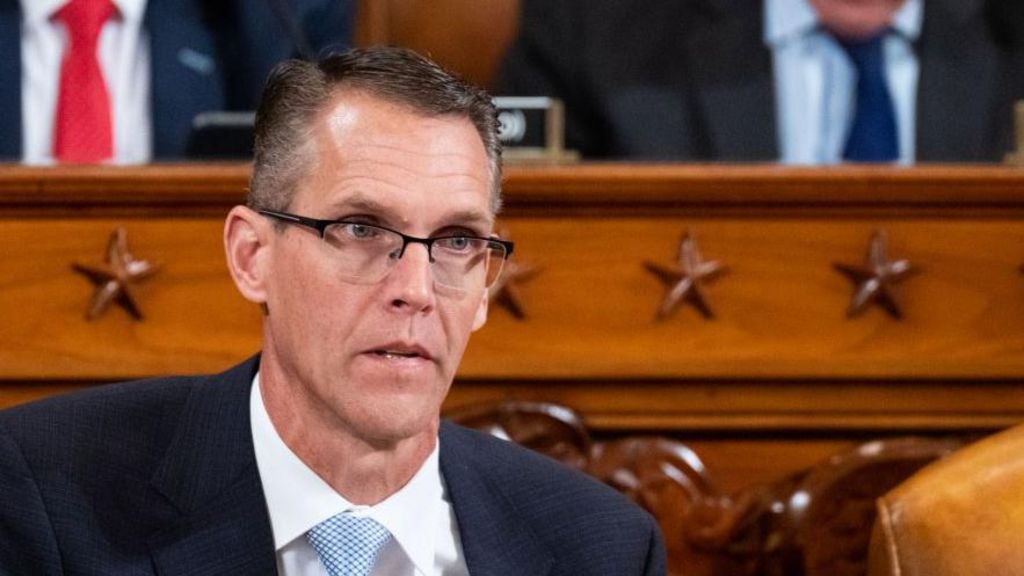
In a stunning upset that has upended expectations for 2026 Iowa Republican politics, three-term U.S. Congressman Randy Feenstra — a longtime loyal ally of Donald Trump who entered the race as the clear frontrunner and secured a last-minute endorsement from the former president — has conceded defeat in the state’s GOP gubernatorial primary. His challenger, Zach Lahn, a farmer and small business owner, ran an unapologetically populist, Trump-aligned campaign centered on slogans like “Make Iowa Healthy Again” and “Iowa First,” and capitalized on deep grassroots frustration with Washington political insularity.
Lahn’s platform centered heavily on restricting foreign and out-of-state entities from purchasing Iowa agricultural land, paired with fiery rhetoric criticizing what he frames as out-of-touch “global elites” exerting undue influence over state policy. His campaign drew institutional support from Turning Point USA, the prominent conservative organization, as well as a coalition of Iowa grassroots conservative activists who painted Feenstra as too embedded in the Washington establishment to deliver meaningful change for Iowa voters.
The upset marks a rare black mark on what had been an unbroken winning streak for Trump’s political endorsements in 2026 primary contests. Just weeks prior, Trump-backed challengers unseated incumbents including Kentucky Congressman Thomas Massie and Senator Bill Cassidy, while Texas Attorney General Ken Paxton secured the state’s Republican Senate nomination over incumbent John Cornyn — a race where polling already pointed to a Paxton victory even before Trump’s backing.
The outcome also comes amid a quiet stretch for Trump, who has largely stepped back from public appearances over the past six days, limiting his public output to pre-taped interviews with conservative aligned media outlets and posts on his social platform Truth Social. One recent Truth Social post claimed that negotiations with Iran over the ongoing regional conflict have “been going on continuously,” though multiple diplomatic sources have indicated the talks have produced little tangible progress to date.
Domestically, it has already been a difficult week for Trump: his team recently scrapped plans for a proposed $1.8 billion “anti-weaponization” fund that was designed to compensate people who claimed they were targeted for political investigation by prior presidential administrations.
Political analysts note the Iowa result may signal a growing erosion of Trump’s political standing in a state that has backed him in three consecutive presidential elections, but where shifting economic realities have soured voter opinion. Trump’s broad trade tariffs on Chinese goods, and China’s resulting retaliatory tariffs, hit Iowa’s critical agricultural sector particularly hard. More recently, the ongoing U.S.-Iran conflict following Israeli military operations has driven sharp increases in fuel and fertilizer costs, delivering a second economic blow to the state’s farming community. A recent joint poll from YouGov and The Economist puts Trump’s net approval rating at negative 20% among Iowa voters.
For Iowa Democrats, the opening has sparked new optimism about flipping the open governorship in November’s general election, where Lahn will now face Democratic State Auditor Rob Sand. Democrats are also competitive in the race for open U.S. Senate seat being vacated by retiring Republican Joni Ernst: centrist Paralympian Josh Turek, who earned backing from national Democratic party leadership, won his party’s primary nomination and will face Republican former Congresswoman Ashley Hinson in the fall.
Nonpartisan election analysis groups have reclassified both the gubernatorial and Senate races as either toss-ups or leaning Republican, a shift that reflects the newly competitive landscape in Iowa. Once a reliably Democratic-leaning state, Iowa has shifted sharply red in federal and statewide elections over the past 15 years, but the current political shifts mean the Hawkeye State could now hold the key to Democratic control of Congress and key governor’s mansions heading into the next election cycle. With control of national political majorities hanging in the balance, Iowa’s upcoming general election contests are set to be among the most closely watched in the nation this cycle.