作者: admin

  • A taste of tradition: Jinjiang’s Spring Festival delights

    A taste of tradition: Jinjiang’s Spring Festival delights

    In the heart of Fujian province, the city of Jinjiang transforms into a vibrant tapestry of culinary tradition during the Spring Festival season. The air becomes imbued with aromatic whispers of reunion, as generations gather to celebrate with time-honored delicacies that define the Minnan cultural identity.

    Beyond mere sustenance, these traditional foods serve as edible monuments to heritage. Steamed rice cake (wangao) emerges as a symbolic centerpiece, representing prosperity and elevation. Pan-fried oysters in scrambled egg (hailijian) brings coastal abundance to the festive table, while four-herb old duck soup offers medicinal balance according to traditional Chinese principles. The robust flavors of beef steak noodles provide substantial comfort, and sweet peanut soup concludes feasts with nostalgic simplicity.

    These culinary traditions are deeply rooted in the Minnan people’s historical narrative of perseverance and determination—qualities that shaped their migration patterns and cultural resilience. Jinjiang’s approach to the Spring Festival demonstrates how food functions as both cultural preservation and invitation. The city extends this culinary heritage to global visitors, offering immersive experiences into the Minnan way of life through taste, aroma, and communal celebration.

    The preservation of these practices represents more than culinary tradition; it embodies the living memory of a people who maintain cultural continuity through intentional culinary practices. Each dish tells a story of geographical adaptation, historical development, and cultural values that have been refined across centuries.

  • China upgrades Xiong’an high-tech zone to national level

    China upgrades Xiong’an high-tech zone to national level

    China’s State Council has formally granted national-level status to the Hebei Xiong’an High-Tech Industrial Development Zone, marking a significant milestone in the region’s development strategy. The approval, announced on February 14, 2026, covers two designated sections encompassing 20.84 square kilometers within the broader Xiong’an New Area in Hebei province.

    The upgraded zone will operate under the guiding principle of ‘developing high technology and achieving industrialization,’ with particular emphasis on cultivating new-quality productive forces adapted to local conditions. This elevation to national status is designed to accelerate the integration of scientific innovation with industrial development while attracting premium innovation resources from both domestic and international sources.

    Strategic objectives include fostering research collaborations on major scientific projects, achieving breakthroughs in core technologies within priority sectors, and facilitating the efficient commercialization of technological achievements. The zone will additionally focus on strengthening existing leading industries while making strategic investments in emerging sectors through institutional reforms and enhanced international cooperation.

    This development represents a crucial component of Xiong’an’s transformation into a global hub for cutting-edge industries and original innovation. The initiative supports the broader national strategy of establishing Xiong’an New Area as a modern metropolis while advancing the coordinated development of the Beijing-Tianjin-Hebei region. Originally established in April 2017, Xiong’an was conceived to absorb functions non-essential to Beijing’s capital status, with this latest upgrade significantly enhancing its innovation capacity and economic importance.

  • Russia killed opposition leader Alexei Navalny using dart frog toxin, UK says

    Russia killed opposition leader Alexei Navalny using dart frog toxin, UK says

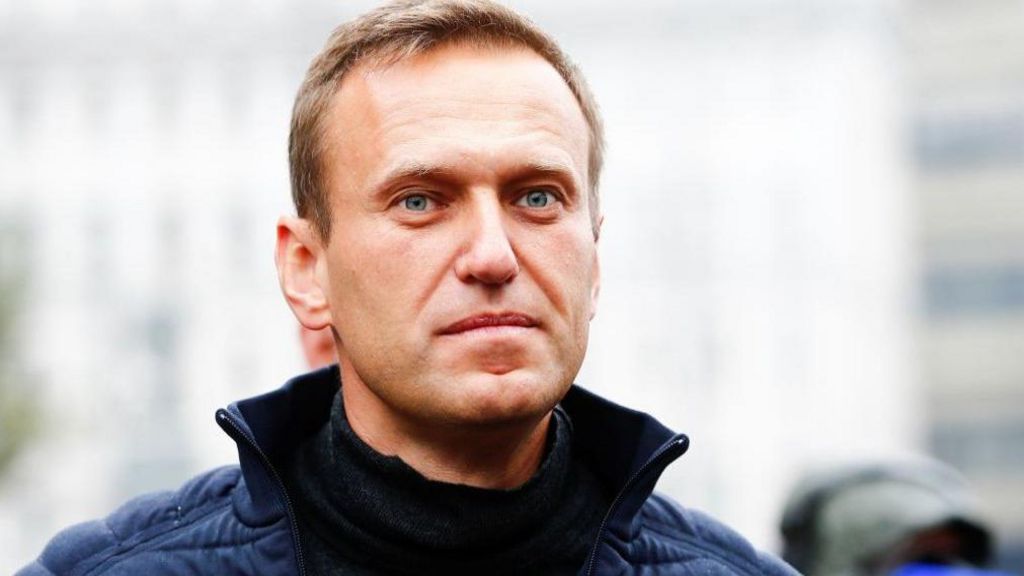
    The United Kingdom has formally accused the Russian government of assassinating opposition leader Alexei Navalny using an exotic poison derived from dart frog toxin. This declaration comes exactly two years after Navalny’s death in a Siberian penal colony and follows a meticulous multinational forensic investigation.

    Foreign Secretary Yvette Cooper, speaking from the Munich Security Conference where she met with Navalny’s widow Yulia Navalnaya, stated that British intelligence analysis of biological samples revealed traces of epibatidine—a lethal toxin with no plausible innocent explanation for its presence. “Only the Russian government had the means, motive and opportunity to deploy this lethal toxin against Alexei Navalny during his imprisonment in Russia,” Cooper asserted, adding that the Kremlin’s use of such chemical agents demonstrated both its despicable capabilities and profound fear of political opposition.

    The UK’s findings have garnered international support, with Sweden, France, the Netherlands, and Germany jointly endorsing the accusation. In response to what it terms a blatant violation of the Chemical Weapons Convention, Britain has formally notified the Organisation for the Prohibition of Chemical Weapons of Russia’s alleged breach.

    Navalny, Russia’s most prominent anti-corruption activist and Vladimir Putin’s foremost critic, died suddenly on February 16, 2024, at age 47 while serving a three-year sentence on widely condemned politically motivated charges. His death occurred shortly after his transfer to a remote Arctic penal colony, with Russian authorities claiming he collapsed after a walk and never regained consciousness.

    This marks the second known poisoning attempt against Navalny, who survived a Novichok nerve agent attack in 2020 that necessitated extensive medical treatment in Germany. His widow Yulia Navalnaya, who had consistently maintained her husband was murdered, expressed gratitude for the international investigation: “I was certain from the first day that my husband had been poisoned, but now there is proof.”

    The Kremlin has remained silent regarding these latest allegations, continuing its pattern of avoiding direct acknowledgment of Navalny’s existence. President Putin only briefly referenced the opposition leader’s death a month after it occurred, calling any human passing “always a sad event” without mentioning Navalny by name.

  • Lulu Retail plans to open 50 new stores, creating hundreds of job opportunities

    Lulu Retail plans to open 50 new stores, creating hundreds of job opportunities

    Lulu Retail Holdings, the Gulf Cooperation Council’s premier full-line retail conglomerate, has unveiled an ambitious expansion strategy following exceptional financial results for fiscal year 2025. The retail giant reported record-breaking revenues of Dh29.1 billion, marking a 4.1% year-on-year increase, while net profits reached Dh753 million, exceeding previous quarterly projections.

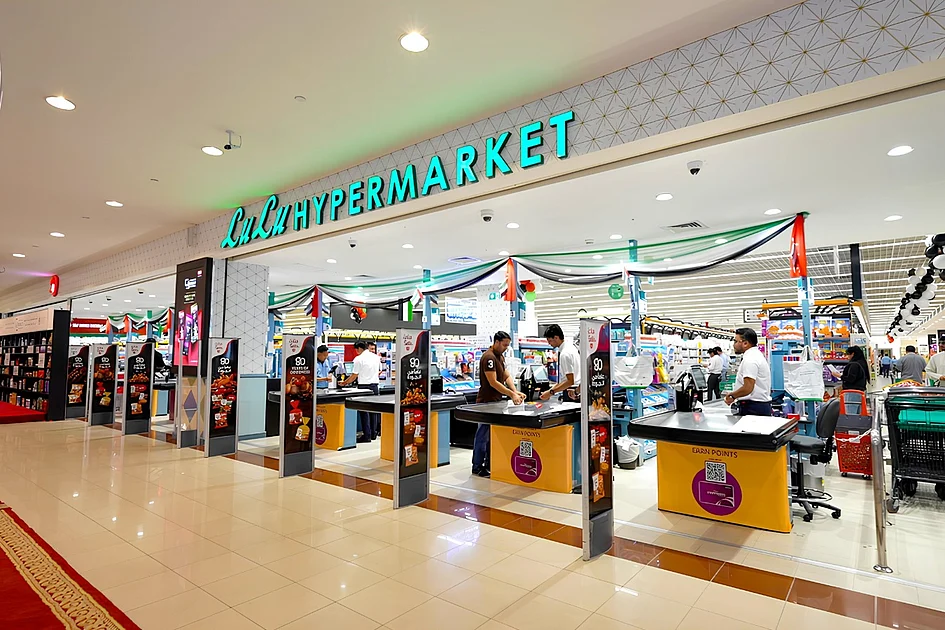
    The company’s growth trajectory will accelerate with plans to establish 50 new retail outlets across key GCC markets between 2026 and 2028. This expansion follows the successful opening of 20 new stores throughout 2025, bringing Lulu’s total operational footprint to 267 stores across the UAE, Saudi Arabia, Kuwait, and Bahrain. The new establishments will encompass various formats including hypermarkets, express convenience stores, and mini-markets, creating hundreds of new employment opportunities throughout the region.

    Digital commerce emerged as a particularly strong performance sector, with e-commerce sales surging 38.6% annually and accelerating to 51.8% growth during the fourth quarter. Online penetration reached 7.3% of total retail sales in Q4, demonstrating robust consumer adoption of digital shopping channels. Investments in proprietary digital infrastructure yielded particularly strong returns, with sales through Lulu’s owned platforms growing at nearly double the rate of third-party aggregator channels.

    The company’s private label portfolio continued to gain market share, accounting for 29.8% of total sales and contributing significantly to both revenue growth and margin enhancement. Financial stability improved with net debt reduction to Dh9.18 billion and enhanced leverage metrics on an IFRS 16 accounting basis.

    Reflecting confidence in continued performance, Lulu’s board announced a second-half dividend of 3.5 fils per share, bringing the total 2025 dividend distribution to 7 fils per share, equivalent to approximately Dh724 million in shareholder returns.

    CEO Saifee Rupawala emphasized the company’s disciplined expansion approach, noting that existing portfolio strength and digital capabilities position Lulu for sustained growth across GCC markets while maintaining attractive shareholder returns through consistent dividend distributions.

  • Funding dispute triggers partial shutdown of US Department of Homeland Security

    Funding dispute triggers partial shutdown of US Department of Homeland Security

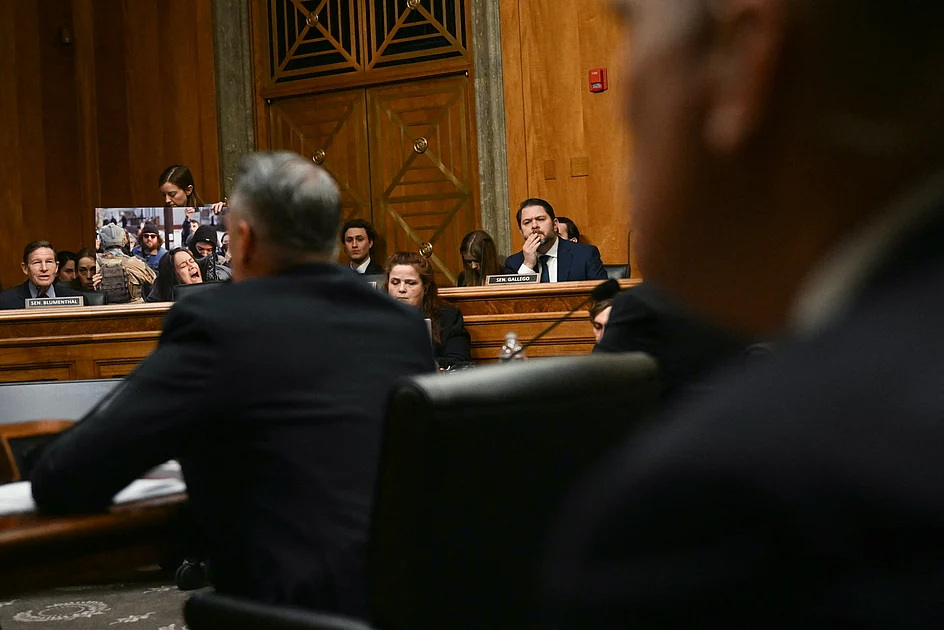
    The US Department of Homeland Security initiated a partial shutdown on Saturday, February 14, 2026, as Congressional negotiations reached an impasse over funding allocations. This development marks the third government closure during President Donald Trump’s second term, affecting thousands of federal employees across multiple agencies.

    The budgetary stalemate centers primarily on Immigration and Customs Enforcement (ICE), with Democratic lawmakers demanding significant operational reforms before approving any new funding. These demands include restricted patrol protocols, prohibition of face masks during operations, and mandatory judicial warrants for private property entries. The controversy intensified following recent incidents in Minneapolis where ICE agents fatally shot two US citizens during widespread operations.

    House Minority Leader Hakeem Jeffries accused Republicans of having “zero interest in getting ICE under control,” emphasizing that “dramatic changes are needed” to prevent further shutdowns. Conversely, White House Press Secretary Karoline Leavitt characterized the situation as Democratic lawmakers “barreling our government towards another shutdown for political and partisan reasons.”

    Despite the departmental shutdown, ICE operations will continue under previously approved funding from last year’s spending bill. Senator John Fetterman noted that “this shutdown literally has zero impact on ICE,” while acknowledging significant consequences for other agencies including FEMA and the Transportation Security Administration. TSA officials warned that prolonged closure could result in extended wait times and potential flight cancellations nationwide.

    The Senate adjourned for a weeklong recess beginning Thursday, though legislators remain on standby should negotiations resume. Previous shutdowns have yielded some concessions, including Homeland Security Secretary Kristi Noem’s mandate for federal agents to wear body cameras following public outcry over the Minneapolis incidents. Senate Majority Leader John Thune acknowledged the White House’s “extremely serious offer” for immigration policy negotiations while cautioning that Democratic demands would not be fully met.

    With Senate rules requiring 60 votes to advance the budget bill, bipartisan cooperation remains essential despite current political tensions. The government recently emerged from a four-day partial shutdown earlier this month, also concerning DHS funding disputes.

  • The samba-dancing skier making Brazil Olympic history

    The samba-dancing skier making Brazil Olympic history

    In an extraordinary display of athletic prowess and personal redemption, Lucas Pinheiro Braathen carved his name into Olympic history by securing Brazil’s inaugural Winter Games medal with a stunning giant slalom victory. The 25-year-old skier, competing in the green and yellow of his maternal heritage, delivered a masterful performance on Bormio’s challenging Stelvio piste amid deteriorating weather conditions.

    Pinheiro Braathen’s triumph over Swiss defending champion Marco Odermatt by 0.58 seconds represents more than just athletic achievement—it marks the first Winter Olympic medal ever won by any South American nation. The victory becomes particularly poignant given the athlete’s recent history: exactly one year after announcing his shock retirement from professional skiing, citing a loss of ‘joy of living,’ he returned to the sport with renewed purpose.

    The Brazilian-Norwegian skier established a commanding 0.95-second lead after the first run, maintaining his composure despite pressure from Odermatt’s aggressive second descent. His victory denied the four-time World Cup champion what many considered an inevitable gold medal, reshaping the alpine skiing hierarchy at the Milan-Cortina Games.

    Pinheiro Braathen’s journey to Olympic glory reflects a lifetime of cultural navigation. Born in Oslo to a Norwegian father and Brazilian mother, he spent his childhood oscillating between continents, moving homes 21 times before turning 22. Initially drawn to football and resistant to skiing, he eventually embraced the sport’s high-speed challenges while maintaining his Brazilian cultural identity.

    His flamboyant personality—evidenced by painted fingernails, samba celebrations, and fashion runway appearances—has brought unprecedented color to alpine skiing. After winning 12 World Cup medals for Norway, his decision to retire at 23 and subsequently return representing Brazil has become one of sports’ most compelling narratives of self-discovery.

    Following his historic victory, Pinheiro Braathen emphasized the importance of authenticity: ‘I hope I can inspire kids that despite what they wear, despite how they look, despite where they come from, they can follow their dreams and be who they really are. That is the real source of happiness in life.’

  • Philippine senators Dela Rosa, Go named ‘co-perpetrators’ in Duterte ICC case

    Philippine senators Dela Rosa, Go named ‘co-perpetrators’ in Duterte ICC case

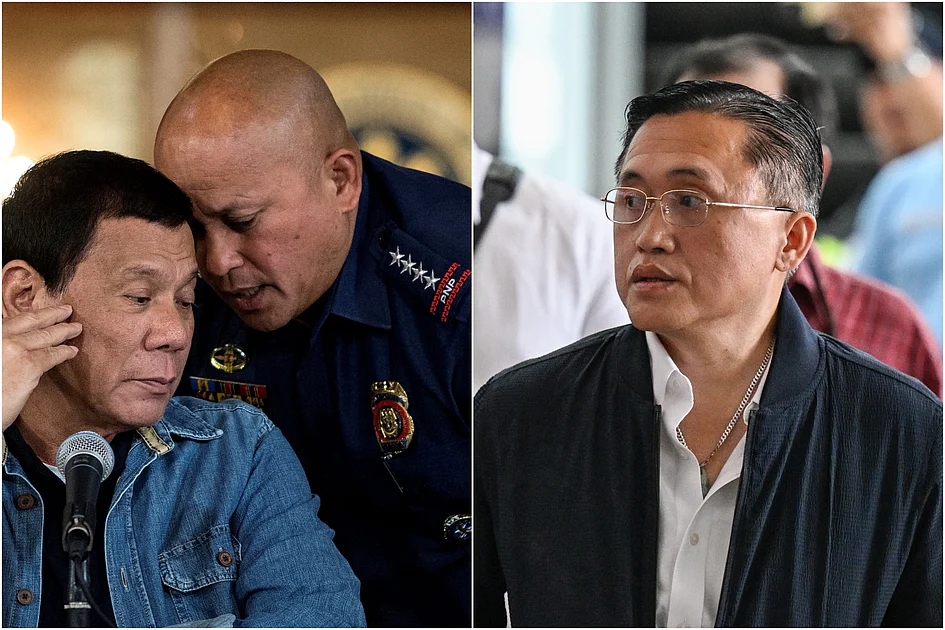
    The International Criminal Court has formally implicated two sitting Philippine senators as alleged co-perpetrators in former president Rodrigo Duterte’s crimes against humanity case. Prosecutorial documents dated February 13 and published on the ICC’s website identify Senators Ronald Dela Rosa and Christopher Go among eight current and former officials accused of participating in Duterte’s controversial anti-drug campaign.

    ICC prosecutors have charged Duterte with three distinct counts of crimes against humanity, connecting him to at least 76 murders committed during his administration’s war on drugs. The prosecution’s filing states that “Duterte and his co-perpetrators shared a common plan or agreement to ‘neutralise’ alleged criminals in the Philippines through violent crimes including murder.”

    Senator Dela Rosa, who previously served as national police chief and primary enforcer of Duterte’s drug war, has been notably absent from public view for several months after previously expressing concerns about potential arrest. Senator Go, recently re-elected by a substantial margin, maintained a long-standing political alliance with Duterte dating back to their time in Davao City governance.

    The prosecution document outlines three chronological categories of alleged offenses: 19 murders occurring between 2013-2016 during Duterte’s mayoral tenure in Davao City; 14 targeted killings of so-called “High Value Targets” in 2016-2017; and 43 murders during anti-drug operations against lower-level suspects from 2016-2018.

    Duterte is scheduled to undergo a four-day “confirmation of charges” hearing commencing February 23, where ICC judges will determine whether the evidence warrants proceeding to full trial. The court has previously rejected arguments questioning the 80-year-old former leader’s fitness for trial following his arrest and transfer to Netherlands custody in March of last year.

  • Casey Wasserman to sell talent agency after Epstein fallout – reports

    Casey Wasserman to sell talent agency after Epstein fallout – reports

    Casey Wasserman, the influential American sports and entertainment agent, has announced plans to sell his prominent talent agency following revelations of his past connections to convicted sex offenders Jeffrey Epstein and Ghislaine Maxwell. The decision comes after multiple high-profile clients severed ties with Wasserman Media Group this week.

    The controversy erupted when court documents revealed Wasserman had flown on Epstein’s private aircraft and engaged in flirtatious email exchanges with Maxwell in 2003. While Wasserman maintains he had no substantial relationship with Epstein, the disclosures prompted immediate backlash across the entertainment industry.

    In a memo to staff obtained by the Wall Street Journal, Wasserman acknowledged his past actions had become a distraction, stating: ‘I’m deeply sorry that my past personal mistakes have caused you so much discomfort. It’s not fair to you, and it’s not fair to the clients and partners we represent so vigorously.’

    The 51-year-old executive expressed particular regret over his communications with Maxwell, who is currently serving a 20-year prison sentence for facilitating Epstein’s sexual abuse of minors. Wasserman emphasized these exchanges occurred ‘over two decades ago, long before her horrific crimes came to light.’

    Notable departures from the agency include rising singer Chappell Roan, who announced on Instagram that ‘no artist, agent or employee should ever be expected to defend or overlook actions that conflict so deeply with our own moral values.’ Former US soccer star Abby Wambach similarly terminated her representation, citing her need to ‘follow my gut and values.’

    Despite the professional fallout, Wasserman will retain his position as chairman of the 2028 Los Angeles Olympics organizing committee. LA28 conducted an internal review concluding that Wasserman’s interaction with Epstein was limited to a single humanitarian flight to Africa in 2003, arranged through the Clinton Foundation. The board stated this occurred before ‘Wasserman or the public knew of Epstein and Maxwell’s deplorable crimes.’

    No allegations of wrongdoing have been made against Wasserman by any of Epstein’s victims, and his appearance in court documents does not imply criminal activity.

  • Orbán says the EU and not Russia is Hungary’s real threat ahead of April vote

    Orbán says the EU and not Russia is Hungary’s real threat ahead of April vote

    BUDAPEST, Hungary — In a fiery pre-election address to supporters on Saturday, Hungarian Prime Minister Viktor Orbán dramatically repositioned the European Union as Hungary’s principal antagonist, surpassing even Russia in perceived threat level. With critical national elections looming just eight weeks away, Orbán’s nationalist Fidesz party faces its most formidable electoral challenge since returning to power in 2010.

    Current independent polling indicates Fidesz trailing behind the emerging center-right Tisza party and its leader Péter Magyar, despite Orbán’s campaign narrative warning that an opposition victory would result in the EU forcibly deploying Hungarian citizens to combat zones in neighboring Ukraine—a claim entirely lacking evidentiary support.

    During his Saturday oration, Orbán drew provocative parallels between the contemporary European Union and the historically oppressive Soviet regime that dominated Hungary throughout the Cold War era. He explicitly dismissed widespread concerns among European leadership regarding Russian President Vladimir Putin’s threat to continental security, stating: “We must acclimatize to the reality that freedom-loving citizens should dread Brussels, not Eastern powers.”

    The Prime Minister elaborated: “Fear-mongering about Putin represents primitive and unserious rhetoric. Conversely, Brussels constitutes a tangible reality and source of imminent danger. This uncomfortable truth is one we refuse to tolerate.”

    Orbán has maintained consistent opposition to military and financial assistance for Kyiv since Russia’s full-scale invasion commenced nearly four years ago. His administration has cultivated unusually cordial relations with Moscow while adopting confrontational stances toward Hungary’s EU and NATO allies, frequently characterizing them as instigators of military conflict.

    This geopolitical positioning has generated significant friction with the European Union, resulting in the freezing of billions in EU funds allocated to Budapest. These financial sanctions respond to persistent concerns regarding democratic backsliding, erosion of judicial independence, and systemic corruption under Orbán’s governance.

    In retaliation, Orbán has increasingly functioned as an obstructionist within EU policymaking processes, routinely threatening vetoes on crucial initiatives including financial support packages for Ukraine.

    As electoral pressures intensify, the Prime Minister has amplified rhetoric portraying the Tisza party as an EU-engineered puppet regime designed to overthrow his government and advance foreign agendas—allegations vehemently denied by opposition leaders. Péter Magyar has committed to restoring Hungary’s deteriorating relationships with Western allies, revitalizing economic stagnation, and reinstating democratic norms.

    Orbán additionally accused multinational corporations in banking and energy sectors of capitalizing on the Ukraine conflict while conspiring with political opponents to secure electoral victory. He asserted: “Hungary’s petroleum industry, financial institutions, and Brussels elite are overtly preparing to establish a government. They require Hungarian leadership that will never oppose Brussels’ demands.”

    The Prime Minister promised that a fifth consecutive parliamentary majority would enable intensified efforts to eliminate entities he claims compromise national sovereignty. He notably praised former U.S. President Donald Trump—who has endorsed Orbán’s reelection bid—for creating international conditions conducive to expelling “fabricated NGOs and compromised journalists, judiciary members, and politicians.”

    Orbán concluded: “The American president’s rebellion against global liberal networks has improved our prospects. We too can eliminate foreign influences and their domestic agents that constrain our sovereignty. Brussels’ repressive apparatus remains operational in Hungary—we will commence its purification this April.”

  • Ramadan under open skies: Why iftar hikes are drawing UAE residents into the mountains

    Ramadan under open skies: Why iftar hikes are drawing UAE residents into the mountains

    As the sun dips below the mountainous horizons of the United Arab Emirates, a growing spiritual movement transforms traditional Ramadan observances. Instead of gathering around lavish dining tables, residents increasingly embark on iftar hikes—communal treks that culminate in breaking the fast amid nature’s tranquility. This emerging tradition combines physical activity with spiritual reflection, creating unique Ramadan experiences far from urban distractions.

    Organized hiking groups across the Emirates report significant participation during the holy month, with carefully structured programs accommodating different fitness levels and spiritual preferences. UAE Adventures Team, founded by Mohammed Al Kaabi, has developed formal iftar hiking initiatives over five years, evolving from casual gatherings into well-organized events prioritizing both safety and religious observance.

    “We offer multiple options because fasting experiences vary,” Al Kaabi explained. Some groups hike after evening prayers, while others undertake lighter afternoon treaks to break their fasts modestly on mountain trails before descending for full meals. The most popular time proves to be after taraweeh prayers, when trails fill with energetic participants.

    Outdoorzy Adventures founder Alaa Masood emphasizes accessibility in their Ramadan programming. “We select locations manageable for all skill levels, like Fossil Rock in Mleiha with its panoramic views,” Masood noted. Their iftar hikes incorporate safety measures including group size limitations and paced walking to prevent fatigue among fasting participants.

    For Grasp the Adventure founder Yousuf Elabbasy, these mountain iftars provide meaningful disconnection from modern stressors. “Hiking removes us from visual and noise pollution, work pressures, and social demands,” Elabbasy reflected. His groups typically pause at scenic overlooks or canyon pools precisely at sunset, sharing dates, nuts, and simple foods in spontaneous acts of generosity that capture Ramadan’s essence.

    Post-iftar, many groups continue hiking or gather for suhoor barbecues under the stars. Participants consistently report feeling spiritually renewed and community-connected through these experiences. While Ramadan hiking participation numbers may be slightly lower than other seasons, organizers note attendees demonstrate deeper commitment to the spiritual dimensions of these outdoor rituals.

    This trend reflects a broader cultural shift toward finding Ramadan’s core values—generosity, reflection, and togetherness—through simplified experiences that contrast with increasingly commercialized urban celebrations. The mountain iftar movement continues gaining momentum as UAE residents seek authentic spiritual connections during Islam’s holiest month.