作者: admin

  • UAE weather: Fog alert issued; lowest temperature 9°C

    UAE weather: Fog alert issued; lowest temperature 9°C

    Meteorological authorities in the United Arab Emirates have issued a weather advisory warning residents of reduced visibility conditions due to fog formation across coastal regions. The National Center of Meteorology (NCM) forecasts generally fair weather with intermittent cloud cover for Saturday, February 14th, though atmospheric conditions will create challenging visibility scenarios from Friday evening through Saturday morning.

    The humidity levels are anticipated to increase significantly during nighttime and Sunday morning, creating optimal conditions for mist and fog development, particularly along coastal areas. Interior regions will experience humidity fluctuations ranging from 10-30% minimum to 65-80% maximum throughout the day.

    Temperature variations across the Emirates will be considerable, with internal areas experiencing lows of 9°C and highs reaching 34°C. Major urban centers will see more moderate conditions: Dubai ranging between 20°C and 30°C, Abu Dhabi between 18°C and 32°C, and Sharjah between 15°C and 31°C.

    Wind patterns will remain light to moderate throughout the day, blowing from southeasterly to northeasterly directions at speeds of 10-20 km/h, occasionally reaching 30 km/h. Maritime conditions in both the Arabian Gulf and Oman Sea are expected to remain calm with slight waves.

    The previous day’s maximum temperature of 33.9°C was recorded in Barakah 2, located in the Al Dhafra Region, at approximately 1:30 pm on Friday. Meteorological officials continue to monitor conditions closely and advise residents to exercise caution during reduced visibility periods.

  • Experts examine AI’s potential risks

    Experts examine AI’s potential risks

    Washington witnessed a pivotal gathering of artificial intelligence experts this week as the Center for Strategic and International Studies hosted an in-depth analysis of the newly released International AI Safety Report 2026. This second edition of the comprehensive global assessment, chaired by Turing Award laureate Professor Yoshua Bengio of Universite de Montreal and the Mila-Quebec AI Institute, represents a collaborative effort spanning more than 30 nations and international organizations, including significant contributions from China.

    The seminar revealed that international coordination has emerged as the paramount concern in addressing AI’s rapidly evolving risks. Stephen Clare, the report’s lead writer, explained the foundational purpose: “to build a shared evidence base to inform decision-making about AI technologies” amid widespread uncertainty about the actual technical realities.

    Technical safeguards expert Stephen Casper presented a detailed examination of frontier model development stages, emphasizing that “different types of safeguards and risk management techniques apply at different parts in the life cycle.” While acknowledging progress in creating multi-layered defenses, Casper highlighted persistent governance gaps, particularly concerning open-weight models that cannot be recalled once released and whose safeguards are easier to remove.

    The report particularly noted China’s substantial contributions to the AI landscape, accounting for 24.2% of notable models in 2024. Chinese advancements including DeepSeek R1, Alibaba’s Qwen series, Tencent’s Hunyuan-Large, and Moonshot AI’s Kimi models have narrowed the capability gap with leading closed models to less than one year in certain cases. China’s AI Safety Governance Framework 2.0 (2025) received special recognition for providing structured guidance on risk categorization and countermeasures throughout the AI lifecycle.

    Despite the daunting challenges posed by AI’s rapid progression, Professor Bengio expressed optimism based on the collaborative spirit demonstrated by the international expert community. The report deliberately avoids specific policy recommendations, instead focusing on synthesizing scientific evidence to support informed policymaking and establish a shared evidence base for global decision-makers navigating this complex technological landscape.

  • Free live music, hula hoop shows: Bluewaters turns Dubai into open-air stage on weekends

    Free live music, hula hoop shows: Bluewaters turns Dubai into open-air stage on weekends

    Dubai’s Bluewaters Island has undergone a remarkable transformation into a vibrant cultural hub every weekend, offering residents and tourists an immersive open-air entertainment experience completely free of charge. From February through March 1, the waterfront destination comes alive with simultaneous performances across multiple locations, creating an unprecedented artistic atmosphere.

    The Dubai Busking Experience program features 25 international artists who showcase diverse talents including musical performances, dance routines, circus acts, and magic shows from 6:30 PM to 10:30 PM every Friday, Saturday, and Sunday. This innovative initiative represents a significant development in Dubai’s cultural landscape, providing artists with unprecedented access to audiences while offering visitors spontaneous entertainment encounters.

    Among the standout performers is Salina Bakaou, a professional performance artist whose mesmerizing hula hoop act combines technical mastery with emotional storytelling. “I bring soul and character to my performances,” Bakaou explained. “What distinguishes my show isn’t just skill but the genuine connection I establish with audiences. No two performances are ever identical.”

    Meanwhile, musician and magician Adam Cadabra demonstrates remarkable adaptability through his unique lap tapping guitar technique, developed after a hand injury altered his conventional playing style. “This approach originated from early blues slide guitar traditions,” Cadabra noted. “Dubai’s emerging busking culture represents an exciting evolution in the region’s artistic scene.”

    The event organization facilitates direct artist-audience interaction without physical barriers or formal staging, creating an intimate atmosphere where spectators can transition seamlessly between performances. A secure cashless payment system enables visitors to support performers financially while maintaining the event’s accessible nature.

    This cultural initiative marks Dubai’s continuing expansion of family-friendly entertainment options beyond traditional dining and sightseeing experiences, positioning Bluewaters as a pioneering destination where artistic expression and public engagement converge organically.

  • China demonstrates AI computing power in outer space with satellite network breakthrough

    China demonstrates AI computing power in outer space with satellite network breakthrough

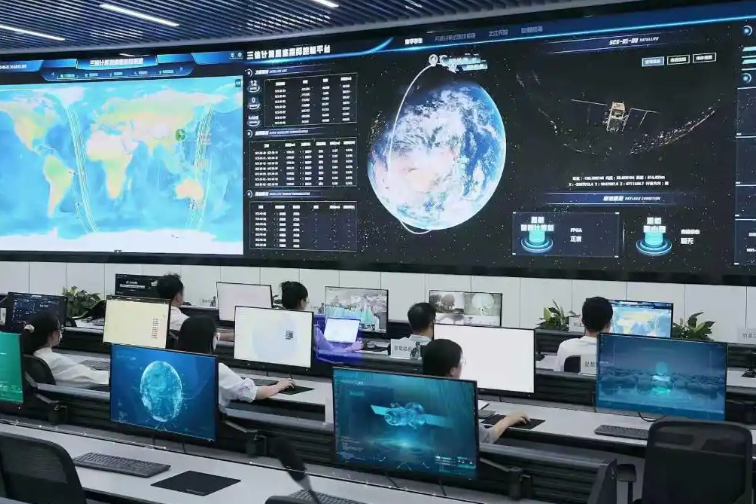
    China has achieved a significant milestone in space technology with the successful deployment of artificial intelligence models operating directly in orbit through an advanced satellite network. The breakthrough demonstrates the nation’s growing capabilities in space-based computing systems.

    The pioneering project, known as the “Three-Body Computing Constellation,” represents a collaborative effort between Zhejiang Lab and international partners. Initially launched in May 2025 with twelve satellites, the constellation has undergone extensive testing over nine months to validate its core functionalities including orbital networking, computational processing, AI model deployment, and scientific instrument verification.

    Among the technological achievements are the operation of two massive AI models in space: an 8-billion-parameter remote sensing system and an equally sophisticated astronomical time-domain model. These represent some of the largest AI parameter models currently operational in orbit worldwide.

    The remote sensing capability was demonstrated in November 2025 when it successfully conducted an infrastructure census across 189 square kilometers in northwest China, automatically identifying structures like stadiums and bridges despite challenging heavy snow conditions.

    For astronomical research, satellites equipped with specialized cosmic X-ray polarization detectors implemented an AI model that classifies gamma-ray bursts with remarkable 99% accuracy while significantly reducing data transmission requirements and processing timelines.

    A critical advancement includes the establishment of inter-satellite communication links among six satellites, forming the foundation for a comprehensive space network. When fully realized with over 1,000 planned satellites, the constellation is projected to deliver unprecedented computational power exceeding 100 quintillion operations per second.

    According to Li Chao from Zhejiang Lab, this space-based computing architecture enables direct data processing in orbit, allowing refined information to be delivered immediately to end-users rather than raw data requiring extensive ground processing.

  • Groups push for legislated minimum wage for Indian domestic workers

    Groups push for legislated minimum wage for Indian domestic workers

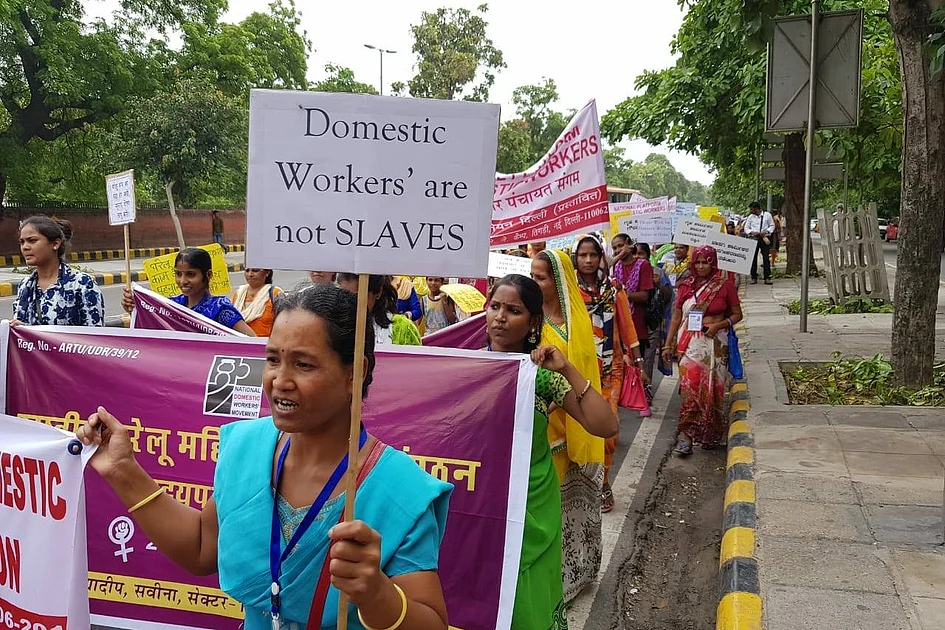
    India faces a mounting crisis regarding the protection of its vast domestic workforce, with millions remaining vulnerable due to inadequate legal safeguards. The Indian Supreme Court has recently expressed concern over the plight of these workers, predominantly women, and called upon state governments to establish appropriate mechanisms for their inclusion under minimum wage legislation.

    Domestic workers’ unions have been granted permission by the court to submit detailed representations highlighting the severe exploitation faced by this marginalized workforce. These representations argue that excluding household workers from the Minimum Wages Act constitutes a violation of fundamental rights against forced labor and the right to life.

    Official statistics significantly underestimate the scale of the issue, reporting approximately 5 million domestic workers with over 3 million being women. However, International Labour Organisation estimates suggest the actual number could reach 80 million nationwide. Most concerning is that a substantial portion of these workers are young female migrants from rural areas seeking employment in urban centers, often facing arbitrary hiring and firing practices without documentation.

    Despite judicial intervention, progress remains limited with only 14 of India’s states having enacted minimum wage laws for domestic workers. The absence of a unified platform for these workers to advocate for their basic rights further compounds the problem. Organizations like the Self-Employed Women’s Association (SEWA) work extensively to raise awareness about workers’ rights but face resistance from employers opposed to regulatory measures.

    The judicial response has included criticism of trade unions, with Chief Justice Surya Kant noting that union activities have historically impacted industrial growth negatively. While acknowledging worker exploitation, the justice emphasized the importance of individual rights awareness and skill development rather than relying solely on union intervention.

    Proposed solutions include formal recognition of domestic work as a regular employment category with standardized working hours, and mandatory registration systems for both workers and employers to ensure accountability and legal protection for all parties involved.

  • Iran’s crown prince says ahead of protests that inaction against Tehran encourages bullies

    Iran’s crown prince says ahead of protests that inaction against Tehran encourages bullies

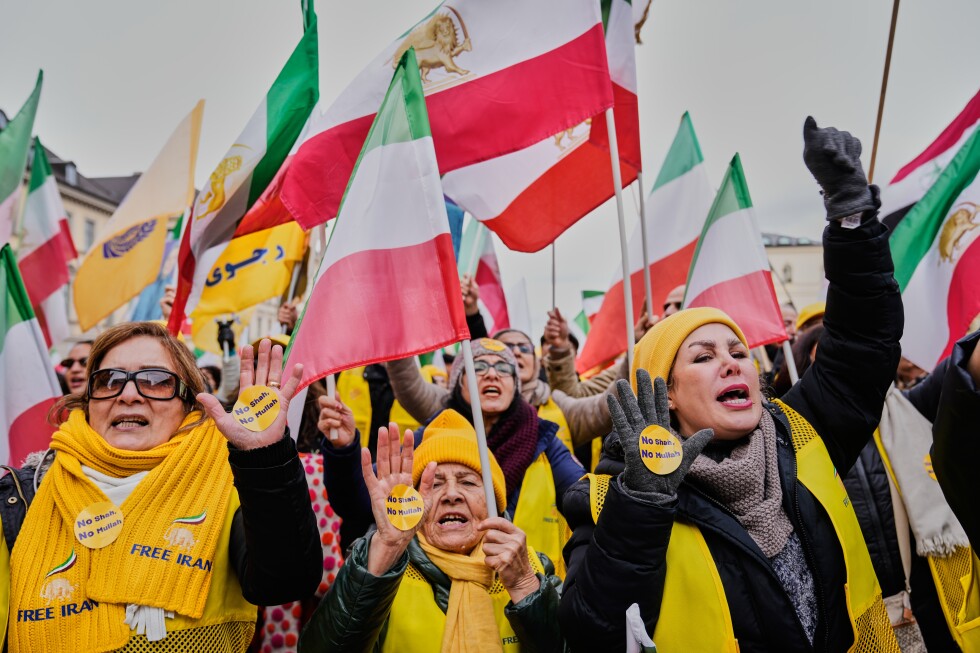
    MUNICH, Germany — Iranian exile groups intensified their campaign for regime change during the Munich Security Conference this weekend, leveraging the gathering of world leaders to amplify their demands. Reza Pahlavi, Iran’s exiled crown prince and son of the deposed shah, orchestrated coordinated demonstrations across Munich, Los Angeles, and Toronto in what he termed a “global day of action.”

    The protests coincide with heightened international pressure on Iran’s leadership, particularly following President Donald Trump’s recent suggestions that regime change “would be the best thing that could happen.” Trump’s administration has been pushing for further scaling back of Iran’s nuclear program while threatening military action.

    Friday’s opening of the security conference already featured significant protests against Iran’s government, primarily organized by the People’s Mujahedeen Organization of Iran (MEK). These demonstrations highlighted Iran’s violent suppression of nationwide protests last month, which human rights organizations report resulted in thousands of casualties.

    Pahlavi, who has lived in exile since the 1979 Iranian Revolution, used a Munich press conference to warn that more deaths would occur if “democracies stand by and watch.” He framed the situation as a critical test of international resolve: “We gather at an hour of profound peril to ask: Will the world stand with the people of Iran?”

    The crown prince argued that the Iranian government’s continued survival “sends a clear signal to every bully: kill enough people and you stay in power.” His comments referenced widely divergent death tolls from recent unrest, with human rights organizations reporting approximately 7,005 fatalities while Iranian authorities acknowledge only 3,117 deaths. The significant discrepancy reflects both the government’s historical pattern of underreporting casualties and the challenges of verification amid internet restrictions and communication blackouts.

  • Brazil’s Lucas Pinheiro Braathen wins giant slalom, earns South America’s 1st medal at Winter Games

    Brazil’s Lucas Pinheiro Braathen wins giant slalom, earns South America’s 1st medal at Winter Games

    In a historic moment for winter sports, Brazilian alpine skier Lucas Pinheiro Braathen captured the Olympic giant slalom gold medal on Saturday, delivering South America’s first-ever Winter Games medal. The 25-year-old athlete mastered the challenging Stelvio course in Bormio, Italy, overcoming falling snow and dense fog to finish with a combined two-run time of 2 minutes, 25 seconds.

    Pinheiro Braathen’s victory margin of 0.58 seconds secured his triumph over defending Olympic champion Marco Odermatt of Switzerland, who claimed silver. Odermatt’s teammate Loic Meillard completed the podium with bronze.

    The emotional champion collapsed onto the snow in celebration upon seeing his top-ranked position, later explaining his mindset during the decisive run: “I was pulling, pulling, always pulling, trying to find where to step, always trying to find the rhythm. I was skiing with my heart, and when you ski the way you are, anything is possible.”

    Pinheiro Braathen’s background reflects his unique journey—born to a Brazilian mother and Norwegian father, he initially competed for Norway before unexpectedly retiring prior to the 2023 season. His return to competitive skiing representing Brazil just one year later has culminated in this extraordinary achievement.

    The victory carries special significance during Brazil’s Carnival season, a connection highlighted by the skier’s helmet inscription “Vamos Dancar” (Let’s Dance) and his reputation as a samba-dancing, fun-loving competitor. Brazilian supporters at “Casa Brasil” in Milan erupted in celebration, with the venue playing both Queen’s “We Are The Champions” and traditional samba music.

    Brazilian President Luiz Inácio Lula da Silva recognized the achievement on social media, stating: “This unprecedented result shows Brazilian sport has no limits. It is the reflection of talent, dedication and continuous work to strengthen sport in every dimension.”

    The victory adds to Pinheiro Braathen’s growing legacy as a pioneer for Brazilian winter sports, having previously become the first Brazilian Alpine racer to reach a World Cup podium last year and securing the country’s first World Cup win this season.

  • UAE jobs: Hiring slows as companies invest in upskilling existing staff

    UAE jobs: Hiring slows as companies invest in upskilling existing staff

    A significant transformation is underway in the United Arab Emirates’ employment landscape as organizations increasingly redirect resources toward enhancing their current workforce capabilities rather than expanding headcount through traditional hiring. Recent market analysis reveals that 42% of UAE employers are now prioritizing employee upskilling initiatives over external recruitment, marking a fundamental shift in human resource strategy.

    According to the Hays 2026 US Salary & Hiring Trends Guide, this paradigm shift extends beyond competitive market pressures. Business leaders and hiring managers are deliberately slowing recruitment processes even while maintaining open position listings, reflecting a more cautious and pragmatic approach to workforce development.

    Zaid Alhiali, Co-Founder of Marc Ellis, observes that this strategic reorientation stems from multiple economic factors. “Businesses are navigating tighter budgetary constraints, challenges in attracting suitable talent, and rapidly evolving skill requirements,” Alhiali explained. “Rather than onboarding new personnel and enduring extended acclimatization periods, organizations are choosing to invest in already-trusted employees.”

    The implications for job seekers are substantial, as conventional qualifications and experience alone no longer guarantee employment. Successful candidates now demonstrate ongoing learning initiatives, adaptability, and alignment with immediate organizational needs—particularly in digital competencies, commercial awareness, and leadership capabilities.

    Industry practitioners are already witnessing tangible benefits from this approach. Shabeel Ummer, Head of HR at V Group International Middle East, detailed their implementation strategy: “We concentrate on training sales associates in advanced product knowledge, personalized customer service, and digital sales tools. This enables current staff to manage high-value clients, online orders, and loyalty programs effectively without expanding personnel.”

    This methodology delivers multidimensional advantages, including enhanced customer experiences, improved sales performance, and increased employee retention while maintaining stable operational costs. Karuna Agarwal, Director of Future Tense UAE, emphasizes the value proposition: “Upskilling represents investment in known assets with established organizational familiarity. Employees with proven performance understand company DNA, making them twice as attractive for development compared to new hires.”

    The phenomenon of unfilled positions despite public listings indicates employers’ heightened selectivity and willingness to await ideally qualified candidates. This trend suggests organizations are seeking increasingly specialized skills and industry-specific expertise, with mass hiring initiatives becoming progressively uncommon across sectors.

    HR experts consequently advise job seekers to embrace continuous professional development. Jessie Joy, Head of HR at Magnitude Creative in Abu Dhabi, notes: “Existing employees possess institutional knowledge of systems, clients, and culture. Upskilling closes productivity gaps more rapidly while boosting morale and loyalty through demonstrated investment in growth.”

    This strategic evolution in UAE workforce development reflects a maturation of the regional job market, emphasizing quality over quantity in human capital investment while creating new paradigms for both employer strategy and employee career development.


  • South Africa hammers New Zealand by seven wickets at T20 World Cup. England beats Scotland

    South Africa hammers New Zealand by seven wickets at T20 World Cup. England beats Scotland

    In a spectacular display of cricketing prowess, South Africa delivered a commanding performance against New Zealand in their T20 World Cup encounter on Saturday. Captain Aiden Markram emerged as the undisputed hero, blasting an unbeaten 86 runs from just 44 deliveries to secure a comprehensive seven-wicket victory for the Proteas.

    The match witnessed South Africa’s clinical execution as they chased down New Zealand’s total of 175-7 with remarkable ease, achieving their target of 178-3 with 2.5 overs remaining. Markram’s explosive innings, featuring four sixes and eight boundaries, included the fastest half-century in South Africa’s T20 World Cup history, reaching 50 runs in merely 19 deliveries.

    Left-arm pacer Marco Jansen set the stage for South Africa’s dominance with an impressive bowling performance, claiming 4-40 in his four-over spell. His early breakthroughs dismantled New Zealand’s top order, reducing them to 64-4 within 6.4 overs. Despite a recovery effort from Daryl Mitchell and Mark Chapman, who contributed 74 runs, New Zealand struggled to maintain momentum against South Africa’s disciplined attack.

    The victory marks South Africa’s third consecutive win in Group D, solidifying their position as strong contenders for the next round. Meanwhile, New Zealand suffered their first tournament defeat and extended their winless streak against South Africa to five matches in T20 World Cup history.

    In other tournament developments, England revived their campaign with a crucial five-wicket triumph over Scotland in Kolkata. Tom Banton’s unbeaten 63 from 41 balls proved instrumental in England’s recovery after early setbacks. Ireland recorded their inaugural victory in Colombo, overwhelming Oman by 96 runs behind Lorcan Tucker’s spectacular 94 not out from 51 deliveries, posting the tournament’s highest score of 235-5.

  • Bangladesh Nationalist Party wins big in election

    Bangladesh Nationalist Party wins big in election

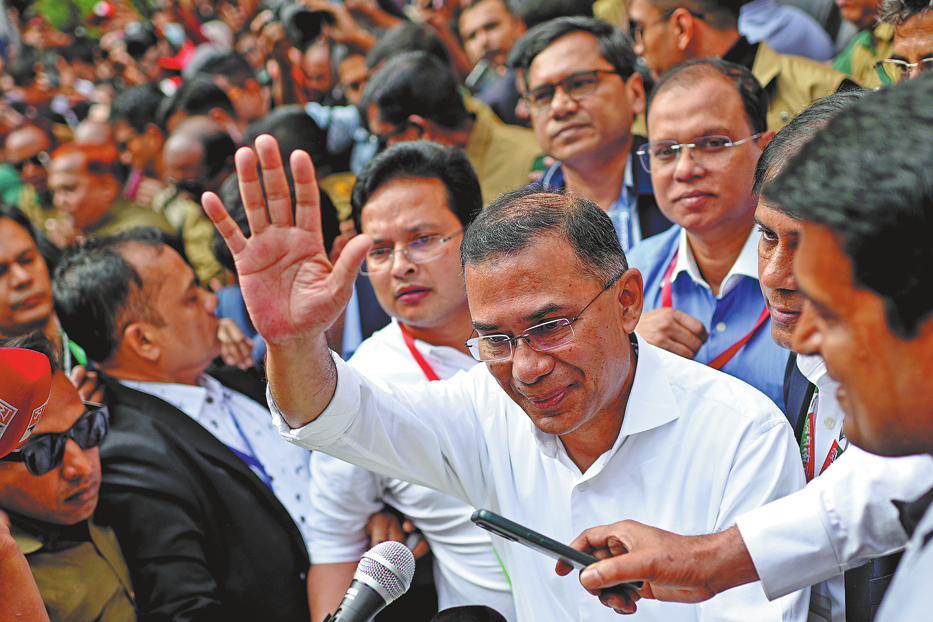
    In a decisive political shift, the Bangladesh Nationalist Party (BNP) has achieved a commanding victory in the nation’s parliamentary elections, capturing 209 out of 299 contested seats. This substantial win grants the party more than a two-thirds majority in parliament, positioning it to form the next government.

    The election’s most anticipated outcome is the expected ascension of BNP Chairman Tarique Rahman, 60, to the prime minister’s office. Rahman, carrying a significant political legacy as the son of former president Ziaur Rahman (who founded BNP) and former prime minister Khaleda Zia (who passed away in December), now stands to lead the nation.

    According to Election Commission Senior Secretary Akhtar Ahmed, Bangladesh Jamaat-e-Islami secured second place with 68 seats, while independent candidates and smaller allied parties obtained the remaining 20 seats. Voter participation reached 59.44% of the eligible population of approximately 170 million.

    This election marks a critical juncture for Bangladesh, being the first general election since former prime minister Sheikh Hasina resigned and departed the country in August 2024 amid widespread political turmoil. Since her departure, Nobel laureate Muhammad Yunus has led an interim administration.

    The BNP leadership has responded to its victory with measured enthusiasm. Senior Joint Secretary-General Ruhul Kabir Rizvi extended congratulations to the Bangladeshi people while simultaneously announcing that the party would refrain from organizing celebratory processions or rallies despite their substantial margin of victory.

    International recognition began promptly, with the Chinese embassy in Bangladesh issuing a formal congratulatory message on Facebook, praising the “smooth and successful” election and expressing anticipation for collaborative efforts with the incoming administration to enhance bilateral relations.

    With two constituencies postponing results and polling delayed in one following a candidate’s death, the Election Commission confirmed it would soon issue an official gazette notification formalizing the outcomes. Political adviser Asif Nazrul indicated that the transition of power would occur before Ramadan begins around February 19.

    The Bangladeshi parliamentary system comprises 350 members total, with 50 seats reserved for women who are elected subsequently through proportional representation by the 300 directly-elected members.