作者: admin

  • UK wants action taken on Russia after Navalny frog poisoning, Cooper says

    UK wants action taken on Russia after Navalny frog poisoning, Cooper says

    British Foreign Secretary Yvette Cooper has declared that the United Kingdom will pursue coordinated international action following conclusive evidence that Russian dissident Alexei Navalny was murdered using an exotic frog-based toxin. The announcement came during the Munich Security Conference where Cooper emphasized that European laboratories from five nations have definitively identified the poison responsible for Navalny’s death two years ago in a Siberian penal colony.

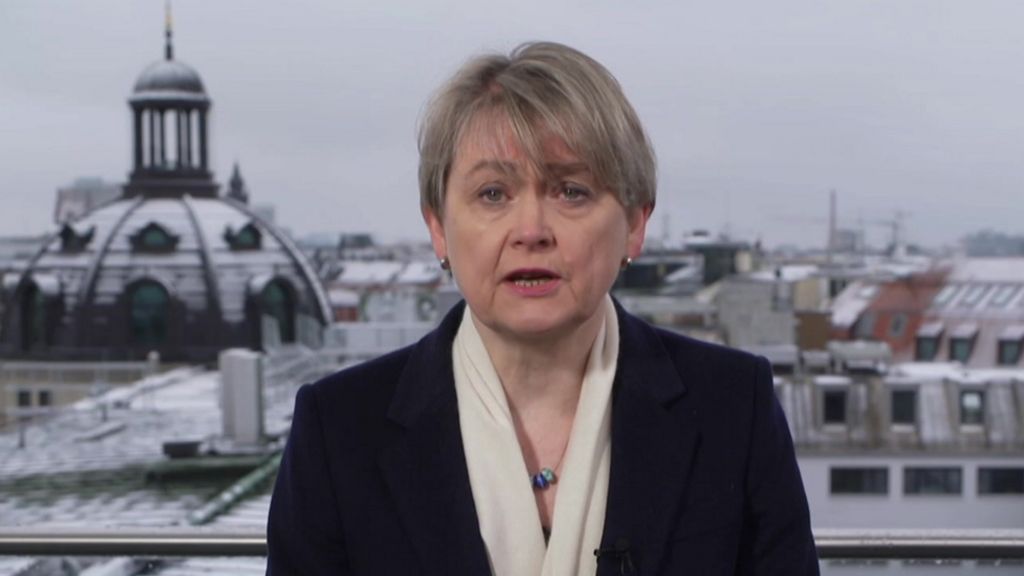
    Speaking from a snow-covered Munich rooftop on the BBC’s Sunday with Laura Kuenssberg programme, Cooper stated that the Russian government alone possessed the “means, motive and opportunity” to deploy the obscure biological agent derived from Ecuadorian dart frogs. The confirmation, obtained through analysis of smuggled biological samples, represents a “clear breach” of international chemical weapons conventions according to the Foreign Secretary.

    Cooper outlined Britain’s intention to escalate pressure on Moscow through continued sanctions coordination and formal reporting to the Organisation for the Prohibition of Chemical Weapons. She framed the poisoning as part of broader Russian aggression that requires united Western response, particularly noting the approaching fourth anniversary of Ukraine’s invasion.

    The diplomatic offensive occurs alongside Prime Minister Keir Starmer’s participation at the security conference, where both British leaders have emphasized European preparedness against Russian threats. Cooper characterized these efforts as continuing Navalny’s mission to “tell the truth, spread the truth” about Putin’s regime, which she described as “the most dangerous weapon of all.”

    Moscow’s London embassy issued a scathing rebuttal, dismissing the findings as “feeble-mindedness of Western fabulists” and accusing critics of engaging in “necro-propaganda.” Russian officials repeatedly questioned the scientific plausibility of the frog poison narrative while maintaining Navalny died of natural causes.

    The emerging divide was further highlighted by Conservative shadow foreign secretary Dame Priti Patel, who separately warned of an expanding “axis of authoritarianism” comprising Russia, China, North Korea and Iran. Despite these challenges, Patel reaffirmed America’s status as Europe’s “natural ally” in confronting global threats.

  • Obama compares Minnesota crackdown to behaviour seen ‘in dictatorships’

    Obama compares Minnesota crackdown to behaviour seen ‘in dictatorships’

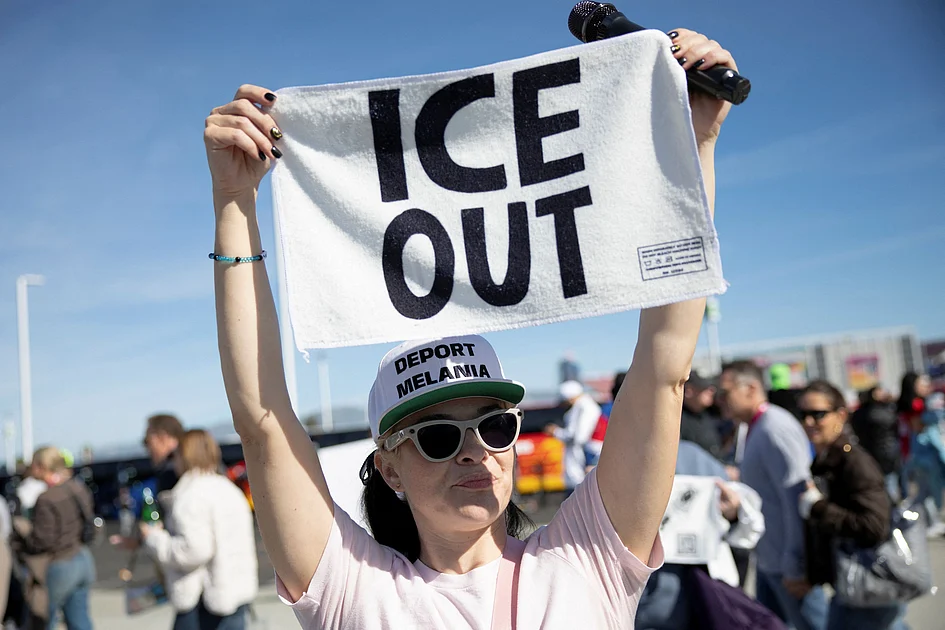
    Former President Barack Obama has issued a forceful condemnation of Immigration and Customs Enforcement (ICE) operations in Minnesota, drawing direct parallels between federal agents’ conduct and tactics employed by authoritarian regimes. In a Saturday interview with political commentator Brian Tyler Cohen, Obama characterized the weeks-long campaign of sweeping raids and arrests as “rogue behavior” that represents a dangerous departure from democratic norms.

    The Trump administration had defended the operations as targeted missions against criminal elements, deploying thousands of federal agents until concluding the controversial initiative this week. The raids included two fatal shootings that intensified public scrutiny and sparked widespread protests across Minnesota communities.

    Obama, who had previously criticized ICE actions as unlawful last month, escalated his rhetoric by stating: “This is the sort of conduct we’ve historically associated with authoritarian nations and dictatorships.” The former president specifically highlighted the systematic nature of the operations as particularly concerning.

    Despite his strong criticism, Obama expressed optimism about democratic resilience, praising community responses that organized systematic resistance through truth documentation, camera surveillance, and peaceful demonstrations. He described subzero-temperature protests as “heroic, sustained behavior by ordinary people” that embodies American values and provides hope for the nation’s democratic future.

    The interview also addressed deteriorating political discourse, with Obama commenting on the recent social media post by President Trump that depicted him and former First Lady Michelle Obama as monkeys. While not addressing the incident directly until now, Obama criticized the general erosion of shame and decorum in political communications.

    Tom Homan, Trump’s immigration point person, announced the conclusion of the Minnesota operations on Thursday following mounting public pressure and nationwide outrage.

  • India’s Hardik Pandya biggest threat to Pakistan, says Umar Gul ahead of T20 game

    India’s Hardik Pandya biggest threat to Pakistan, says Umar Gul ahead of T20 game

    As the cricketing world anticipates the high-voltage India-Pakistan clash in the T20 World Cup 2026, former Pakistani pace bowler Umar Gul has singled out Indian all-rounder Hardik Pandya as the most formidable threat to Pakistan’s ambitions. The much-awaited encounter is scheduled for Sunday at Colombo’s R Premadasa Stadium, where both teams will battle for supremacy in Group A.

    In an exclusive appearance on the Mr Cricket UAE podcast, Gul provided strategic insights into the upcoming contest. He characterized Pandya as exceptionally “calm, composed, and dangerous,” emphasizing that claiming his wicket would be absolutely crucial for Pakistan’s success. “His powerful ball-striking ability and intelligent shot selection truly distinguish him from other players,” Gul remarked, acknowledging Pandya’s match-winning potential.

    While Gul assessed the match as fundamentally balanced with “50-50 chances for both sides,” he suggested Pakistan might hold a slight advantage due to their familiarity with the conditions at R Premadasa Stadium. He noted that these high-stakes encounters typically carry “truckloads of pressure,” which could influence the final outcome.

    The former cricketer also expressed concerns about India’s middle-order performance, observing that it “hasn’t delivered as expected in the last two games.” This vulnerability, according to Gul, is something the Indian team must urgently address against formidable opponents.

    Regarding team selection, Gul speculated that India might include spinner Kuldeep Yadav, considering his impressive record against Pakistan and the Colombo pitch conditions. This move would potentially come at the expense of seamer Arshdeep Singh to maintain batting depth.

    On Pakistan’s internal selection debates, Gul advocated for maintaining consistency despite wicketkeeper-batter Usman Khan’s consecutive ducks in the tournament. “The team management should give another opportunity to Usman Khan. They trust him, and that’s why they prefer him over Nafay,” he stated, recommending against experimentation.

    The historical context heavily favors India, who dominate the T20 World Cup head-to-head record with seven victories against Pakistan’s solitary win. Both teams enter this contest undefeated in the tournament so far, with India leading Group A through superior Net Run Rate (+3.050 compared to Pakistan’s +0.932).

  • Europeans push back at US over claim they face ‘civilizational erasure’

    Europeans push back at US over claim they face ‘civilizational erasure’

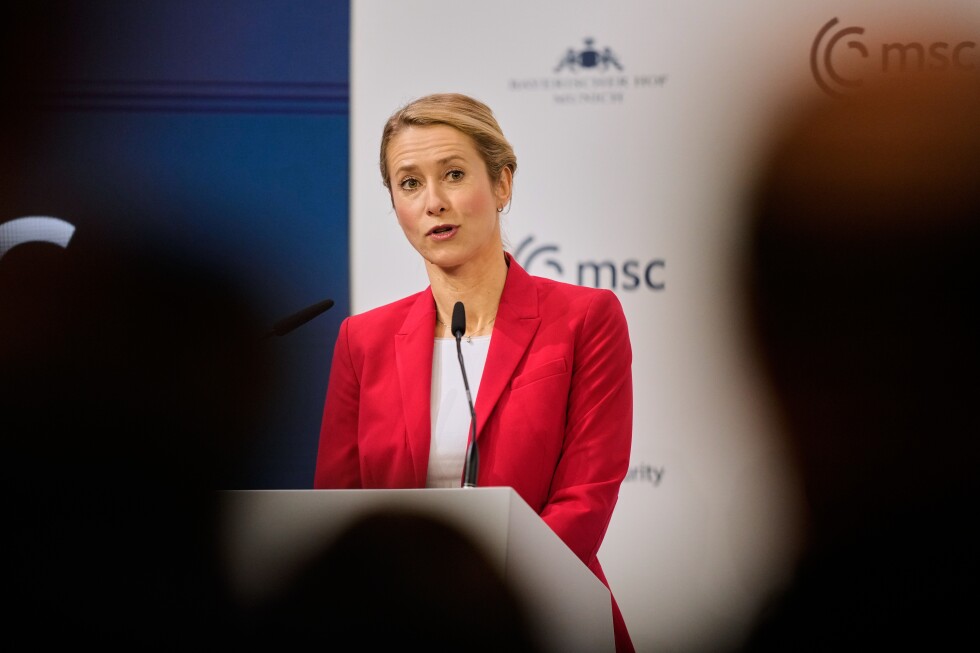
    MUNICH — European Union Foreign Policy Chief Kaja Kallas delivered a robust rebuttal to claims of Europe’s decline during her address at the Munich Security Conference on Sunday, directly countering assertions made in recent U.S. national security assessments.

    Kallas challenged the characterization of Europe as facing “civilizational erasure”—a concept outlined in the Trump administration’s December national security strategy document. That document had pointed to European economic stagnation, immigration policies, declining birth rates, and alleged suppression of political opposition as factors contributing to what it described as a loss of national identity and self-confidence.

    “Contrary to what some may say, woke, decadent Europe is not facing civilizational erasure,” Kallas asserted before the international security gathering. “People still want to join our club and not just fellow Europeans,” she added, referencing her conversations during a recent Canada visit where many expressed interest in EU membership.

    The EU diplomat characterized such criticism as “European-bashing” and emphasized Europe’s ongoing role in advancing human rights and prosperity. “We are pushing humanity forward, trying to defend human rights and all this, which is actually bringing also prosperity for people,” Kallas stated.

    Her comments followed Saturday’s address by U.S. Secretary of State Marco Rubio, who struck a more conciliatory tone than previous Trump administration officials while maintaining firm positions on policy differences. Rubio assured European allies that ending the trans-Atlantic partnership was “neither our goal nor our wish,” acknowledging America’s enduring ties to Europe while reaffirming the administration’s stance on migration, trade, and climate policies.

    European leaders including British Prime Minister Keir Starmer emphasized the strength derived from Europe’s diverse societies. Starmer noted the importance of defending “vibrant, free and diverse societies” while demonstrating how “people who look different to each other can live peacefully together.”

    Kallas acknowledged that while differences persist on specific issues, the fundamental trans-Atlantic relationship remains intact. “It is also clear that we don’t see eye to eye on all the issues and this will remain the case as well, but I think we can work from there,” she concluded.

  • Ukrainian drone strike sparks fires at Russian Black Sea port ahead of US-brokered peace talks

    Ukrainian drone strike sparks fires at Russian Black Sea port ahead of US-brokered peace talks

    In a significant escalation of hostilities, Ukrainian forces launched a precision drone strike against the Russian port of Taman on the Black Sea, triggering substantial fires and damaging critical energy infrastructure. Regional Governor Veniamin Kondratyev confirmed two casualties and damage to oil storage facilities, warehouses, and terminal operations.

    Simultaneously, Russian drone attacks targeted civilian infrastructure in Ukraine’s Odesa region, causing disruptions to power and water supplies. This exchange represents the ongoing strategic targeting of energy systems by both nations—Ukraine aims to cripple Russia’s oil export revenue financing its invasion, while Russia continues its campaign to disable Ukraine’s power grid amid winter conditions.

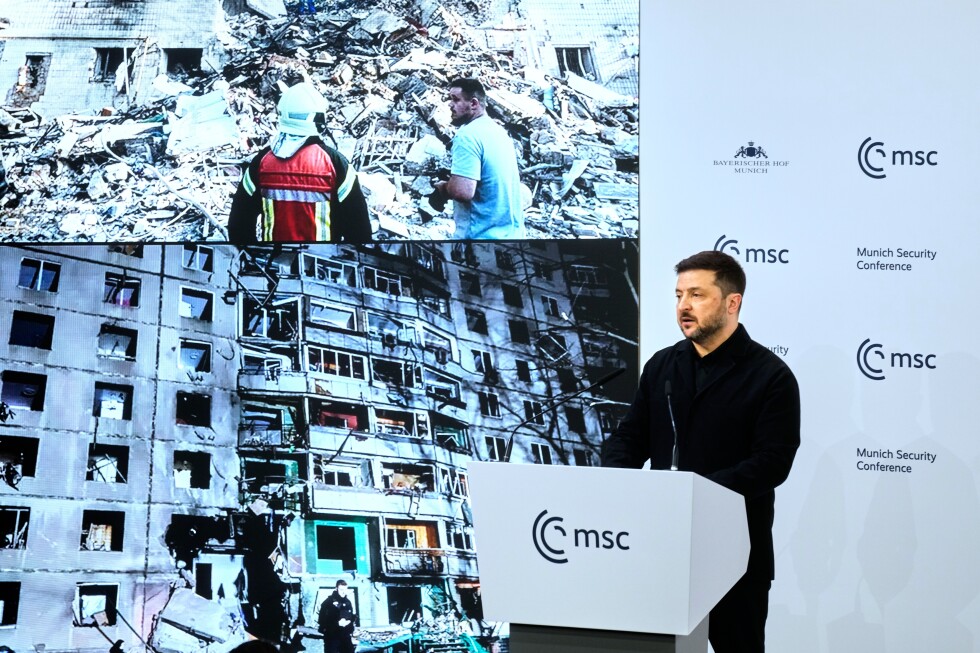
    The heightened violence precedes crucial U.S.-mediated negotiations scheduled for Tuesday and Wednesday in Geneva, marking the fourth anniversary of Russia’s full-scale invasion. Ukrainian President Volodymyr Zelenskyy, speaking at the Munich Security Conference, expressed reservations about proposed security guarantees and questioned the feasibility of U.S.-backed peace terms regarding the disputed Donbas region.

    International voices amplified these concerns. U.S. Senator Jeanne Shaheen warned that without enforceable security commitments, conflict recurrence remains inevitable. EU foreign policy chief Kaja Kallas accused Russia of seeking diplomatic victories unattained militarily, emphasizing that European nations would decide on sanctions relief rather than the U.S. Previous negotiation rounds in Abu Dhabi failed to resolve core issues, particularly the status of Russian-occupied Ukrainian territories, casting uncertainty on the upcoming Geneva talks.

  • Italy’s Federica Brignone fastest after first run in women’s giant slalom. Shiffrin sits seventh

    Italy’s Federica Brignone fastest after first run in women’s giant slalom. Shiffrin sits seventh

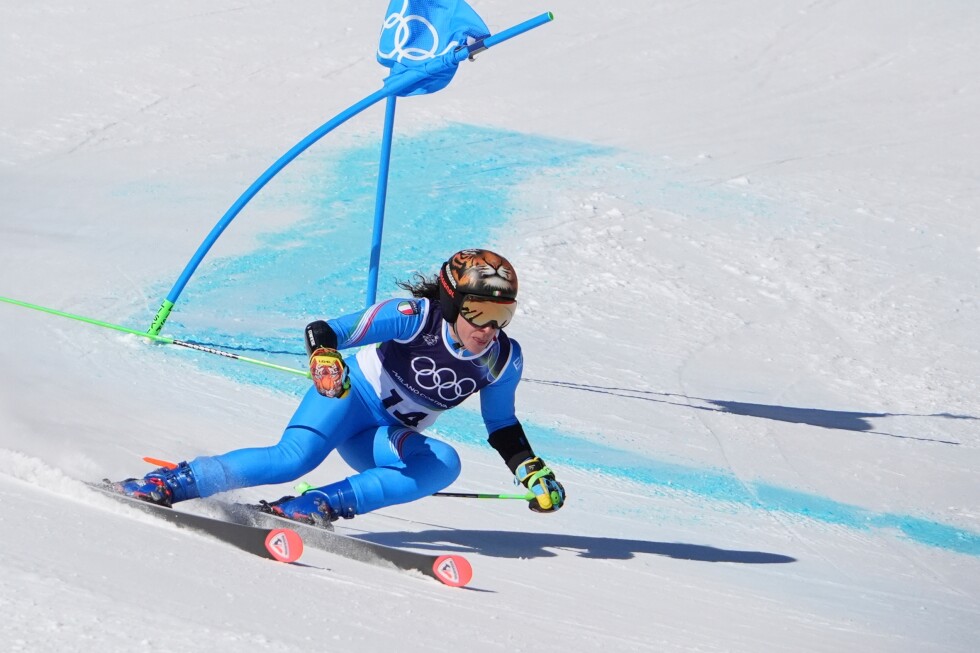
    CORTINA D’AMPEZZO, Italy — Italian skiing sensation Federica Brignone has positioned herself for a potential second Olympic gold medal within a week after delivering a commanding performance in the first run of the women’s giant slalom at the Milan Cortina Olympics.

    The 35-year-old veteran, who captured the super-G title just days ago after a 16-year Olympic pursuit, demonstrated exceptional form on the challenging Dolomite Mountains course. Brignone completed the 51-gate run in 1:03.23, establishing a substantial lead over her closest competitors in a field of 76 elite skiers.

    This impressive showing comes less than a year after Brignone suffered a severe fracture to her left leg that required surgical intervention with multiple screws and left her immobilized for weeks. The 2023 world champion in giant slalom has made a remarkable recovery to reach peak form at these Games.

    German skier Lena Duerr trails Brignone by 0.34 seconds, while Italian teammate Sofia Goggia sits third, 0.46 seconds behind. A three-way tie for fourth place at 1:03.97 includes defending Olympic champion Sara Hector of Sweden, Norway’s Thea Louise Stjernesund, and Albania’s Lara Colturi.

    American star Mikaela Shiffrin, the 2018 Olympic champion in this event, finished her first run in seventh position, more than a second behind Brignone. Shiffrin is seeking her first Olympic medal in eight years and aims to rebound from a disappointing fourth-place finish in the combined event earlier in these Games.

    Brignone described her approach: “I tried to attack, to be clean and intelligent on the terrain changes and then toward the end, to anticipate the bumps. It was just a natural reaction for me. I had a proper run and it all came naturally to me.”

    Current World Cup giant slalom leader Julia Scheib of Austria, who sits eleventh after the first run, acknowledged Brignone’s dominance: “Perfect skiing. She likes the snow. I noticed and it was not a huge surprise.”

    Brignone’s four Olympic medals now tie the record for most by an Italian woman in alpine skiing history. With her stellar first run, she stands poised to add a second gold to her collection when competition concludes.

  • Whether it’s a mini-sabbatical or an adult gap year, more people are taking extended work breaks

    Whether it’s a mini-sabbatical or an adult gap year, more people are taking extended work breaks

    While traditional vacations offer brief respites from work, a growing movement of professionals are embracing extended career breaks known as mini-sabbaticals, adult gap years, or micro-retirements. These transformative pauses—whether taken between jobs, through employer-approved leaves, or as digital nomad adventures—provide substantial mental, physical, and spiritual resets that go far beyond conventional time off.

    According to sabbatical experts and individuals who have taken extended breaks, significant barriers prevent many from pursuing this path. Financial constraints, personal responsibilities, and fears of social judgment from colleagues and family members often deter people from hitting pause on their careers to gain new perspectives.

    American attitudes toward extended time off differ markedly from European approaches, where rest and free time are culturally prioritized. Kira Schrabram, University of Washington management professor and researcher of meaningful work, notes that EU workers are legally entitled to at least 20 paid vacation days annually. However, more US companies are now offering weeks or months of paid or unpaid leave as retention strategies for valued employees.

    Schrabram brought her expertise on burnout to the Sabbatical Project, an initiative founded by Harvard Business School’s DJ DiDonna that promotes sabbaticals as “a sacred human ritual” deserving broader accessibility. Their research with University of Notre Dame’s Matt Bloom identified three distinct sabbatical types through interviews with 50 US professionals: working holidays pursuing passion projects; “free dives” combining adventure with rest periods; and transformative quests undertaken by burned-out individuals.

    Despite more than half of interviewees self-funding their breaks, the researchers advocate in Harvard Business Review for employer-sponsored sabbaticals as tools for recruiting, retaining, and developing talented workers. The Sabbatical Project has created coaching networks to support those considering extended leaves, challenging the notion that sabbaticals require employer sponsorship.

    Real-world examples demonstrate the transformative potential of extended breaks. Corporate lawyer Roshida Dowe, laid off at 39, spent a year traveling before co-founding ExodUS Summit with Stephanie Perry—a virtual conference helping Black women navigate sabbaticals and international relocation. Their initiative addresses both practical considerations (finances, safety, healthcare) and philosophical aspects (rest value, overcoming intergenerational trauma).

    Financial planning expert Taylor Anderson of Vancouver advises clients on sabbatical preparation, noting similar principles apply to retirement savings. She observes that while not everyone can afford extended unpaid time, many potential sabbatical-takers have savings but fear spending them—what she calls understanding “money breathing” patterns of accumulation and expenditure.

    For some, sabbaticals catalyze profound life changes. Artists Eric Rewitzer and Annie Galvin discovered their San Francisco gallery break led to permanent relocation after gaining new perspective on work-life balance. Similarly, Gregory Du Bois incorporated regular mini-sabbaticals throughout his IT career by negotiating extended time off with each new employer, ultimately finding these breaks essential for spiritual regeneration and peak performance.

    As these experiences demonstrate, extended career breaks are evolving from rare luxuries to strategic tools for personal and professional renewal in an increasingly burnout-prone workforce.

  • Xi’an: Heart of Chinese New Year

    Xi’an: Heart of Chinese New Year

    China Daily Information Co. (CDIC) maintains strict copyright protection over all content published on its platform. This comprehensive protection extends to textual materials, photographs, multimedia information, and all other forms of content accessible through the website. Unauthorized republication or utilization of any protected material without explicit written permission from CDIC constitutes a violation of these copyright provisions.

    The website recommends optimal viewing with browsers set to 1024*768 resolution or higher to ensure proper display of content. The publication operates under multimedia online publishing license 0108263 and maintains registration number 130349, establishing its formal credentials as a registered information provider.

    Additional site information provides various resources including background information about China Daily, advertising opportunities through the platform, contact channels for user inquiries, employment opportunities both generally and specifically for expatriates seeking positions. The notice concludes by encouraging visitors to follow the organization’s official channels for ongoing updates and content distribution.

  • Exploring Xinwu district’s innovation journey from A to Z

    Exploring Xinwu district’s innovation journey from A to Z

    China Daily Information Co. (CDIC) maintains strict copyright protection over all content published on its platform. This comprehensive protection extends to textual materials, photographic content, multimedia information, and all other forms of digital assets. The company explicitly prohibits any republication or utilization of its copyrighted materials without obtaining prior written authorization. The notice emphasizes that unauthorized use of any content constitutes a violation of CDIC’s intellectual property rights. Additionally, the publication provides technical recommendations for optimal viewing experience, suggesting browsers with 1024*768 resolution or higher for best performance. The footer section contains practical information including the site’s registration details (Registration Number: 130349), multimedia publishing license (0108263), and various navigational links. These links direct users to sections covering corporate information, advertising opportunities, contact channels, and career opportunities including positions for expatriates. The notice also includes social media connectivity options, encouraging visitors to follow the organization’s updates across various platforms.

  • Cannabis smoke fills the air as Nepal marks Shivaratri festival

    Cannabis smoke fills the air as Nepal marks Shivaratri festival

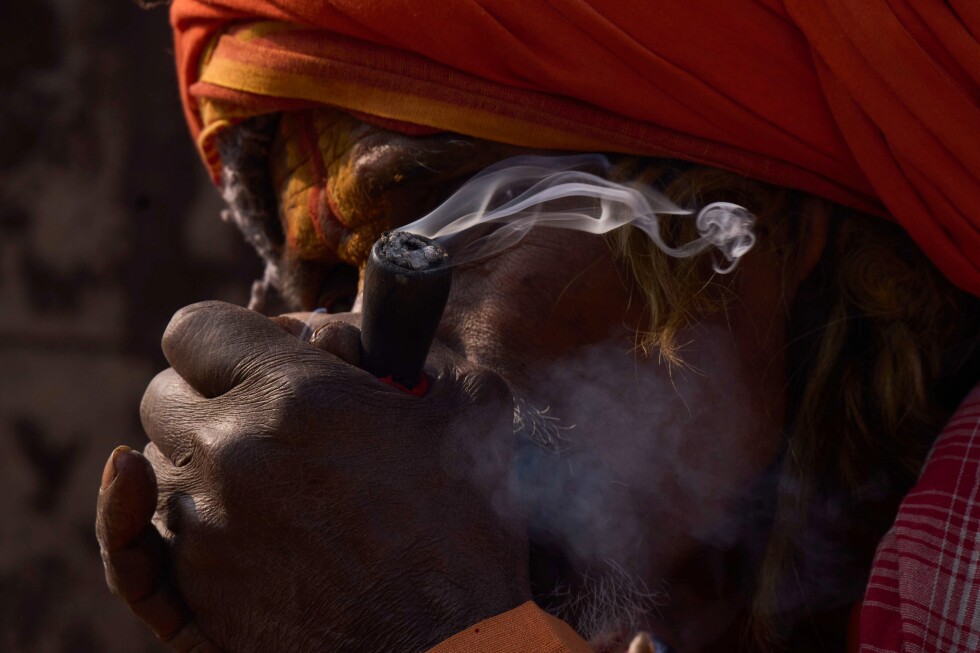
    KATHMANDU, Nepal — In a remarkable annual display of religious exception, tens of thousands of Hindu devotees participated in traditional cannabis consumption during the Shivaratri festival at Kathmandu’s sacred Pashupatinath Temple on Sunday. The event represents one of Nepal’s most significant religious gatherings, drawing both local worshippers and pilgrims from neighboring India.

    Against the backdrop of normally strict anti-drug laws, participants openly engaged in cannabis smoking as part of their devotional practices honoring Lord Shiva, the Hindu deity strongly associated with the plant’s ritual use. Holy men adorned with sacred ashes joined predominantly young devotees along the forested Bankali hills overlooking the Bagmati River, creating a vivid scene of religious celebration that contrasts sharply with Nepal’s typical drug enforcement policies.

    This ceremonial exception occurs despite Nepal’s general prohibition on marijuana, which carries penalties of up to one month imprisonment for personal use and decade-long sentences for trafficking offenses. The country’s relationship with cannabis has evolved significantly since the 1960s, when Nepal gained international recognition as a destination for psychoactive substances during the hippie movement era. Legal sales ended abruptly with the 1976 nationwide ban.

    Contemporary efforts to decriminalize marijuana have emerged from both activist campaigns and parliamentary initiatives seeking to legalize cultivation and consumption. However, these legislative movements have encountered substantial political obstacles, leaving the Shivaratri festival as one of the few legally sanctioned contexts for cannabis use in the predominantly Hindu nation, where approximately 81% of the population practices Hinduism.