作者: admin

  • Bitcoin bounce revives bulls but ‘crypto winter’ risks linger

    Bitcoin bounce revives bulls but ‘crypto winter’ risks linger

    Bitcoin has demonstrated a tentative recovery following weeks of substantial market pressure, climbing over 4% to approach the $69,000 threshold. This upward movement, adding approximately $2,700 to its valuation, offers a temporary reprieve from the cryptocurrency’s recent 44% decline from its October 2025 peak. However, market analysts caution that this stabilization may represent technical market dynamics rather than fundamental strength, with macroeconomic uncertainties continuing to cast shadows on Bitcoin’s immediate prospects.

    Market strategists observe that the current rebound appears driven primarily by technical buying and short-covering activities rather than robust institutional participation. Trading volumes remain notably subdued, while volatility metrics indicate many investors maintain a cautious stance awaiting clearer signals from key economic indicators, particularly US inflation data and Federal Reserve policy directions.

    Research firm Ned Davis Research presents one of the more conservative outlooks, suggesting Bitcoin could potentially face further declines should current corrections evolve into a prolonged bear market. Historical analysis indicates that during previous major downturns, Bitcoin experienced peak-to-trough declines ranging between 70-75%. Should similar patterns emerge, prices could theoretically approach the $31,000 range—representing a potential 55% decrease from current levels.

    The duration of historical crypto winters further compounds concerns. Since 2011, Bitcoin has endured average drawdowns of approximately 84% during bear markets, with these downturns typically lasting around 225 days. With only 120 days elapsed since October’s peak, the current correction might still be in its preliminary phases if historical cycles repeat.

    Despite these cautionary indicators, some market observers identify reasons for measured optimism. Analysts at Bitfinex note diminishing selling pressure and improving funding rates across derivatives markets, potentially signaling the formation of a short-term base. Simultaneously, CoinShares research indicates stabilization in institutional flows into crypto investment products following weeks of outflows, suggesting selective re-entry by larger investors.

    The cryptocurrency’s strengthened correlation with global equities and risk assets renders it particularly sensitive to interest rate expectations and liquidity conditions. For investors in UAE and regional markets, Bitcoin’s recent volatility reinforces its characterization as a high-risk, high-reward asset class, with many traders adopting wait-and-see approaches focused on short-term opportunities rather than long-term accumulation.

    While the modest rebound provides temporary relief for bullish investors after months of declines, the broader outlook remains delicately balanced. Stabilizing prices and improving sentiment suggest potential base formation, yet bearish forecasts and historical precedents emphasize the risk that current recovery efforts might prove transient. Bitcoin’s trajectory will likely depend significantly on global macroeconomic signals and investor risk appetite in the coming weeks, with analysts anticipating range-bound movement until clearer market catalysts emerge.


  • ‘O Romeo’ review: Shahid Kapoor is fabulous in a weak Vishal Bhardwaj film

    ‘O Romeo’ review: Shahid Kapoor is fabulous in a weak Vishal Bhardwaj film

    Vishal Bhardwaj’s latest cinematic offering ‘O Romeo’ emerges as a perplexing case study in squandered potential, combining brilliant individual performances with a fundamentally flawed narrative execution. Drawing inspiration from Mumbai’s notorious underworld era of the 1990s-2000s, the film allegedly takes creative inspiration from the legendary story of Sapna Didi—a real-life housewife turned vigilante who challenged Dawood Ibrahim’s criminal empire to avenge her husband’s murder.

    The film assembles an impressive creative ensemble, reuniting Bhardwaj with Shahid Kapoor following their acclaimed collaborations in ‘Haider’ and ‘Kaminey’. Kapoor embodies Hussain Ustara, a blade-wielding contract killer operating in Mumbai’s gritty underworld. His character development shows fascinating complexity, particularly through his relationships with intelligence officer Khan (Nana Patekar) and his foul-mouthed grandmother (Farida Jalal). The plot gains momentum when Ustara encounters Afshan Qureshi (Tripti Dimri), a widow seeking retribution for her husband’s murder at the hands of mafia kingpin Jalal (Avinash Tiwary).

    Bhardwaj demonstrates directorial brilliance in isolated sequences, employing symbolic imagery like rifle-shaped liquor bottles and staging action sequences in unconventional locations including an empty theater playing ‘Dhak Dhak’. The first half maintains engaging tension through well-crafted montages exploring the developing relationship between Ustara and Afshan against Mumbai’s atmospheric backdrop.

    However, the film undergoes a dramatic deterioration in its second act with an ill-conceived relocation to Spain. This geographical shift introduces bizarre bullfighting sequences and transforms the previously menacing Jalal into a caricatured villain resembling 1980s Bollywood antagonists. The narrative becomes increasingly implausible, culminating in a climactic bullring confrontation that defies logical coherence while failing to generate emotional investment.

    The fundamental weakness lies in the screenplay’s abandonment of its compelling source material. Rather than exploring the feminist undertones of a woman challenging patriarchal criminal structures, the film opts for excessive violence and profanity that overshadow character development. Despite Kapoor’s committed performance—blending elements of his previous roles from ‘Udta Punjab’ and ‘Kabir Singh’—the writing fails to provide adequate depth to either his character or Dimri’s potentially fascinating avenger.

    Supporting performances from veteran actors provide occasional highlights, particularly Patekar’s nuanced portrayal of the morally ambiguous Khan. Yet these cannot compensate for the film’s structural deficiencies, including underdeveloped themes about political-criminal nexus and emotional conflicts surrounding loyalty and redemption.

    ‘O Romeo’ ultimately represents a disappointing departure from Bhardwaj’s established reputation for crafting sophisticated crime narratives with literary depth. The production values—including exceptional cinematography and melodic soundtrack—highlight the tragedy of wasted potential, making this underdeveloped effort particularly frustrating for audiences anticipating another masterpiece from the acclaimed director.

  • Can teenagers get summer jobs in UAE? What law says

    Can teenagers get summer jobs in UAE? What law says

    The United Arab Emirates maintains a structured legal framework governing juvenile employment, providing clear pathways for teenagers seeking temporary work during summer breaks while prioritizing their welfare and development. Federal legislation establishes comprehensive safeguards for minors between 15 and 18 years old who wish to enter the workforce under regulated conditions.

    According to Federal Decree Law No. 33 of 2021 and its implementing regulations, employment of individuals under 15 remains strictly prohibited. Eligible juveniles must obtain written parental consent and present a medical fitness certificate from authorized institutions before commencing employment. The law imposes specific protective measures including a maximum six-hour daily work period with mandatory breaks, prohibiting work between 7 PM and 7 AM, and banning hazardous occupations that might compromise health, safety, or moral development.

    The regulatory framework offers exemptions for recognized charitable, educational, and training institutions conducting professional development programs. These entities may be exempted from certain provisions when providing vocational training or volunteer opportunities, provided they maintain proper registration with relevant authorities.

    Employers must secure a Juvenile Work Permit from the Ministry of Human Resources and Emiratisation before engaging minor workers. This permit specifically applies to individuals aged 15-18 employed at establishments registered with the Ministry. The combination of parental authorization, medical clearance, and ministerial oversight creates a protective ecosystem for young workers.

    For families considering summer employment, these regulations mean that 16-year-olds may legally work provided all requirements are met, while 14-year-olds remain ineligible until reaching the minimum age threshold. The system balances workforce participation opportunities with robust protections for juvenile development, reflecting the UAE’s commitment to responsible youth employment practices.

  • Indonesia says 8,000 troops ready for possible peacekeeping mission in Gaza by June

    Indonesia says 8,000 troops ready for possible peacekeeping mission in Gaza by June

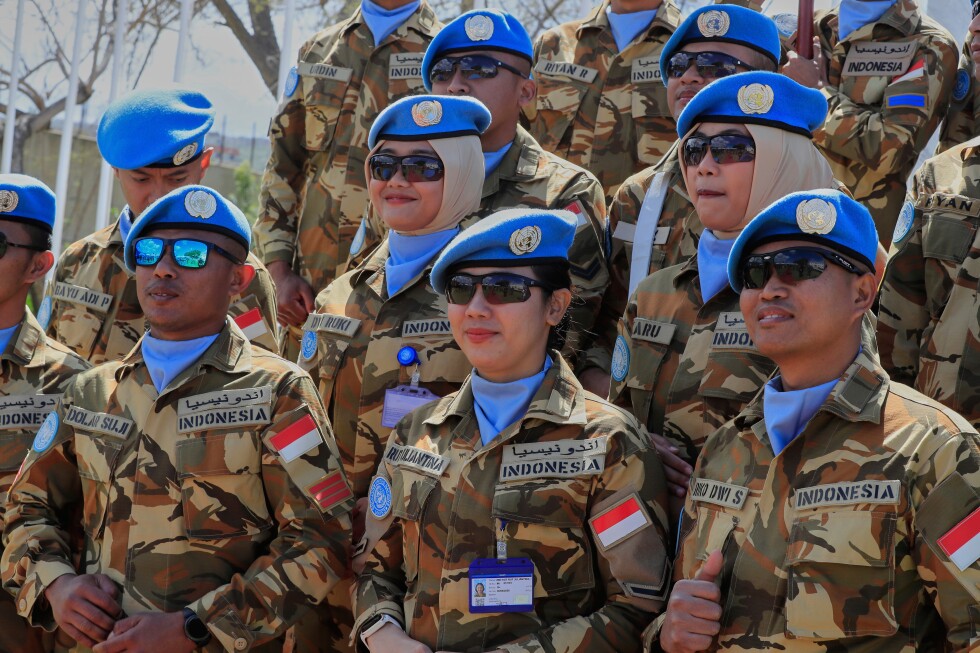
    JAKARTA, Indonesia — In a significant development for Middle East peace efforts, Indonesia’s military has announced preparations to deploy up to 8,000 personnel to Gaza as part of an international humanitarian and stabilization initiative. The Indonesian National Armed Forces (TNI) has completed operational planning for what would represent the first concrete troop commitment to President Donald Trump’s postwar reconstruction framework for the conflict-ravaged territory.

    Army spokesperson Brigadier General Donny Pramono confirmed that military authorities have finalized the proposed troop structure and deployment timeline, though actual deployment remains contingent on governmental approval and international coordination mechanisms. ‘In principle, we are ready to be assigned anywhere,’ Pramono stated. ‘Our troops are fully prepared and can be dispatched at short notice once the government gives formal approval.’

    The comprehensive preparation schedule involves medical examinations and administrative processing throughout February, followed by a force readiness assessment at month’s end. According to military planning, approximately 1,000 personnel could deploy as an advance team by April, with the full composite brigade of 8,000 troops prepared for movement by June’s conclusion.

    Indonesian officials have emphasized that any participation would be strictly humanitarian in nature, focusing on civilian protection, medical services, and reconstruction support rather than combat operations. The Foreign Ministry has repeatedly clarified that Indonesian forces would not engage in actions that might precipitate direct confrontation with armed factions.

    This potential deployment marks a strategically nuanced position for Indonesia, the world’s most populous Muslim-majority nation, which maintains no formal diplomatic relations with Israel while historically advocating for Palestinian self-determination. Indonesian authorities have justified participation in Trump’s Board of Peace initiative as necessary to represent Palestinian interests from within the international framework, particularly given Israel’s inclusion on the board without Palestinian representation.

    The Southeast Asian nation brings substantial peacekeeping experience to the potential mission, ranking among the top ten contributors to United Nations peacekeeping operations globally with previous deployments in Lebanon and other conflict zones.

  • How long can you stay in the UAE after work visa is cancelled?

    How long can you stay in the UAE after work visa is cancelled?

    Foreign employees in Dubai’s mainland face critical immigration deadlines following job termination, with specific legal provisions governing their stay duration after visa cancellation. According to UAE immigration regulations, employers must initiate work permit cancellation procedures through the Ministry of Human Resources and Emiratisation (MOHRE) channels when employment concludes.

    The cancellation process, mandated by Cabinet Resolution No. 1 of 2022, requires employers to: submit applications through designated channels, complete necessary documentation, settle outstanding penalties, and formally acknowledge settlement of all employee entitlements. These procedures ensure proper termination of the employment relationship under UAE law.

    Crucially, terminated employees receive a government-defined grace period following residency visa cancellation, during which they may legally remain in the country. This period is explicitly stated on the visa cancellation documentation provided to the individual. Remaining in the UAE beyond this allotted timeframe triggers administrative penalties under Federal Decree Law No. 29 of 2021, which imposes daily fines for illegal residence.

    During the grace period, individuals have two primary options: secure new employment and process a status change without exiting the country, or depart the UAE before the grace period expires. Those obtaining new employment may have their new employer apply for a work permit and residency visa conversion internally. Alternatively, individuals may explore converting to visit or tourist visas without departure, though this requires consultation with Dubai’s General Directorate of Residency and Foreigners Affairs.

    The legal framework emphasizes that exceeding the grace period constitutes illegal residence subject to escalating penalties. Professionals recommend seeking specific guidance from immigration authorities regarding individual circumstances, particularly when considering visa conversion options rather than departure.

  • Look: 130-year-old kerosene fan, radio designed in Braille; rare items at Sharjah festival

    Look: 130-year-old kerosene fan, radio designed in Braille; rare items at Sharjah festival

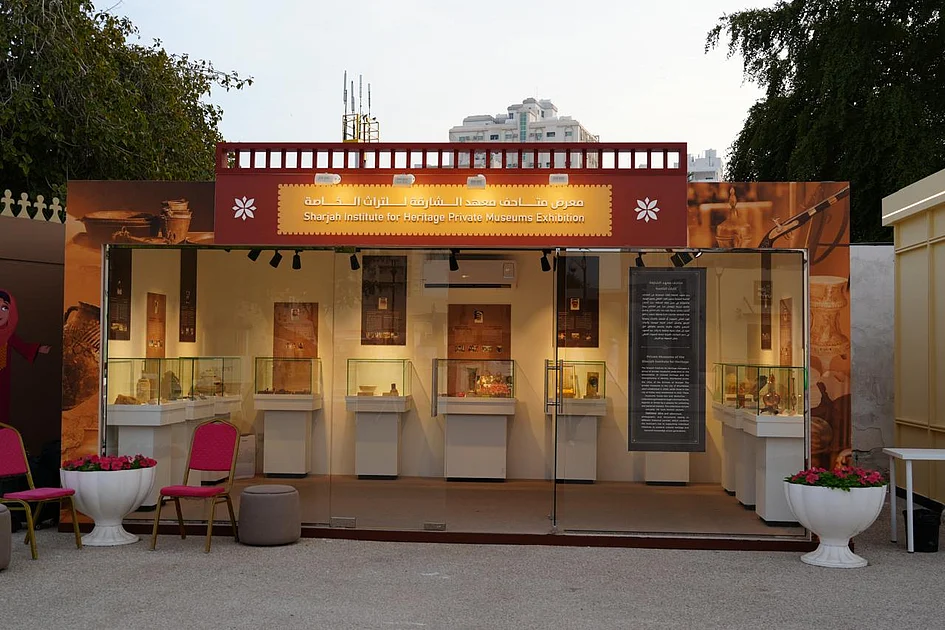
    A remarkable collection of historical artifacts spanning more than a century is currently captivating visitors at the Sharjah Heritage Days festival in the United Arab Emirates. The exhibition, intriguingly titled ‘Heard of It, Never Seen It’ (known in Arabic as ‘Samait wa Ma Shuft’), showcases rare technological marvels from a private Emirati collection that many have only encountered through stories or historical accounts.

    The display features extraordinary items including a 130-year-old kerosene-powered fan, a Braille-adapted radio from the early 20th century, and Thomas Edison’s pioneering 1877 phonograph—one of the first devices capable of recording and reproducing sound. Other notable exhibits include a 1956 aircraft black box, manual calculators, telegraph telex machines, vintage music cartridges, and one of the earliest portable computers dating back to 1981.

    Collector Hassan Ahmed Bu Sabar, whose childhood passion evolved into this comprehensive collection, explained the exhibition’s profound purpose: “Most people have heard of these devices from their parents or in books, but they have never actually seen them. When visitors walk into this hall, I want them to feel surprise—and then connection. These objects demonstrate the step-by-step evolution of human intelligence.”

    The current festival display represents merely a fraction of Bu Sabar’s complete collection, which he has organized into a 20-section private museum featuring themed rooms that recreate historical settings including a traditional coffee majlis, vintage grocery shop, barber’s corner, and pearl merchant’s section. His collecting journey began at age 12 with coins from the pre-Union era, gradually expanding to include Indian swords, stamps, and black-and-white cameras.

    This exhibition forms part of a broader cultural preservation effort supported by the Sharjah Institute for Heritage, which has nurtured numerous private museums across the emirate since the early 2000s. These collections, often built through family inheritance and personal passion, serve as vital bridges between generations—transforming individual memories into shared cultural knowledge and ensuring that heritage remains accessible beyond formal institutions.

  • Singapore ski racer Faiz Basha becomes 2nd athlete to represent tropical nation at a Winter Games

    Singapore ski racer Faiz Basha becomes 2nd athlete to represent tropical nation at a Winter Games

    BORMIO, Italy — In the world of alpine skiing where nations like Switzerland and Norway dominate, Faiz Basha represents an extraordinary anomaly. As Singapore’s second Winter Olympian in history, the 23-year-old skier carries the flag for a tropical nation where temperatures rarely dip below 30°C (86°F).

    Basha’s journey to the Milan Cortina Games began unexpectedly when his family relocated to Geneva during his father’s diplomatic service. Introduced to skiing by his mother who worked at a Swiss bank, Basha quickly developed a competitive passion for the slopes. “I didn’t like losing as a kid,” recalled Basha, whose full name is Faiz Basha Munwar Basha. “Whenever I had a bad race, I would be crying. But I kept improving.”

    His path diverged dramatically from conventional ski racing development when he returned to Singapore to fulfill mandatory military service. With no mountains available, Basha innovatively trained on inline skates through slalom courses set up on local promenades. “Inline skates helped me develop a skiing-on-rails mindset,” Basha explained. “When I returned to snow after national service, I actually improved.”

    The Olympian’s career nearly ended following a devastating super-G crash as a teenager that tore a hole in his intestine. The psychological aftermath proved particularly challenging. “My first training after the crash, I crashed three consecutive runs,” Basha remembered. “I told my mother I was done with skiing.”

    During his recovery hiatus, Basha channeled his analytical mind into redesigning Singapore’s Mass Rapid Transit (MRT) system map. His viral cartography project earned him an internship offer from the transportation department. Meanwhile, he pursued mechanical engineering studies at the University of Strathclyde in Glasgow.

    Basha joins a growing contingent of athletes from non-traditional winter sports nations making their mark at the Games. Eritrea’s Shannon Abeda, who finished 31.30 seconds behind giant slalom champion Lucas Pinheiro Braathen of Brazil, expressed similar pride in representation. “My friend asked me how much it took to get here, and I just started bawling,” Abeda shared.

    Nathan Tchibozo of Benin, who finished 48th in giant slalom, echoed the sentiment: “This shows that everything is possible. You have to believe in your dreams.”

    Though Basha recorded a DNF (did not finish) in his Olympic giant slalom debut after crashing, his perspective remains focused on broader objectives. “I know I’m still far from the top, but success means breaking new ground for Singapore,” Basha stated. “I’m content with what I’ve achieved in paving the way for future tropical climate athletes.”

  • Imran Khan’s sister says sons spoke to him for 20 minutes after Pakistan Chief Justice order

    Imran Khan’s sister says sons spoke to him for 20 minutes after Pakistan Chief Justice order

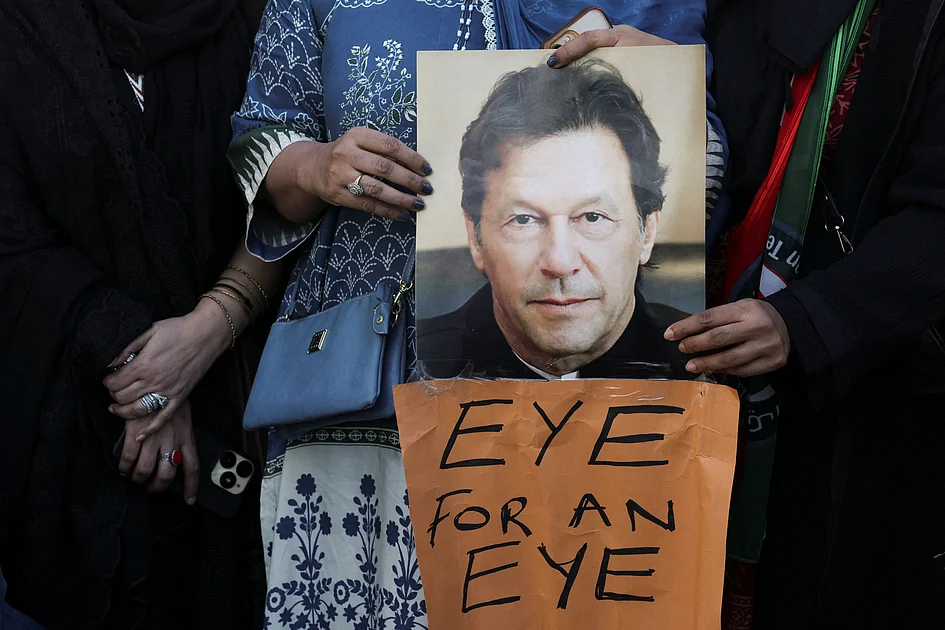
    In a significant development within Pakistan’s ongoing political saga, former Prime Minister Imran Khan has finally connected with his sons through a supervised telephone conversation lasting approximately twenty minutes. This communication occurred following a direct order from Pakistan’s Chief Justice, marking a rare familial interaction since Khan’s incarceration began in August 2023.

    Aleema Khanum, Khan’s sister, confirmed the exchange via social media platform X, stating the former cricket star turned politician expressed immense joy upon hearing his sons’ voices after an extended period of separation. The conversation represents a minor concession in an otherwise stringent detention regime that has drawn international scrutiny.

    The development emerges against a backdrop of escalating tensions regarding Khan’s treatment. His sons, residing in the United Kingdom, have reportedly faced visa denials preventing physical visits to Pakistan. Kasim Khan, Khan’s younger son, has characterized these restrictions as systematic persecution, appealing to global human rights organizations and democratic nations to intervene against what he describes as politically motivated injustice.

    Medical concerns compound the situation. Recent court submissions reveal Khan has been diagnosed with a right central retinal vein occlusion, a serious vascular eye condition. Although prison authorities transferred him to Pakistan Institute of Medical Sciences for a brief surgical procedure on February 6, his family asserts significant treatment delays have exacerbated vision deterioration. They demand immediate specialist care at Shifa International Hospital under supervision of his personal physicians to prevent permanent vision loss.

    Khan, sentenced to 14 years on corruption charges among dozens of cases, maintains these allegations constitute a deliberate campaign by military establishments to eliminate his political influence—a claim the armed forces consistently deny. The Supreme Court initiated review proceedings after lawyer Salman Safdar petitioned for adequate medical access and family visitation rights.

    This episode highlights continuing tensions between Pakistan’s judiciary, military establishment, and political factions, with Khan’s health and treatment conditions becoming a focal point for broader debates about democratic norms and human rights protections in the country.

  • Palestinian NGO condemns Israeli act of ‘revenge’ after prisoner abuse video

    Palestinian NGO condemns Israeli act of ‘revenge’ after prisoner abuse video

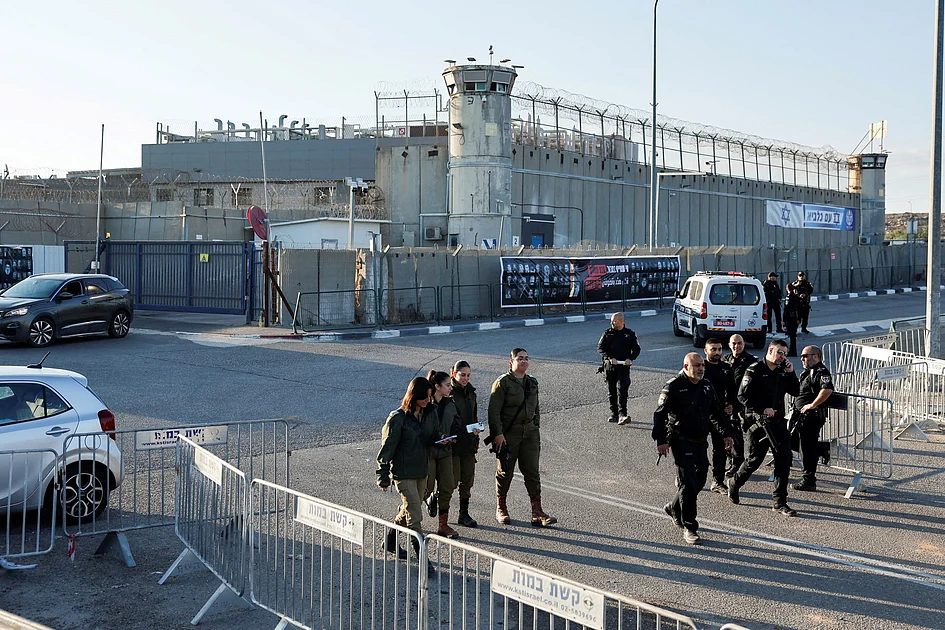
    A Palestinian human rights organization has issued a forceful condemnation of Israel’s far-right National Security Minister Itamar Ben Gvir following the emergence of disturbing footage showing the orchestrated abuse of detainees at Ofer Prison in the occupied West Bank. The incident, which occurred just days before Ramadan, has ignited fresh concerns about prisoner treatment in Israeli detention facilities.

    Video evidence broadcast by Israel’s Channel 7 reveals approximately twenty armed police officers storming a prison corridor while discharging stun grenades and brandishing weapons. The officers subsequently extracted five bound detainees from their cells, forcing them into prone positions on the floor. The operation coincided with pending parliamentary legislation that would institute capital punishment for Palestinian prisoners convicted of terrorism offenses.

    Abdallah al-Zaghari, director of the Palestinian Prisoners’ Club, characterized the incident as “systematic retaliation against Palestinian detainees” during a Saturday statement to AFP. He further asserted that the actions of Ben Gvir and Israel’s far-right government “not only target Palestinian populations and incarcerated individuals but also undermine global legal frameworks and human rights protections.”

    Ben Gvir, who personally supervised the operation and appears in the footage, described the scene as “a source of pride” while advocating for capital punishment against what he termed “the vilest of the vile.” His inflammatory remarks prompted Hamas to denounce the statements as “a new war crime and blatant challenge to international humanitarian law.”

    This incident occurs amid ongoing international scrutiny regarding prisoner treatment in Israeli facilities following Hamas’s October 2023 offensive. While Israel technically retains the death penalty for extreme cases, the nation has maintained de facto abolitionist status since the 1962 execution of Adolf Eichmann, making the current legislative push particularly significant.

  • Spring Festival greetings from envoys

    Spring Festival greetings from envoys

    China Daily Information Co (CDIC) maintains strict copyright protection over all content published on its platform. The comprehensive copyright notice explicitly prohibits unauthorized republication or use of any materials—including text, photographs, and multimedia information—without obtaining written permission from CDIC.

    The notice further provides technical recommendations for optimal user experience, suggesting browsers with 1024*768 or higher resolution for best viewing results. The publication operates under formal licensing arrangements for online multimedia content, with specific registration details provided for transparency.

    Additionally, the platform offers various informational sections including corporate background about China Daily, advertising opportunities, contact channels, and employment information for both general positions and expatriate opportunities. The notice concludes by encouraging readers to follow the organization’s official channels for updates.