作者: admin

  • Kpop Demon Hunters wins Oscar for best animated film

    Kpop Demon Hunters wins Oscar for best animated film

    In a historic moment for both animation and Korean cultural representation, the supernatural musical film ‘Kpop Demon Hunters’ claimed the Academy Award for Best Animated Feature at Sunday’s Oscar ceremony. The Netflix-produced phenomenon, which has captivated global audiences since its summer release, triumphed over formidable competition to secure Hollywood’s highest animation honor.

    Directors Maggie Kang and Chris Appelhans, alongside producer Michelle LM Wong, accepted the award to enthusiastic applause. Kang, receiving her first Oscar nomination and win, delivered an emotionally charged acceptance speech dedicating the victory to Korea and Koreans worldwide. ‘For those of you who look like me, I’m so sorry that it took us so long to see us in a movie like this. But it is here, and that means the next generations don’t have to go longing,’ she stated, highlighting the film’s significance for Asian representation in mainstream cinema.

    The innovative film blends K-pop spectacle with supernatural adventure, following a girl group that weaponizes their vocal talents against demonic forces, including a soul-capturing boy band from the underworld. Its cultural impact extends beyond animation, with the soundtrack dominating global music charts and becoming a commercial staple in retail spaces worldwide.

    Lead vocalists Ejae, Rei Ami, and Audrey Nuna attended the ceremony in golden gowns—a deliberate homage to ‘Golden,’ the film’s breakout ballad that earned an Oscar nomination for Best Original Song. This follows the film’s previous awards sweep, having already secured Golden Globes for both Best Animated Feature and Best Original Song, while ‘Golden’ recently made history as the first K-pop track to win a Grammy Award.

  • ‘Disappointed’: MPs dumped in Nationals’ shadow ministry reshuffle

    ‘Disappointed’: MPs dumped in Nationals’ shadow ministry reshuffle

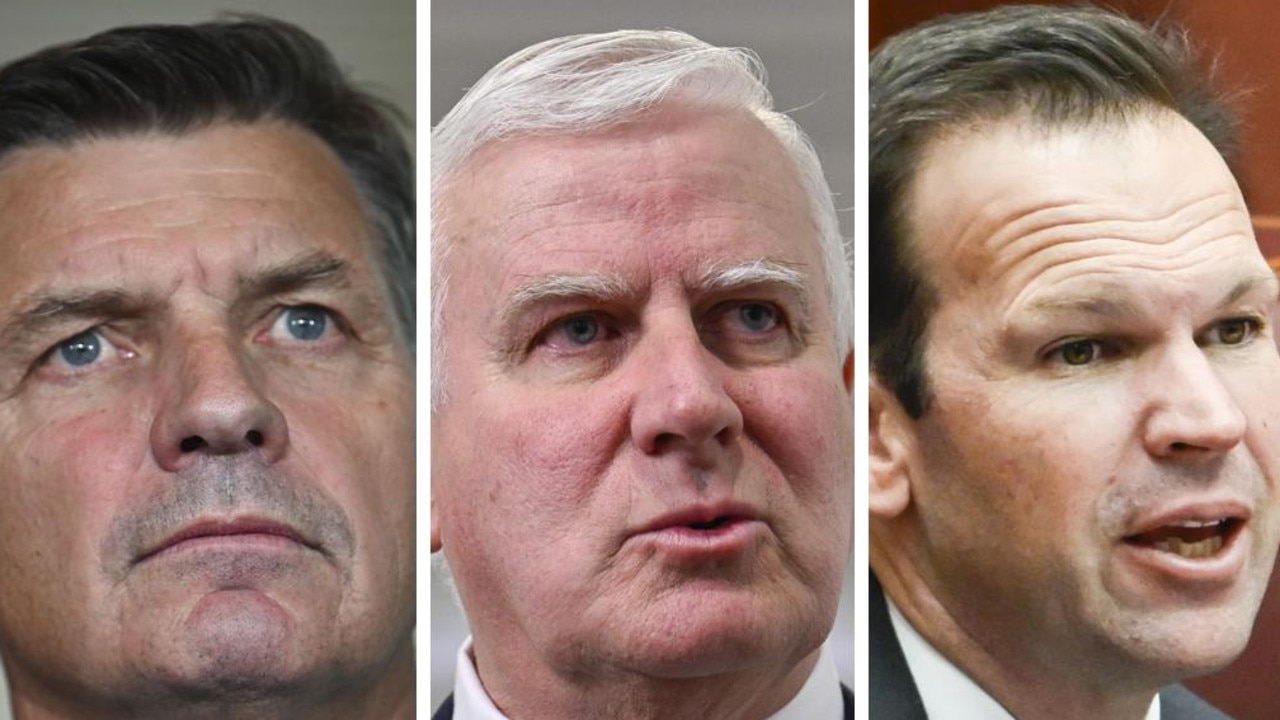
    Australia’s National Party has unveiled a significantly reshaped shadow ministry under its newly appointed leader, Senator Matt Canavan, marking a critical step in the Coalition’s rebuilding efforts following recent political turbulence. The announcement comes just days after Canavan’s election to leadership and former leader David Littleproud’s unexpected resignation citing fatigue.

    The restructured lineup maintains several key figures while implementing strategic demotions and exclusions. Notably, David Littleproud will retain a significant role as opposition spokesperson for emergency services and tourism despite his departure from leadership. Former deputy prime minister Michael McCormack assumes responsibility for water resources and veterans’ affairs, bringing considerable experience to these portfolios.

    The ministerial reshuffle follows months of internal Coalition tensions, particularly regarding January’s rebellion when three Nationals frontbenchers defied the shadow cabinet’s position on the Albanese government’s Bondi hate speech reforms. This defiance contributed to the eventual ousting of former Liberal leader Sussan Ley and created significant fractures within the opposition alliance.

    Senator Canavan described his new team as a ‘posse of patriots’ committed to advancing regional Australia’s interests. ‘The Nationals believe that a bigger regional Australia will make for a better Australia overall,’ he stated, emphasizing policies that would incentivize population movement from cities to regional areas.

    The new appointments include Queensland Senator Susan McDonald as opposition spokesperson for mining and northern Australia, while Kevin Hogan, who lost the deputy leadership following Littleproud’s resignation, will serve as shadow assistant treasurer and financial services spokesperson. Notably absent from the new lineup is Ross Cadell, who had previously crossed the floor during the January rebellion.

    Opposition Leader Angus Taylor endorsed the new Nationals team, acknowledging their understanding of ‘the pressures facing families, farmers, small businesses and regional communities.’ The Coalition simultaneously seeks to leverage current national concerns, including the fuel crisis stemming from the Iran conflict, to pressure the Labor government.

  • ‘Mr. Nobody Against Putin’ wins best documentary feature Oscar for teacher who opposed Ukraine war

    ‘Mr. Nobody Against Putin’ wins best documentary feature Oscar for teacher who opposed Ukraine war

    LOS ANGELES — In a striking moment of cinematic triumph and political statement, “Mr. Nobody Against Putin” claimed the Academy Award for Best Documentary Feature at Sunday’s Oscars ceremony. The film offers a courageous examination of how Russia’s youth are being indoctrinated with pro-war propaganda following the invasion of Ukraine.

    Accepting the award through a translator, the film’s protagonist and co-director Pavel Talankin delivered an impassioned plea in Russian: “In the name of our future, in the name of all of our children, stop all of these wars now.” Talankin, a former teacher and activities director from a small Russian town, secretly documented his students’ lessons, chants, and songs promoting the Ukraine conflict. He risked his safety by smuggling hard drives out of the country to collaborate with American director David Borenstein, who is based in Copenhagen.

    The acceptance speeches provided some of the evening’s most overtly political moments. Backstage, Talankin revealed his students had helped craft his speech. Borenstein addressed the broader theme of nations descending into totalitarianism, drawing clear parallels between his own country and Talankin’s.

    “‘Mr. Nobody Against Putin’ is about how you lose your country,” Borenstein stated. “You lose it through countless small little acts of complicity.” The director received growing applause as he elaborated that countries are lost when citizens remain silent as governments kill people in the streets and oligarchs consolidate media control.

    Kremlin spokesman Dmitry Peskov declined to comment on the award, stating he had not seen the documentary.

    Distributed by Apple TV, the film premiered at last year’s Sundance Film Festival. Its tone blends light, almost mischievous comedy with serious political commentary, with Talankin occasionally channeling the style of fellow documentary Oscar winner Michael Moore. The victory marked an upset over frontrunner “The Perfect Neighbor,” a Netflix production constructed primarily from police body camera footage.

    The Ukraine conflict has consistently featured prominently in recent Oscar documentary categories. This follows last year’s win by The Associated Press’ “20 Days in Mariupol” and the nomination this year of “Armed Only With a Camera: The Life and Death of Brent Renaud,” about an American journalist killed in the war.

    In the documentary short category, “All the Empty Rooms” prevailed, chronicling efforts to memorialize the bedrooms of children killed in mass shootings. The filmmakers yielded their acceptance time to Gloria Cazares, mother of 9-year-old Jackie who died in the Uvalde shooting, who made an emotional appeal for gun reform.

  • ‘I let my teammates down’: Daly Cherry-Evans knew his round 1 performance wasn’t up to scratch

    ‘I let my teammates down’: Daly Cherry-Evans knew his round 1 performance wasn’t up to scratch

    Daly Cherry-Evans has masterfully demonstrated the perils of premature judgment in professional sports, responding to intense criticism with a commanding performance that propelled the Sydney Roosters to a decisive victory over archrivals South Sydney Rabbitohs. The veteran halfback’s transition to the Roosters faced immediate scrutiny following a disappointing Round 1 defeat against the New Zealand Warriors, where defensive vulnerabilities and team discipline issues prompted calls for his benching after just one appearance.

    The 37-year-old playmaker, however, delivered a spectacular rebuttal on Friday night, opening the scoring and orchestrating the final try in a display that justified the Roosters’ strategic acquisition. With 354 NRL games to his credit, Cherry-Evans exhibited the composure of a seasoned professional, deliberately avoiding external noise while focusing on systemic improvements with his new teammates.

    “I maintain a conscious distance from media commentary,” Cherry-Evans revealed post-match. “After decades in the league, I’ve developed effective mechanisms to handle criticism—primarily through digital detoxification and intensified training regimens. This week, we collectively embraced that philosophy.”

    The victory against South Sydney provided crucial momentum ahead of upcoming challenges against Penrith Panthers and Cherry-Evans’ emotional return to 4 Pines Park to confront his former Manly Sea Eagles squad. His developing partnership with fellow half Sam Walker showed promising coordination, suggesting significant potential for the Roosters’ offensive strategies.

    Reflecting on the Warriors defeat, Cherry-Evans acknowledged personal accountability while emphasizing perspective: “I take profound pride in my performances, and I certainly felt I disappointed my teammates last week. However, I resisted the apocalyptic narrative that some were constructing. My strength lies in contextualizing setbacks and implementing precise corrections.”

    The Roosters’ culture of resilience, reinforced by established leadership structures and coaching philosophy, enabled the squad to transform an initial stumble into a powerful statement victory, establishing early-season credibility despite their traditional slow starts.

  • Neymar’s path to the World Cup with Brazil narrows after subdued performance for Santos

    Neymar’s path to the World Cup with Brazil narrows after subdued performance for Santos

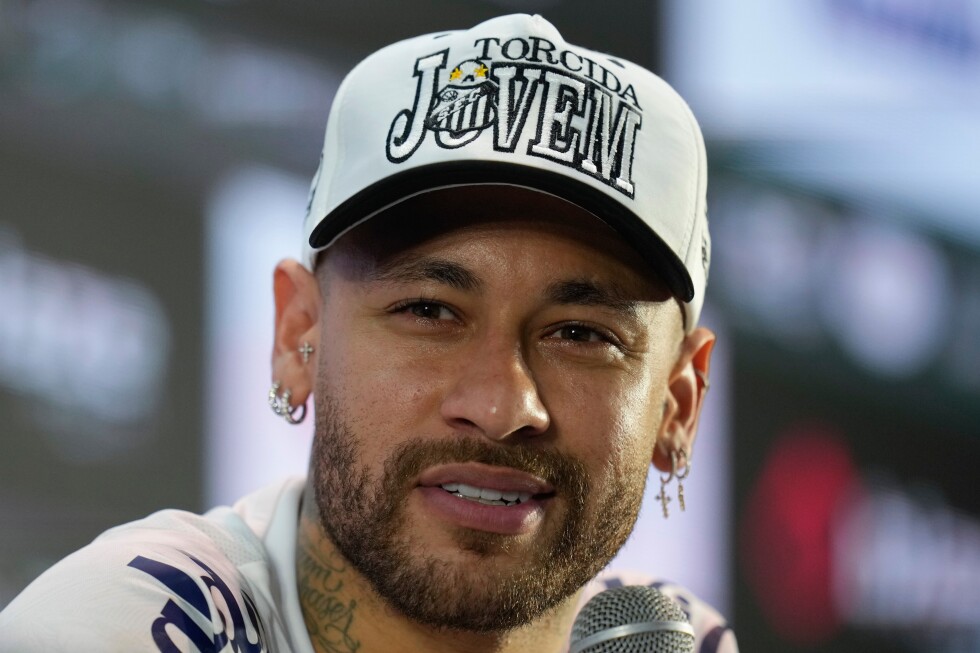
    SAO PAULO — Brazilian football superstar Neymar Jr. faces mounting uncertainty regarding his selection for the upcoming World Cup following an unimpressive performance in Santos’ 1-1 draw against Corinthians on Sunday. The match represented the final opportunity for the 34-year-old striker to demonstrate his capabilities before Brazil coach Carlo Ancelotti announces his squad for crucial preparatory friendlies against France and Croatia.

    Neymar, Brazil’s all-time leading scorer with 79 international goals, delivered a notably subdued performance at Vila Belmiro Stadium. His most significant opportunity came in the second half with a narrowly missed header, while throughout the match he demonstrated limited dribbling effectiveness and failed to register a single shot on target. The performance followed his controversial absence from Tuesday’s match against Mirassol, which Ancelotti attended without prior notification of Neymar’s withdrawal.

    The striker’s recent history compounds his selection challenges. Neymar underwent ACL reconstruction surgery in October 2023 followed by additional knee surgery in December, limiting him to fewer than 10 appearances for Santos this season. Despite these setbacks, he has demonstrated flashes of his former brilliance, most notably in February when his two-goal performance against Vasco da Gama elevated him into Santos’ top ten all-time scorers.

    Ancelotti has maintained stringent selection criteria, emphasizing that only fully fit players will be considered for the World Cup tournament. The coach has simultaneously suggested that certain established players might bypass the usual evaluation process, leaving Neymar with residual hope for final squad inclusion even if omitted from the upcoming friendlies.

    Following the match, a visibly disappointed Neymar told reporters: ‘My aspiration to rejoin the national team and compete in the World Cup remains strong, but ultimately this decision lies beyond my control. Regardless of my participation, I will always support Brazil.’

    With Brazil’s federation staff observing Sunday’s match and Ancelotti’s final squad announcement scheduled for May, Neymar’s pathway to what would be his fourth consecutive World Cup appearance appears increasingly precarious.

  • Is this product ‘human-made’? The race to establish an AI-free logo

    Is this product ‘human-made’? The race to establish an AI-free logo

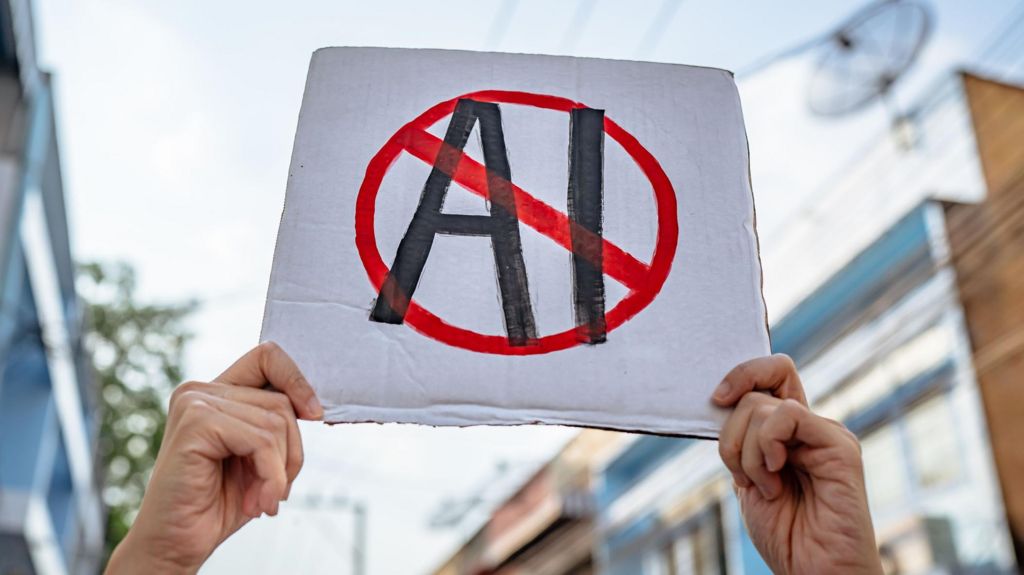
    A worldwide movement is gaining momentum as organizations scramble to establish a universally recognized certification system for human-created products and services. This emerging trend represents a significant cultural pushback against the pervasive integration of artificial intelligence across creative and commercial sectors.

    Multiple initiatives from the UK, Australia, and the United States are developing distinctive labels including “Proudly Human,” “Human-made,” “No A.I,” and “AI-free” declarations. These markings are increasingly appearing across films, marketing materials, literary works, and digital platforms. The movement stems from growing concerns that AI-powered automation threatens to displace entire professions and diminish the value of human creativity.

    BBC News has identified at least eight separate initiatives competing to develop a certification standard that could achieve global recognition comparable to the Fair Trade logo. However, experts warn that this proliferation of competing labels, coupled with fundamental confusion about what constitutes “AI-free” content, risks creating consumer uncertainty rather than clarity.

    Dr. Amna Khan, consumer behavior expert at Manchester Metropolitan University, emphasizes: “AI is creating significant disruption, and competing definitions of what is ‘human made’ are confusing consumers. A universal definition is essential to build trust, clarification and confidence.”

    The certification landscape varies dramatically between organizations. Some platforms like no-ai-icon.com, ai-free.io and notbyai.fyi offer downloadable badges for free or minimal fees with little to no verification process. In contrast, systems like aifreecert require payment and implement rigorous vetting procedures utilizing professional analysts and AI-detection software.

    Technical challenges present substantial obstacles to standardization. AI Research Scientist Sasha Luccioni explains: “AI is now so ubiquitous and integrated into different platforms and services that establishing what ‘AI free’ means is truly complicated. From a technical perspective, it’s hard to implement. I think AI exists on a spectrum, and we need more comprehensive certification systems rather than a binary AI/AI-free approach.”

    The creative industries have emerged as ground zero for this movement. The 2024 Hugh Grant thriller Heretic explicitly stated in its closing credits that “No generative AI was used in the making of this film.” Film distributor The Mise en scène Company has incorporated a ‘No AI was used’ stamp into promotional materials for its latest production.

    CEO Paul Yates articulates the industry perspective: “We support the AI industry and think it’s an exciting time, but we believe AI content creates an economic premium for human-made content, and we want to leverage that.”

    Publishing has similarly embraced authentication efforts. Faber and Faber began applying “Human Written” stamps to select titles, with author Sarah Hall requesting the designation for her novel Helm, describing unauthorized use of books to train AI models as “creative larceny at scale.”

    UK company Books by People has established a certification system requiring publishers to complete detailed questionnaires about their practices and author vetting procedures, supplemented by periodic sample testing. Meanwhile, Australia’s Proudly Human implements even more rigorous verification throughout the publication process, including monitoring changes from manuscript to ebook formats.

    Alan Finkel of Proudly Human asserts the necessity of third-party verification: “A certification of ‘human origin’ is needed, but self-certification isn’t sufficient. We’ve established a full verification process to ensure truly human-originated material.”

    As these competing standards evolve, the fundamental challenge remains establishing technical and ethical consensus around what constitutes human creativity in an age of increasingly sophisticated artificial intelligence.

  • ‘I cry every time’: How Kpop Demon Hunters went viral

    ‘I cry every time’: How Kpop Demon Hunters went viral

    The unprecedented triumph of ‘Kpop Demon Hunters’ at the 2026 Academy Awards, where it secured the Oscar for Best Animated Feature, represents a cultural watershed moment in global entertainment. This groundbreaking film has captivated audiences worldwide since its Netflix debut last summer, achieving what few animated features have accomplished: genuine cross-generational appeal.

    At San Francisco’s elementary schools, children like eight-year-old Oona Herman trade character stickers as prized commodities while attending themed birthday parties featuring movie merchandise and life-sized character cutouts. Yet the phenomenon extends far beyond childhood fascination. Parents like Christine Kao find themselves unexpectedly moved by the film’s emotional depth, frequently moved to tears by its narrative beauty despite initial expectations of mere children’s entertainment.

    The film’s genius lies in its multi-layered construction. On its surface, it presents as a vibrant musical adventure where a K-pop girl group battles demons through the power of their golden voices. Yet beneath this colorful exterior lies a profound exploration of identity through protagonist Rumi’s struggle with her dual heritage as both demon hunter and half-demon. This tension resonates particularly with Asian American audiences who recognize the cultural nuances of family expectations and personal identity.

    Musically, the film represents an evolutionary leap in cultural fusion. The soundtrack—crafted by an international team of K-pop and Hollywood producers—creates what musicologist Ray Seol of Berklee College describes as ‘a clever intersection between K-pop and Western pop music.’ The producers engineered a ‘global sound’ that maintains K-pop’s essential character while incorporating familiar Western pop elements, making it accessible to international audiences while preserving its authentic Korean roots.

    Lyrically, the songs transcend typical animated film music, serving as narrative vehicles that explore themes of self-discovery and identity. Tracks like ‘What It Sounds Like’ function on multiple levels, simultaneously referencing physical markings that reveal Rumi’s heritage while metaphorically addressing emotional scars and personal growth.

    The film arrives at a pivotal moment in Korean cultural expansion, building upon the foundation laid by Gangnam Style’s global breakthrough in 2012. Where BTS and Blackpink paved the way for K-pop’s Western acceptance, ‘Kpop Demon Hunters’ represents the maturation of this cultural movement into a comprehensive ‘K-everything’ phenomenon that encompasses animation, storytelling, and cultural diplomacy. South Korean President Lee Jae Myung has explicitly embraced this cultural output as soft power instrument for diplomatic and economic advancement.

    From merchandise shortages that surprised Netflix to academic analysis at institutions like Yale University, where sociology professor Dr. Grace Kao studies its cultural impact, the film has demonstrated an extraordinary capacity to bridge demographic and cultural divides while advancing the ongoing global influence of Korean creative industries.

  • Blackened, wrecked Russian tanker nears Malta

    Blackened, wrecked Russian tanker nears Malta

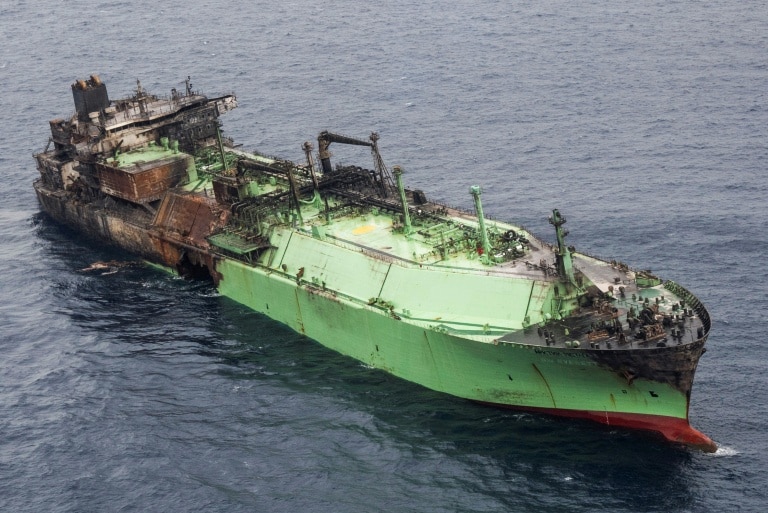
    A sanctioned Russian liquefied natural gas carrier, the Arctic Metagaz, continues to drift unmanned in the Mediterranean Sea while displaying severe structural damage. Recent aerial footage reveals the 277-meter vessel listing heavily to one side, with extensive fire damage blackening its exterior and two substantial breaches visible amidships.

    The vessel has been adrift since March 3rd following multiple explosions that occurred off the Libyan coast. Current positioning places the damaged carrier approximately 50 nautical miles southwest of Malta, raising significant environmental concerns among regional authorities.

    Russian officials have attributed the incident to Ukrainian drone operations, though Ukraine has maintained official silence regarding these allegations. The Arctic Metagaz forms part of Russia’s so-called “shadow fleet” – aging tankers specifically employed to circumvent Western sanctions imposed following the 2022 invasion of Ukraine.

    Environmental organizations including WWF Italy have issued grave warnings regarding the vessel’s cargo, which includes approximately 62,000 metric tonnes of liquefied natural gas originally destined for Egypt, alongside 900 tonnes of diesel fuel. Experts caution that potential leakage could trigger catastrophic environmental consequences including cryogenic clouds lethal to marine organisms and extensive, persistent pollution throughout the Mediterranean ecosystem.

    Italian Prime Minister Giorgia Meloni has convened emergency meetings with key ministers to coordinate response efforts, while Maltese authorities confirm that salvage specialists have already arrived in preparation for the vessel’s anticipated entry into Maltese waters. A specialized recovery vessel is currently en route to assist with containment and mitigation operations.

  • Espressos and red wine: Italy’s baseball team captivates Classic

    Espressos and red wine: Italy’s baseball team captivates Classic

    In a stunning Cinderella story that has captivated the baseball world, Italy’s national team has defied 80-1 odds to reach the World Baseball Classic semifinals for the first time in history. Their improbable journey continued Saturday with a dramatic 8-6 quarterfinal victory against Puerto Rico, cementing their status as the tournament’s most compelling underdog narrative.

    The Italian squad, predominantly composed of American players with Italian heritage, has embraced its cultural roots with distinctive flair. Team captain Vinnie Pasquantino of the Kansas City Royals introduced an espresso machine to the dugout, where players celebrate home runs with celebratory shots of the strong coffee. Victories are toasted with bottles of red wine while the operatic vocals of Andrea Bocelli resonate through locker room celebrations.

    Manager Francisco Cervelli, a Venezuela-born former MLB veteran who only assumed leadership in January, has masterfully forged team chemistry despite limited preparation time. ‘In the beginning, it was tough,’ Cervelli acknowledged. ‘This tournament, they only give you three days together. To build chemistry, we did so many things inside the clubhouse to get to know personalities.’

    The team’s transformation began with group stage victories over Brazil and Great Britain before achieving a seismic upset against a star-studded United States lineup considered one of the most talented baseball teams ever assembled. ‘Then we beat the United States, and now it’s a different team,’ Cervelli observed. ‘They’re going to miss this tournament after they go back to their teams because it’s been really fun.’

    Beyond the field, the team’s success has sparked unprecedented baseball enthusiasm in Italy, where the sport remains relatively obscure. Pasquantino noted the cultural impact: ‘Italy was able to watch our game today, and it was on television out there. There was baseball being played at bistros and cafes in Italy tonight. That doesn’t happen.’

    For players like 21-year-old infielder Andrew Fischer, whose maternal great-great-grandfather was born in Campania, representing Italy has provided a meaningful connection to their heritage. ‘Italian culture is engraved in New Jersey,’ said Fischer, who sports a Frank Sinatra tattoo. ‘Being here and representing it has definitely brought some light to it in my life.’

    The team now prepares to face Venezuela in Monday’s semifinal in Miami, carrying both their unexpected winning streak and their distinctive Italian spirit into the tournament’s final stages.

  • Ukraine’s urgent fight on the financial frontline

    Ukraine’s urgent fight on the financial frontline

    While Ukrainian soldiers continue their defense against Russian aggression, the government in Kyiv is simultaneously waging a crucial economic battle to secure the nation’s financial stability and future prosperity. This economic frontline represents an unseen but equally critical theater in the ongoing conflict.

    Ukraine’s Finance Minister Sergii Marchenko emphasizes the strategic importance of economic resilience, stating, “Our strong army depends on our strong economy because all internally mobilized resources are channeled toward national defense.” The minister articulates a vision beyond immediate survival, expressing Ukraine’s ambition to evolve from being “just a poor neighbor” to becoming a valuable provider of military expertise to Europe.

    International financial support has become the lifeline sustaining Ukraine’s economy. A monumental €90 billion ($105 billion) EU loan, approved by the European Parliament, forms the centerpiece of a $136.5 billion international support package. The first tranche is anticipated in April, providing critical budgetary support. Concurrently, the International Monetary Fund has approved an $8.1 billion loan program, with an initial $1.5 billion disbursement already received.

    These external funds are particularly crucial since American financial assistance has diminished. Minister Marchenko acknowledges that without international support, Ukraine cannot survive given its current circumstances. However, he emphasizes that Ukrainian taxpayers remain the primary contributors to military funding.

    Domestic revenue mobilization has intensified through controversial tax increases implemented in December 2024—the first since the war began—affecting personal incomes, small businesses, and financial institutions. These measures are projected to generate $67.5 billion in government revenue this year, representing a 15% increase from the previous year.

    Despite these efforts, Ukraine faces a significant budgetary shortfall. The 2026 budget outlines $112 billion in spending, with approximately 60% allocated to military expenditures. This creates a $45 billion gap that the government aims to bridge through additional tax legislation, including increased taxation on digital platforms and reduced VAT exemptions as stipulated by IMF conditions.

    The path to economic stability faces multiple obstacles. Hungary’s Prime Minister Viktor Orban has temporarily blocked EU financial assistance amid accusations of an “oil blockade” from Ukraine. Kyiv attributes pipeline repair delays to Russian attacks that have injured repair crews. The outcome of upcoming Hungarian elections may significantly influence this diplomatic and economic standoff.

    Energy infrastructure damage presents another formidable challenge. Finance Minister Marchenko identifies electricity insufficiency as the economy’s primary constraint, forcing businesses to rely on generators and reducing productivity while increasing costs. Common sights of generators outside businesses underscore the energy sector’s difficulties, which the central bank acknowledges will “restrain business activity for a long time.”

    Civilian economic hardships persist despite decreasing inflation from its wartime peak of 26.6% to the current 7.4%. Pensioners like 65-year-old Tetiana describe working additional jobs because pensions prove insufficient amid rising food and utility prices. Restaurant worker Mykyta, 19, reports staffing challenges and operational difficulties during power outages.

    The reconstruction outlook appears daunting. A collaborative assessment by the Ukrainian government, EU, World Bank, and UN estimates recovery costs at $588 billion—nearly two-and-a-half times Ukraine’s entire economy—encompassing housing, infrastructure repair, and mine clearance.

    Despite these challenges, optimism persists within business circles. Gennadiy Chyzhykov, President of the Ukrainian Chamber of Commerce and Industry, reports growing foreign business interest and investment inquiries. “They believe in victory and they believe in good business in Ukraine,” he states, noting increased delegations investigating post-war reconstruction opportunities.

    The European Bank for Reconstruction and Development has committed over $10 billion in Ukraine since the conflict began. President Odile Renaud-Basso acknowledges the “immense” challenges but expresses confidence in their management, emphasizing that “a real, just peace, credible peace settlement will be key” for investor confidence.

    Labor shortages present additional reconstruction hurdles. The UN’s International Labor Organization projects a deficit of 8.7 million workers, with millions having either joined military forces or left the country. Business leaders suggest importing foreign workers as a potential solution.

    Through these multifaceted challenges, Finance Minister Marchenko maintains that wartime economic pressures are driving transformations that could ultimately create “a better economy for the future.” He concludes with determined resolve: “The Ukrainian people, our government, and economy are resilient and determined to fight this war because we defend ourselves and we will.”