作者: admin

  • Seville ushers in new era for Jamaican sprinting

    Seville ushers in new era for Jamaican sprinting

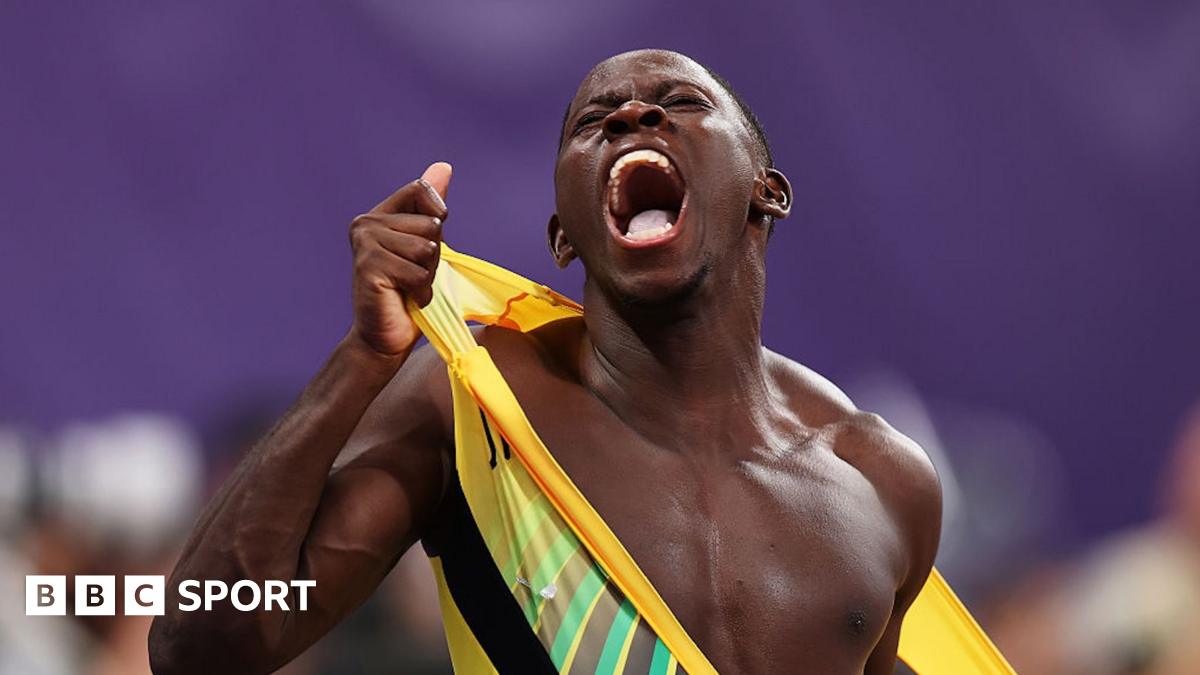
    In a moment of sheer triumph, Oblique Seville has etched his name into the annals of athletics history, becoming the first Jamaican man to claim the world 100m title since the legendary Usain Bolt in 2016. The 24-year-old sprinter delivered a breathtaking performance at the Tokyo World Championships, clocking a personal best of 9.77 seconds to secure gold and usher in a new era for Jamaican sprinting. His victory, coupled with Kishane Thompson’s silver, marked a resounding return to dominance for Jamaica in the men’s 100m event, ending a four-year streak of American supremacy.

    Seville’s journey to the top has been anything but smooth. After narrowly missing the podium in the 2023 World Championships and a disappointing last-place finish in the 2024 Paris Olympics, doubts lingered about his ability to fulfill his immense potential. However, under the guidance of Glen Mills, Usain Bolt’s former coach, Seville silenced his critics with a commanding performance in Tokyo. ‘I have proved that I am a true competitor, that I have the determination of a champion,’ Seville declared after his victory.

    The emotional weight of the moment was palpable, with Bolt himself in attendance, visibly elated by Seville’s success. ‘His coach is my coach, and I know that both of them are very proud of me right now,’ Seville shared. The young sprinter also revealed that Bolt’s mentorship and family support have been pivotal in his journey. ‘Since my father passed away, Usain’s my motivator,’ he added.

    Seville’s triumph was part of a stellar night for Jamaica, with Tina Clayton securing silver in the women’s 100m final. Meanwhile, the United States celebrated Melissa Jefferson-Wooden’s breakthrough gold in the women’s event, ensuring the continued rivalry between the two sprint powerhouses. As Seville looks ahead, his victory not only cements his status as a world-class athlete but also reignites Jamaica’s hopes for a new golden era in sprinting.
  • Romania becomes second Nato country to report Russian drone in its airspace

    Romania becomes second Nato country to report Russian drone in its airspace

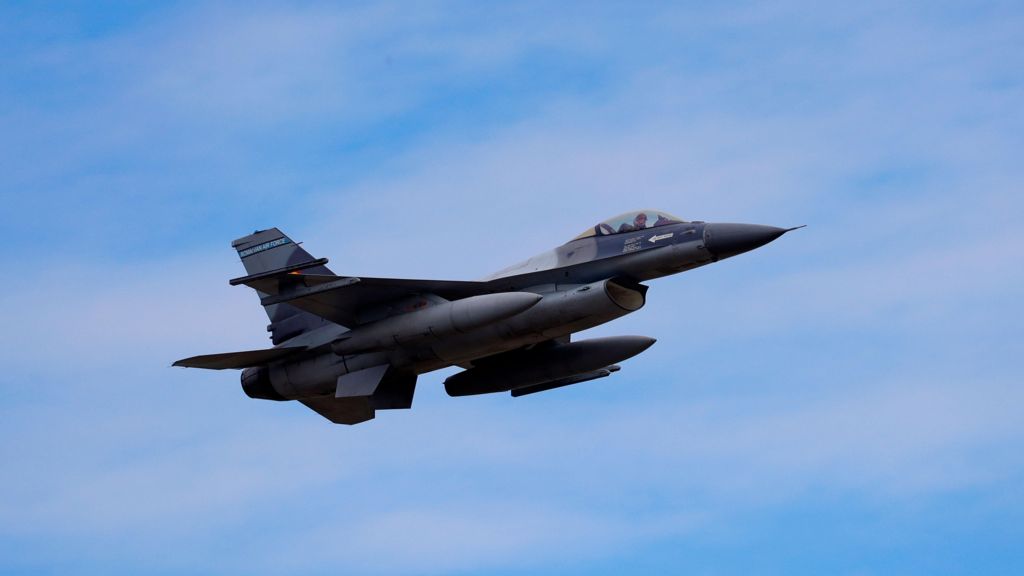
    In a significant escalation of tensions in Eastern Europe, a Russian drone breached Romanian airspace on Saturday, marking the second NATO country to report such an incursion this week. Romanian F-16 fighter jets, monitoring the country’s border with Ukraine, detected the drone following Russian air attacks on Ukrainian infrastructure near the Danube River. The drone, identified as a Geran (the Russian designation for the Iranian-designed Shahed 136), was tracked 20 kilometers southwest of the village of Chilia Veche before disappearing from radar. Although it did not fly over populated areas or pose immediate danger, the incident has raised concerns about Russia’s expanding military activities in the region. Ukrainian President Volodymyr Zelensky condemned the breach as a deliberate act of war expansion by Russia, while Moscow has remained silent on the allegations. Romania has summoned the Russian ambassador and is considering its response under a new law that authorizes the military to shoot down unauthorized drones. Meanwhile, Poland reported shooting down three Russian drones earlier in the week, prompting heightened defensive measures across NATO’s eastern flank. The Czech Republic has also deployed a special operations helicopter unit to Poland in response to the escalating threat. As the conflict in Ukraine continues, Western leaders, including U.S. President Donald Trump, have called for stricter sanctions on Russia, though NATO members remain divided on the best course of action.

  • England and South Africa draw T20 series after washout

    England and South Africa draw T20 series after washout

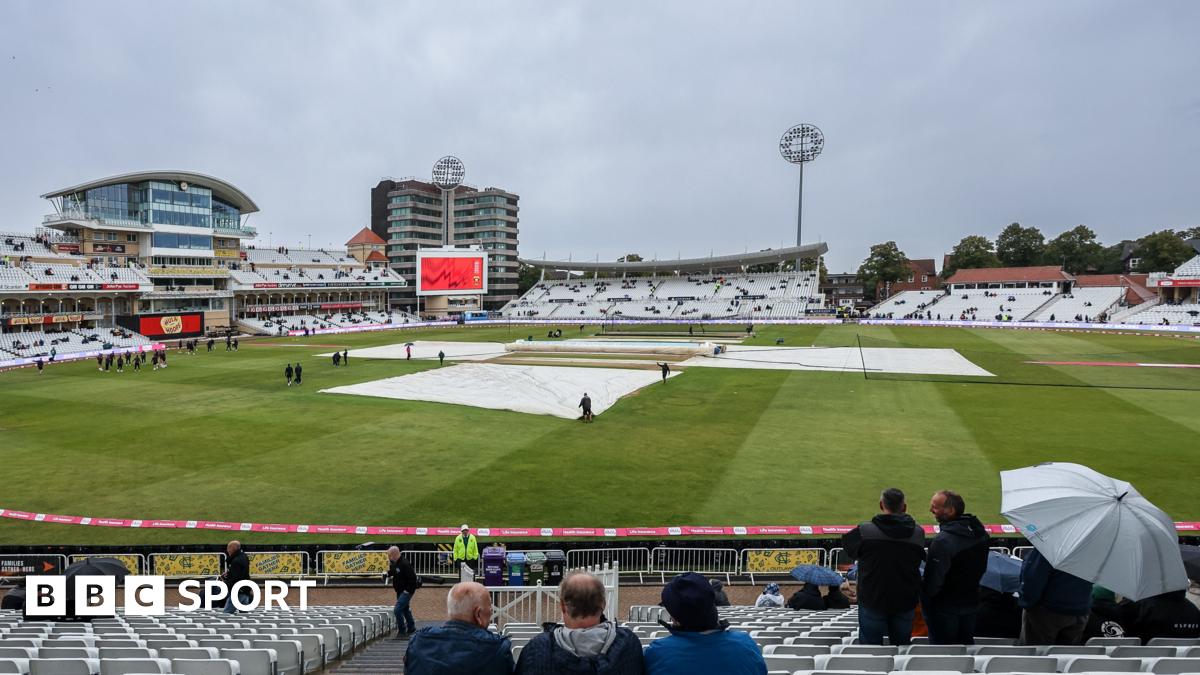
    The highly anticipated third T20 match between England and South Africa, which was set to determine the winner of the series, was abandoned due to relentless rain at Trent Bridge on Sunday. The match, scheduled to begin at 14:30 BST, was called off by the umpires at approximately 16:20 after persistent rainfall prevented any play. This washout resulted in the series being drawn 1-1, leaving both teams without a decisive victory. The first match of the series had been shortened by rain, with South Africa emerging victorious, while England leveled the score with a record-breaking performance at Old Trafford. England’s Harry Brook expressed disappointment, stating, ‘It’s a shame the weather has ruined it again,’ but praised his team’s exceptional performance in the previous game. South Africa’s captain, Aiden Markram, acknowledged the frustration but emphasized the importance of building momentum ahead of the World Cup. The abandonment marks the end of England’s home summer cricket season, with an understrength squad set to begin a T20 series in Ireland on Wednesday, followed by white-ball fixtures in New Zealand in October.

  • Hermeto Pascoal, ‘the wizard’ of Brazilian music, dies at 89

    Hermeto Pascoal, ‘the wizard’ of Brazilian music, dies at 89

    Hermeto Pascoal, the groundbreaking Brazilian composer and multi-instrumentalist renowned for his unique fusion of jazz and traditional Brazilian music, has died at the age of 89. His passing was announced on his Instagram page, where his family shared that he was surrounded by loved ones and fellow musicians at the time of his death. No further details were provided. Born on June 22, 1936, in a rural settlement in Alagoas, Pascoal overcame childhood poverty and the challenges of albinism to become a self-taught musical prodigy. He began his journey at the age of 10, performing at local dances and weddings, and later expanded his repertoire to include forró and other traditional Brazilian styles. In the late 1950s, Pascoal moved to Rio de Janeiro, where he immersed himself in the city’s vibrant jazz scene, performing in nightclubs and joining a radio orchestra. His innovative blend of jazz and Brazilian folk music captivated audiences and earned him collaborations with legendary artists, including singer Elis Regina and percussionist Airto Moreira. Pascoal’s talent also caught the attention of jazz icon Miles Davis, who hailed him as the ‘most important musician on the planet.’ Despite this acclaim, Pascoal rejected being labeled solely as a jazz musician, emphasizing his deep roots in Brazilian genres like chorinho and samba. Over his prolific career, he composed over 2,000 instrumental pieces and continued to arrange and record music well into his 80s. Known for his versatility, Pascoal mastered instruments ranging from piano and flute to saxophone, guitar, and even household objects. His unconventional approach was exemplified in 1976 when he brought live pigs into the studio while recording his debut album, ‘Slaves Mass.’ Pascoal’s family encouraged fans to honor his legacy by letting ‘a single note ring—from an instrument, your voice, or a kettle—and offer it to the universe.’ His death marks the end of an era for Brazilian music, leaving behind a legacy of innovation and boundless creativity.

  • Former English schools champion makes history for Uruguay

    Former English schools champion makes history for Uruguay

    In a dramatic finish at the World Athletics Championships in Tokyo, Julia Paternain secured a surprising bronze medal in the women’s marathon, marking Uruguay’s first-ever medal in the event’s history. The 25-year-old athlete, whose family hails from Uruguay but moved to the UK when she was two, drew inspiration from her past victories in the English Schools 3,000m championships during the race. Ranked 288th globally and competing in only her second marathon, Paternain was not considered a contender for a podium finish. However, her determination and strategic pacing propelled her to a remarkable third place with a time of 2:27.23. Kenya’s Peres Jepchirchir, the 2021 Olympic champion, clinched gold in a thrilling sprint finish, narrowly beating Ethiopia’s Tigst Assefa by two seconds. Paternain, unaware of her exact position during the race, expressed shock and disbelief at her achievement. She credited her success to her focus and resilience, recalling her earlier triumphs in school competitions. This historic moment not only highlights Paternain’s personal journey but also underscores Uruguay’s growing presence in international athletics.

  • Malawi – where the petrol queue might overshadow the queue to vote

    Malawi – where the petrol queue might overshadow the queue to vote

    As Malawi approaches its general election on Tuesday, the pressing concerns for many citizens are not the candidates or their promises, but the dire economic conditions that have gripped the nation. Prolonged fuel shortages, frequent power outages, skyrocketing living costs, widespread hunger, and rampant youth unemployment have created a palpable sense of frustration among the populace. Against this backdrop, the presidential, parliamentary, and local council candidates are vying for votes, but the usual fervor of election campaigns has been noticeably subdued. The presidential race, a rematch between incumbent Lazarus Chakwera and former President Peter Mutharika, has been marked by a lack of the traditional campaign fanfare, with fewer billboards and limited distribution of free T-shirts. The economic strain has also led to tensions, with fistfights breaking out in long queues for petrol. Chakwera has attempted to address the fuel crisis, blaming corrupt officials for sabotaging the oil market, but the issue remains unresolved. The economic challenges are particularly significant for young voters, who make up around half of the electorate. Many express disillusionment with the political process, citing years of unfulfilled promises. Despite the cynicism, candidates like Chakwera, Mutharika, and former President Joyce Banda continue to campaign, each pledging to bring about radical change. However, the real test will be whether the eventual winner can deliver on their promises and alleviate the economic hardships faced by the majority of Malawians.

  • The high, high cost of fewer foreign students in America

    The high, high cost of fewer foreign students in America

    American college campuses, from Tucson to Tallahassee, are witnessing a significant shift in their student demographics. While the fall semester typically sees students settling into classes and dorms, a concerning trend is emerging: a sharp decline in international student enrollment. According to NAFSA: Association of International Educators and JB International, an estimated 30% to 40% fewer international students are expected on US campuses in the fall of 2025 compared to the 2024-2025 academic year. This translates to approximately 150,000 fewer students, primarily due to stringent visa restrictions and canceled visa appointments at US embassies and consulates in countries like India, China, Nigeria, and Japan. The Institute for International Education reports that over 1.1 million international students, more than half from China and India, were enrolled in US institutions during the 2023-2024 academic year. The projected decline could cost the US economy $7 billion in the 2025-26 school year, as international students contribute significantly to local economies through housing, food, transportation, and other expenses. For every three international students, one American job is created or supported. Historically, international student enrollment in the US has grown steadily since the early 20th century, driven by philanthropic efforts and government-funded programs like the Fulbright Scholarship. However, recent policy changes under the Trump administration, including visa revocations and travel bans, have created an unwelcoming environment for foreign students. High-profile arrests of international students, such as Rumeysa Ozturk of Tufts University, have further deterred prospective applicants. The administration’s plans to cap the duration of student visas to four years and restrict entry from 19 countries have exacerbated the situation. Universities like New York University, Northeastern University, and Columbia University, which host the largest numbers of international students, are expected to face significant financial repercussions. This decline not only threatens the diversity and global engagement of US higher education but also undermines the economic benefits these students bring to local communities.

  • Black Ferns beat South Africa to reach semis

    Black Ferns beat South Africa to reach semis

    In a thrilling Women’s Rugby World Cup quarter-final clash, reigning champions New Zealand showcased their resilience and skill to defeat a determined South African side 46-17. The match, held at Sandy Park in Exeter, saw the Black Ferns recover from a slow start to dominate the second half and secure their place in the semi-finals against Canada. South Africa, making their first-ever quarter-final appearance, opened the scoring through prop Babalwa Latsha, but New Zealand responded with tries from Theresa Setefano and Braxton Sorensen-McGee. Aphiwe Ngwevu’s try leveled the scores at halftime, but the Black Ferns unleashed a second-half onslaught with five tries, including doubles from Renee Holmes, Sorensen-McGee, and Kaipo Olsen-Baker. South Africa’s Lerato Makua scored a late consolation try, capping off a historic campaign for the Springbok Women. New Zealand’s clinical performance highlighted their title credentials, though their slow start and scrum penalties could be areas of concern ahead of the semi-finals. South Africa’s head coach, Swys de Bruin, praised his team’s legacy-building efforts, emphasizing the growth of women’s rugby in the country. The Black Ferns, unbeaten in World Cup matches since 2014, now turn their focus to Friday’s semi-final in Bristol.

  • If Donald Trump gets his disaster capitalism way in Gaza

    If Donald Trump gets his disaster capitalism way in Gaza

    Gaza, a region devastated by conflict, lies in ruins with entire neighborhoods destroyed and hundreds of thousands of residents crammed into tents, struggling for basic necessities like food, water, and power. Amid this humanitarian crisis, a leaked 38-page document from the Trump administration, titled the Gaza Reconstitution, Economic Acceleration and Transformation (Great) Trust, proposes a radical plan to “fundamentally transform Gaza” by integrating it into the India–Middle East–Europe Economic Corridor (Imec).

    The plan, framed as a reconstruction effort, emphasizes “massive US gains” and the acceleration of Imec, while consolidating an “Abrahamic regional architecture”—a reference to the 2020 Abraham Accords that normalized relations between Israel, the UAE, and Bahrain. This vision aligns closely with Israeli Prime Minister Benjamin Netanyahu’s “Gaza 2035” proposal, which envisions Gaza as a sanitized logistics hub linked to Saudi Arabia’s Neom mega-project, devoid of meaningful Palestinian presence.

    Imec, launched at the 2023 G20 summit in New Delhi, is a transformative infrastructure project signed by the US, EU, India, Saudi Arabia, and the UAE. It includes railways, ports, pipelines, and digital cables connecting South Asia to Europe via the Arabian Peninsula. While Israel is not a formal signatory, its role is implicit, with the corridor running through Haifa Port.

    The plan casts Gaza as both an obstacle and a gateway, presenting it as a historic crossroads of trade routes. It proposes extending Gaza’s port, integrating its industries into regional supply chains, and reorganizing its land into “planned cities” and digital economies. However, the vision is not one of recovery for Gaza’s residents but rather its conversion into a logistics center serving Imec.

    The Great Trust’s most radical element is its model of direct trusteeship, envisioning a US-led custodianship that would govern Gaza, oversee security, manage aid, and control redevelopment. Even after establishing a “Palestinian polity,” the trust would retain powers through a Compact of Free Association. The plan also includes provisions for “voluntary relocation,” offering financial incentives for Palestinians to leave Gaza, a move critics argue sanctions ethnic cleansing.

    The document is laden with “Abrahamic” branding, from logistics hubs to infrastructure corridors, and envisions a techno-futurist Gaza with smart manufacturing zones, AI-regulated data centers, and luxury resorts. It aims to channel Gulf capital into Gaza’s redevelopment, forecasting $70–100 billion in public investment and $35–65 billion from private investors.

    While Saudi Arabia has not formally joined the Abraham Accords, its backing of Imec signals acceptance of the framework. For Washington, Gaza’s reconstruction is seen as a final step in persuading Riyadh to normalize relations with Israel. However, the plan’s focus on Gaza as a distressed asset to be flipped raises ethical concerns, with critics labeling it disaster capitalism at its sharpest.

    Despite the grand visions of free-trade zones and futuristic cities, Palestinians have consistently rejected such schemes. The leaked document underscores that Gaza’s future is being framed within a broader US effort to reshape the region, raising questions about whose interests are truly being served.

  • Neo-Nazi Golden Dawn leader released from prison early

    Neo-Nazi Golden Dawn leader released from prison early

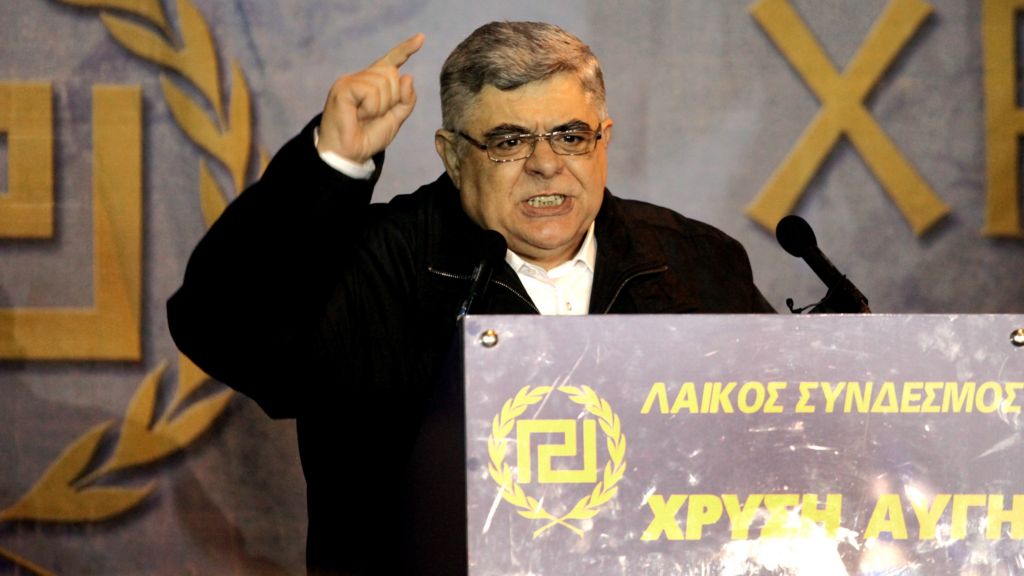
    Nikos Michaloliakos, the notorious leader of the Greek neo-Nazi party Golden Dawn, has been granted early release from prison, igniting widespread condemnation. The 67-year-old far-right politician, known for his admiration of Nazism and Holocaust denial, was permitted to serve the remainder of his 13-year sentence under house arrest due to health concerns, as reported by state media on Friday. Michaloliakos had been convicted in 2020 for orchestrating a series of violent attacks on immigrants and political opponents carried out by Golden Dawn supporters. This marks the second time he has been released early; a previous attempt in May 2024 was revoked after he failed to demonstrate satisfactory behavior. Golden Dawn, which Michaloliakos founded and led, was declared a criminal organization linked to the murder of an anti-fascist musician and attempted murders of Egyptian fishermen and communist activists. The party gained significant traction during Greece’s financial crisis, securing third place in the 2012 elections with its anti-immigrant and nationalist rhetoric. Despite officially denying its neo-Nazi identity, Golden Dawn adopted Nazi-inspired symbols and ideologies. Michaloliakos and former party MPs were convicted of leading or participating in the criminal group. The decision to release him has drawn sharp criticism from left-wing parties, with Greece’s New Left party calling it a ‘serious blow to the collective memory and the struggle for democracy and justice.’ The communist party KKE has demanded the decision be overturned, emphasizing that Golden Dawn’s crimes remain unforgotten by the public and younger generations.