作者: admin

  • USS Gerald R. Ford enters Mediterranean: A look at US military assets in region

    USS Gerald R. Ford enters Mediterranean: A look at US military assets in region

    In a significant escalation of military presence, the USS Gerald R. Ford—the world’s largest aircraft carrier—has entered the Mediterranean Sea through the Strait of Gibraltar. This deployment substantially enhances American strategic capabilities in a region experiencing unprecedented military mobilization ahead of potential confrontations with Iran.

    The naval reinforcement brings total US warship deployments in the Middle East to 17 vessels, including two aircraft carriers simultaneously operating in the region—an uncommon show of naval strength. The Ford carrier strike group joins the existing USS Abraham Lincoln and its accompanying fleet of nine destroyers and three littoral combat ships already positioned in the area.

    Beyond naval assets, the United States has deployed advanced aerial capabilities to the region. Open-source intelligence and flight tracking data confirm the presence of F-22 Raptor and F-35 Lightning stealth fighter jets, alongside F-15 and F-16 warplanes, supported by KC-135 aerial refueling aircraft essential for sustained operations.

    The military buildup extends to enhanced land-based air defense systems throughout the Middle East, complementing the sea-based defense capabilities provided by guided-missile destroyers. This multi-layered approach addresses potential vulnerabilities at US military installations across the region, where tens of thousands of personnel remain stationed.

    The strategic deployment occurs amidst heightened tensions following previous exchanges, including Iran’s missile launch toward a US base in Qatar in June 2025—which was successfully intercepted by air defense systems—in retaliation for American strikes on Iranian nuclear facilities.

  • Six races, six golds – Klaebo’s historic Olympics

    Six races, six golds – Klaebo’s historic Olympics

    Norwegian cross-country skiing sensation Johannes Hoesflot Klaebo has etched his name in Winter Olympic history by capturing an unprecedented sixth gold medal at the Milan-Cortina 2026 Games. The 29-year-old phenom achieved this extraordinary feat by dominating the grueling 50km mass start classic event, completing the challenging course in 2 hours, 6 minutes, and 44.8 seconds.

    Klaebo’s victory marked a complete Norwegian podium sweep, with teammates Martin Loewstroem Nyenget securing silver and Emil Iversen claiming bronze. Nyenget finished 8.9 seconds behind the champion, earning his third medal of the competition.

    This historic performance surpasses the previous record of five gold medals set by American speed skater Eric Heiden at the 1980 Lake Placid Olympics. Klaebo now boasts 11 Winter Olympic gold medals overall, establishing himself as the first athlete to win all six cross-country skiing events at a single Games. Among all Olympians, only swimming legend Michael Phelps, with 23 gold medals, stands above Klaebo’s remarkable achievement.

    Reflecting on his accomplishment, Klaebo told BBC Sport: ‘It’s been crazy, it’s a dream come true. I really think this Olympics has been perfect. Being able to crown the Olympics with the 50km was unbelievable.’

    The Norwegian champion’s journey to skiing greatness began when he moved to Trondheim as a child, a region renowned for its cross-country skiing trails. His dominance extends beyond the Olympics, with an incredible 116 World Cup victories and 15 world championship titles to his name.

    Meanwhile, Team GB’s Andrew Musgrave delivered a respectable sixth-place finish, nearly four minutes behind Klaebo, while teammate Joe Davies placed 16th. The 35-year-old Musgrave, competing in his fifth Olympics, humorously remarked about potentially competing in his sixth Games: ‘I’m still young and promising.’

    Despite limited resources, the British cross-country team celebrated their most successful Olympic performance to date, including a fifth-place finish in the team sprint event—the nation’s best result in the sport.

  • Body odour, bad breath? How UAE schools are teaching better hygiene habits

    Body odour, bad breath? How UAE schools are teaching better hygiene habits

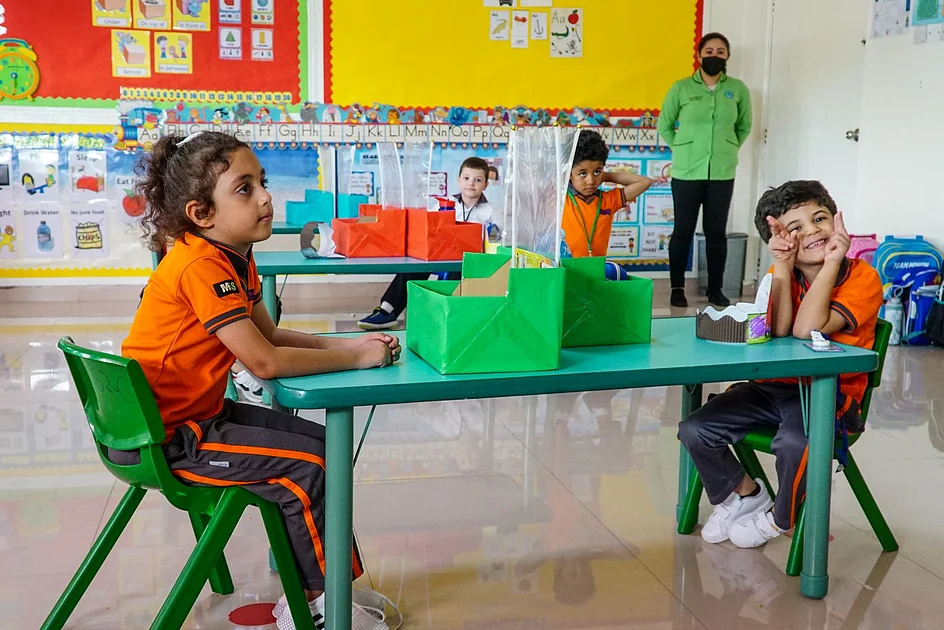
    In the diverse educational landscape of the United Arab Emirates, schools are implementing innovative approaches to personal hygiene education that extend beyond traditional family responsibilities. These initiatives are becoming integral components of institutional well-being programs, addressing sensitive topics like body odor and oral hygiene with remarkable tact and effectiveness.

    Global research substantiates that comprehensive hygiene education produces multifaceted benefits, enhancing not only children’s physical health and school attendance rates but also creating positive ripple effects throughout families and communities. This evidence-based approach has prompted UAE institutions to develop sophisticated methodologies for delivering these essential lessons.

    Dubai resident Sherry Garcia experienced this educational evolution firsthand when she received a carefully worded communication from her son’s school regarding post-physical education odor concerns. Initially surprised by the notification, Garcia later appreciated the institution’s considerate approach. “The school’s guidance proved both practical and reassuring,” she noted, citing specific recommendations including frequent washing of athletic uniforms, daily bathing routines, and appropriate deodorant use when necessary.

    Educational professionals throughout the UAE emphasize that these conversations, when conducted with sensitivity, serve as confidence-building exercises rather than sources of embarrassment. Dr. Mathivathani D, school physician at Springdales School Dubai, explained: “We employ interactive lectures, creative visual displays, and engaging student-centered activities to promote hygiene awareness through positive reinforcement. This methodology helps students develop self-care habits while fostering consideration for others.”

    Schools maintain careful balance in their hygiene initiatives, discouraging strong fragrances that might trigger asthma or allergic reactions while emphasizing that true confidence stems from self-respect and healthy practices rather than external appearance alone. Regular health education sessions, particularly for adolescents, address both physical changes and emotional development while reinforcing principles of mutual respect.

    The holistic approach involves parents as essential partners, with seasonal communications and workshops ensuring home-school alignment. Discreet handling of individual concerns prioritizes building trust with students before engaging parents supportively.

    The broader conversation around grooming continues to evolve, with industry experts like Abdulla Ajmal, CEO of Ajmal Group, noting that age-appropriate fragrances can become constructive elements in children’s self-care routines when formulated with sensitivity to youthful skin and preferences for lighter, softer scents.

  • Katseye’s Manon to take ‘temporary hiatus’ to focus on health

    Katseye’s Manon to take ‘temporary hiatus’ to focus on health

    In a significant development for the global music scene, Katseye—the multinational girl group formed through HYBE’s 2023 reality competition The Debut: Dream Academy—has announced member Manon Bannerman’s temporary hiatus for health and wellbeing reasons. The 23-year-old Swiss vocalist addressed fans directly through the group’s WeVerse platform, emphasizing she remains “healthy” while acknowledging that “sometimes things unfold in ways we don’t fully control.”

    The decision follows extensive deliberations among all six members—Bannerman, Daniela Avanzini, Lara Raj, Megan Skiendiel, Sophia Laforteza, and Yoonchae Jeung—with their labels HYBE and Geffen Records expressing full support. The announcement comes shortly after Katseye’s notable Grammy Awards appearance, where they received nominations for Best New Artist and Best Pop Duo/Group Performance for their single ‘Gabriela’.

    Despite Bannerman’s absence, Katseye confirmed they will honor scheduled performances while awaiting her return. The group’s statement emphasized their “commitment to showing up for one another and for the fans who mean everything to us.” No specific timeline has been established for Bannerman’s comeback.

    This development occurs against the backdrop of the group’s meteoric rise since their June 2024 debut single, which spawned two successful EPs (SIS and Beautiful Chaos) and numerous singles. However, their rapid success has been accompanied by severe online harassment, with members previously revealing they’ve received thousands of death threats since formation—a phenomenon Lara Raj described as “jarring” and “dystopian,” while Bannerman characterized the experience as “very terrorising on the mind.”

  • Harrop, Anselmet combine to win mixed relay for France as part of ski mountaineering’s Olympic debut

    Harrop, Anselmet combine to win mixed relay for France as part of ski mountaineering’s Olympic debut

    BORMIO, Italy — France’s Emily Harrop and Thibault Anselmet secured a monumental victory in the inaugural Olympic mixed relay ski mountaineering event at the Milan Cortina Games on Saturday. The duo dominated the challenging Stelvio course with a commanding performance, finishing in 26 minutes and 57.44 seconds to claim the sport’s first Olympic mixed relay gold medal.

    The French team established an early advantage that they maintained throughout the four-lap race, with Harrop setting a punishing pace on the initial leg. Their seamless transitions and technical mastery proved decisive on the demanding circuit that combined grueling ascents and technical descents. Anselmet’s confidence was evident as he began celebrating well before the finish line, raising his arms in triumph during the final descent.

    Switzerland’s Marianne Fatton and Jon Kistler mounted a strong challenge, particularly during the final exchange where Fatton narrowed the gap significantly. However, Anselmet responded with exceptional composure on the decisive lap, ultimately securing victory by 11.86 seconds. The Spanish pairing of Ana Alonso Rodriguez and Oriol Cardona Coll captured bronze, adding to Cardona Coll’s individual sprint gold from Thursday’s historic competition.

    American competitors Anna Gibson and Cameron Smith delivered a respectable performance, finishing just off the podium in fourth position. The event showcased ski mountaineering’s unique demands, requiring athletes to navigate multiple transitions between skin-equipped ascents and high-speed descents while carrying their equipment.

    The mixed relay format featured alternating male and female athletes completing two laps each, with a total course length of 1,410 meters including approximately 137 meters of elevation gain. Athletes faced the additional challenge of staircase sections where they carried their skis while running in ski boots—a signature element of ski mountaineering competition.

    This event marks the second medal ceremony for ski mountaineering following its formal inclusion in the Olympic program in 2021, solidifying the sport’s place in winter sports tradition with its blend of endurance, technical skill, and strategic teamwork.

  • UK should send non-combat troops to Ukraine now, former PM Johnson tells BBC

    UK should send non-combat troops to Ukraine now, former PM Johnson tells BBC

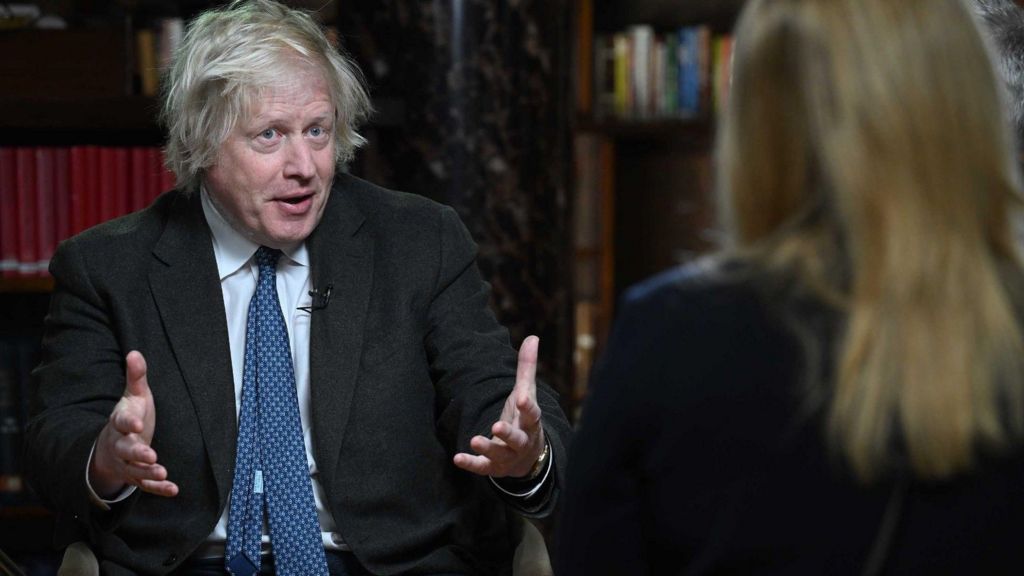
    Former British Prime Minister Boris Johnson has called for the immediate deployment of Western non-combat troops to Ukraine, arguing such a move could fundamentally alter Russian President Vladimir Putin’s strategic calculations. In an exclusive interview with BBC’s Sunday with Laura Kuenssberg, Johnson contended that if Western nations plan to station peacekeeping forces after a potential ceasefire, they should consider doing so immediately in peaceful regions of Ukraine.

    Speaking alongside former UK military chief Admiral Sir Tony Radakin, Johnson reflected on the fourth anniversary of Russia’s invasion, suggesting the conflict could have been prevented had Western allies responded more decisively to Putin’s 2014 annexation of Crimea. Both Johnson and Radakin acknowledged that Western support for Ukraine, while substantial, has often been delayed through months of cautious deliberation they described as ‘incrementalism.’

    Johnson characterized this hesitation as needless delay that has ultimately cost Ukrainian lives. ‘We’ve always delayed needlessly,’ he stated. ‘We’ve then ended up giving the Ukrainians what they have been asking for, and actually it’s always served to their advantage and to the disadvantage of Putin. The one person who suffers from escalation is Putin.’

    The former prime minister specifically proposed that UK and allied forces could be deployed to secure areas of Ukraine in non-combat roles, such as training, logistical support, or infrastructure protection. This presence, he argued, would demonstrate constitutional support for Ukrainian sovereignty without directly engaging in combat operations.

    Johnson also offered a critical assessment of Western foreign policy failures that he believes emboldened Putin, including the inadequate response to chemical weapons use in Syria, the chaotic withdrawal from Afghanistan, and what he termed ‘the general ambiguity of the Western position’ regarding Ukraine.

    Admiral Radakin separately addressed defense spending, urging the UK government to clarify its commitment to allocate 3.5% of national income to defense by 2035—a pledge made at last year’s NATO summit. He emphasized that while the UK remains secure as a nuclear power within NATO, sustained investment is essential for long-term security amid a ‘weak but dangerous’ Russia.

    The proposal to deploy troops represents a significant escalation beyond current Western policy, which has consistently ruled out direct military presence. The UK government is reportedly working with allies to plan a ‘coalition of the willing’ that would provide forces only after a formal peace agreement is established.

  • India condemn Australia to first home series loss since 2017

    India condemn Australia to first home series loss since 2017

    In a historic triumph that shattered Australia’s nine-year home dominance, India’s women’s cricket team secured a dramatic 2-1 T20I series victory after claiming the decisive third match by 17 runs in Adelaide. The landmark win marks only India’s second-ever bilateral series triumph on Australian soil, with their previous success dating back to 2016.

    The victory was forged through exceptional batting prowess and strategic bowling execution. Opener Smriti Mandhana delivered a masterclass innings of 82 runs from just 55 deliveries, forming a record-breaking 121-run partnership with Jemimah Rodrigues (49) that established India’s commanding total of 176-6. This partnership now stands as India’s highest second-wicket stand in women’s T20 international history.

    Australia’s response began disastrously as off-spinner Shreyanka Patil dismantled the top order, removing both Georgia Voll and Ellyse Perry to leave the hosts reeling at 32-3. Despite a resilient 57 from 45 balls by Ash Gardner that temporarily revived Australian hopes, the required run rate proved insurmountable against India’s disciplined bowling attack.

    The match concluded with Patil recording impressive figures of 3-22, complemented by left-arm spinner Shree Charani’s equally impactful 3-28. The defeat marked a challenging start for Sophie Molineux’s captaincy tenure, as she assumed leadership of the Australian side for the first time.

    This series victory followed a weather-affected opening match where India prevailed by 21 runs via the DLS method, before Australia leveled the series with a 19-run win in the second encounter. The teams now prepare to extend their competition with a three-match ODI series commencing in Brisbane, followed by a standalone Test match in Perth beginning March 6th.

  • Watch: UAE, Bahrain send 100 tonnes of urgent aid to Gaza for Ramadan

    Watch: UAE, Bahrain send 100 tonnes of urgent aid to Gaza for Ramadan

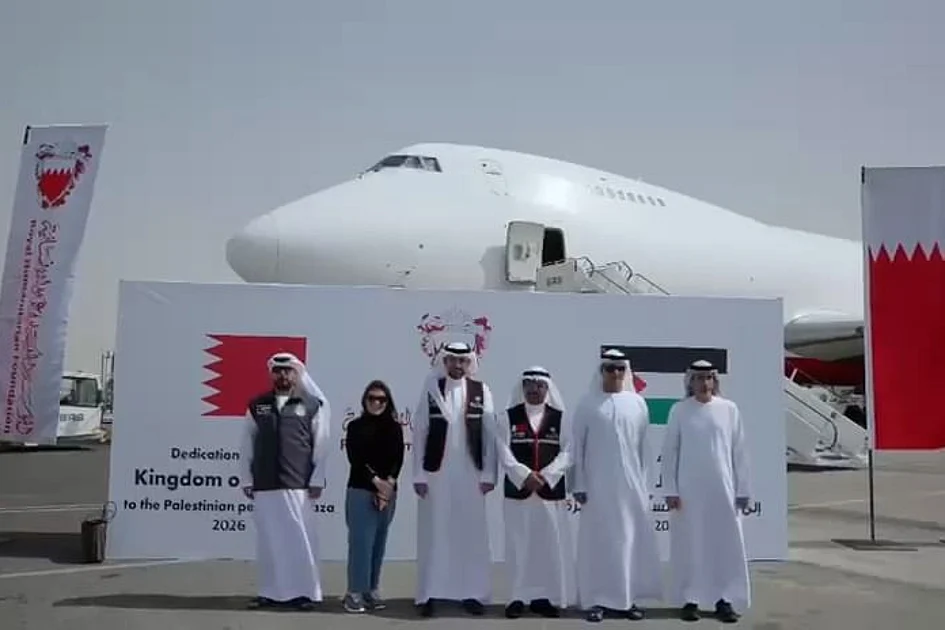
    In a significant humanitarian operation timed with the commencement of Ramadan, the United Arab Emirates and the Kingdom of Bahrain have jointly orchestrated the delivery of 100 tonnes of critical aid supplies to the embattled Gaza Strip. This coordinated effort, executed through the collaborative frameworks of ‘Operation Chivalrous Knight 3,’ the Emirates Red Crescent, and the Royal Humanitarian Foundation (RHF) of Bahrain, underscores a deepening regional commitment to alleviating the severe conditions in Palestine.

    The comprehensive relief consignment, currently routed through Egypt’s Al-Arish Airport for subsequent entry via the Rafah Border Crossing, is specifically tailored to address urgent needs. The shipment encompasses a diverse array of essential items, including specialized hygiene kits for women and children, staple food commodities, and a vital selection of pharmaceuticals and medical equipment.

    Eng. Ibrahim Dalhan Al Doseri, Acting Secretary-General of the RHF, articulated the philosophical underpinning of this initiative. He emphasized that the aid reflects Bahrain’s enduring humanitarian vision and its unwavering solidarity with the Palestinian people. This dispatch, particularly during the holy month, is imbued with profound symbolic significance, reinforcing principles of compassion and communal support that are hallmarks of Bahraini society.

    The operation is being conducted under the direct directives of His Majesty King Hamad bin Isa Al Khalifa of Bahrain, who serves as the Honorary President of the RHF. The mission also benefits from the oversight of Sheikh Nasser bin Hamad Al Khalifa, the King’s Representative for Humanitarian Work and Youth Affairs and Chairman of the Foundation’s Board of Trustees. This high-level patronage highlights the strategic importance placed on humanitarian diplomacy and support for what is described as a just cause within the region.

  • Xinjiang county blends heritage, modern services for Spring Festival

    Xinjiang county blends heritage, modern services for Spring Festival

    Awat County in China’s Xinjiang Uygur Autonomous Region has successfully orchestrated a distinctive Spring Festival celebration that masterfully integrates traditional cultural preservation with contemporary community services. The event, organized on Tuesday as part of Aksu prefecture’s broader festive programming, represents an innovative approach to cultural continuity during the Lunar New Year period.

    The celebration featured immersive experiences with intangible cultural heritage, including hands-on workshops in traditional paper-cutting and calligraphy conducted by cultural volunteers and heritage inheritors. These activities provided residents with direct engagement with centuries-old artistic practices while ensuring their transmission to newer generations.

    Beyond cultural preservation, the event incorporated modern community services through sixteen volunteer teams offering practical assistance including policy consultations, legal guidance, and health assessments. This dual approach addressed both cultural and practical needs of community members.

    Artistic performances by local talents and community groups enhanced the festive atmosphere, with the broader cultural program continuing through March 3. This extended timeline allows for sustained community engagement and cultural participation across all ethnic groups in the region.

    The Awat County initiative demonstrates how traditional festivals can evolve to meet contemporary needs while maintaining cultural authenticity, effectively bridging historical traditions with modern community requirements during one of China’s most significant annual celebrations.

  • Viral monkey Punch rejected by mother given stuffed orangutan

    Viral monkey Punch rejected by mother given stuffed orangutan

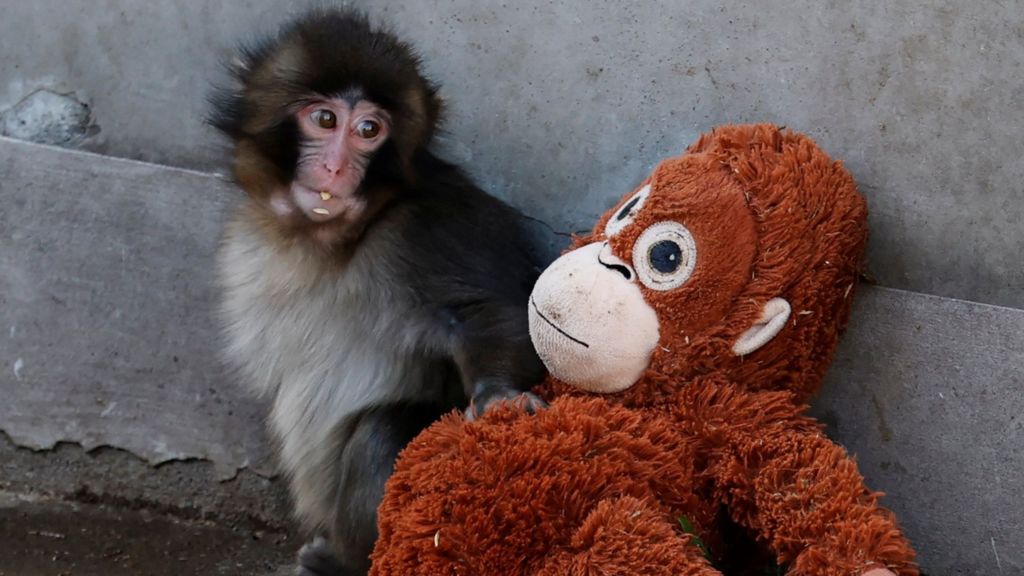
    A heartwarming narrative of interspecies compassion has emerged from Japan’s Ichikawa City Zoo, where a young Japanese macaque rejected by his biological mother has formed an extraordinary bond with an inanimate companion. The juvenile primate, whose early life was marked by maternal abandonment, has been provided with a carefully selected stuffed orangutan by attentive zookeepers seeking to address his emotional needs.

    This unconventional pairing has evolved into an international sensation after zoo visitors documented and shared footage capturing the monkey’s intricate interactions with his plush surrogate. The viral videos reveal astonishing behavioral patterns as the macaque engages in behaviors ranging from gentle grooming sessions to playful ambushes, demonstrating what primate experts identify as transference of natural social behaviors onto the artificial companion.

    Animal behavioral specialists observing the phenomenon note that such therapeutic interventions represent significant advancements in zookeeping practices, particularly regarding emotional support for socially deprived primates. The stuffed orangutan, selected for its size and texture similarities to actual primates, serves as an enrichment tool that provides continuous comfort while allowing the development of crucial social skills that may facilitate future integration with conspecifics.

    The global response has highlighted growing public fascination with animal emotional intelligence, with the zoo reporting increased visitor numbers and international inquiries about the primate’s wellbeing. This incident has simultaneously sparked broader conversations about ethical animal management and the psychological complexities of non-human species in captive environments.