作者: admin

  • Opposition activists among 379 prisoners set for release under Venezuela’s amnesty

    Opposition activists among 379 prisoners set for release under Venezuela’s amnesty

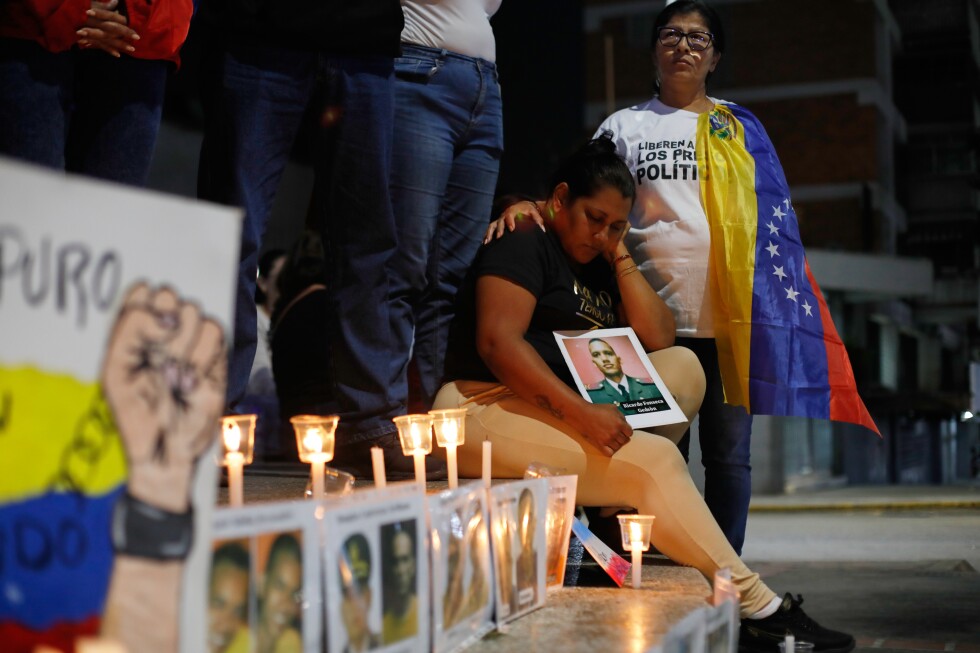
    Venezuelan authorities have commenced a significant prisoner release initiative, with 379 individuals detained for political reasons expected to gain freedom this weekend under a newly enacted amnesty law. The measure, signed into law Thursday, represents a dramatic policy reversal for a government that has historically denied holding political prisoners.

    The amnesty legislation benefits opposition figures, activists, human rights defenders, and journalists who have been detained for periods ranging from months to years. Jorge Arreaza, president of the special commission overseeing the law’s implementation, announced on state television Friday that all received applications would be processed for release between Friday and Saturday, with additional releases possible within the next 15 days.

    This development follows last month’s U.S. military operation in Caracas that resulted in the capture of former President Nicolás Maduro. Current acting President Delcy Rodríguez characterized the law as demonstrating political leaders’ willingness to “let go of a little intolerance and open new avenues for politics in Venezuela.”

    However, the legislation contains significant exclusions for those convicted of homicide, drug trafficking, serious human rights violations, and military rebellion. Human rights organizations have criticized these limitations, arguing they prevent true national reconciliation.

    Alfredo Romero, president of prisoners’ rights group Foro Penal, declared on social media that excluding military personnel and prominent political figures makes the law “discriminatory and unconstitutional,” adding that genuine national coexistence cannot exist under these conditions.

    According to monitoring by Venezuela-based nonprofit Justice, Encounter and Forgiveness, 459 detainees held for political reasons were released between January 8 and February 20, though relatives and watchdogs have criticized the slow pace and restrictive conditions of releases.
  • Recovery labs, biohacking resort: Inside UAE’s wellness reset

    Recovery labs, biohacking resort: Inside UAE’s wellness reset

    The United Arab Emirates is spearheading a transformative movement in wellness tourism, shifting from traditional relaxation-focused retreats to scientifically-grounded, performance-enhancing experiences. According to recent data from the Global Wellness Institute (GWI), the UAE represents the world’s fastest-growing wellness market since 2019, demonstrating a remarkable 14.3 percent expansion rate.

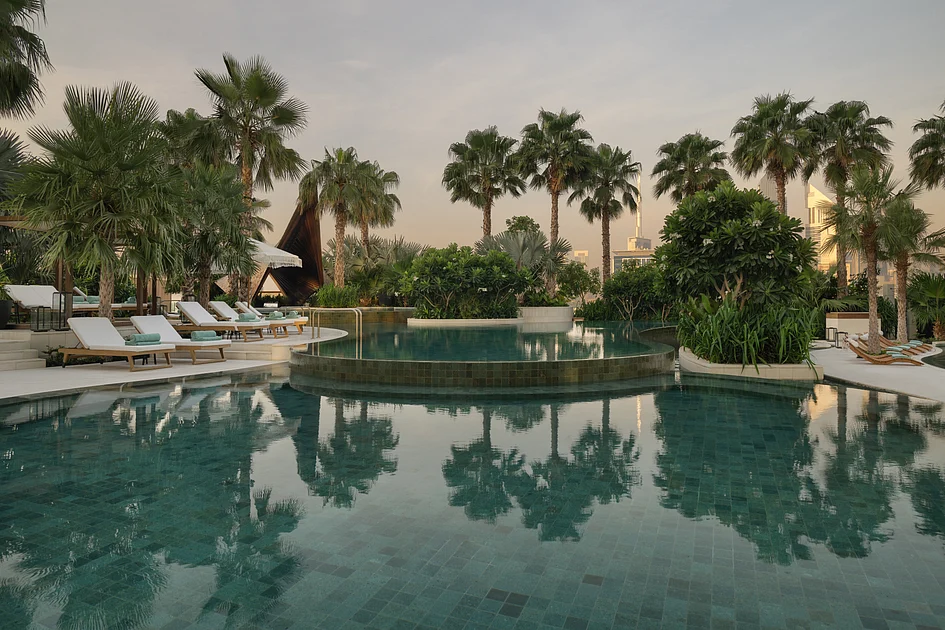
    This evolution is manifesting through cutting-edge facilities across Abu Dhabi and Dubai that blend elite athletic training technologies with luxury hospitality. At the forefront is Modon Hospitality’s Olympia Resort on Hudayriyat Island, where guests access altitude-simulation chambers, graphene-infused recovery mattresses, and biohacking tools previously exclusive to professional athletes.

    Industry leaders note this represents a fundamental reimagining of wellness travel. “Today’s travelers seek destinations that deliver tangible improvements to their physical, mental, and emotional wellbeing,” observed Mattheos Georgiou, SVP at SIRO, a property engineered around performance optimization with integrated training facilities and science-backed recovery labs.

    The UAE’s unique advantage lies in its concentrated diversity, enabling visitors to experience desert retreats alongside urban wellness hubs within a single journey. Dr. Karima Arroud, Medical Director at Wellth, emphasizes the nation’s luxury infrastructure, world-class medical services, and premium international status as foundational elements supporting this emerging sector.

    A surprising social dimension is also emerging, with facilities like PEAQ Wellness reporting increased demand for community-based wellness practices. “Travelers increasingly seek experiences that challenge their limits while strengthening their overall wellbeing and sense of connection,” noted founder Ali Hassoun.

    This paradigm shift is driven by post-pandemic health awareness, urban lifestyle pressures, and growing skepticism toward superficial solutions. Technology plays an expanding role through wearables, health applications, and AI-powered personalization, though the core objective remains human-centric: empowering individuals with deeper understanding of how daily habits impact their wellbeing.

    Future trends indicate growing interest in longevity-focused travel, sleep optimization, and micro-transformative stays offering measurable benefits within condensed timeframes, solidifying the UAE’s position as the global capital of next-generation wellness tourism.

  • US Supreme Court strikes down Trump’s global tariffs: What’s next?

    US Supreme Court strikes down Trump’s global tariffs: What’s next?

    The United States Supreme Court has delivered a landmark ruling striking down former President Donald Trump’s comprehensive global tariff regime, creating immediate economic turbulence and setting the stage for prolonged legal battles. While providing temporary relief to import-dependent industries, the decision has unleashed a complex aftermath of refund claims and policy uncertainty.

    The conservative-majority court’s rejection of tariffs imposed under emergency economic powers has invalidated approximately $133.5 billion in duties collected between January 2025 and December 2025. The ruling notably omitted guidance on refund procedures, transferring this contentious issue to lower courts. According to ING analysts Carsten Brzeski and Julian Geib, the U.S. Court of International Trade will likely oversee a fragmented reimbursement process requiring individual lawsuits from affected importers. Already, over 1,000 corporate entities have initiated legal actions, prompting Trump’s prediction of continuous litigation spanning five years.

    Within hours of the decision, Trump announced alternative measures including a new 10% import levy under Section 122 of the Trade Act of 1974. This temporary authority permits 150-day tariffs unless congressional extension occurs. Simultaneously, the administration has signaled intentions to pursue more permanent duties through Section 301 investigations targeting alleged unfair trade practices.

    Josh Lipsky of the Atlantic Council characterizes the development as merely opening “a new chapter” in Trump’s trade policy, forecasting continued volatility for businesses and complicated negotiations with international partners. The ruling effectively removes what Treasury Secretary Scott Bessent described as a “custom-made” tool for rapid leverage assertion against trading nations.

    While existing trade agreements likely remain intact according to Wendy Cutler of the Asia Society Policy Institute, ongoing negotiations may experience shifted power dynamics. The immediate consumer impact reflects a reduction in average effective tariff rates from 16.9% to 9.1%—still representing the highest levels since 1946 excluding 2025.

    Economists anticipate this judicial intervention will compel a comprehensive reset of tariff implementation strategies. Navy Federal Credit Union’s Heather Long projects that the ruling will likely result in lower overall duty rates and more methodical future trade policy execution, despite administrative intentions to establish enduring tariff structures.

  • Global leaders and businesses pore over fallout of more US tariff swoons

    Global leaders and businesses pore over fallout of more US tariff swoons

    The global economic community entered a state of heightened alert this weekend as nations and corporations worldwide assessed the ramifications of a landmark U.S. Supreme Court decision that partially dismantled the Trump administration’s expansive tariff framework. The ruling represents the latest development in an ongoing trade policy revolution that has destabilized international commerce since the administration’s return to power thirteen months ago.

    In immediate response to the judicial setback, President Trump signed an executive order instituting a new 10% global tariff, which he subsequently announced would be elevated to 15%. This strategic pivot has forced trading partners from Asia to the Americas into emergency evaluations of their economic exposure. South Korea’s Trade Ministry convened an urgent meeting to analyze the shifting landscape, noting that while key exports like automobiles and steel remain unaffected, numerous other sectors now face renewed financial pressure.

    European leaders responded with measured diplomatic rhetoric. French President Emmanuel Macron, speaking at a Paris agricultural fair, acknowledged the value of institutional checks and balances within democracies, stating, “It’s a good thing to have powers and counter-powers. We should welcome that.” However, Macron simultaneously cautioned against premature celebration, emphasizing Europe’s intention to scrutinize the practical consequences of Trump’s reworked tariff measures.

    The uncertainty has created particular strain along the U.S.-Mexico border, where industrial economies remain deeply interconnected. Sergio Bermúdez, who leads an industrial parks company in Ciudad Juárez, captured the prevailing sentiment among business leaders: “All of the businesses I know are analyzing, trying to figure out how it’s going to affect them.” This confusion has been compounded by what American executive Alan Russell described as the “greatest enemy”—persistent uncertainty regarding daily regulatory changes that have complicated international operations.

    Meanwhile, financial restitution emerged as a critical secondary concern. Bernd Lange, chairman of the European Parliament’s trade committee, insisted that excess tariffs “must be refunded,” estimating German entities alone overpaid more than €100 billion. Swiss technology industry association Swissmem welcomed the court’s decision as positive news for an industry that saw exports plummet 18% in just one quarter, though officials acknowledged the situation remains fluid and unresolved.

  • The bones of St. Francis are going on public display, a mixed blessing for Assisi

    The bones of St. Francis are going on public display, a mixed blessing for Assisi

    The medieval Italian town of Assisi is bracing for an extraordinary spiritual event as the skeletal remains of St. Francis of Assisi are being exhibited publicly for the first time in history. This unprecedented month-long display, organized to commemorate the 800th anniversary of the saint’s passing, has already attracted registrations from nearly 400,000 pilgrims, with projections suggesting half a million visitors before the relics return to their crypt on March 22.

    The exhibition presents both a spiritual opportunity and logistical challenge for this Umbrian hilltop community. Mayor Valter Stoppini acknowledges the complex reality facing residents: “We’re accustomed to major events, but typically lasting one to three days. This prolonged month-long exhibition brings concerns, though I remain calm.”

    A dedicated force of 400 volunteers has been mobilized to manage the expected crowds through Assisi’s narrow, souvenir-lined cobblestone streets toward the lower Basilica of St. Francis. There, pilgrims will encounter the saint’s bones secured within a bulletproof glass enclosure.

    The town’s infrastructure faces severe strain from this continuous influx. While Assisi regularly welcomes religious tourists due to its status as a premier Christian pilgrimage destination, the extended duration of this event tests the patience of locals and the capacity of limited urban services.

    Adding to Assisi’s spiritual significance is the recent canonization of Carlo Acutis, the Catholic Church’s first millennial saint. This 15-year-old who died of leukemia in 2006 has become a powerful draw for younger pilgrims, particularly from Latin America, creating what Brother Marco Moroni describes as “an osmosis” between devotion to both saints that further increases visitor numbers.

    Local businesses express enthusiasm for the economic opportunity. Shopkeeper Arianna Catarinelli, whose store sells both St. Francis-themed merchandise and Acutis memorabilia, notes: “For residents, parking isn’t easy. But commercially, the high visitor numbers are positive.”

    The city administration has implemented mitigation measures including new peripheral parking facilities and shuttle services to reduce urban congestion. Bank employee Riccardo Bacconi reflects the pragmatic attitude of many residents: “Economically it’s important. There are more advantages than disadvantages for those of us who choose to live here.”

  • USS Gerald R Ford enters Mediterranean: What to know about world’s largest carrier

    USS Gerald R Ford enters Mediterranean: What to know about world’s largest carrier

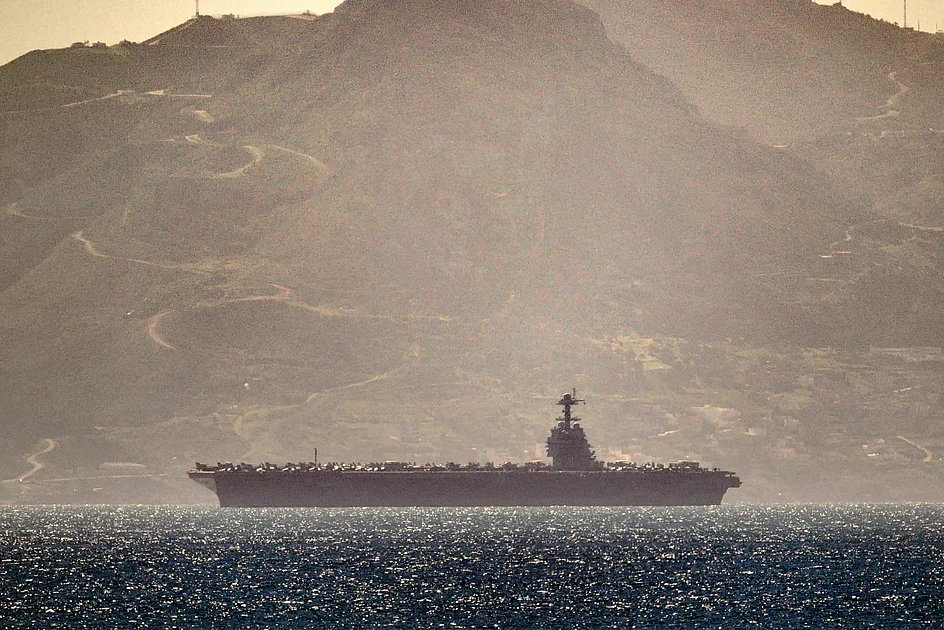
    The USS Gerald R. Ford, the United States’ newest and most advanced aircraft carrier, has entered the Mediterranean Sea through the Strait of Gibraltar as of Friday. This strategic deployment significantly enhances American military presence in a region experiencing substantial force buildup ahead of potential operations against Iran.

    Accompanied by three destroyer escorts, the nuclear-powered carrier brings the total number of US warships in the Middle East to 17 vessels once fully positioned. The Ford’s arrival marks the second carrier deployment to the region, joining the USS Abraham Lincoln and its accompanying guided-missile destroyers that arrived in January.

    This deployment follows the Pentagon’s February 13th announcement redirecting the carrier from Caribbean operations to the Middle East. President Donald Trump had previously indicated he would consider sending additional carrier support if diplomatic efforts with Iran remained unresolved.

    The Gerald R. Ford represents the pinnacle of naval technology, capable of carrying over 75 military aircraft including F/A-18 Super Hornets and E-2 Hawkeye early warning aircraft. The vessel features advanced radar systems for superior air traffic control and navigation capabilities. Its supporting fleet includes the Ticonderoga-class cruiser USS Normandy and Arleigh Burke-class destroyers USS Thomas Hudner, USS Ramage, USS Carney, and USS Roosevelt—all equipped for comprehensive surface-to-air, surface-to-surface, and anti-submarine warfare operations.

    According to operational records, the carrier has been continuously at sea since June 2025, having been abruptly redirected from planned European operations to the Caribbean in November before its current Middle Eastern assignment. While typical carrier deployments last nine months, extensions frequently occur during periods of heightened military activity.

    US Central Command confirmed the strike group’s deployment is intended to ‘promote regional security and stability’ amid escalating tensions. The military buildup follows Iran’s intensified crackdown on mass protests earlier this year, though President Trump has since stepped back from direct military action while maintaining that all options remain available.

  • UAE weather: Morning fog, mist expected till Wednesday

    UAE weather: Morning fog, mist expected till Wednesday

    The United Arab Emirates is set to experience a sustained period of humid conditions with significant morning fog and mist from Saturday through Wednesday, according to the National Centre of Meteorology. Meteorological officials indicate reduced visibility will particularly affect coastal and internal regions during early morning hours, prompting advisories for motorists to exercise heightened caution.

    Weather patterns will generally remain fair to partly cloudy throughout the five-day period, though temperatures will see minor fluctuations. A slight temperature decrease is anticipated on Sunday, followed by a noticeable increase by Tuesday. Wind patterns will predominantly feature light to moderate Northwesterly to Southwesterly flows, occasionally freshening with speeds potentially reaching 35 km/hour.

    Maritime conditions in both the Arabian Gulf and Oman Sea are expected to remain generally slight, with occasional moderate swells forecast for Sunday and Wednesday. The meteorological authority continues to monitor conditions closely and has issued regular updates to ensure public safety during the period of reduced visibility.

    The recurring fog pattern aligns with seasonal weather expectations for the region during this transitional period. Authorities emphasize the importance of allowing extra travel time during morning commutes and utilizing appropriate vehicle lighting systems when encountering foggy conditions.

  • India court sentences couple to death for sexual abuse of 33 children

    India court sentences couple to death for sexual abuse of 33 children

    In a landmark ruling that has sent shockwaves across India, a Special POCSO Court in Uttar Pradesh’s Banda district has delivered death sentences to a married couple convicted of perpetrating one of the most extensive child sexual abuse cases in recent history. Rambhawan, a junior engineer in the state irrigation department, and his wife Durgawati were found guilty of subjecting 33 male children—some as young as three years old—to systematic sexual exploitation over a decade-long period from 2010 to 2020.

    The court characterized the offenses as demonstrating ‘extreme moral turpitude’ and falling under the ‘rarest of rare’ category warranting capital punishment. The convicted pair faced multiple charges including aggravated penetrative sexual assault, production of child sexual abuse material, and criminal conspiracy under India’s Protection of Children from Sexual Offences (POCSO) Act.

    According to investigative findings by India’s Central Bureau of Investigation (CBI), which registered the case in October 2020, the perpetrators employed sophisticated grooming techniques including online video games, financial incentives, and gifts to lure vulnerable minors across Banda and neighboring Chitrakoot districts. The agency’s meticulous investigation involved coordination with forensic experts, medical professionals, and child protection authorities to preserve crucial digital evidence.

    The court additionally mandated compensation of Rs 1 million (approximately $12,000) for each victim and ordered the distribution of confiscated cash from the defendants’ residence among the survivors. Medical reports presented during trial revealed some children sustained physical injuries during assaults, while others developed permanent health conditions including squint eye from being forced into uncomfortable positions.

    Child rights advocate Naghma Sahar, who has extensively reported on such cases, emphasized that while sentencing provides judicial closure, the victims require sustained psychological and educational support to rebuild their lives. She highlighted the case demonstrates how abuse can remain concealed for years within familiar environments, underscoring the critical need for enhanced community vigilance and awareness programs in schools.

    The verdict represents a significant application of India’s legal provisions permitting capital punishment in exceptional cases involving aggravated sexual assault of minors, reflecting the judiciary’s increasing severity toward crimes against children.

  • Gold price likely to hit $6,000 this year, seen heading towards $10,000, analysts say

    Gold price likely to hit $6,000 this year, seen heading towards $10,000, analysts say

    Financial markets are witnessing an unprecedented rally in gold prices, with leading analysts projecting a potential ascent to the unprecedented $10,000 per ounce mark. After consolidating near $5,100 per ounce, the precious metal is poised for a significant surge as Asian trading hubs resume operations following the Chinese New Year hiatus, expected to inject renewed volatility and upward momentum.

    The current bullish trajectory is underpinned by a confluence of powerful fundamental drivers. Senior research strategist Michael Brown of Pepperstone identifies the recent market calm not as stagnation, but as a highly bullish indicator. He suggests the speculative frenzy has subsided, allowing core market fundamentals to reassert control. These fundamentals include sustained geopolitical risk premiums from ongoing Middle Eastern tensions, relentless demand from central banks diversifying their reserves, and increasing retail investor allocations into gold as a portfolio safeguard.

    Further bolstering the long-term outlook are deep-seated concerns over the unsustainable fiscal policies of developed nations. Brown emphasizes that any price dips should be viewed as strategic buying opportunities, with key support levels established at $4,850 and $4,700 per ounce. A decisive break above the recent high of $5,100 is anticipated to trigger a fresh wave of long positions.

    Zaheer Anwari, CEO of The Revacy Fund, echoes this cautiously optimistic sentiment. He confirms that gold’s status as the premier safe-haven asset is being reinforced by a broad shift away from U.S. assets and persistent central bank accumulation, which collectively act as a robust floor for prices. The prospect of U.S. monetary policy easing continues to serve as a significant tailwind.

    However, analysts caution that the rally is not without potential headwinds. A de-escalation of global conflicts, a more hawkish-than-expected Federal Reserve, or a slowdown in institutional buying could trigger short-term volatility and profit-taking. Anwari’s fund has adopted a more cautious stance, tightening risk parameters and realizing gains near the $5,000 threshold while awaiting clearer directional confirmation.

    This analysis aligns with projections from major global institutions. JPMorgan forecasts gold reaching $6,300 per ounce by the end of 2026, while AuAg Funds predicts the metal will surpass $6,000 within the year, building on its record-breaking performance earlier in 2026 that saw it cross the $5,500 milestone.

  • Pakistan chooses to bat first against New Zealand in rain-delayed Super 8 match at T20 World Cup

    Pakistan chooses to bat first against New Zealand in rain-delayed Super 8 match at T20 World Cup

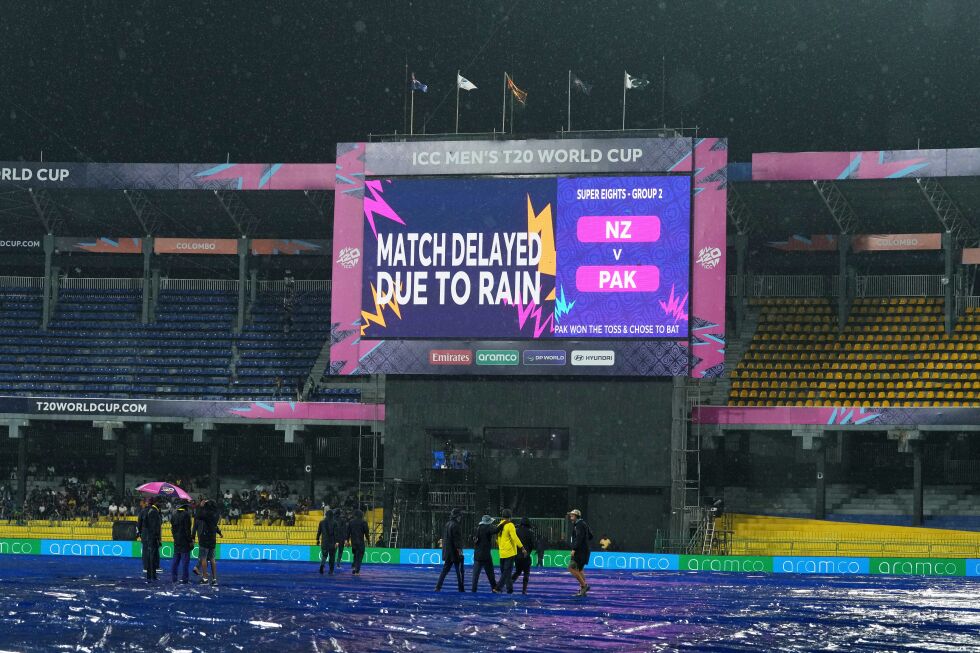
    COLOMBO, Sri Lanka — The highly anticipated Super 8s opener between Pakistan and New Zealand at the ICC T20 World Cup encountered an immediate setback as persistent rainfall delayed the start of play at R. Premadasa Stadium on Saturday.

    Pakistan’s newly appointed captain, Salman Ali Agha, won the crucial toss and elected to bat first, seeking to establish an early advantage in the Group 2 encounter. Both squads revealed significant strategic changes to their starting lineups ahead of the critical match.

    The Pakistani selection committee made one notable alteration to their batting order, recalling veteran power-hitter Fakhar Zaman to replace Khawaja Nafay. Zaman, who was rested during Pakistan’s final group-stage fixture against Namibia, returns to bolster the team’s firepower in the middle overs.

    New Zealand responded with their own tactical adjustments, reinstating three key players to their first-choice lineup. Regular captain Mitchell Santner resumed leadership duties, while the Black Caps also welcomed back pace spearhead Lockie Ferguson and leg-spinner Ish Sodhi, significantly strengthening both their bowling attack and strategic leadership.

    This match represents a critical juncture for both nations after they finished second in their respective preliminary groups. They now face the daunting challenge of Group 2, which includes tournament hosts Sri Lanka and the defending champions, England, making every match in the Super 8 stage essentially a knockout fixture.

    The weather interruption adds another layer of complexity to an already high-stakes encounter, with both teams needing to adapt quickly to conditions and potential Duckworth-Lewis calculations should the rain persist.

    Lineups:
    Pakistan: Salman Ali Agha (captain), Sahibzada Farhan, Saim Ayub, Babar Azam, Fakhar Zaman, Shadab Khan, Usman Khan, Mohammad Nawaz, Faheem Ashraf, Salman Mirza, Usman Tariq.

    New Zealand: Mitchell Santner (captain), Tim Seifert, Finn Allen, Rachin Ravindra, Glenn Phillips, Mark Chapman, Daryl Mitchell, James Neesham, Matt Henry, Ish Sodhi, Lockie Ferguson.