作者: admin

  • China sees record daily passenger flow in Spring Festival travel rush

    China sees record daily passenger flow in Spring Festival travel rush

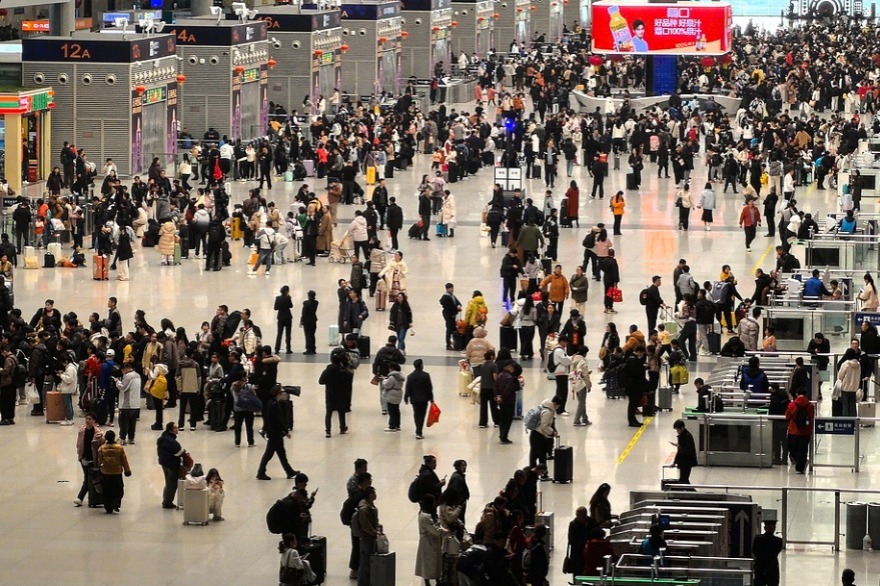
    China’s annual Spring Festival travel period has achieved a monumental milestone, with daily cross-regional passenger movement surging to unprecedented levels. Official data released by the Ministry of Transport on February 22, 2026, reveals that February 20 witnessed an extraordinary 352.999 million passenger journeys across the nation, establishing a new historical record for daily mobility during this traditional migration period.

    This remarkable figure represents a substantial 12.3 percent increase compared to the equivalent day during the 2025 Spring Festival travel season, highlighting the growing intensity of what is universally recognized as the planet’s largest periodic human migration. The 2026 chunyun period, spanning 40 days from February 2 to March 13, is projected to culminate in approximately 9.5 billion inter-regional passenger trips, far surpassing previous years’ volumes.

    The Spring Festival, alternatively known as Chinese New Year, occurred on February 17 this year, with official celebrations extending across a nine-day holiday period. This cultural phenomenon drives hundreds of millions of Chinese citizens to undertake extensive journeys to reunite with family members in their hometowns, creating extraordinary transportation demands across railway networks, highways, airports, and waterways.

    The transportation infrastructure demonstrated remarkable resilience in managing this colossal passenger volume, implementing sophisticated crowd management strategies and optimized scheduling to ensure safe and efficient travel experiences. This record-breaking mobility reflects both China’s ongoing urbanization trends and the enduring cultural significance of family reunification during traditional festivals, despite the logistical challenges presented by such massive population movements.

  • China issues import tax incentives for sci-tech popularization

    China issues import tax incentives for sci-tech popularization

    In a significant move to advance scientific literacy, China has unveiled comprehensive import tax incentives for science popularization institutions during its 15th Five-Year Plan period (2026-2030). The joint policy initiative, announced by the Ministry of Finance, General Administration of Customs, and State Taxation Administration, eliminates import tariffs and value-added taxes on critical educational materials and equipment that cannot be domestically produced or meet performance standards.

    The policy framework, effective January 1, 2026, through December 31, 2030, specifically targets science and technology museums, natural history museums, and similar institutions dedicated to public science education. Qualified organizations will benefit from exemptions covering imported popularization films, educational videos, and specialized equipment that either lacks domestic manufacturing capabilities or where domestic alternatives fail to achieve necessary performance benchmarks.

    This strategic fiscal measure represents China’s commitment to enhancing public engagement with scientific concepts through improved access to international educational resources. By reducing financial barriers to high-quality science communication tools, the initiative aims to foster a more scientifically literate society and support national innovation goals. The tax incentives are expected to significantly lower operational costs for science centers while enabling them to acquire advanced demonstration equipment and multimedia materials from global markets.

    The policy implementation follows careful coordination between multiple government agencies and reflects China’s broader strategy to strengthen its science education infrastructure during a critical period of technological development and international competition in innovation.

  • Could this be wreckage from a 214-year-old maritime disaster?

    Could this be wreckage from a 214-year-old maritime disaster?

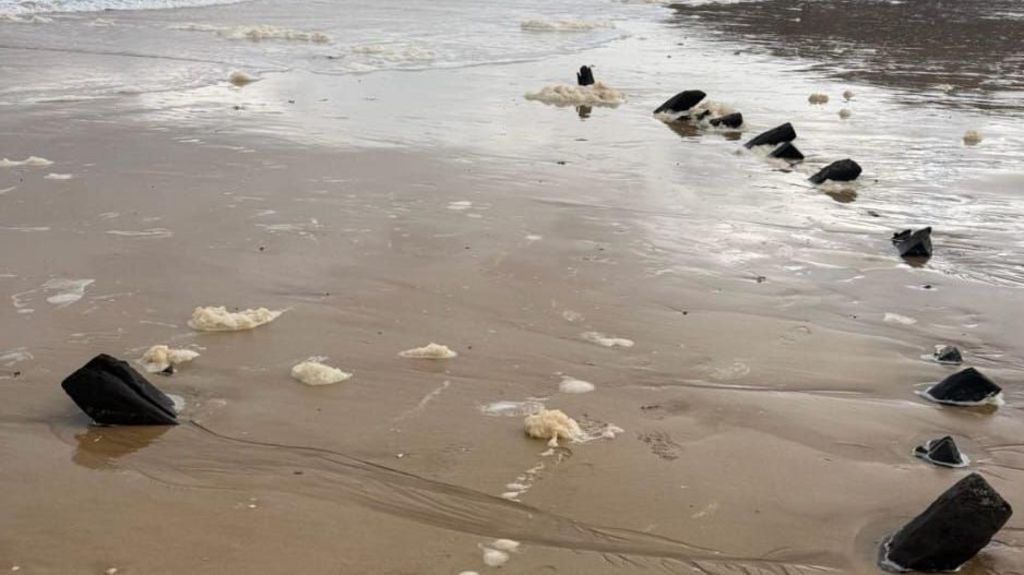
    Recent powerful coastal storms in Ireland’s County Donegal have potentially solved a 213-year-old maritime mystery. Extraordinary wind patterns at Ballymastocker Bay have shifted substantial sand deposits, exposing what archaeologists believe could be the long-lost remains of HMS Saldanha—a British naval frigate that tragically sank during a violent December storm in 1811 with all 253 crew members aboard.

    The uncovered wooden structure, visible during low tide conditions, has generated significant excitement within the local community and archaeological circles. According to maritime archaeologist John O’Raw, who has studied the Saldanha wreck for decades, the exposed timbers likely represent the vessel’s starboard bow section. “These structures protruding from the sand are probably futtocks,” O’Raw explained, “which are individual curved timber components that constitute the ribs or frames of a traditional wooden ship’s hull.”

    Historical records indicate HMS Saldanha was performing blockade duties against French forces during the Napoleonic Wars when it encountered catastrophic weather conditions. Seeking shelter in Lough Swilly, the 36-gun frigate reportedly struck cliffs south of Portsalon before breaking into multiple sections. Contemporary accounts suggest only the captain’s parrot survived the disaster, though historians note many original newspaper reports contained significant inaccuracies.

    The potential discovery has particular resonance for local residents who have maintained the memory of the tragedy through memorial efforts. In 2011, community members raised €1,500 to erect a monument honoring the lost sailors, and a commemorative plaque bearing crew members’ names was subsequently unveiled using archival records from London.

    Journalist Anne Cadwallader, who has helped organize memorial events, noted the emotional significance: “These men entered freezing cold water in blustering gales. One can only imagine their horrors, and not a single survivor emerged. It’s hardly surprising that stories and legends grew around this wreck.”

    The National Monuments Service has conducted preliminary inspections and documentation of the site, acquiring precise locational data for their Wreck Inventory of Ireland Database. While officials caution that definitive identification requires further analysis and dating of the timber, they plan additional comprehensive recording sessions in March when tidal conditions permit extended site access.

    The Saldanha’s legacy extends beyond the human tragedy—its sinking directly prompted construction of the iconic Fanad Lighthouse, which began illuminating Lough Swilly’s hazardous waters in 1817 and continues operation today. The ship’s anchor, recovered earlier by local fishermen, remains displayed at Fort Dunree Military Museum, serving as a tangible connection to one of Ireland’s most enduring maritime mysteries.

  • From abdication to Diana, Harry and ex-Prince Andrew. A look at major British royal scandals

    From abdication to Diana, Harry and ex-Prince Andrew. A look at major British royal scandals

    The British monarchy faces one of its most severe institutional crises in over a century as Prince Andrew’s recent arrest on suspicion of misconduct in public office creates unprecedented challenges for King Charles III’s reign.

    Scotland Yard detained the former Duke of York for nearly eleven hours Thursday following the release of millions of documents from the U.S. Justice Department’s Epstein files investigation. Authorities are examining whether Andrew improperly shared confidential trade information during his tenure as U.K. trade envoy with the late convicted sex offender Jeffrey Epstein. Notably, the arrest relates solely to potential abuse of office rather than Epstein’s sex trafficking allegations.

    While Andrew has consistently denied wrongdoing regarding his association with Epstein, he has remained silent on these latest allegations. The incident represents another devastating blow to the monarchy already grappling with the King’s cancer diagnosis and previous tensions with Prince Harry.

    King Charles III has taken decisive action to protect the institution, stripping his brother of all royal titles and honors while banishing him from his Windsor residence. The monarch maintains that the legal process must run its course, even as the government considers legislation to remove Andrew from the line of succession.

    This crisis evokes historical parallels to other Windsor family challenges: the 1917 name change from Saxe-Coburg and Gotha during World War I anti-German sentiment; Edward VIII’s 1936 abdication over his relationship with Wallis Simpson; and the massive public outcry following Princess Diana’s 1997 death that forced the Queen to address the nation.

    The current situation poses unique dangers as it combines legal proceedings, reputational damage, and constitutional considerations regarding succession. With Andrew remaining eighth in line to the throne despite his diminished status, the monarchy confronts its most significant legitimacy challenge since its modern iteration began over a century ago.

  • The US deported a gay asylum-seeker to a third country where homosexuality is illegal

    The US deported a gay asylum-seeker to a third country where homosexuality is illegal

    In a controversial move that has drawn sharp criticism from immigration advocates, the Trump administration has deported a Moroccan woman with a valid US immigration protection order to Cameroon—a country where she had no connections and where homosexuality remains criminalized.

    Farah, a 21-year-old gay woman who fled Morocco after facing violent persecution from her family, endured a harrowing journey through six countries before reaching the US border in early 2025. Despite receiving a judicial protection order in August that explicitly prohibited her deportation to Morocco due to life-threatening risks, Immigration and Customs Enforcement (ICE) officials transported her to Cameroon just three days before her scheduled release hearing.

    Her case represents one of dozens confirmed instances where migrants with legal protection from US immigration judges have been deported to third countries under the administration’s “third-country agreements” with African nations. According to legal representatives, all nine deportees on the January flight to Cameroon possessed similar protection orders.

    Legal experts have condemned the practice as a dangerous loophole that violates both US immigration laws and international treaties. Alma David, an immigration lawyer with Novo Legal Group, stated: “By deporting them to Cameroon, and giving them no opportunity to contest being sent to a country whose government hoped to quietly send them back to the very countries where they face grave danger, the US not only violated their due process rights but our own immigration laws.”

    The Department of Homeland Security defended the actions, asserting: “We are applying the law as written. If a judge finds an illegal alien has no right to be in this country, we are going to remove them. Period.”

    Currently, at least seven African nations—including Cameroon, South Sudan, Rwanda, Uganda, Eswatini, Ghana, and Equatorial Guinea—have entered into agreements with the US to accept deported third-country nationals. Senate Foreign Relations Committee documents reveal the administration has spent approximately $40 million to deport about 300 migrants to countries other than their own.

    Farah, now back in Morocco and living in hiding, expressed her disillusionment: “What was done to me was unfair. A normal deportation would have been fair, but to go through so much and lose so much, only to be deported in such a way, is cruel.”

  • More than 1,500 Venezuelan political prisoners apply for amnesty

    More than 1,500 Venezuelan political prisoners apply for amnesty

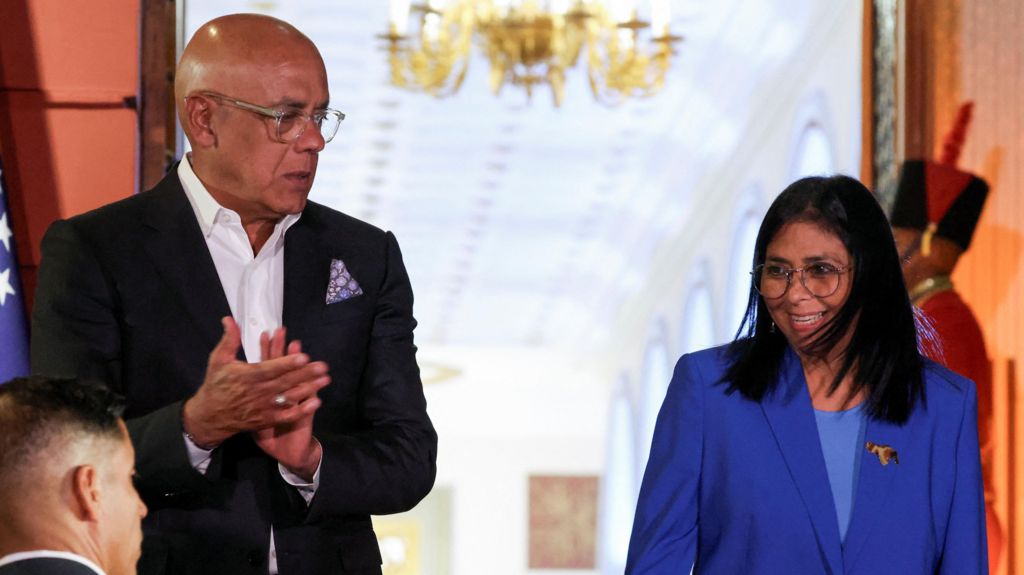
    Venezuela’s National Assembly President Jorge Rodríguez announced that 1,557 individuals classified as political prisoners have submitted applications for amnesty under new legislation enacted Thursday. The development comes amid ongoing political tensions following the dramatic capture of former President Nicolás Maduro by US forces on January 3rd.

    Rodríguez, who serves as both legislative leader and brother to interim President Delcy Rodríguez, confirmed that ‘hundreds’ of detainees have already been released through the program. The government initially promised significant prisoner releases on January 8th as a goodwill gesture following Maduro’s apprehension.

    The amnesty process prioritizes inmates from Zona Seven of El Helicoide, Caracas’ notorious detention facility, with Rodríguez indicating releases would occur ‘over the next few hours.’ This aligns with US President Donald Trump’s previous commitment to close the infamous prison following Maduro’s capture.

    However, the legislation faces substantial criticism from opposition groups and human rights organizations. A primary concern involves specific exclusions within the law, particularly targeting those who advocated for foreign military intervention in Venezuela. Legal experts note this provision appears directly aimed at political figures like Maria Corina Machado, last year’s Nobel Peace Prize laureate, though her eligibility remains uncertain.

    Additional controversy surrounds the apparent exclusion of military officers who participated in rebellions against Maduro’s administration. Opposition groups maintain that the previous government systematically used political detentions to suppress dissent and silence critics.

    The releases occur while Maduro and his wife Cilia Flores remain in US custody awaiting trial on drug and weapons charges. Maduro has pleaded not guilty, maintaining his status as a ‘prisoner of war.’ Meanwhile, families of El Helicoide detainees have reportedly begun hunger strikes demanding their relatives’ freedom.

  • After 4 years of war by Russia in Ukraine, peace is still elusive despite a US push for a settlement

    After 4 years of war by Russia in Ukraine, peace is still elusive despite a US push for a settlement

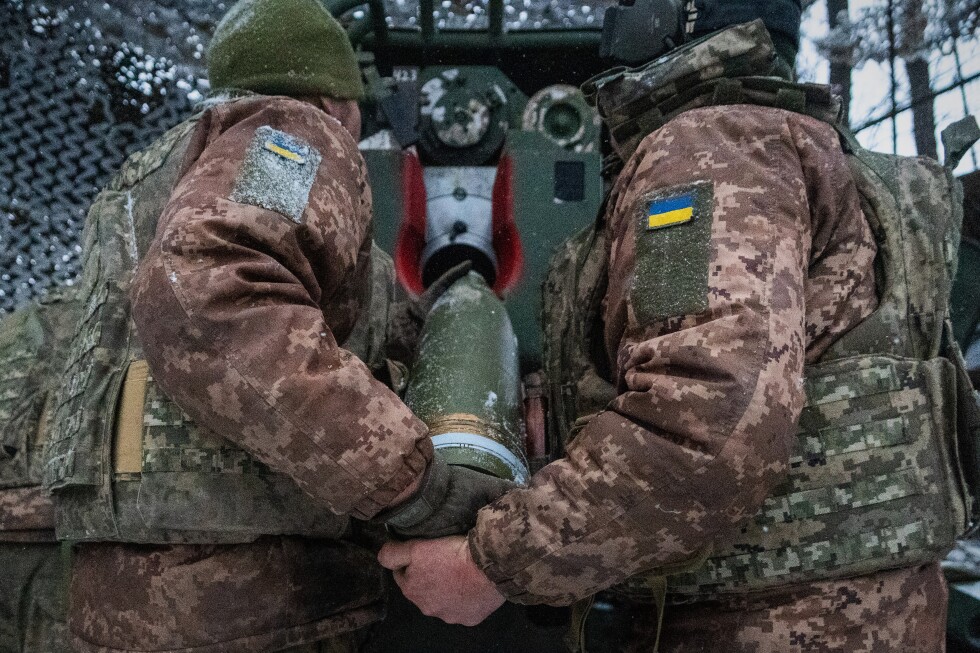
    Russia’s full-scale invasion of Ukraine has now exceeded a sobering historical benchmark, surpassing the 1,418-day duration of Moscow’s World War II campaign against Nazi Germany. Unlike the Red Army’s decisive push to Berlin eight decades ago, today’s conflict has devolved into a grueling stalemate with minimal territorial gains despite catastrophic human costs.

    Current estimates indicate nearly two million soldiers dead, wounded, or missing from both sides in Europe’s most devastating conflict since WWII. NATO Secretary-General Mark Rutte recently characterized Moscow’s advance as moving at “the speed of a garden snail,” with Russian troops gaining merely 50 kilometers in the Donetsk region over two years of brutal fighting.

    The warfare has transformed into a peculiar blend of high-tech drone operations and World War I-style trench combat. Drones have become decisive instruments, creating a 50-kilometer kill zone along the 1,200-kilometer front line that prevents troop concentrations and complicates supply movements. Small infantry groups now attempt infiltrations through towns flattened by Russian artillery and glide bombs.

    President Vladimir Putin maintains maximalist demands in U.S.-mediated peace talks, insisting Ukraine withdraw forces from four illegally annexed regions and abandon NATO aspirations. Meanwhile, Ukraine has conducted audacious long-range attacks, including drone strikes on Russian oil refineries and the sinking of several Black Sea warships.

    The conflict has expanded beyond the battlefield, with Russia targeting Ukraine’s energy infrastructure to create widespread blackouts, while Ukraine retaliates with strikes deep inside Russian territory. Economic strains are mounting on both nations, with Western sanctions slowing Russia’s growth though defense production continues unabated.

    Mediation efforts face significant hurdles due to incompatible demands: Putin seeks comprehensive peace agreement rather than ceasefire, while President Volodymyr Zelenskyy requires security guarantees before considering elections or referendums. With the White House reportedly setting a June deadline for resolution and both leaders courting favor with former President Trump, the path to settlement remains elusive amid continued military operations and entrenched diplomatic positions.

  • Stars descend on the BAFTA film awards, with ‘One Battle’ and ‘Sinners’ leading the race

    Stars descend on the BAFTA film awards, with ‘One Battle’ and ‘Sinners’ leading the race

    LONDON — The British Academy Film Awards ceremony on Sunday features a dramatic showdown between two cinematic powerhouses: the politically charged thriller “One Battle After Another” and the blues-infused epic “Sinners.” These films lead the nominations race for the prestigious EE BAFTA Film Awards, setting the stage for an intense competition that could foreshadow outcomes at the upcoming Academy Awards.

    With 14 nominations each, both films dominate categories including Best Picture and multiple acting honors. However, the Shakespearean family tragedy “Hamnet” emerges as a potential dark horse, captivating British film industry voters with its emotionally resonant narrative, authentic English setting, and powerful performances in Chloé Zhao’s adaptation of Maggie O’Farrell’s historical novel.

    The nominations landscape shows Guillermo del Toro’s reimagined “Frankenstein” and Norwegian family drama “Sentimental Value” securing eight nominations each, while the ping-pong odyssey “Marty Supreme” collected 11 nominations alongside “Hamnet.”

    As a reliable predictor of Oscar success, the BAFTAs offer crucial insights into the March 15 Academy Awards race. “Sinners” currently leads Oscar nominations with a record-breaking 16, followed by “One Battle After Another” with 13.

    The ceremony at London’s Royal Festival Hall will feature celebrity attendees including Emma Stone, Cillian Murphy, Glenn Close, and Ethan Hawke. Scottish actor Alan Cumming, host of the U.S. version of “The Traitors,” promises to balance “celebration and mischief” as ceremony host.

    Notable directing contenders include Paul Thomas Anderson (“One Battle”), Josh Safdie (“Marty Supreme”), Ryan Coogler (“Sinners”), Yorgos Lanthimos (“Bugonia”), Joachim Trier (“Sentimental Value”), and Zhao (“Hamnet”). Zhao could make history as the first female director to win two BAFTAs if she triumphs.

    In the acting categories, Timothée Chalamet (“Marty Supreme”) leads the Best Actor field against Leonardo DiCaprio (“One Battle”), Ethan Hawke (“Blue Moon”), Michael B. Jordan (“Sinners”), Jesse Plemons (“Bugonia”), and Robert Aramayo (“I Swear”). Jessie Buckley stands as Best Actress favorite for her portrayal of Agnes Hathaway in “Hamnet,” competing against Rose Byrne, Kate Hudson, Chase Infiniti, Renate Reinsve, and Emma Stone.

    The Associated Press received recognition in the documentary category for Mstyslav Chernov’s harrowing Ukraine war portrait “2000 Meters to Andriivka,” co-produced with Frontline PBS.

    Most awards are determined by 8,500 U.K. academy professionals, while the Rising Star award remains the sole publicly voted category. NBCUniversal Entertainment chairwoman Donna Langley will receive the BAFTA fellowship, the academy’s highest honor.

    The ceremony airs on BBC in the U.K. at 1900GMT and on E! in the U.S. at 2000EST.

  • Islamic State calls for attacks on Syrian government

    Islamic State calls for attacks on Syrian government

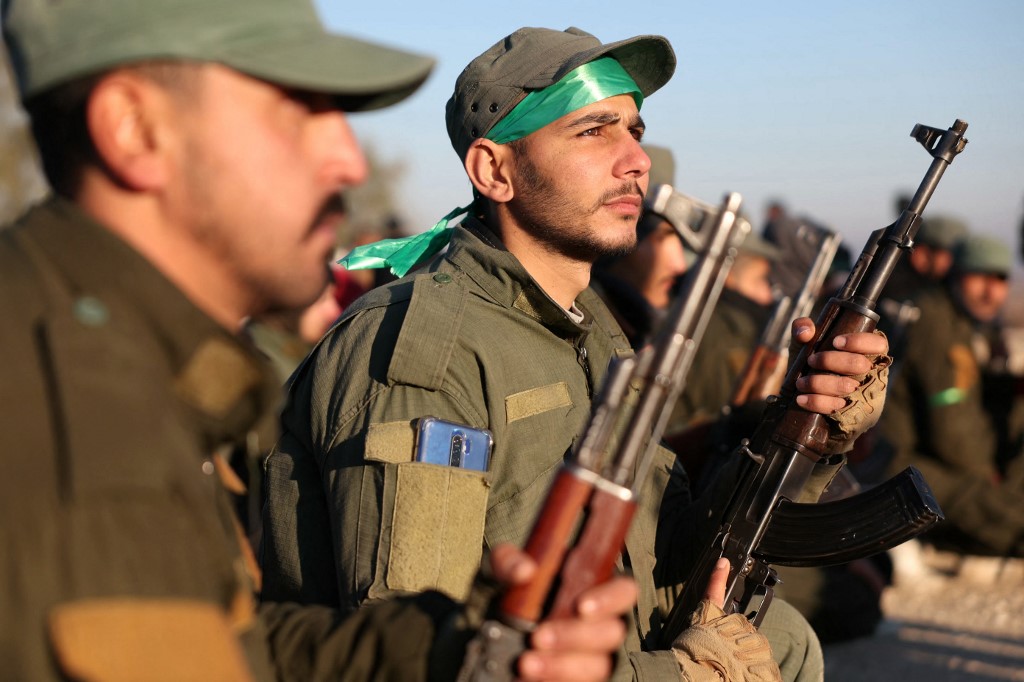
    In a significant escalation of rhetoric, the Islamic State (IS) group has issued its first official audio statement in two years, directly calling for intensified attacks against the Syrian government and national army. The message, delivered by spokesperson Abu Huzaifa al-Ansari through the group’s official media channels, marks a strategic shift in the organization’s priorities.

    The recording explicitly identifies the overthrow of President Ahmed al-Sharaa’s administration as the group’s primary objective, characterizing his leadership as ‘apostate and secular rule.’ This declaration comes amid growing tensions following Syria’s recent alignment with international counter-terrorism efforts.

    President al-Sharaa, formerly known as Abu Mohammed al-Jolani of the al-Qaeda-linked al-Nusra Front, has undergone a remarkable political transformation. After ousting longtime leader Bashar al-Assad in December 2024, he assumed the interim presidency in January 2025. His journey from leading al-Qaeda’s Syrian branch—which historically fought against IS—to his current position as a conventional political leader represents one of the most dramatic political evolutions in the region.

    The timing of IS’s message appears directly linked to Syria’s November participation in the US-led global coalition against the terrorist organization. During his historic visit to Washington, al-Sharaa formalized Syria’s cooperation with the 90-member coalition, including attendance at recent meetings in Riyadh, Saudi Arabia. The IS spokesperson condemned this alignment, accusing Western ‘crusaders’ of being Syria’s true rulers and vowing perpetual conflict in Damascus.

    Independent researcher Cagatay Cebe, who specializes in jihadist movements, interprets the statement as an official declaration of strategic regrouping within Syria. ‘After its territorial losses in 2019, the organization preferred to maintain a low profile in Syria while strengthening its branches across different continents,’ Cebe explained to Middle East Eye. He noted that the group previously avoided claiming responsibility for attacks in government-held areas but changed tactics following al-Sharaa’s Washington visit.

    The audio statement also celebrated IS’s operational successes across Africa while urging followers to mobilize in regions where the group maintains influence. Shortly after its release, IS claimed responsibility for an attack in Raqqa that killed two alleged Syrian army members, followed by another claimed operation in Deir al-Zor that resulted in one casualty and one injury among internal security forces.

    According to a recent UN Office of Counter-Terrorism report, IS has already attempted five failed assassinations targeting President al-Sharaa and two senior cabinet ministers. The group, which once controlled vast territories across Syria and Iraq before its territorial defeat in 2017-2019, appears to be repositioning itself for a renewed campaign centered in Syria, potentially transferring forces from Iraq according to analyst assessments.

  • A long-acting HIV drug arrives in Zimbabwe for some at highest risk

    A long-acting HIV drug arrives in Zimbabwe for some at highest risk

    ZIMBABWE has emerged as a pioneering nation in the global fight against HIV/AIDS by launching a groundbreaking twice-yearly preventive injection that promises to transform prevention strategies for vulnerable populations. The revolutionary drug lenacapavir, administered just semiannually, represents a significant advancement over daily oral PrEP medications that have long posed adherence challenges for high-risk groups.

    At a dedicated rollout event in Harare’s outskirts, diverse beneficiaries including sex workers, young mothers, and LGBTQ+ individuals received their initial injections in mobile clinic settings. The atmosphere reflected both hope and relief among recipients who have struggled with the practical limitations of existing prevention methods.

    Developed by California-based pharmaceutical innovator Gilead Sciences, this long-acting injectable demonstrates near-total protection efficacy in clinical trials. The African rollout across ten nations including Zimbabwe, Zambia, and Eswatini receives substantial support through PEPFAR (President’s Emergency Plan for AIDS Relief) in collaboration with the Global Fund.

    Health Minister Douglas Mombeshora emphasized the transformative potential during the launch ceremony: ‘Effective prevention must integrate seamlessly into real lives. When health solutions prove overly complex, demanding, or visibly stigmatizing, compliance inevitably suffers. Lenacapavir fundamentally reimagines our approach to HIV prevention.’

    Despite Zimbabwe’s remarkable progress in epidemic control—achieving WHO testing, treatment, and viral suppression targets—new infections persist concerningly among adolescent girls and young women. UN data reveals HIV prevalence among sub-Saharan African females aged 10-24 remains persistently triple that of male counterparts, driven by structural inequalities and healthcare access disparities.

    Practical implementation challenges loom large, however. With each injection costing approximately $54 annually per person even at negotiated nonprofit pricing, sustainable scaling remains financially constrained for many African governments. Health infrastructure limitations and diminishing foreign aid further complicate widespread accessibility.

    Medical professionals stress that lenacapavir should complement rather replace existing prevention tools. ‘Condoms remain essential—they’re affordable and prevent additional sexually transmitted infections,’ noted Enerst Chikwati of AIDS Healthcare Foundation.

    For early recipients like Constance Mukoloka, a 27-year-old sex worker, the injection already delivers profound impact: ‘This means security and professional confidence. Daily pills created client suspicion and scheduling difficulties. Now I can work without compromising protection for six months.’