作者: admin

  • Dyeing for the future: Reviving an ancient blue in rural China

    Dyeing for the future: Reviving an ancient blue in rural China

    In the quiet hills of Lizu village, Zhejiang province, a cultural renaissance is unfolding through the vibrant blues of an ancient craft. Designer Lou Shamoshuang, 34, has transformed a 400-year-old dyeing technique into a thriving sustainable enterprise that bridges tradition and modernity while revitalizing rural communities.

    The journey began in 2018 when Lou discovered a century-old dye workshop in Dali, Yunnan, on the verge of permanent closure. Moved by the artisans’ resignation that their craft had ‘no future,’ she became determined to preserve this intangible cultural heritage. Starting with documenting processes and selling fabrics through social media, she discovered unexpected demand for these traditional artworks.

    Returning to her hometown Yiwu, Lou established Desert Dye House in 2018, leveraging Zhejiang’s ‘Green Rural Revival Program’ that offered favorable lease terms for young entrepreneurs. The location provided both the tranquility essential for handcrafts and practical support for sustainable development.

    Mastering the technique required relentless experimentation with natural materials including indigo, sappanwood, and onion skins. Lou identified tie-dye as the most accessible entry point, explaining: ‘Tie-dye is the art of resisting dye by binding fabric. Through precise knots and dips in vats of dye, unique patterns emerge—a process taking from 30 minutes to several days.’

    The breakthrough came in 2023 with the ‘Boundless Prospects’ sachet during the Year of the Rabbit, catalyzing significant growth. Lou built a diverse team of nine locals ranging from digital-native Gen-Zers to seventy-year-old women with lifetime needlework skills, creating a distinctive model of common prosperity in a city known for mass production.

    The economic impact has been substantial, with outsourcing intricate embroidery and sewing for zodiac-themed products generating supplementary income for over 20 women in Lizu, boosting their earnings by approximately 4,000 yuan monthly.

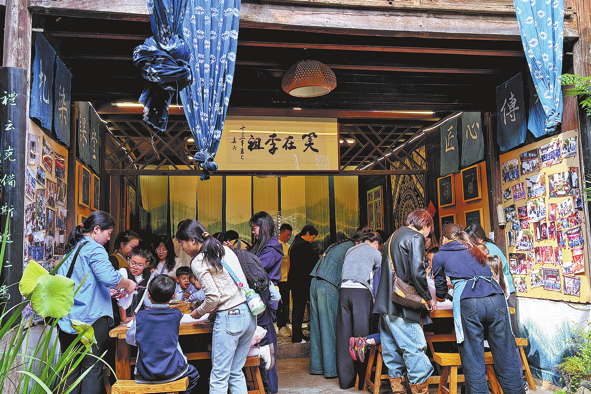
    Beyond economics, Lou emphasizes cultural transmission and ecological sustainability. She has evangelized the craft through free community talks and established a plant-dyeing studio at her alma mater, Yiwu No 3 High School, where she lectures to 800 students. ‘When students win awards for their tie-dye work,’ Lou notes, ‘it proves this isn’t a relic—it’s a living language.’

    The ecological significance resonates deeply with contemporary environmental concerns. Lou highlights: ‘The fashion industry’s dyeing processes are a leading global polluter of waterways. Plant dyes utilizing indigo, sappanwood, and other botanicals offer sustainable alternatives—this is ancestral wisdom for living in balance with nature.’

    Recognition has attracted distinguished visitors including former UN Secretary-General Ban Ki-moon, drawn by the unique ecosystem of creators in Lizu village. Dozens of complementary businesses—from tie-dye workshops to cafes run by young entrepreneurs—form a collective hub near the ‘common prosperity square,’ embodying the Zhejiang spirit of creating something from nothing.

    Lou’s transformation from high-end fashion designer to guardian of rural heritage represents more than career change—it embodies purpose-driven revitalization of both cultural tradition and sustainable rural development.

  • Technology gives room to roam

    Technology gives room to roam

    Across Kenya’s diverse landscapes—from the sprawling Maasai Mara to the rugged plains of Tsavo—a technological revolution is quietly unfolding. Advanced early-warning systems now create an invisible safety net that protects both wildlife and human communities from destructive encounters.

    In regions like Kajiado, where farmers once lost entire crops to marauding elephants overnight, instant alerts now provide critical advance notice before herds approach settlements. This transformation stems from Kenya Wildlife Service’s comprehensive digital strategy that integrates artificial intelligence, long-range telemetry, thermal imaging, and community knowledge into a unified conservation framework.

    At the heart of this initiative lies EarthRanger, an innovative platform that aggregates data from satellite collars, drones, smart camera traps, and thermal sensors into a single operational dashboard. When elephants breach virtual boundaries, automated notifications instantly alert rangers’ handheld devices, WhatsApp groups, and command centers in Nairobi. Different species appear as moving icons on screens, enabling precise tracking of elephants crossing migratory corridors, lions approaching settlements, and rhinos near sanctuary boundaries.

    Response teams now deploy within minutes, sometimes guided by overhead drones, to gently redirect animals to safety. This coordinated approach has transformed human-wildlife interactions from chaotic clashes into managed encounters. Farmers gain precious time to secure livestock and activate deterrent systems, while rangers can preemptively defuse conflicts before they escalate.

    The technological infrastructure extends even to remote parks like Marsabit and Samburu through long-range, low-power radio networks capable of transmitting telemetry over 20 kilometers. Thermal cameras detect movements in complete darkness, while acoustic sensors identify gunshots, chainsaws, and animal distress calls around the clock. Beyond terrestrial monitoring, scientists employ environmental DNA to detect aquatic species without direct observation and underwater camera traps to monitor coral reef health.

    This conservation technology creates unexpected economic opportunities. After suitable training, community members become drone pilots, telemetry analysts, and data technicians—diversifying livelihoods beyond tourism-dependent economies.

    Complementing these technological advances, the International Fund for Animal Welfare’s Room to Roam initiative seeks to secure over 9 million hectares of connected habitat across East and Southern Africa. The program focuses on maintaining migratory paths, restoring degraded rangelands, and collaborating with communities along elephant movement routes. Conservationists emphasize that success requires integrating conservation with local development needs, land-use planning, and community benefits.

    Despite these advancements, experts caution that no single solution fits all contexts. Research combining species distribution modeling with AI analysis reveals that 19.1% of Kenya’s land faces high human-elephant conflict risk with limited tourism potential. In these areas, alternative interventions—including wildlife corridors, electric fencing, and strengthened land-use planning—remain essential.

    Kenya’s approach demonstrates how technology, when combined with human expertise and community engagement, can create sustainable coexistence between humans and wildlife while emerging as a continental leader in innovative conservation practices.

  • Rajanish Kakade, AP photographer who captured the daily rhythm of India’s Mumbai, dies at 55

    Rajanish Kakade, AP photographer who captured the daily rhythm of India’s Mumbai, dies at 55

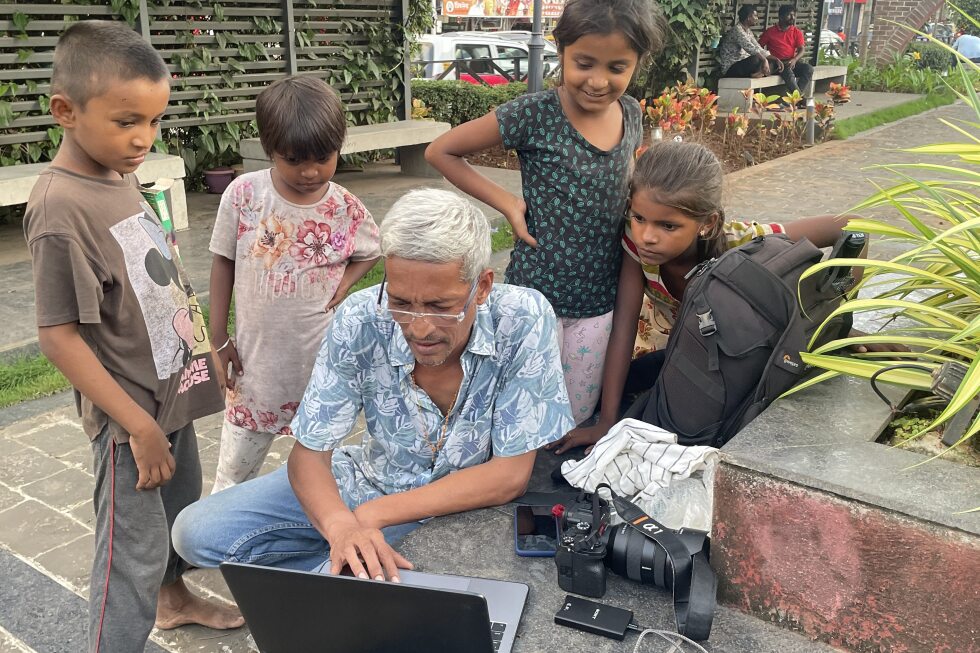
    Mumbai-based photojournalist Rajanish Kakade, whose evocative imagery captured the complex essence of India’s financial capital for nearly two decades, has passed away at age 55 after battling an illness. The acclaimed Associated Press photographer died at his residence on Monday, according to family statements.

    A third-generation visual storyteller who inherited the craft from both his grandfather and father, Kakade joined the AP in 2008 following tenures with prominent media organizations including the Sakal Group conglomerate and Hindustan Times newspaper. His lens documented India’s multifaceted narrative across political spectrums, cultural landscapes, and daily urban existence with remarkable depth and authenticity.

    Kakade’s portfolio encompassed monumental assignments ranging from national elections and sporting events to harrowing coverage of the 2008 Mumbai terrorist attacks and COVID-19 pandemic. His distinctive ability to capture Mumbai’s paradoxical nature—simultaneously conveying the city’s overwhelming scale and delicate intimate moments—established him as a definitive visual historian of the metropolis.

    Colleagues and industry organizations mourned the loss of both an exceptional artist and mentor. The Mumbai Press Club honored his legacy, noting: “Through his work, he captured defining moments with integrity and sensitivity. Through his mentorship, he shaped countless careers, always encouraging young photographers to pursue the truth with courage and compassion.”

    Manish Swarup, AP’s chief photographer for South Asia, remembered Kakade as possessing “that rare, quiet grace of a true observer” who earned the trust of his subjects. “We haven’t just lost a great photojournalist; we have lost a beautiful soul, whose kindness was as luminous as his work,” Swarup expressed.

    Yirmiyan Arthur, AP’s photography director for Asia Pacific, emphasized how Kakade’s work revealed Mumbai’s contradictions with “utter honesty,” chronicling everything from economic disparities to seasonal monsoon transformations and the vibrant humanity within the city’s local train system. “He was a son of Mumbai and made sure he told its story the right way,” Arthur concluded.

    Kakade is survived by family members, leaving behind an enduring visual legacy that continues to shape understanding of contemporary Indian society.

  • EU diplomats scramble to overcome Hungary’s threat to derail new sanctions on Russia

    EU diplomats scramble to overcome Hungary’s threat to derail new sanctions on Russia

    BRUSSELS — European Union efforts to impose a twentieth sanctions package against Russia have encountered significant obstruction from Hungary, creating a major rift within the bloc on the eve of the fourth anniversary of Russia’s full-scale invasion of Ukraine.

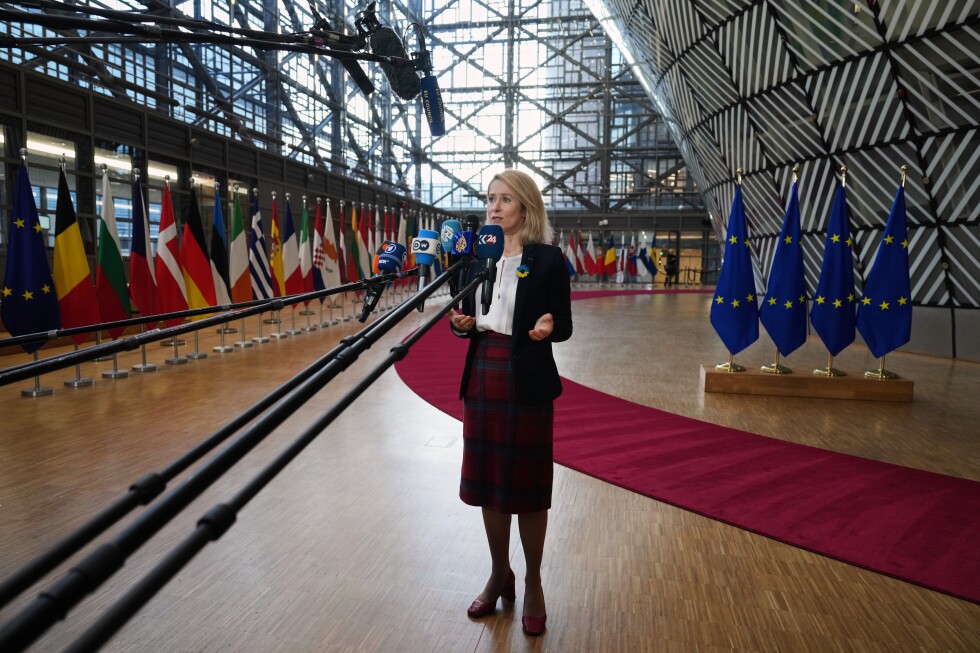
    EU Foreign Policy Chief Kaja Kallas confirmed Monday that the comprehensive sanctions package targeting Russia’s shadow fleet and energy revenues would likely not advance during the foreign ministers’ meeting in Brussels. The development follows Hungary’s weekend threat to block both the sanctions and a critical €90 billion loan package for Ukraine until Russian oil deliveries to Hungary resume.

    The diplomatic standoff stems from the January 27 interruption of Russian oil shipments to Hungary and Slovakia via the Druzhba pipeline, which Ukrainian officials attribute to Russian drone attacks damaging the infrastructure. Hungarian Prime Minister Viktor Orbán has made unsubstantiated claims that Ukraine is deliberately withholding oil shipments and attempting to destabilize his government.

    In a social media post, Orbán characterized the situation as a “Ukrainian oil blockade” orchestrated by President Volodymyr Zelenskyy, warning that “by attacking Hungary, he can only lose.” The comments come as Orbán faces a crucial election in less than two months, during which he has launched an aggressive anti-Ukraine campaign accusing the leading opposition party of conspiring with EU and Ukrainian officials.

    The Hungarian position has drawn sharp criticism from other EU members. Polish Foreign Minister Radosław Sikorski suggested Orbán’s actions represent a domestic political maneuver, stating it was “shocking” to see hostility toward “the victim of aggression” exploited for electoral gains.

    German Foreign Minister Johann Wadephul expressed astonishment at Hungary’s stance, urging reconsideration and emphasizing the need to “show strength” and “support Ukraine sustainably.” Latvian and Estonian officials similarly emphasized the urgency of both sanctions and financial support for Ukraine.

    The blocked €90 billion loan package represents crucial funding for Ukraine’s military and economic needs over the next two years, with Estonian Foreign Minister Margus Tsahkna stressing that “Ukraine needs this money heavily.”

    Unlike most European nations that have significantly reduced or eliminated Russian energy imports since the 2022 invasion, Hungary and Slovakia maintain substantial Russian oil and gas supplies under a temporary EU exemption.

  • Lunch at the museum!

    Lunch at the museum!

    Chinese museums are revolutionizing visitor experiences by transforming ancient artifacts into edible cultural encounters. During the 2026 Spring Festival holiday, institutions nationwide reported unprecedented foot traffic, with visitors flocking not only for historical exhibits but increasingly for museum restaurants offering relic-inspired cuisine.

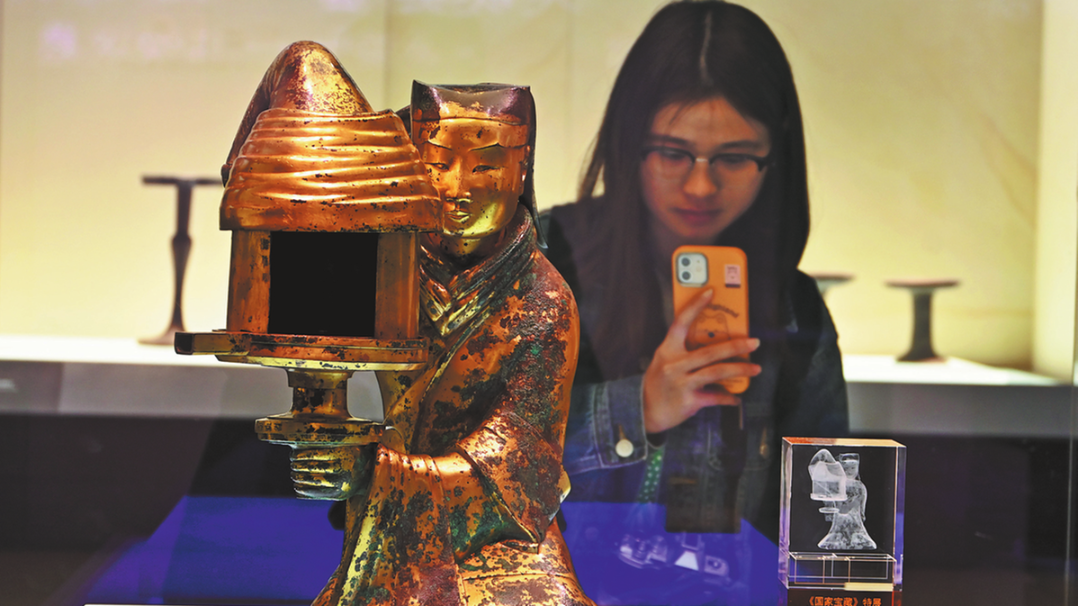
    The Hebei Museum exemplifies this trend with its innovative Changxin Palace Lamp noodles—a regional specialty dish crowned with a steamed egg sculpted to resemble the museum’s 2,000-year-old Western Han Dynasty treasure. ‘It feels like tasting a piece of history,’ remarked Liang, a Beijing traveler who prioritized both national treasures and culinary exploration during her visit.

    This gastronomic movement represents a strategic shift from static exhibition to immersive consumption. According to Li Kexin of the Hebei Museum’s art department, these culinary creations address practical needs while making cultural narratives more accessible. ‘Dining at a museum is part of the cultural experience,’ Li explained, emphasizing how flavor enhances storytelling.

    The phenomenon extends beyond Hebei Province. At Anyang’s Yinxu Museum, visitors consume noodles imprinted with oracle bone inscriptions—each character printed in squid ink representing ancient blessings that are literally consumed. The restaurant reports selling 500-600 daily portions during peak periods.

    Social media amplification has accelerated this trend, with visually striking creations like the Capital Museum’s horse-shaped mousse cake generating viral attention on platforms like Xiaohongshu. The ‘instagrammable’ quality of these dishes has become a significant driver of museum attendance among younger demographics.

    Beyond novelty, practical considerations fuel the trend’s sustainability. Affordable pricing—with dishes starting at 3 yuan at the Sichuan Museum—combined with the convenience of on-site dining addresses visitor fatigue while creating additional revenue streams. Professor Xu Jing of Peking University notes that dining’s recurring nature makes it a stronger consumption driver than traditional souvenir sales.

    Government policies have encouraged this development, with nine central departments jointly promoting innovative cultural products. However, experts caution that sustained success requires moving beyond novelty toward developing enduring cultural narratives that integrate museums into community life rather than merely attracting tourists.

  • ‘We are ready’: Families of victims of Duterte’s war on drugs raring to participate in ICC trial

    ‘We are ready’: Families of victims of Duterte’s war on drugs raring to participate in ICC trial

    THE HAGUE – Nine years after losing both sons in a single day, Llore Pasco stands ready at the International Criminal Court as proceedings against former Philippine president Rodrigo Duterte commence. Alongside fellow complainant Sheera Escudero, whose teenage brother perished in the same brutal campaign, these mothers embody the human cost of a drug war that claimed thousands of lives between 2016 and 2022.

    The confirmation of charges hearings, scheduled from February 23-26 at the ICC’s Netherlands headquarters, mark a watershed moment in global accountability efforts. Despite Duterte’s conspicuous absence from the proceedings, victims’ representatives maintain their resolve. “We’ve waited nine years for this day,” Pasco stated, acknowledging mixed emotions about the former leader’s non-appearance. “I would have wanted to see his reactions as the charges are being read.”

    A coalition of Philippine human rights advocates has mobilized in support of the historic case. Former legislator Neri Colmenares, ICC-accredited counsel Kristina Conti, and leaders from Karapatan and Rise Up organizations have assembled in The Hague to monitor proceedings that could establish precedent for prosecuting state-sanctioned violence.

    Parallel demonstrations unfolded across the Philippines as the trial commenced. In Manila, Bishop Gerardo Alminaza presided over a Mass for Justice and Truth at Our Lady of Remedies Church, declaring the drug war killings represented “not random acts of violence but rather a systematic policy that undermined the fundamental right to life.”

    Security forces heightened alert status nationwide, with Philippine National Police chief Jose Melencio Nartatez confirming surveillance of potential gatherings related to the proceedings. The government’s measured response contrasts with previous administrations’ outright rejection of ICC jurisdiction, signaling possible diplomatic recalibration under current leadership.

    The ICC’s involvement follows years of failed domestic accountability mechanisms and a 2025 Philippine Congressional investigation that first provided victims’ families opportunity to confront their accuser. While legal experts caution that confirmation hearings represent merely the preliminary phase in what could be a protracted judicial process, for families who have endured nearly a decade of seeking justice, this week represents their long-awaited day in court.

  • ‘Wanted to know why Muslims do this’: UAE expat tries fasting in Ramadan for first time

    ‘Wanted to know why Muslims do this’: UAE expat tries fasting in Ramadan for first time

    In an inspiring display of cultural curiosity, Junior Gomes, a Brazilian expatriate residing in the United Arab Emirates, has embarked on his first Ramadan fasting experience to better understand Islamic traditions. The Director of Operations at Little Legends sports academy, who was raised in South Africa, decided to personally experience the month-long spiritual practice after observing his fasting students.

    Gomes, who previously relied exclusively on takeout and restaurant meals, has undergone a remarkable culinary transformation during Ramadan. With guidance from friends, he now prepares balanced home-cooked meals including spring rolls and other nutritious dishes—a significant departure from his previous lifestyle. ‘I never cooked in my life before this,’ Gomes admitted, expressing pride in his newly acquired kitchen skills.

    The daily Ramadan routine involves pre-dawn awakenings at 4:00 AM for suhoor meals carefully designed with proteins, carbohydrates, and sufficient fluids. Despite maintaining his rigorous gym schedule and managing multiple responsibilities at the children’s sports academy, Gomes reports the experience has been less challenging than anticipated. He particularly notes the psychological difficulty of the final hours before sunset when thirst and hunger intensify, followed by heightened appreciation for nourishment after breaking the fast.

    Beyond physical adaptation, Gomes has discovered deeper philosophical insights. ‘The whole self-control thing is quite important,’ he reflects. ‘You actually learn to appreciate things more. During the day, be a better person. Have some self-control. Be grateful. Give back.’

    In a surprising familial coincidence, Gomes discovered his brother in Brazil had independently decided to fast alongside his Muslim wife, creating an unplanned bond of shared experience across continents. This unexpected connection has added another layer of meaning to his cultural exploration, demonstrating how Ramadan traditions can bridge geographical and cultural divides.

  • NASA delays astronaut moon mission over glitch

    NASA delays astronaut moon mission over glitch

    CAPE CANAVERAL, Florida — NASA has announced another significant postponement of its landmark Artemis II lunar mission, pushing humanity’s first crewed moon flight in over fifty years to April at the earliest. The decision comes after a critical technical malfunction emerged during testing operations on Saturday.

    The setback occurred when engineers detected an unexpected interruption in the helium flow to the upper stage of the Space Launch System (SLS) rocket. This helium system plays a vital role in engine purging procedures and maintaining proper pressurization within the fuel tanks. The incident represents a fresh challenge distinct from previous hydrogen leakage issues that had already delayed the mission timeline.

    NASA Administrator Jared Isaacman addressed the technical complications, indicating that the root cause likely involves malfunctioning components within the helium delivery system. Potential culprits include a compromised filter, defective valve, or faulty connection plate. Due to the inaccessible location of these components, the agency must return the 98-meter rocket to its protective hangar for comprehensive repairs and component replacement.

    “We will initiate preparations for rollback operations, which effectively eliminates the March launch window from consideration,” Isaacman stated via social media platform X. The space agency now targets either early or late April for the next viable launch opportunity, pending successful resolution of the technical issues.

    The administrator acknowledged public disappointment while emphasizing the profound frustration within NASA’s engineering teams. “I understand people are disappointed by this development,” Isaacman remarked. “That disappointment is felt most acutely by the dedicated NASA team members who have been working tirelessly to prepare for this monumental endeavor.”

    The helium system anomaly emerged unexpectedly during routine post-testing procedures, requiring engineers to work through the night to assess the situation. Notably, the system had performed flawlessly during previous dress rehearsal exercises, making this development particularly surprising for mission planners.

    This delay follows earlier complications with hydrogen fuel leaks that had already pushed the Artemis II mission timeline back by approximately one month. NASA had successfully addressed those issues during a second fueling test last Thursday, which showed minimal leakage and had initially restored confidence in a March launch timeframe.

  • Tokyo Skytree elevator traps 20 people for over 5 hours, all rescued

    Tokyo Skytree elevator traps 20 people for over 5 hours, all rescued

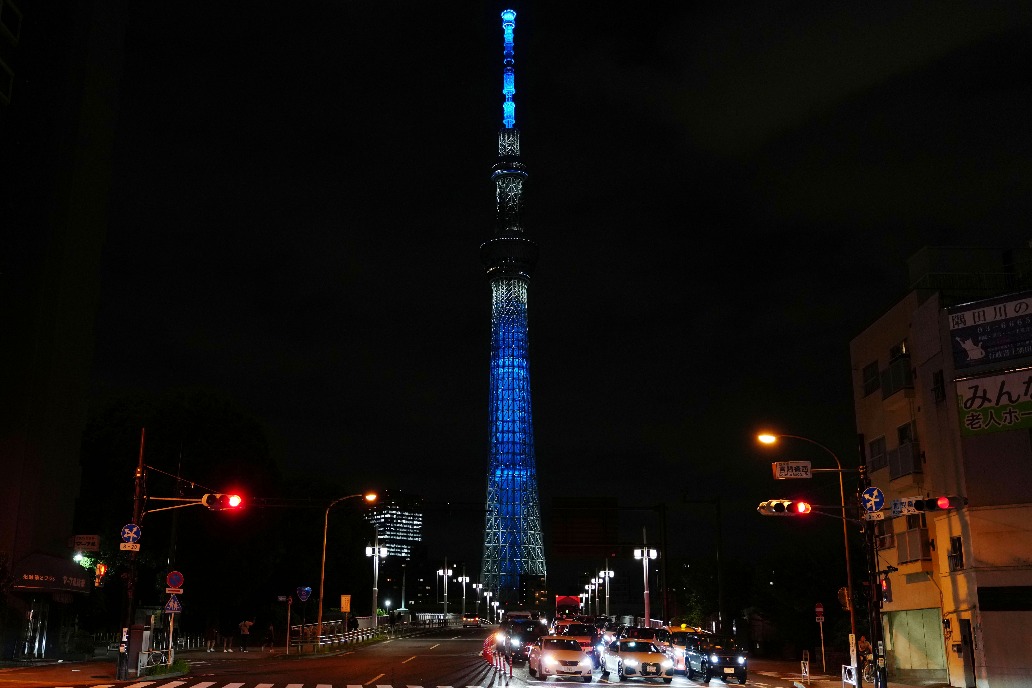
    A harrowing incident unfolded at Tokyo’s iconic Skytree tower on Sunday evening when an elevator carrying twenty passengers malfunctioned and became stranded approximately 30 meters above ground level. The emergency situation began at approximately 8:30 PM local time and persisted for over five hours before all occupants were successfully evacuated without physical injury.

    According to reports from Japan’s national public broadcasting organization NHK, the technical failure affected two of the four elevators servicing the 350-meter observation deck. While one elevator cabin remained unoccupied, the other contained a diverse group of visitors including children, all of whom found themselves suspended mid-air as the mechanism ceased functioning without warning.

    Tokyo Fire Department rescue personnel executed a complex technical operation to secure the trapped individuals. Using an adjacent elevator that had been carefully maneuvered to match the exact height of the stranded cabin, emergency crews established a secure transfer pathway between the two structures. The meticulous rescue concluded at approximately 2:00 AM Monday morning when the final passenger was safely extracted from the immobilized elevator.

    Law enforcement authorities confirmed that none of the evacuated individuals required medical attention or reported adverse health effects following the prolonged confinement. A comprehensive investigation has been initiated to determine the precise mechanical or electrical factors that precipitated the elevator failure at one of Japan’s most visited tourist destinations.

    The Tokyo Skytree, recognized globally as the world’s tallest broadcasting tower at 634 meters, annually attracts millions of domestic and international visitors. The incident has prompted renewed scrutiny of safety protocols and maintenance procedures for high-rise elevator systems in major tourist attractions.

  • France says EU has tools to hit back at Washington over import levies

    France says EU has tools to hit back at Washington over import levies

    European powers are mobilizing a coordinated response against Washington’s dramatic escalation of global trade levies, with France declaring the bloc possesses formidable countermeasures while Germany seeks a unified diplomatic approach.

    Following the US Supreme Court’s landmark ruling that invalidated numerous existing tariffs as illegal, the Biden administration has moved aggressively to implement a sweeping flat tariff structure. Initial 10% global levies announced Friday were abruptly raised to 15% on Saturday, signaling a hardening US trade stance.

    French Trade Minister Nicolas Forissier revealed in a Financial Times interview that Paris is actively consulting with EU counterparts and the European Commission regarding retaliatory options. “Should it become necessary, the EU has the appropriate instruments at its disposal,” Forissier stated, indicating the bloc’s readiness to deploy economic countermeasures.

    Among the potential weapons in Europe’s arsenal is the recently developed “trade bazooka”—an anti-coercion instrument granting Brussels broad authority to implement export controls, service tariffs, and exclusion of US technology firms from lucrative EU procurement contracts. Additionally, a suspended package of retaliatory tariffs targeting over €90 billion ($106 billion) in American goods remains available for activation.

    Simultaneously, German Chancellor Friedrich Merz announced plans to consolidate a common European position ahead of his Washington visit scheduled within the coming week. “Customs policy is a matter for the European Union, not for individual member states,” Merz emphasized during an ARD broadcaster appearance, underscoring the bloc’s determination to present a united front.

    Despite the escalating trade tensions, Merz identified a silver lining in the Supreme Court’s intervention, noting: “For me, there is a reassuring element in yesterday’s Supreme Court decision: the separation of powers in the USA still seems to be working.”

    The US judicial ruling has triggered international scrutiny, with Croatian economist Ljubo Jurcic describing it as a “major setback for a flawed economic model” that ultimately damaged American interests. Portuguese commentator Rui Cardoso criticized the EU’s previous conciliatory approach, suggesting recent developments demonstrate Brussels “did not need to concede as much as it did” in earlier trade negotiations.