作者: admin

  • AFL 2026: Richmond has been dealt a brutal injury blow on the eve of the season

    AFL 2026: Richmond has been dealt a brutal injury blow on the eve of the season

    Two Australian Football League clubs are confronting significant pre-season challenges following injury setbacks to their most promising young players. Richmond Tigers’ emerging star Taj Hotton faces an extended period on the sidelines after medical scans revealed bone stress in his hip, potentially sidelining the talented recruit for up to four months.

    The development represents a particularly cruel blow for Hotton, who had been demonstrating impressive form during match simulation against Essendon last Friday before reporting subsequent discomfort. This latest injury compounds existing concerns for the young athlete, who missed the first half of last season recovering from an ACL rupture sustained during his draft campaign.

    Prior to his initial injury, Hotton was widely considered a potential number one draft selection, making his acquisition by Richmond at pick 12 in the 2024 super draft viewed as exceptional value. Richmond’s high performance manager Ben Serpell indicated the club would implement a carefully managed rehabilitation protocol, noting: “Taj will begin modified weight bearing across the next 10 days to two weeks, before starting a slow progression back into running. We anticipate approximately six to eight weeks before he returns to running and possibly four months before available for selection.”

    Meanwhile, North Melbourne faces its own preseason complication with midfielder George Wardlaw sustaining a hamstring strain during match simulation exercises. Club officials have confirmed a 3-4 week absence for the hard-nosed midfielder, though remain optimistic about his relatively prompt return. North Melbourne’s head of performance Kevin White characterized the injury as “a low-grade strain similar to the previous injury in the same area,” while noting the player has “presented really well” following the incident.

    Both incidents highlight the physical demands and injury risks associated with elite Australian rules football, particularly affecting clubs investing in developing young talent ahead of the approaching season.

  • ASX shakes off negative session on Wall Street to end Tuesday flat

    ASX shakes off negative session on Wall Street to end Tuesday flat

    Australia’s benchmark ASX 200 demonstrated remarkable resilience on Tuesday, closing essentially flat at 9022.30 despite significant pressure from technology sector declines. The index’s stability emerged from a fascinating sectoral divergence where robust commodity performances neutralized substantial tech sell-offs driven by artificial intelligence concerns.

    Market dynamics revealed a tale of two sectors: technology stocks experienced pronounced declines with WiseTech Global falling 3.67%, Xero dropping 4.57%, and TechnologyOne decreasing 3.75%. Conversely, energy companies surged as crude oil prices climbed above $72 per barrel, reaching their highest levels since August. Woodside Energy advanced 2.4%, while Santos and Ampol posted gains of 0.44% and 1.06% respectively. Mining giant BHP added 1.35% to the positive momentum.

    Lithium miners emerged as standout performers, fueled by supply constraints and stronger-than-anticipated demand from electric vehicles and energy storage systems. Core Lithium skyrocketed 9.52%, Liontown Resources jumped 8.68%, and Iluka Resources gained 7.92%.

    Market analyst Tony Sycamore noted the Australian market’s ability to withstand negative influences from Wall Street’s session, describing the phenomenon as investors playing ‘Whack-a-Mole’ with potential AI disruption casualties. He highlighted significant implications from the US Supreme Court’s decision to strike down previous tariffs, replaced with a standardized 15% global tariff structure.

    ‘The tariff restructuring reduces average tariff levels, presenting a positive development for global growth,’ Sycamore explained. ‘China, as Australia’s largest trading partner, stands to benefit substantially with an estimated five to eight percentage point reduction in tariffs, potentially creating upside risks for both Chinese and global economies.’

    Financial institutions presented a mixed picture, with ANZ declining 0.7% following resolved legal proceedings with former CEO Shayne Elliott. Westpac and NAB posted gains of 1.45% and 1.04% respectively, while CBA remained virtually unchanged.

    Corporate performances varied significantly: Engineering firm Monadelphous rallied 5.91% after reporting record half-year revenue of $1.53 billion, exceeding expectations. Conversely, ARB Corporation plummeted 13.06% following a 17.2% profit decline, while online retailer Adore Beauty crashed 27.91% amid profit compression from aggressive Black Friday discounting.

    Market participants now await January inflation data scheduled for Wednesday release, alongside earnings reports from Woolworths, Flight Centre, Bapcor, and Domino’s Pizza.

  • BBC’s Will Grant on the atmosphere in Mexico following unrest

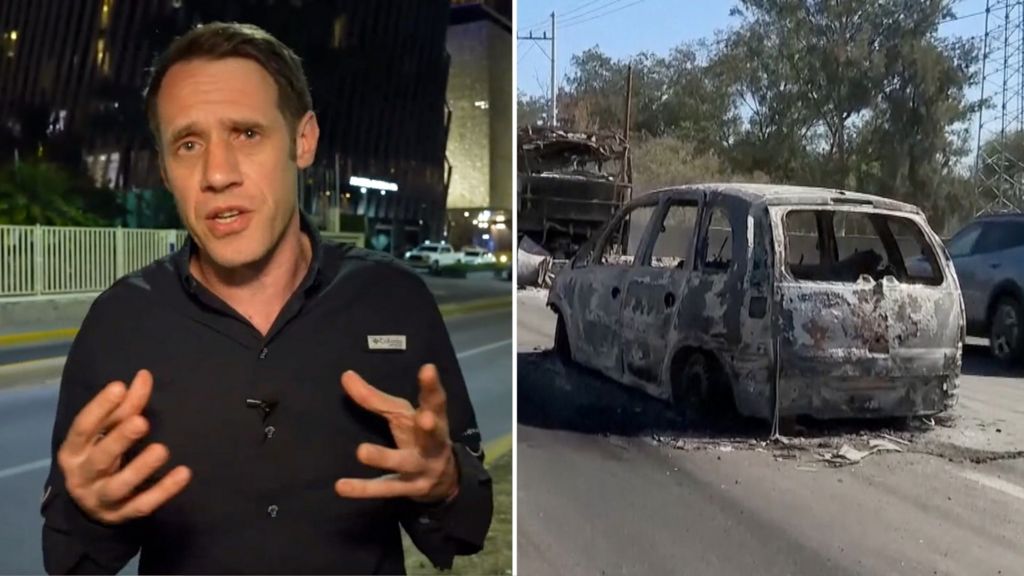
    BBC’s Will Grant on the atmosphere in Mexico following unrest

    A palpable sense of apprehension lingers in Guadalajara, the bustling capital of Mexico’s Jalisco state, in the aftermath of a significant eruption of public violence. According to firsthand reporting from the BBC’s Will Grant, the city’s normally vibrant atmosphere has been subdued, replaced by a collective wariness among its citizens. The recent unrest has not only disrupted daily life but has also cast a shadow over the community’s sense of security. Local authorities are reportedly increasing patrols and presence in an effort to restore calm and reassure the public. The incident has sparked conversations about public safety and the underlying social tensions within the region. While businesses are gradually reopening, the memory of the turmoil continues to influence the rhythm of the city, with many residents opting for caution in their daily routines. This event highlights the ongoing challenges faced by communities when civil order is unexpectedly fractured.

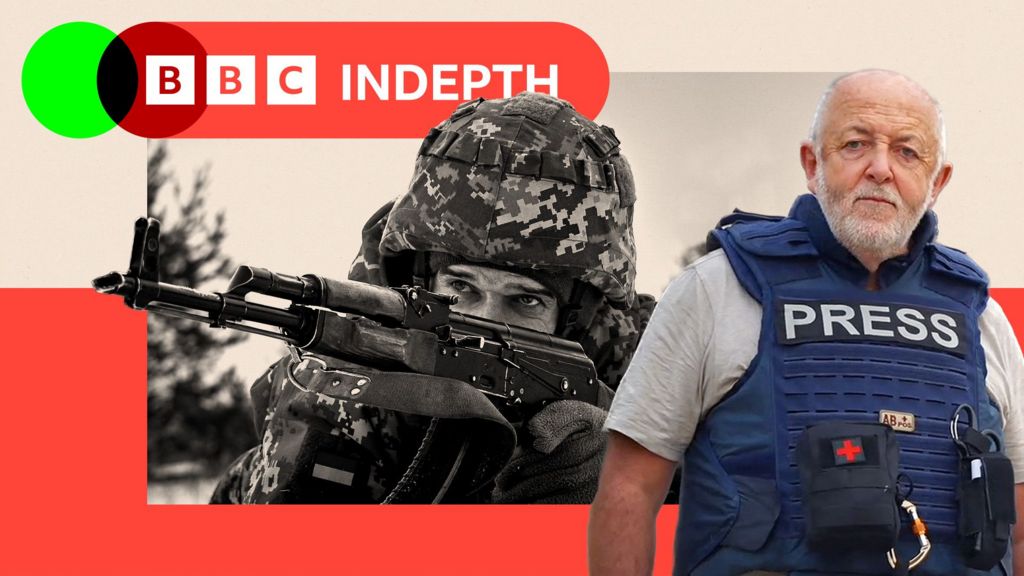
  • Bowen: Why Ukraine remains defiant and does not feel close to defeat

    Bowen: Why Ukraine remains defiant and does not feel close to defeat

    Beneath the eerie glow of headlights in eastern Ukraine’s Donetsk region, miles of suspended fishing nets create a shimmering canopy over strategic roadways—a surreal defense against explosive drones that now define modern warfare. These improvised barriers, donated by European fishermen including 280 tonnes of Scottish salmon nets, represent Ukraine’s ingenious adaptation to the deadly drone warfare that has transformed this conflict.

    The battlefield’s most feared weapons are FPV (first-person view) drones, capable of transmitting real-time footage to operators 40km away while delivering precision strikes. Both Ukrainian and Russian forces have revolutionized their use, transitioning from radio-controlled systems to fiber-optic guidance to counter electronic warfare tactics. In hidden command centers within shattered buildings, Ukrainian analysts monitor banks of screens, directing ground operations with terrifying accuracy.

    This technological arms race has expanded traditional front lines into vast “kill zones” stretching 20km beyond forward positions. Rear areas once considered safe now face equal peril as surveillance drones saturate the skies. The economic asymmetry is staggering: a $1,000 drone can destroy a $30 million tank, making skilled pilots invaluable assets. Both nations have become global leaders in drone warfare, with NATO forces struggling to match their operational experience.

    The conflict’s technological evolution occurs against persistent geopolitical pressures. Russian President Vladimir Putin demands Ukrainian surrender of Donetsk’s remaining 20% under Ukrainian control, along with portions of Zaporizhzhia and Kherson regions. Despite American pressure for a ceasefire—including direct appeals from the Trump administration—President Zelensky maintains he will never relinquish unconquered territory, fearing renewed Russian aggression following any temporary pause.

    In Slovyansk, designated a “fortress city” with extensive anti-tank defenses, civilian life persists amid constant danger. Residents hurry through snow-covered streets, aware that nowhere in Donetsk remains truly safe. Local humanitarian efforts continue against impossible odds, with figures like Pastor Oleh Tkachenko delivering 17,000 weekly bread loaves to frontline communities while evacuating those who can no longer endure the danger.

    The human cost remains staggering, with Zelensky acknowledging 55,000 military deaths and countless civilians displaced. Recruitment challenges mount as veterans describe the horrors of months-long deployments in underground bunkers. Yet polling indicates most Ukrainians believe continued resistance remains necessary against what they perceive as existential threats to their nationhood.

    As winter persists, Russia systematically targets energy infrastructure, creating humanitarian crises in already devastated communities. Evacuation trains continue transporting civilians westward, their passengers carrying minimal belongings and maximum trauma. Through it all, Ukraine demonstrates remarkable resilience—maintaining functional cities despite constant attacks while developing domestic military production capabilities.

    The war’s conclusion appears distant as both sides maintain fundamentally incompatible positions. International mediation efforts continue, but appear more focused on diplomatic appearances than genuine breakthrough. With spring approaching, Ukraine prepares for renewed hostilities while advocating for increased European support, determined to prevent what many citizens describe as the repetition of historical mistakes made against previous aggressors.

  • Russia soldiers tell BBC they saw fellow troops executed on commanders’ orders

    Russia soldiers tell BBC they saw fellow troops executed on commanders’ orders

    In a groundbreaking documentary titled “The Zero Line: Inside Russia’s War,” four Russian soldiers have provided chilling firsthand accounts of systematic brutality within their own military ranks in Ukraine. These testimonies, recorded at an undisclosed location outside Russia, reveal a pattern of executions, torture, and dehumanizing treatment ordered by commanders against their own troops.

    The soldiers describe witnessing point-blank executions of comrades who refused orders to participate in what they term “meat storms” – relentless frontal assaults designed to overwhelm Ukrainian defenses through sheer numbers. One soldier, Ilya, a former special needs teacher from the Ural Mountains, recounted watching a commander execute four soldiers who had fled the front lines. “I remember one of them screaming ‘Don’t shoot, I’ll do anything!’ but he zeroed them anyway,” Ilya stated, using the Russian military slang for executing one’s own soldiers.

    Dima, a 34-year-old former dishwasher repairman from Moscow, described witnessing his commander, Alexei Ksenofontov – later decorated as a “Hero of Russia” – personally execute soldiers at close range. “I see it – just two metres, three metres. Just murders, just click, clack, bang. It’s not a drama, it’s not a movie, it’s real life,” he recalled. Dima also reported discovering 20 bodies of recently arrived ex-convict soldiers in a ditch, apparently executed for their bank cards.

    The documentary reveals how commanders employed extreme brutality to maintain discipline, including electrocution, starvation, and public humiliation. Ilya described being tied to a tree, beaten with a baton, and urinated on after refusing to participate in an assault. Denis, another soldier, showed documentation of having his teeth knocked out by superiors for refusing to search for a missing drone.

    These accounts are substantiated by a former senior staff officer with 17 years of military service who described speaking with a member of a “liquidation squad” tasked with eliminating high-ranking officers. The UK Ministry of Defence estimates 900-1,500 Russian casualties daily in 2025, with total casualties exceeding 1.2 million since the full-scale invasion began.

    The Russian government maintains that its armed forces “operate with utmost restraint” and that allegations of violations are “duly investigated.” However, these testimonies suggest a complete breakdown of military discipline and international humanitarian law on the Russian front lines.

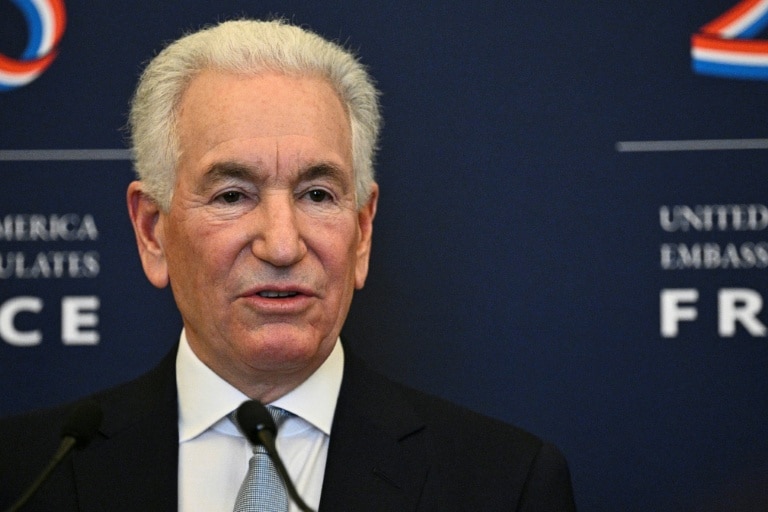
  • France to revoke US envoy’s govt access after summons no-show

    France to revoke US envoy’s govt access after summons no-show

    France has imposed significant restrictions on US Ambassador Charles Kushner’s access to government officials following his failure to attend a scheduled meeting to address controversial remarks about a deceased far-right activist. The French Foreign Ministry announced on Monday that Ambassador Kushner would be barred from direct meetings with ministers, though he may continue other diplomatic functions and maintain communication through official channels.

    This diplomatic escalation stems from the US Embassy in Paris reposting comments from Washington regarding Quentin Deranque, a 23-year-old far-right activist who died from head injuries during clashes between radical-left and far-right groups in Lyon on February 12. Foreign Minister Jean-Noel Barrot had summoned Kushner for a 7:00 pm meeting, but the ambassador cited ‘personal commitments’ and sent a senior embassy official instead.

    The French government characterized Kushner’s absence as ‘an apparent failure to grasp the basic requirements of the ambassadorial mission and the honour of representing one’s country.’ This incident marks the second time Kushner has skipped a summons, having previously failed to attend a meeting in late August regarding his criticism of France’s handling of antisemitism.

    The Deranque case has heightened political tensions in France ahead of the 2027 presidential election, with over 3,000 people marching in Lyon on Saturday amid heavy security deployment. The situation has also triggered international commentary, including from Italian Prime Minister Giorgia Meloni, prompting French President Emmanuel Macron to advise foreign leaders to refrain from commenting on France’s domestic affairs.

    Washington has not yet responded to France’s latest diplomatic measures, which represent continuing friction between the allies during the Trump administration.

  • Mexico’s Jalisco cautiously tries returning to normal after cartel violence

    Mexico’s Jalisco cautiously tries returning to normal after cartel violence

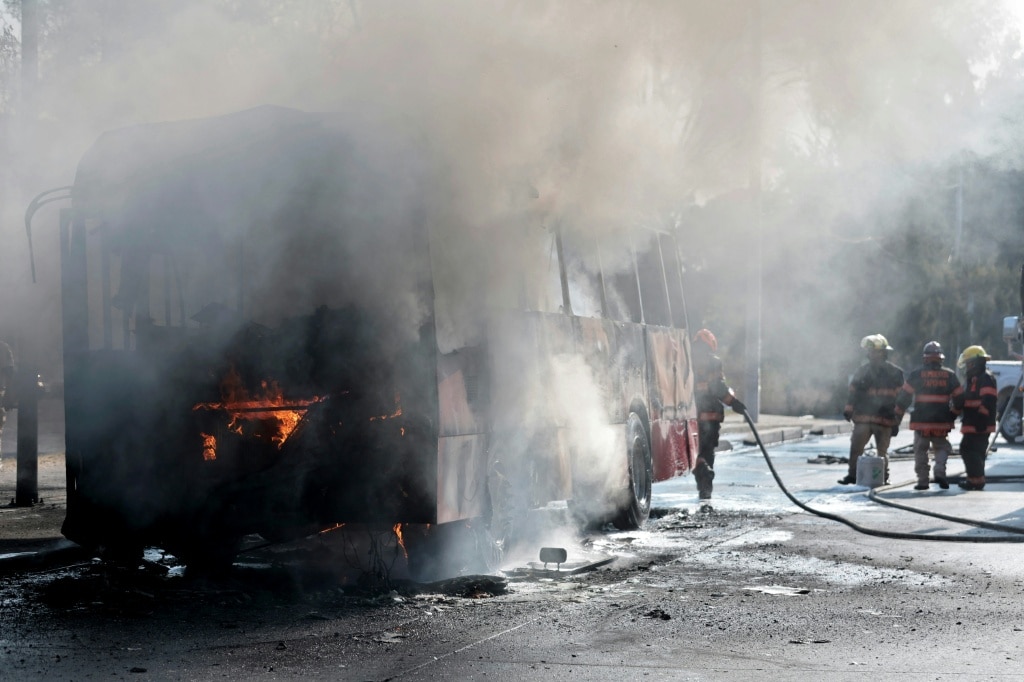
    The Mexican state of Jalisco is experiencing a fragile return to daily routines following a devastating wave of cartel violence that erupted over the weekend. This surge in retaliatory attacks came immediately after authorities confirmed the death of Nemesio “El Mencho” Oseguera, the formidable leader of the Jalisco New Generation Cartel (CJNG), during a military confrontation on Sunday.

    In Guadalajara, the state capital, residents tentatively emerged from their homes on Monday after being confined indoors amidst widespread terror. The city presented a scene of cautious movement rather than normalcy—schools remained shuttered, many businesses kept doors locked, and public transportation operated with notably few passengers. Those venturing outside primarily sought essential supplies, forming extensive queues at supermarkets amid concerns that cartel members might resume road blockades and arson attacks against vehicles and commercial establishments.

    Matias Mora, a local taxi driver, described the palpable fear that kept him indoors after witnessing a pharmacy being burned down. Similarly, retiree Juan Soler reported critical shortages and enormous lines at the few open stores, while Maria de Jesus Gonzalez recounted being “locked inside, terrified” before joining the supermarket queue. The demand was so intense that shopping carts ran out, forcing some customers to use laundry baskets for their groceries.

    While authorities worked to clear the streets of charred, twisted vehicle wreckage, the violence persisted in certain areas. On the road to Tapalpa, where Oseguera made his final stand, cartel members continued to maintain roadblocks despite official claims that the worst violence had subsided nationwide.

    The government deployed approximately 10,000 troops across 20 of Mexico’s 32 states to restore order, including in the international tourist destination Puerto Vallarta. Oseguera, 59, represented the last of Mexico’s old-guard drug lords operating with the brutal tactics reminiscent of imprisoned kingpins like “El Chapo” Guzman. As a founding member of CJNG since 2009, he built one of Mexico’s most violent criminal organizations.

    Official reports indicate the raid that killed Oseguera and subsequent clashes resulted in at least 27 security force casualties, 46 suspected cartel members dead, and one civilian fatality. While his elimination marks a significant victory for Mexican authorities, security experts warn that the absence of clear succession within CJNG could create a dangerous power vacuum, potentially triggering further violent internal conflicts.

  • State of the Union offers Trump a chance to make the case for his foreign policy approach

    State of the Union offers Trump a chance to make the case for his foreign policy approach

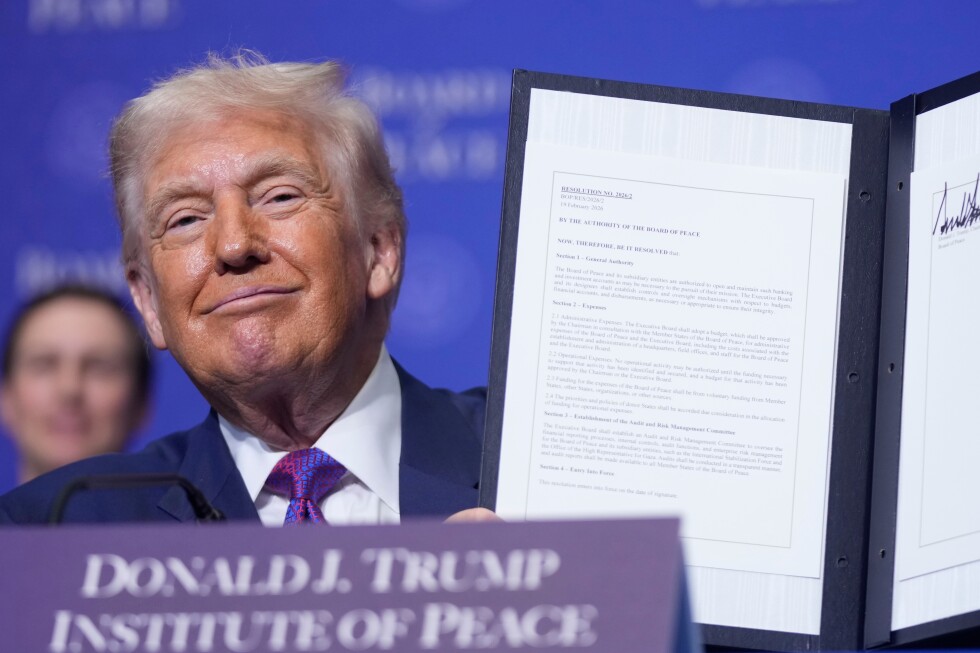
    WASHINGTON — As President Donald Trump prepares to deliver his pivotal State of the Union address, he faces the dual challenge of addressing growing domestic economic concerns while defending his administration’s foreign policy achievements against mounting public skepticism.

    The President intends to highlight several international accomplishments, including brokering a fragile Gaza ceasefire, orchestrating the capture of Venezuelan autocrat Nicolás Maduro, and pressuring NATO allies to increase defense spending. However, these foreign policy wins come at a time when recent AP-NORC polls reveal 61% of Americans disapprove of Trump’s handling of international relations, with 56% believing he has overextended military intervention abroad.

    The address occurs against a backdrop of significant political tension, including public criticism from former allies like ex-Rep. Marjorie Taylor Greene, who recently accused Trump of prioritizing “rich donor class and foreign policy” over America First principles.

    Key foreign policy challenges expected to feature prominently include:

    Iran Nuclear Standoff: The administration appears perplexed by Iran’s resistance to mounting military pressure, with Trump warning of “bad things” happening if no nuclear agreement is reached. Special envoys are scheduled for renewed talks in Geneva amid significant U.S. military buildup in the region.

    Ukraine Conflict: On the four-year anniversary of Russia’s invasion, Trump struggles to deliver on his campaign promise to end the war “in one day.” Negotiations remain deadlocked over territorial concessions and control of the Zaporizhzhia nuclear facility, with Trump pressuring President Zelenskyy to accept a deal before the U.S. midterm elections.

    Venezuela Strategy: The capture of Maduro has opened opportunities for U.S. energy investments, with the administration seeking $100 billion to revitalize Venezuela’s oil infrastructure while advancing what Trump calls the “Donroe Doctrine”—an aggressive regional strategy targeting drug trafficking and asserting U.S. primacy.

    Trade Policy Uncertainty: Following a Supreme Court ruling against his tariff authorities, Trump has threatened even higher global tariffs, creating market uncertainty that former Biden administration official Bharat Ramamurti warns could paralyze business investment decisions.

  • Bloomberg Philanthropies Mayors Challenge winners use AI and resident input to improve city services

    Bloomberg Philanthropies Mayors Challenge winners use AI and resident input to improve city services

    Urban centers worldwide are pioneering groundbreaking approaches to enhance civic services through the 2024 Bloomberg Philanthropies Mayors Challenge, which recognized twenty-four innovative municipal projects. These initiatives strategically combine artificial intelligence with community engagement to address pressing urban challenges.

    South Bend, Indiana exemplifies this trend with its proactive AI-driven system that identifies residents facing financial hardship—such as water bill delinquency—and connects them with support services before crises escalate. Mayor James Mueller emphasized the ethical implementation of technology: “We’re leveraging cutting-edge tools to deliver city services proactively while establishing safeguards against potential misuse.”

    The winning projects demonstrate remarkable geographical and thematic diversity. Boise, Idaho will utilize geothermal energy to reduce heating costs for residents, while Beira, Mozambique is relocating fishing communities from flood-prone coastal areas to safer inland housing. Each recipient city receives $1 million in implementation funding plus expert support from Bloomberg Philanthropies.

    According to Michael R. Bloomberg, founder of Bloomberg Philanthropies, the initiative aims to identify replicable solutions that can be adopted globally. “The most effective city halls demonstrate bold, creative problem-solving—we launched the Mayors Challenge to amplify such successes,” Bloomberg stated.

    James Anderson, head of government innovation programs at Bloomberg Philanthropies, noted the sophisticated integration of AI technology in this year’s winning proposals. “Philanthropy must fund the experimentation that public dollars typically won’t support,” Anderson explained, highlighting how these innovations bridge gaps between municipal governments and their constituents.

    The impact extends across continents: Pasig City, Philippines will accelerate construction of floating parks that simultaneously create community spaces and mitigate flooding risks. Mayor Vico Sotto emphasized community involvement in maintenance through local governance councils. Conversely, Lafayette, Louisiana developed an innovative solution to update sewer systems located on private property—a previously insurmountable regulatory challenge.

    Mayor-President Monique Blanco Boulet of Lafayette credited the program with providing “the creative space to develop life-changing solutions.” The timing is particularly crucial, as South Bend’s Mueller observed: “With trust in government at historic lows, local governments must continually innovate to maintain and build upon the relatively higher trust residents place in municipal leadership.”

    The 2026 Mayors Challenge winners span 24 cities across six continents, representing both Global North and South communities committed to transformative urban innovation.

  • Supreme Court ruling against Trump’s tariffs is unlikely to mean an end to trade policy chaos

    Supreme Court ruling against Trump’s tariffs is unlikely to mean an end to trade policy chaos

    In a landmark decision, the U.S. Supreme Court has delivered a severe judicial reprimand to President Donald Trump’s expansive tariff regime, fundamentally challenging his authority to unilaterally impose import taxes. The ruling specifically invalidates tariffs justified under the 1977 International Emergency Economic Powers Act (IEEPA), which the administration had primarily deployed to address persistent trade deficits.

    Despite this judicial setback, economic uncertainty continues to grip American businesses as the administration explores alternative legal mechanisms to reconstruct its trade barriers. Treasury Secretary Scott Bessent confidently asserted that tariff revenues would remain unaffected both presently and in future projections.

    President Trump’s immediate response to the judicial defeat has been characteristically volatile. Within days of the ruling, he announced intentions to implement a 10% global tariff under Section 122 of the Trade Act of 1974, subsequently escalating this figure to 15%. This previously unused provision permits temporary tariffs for up to 150 days without congressional approval, though any extension would require legislative consent—a politically challenging prospect during an election season.

    Legal experts immediately questioned the validity of applying Section 122 to address trade deficits, with National Taxpayers Union’s Bryan Riley noting the provision was designed for fundamentally different international payment crises from a bygone monetary era.

    The administration simultaneously signaled potential recourse to Section 301 authorities, a more legally robust tool previously deployed against Chinese trade practices. U.S. Trade Representative Jamieson Greer confirmed the initiation of multiple Section 301 investigations following the Supreme Court defeat.

    Internationally, the decision has created diplomatic complications, particularly with trading partners who had negotiated agreements under the threat of now-invalid IEEPA tariffs. European Union officials have delayed ratification of their trade pact with the United States, seeking clarification on whether new tariffs would compound existing obligations. Despite these tensions, trade analysts generally expect partners to honor existing agreements, fearing potentially unlimited Section 301 tariffs for non-compliance.

    The ruling additionally creates a massive administrative challenge regarding approximately $133 billion in previously collected tariffs. The Supreme Court delegated the complex refund question to lower courts and Customs and Border Protection, setting the stage for a protracted claims process that could overwhelm administrative systems and potentially require congressional intervention to streamline.