作者: admin

  • Real Madrid face Man City, PSG draw Chelsea in Champions League last 16

    Real Madrid face Man City, PSG draw Chelsea in Champions League last 16

    The UEFA Champions League knockout stage draw, conducted on Friday, has produced a series of compelling fixtures headlined by a fifth consecutive high-stakes encounter between football titans Real Madrid and Manchester City. This recurring European saga will see the record fifteen-time champions, Real Madrid, initially host the reigning titleholders at the iconic Santiago Bernabeu next month, with the decisive return leg scheduled in Manchester the following week.

    Adding to the draw’s drama, current champions Paris Saint-Germain are poised for a formidable clash against English powerhouse Chelsea. PSG secured their last-16 berth with a narrow aggregate victory over Monaco in the play-offs, while Chelsea advanced directly after a strong league phase performance.

    The historical context between these clubs is profound. Real Madrid and Manchester City have clashed in seven separate seasons since 2012, with their most recent playoff occurring just last season. Similarly, PSG and Chelsea share a rich knockout history, having met in three consecutive campaigns from 2014 to 2016, and most recently in the Club World Cup final this past July.

    Beyond these marquee matchups, the draw unveiled several other intriguing contests. Arsenal, who topped their league phase group, are set to face German contenders Bayer Leverkusen. Newcastle United will host Barcelona in a rematch of their September encounter, and Tottenham Hotspur will battle Spain’s Atletico Madrid. The draw also confirmed a record six English clubs in the round of sixteen, ensuring strong Premier League representation with no all-English fixtures at this stage.

    The first legs are scheduled for March 10-11, with return matches set for the following week. Teams that qualified directly will enjoy the home advantage in the second leg. The road to the final, which will be held at Budapest’s Puskas Arena on May 30, is now clearly defined, promising a thrilling culmination to Europe’s premier club competition.

  • What we know after latest escalation in Pakistan-Afghanistan tensions

    What we know after latest escalation in Pakistan-Afghanistan tensions

    Tensions between Pakistan and Afghanistan’s Taliban government escalated dramatically this week with reciprocal military offensives across their shared border, marking the most significant deterioration in relations since last October’s ceasefire agreement.

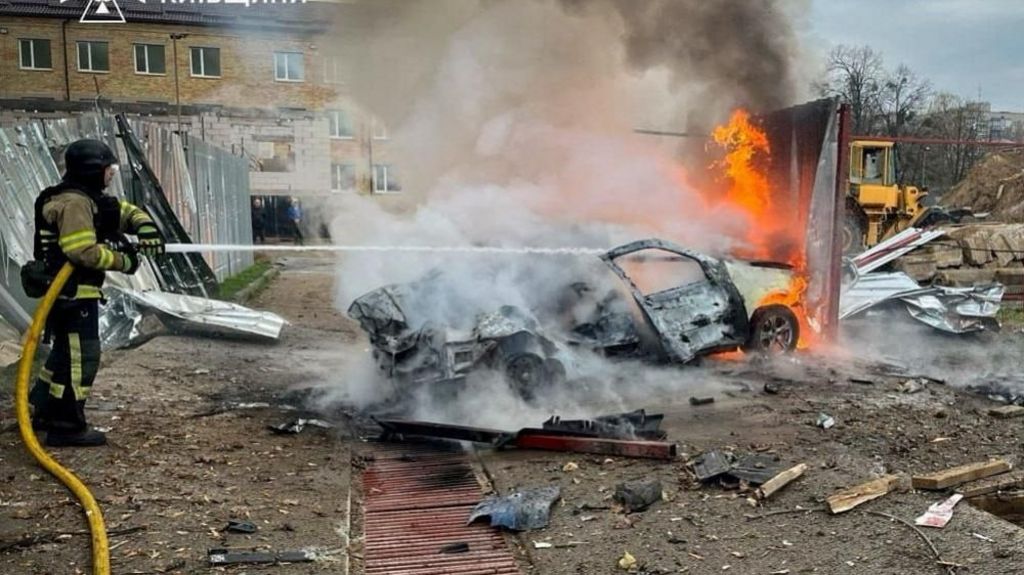
    The conflict ignited on Thursday evening when Taliban forces launched coordinated assaults on Pakistani military installations along multiple border provinces including Nangarhar, Nuristan, and Khost. Pakistani authorities characterized the action as ‘unprovoked aggression’ and responded within hours with precision airstrikes targeting Taliban positions in Kabul, Kandahar, and Paktika provinces.

    The situation intensified further on Friday morning as the Taliban conducted unprecedented drone strikes deep into Pakistani territory, targeting military facilities in Nowshehra, Abbottabad, and Swabi. Security analysts noted the tactical significance of these attacks, which utilized commercially available drones modified to carry explosives—a demonstration of the Taliban’s evolving asymmetric capabilities.

    Both nations have issued conflicting casualty reports. Pakistani officials claim to have eliminated 133 Taliban fighters and wounded over 200, while Taliban spokespersons assert they inflicted heavy losses on Pakistani forces and captured several soldiers. These claims remain unverified by independent sources.

    The international community has responded with growing concern. United Nations officials urgently called for de-escalation, while regional powers including China, Iran, and Saudi Arabia offered mediation. Iranian Foreign Minister Abbas Araqchi specifically referenced the ongoing Ramadan period, appealing for ‘self-restraint and Islamic solidarity.’

    This confrontation stems from longstanding accusations between the neighbors. Pakistan maintains that Taliban-controlled Afghanistan harbors terrorist elements responsible for attacks on Pakistani soil, including recent suicide bombings. The Taliban government vehemently denies these allegations while accusing Pakistan of conducting indiscriminate strikes that kill Afghan civilians.

    Security analysts observe that Pakistan’s latest strikes represent a strategic shift by directly targeting Taliban government facilities rather than suspected terrorist camps. Michael Kugelman of the Atlantic Council noted this indicates Pakistan is ‘now targeting the regime itself,’ potentially signaling a dangerous new phase in bilateral relations.

    With both sides exchanging increasingly bellicose rhetoric and demonstrating military capabilities, the situation remains highly volatile along the 2,600-kilometer border region.

  • Trump says he’s ‘not happy’ with Iran talks but will wait to see what happens in further rounds

    Trump says he’s ‘not happy’ with Iran talks but will wait to see what happens in further rounds

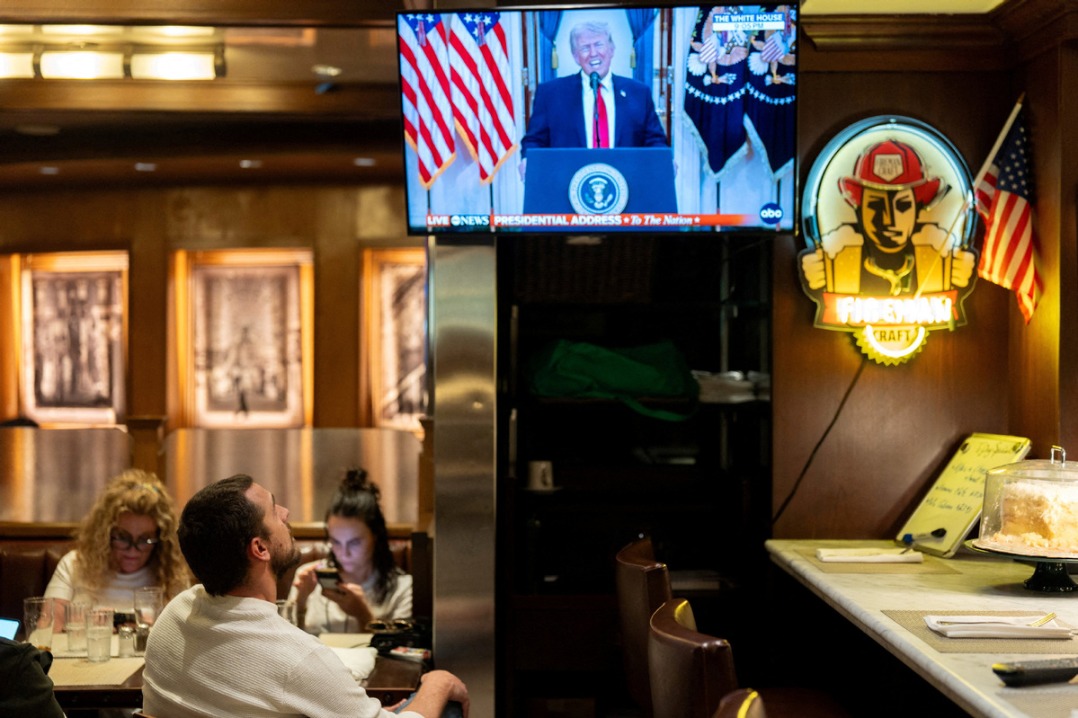
    TEL AVIV, Israel (AP) — President Donald Trump expressed significant dissatisfaction with the progress of nuclear negotiations with Iran on Friday, stating he remains “not happy” with Tehran’s current negotiating position. The President’s comments came amid heightened tensions following unsuccessful diplomatic talks in Geneva and substantial U.S. military deployments in the region.

    Speaking to reporters outside the White House, Trump emphasized his concerns: “I’m not thrilled with their unwillingness to meet our essential requirements. We’ll monitor developments closely as discussions continue, but their acquisition of nuclear weapons remains absolutely unacceptable.”

    The diplomatic impasse follows Thursday’s negotiations in Geneva that concluded without breakthrough agreements. In response to the stalled talks, the U.S. State Department announced Secretary of State Marco Rubio’s emergency visit to Israel scheduled for early next week. Simultaneously, the U.S. Embassy in Jerusalem activated “authorized departure” status, enabling non-essential personnel and families to evacuate at government expense.

    Ambassador Mike Huckabee urgently advised staff considering departure to “do so TODAY,” noting that commercial flight availability might become increasingly limited. This evacuation protocol aligns with similar measures implemented by other nations including Britain, Australia, and China, all recommending their citizens avoid travel to the region.

    The military landscape shows significant escalation, with the U.S. deploying multiple aircraft carriers and warships to the Middle East. Iran has responded with warnings that any American attack would prompt retaliation against U.S. forces throughout the region, potentially involving bases in allied Arab nations.

    Diplomatic efforts continue despite the tensions. Technical discussions are scheduled in Vienna next week, while Vice President JD Vance prepared to meet with Omani Foreign Minister Badr al-Busaidi, who has mediated previous negotiations. U.N. Secretary-General António Guterres urged both nations to “focus on the diplomatic track” despite concerning military movements throughout the region.

    A confidential International Atomic Energy Agency report obtained by The Associated Press confirms that Iran has denied inspectors access to sensitive nuclear sites damaged during last June’s 12-day conflict with Israel. The agency consequently cannot verify Iranian claims about suspending uranium enrichment activities following U.S. and Israeli military actions.

    Israeli Prime Minister Benjamin Netanyahu continues advocating for stronger U.S. measures against Iran, warning that Israel will respond decisively to any Iranian aggression. The situation remains fluid with both diplomatic channels active and military preparations intensifying simultaneously.

  • China’s top legislature wraps up standing committee session, removes 2 officials

    China’s top legislature wraps up standing committee session, removes 2 officials

    The 21st session of the 14th National People’s Congress Standing Committee concluded in Beijing on February 26, 2026, marking significant developments in China’s legislative agenda. Presided over by NPC Standing Committee Chairman Zhao Leji, the closing meeting witnessed substantial personnel decisions and procedural approvals ahead of the upcoming full NPC session.

    In a notable administrative reshuffle, legislators voted to remove Wang Xiangxi from his position as Minister of Emergency Management and dismissed Liu Shaoyun from his role as President of the Military Court of the Chinese People’s Liberation Army. These decisions were part of several personnel-related bills approved during the session.

    The committee endorsed in principle the draft work report of the NPC Standing Committee, with the Council of Chairpersons recommending that Chairman Zhao deliver this report at the impending fourth session of the 14th NPC. Additionally, lawmakers ratified the draft agenda for the full NPC session and the proposed list of the session’s presidium and secretary-general, which will undergo further review during the preparatory meeting.

    Chairman Zhao emphasized the critical nature of the upcoming annual session, which will deliberate on China’s 15th Five-Year Plan (2026-2030) and consider major legislative documents including the environmental code, legislation promoting ethnic unity and progress, and national development planning laws. Zhao urged committee members to maintain focus on the central priorities of the Communist Party of China and the nation while fulfilling their statutory responsibilities with heightened accountability.

    The session also featured a special lecture for lawmakers following a meeting of the Council of Chairpersons, further preparing legislators for the significant agenda items facing the full NPC session.

  • Takeaways from a UK special election won by the Green Party over Starmer’s Labour

    Takeaways from a UK special election won by the Green Party over Starmer’s Labour

    LONDON — Britain’s political establishment has been rocked by a seismic shift as the environmentalist Green Party secured a stunning victory in the Greater Manchester constituency of Gorton and Denton. The outcome represents a devastating blow to Prime Minister Keir Starmer’s leadership and signals a fundamental realignment of the UK’s traditionally two-party political system.

    In what political analysts are calling a watershed moment, the centre-left Labour Party not only lost its longtime stronghold but finished third behind both the left-leaning Greens and the hard-right Reform UK party. This humiliation comes less than two years after Starmer’s landslide victory in July 2024, raising serious questions about his political survival.

    The Prime Minister’s administration has been plagued by multiple crises, including failure to deliver promised economic growth, deteriorating public services, and controversial policy U-turns. The recent Epstein-related scandal involving former ambassador Peter Mandelson further weakened Starmer’s position, triggering internal party rebellion and high-level resignations.

    Green Party leader Zack Polanski declared that “Labour’s electoral stranglehold is over” as his party expands beyond environmental issues to address cost-of-living concerns, drug legalization, and Palestinian support. Newly elected Green MP Hannah Spencer, a 34-year-old plumber, embodies this populist shift, promising to represent those “left behind and isolated.”

    Meanwhile, Reform UK continues to lead national opinion polls, creating a perfect storm for Labour as it faces challenges from both left and right. Political scientist Rob Ford describes Labour’s predicament as falling into the “electoral Valley of Death”—rejected across the political spectrum.

    With the next general election not required until 2029, Starmer faces mounting internal pressure to resign or change direction. Despite acknowledging voter frustration, the Prime Minister has vowed to “keep on fighting” amid growing speculation about his leadership’s longevity.

  • At least 55 Ghanaians killed in Russia-Ukraine war, minister says

    At least 55 Ghanaians killed in Russia-Ukraine war, minister says

    Ghana’s Foreign Minister Samuel Okudzeto Ablakwa has officially confirmed the deaths of 55 Ghanaian nationals in the Ukraine conflict during a diplomatic visit to Kyiv, marking the highest officially verified casualty count from any African nation. The minister additionally disclosed that two Ghanaians are currently being held as prisoners of war.

    Minister Ablakwa, characterizing the statistics as profoundly ‘depressing and frightening,’ revealed that approximately 272 citizens have been successfully recruited into the conflict since 2022 according to Ukrainian intelligence sources. He emphasized that these figures represent more than mere numbers, stating they ‘represent human lives, the hope of many Ghanaian families and our nation.’

    The Ghanaian government has initiated a comprehensive response strategy targeting what it describes as ‘dark web illegal recruitment schemes.’ This includes intensified public awareness campaigns designed to protect vulnerable youth from being drawn into foreign conflicts. ‘This is not our war and we cannot allow our youth to become human shields for others,’ Ablakwa asserted during diplomatic engagements.

    The recruitment phenomenon extends beyond Ghana’s borders. A recent Kenyan intelligence report indicates approximately 1,000 nationals have been recruited to fight for Russia, while Cameroonian media reports suggest 94 fatalities though these remain unconfirmed by authorities. South Africa has acknowledged two citizen deaths with fifteen recently repatriated and two receiving medical treatment in Russia for severe injuries.

    During meetings with Ukrainian counterpart Andrii Sybiha, Minister Ablakwa appealed for the release of two Ghanaian POWs captured while fighting for Russian forces, framing them as ‘victims of manipulation, of disinformation, misinformation, of criminal trafficking networks.’ Ukrainian officials confirmed the prisoners are in good health and have received humane treatment in accordance with international law, with both parties engaging in frank discussions regarding potential repatriation.

    The Russian embassy in Kenya has denied direct involvement in recruitment activities while acknowledging that Russian law permits legally present foreign nationals to voluntarily enlist. This stands in contrast to recent legal proceedings in Kenya where Festus Arasa Omwamba faces charges for allegedly luring young men to Russia under false pretenses of employment opportunities.

    Ukrainian authorities maintain their consistent position that individuals fighting for Russia will be treated as enemy combatants, with surrender representing the only guaranteed path to POW status and protection under international humanitarian law.

  • The EU will ‘provisionally implement’ a trade deal with South American bloc Mercosur

    The EU will ‘provisionally implement’ a trade deal with South American bloc Mercosur

    BRUSSELS — European Commission President Ursula von der Leyen announced on Friday the provisional implementation of the landmark EU-Mercosur trade agreement, circumventing pending approval from the European Parliament. This decisive move follows Uruguay and Argentina’s ratification of the pact on Thursday, triggering the Commission’s unprecedented activation procedure.

    The monumental trade deal represents the culmination of 25 years of complex negotiations between economic blocs encompassing over 700 million people and accounting for approximately 25% of global GDP. The agreement establishes one of the planet’s most extensive free trade zones, strategically positioning both regions against contemporary trade challenges including U.S. tariff policies and China’s critical mineral supply restrictions.

    Von der Leyen emphasized the agreement’s strategic importance at a press conference, stating: “Mercosur embodies the spirit in which Europe is acting on the global scene. Our businesses, our workers, and our citizens will reap the benefits, and they should reap them as soon as possible. This is about resilience, this is about growth, and Europe shaping its own future.”

    The Commission’s approach has generated significant controversy due to its unusual circumvention of parliamentary procedures. The agreement faces substantial opposition from European agricultural sectors concerned about competitive pressures from South American producers. Von der Leyen acknowledged that full ratification remains contingent upon future parliamentary consent, committing to “continue working closely with all EU institutions, member states, and stakeholders to ensure a smooth and transparent process.”

  • India court clears former Delhi chief minister of corruption charges

    India court clears former Delhi chief minister of corruption charges

    In a significant judicial development, an Indian court has dismissed a high-profile corruption case against Arvind Kejriwal, the former Chief Minister of Delhi and prominent opposition leader. The ruling comes nearly two years after his controversial arrest in March 2024, which occurred just weeks before India’s general elections.

    The Rouse Avenue Court in Delhi exonerated Kejriwal and 23 co-accused individuals on Friday, delivering a stern rebuke to the Central Bureau of Investigation (CBI). The court found no evidence of “overarching conspiracy or criminal intent” in the excise policy that formed the basis of the corruption allegations. The judge specifically criticized the CBI for attempting to “construct a narrative of conspiracy on the basis of mere conjecture” and for relying excessively on statements from approvers—accomplices who become state witnesses in exchange for leniency.

    The court announced it would recommend a departmental inquiry against CBI officials for what it deemed a “shoddy probe,” emphasizing that “a fair investigation is essential for a fair trial.” The CBI has indicated it will appeal the verdict.

    The case centered on a liquor policy introduced by Kejriwal’s Aam Aadmi Party (AAP) government in 2021, which aimed to curb black market sales, increase state revenues, and ensure equitable distribution of liquor licenses. The policy was withdrawn months later after Delhi’s Lieutenant-Governor Vinai Kumar Saxena accused AAP of manipulating rules to benefit private retailers, leading to a CBI investigation in July 2022.

    Following the court’s decision, an emotional Kejriwal addressed journalists outside the courtroom, stating, “In the end, unrighteousness and injustice are defeated and truth alone prevails.” He was embraced by former deputy chief minister Manish Sisodia, who was also cleared in the case along with AAP spokesperson Sanjay Singh. All three leaders had spent substantial time in jail after being repeatedly denied bail by lower courts before eventually receiving relief from the Supreme Court.

    Kejriwal had consistently alleged political persecution by the ruling Bharatiya Janata Party (BJP), which controls Delhi’s police and investigation agencies—claims that the BJP has denied. The case had drawn significant attention as a test of India’s judicial independence and the treatment of opposition figures.

  • Canadian Prime Minister Mark Carney arrives in India to repair a strained relationship

    Canadian Prime Minister Mark Carney arrives in India to repair a strained relationship

    Canadian Prime Minister Mark Carney commenced his inaugural official visit to India on Friday, landing in Mumbai with ambitions to revitalize bilateral relations and expand trade partnerships. This four-day diplomatic mission represents a strategic effort to mend ties that deteriorated significantly during his predecessor’s administration.

    The cornerstone of Carney’s itinerary includes high-level discussions with Indian business leaders and a pivotal meeting with Prime Minister Narendra Modi scheduled for Monday in New Delhi. India’s Foreign Ministry characterized the upcoming dialogue as an opportunity to reinforce “the positive momentum and shared vision” for a progressive bilateral partnership.

    Both governments are poised to explore enhanced cooperation across multiple sectors including trade and investment, energy security, critical minerals, and technological innovation. This diplomatic re-engagement follows two years of strained relations between the Commonwealth nations.

    The visit forms part of Carney’s broader strategy to diversify Canada’s trade relationships beyond the United States. Subsequent to his Indian engagement, the Canadian leader will proceed to Australia and Japan, implementing his declared objective of doubling non-U.S. exports within the next decade in response to American tariff policies that have dampened investment enthusiasm.

    This diplomatic thaw follows a period of heightened tensions sparked by Canadian allegations of Indian involvement in the June 2023 killing of a Sikh activist near Vancouver. New Delhi had vigorously denied the accusations while countering that previous Canadian administration provided sanctuary to Sikh extremists advocating for Khalistan—a separatist movement prohibited in India.

    The reconciliation process initiated last June when Carney extended an invitation to Modi during the G7 summit in Alberta. Notably, Canada isn’t alone in alleging Indian officials’ involvement in overseas plots, as U.S. prosecutors similarly accused an Indian official of orchestrating a foiled assassination attempt against a Sikh separatist in New York during 2023.

  • A clinical century from Georgia Voll has handed Australia a series advantage over India

    A clinical century from Georgia Voll has handed Australia a series advantage over India

    Australian cricket witnessed the emergence of a formidable new talent as Georgia Voll’s spectacular century secured a decisive victory for the hosts against India in the second One Day International at Hobart. The 82-ball masterclass of 101 runs, featuring 13 boundaries and one massive six, positioned Australia favorably in the multi-format series.

    The match showcased Australia’s batting prowess through two dominant partnerships. Voll combined with Phoebe Litchfield in a devastating 119-run stand from just 94 deliveries, with Litchfield contributing a flashy 80 from 62 balls before an ambitious ramp shot ended her innings. Beth Mooney provided additional stability with 31 runs, ensuring Australia comfortably chased down India’s target of 252 with five wickets remaining.

    India’s innings had shown promise through openers Smriti Mandhana and Pratika Rawal, who capitalized on early opportunities before Australia’s bowling attack found its rhythm. Harmanpreet Kaur battled through 70 deliveries for her 54, but India’s momentum was consistently disrupted by Australia’s strategic bowling changes.

    The absence of newly-appointed captain Sophie Molineux, sidelined with a back injury, created an opportunity for Ash Gardner to demonstrate her all-round capabilities. Gardner not only contributed the winning runs but also delivered a crucial bowling performance of 2-39 from her 10 overs, applying consistent pressure alongside Alana King (2-41).

    Australia’s victory establishes their series lead ahead of Sunday’s third ODI, with the teams set to conclude the competition with a one-off Test match in Perth next week.