作者: admin

  • Belgium seizes Russian ‘shadow fleet’ tanker

    Belgium seizes Russian ‘shadow fleet’ tanker

    In a significant multinational operation, Belgian special forces have intercepted and seized a Russian oil tanker belonging to Moscow’s ‘shadow fleet’ used to circumvent Western sanctions. The vessel, identified as the ‘Ethera,’ was boarded overnight in Belgium’s exclusive economic zone with aerial support from French military helicopters before being escorted to the port of Zeebrugge for confiscation.

    Federal prosecutors confirmed the tanker was sailing under the false flag of Guinea while actually operating as part of Russia’s sanctions-evasion network. During inspection, authorities discovered suspected forged ship documents, prompting the opening of a criminal investigation. Sailing under false flags violates multiple international maritime regulations concerning safety, insurance, and environmental standards.

    French President Emmanuel Macron hailed the operation on social media as a ‘major blow’ to Russia’s shadow fleet, while Belgian officials emphasized the importance of sanctions enforcement. ‘Sanctions only matter if they are enforced. Today, we enforced them,’ stated Belgian Foreign Minister Maxime Prevot.

    The operation was conducted in coordination with G7, Nordic, and Baltic partners, highlighting international cooperation against Russian sanctions evasion. French forces provided critical air support with two NH90 helicopters, with footage showing Belgian commandos rappelling onto the vessel’s deck.

    Russia’s embassy in Brussels stated it had not received official notification of the detention and was investigating whether Russian citizens were among the crew. Meanwhile, Ukrainian leadership welcomed the seizure, with President Volodymyr Zelensky describing it as ‘strong action against Moscow’s floating purse.’

    This incident follows previous seizures of suspected Russian shadow fleet vessels, including France’s interception of the tanker ‘Grinch’ in January and another vessel in September that was found carrying employees of a Russian private security company tasked with monitoring crew and gathering intelligence.

  • Afghanistan says it thwarted a Pakistani airstrike attempt on Bagram Air Base

    Afghanistan says it thwarted a Pakistani airstrike attempt on Bagram Air Base

    Afghan authorities reported successfully intercepting an attempted Pakistani airstrike on the strategic Bagram Air Base early Sunday, marking a dangerous escalation in the ongoing military confrontation between the neighboring nations. The incident occurred as cross-border hostilities entered their fourth consecutive day, representing the most severe bilateral conflict in recent years.

    The Parwan provincial police headquarters issued an official statement confirming that multiple Pakistani military jets violated Afghan airspace around 5:00 AM local time, targeting the former U.S. military installation. Afghan defense forces responded with anti-aircraft and missile defense systems, ultimately repelling the aerial assault according to the announcement.

    This latest development follows Pakistan’s declaration of being in “open war” with Afghanistan, a significant deterioration in relations that has raised international concerns. The region affected by the fighting represents a security-sensitive area where militant organizations including al-Qaida and Islamic State affiliates maintain active presence and seek to strengthen their influence.

    The current cycle of violence originated from Afghanistan’s broad cross-border offensive launched Thursday night, characterized as retaliation for Pakistani airstrikes conducted the previous Sunday. Pakistan maintains its initial strikes targeted the outlawed Tehrik-i-Taliban Pakistan (TTP) militant group, while Afghanistan insists only civilians were killed in those operations.

    Military engagements continued through Sunday across multiple border provinces, with Afghan defense officials reporting counterattacks employing sniper units from Nangarhar, Paktia, Khost and Kandahar provinces. Afghan authorities claimed the destruction of two Pakistani drones and significant casualties among Pakistani forces, though these accounts lack independent verification.

    Civilian casualties mounted as Pakistani drone attacks allegedly struck residential areas in Nangarhar province late Saturday, killing one woman and child according to deputy government spokesman Hamdullah Fitrat. Separate mortar fire in Paktia province reportedly claimed another civilian life.

    The strategic Bagram Air Base, formerly the United States’ largest military installation in Afghanistan, fell under Taliban control during the chaotic 2021 withdrawal of American forces. The facility’s symbolic and strategic importance adds significance to the attempted strike, particularly following former President Trump’s previously expressed interest in reestablishing a U.S. presence at the base.

    International mediation efforts led by Qatar previously achieved a temporary ceasefire following October border clashes that killed dozens, but subsequent peace talks in Turkey failed to produce a lasting diplomatic solution. Pakistan consistently accuses Afghanistan’s Taliban government of providing sanctuary to militant groups operating against Pakistani interests, allegations Afghan authorities consistently deny.

  • UN Security Council convenes emergency meeting after strikes on Iran

    UN Security Council convenes emergency meeting after strikes on Iran

    The United Nations Security Council convened an urgent session on Saturday, February 28, 2026, in response to rapidly deteriorating conditions across the Middle East following coordinated military operations by United States and Israeli forces against Iranian targets. The emergency meeting was formally requested by a coalition of nations including China, Russia, France, Bahrain, and Colombia.

    China’s Permanent Representative to the UN, Ambassador Fu Cong, expressed profound concern regarding the timing and nature of the military actions, characterizing them as ‘shocking’ given their occurrence during active diplomatic negotiations between Washington and Tehran. The ambassador emphasized the critical need for political sincerity among all involved parties and urged an immediate return to dialogue channels.

    The military engagement initiated by US and Israeli forces triggered immediate retaliatory measures from Iran, which launched counterstrikes targeting American and Israeli military installations across multiple Arab nations. The conflict rapidly expanded to involve Qatar, Bahrain, Kuwait, Iraq, the United Arab Emirates, Jordan, Saudi Arabia, Syria, and Lebanon by Saturday evening.

    Ambassador Fu underscored China’s consistent position regarding respect for national sovereignty, security, and territorial integrity of Iran and other regional nations. He voiced particular distress over the significant civilian casualties resulting from the escalating violence, stressing that ‘the red line of protecting civilians in armed conflict must never be crossed.’

    The Chinese diplomat reiterated Beijing’s firm opposition to the use or threat of force in international relations, calling instead for strict adherence to the UN Charter’s principles. He emphasized that indiscriminate military actions remain unacceptable under international law, including humanitarian provisions that mandate civilian protection and safeguard civilian infrastructure.

    ‘Force represents an inadequate pathway for resolving international disputes,’ Ambassador Fu stated during the emergency session. ‘The dangerous spillover effects of escalating Middle East tensions benefit no nation. The only viable solution lies through diplomatic engagement and negotiated settlements.’

  • Music, mourning as Iran’s Khamenei is killed

    Music, mourning as Iran’s Khamenei is killed

    The global geopolitical landscape was jolted by the confirmed death of Iran’s Supreme Leader, Ayatollah Ali Khamenei, following a targeted US-Israeli military operation against the Islamic Republic. The event has triggered a complex and volatile array of international and domestic reactions, ranging from overt jubilation to profound mourning and vows of severe retaliation.

    Within Tehran, the atmosphere was starkly divided. Verified footage and eyewitness accounts documented spontaneous public celebrations, with citizens setting off fireworks and broadcasting music in a rare display of collective relief. Conversely, state-sanctioned mourners, clad in black and brandishing Iranian flags alongside portraits of the late leader, congregated in Enghelab Square, vociferously chanting anti-American and anti-Israeli slogans. The Iranian government promptly declared a 40-day national mourning period and seven public holidays.

    In a formal statement, Iran’s President Masoud Pezeshkian condemned the strike as a ‘declaration of war against Muslims’ and asserted the nation’s ‘legitimate duty and right’ to exact revenge. This pledge was immediately echoed by the powerful Revolutionary Guards, who vowed to punish the ‘murderers.’

    The international community responded with deeply polarized positions. Key ally Russian President Vladimir Putin denounced the killing as a ‘cynical violation of all norms of human morality and international law,’ extending his official condolences. Conversely, US President Donald Trump, who announced the operation, labeled Khamenei ‘one of the most evil people in History’ and framed his death as an opportunity for Iranians to ‘take back their country.’ Israeli Prime Minister Benjamin Netanyahu similarly urged citizens to ‘overthrow the regime,’ characterizing the Supreme Leader as a ‘cruel tyrant.’

    Support from Iran’s network of regional proxies was swift. Hamas praised Khamenei’s unwavering support for the Palestinian cause, while Hezbollah’s leadership in Lebanon vowed to confront the aggression. The fallout escalated into deadly protests, with at least nine fatalities reported as pro-Iranian demonstrators attempted to storm the US consulate in Karachi, Pakistan. Simultaneously, in a symbolic gesture, jubilant Iranian diaspora communities in cities like Los Angeles took to the streets waving pre-revolutionary flags and expressing hope for a ‘Free Iran.’ Western officials, including those from the UK and Australia, expressed little sympathy, stating that ‘few people will mourn’ a leader they held responsible for regional destabilization and domestic oppression.

  • Trump talks regime change in Iran after strikes, but history shows that could be very hard

    Trump talks regime change in Iran after strikes, but history shows that could be very hard

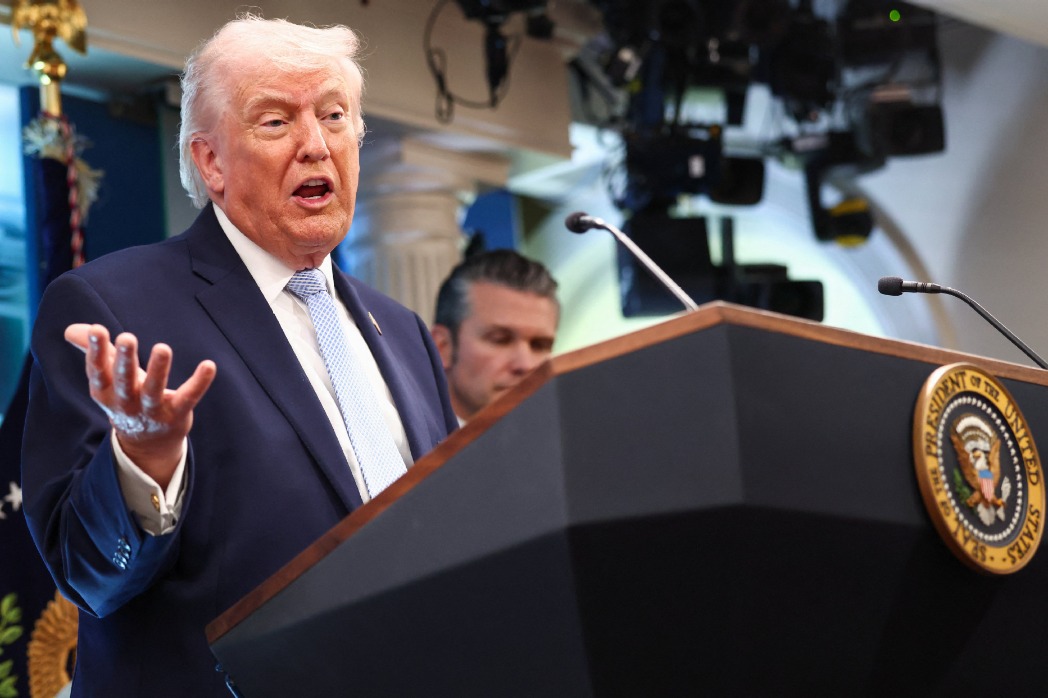
    Following coordinated U.S. and Israeli airstrikes that targeted Iranian leadership positions, former President Donald Trump publicly urged Iranian citizens to seize the opportunity for regime change. In a video address delivered shortly after the attacks, Trump declared: “Now is the time to seize control of your destiny. This is the moment for action.”

    Despite this apparent simplicity, historical evidence suggests that successful regime change operations remain exceptionally complex. The United States possesses an extensive yet troubled history with such interventions, including operations in Vietnam (1960s-70s), Panama (1989), Nicaragua (1980s), Iraq and Afghanistan (post-9/11), and most recently in Venezuela. Notably, the CIA engineered the 1953 coup that overthrew Iran’s democratically elected government, installing Shah Mohammad Reza Pahlavi—who was subsequently ousted during the 1979 Islamic Revolution after increasingly authoritarian rule.

    These intervention attempts frequently begin with clear intentions—establishing democracy in Iraq or supporting anti-Communist leaders during the Cold War—but often descend into political quagmires where democratic aspirations transform into civil conflicts, allied dictators become liabilities, and American casualties mount.

    Trump himself previously criticized such nation-building efforts, stating in 2016: “We must abandon the failed policy of regime change,” and later remarking in Saudi Arabia that interventionists “were intervening in complex societies that they did not even understand.”

    The current situation presents particular complexities. Iran’s economy remains severely compromised, and dissent persists despite brutal crackdowns on protests that resulted in thousands of deaths and arrests. While key Iranian allies including Hamas, Hezbollah, and the Assad government have been weakened, and Supreme Leader Ayatollah Ali Khamenei confirmed killed, the U.S. lacks a clear postwar vision.

    Jonathan Schanzer of the Foundation for Defense of Democracies notes that potential allies might exist within Iran’s current power structure, but emphasizes that “there needs to be a sense that there is no salvation for the regime as such.” This proves particularly challenging in a leadership united by religious ideology, where “true believers” rarely switch allegiances.

    Historical parallels extend to Latin America, where the Monroe Doctrine justified two centuries of interventionism. Christopher Sabatini of Chatham House observes that direct U.S. involvement has rarely produced “long-term democratic stability,” citing Guatemala’s 40-year civil war and Nicaragua’s devastating conflict as examples.

    The recent Venezuelan operation may signal Washington’s current approach—rather than backing opposition leader María Corina Machado, the U.S. collaborated with President Delcy Rodríguez, previously second-in-command to captured leader Nicolás Maduro. This suggests a preference for modifying existing power structures rather than complete overthrow.

    As military strategist Phillips O’Brien notes: “Air power can damage a leadership, but it can’t guarantee that you’ll bring in something new.” The fundamental question remains whether the U.S. fully comprehends the complexities of the society it seeks to reshape.

  • More flights cancelled as Iran conflict shuts Mideast hubs

    More flights cancelled as Iran conflict shuts Mideast hubs

    Global aviation networks faced their most severe disruption since the COVID-19 pandemic this weekend as escalating military confrontations between Iran and US-Israeli forces triggered widespread airspace closures across the Middle East. The crisis has created an unprecedented shutdown of critical international travel hubs, including Dubai International Airport—the world’s busiest for international traffic—and Qatar’s Doha facility.

    The aviation paralysis began Saturday following retaliatory strikes from Tehran that targeted both Dubai and Kuwait’s primary airports. This prompted immediate airspace restrictions from Iran, Iraq, Israel, Syria, Kuwait, Qatar, and the United Arab Emirates, effectively halting civilian air traffic across the region. Flight tracking data from FlightAware revealed massive global repercussions, with over 6,700 flights delayed and 1,900 cancellations by 1000 GMT Sunday, compounding thousands of previous disruptions.

    Major carriers worldwide implemented sweeping service suspensions. Gulf airlines Emirates and Etihad cancelled 38% and 30% of their flights respectively, while Qatar Airways halted all departures from Doha. European aviation giants including Air France, British Airways, Lufthansa, and Turkish Airlines cancelled routes to multiple Middle Eastern destinations through early March. North American carriers Delta, American Airlines, United, and Air Canada similarly suspended service to affected regions.

    Asian and Pacific airlines faced significant operational challenges. India’s premier private carriers IndiGo and Air India suspended all Middle Eastern routes, while Pakistan International Airlines, Cathay Pacific, Garuda Indonesia, and Singapore Airlines cancelled numerous regional connections. African carriers Ethiopian Airlines and Kenya Airways also joined the global aviation retreat from the conflict zone.

    Aviation authorities across closed airspaces issued indefinite suspension notices, with only minimal indications of when normal operations might resume. The cascading effect on global travel networks continues to expand as military tensions show no immediate signs of de-escalation, leaving thousands of passengers stranded worldwide and creating the most significant non-pandemic aviation crisis in recent history.

  • Iran vows revenge for slain supreme leader despite Trump threat

    Iran vows revenge for slain supreme leader despite Trump threat

    Iranian leadership has issued forceful vows of retaliation following the confirmed death of Supreme Leader Ayatollah Ali Khamenei in a series of strikes, setting the stage for heightened confrontation with the United States and Israel despite President Donald Trump’s warnings of unprecedented military response.

    The political landscape shifted dramatically Sunday as explosions reverberated across Tehran while the Israeli military confirmed ongoing operations within the city center. Concurrent blasts were reported throughout the region, including Jerusalem, Riyadh, Dubai, Doha, and Manama, signaling rapidly expanding conflict zones.

    Iranian President Masoud Pezeshkian characterized Khamenei’s killing as “a declaration of war against Muslims,” asserting Iran’s “legitimate duty and right to avenge the perpetrators and masterminds of this historic crime.” Ali Larijani, head of Iran’s Supreme National Security Council, promised that Iranian forces would deliver “an unforgettable lesson to international oppressors” in language mirroring Trump’s rhetorical style on social media platforms.

    The initial Iranian retaliatory strikes on Saturday targeted multiple Gulf states excluding Oman, which had attempted to mediate U.S.-Iran negotiations. However, Oman’s commercial port of Duqm sustained drone attacks Sunday that injured a foreign worker, with additional strikes reported against a tanker off the coast.

    Regional fallout intensified as protests erupted across neighboring nations. In Pakistan’s Karachi, at least eight fatalities occurred during demonstrations at the U.S. consulate, while Iraqi crowds attempted to storm American diplomatic facilities. Iranian rescue services reported 201 casualties from the strikes with hundreds more injured.

    Confirmed casualties within Iranian leadership included Ali Shamkhani, senior adviser to Khamenei, and General Mohammad Pakpour, commander of the Revolutionary Guards. This decapitation of key figures has triggered immediate succession questions, with state television announcing that President Pezeshkian and two other officials would lead during the transitional period.

    Reza Pahlavi, son of Iran’s deposed shah, declared that Khamenei’s death effectively signaled the end of the Islamic Republic, though his claims of transitional leadership remain contested among opposition groups. The Iranian judiciary reported one strike on a southern school killed 108 people, though independent verification remains challenging amid the chaos.

  • Iran will respond to US-Israeli strikes as existential threats

    Iran will respond to US-Israeli strikes as existential threats

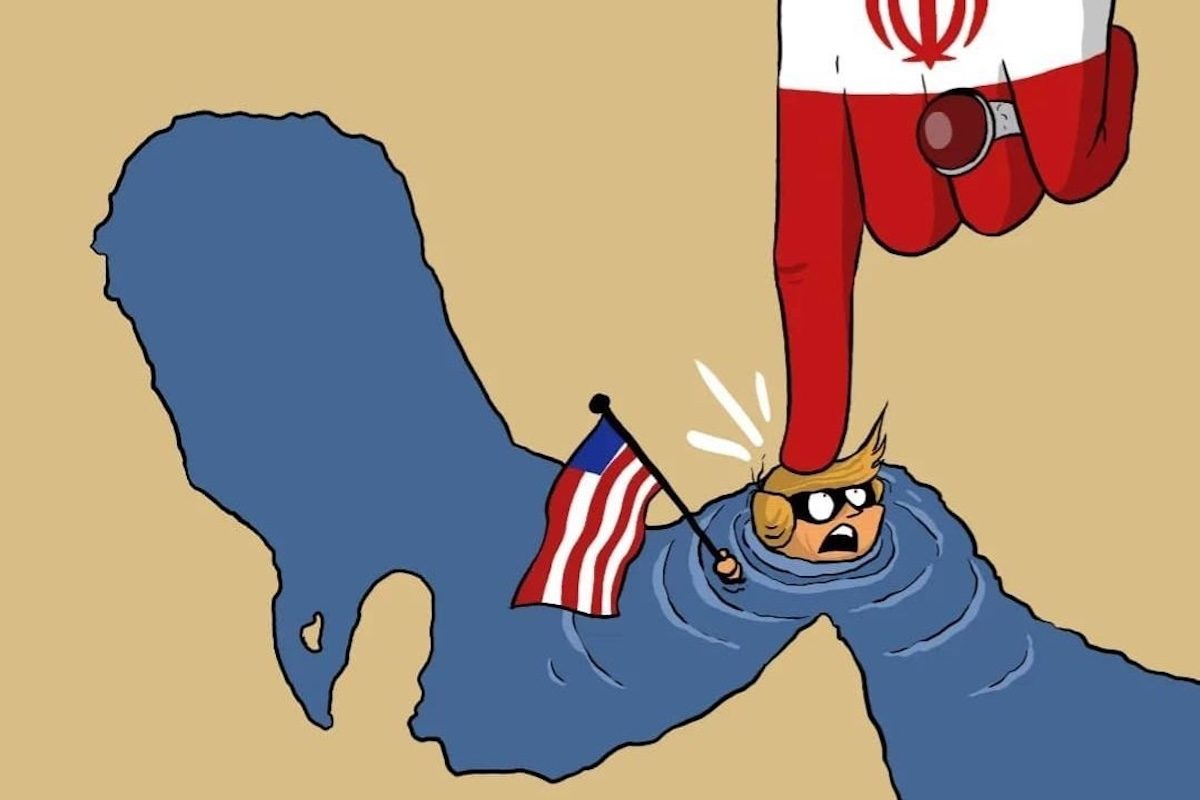
    In a dramatic escalation of Middle East tensions, US and Israeli forces launched unprecedented coordinated strikes against multiple Iranian targets on February 28, 2026. Dubbed “Operation Epic Fury” by the Pentagon, the massive missile offensive represents a fundamental shift in the longstanding conflict between Tehran and Western powers.

    The operation targeted Iran’s ballistic missile infrastructure, including production facilities, storage sites, and launch capabilities—a clear attempt to degrade Tehran’s primary regional deterrent. Unlike previous limited strikes, including the 2025 nuclear site attacks that prompted measured Iranian responses, this campaign appears designed to fundamentally alter Iran’s military and political landscape.

    Notably, strikes hit a compound housing Supreme Leader Ayatollah Ali Khamenei, with Israeli officials confirming the 86-year-old leader was specifically targeted. President Trump simultaneously addressed Iranians directly via video message, urging them to “take over your government” in what experts interpret as an explicit regime change objective.

    This military action follows months of diplomatic efforts in Oman and Geneva that ultimately failed to bridge differences over Iran’s ballistic missile program and support for regional proxy groups. Tehran had consistently rejected limitations on its missile capabilities, considering them vital to national security doctrine.

    Iran has promised “crushing” retaliation, though its conventional capabilities have been significantly degraded by the strikes. Regional security analysts warn that Tehran may leverage unconventional capabilities through proxy forces including Hezbollah, Iraqi Shia militias, and Yemen’s Houthis, potentially increasing terrorism risks globally.

    The operation proceeds without congressional authorization, relying instead on presidential Article 2 powers. Under the War Powers Act, the administration has 60 days to conclude operations or seek formal congressional approval, creating a political timer on military actions.

    With both sides facing existential stakes and no clear diplomatic off-ramp, the region braces for potentially prolonged conflict that could redefine Middle East power dynamics for generations.

  • South Africa beats Zimbabwe to top Group 1 at T20 World Cup. India opts to field vs West Indies

    South Africa beats Zimbabwe to top Group 1 at T20 World Cup. India opts to field vs West Indies

    DELHI, India — South Africa maintained their flawless campaign at the 2026 T20 World Cup, securing a five-wicket triumph against Zimbabwe in their concluding Super 8 encounter. The victory cemented their position at the summit of Group 1 and propelled them into the semifinals without a single defeat.

    Stand-in all-rounder George Linde delivered a match-defining performance, proving instrumental in both departments. Linde, who was drafted into the lineup to provide rest for Keshav Maharaj, claimed figures of 1-22 from his three-over spell. Later, with the bat, his composed unbeaten 30 from 21 deliveries, batting at number seven, guided the Proteas across the finish line.

    Chasing a target of 154, South Africa’s innings faced early turbulence. Zimbabwe’s captain, Sikandar Raza, showcased his all-round prowess by dismantling the top order with his off-spin, dismissing key batsmen Aiden Markram (4) and Quinton de Kock (0) cheaply. A brilliant catch in the deep by Ryan Burl sent back Ryan Rickelton after a brisk 31.

    The chase was stabilized by a explosive 42 from just 18 balls by Dewald Brevis, which included four massive sixes. A critical 50-run partnership off 25 balls between Brevis and David Miller (22) seemed to shift momentum, before Zimbabwe struck back again. Raza captured his third wicket by removing Brevis, and Blessing Muzarabani dismissed Miller, leaving South Africa in a precarious position at 101-5.

    Ultimately, an unbroken 53-run stand between Tristan Stubbs (21*) and Linde navigated the team to 154-5 with 13 balls remaining, showcasing resilience under pressure.

    Earlier, after electing to bat, Zimbabwe posted 153-7, a total built almost single-handedly by a defiant captain’s knock from Sikandar Raza. His 73 off 43 balls, featuring five boundaries and three sixes, rescued his side from a shaky start of 28-2. He found brief support from Clive Madande, who remained not out on 26, ensuring Zimbabwe crossed the 150-mark. For South Africa, Corbin Bosch was the pick of the bowlers with 2-40.

    This result eliminates Zimbabwe from the tournament after three consecutive losses in the Super 8 stage, despite this being their first appearance in the second round of a T20 World Cup. Meanwhile, South Africa, the 2024 runners-up, advance confidently, having conquered the ‘group of death’ in the initial round and all challengers in the Super 8s.

    From Group 2, England and New Zealand have progressed to the semifinals, with Pakistan and co-hosts Sri Lanka being eliminated.

  • AFL 2026: Melbourne defender Steven May has retired effective immediately

    AFL 2026: Melbourne defender Steven May has retired effective immediately

    In a significant development for Australian Rules Football, Melbourne Demons premiership defender Steven May has announced his immediate retirement from the AFL following a series of off-field challenges. The decision concludes a distinguished 251-game career that spanned both the Gold Coast Suns and Melbourne Football Club.

    The 31-year-old Darwin native has been absent from team training for over a month, citing personal reasons during this period. His departure from the sport comes amid legal proceedings involving an assault charge and reported police attendance at his residence last month, though specific details remain undisclosed.

    May communicated his retirement decision via social media on Sunday evening, preempting a planned address to teammates scheduled for Monday. In his emotional statement, he expressed gratitude for realizing his childhood dream of playing AFL football while acknowledging the difficulty of his timing decision just before the new season.

    ‘It’s an incredibly tough decision to make on the eve of the season but I know it’s the right one for myself, my family and the team,’ May wrote on Instagram. He extended appreciation to both the Gold Coast Suns, where he began his career as an inaugural team member, and the Melbourne Football Club where he achieved the pinnacle success of a 2021 premiership.

    The veteran defender emphasized his desire to provide the club with ‘clean air and no distractions moving forward,’ expressing confidence in the team’s future prospects. His retirement creates an unexpected list vacancy for Melbourne, allowing the club to utilize the supplemental selection period before its closure.

    Melbourne had previously encouraged May to consider trade options at the conclusion of the 2023 season, though he had initially committed to fulfilling the final year of his contract prior to this development.