作者: admin

  • World Cup marks 100-day countdown amid political upheaval

    World Cup marks 100-day countdown amid political upheaval

    As the 100-day countdown commences for the largest FIFA World Cup in history, the monumental sporting event finds itself navigating a complex landscape of geopolitical tensions and operational hurdles. The 2026 tournament, uniquely co-hosted across the United States, Canada, and Mexico, will feature an unprecedented 48 national teams competing in 104 matches. The football extravaganza is scheduled to kick off at Mexico City’s iconic Estadio Azteca on June 11th, culminating in the championship final at New Jersey’s MetLife Stadium on July 19th.

    FIFA President Gianni Infantino projects record-breaking commercial success for the event, forecasting approximately $11 billion in revenue—significantly surpassing the $7 billion generated by the 2022 Qatar World Cup. With over 508 million ticket requests for just seven million available seats, demand has reached unprecedented levels. However, this commercial ambition has drawn criticism from fan organizations worldwide, including Football Supporters Europe, which has condemned FIFA’s pricing strategy as a ‘monumental betrayal’ of loyal supporters.

    Beyond the financial considerations, the tournament confronts substantial political complications. The Trump administration’s international policies—including trade disputes with co-hosts Canada and Mexico, alongside stringent immigration measures affecting qualified nations Iran, Haiti, Senegal, and Ivory Coast—have introduced uncertainty regarding fan accessibility. Although White House officials assure that visa restrictions won’t impede ticketed spectators, geopolitical friction persists.

    Recent U.S.-Israeli military actions against Iran have added diplomatic complexity, particularly as Iran’s national team is slated to play group matches in Los Angeles and Seattle. Simultaneously, Mexico faces security concerns following violent unrest in Guadalajara—a host city for four matches—after military operations targeted drug cartel leadership. Both Infantino and Mexican President Claudia Sheinbaum have publicly affirmed that safety protocols remain robust and games will proceed uninterrupted.

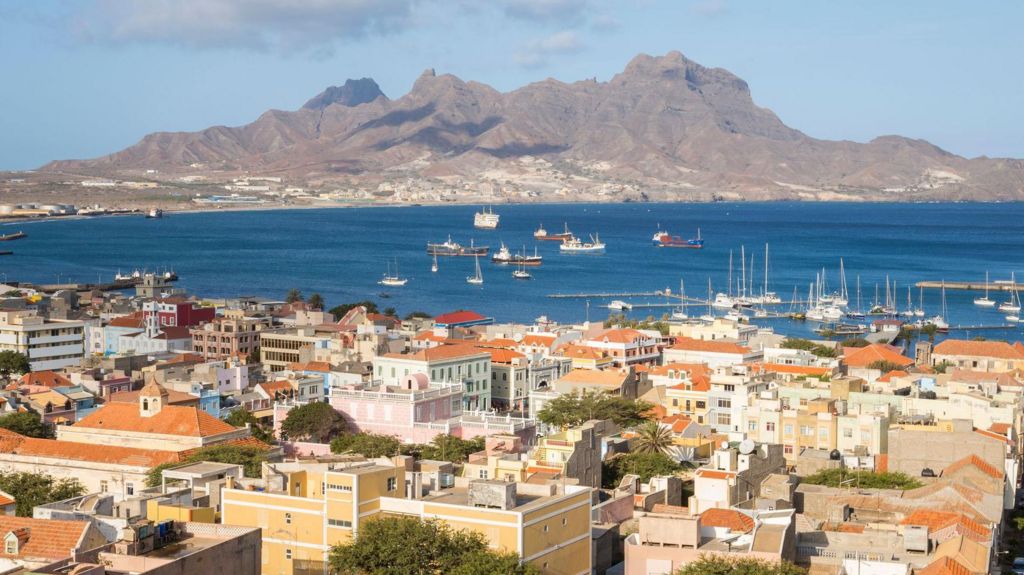
    On the competitive front, the expanded format guarantees that the top two teams from each of the twelve groups, plus eight third-place finishers, will advance to the knockout stage—a structure that minimizes early exits for traditional football powerhouses. The tournament promises compelling narratives, including Lionel Messi’s anticipated sixth and final World Cup appearance as he leads defending champion Argentina against formidable challengers like France, Spain, and an England squad seeking to end a six-decade championship drought. The event will also welcome debutante nations including Cape Verde, Curaçao, Jordan, and Uzbekistan, adding fresh intrigue to the global spectacle.

  • Kosgei wins Tokyo Marathon in record time

    Kosgei wins Tokyo Marathon in record time

    In a spectacular display of athletic prowess at the Tokyo Marathon, Kenyan long-distance runner Brigid Kosgei delivered a historic performance by obliterating the women’s course record. The 32-year-old Olympic silver medalist crossed the finish line with an astonishing time of 2:14:29, establishing a new benchmark for the prestigious event.

    Kosgei’s dominant victory saw her finish more than two minutes ahead of her closest competitor, Ethiopia’s Bertukan Welde, who secured second place with a time of 2:16:36. Another Ethiopian athlete, Hawi Feysa, completed the podium with a third-place finish of 2:17:39. The previous course record of 2:15:55, set by two-time champion Sutume Asefa Kebede in 2024, was convincingly surpassed by Kosgei’s remarkable achievement.

    In a post-race revelation, Kosgei announced her intention to represent Turkey at the 2028 Los Angeles Games, citing her desire to create opportunities for emerging Kenyan talent. “We have abundant athletic potential in Kenya,” Kosgei stated. “My transition to representing Turkey will hopefully inspire the next generation of Kenyan runners to join me in this new chapter.”

    The men’s competition provided equal drama as Ethiopia’s Tadese Takele successfully defended his title in one of the most thrilling finishes in marathon history. The 23-year-old champion clocked 2:03:37, matching the official time of Kenyan rival Geoffrey Toroitich, with another Kenyan athlete, Alexander Mutiso Munyao, finishing just one second behind in third place.

    Takele described his strategic approach to the nail-biting finale: “I anticipated the final stage would determine the outcome. At approximately 41 kilometers, I maintained patience to assess the situation before executing my decisive move immediately before the finish line.” The event showcased exceptional international competition, particularly between Ethiopian and Kenyan athletes who continue to dominate long-distance running globally.

  • US wins the Sydney leg of Sail GP, showing its class in light winds

    US wins the Sydney leg of Sail GP, showing its class in light winds

    SYDNEY — The United States SailGP Team delivered a masterclass in light-wind sailing tactics to claim victory in the Sydney leg of the global championship series on Sunday. In a dramatic three-boat final against Great Britain and Spain, the American team demonstrated exceptional boat handling and strategic positioning to secure their first event win since the fourth season.

    The final race unfolded in challenging conditions with winds ranging between 8-15 knots (9-17 mph). American driver Taylor Canfield executed a perfect start from the favored upper end of the line, immediately establishing competitive advantage. Though Britain crossed the starting line marginally ahead, the U.S. vessel demonstrated superior speed and optimal sailing angles to overtake their rivals.

    At the first mark, Britain maintained a narrow lead, but the Americans quickly leveraged their foiling catamaran’s performance capabilities to establish a dominant position they would maintain throughout the remainder of the race. When the British team attempted to split from the course in search of favorable wind conditions on the second leg, their tactical gamble failed to produce results, allowing the U.S. team to consolidate their lead.

    The victory marked a significant milestone for the American team, ending a two-season win drought dating back to the Cádiz event in Season 4. Despite achieving a peak speed of approximately 41 knots during competition, the team maintained foiling flight for only 22% of the final race duration.

    The Sydney event proceeded with a reduced fleet of 11 vessels following a serious collision during the previous Auckland competition that sidelined both the French and New Zealand teams. That incident resulted in hospitalizations, with New Zealand sailor Louis Sinclair sustaining compound fractures to both legs and French strategist Manon Audinet suffering chest injuries.

    SailGP competition features identical 50-foot foiling catamarans capable of reaching speeds approaching 100 km/h (60 mph), as demonstrated in the high-wind Auckland conditions. Britain had previously won the season opener in Perth, Australia, while the home-team Flying Roos claimed victory in Auckland.

    Following three events in the sixth season championship, Great Britain maintains the overall series lead with 29 points, followed by Australia with 25 points and the United States with 20 points.

  • Latest developments after US, Israeli strikes kill Iran’s Khamenei

    Latest developments after US, Israeli strikes kill Iran’s Khamenei

    The Middle East has plunged into unprecedented turmoil following the confirmed death of Iran’s Supreme Leader Ayatollah Ali Khamenei in coordinated military strikes by the United States and Israel. Iranian state television officially announced Khamenei’s passing on Sunday, confirming earlier statements by former US President Donald Trump, who declared the operation had eliminated “one of the most evil people in History.

    The military campaign, initiated on Saturday, has triggered a dangerous escalation across the region. Iran’s army swiftly retaliated by targeting US bases in Iraq’s Kurdistan region and Gulf territories. The Islamic Republic’s Revolutionary Guards vowed to launch “the most ferocious” operation in history against Israeli and American military installations, while simultaneously moving to close the strategically vital Strait of Hormuz.

    Regional violence has intensified dramatically with air raid sirens sounding across Jerusalem as missiles launched from Iran approached Israeli territory. Explosions reverberated through multiple Gulf capitals including Dubai, Manama, and Doha, where thick black smoke was visible on the horizon. The United Arab Emirates reported two fatalities in Abu Dhabi, while Israel’s emergency services confirmed one woman killed and at least 21 injured in the Tel Aviv area.

    Civil unrest has erupted across the Muslim world with deadly protests occurring from Pakistan to Iraq. In Karachi, eight people died as hundreds attempted to storm the US consulate. Iraqi protesters tried to breach Baghdad’s fortified Green Zone housing the US embassy, while thousands demonstrated in Indian-administered Kashmir chanting anti-American and anti-Israeli slogans.

    The human cost continues to mount with Iran confirming the deaths of several top officials including Armed Forces Chief of Staff Abdolrahim Mousavi, Defense Minister Aziz Nasirzadeh, Revolutionary Guards chief General Mohammad Pakpour, and security adviser Ali Shamkhani. Iranian media also reported Khamenei’s daughter, son-in-law, and granddaughter perished in the strikes.

    International response has been swift with the UN Security Council convening an emergency session where Iran’s envoy accused the US and Israel of potential “war crimes.” UN Secretary-General Antonio Guterres warned that military action “carries the risk of igniting a chain of events that no one can control.” The International Atomic Energy Agency will hold an extraordinary meeting on Monday regarding Iran’s nuclear program at Russia’s request.

    Regional governments are taking emergency measures with multiple countries closing airspace and airlines canceling flights across the Middle East. Thailand has initiated preparations to evacuate its citizens from the region using military and charter aircraft, prioritizing those in Iran.

    Iran has declared a 40-day mourning period with seven public holidays, while President Masoud Pezeshkian and two other officials will lead the country during a transitional period. The situation remains highly volatile with new explosions reported in Tehran on Sunday, the source of which remains unclear.

  • At least 6 killed as Shiites storm US Consulate in Pakistan over killing of Iran’s supreme leader

    At least 6 killed as Shiites storm US Consulate in Pakistan over killing of Iran’s supreme leader

    KARACHI, Pakistan — Violent confrontations erupted outside the U.S. Consulate in Karachi on Sunday, resulting in at least six fatalities and approximately a dozen injuries after Pakistani security forces clashed with demonstrators. The protest was triggered by a U.S.-Israel military operation in Iran that resulted in the death of the country’s Supreme Leader, Ayatollah Ali Khamenei.

    According to local authorities, hundreds of protesters attempted to storm the diplomatic compound in Pakistan’s largest city. Senior police official Irfan Baloch confirmed that while demonstrators briefly breached the consulate’s perimeter, they were subsequently dispersed by paramilitary and police units. Baloch asserted that ‘the situation is now fully under our control,’ dismissing reports of significant damage to the consulate building as unfounded.

    Medical authorities at Karachi’s main government hospital, including police surgeon Summaiya Syed Tariq, verified that six casualties and multiple injured individuals had been admitted for treatment. The protesters reportedly set fire to a nearby police post and shattered windows before security forces intervened to regain control of the area.

    The demonstrations weren’t confined to Karachi, as parallel protests emerged near the U.S. Consulate in Lahore, capital of eastern Punjab province. Police official Faisal Kamran reported that authorities prevented demonstrators from approaching the diplomatic facility and dispersed crowds attempting to march toward the building.

    The protests were primarily organized by Pakistan’s Shiite community, which represents approximately 15% of the country’s population of 250 million and constitutes one of the largest Shiite populations globally. While anti-American and anti-Israeli rallies have been common among this demographic, the scale and intensity of Sunday’s violence marked a significant escalation from previous demonstrations.

  • Dudley MP delivers physiotherapy help to Ukraine

    Dudley MP delivers physiotherapy help to Ukraine

    In an unprecedented humanitarian initiative, British Member of Parliament Sonia Kumar has spearheaded a specialized physiotherapy training program for Ukrainian medical professionals confronting the devastating aftermath of ongoing conflict. The Labour representative for Dudley, who maintains her clinical practice as an NHS physiotherapist alongside parliamentary duties, organized the pioneering mission following an emotionally impactful visit to Ukraine in September 2024.

    The delegation, which included Anju Jaggi (Clinical Director of Therapies at the Royal National Orthopaedic Hospital) and physiotherapist Tanisha Sandhu, conducted intensive training sessions at Kyiv’s Institute of Vertebrology and Rehabilitation. Their collaboration with the Patients of Ukraine Charitable Foundation addressed the critical shortage of rehabilitation expertise in a nation where official figures acknowledge 55,000 military fatalities with actual casualty estimates potentially reaching 200,000.

    Kumar described the complex medical landscape facing Ukrainian clinicians, noting that while some injuries mirror those seen in UK practice, the battlefield context creates unique challenges. “When an ankle injury balloons up in combat, how do you manage that rapidly to return someone to duty?” she questioned, highlighting the practical realities of front-line medicine.

    The training program equipped 25 clinicians with advanced techniques for addressing severe trauma cases, including neurological deficits, limb amputations, and complex spinal injuries. Sandhu observed that the injuries being treated “are incredibly complex” and emphasized that sharing techniques “that improve recovery or reduce pain can make a huge difference to someone’s life.”

    Ukrainian Deputy Health Minister Yevheniy Honchar formally acknowledged the mission’s significance, stating that “rehabilitation is really our key priority because we have huge demand in Ukraine because of the war.” He expressed particular appreciation for the knowledge transfer from “well recognized experts from Great Britain.”

    Beyond physical rehabilitation, Kumar identified mental health support as equally crucial, noting that Ukrainian healthcare professionals specifically requested practical skills and partnerships rather than sympathy. She characterized the collaboration as “what international cooperation looks like at its best” and expressed hope that this mission would establish lasting professional bridges between British and Ukrainian medical teams, proving that “even in the shadow of war, collaboration like this can help rebuild lives.”

  • Middle East airports closed and thousands of travelers stranded after attack on Iran

    Middle East airports closed and thousands of travelers stranded after attack on Iran

    A severe aviation crisis has gripped the Middle East following military strikes by the United States and Israel against Iranian targets, triggering unprecedented regional airspace closures that have stranded hundreds of thousands of travelers worldwide.

    The coordinated offensive, launched Saturday, prompted immediate shutdowns of airspace across Iran, Israel, Qatar, Syria, Iraq, Kuwait, and Bahrain. The United Arab Emirates implemented a partial airspace closure while Dubai’s Emirates Airlines suspended all operations until at least Sunday afternoon. Qatar Airways extended its closure through Monday morning, creating massive disruptions at three of the world’s busiest aviation hubs in Dubai, Abu Dhabi, and Doha.

    According to aviation analytics firm Cirium, these airports typically handle approximately 90,000 daily passengers through Emirates, Qatar Airways, and Etihad. The conflict has resulted in the cancellation of over 1,800 flights, with major carriers including Air India, Turkish Airlines, Lufthansa, and Air France suspending regional operations through the weekend.

    The aviation chaos extended beyond cancellations as at least 145 aircraft en route to Middle Eastern destinations were diverted to alternative airports in Athens, Istanbul, and Rome. One transatlantic flight from Philadelphia spent nearly 15 hours airborne before returning to its origin point after reaching Spanish airspace.

    Aviation experts warn travelers to expect prolonged disruptions. ‘There’s no way to sugarcoat this,’ said Henry Harteveldt, president of Atmosphere Research Group. ‘Prepare for delays or cancellations for the next few days as these attacks evolve.’

    The crisis has also produced tragic consequences on the ground. Dubai International Airport reported four injuries from attacks, while Abu Dhabi’s Zayed International Airport confirmed one fatality and seven injuries from a drone strike. Kuwait International Airport also experienced strikes, though Iran hasn’t publicly claimed responsibility for these specific incidents.

    Airlines now face substantial operational challenges, having to reroute flights south over Saudi Arabia—adding hours to travel time and significantly increasing fuel consumption. These added costs may quickly translate to higher ticket prices if the conflict persists.

    Mike McCormick, former FAA air traffic control official and current Embry-Riddle Aeronautical University professor, suggested partial airspace reopenings might occur within 24-36 hours as military operations become more defined and Iran’s missile capabilities diminish. However, the situation remains highly volatile, with the previous June 2025 conflict between Israel and Iran having lasted 12 days.

    Travelers like Jonathan Escott, whose Emirates flight from Newcastle to Dubai was canceled, expressed widespread frustration: ‘No one knows what’s going on with the conflict. Not Emirates, Emirates don’t have a clue. No one has a clue.’

    With India’s civil aviation agency designating most Middle Eastern airspace as high-risk and numerous airlines suspending operations indefinitely, aviation authorities recommend passengers verify flight statuses directly with carriers and explore flexible rebooking options during this unprecedented regional aviation crisis.

  • Navarrete stops Nunez to unify super-featherweight titles

    Navarrete stops Nunez to unify super-featherweight titles

    In a spectacular display of boxing prowess, Mexican champion Emanuel Navarrete forcefully unified the IBF and WBO super-featherweight titles with a commanding performance against countryman Eduardo Nunez. The highly anticipated bout concluded before the eleventh round when ringside medical personnel intervened due to Nunez’s deteriorating condition.

    Navarrete, the 31-year-old three-division world champion, systematically dismantled his previously undefeated opponent throughout the contest at Glendale’s Desert Diamond Arena. The victory marks Navarrete’s 40th professional win in 43 appearances, simultaneously ending Nunez’s impressive 19-fight winning streak.

    The tactical battle saw Navarrete establish early dominance before delivering devastating blows in the ninth round that prompted the first medical examination of Nunez. By the conclusion of the tenth round, Nunez displayed significant facial damage including deep lacerations and a severely swollen right eye that rendered him unable to continue safely.

    Reflecting on the stoppage, Navarrete expressed mixed emotions: ‘It’s difficult to witness your opponent in distress, but the uncertainty of boxing necessitates caution. Those final rounds present unpredictable dangers where a single punch could alter everything.’

    With this unification victory, Navarrete positions himself for potential undisputed championship opportunities against WBC titleholder O’Shaquie Foster and WBA champion Lamont Roach, setting the stage for further consolidation in the super-featherweight division.

  • Lyse Doucet: This is an extraordinary moment Iran has been preparing for

    Lyse Doucet: This is an extraordinary moment Iran has been preparing for

    In a seismic development that has reshaped the Middle Eastern geopolitical landscape, coordinated military strikes by United States and Israeli forces have resulted in the death of Iran’s Supreme Leader Ayatollah Khamenei. The 86-year-old cleric, who ruled Iran for 36 years, was reportedly killed during targeted attacks on his compound, though Iranian officials initially denied the reports before confirming his “martyrdom” through tearful state television announcements.

    The operation unfolded with precision strikes that caused significant damage to the Supreme Leader’s residence visible in satellite imagery. Following hours of conflicting reports and official denials, the confirmation came only after former US President Donald Trump broke the news on his social media platform. The Iranian government has declared forty days of mourning, with pro-government gatherings already emerging to grieve the leader’s passing.

    Contrasting reactions have emerged globally. While government loyalists mourn, verified videos show celebrations erupting in Tehran, Karaj, and among Iranian diaspora communities worldwide, with many expressing hope that this marks the end of hardline Islamic rule. The dramatic events cap years of escalating tensions between Iran and Western powers, particularly following last June’s 12-day conflict that saw Israel eliminate nine nuclear scientists and numerous security officials.

    Historical context reveals this contingency was long anticipated. Khamenei had reportedly prepared succession plans, including identifying three senior clerics as potential replacements and instructing the Assembly of Experts to be ready for any eventuality. Speculation about successors includes his son Mojtaba and other senior figures, though the ruling establishment will likely prioritize continuity and seamless transition to maintain their grip on power.

    The Supreme Leader’s death represents the culmination of growing challenges to his rule, including massive protests against severe security crackdowns that killed thousands of Iranians. His deeply anti-Western, anti-Israel ideology shaped decades of regional policy, suppressing reform movements and confronting international powers.

    As the Islamic Republic enters its most precarious period since the 1979 revolution, questions emerge about whether this leadership change could signal broader directional shifts for the 47-year-old theocratic state. Regardless of who emerges as successor, the primary objective will remain preserving the clerical establishment and powerful Revolutionary Guards control amid a rapidly escalating conflict that continues to unfold in unpredictable and dangerous ways.

  • Trump says Iran’s Supreme Leader killed in US-Israeli strikes, Tehran insists Khamenei is ‘safe and sound’

    Trump says Iran’s Supreme Leader killed in US-Israeli strikes, Tehran insists Khamenei is ‘safe and sound’

    In a controversial social media post on Saturday, former U.S. President Donald Trump asserted that Iran’s Supreme Leader Ayatollah Ali Khamenei had been killed during joint U.S.-Israeli military operations. Utilizing his Truth Social platform, Trump declared this development represented “justice for the people of Iran and all Great Americans,” while praising the effectiveness of American intelligence and tracking systems developed in collaboration with Israel.

    The former president characterized the situation as a pivotal opportunity for Iranian citizens to reclaim their nation, simultaneously claiming that numerous members of Iran’s Revolutionary Guards and security forces had lost their will to combat. Trump indicated his willingness to grant these individuals immunity while promising continued “heavy and pinpoint bombing” operations throughout the coming week “or as long as necessary to achieve our objective.

    These assertions were promptly contradicted by multiple sources. Iran’s Foreign Minister Abbas Araghchi stated to NBC News that, to his knowledge, “almost all officials are safe and sound and alive,” acknowledging only minimal commander casualties. Iranian state media agencies Tasnim and Mehr similarly refuted the claims, describing the Supreme Leader as remaining “steadfast and firm in commanding the field.

    An official from Khamenei’s office denounced the allegations as enemy “mental warfare,” urging public vigilance against psychological operations. The conflicting narratives emerged amid reports of significant military engagements, with Iranian media citing Red Crescent figures indicating Saturday’s strikes affected 24 provinces and resulted in at least 201 fatalities. Iran subsequently launched counterattacks targeting Israeli and U.S. military assets across the Middle East, further escalating regional tensions.

    Middle East Eye noted the inability to independently verify Trump’s claims, particularly as the former president provided no substantiating evidence for his assertions regarding the Iranian leader’s status.