作者: admin

  • Iran to form interim leadership council until next leader’s selection

    Iran to form interim leadership council until next leader’s selection

    In the wake of Supreme Leader Ali Khamenei’s death during coordinated military strikes by the United States and Israel, Iran has announced the formation of an interim leadership council to assume national governance responsibilities. The development was confirmed by Ali Larijani, Secretary of Iran’s Supreme National Security Council, during a televised address on state-run IRIB TV.

    The unprecedented military operation, which targeted Tehran and several other Iranian cities including Tabriz, Qom, and Isfahan on Saturday, resulted in the deaths of multiple high-ranking Iranian officials alongside the Supreme Leader. Among the casualties were Chief of Staff of the Iranian Armed Forces Abdolrahim Mousavi, Defense Minister Aziz Nasirzadeh, and Islamic Revolutionary Guard Corps commander Mohammad Pakpour.

    Larijani outlined the constitutional basis for the transitional government, citing Article 111 of Iran’s Constitution which mandates that the president, judiciary chief, and a constitutional jurist will collectively assume leadership duties during such a vacancy. The security official characterized the nation as ‘mournful and angry’ while vowing a decisive response to what he described as aggressive actions by Israel and the United States.

    In his remarks, Larijani presented a critical geopolitical analysis, suggesting that Israel strategically seeks to fragment Iran to establish dominance across West Asia. He further asserted that the United States had ‘fallen into Israel’s trap,’ arguing that despite the ‘America First’ doctrine promoted by President Donald Trump, Israeli interests appeared to dominate US foreign policy decisions.

    The attack prompted immediate retaliatory measures from Iran, which launched missile and drone strikes targeting Israeli territory and US military installations throughout the region. This exchange represents one of the most significant escalations in regional conflicts in recent years, raising concerns about broader regional stability and the potential for further military confrontation.

  • Trump says diplomatic solution in Iran ‘much easier now’

    Trump says diplomatic solution in Iran ‘much easier now’

    In a significant development following coordinated US-Israeli military operations, President Donald Trump has asserted that achieving a diplomatic resolution with Iran has become substantially more feasible. The statement came during a televised interview on Saturday evening, mere hours after confirmation of Supreme Leader Ayatollah Ali Khamenei’s death.

    Trump, in a detailed phone conversation with CBS News, characterized the recent military campaign as strategically effective, suggesting it has created unexpected opportunities for negotiation. ‘The pathway to diplomacy appears much clearer now than it was just twenty-four hours ago, obviously,’ the President remarked, indicating a calculated shift in geopolitical dynamics.

    When questioned about Iran’s leadership transition, Trump acknowledged the emergence of ‘promising candidates’ to succeed Khamenei, though he declined to specify particular individuals or factions. This commentary suggests Washington is monitoring Tehran’s political reorganization with strategic interest.

    Regarding Iran’s retaliatory measures, Trump displayed measured satisfaction, noting the response fell substantially below anticipated levels. ‘The countermeasures align with our projections, though we had prepared for significantly more robust engagement,’ he stated, implying US defenses had successfully mitigated potential threats.

    Earlier that day, Trump had utilized social media to announce the continuation of military operations, emphasizing that ‘precision bombing campaigns will persist uninterrupted throughout the coming week, or as long as operational requirements dictate.’ This dual-track approach—combining sustained military pressure with diplomatic overtures—marks a complex evolution in US strategy toward Iran.

    The administration appears to be navigating a delicate balance between demonstrating military resolve and creating space for potential negotiations amid Iran’s unprecedented leadership crisis.

  • Women’s cricket great Alyssa Healy ends her ODI career with 158 for Australia against India

    Women’s cricket great Alyssa Healy ends her ODI career with 158 for Australia against India

    HOBART, Australia — In a spectacular farewell to her One Day International career, Australian cricket icon Alyssa Healy delivered a breathtaking performance at Hobart’s stadium on Sunday. The 35-year-old wicketkeeper-batter smashed an extraordinary 158 runs against India, marking one of the highest individual scores in women’s ODI history.

    Healy’s magnificent innings featured 27 boundaries and two sixes from just 98 deliveries, securing her eighth ODI century and cementing her status among cricket’s elite. Her dominant performance propelled Australia to a formidable total of 409-7 in their 50 overs, ultimately leading to a comprehensive 185-run victory as India was dismissed for 224.

    The match concluded Australia’s 3-0 series sweep against India, providing a fitting send-off for one of women’s cricket’s most celebrated athletes. Healy now joins an exclusive group of just six female players who have achieved multiple 150-plus scores in ODI cricket.

    This historic knock adds to Healy’s impressive legacy, which includes her record-setting 148 not out against Sri Lanka in 2019—the highest T20 International innings at the time. While retiring from ODIs and limited-overs cricket, Healy will play one final test match against India in Perth starting Friday, where she’ll have one last opportunity to secure a test century.

    In a remarkable coincidence, Healy’s highest test score of 99 matches exactly that of her husband, Mitchell Starc, the celebrated fast-bowling star of Australia’s men’s cricket team.

  • Months of planning behind US-Israeli mission to target Iran’s supreme leader

    Months of planning behind US-Israeli mission to target Iran’s supreme leader

    In an unprecedented daylight operation, US and Israeli forces successfully targeted and eliminated Iran’s Supreme Leader Ayatollah Ali Khamenei through precisely coordinated military action. The strike occurred at approximately 09:40 local time on Saturday morning at a compound in central Tehran, marking a significant departure from conventional nighttime special operations.

    The operation culminated from months of sophisticated intelligence gathering involving advanced tracking systems and pattern-of-life analysis of high-value Iranian targets. According to intelligence sources, the Central Intelligence Agency provided crucial real-time information about Khamenei’s movements, which was subsequently operationalized by Israeli defense forces.

    Israeli jets deployed approximately thirty specialized munitions to penetrate underground bunker facilities where the Supreme Leader had sought protection. The attack also simultaneously targeted other senior Iranian officials, including Defence Council secretary Ali Shamkhani, Defence Minister Brig Gen Aziz Nasirzadeh, and IRGC commander Gen Mohammad Pakpour, all confirmed deceased by Iranian authorities.

    President Donald Trump and senior administration officials monitored the operation from a makeshift situation room at the Mar-a-Lago estate in Florida, receiving confirmation of the mission’s success hours after the strike. The operation represents an escalation in the ongoing conflict between Western allies and Iranian leadership, though Iranian authorities had reportedly established succession plans for key government positions.

    The daylight timing appears to have exploited Iranian security assumptions about attack probability, while the use of multiple penetrating munitions suggests intelligence about the compound’s underground infrastructure. The strike methodology indicates advanced capabilities in real-time tracking and precision targeting developed through previous operations against Iran’s nuclear program.

    This event represents a significant evolution in targeted strike operations and intelligence collaboration between allied nations, with potentially profound implications for Middle Eastern geopolitics and the ongoing conflict between Iran and Western powers.

  • Watch: How US-Israel strikes on Iran unfolded… in two minutes

    Watch: How US-Israel strikes on Iran unfolded… in two minutes

    The Middle East has witnessed a significant escalation in military confrontations as Iranian forces initiated retaliatory strikes across the region. This development comes in direct response to coordinated military operations conducted by United States and Israeli forces targeting multiple locations within Iranian territory.

    The retaliatory measures represent a substantial escalation in the ongoing regional tensions, marking one of the most direct confrontations between Iran and the US-Israel alliance in recent years. Security analysts indicate that these exchanges could potentially alter the strategic balance in the Middle East, with implications for global security and energy markets.

    Military experts are closely monitoring the situation as both sides demonstrate heightened readiness for potential further engagements. The rapid sequence of events began with precision strikes against Iranian assets, followed within hours by Tehran’s calculated response against strategic targets in neighboring territories.

    International observers have expressed concern over the potential for further escalation, with diplomatic channels working to de-escalate tensions. The United Nations Security Council is expected to convene an emergency session to address the deteriorating security situation in the region.

  • Afghan, Pakistani forces battle along the border

    Afghan, Pakistani forces battle along the border

    Tensions between Afghanistan and Pakistan have dramatically intensified into open military confrontation, with both nations engaging in cross-border aerial bombardments and ground operations. The conflict reached a critical point on Sunday as Afghan residents reported sustained fighting along multiple frontier regions, including drone strikes and artillery shelling that resulted in civilian casualties.

    The escalation began Thursday when Afghan forces launched a coordinated offensive along the disputed border region, prompting immediate retaliation from Pakistani military units. In a significant escalation of tactics, Pakistani jets conducted aerial strikes targeting the former U.S. air base at Bagram north of Kabul—marking the first time Pakistan has directly attacked Afghan government facilities rather than claimed militant positions.

    Eyewitness accounts describe terrifying dawn raids with powerful explosions that shook residential areas. ‘There was smoke and fire coming out north of the airport,’ one anonymous resident reported, characterizing the experience as ‘very terrifying.’ Although provincial officials confirmed attempted bombings at Bagram, they reported no casualties or structural damage from these particular strikes.

    The human cost continues to mount, with Afghan deputy spokesman Hamdullah Fitrat reporting 36 civilian deaths across multiple provinces since Thursday. Heartbreaking personal tragedies have emerged, including that of an 18-year-old in Asadabad who was killed while attempting to protect his family home after recently marrying.

    Pakistan’s information minister Attaullah Tarar acknowledged bombing 46 locations across Afghanistan but claimed these operations targeted militant infrastructure. Islamabad asserts that 415 Afghan soldiers have been killed, though these figures remain unverified by independent sources. Afghanistan meanwhile claims to have killed over 80 Pakistani soldiers and captured 27 military posts.

    The current violence represents the most severe outbreak since October clashes that killed more than 70 people on both sides. Diplomatic efforts led by Saudi Arabia and Qatar have so far failed to establish a ceasefire, with Pakistan maintaining that Afghanistan has not adequately addressed militant groups operating along the border—a charge the Taliban government vehemently denies.

    The border region remains highly volatile with increased security presence in Kabul, additional checkpoints throughout the city, and reports of ongoing sporadic clashes in Khost and Nangarhar provinces. The Torkham border crossing—a vital transit point for Afghans returning from Pakistan—has experienced significant disruption due to the fighting.

  • Kerr scores first international goal in 28 months

    Kerr scores first international goal in 28 months

    In a moment of sporting triumph overshadowed by geopolitical tensions, Australian football star Sam Kerr marked her international return with a decisive goal against the Philippines. The Chelsea striker’s 14th-minute header secured a 1-0 victory for Australia in their Asian Cup opener at Perth Stadium, marking her first international goal since November 2023 following a lengthy recovery from an anterior cruciate ligament injury.

    The 32-year-old forward, who only returned to competitive play in September after nearly two years sidelined, recorded her 70th international goal in what became the match’s solitary highlight. Despite Australia’s numerous missed opportunities, Kerr’s clinical finish proved sufficient for the victory.

    “I’m gradually rediscovering my confidence,” Kerr stated post-match. “While I feel like my normal self, I need more involvement in scoring positions. This performance represents a positive beginning, and our squad maintains strong belief, though the Asian Cup clearly features numerous quality opponents requiring our focused approach.”

    The tournament proceeds against a complex backdrop of Middle East conflicts that have already impacted regional football scheduling. The Asian Football Confederation announced postponement of West Region matches originally scheduled for March 2-3, 2026, citing “the developing situation in the Middle East” following recent military exchanges between the United States, Israel and Iran.

    Australia prepares to face Iran next Thursday at Gold Coast Stadium, with the AFC confirming close coordination with Iranian team officials regarding safety protocols. The confederation emphasized its “resolute commitment to ensuring the safety and security of all players, teams, officials, and fans” while monitoring the evolving geopolitical landscape.

    The Women’s Football Weekly podcast returns with hosts Ben Haines, Ellen White and Jen Beattie offering weekly analysis every Tuesday on BBC Sounds, featuring coverage of the Women’s Super League and international competitions.

  • South Africa beat Zimbabwe to set up NZ semi-final

    South Africa beat Zimbabwe to set up NZ semi-final

    In a decisive Men’s T20 World Cup Super 8s clash in Delhi, South Africa secured a five-wicket victory over Zimbabwe to claim the top position in Group 1. Despite an uncharacteristically shaky batting performance, the Proteas successfully chased Zimbabwe’s total of 153-7 with 13 balls remaining, finishing at 154-5.

    The match saw Zimbabwe’s captain Sikandar Raza deliver an exceptional all-round performance, scoring a defiant 73 runs from just 43 deliveries and claiming three crucial wickets for 29 runs. His efforts with the bat propelled Zimbabwe to a competitive total, supported by Clive Madande’s unbeaten 26-run contribution that included several late boundaries.

    South Africa’s chase encountered early turbulence as Raza’s bowling dismantled the top order, removing openers Quinton de Kock and Aiden Markram for minimal scores. The situation demanded intervention from 22-year-old Dewald Brevis, whose explosive 42 runs from merely 18 balls provided critical momentum. Brevis partnered with David Miller (22 off 16) to establish a 50-run fourth-wicket stand that fundamentally shifted the match’s trajectory.

    Though both batsmen fell within a narrow five-delivery window, George Linde (30 not out) and Tristan Stubbs (21 not out) demonstrated composure under pressure to guide South Africa to victory. The bowling department saw teenage sensation Kwena Maphaka emerge as the most effective bowler, recording impressive figures of 2-21.

    This victory marks South Africa’s seventh consecutive win in the tournament, solidifying their semifinal matchup against New Zealand while simultaneously confirming England’s position against either India or West Indies in the final four. Cricket analysts have noted South Africa’s remarkable consistency and the strategic advantage of testing backup players during this match, highlighting the team’s comprehensive preparation and growing confidence throughout the competition.

  • Geologists brave rugged terrain in Yunnan prospecting mission

    Geologists brave rugged terrain in Yunnan prospecting mission

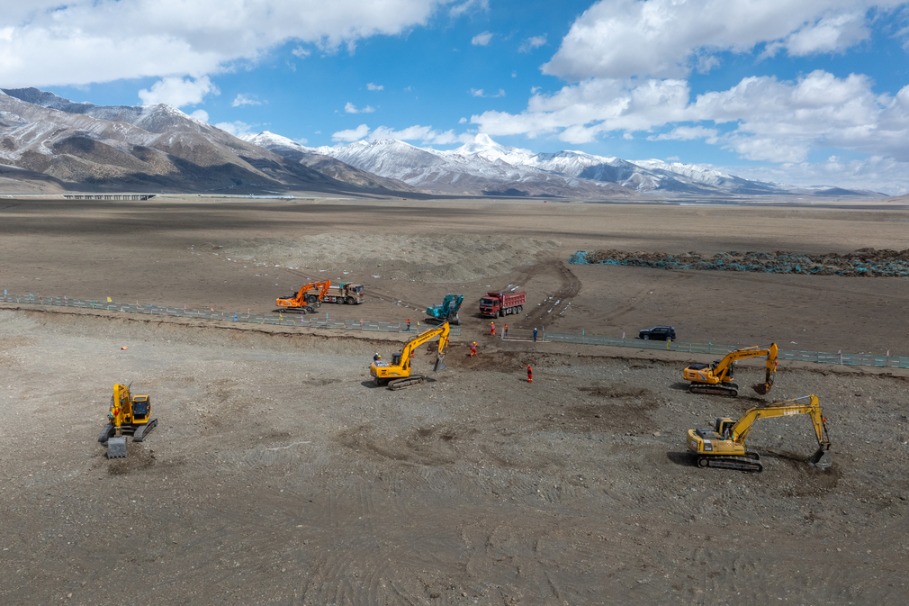
    In the formidable landscapes of Yunnan province, a team of 33 geologists from the Kunming General Survey of Natural Resources has embarked on an ambitious mineral prospecting mission. Equipped with geological hammers, heavy backpacks, and distinctive blue uniforms, these specialists face extreme conditions while surveying a 44-square-kilometer area surrounding a significant lead-zinc deposit in the Nujiang Lisu Autonomous Prefecture.

    The challenging terrain features near-vertical cliffs that pierce the sky and treacherous rocky pathways concealed beneath thick vegetation. Beyond the physical demands of navigating this rugged environment, team members confront the emotional difficulty of prolonged separation from their families—a sacrifice that weighs heavily on these dedicated professionals.

    Their scientific mission represents critical fieldwork for China’s geological survey efforts, combining traditional prospecting methods with modern geological analysis techniques. The data collected will contribute to understanding the region’s mineral resources and potential for future resource development.

    Despite the hardships, these geologists demonstrate remarkable perseverance, driven by scientific curiosity and commitment to their field. Their work provides valuable insights into both the practical challenges of geological fieldwork and the human stories behind mineral exploration in China’s most demanding environments.

  • Fog forces cancelation of men’s World Cup super-G in Germany. Race will be rescheduled in France

    Fog forces cancelation of men’s World Cup super-G in Germany. Race will be rescheduled in France

    GARMISCH-PARTENKIRCHEN, Germany — Adverse weather conditions led to the abandonment of the first men’s World Cup super-G event following the Milan Cortina Winter Olympics this Sunday. Dense fog enveloping the upper section of the renowned Kandahar course severely compromised visibility, rendering competition unsafe despite repeated efforts by organizers.

    The International Ski & Snowboard Federation (FIS) announced the official cancellation after multiple delays and attempts to adjust the start gate position failed to mitigate the challenging atmospheric conditions. ‘Due to the present weather situation with limited visibility from the fog,’ the federation stated, the decision was made to prioritize athlete safety.

    In response to the cancellation, FIS men’s race director Markus Waldner confirmed via Austrian television that the event will be rescheduled for March 13th in Courchevel, France. This venue will host the final weekend of speed races preceding the World Cup Finals scheduled in Norway the subsequent week.

    The cancellation leaves the super-G season standings with Swiss skier Marco Odermatt maintaining a substantial advantage. Odermatt currently commands the discipline with 425 points, establishing a formidable 158-point lead over his closest competitor, Austria’s Vincent Kriechmayr, who trails with 267 points. Three super-G events remain in the season.

    The World Cup circuit now progresses to Kranjska Gora, Slovenia, where athletes will compete in technical events including a slalom and giant slalom next weekend.