Two anonymous Libyan officials have made explosive new claims that Ukrainian military forces are operating covertly across western Libya under a Western-endorsed agreement, launching the March drone attack that severely damaged a Russian-sanctioned liquefied natural gas (LNG) tanker off the North African coast. The officials detailed the scope of the alleged deployment, laying out a new layer of proxy conflict between Russia and the West in the already fractured nation of Libya.
The vessel in question, the Russian-flagged *Arctic Metagaz*, was carrying 61,000 tons of LNG when it was struck by what Russia has confirmed was a Ukrainian sea drone attack in early March. The incident occurred roughly 240 kilometers off the Libyan coastal city of Sirte, near Maltese territorial waters. Initially, the Libyan Maritime Authority incorrectly reported the tanker had sunk after it suffered “sudden explosions and a massive fire,” but the damaged vessel remained afloat and drifted toward the Libyan coast. All 30 crew members were successfully rescued and transferred to a separate ship bound for the eastern Libyan city of Benghazi.
The *Arctic Metagaz* is part of Russia’s widely documented “shadow fleet” of vessels that transport Russian oil and gas in violation of international sanctions imposed over Moscow’s full-scale invasion of Ukraine, now in its fourth year. Just recently, the U.S. issued a temporary waiver on some sanctions to mitigate energy supply disruptions amid escalating conflict with Iran. For Kyiv, targeting these shadow fleet vessels is a deliberate strategy to cut off the oil export revenue that funds Russia’s war effort.
According to the two Libyan officials, who spoke on condition of anonymity to discuss sensitive, classified arrangements, most of the Ukrainian personnel deployed in Libya are specialized drone experts. They are primarily based at a military air base in the coastal city of Misrata, with additional operations out of facilities in the capital Tripoli and the coastal town of Zawiya. One official confirmed the March 3 drone strike on the tanker was directly launched from a Ukrainian-controlled military site in Tripoli.
In the weeks following the attack, conservation group World Wide Fund for Nature confirmed the damaged tanker remained adrift, pushed by winds and currents closer to Libya’s shore. Libyan authorities attempted to tow the vessel to a secure safe zone off the country’s western coast, but harsh weather and strong winds derailed those efforts, leaving the *Arctic Metagaz* drifting uncontrollably, creating a growing risk of a major Mediterranean oil spill.
As of Tuesday, neither Russian nor Ukrainian government officials had issued an immediate response to the new claims. The Tripoli-based Dbeibah government also had not responded to requests for comment on the alleged deployment.
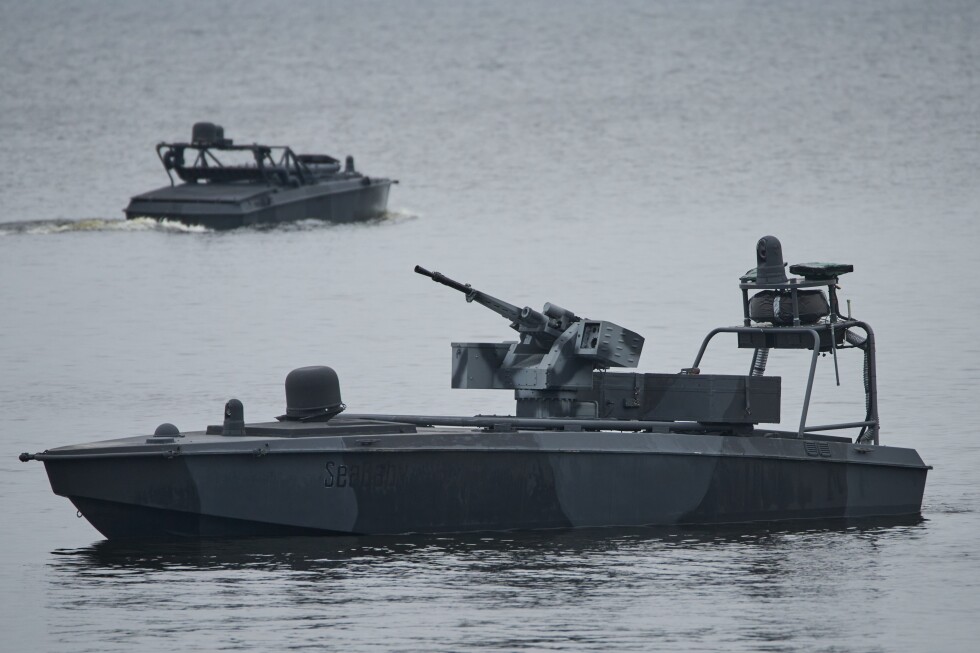
Since the start of Russia’s 2022 invasion, Ukraine has become a global hub for rapid military innovation, particularly in uncrewed drone technology. Kyiv’s Sea Baby naval drones have carried out repeated successful strikes against Russian military and commercial vessels in the Black Sea, disrupting Russia’s naval operations and energy shipping lanes. As Russia has adapted its defenses to block Black Sea attacks, forcing Kyiv to scale back operations in that region, Ukrainian military planners have begun pursuing more ambitious, long-range strikes from alternative locations, according to defense analysts.
The Libyan officials say the gradual deployment of Ukrainian forces to western Libya over recent months was arranged under a covert bilateral deal between Kyiv and the embattled Tripoli-based government of Prime Minister Abdul-Hamid Dbeibah. The agreement, they claim, has received formal backing from Western powers, including the United States. U.S. Africa affairs adviser Massad Boulos recently tabled a conflict resolution proposal for Libya that would retain Dbeibah as prime minister while appointing Saddam Hifter—son of powerful eastern military commander Khalifa Hifter—as head of the presidential council. Khalifa Hifter leads the Russia-backed self-styled Libyan National Army, which controls eastern and southern Libya, including the country’s largest oil fields.
Libya has remained deeply divided for more than a decade, split between the United Nations-backed Dbeibah administration in Tripoli and the rival, Russia-aligned administration in the east backed by Hifter’s forces. Dbeibah’s original government mandate expired in December 2021 after the country failed to hold long-promised first presidential elections, and he has resisted all attempts to replace him, warning a leadership transition could ignite full-scale civil war.
Jalel Harchaoui, a leading Libya expert at the Royal United Services Institute, said the reported presence of Ukrainian forces in western Libya aligns with longstanding NATO efforts to prevent Russia from expanding its influence in the strategically located North African nation. “It is entirely plausible that, with the knowledge and blessing of NATO powers — chiefly the United States but also the United Kingdom and Turkey — several small groups of Ukrainian operatives now maintain a presence in the greater Tripoli area,” Harchaoui noted.
Libya has been mired in ongoing political instability and conflict since a 2011 NATO-backed uprising ousted and killed longtime dictator Moammar Gadhafi. For years, the resource-rich nation has served as a key battleground for the geopolitical rivalry between Russia and the West. With borders connecting it to six North and Central African nations, and its position as a major transit route for migrants seeking to reach Europe, Libya’s stability has long been a core security concern for Western governments. This new reported deployment marks a sharp escalation of the Russia-Ukraine war’s spillover into a region already fractured by great power competition.