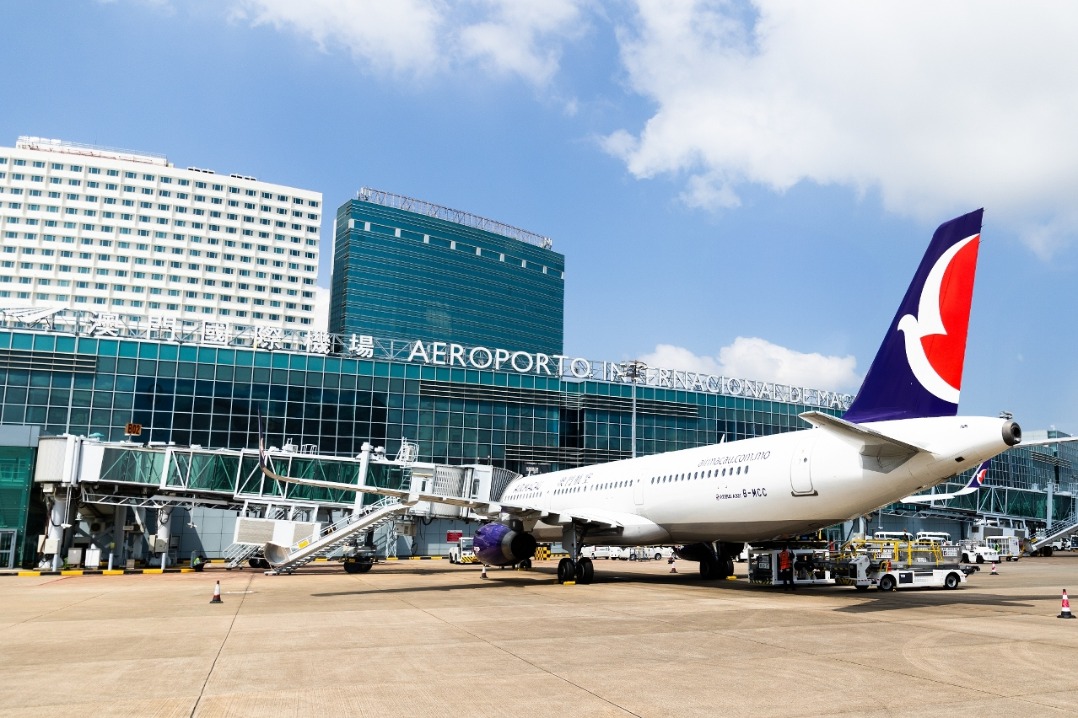
Macau International Airport (MIA) has announced solid performance gains for the first quarter of 2026, with double-digit growth in both passenger volumes and aircraft operations, driven largely by strong travel demand across Greater China. In an official press statement released Wednesday, the airport authority reported that total passenger throughput reached 2,117,427 between January and March, marking a roughly 15% increase compared to the same period last year. Aircraft takeoffs and landings, a key metric of airport operational activity, also climbed 10% year-on-year to hit 15,952 movements for the quarter. Breaking down passenger demographics, travelers from mainland China made up the largest single segment, accounting for 41% of all Q1 passengers, while visitors from Taiwan region represented 19% of total traffic. International travel continues its steady recovery as well: the airport recorded 224,000 international passenger arrivals and departures in the first two months of 2026, representing an 11% year-on-year uptick. The robust growth trend held steady during the recent back-to-back Easter and Qingming Festival holiday travel window, which ran from last Friday through Tuesday. Over the five-day holiday period, MIA handled 115,000 total passengers and 856 aircraft movements, representing year-on-year increases of 2.6% and 9.1% respectively. Looking ahead to the peak summer travel season, MIA says it is actively accelerating efforts to broaden its regional and international route network. Airport officials confirmed they are working closely with partner airline carriers to launch new scheduled services connecting Macau to additional destinations across mainland China and Northeast Asia, positioning the hub to capture further growth in travel demand in the coming months.
作者: admin
-
Trapped miner rescued from flooded Mexican tunnel after 14 days
A remarkable 14-day rescue mission ended in success this week, when Mexican army divers pulled a 42-year-old miner to safety after nearly two weeks trapped in a flooded, collapsed gold mine in the northern state of Sinaloa. The incident unfolded on March 25, when a tailings dam — the containment structure built to hold toxic mining waste — burst at the site, sending mud and water rushing through the underground tunnels. At the time of the collapse, 25 workers were operating deep below the surface. Twenty-one of those workers were able to evacuate to the surface immediately, but four were cut off and trapped 300 meters underground by the disaster.
In the days that followed, rescue teams launched a frantic search through the waterlogged tunnels. Five days after the collapse, one trapped miner, José Alejandro Cástulo, was pulled to safety, while a second was found deceased. It took rescuers a full 13 days of continuous, painstaking searching to locate the third trapped miner, Francisco Zapata Nájera. After more than 300 hours of navigating murky, debris-filled water, divers finally spotted the faint, repeated blinking of Zapata Nájera’s headlamp, which he had been switching on and off intentionally to signal his location to search teams.
Footage captured from the rescue mission shows Zapata Nájera standing in waist-deep water, visibly exhausted but unbroken in spirit. When divers reached his position and told him that his torchlight had been critical to finding him, he repeated again and again that he never lost faith that he would be saved. Even after locating him, however, the rescue team faced a new obstacle: the water level in the connecting tunnel was still too high for an immediate extraction. Divers left Zapata Nájera with emergency supplies including clean drinking water, canned tuna, and energy bars, and promised to return once they could lower the water enough to bring him out.
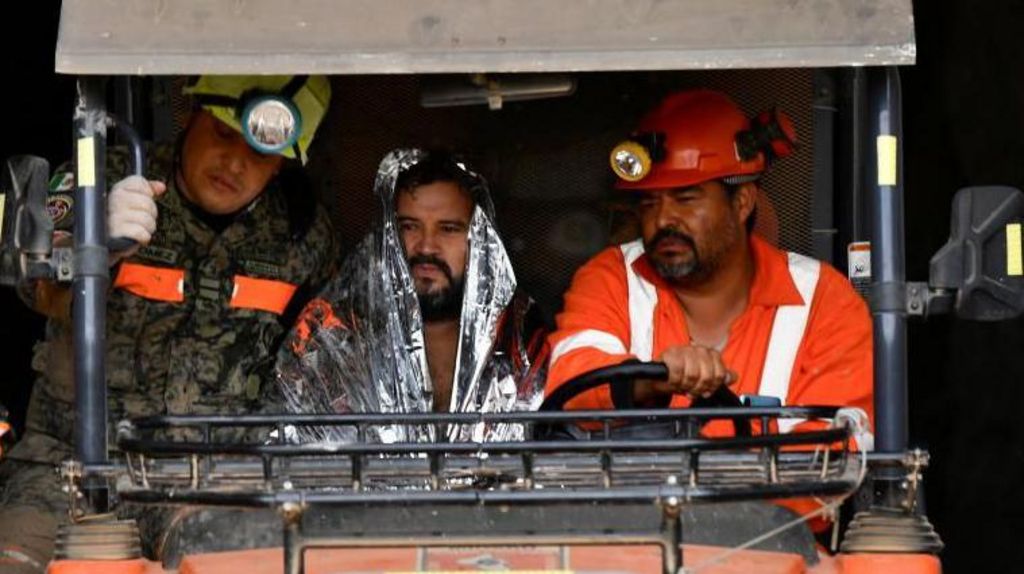
Over the next 20 hours, rescue teams operated heavy pumps to drain excess floodwater from the tunnel system. Early Wednesday, the water level dropped enough to allow extraction, and Zapata Nájera was finally brought to the surface. Wrapped in a thermal blanket to stabilize his body temperature and seated on an electric utility cart, he exited the mine entrance, and was immediately airlifted by helicopter to a local hospital for evaluation, where he was reunited with his waiting family. Doctors reported that while he is frail after his 14-day ordeal, his vital signs are stable and he is expected to make a full recovery with appropriate medical care.
The search is still ongoing for the fourth miner, who remains missing in the collapsed mine. Mexican President Claudia Sheinbaum issued a public statement praising both the relentless effort of the Mexican army rescue team and Zapata Nájera’s extraordinary resilience and unwavering hope, which she credited for making the “astounding rescue” possible.
-
Vietnam’s top leader To Lam to visit China from April 14 to 17
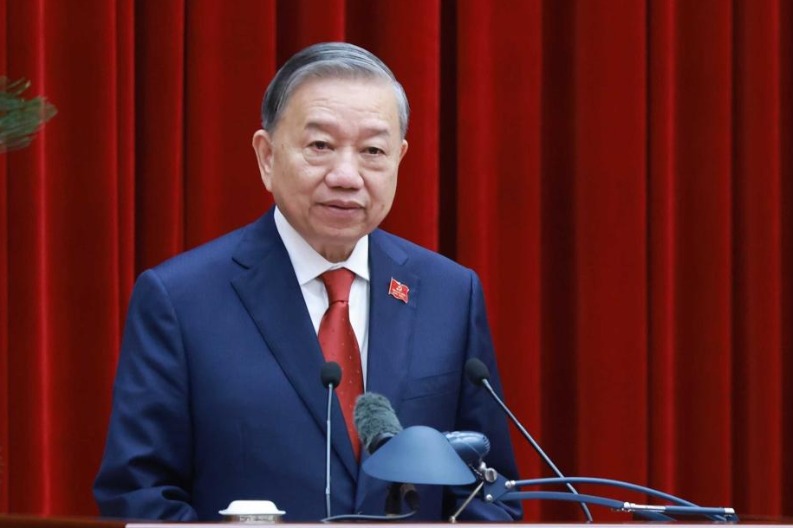
BEIJING – A high-profile diplomatic visit between two neighboring socialist nations is scheduled for mid-April, with Vietnam’s top leader General Secretary of the Communist Party of Vietnam Central Committee and Vietnamese President To Lam set to travel to China for an official state visit spanning April 14 to 17. The visit comes at the formal invitation of General Secretary of the Communist Party of China Central Committee and Chinese President Xi Jinping, according to an official announcement released Thursday by Hu Zhaoming, spokesperson for the International Department of the Communist Party of China Central Committee.
This upcoming visit marks a key milestone in the continuous development of bilateral relations between China and Vietnam, two major regional powers that share a long land border, deep historical and cultural ties, and expanding cooperation across trade, infrastructure, security, and people-to-people exchange. Diplomatic analysts note that high-level exchanges between the ruling parties and top leadership of both countries play a central role in guiding the direction of bilateral cooperation, addressing shared regional challenges, and managing any outstanding differences through constructive dialogue. As neighbors with integrated regional economies, the meeting between the two countries’ top leadership is widely expected to reinforce strategic communication, boost mutually beneficial collaboration, and contribute to greater stability and prosperity across the broader Southeast Asian region.
-
War in the Middle East: latest developments
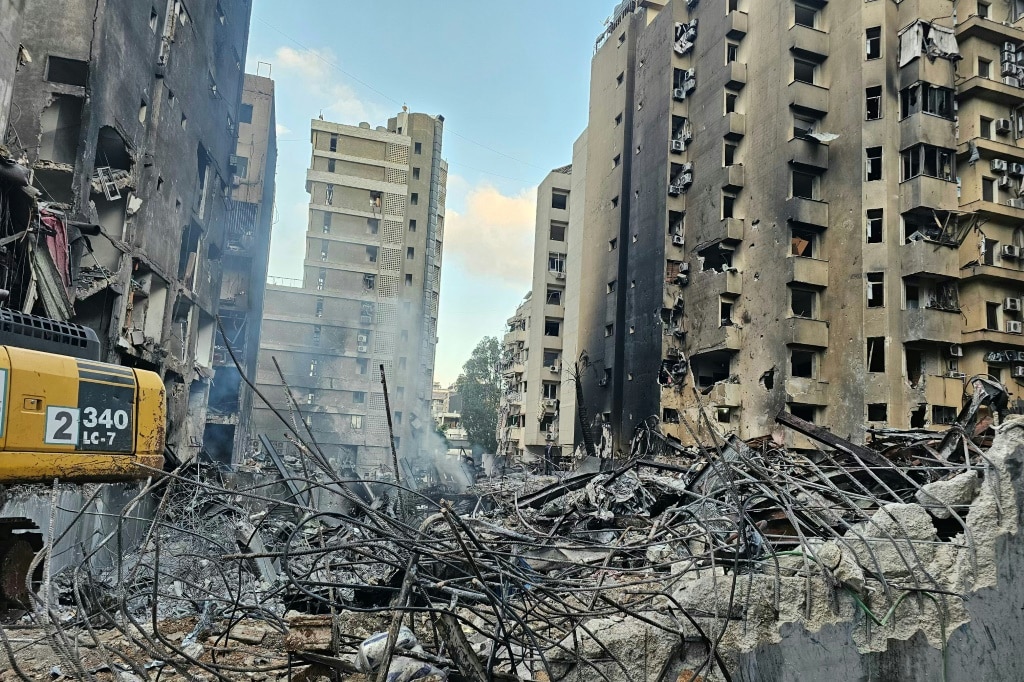
The fragile calm brokered by a US-Iran ceasefire in the Middle East shattered Wednesday when Israel launched its most devastating wave of airstrikes on neighboring Lebanon since Hezbollah joined the regional conflict in March, leaving more than 180 people dead and hundreds injured, and drawing widespread condemnation from world leaders and international aid organizations.
The death toll from the single day of attacks, which targeted areas across Lebanon including densely populated central Beirut, stands at 182 killed with 890 wounded, according to Lebanon’s health ministry. In response to the carnage, Lebanese Prime Minister Nawaf Salam designated Thursday a national day of mourning across the country.
Agnes Dhur, head of the International Committee of the Red Cross (ICRC) delegation in Lebanon, described the sudden, deadly assault as a catastrophic blow to a population already clinging to hope for a ceasefire. “People across Lebanon were holding their breath for a ceasefire agreement, but a wave of deadly strikes plunged the country into panic and chaos,” Dhur said, adding that the ICRC is outraged by the devastating death and destruction inflicted on densely populated civilian areas. United Nations High Commissioner for Human Rights Volker Turk echoed the condemnation, saying “The scale of the killing and destruction in Lebanon today is nothing short of horrific. Such carnage, within hours of agreeing to a ceasefire with Iran, defies belief.”
In the aftermath of the strikes, the Iran-backed militant group Hezbollah announced it had launched rocket attacks toward northern Israel, framing the action as a response to Israel’s violation of the US-brokered truce between Washington and Tehran. The group had previously asserted its right to retaliate for the deadly wave of bombardment.
Global powers have widely called for the existing ceasefire between the US and Iran to be extended to Lebanon to prevent further escalation. British Foreign Secretary Yvette Cooper told Sky News she was deeply troubled by the escalating Israeli attacks in Lebanon and strongly supports extending the ceasefire to the country. French Foreign Minister Jean-Noel Barrot condemned the ongoing strikes, noting they “undermine the temporary ceasefire reached yesterday between the United States and Iran” making them all the more unacceptable. French President Emmanuel Macron held phone talks with both US President Donald Trump and Iranian President Masoud Pezeshkian to push for Lebanon to be included in the truce. “I expressed my hope that the ceasefire will be fully respected by each of the belligerents, across all areas of confrontation, including in Lebanon,” Macron wrote on social media platform X.
China’s foreign ministry spokesperson emphasized that “Lebanon’s sovereignty and security should not be violated. The safety of civilian lives and property must be guaranteed,” and called for urgent de-escalation across the region. Iranian President Masoud Pezeshkian has already listed a halt to Israeli strikes on Lebanon as one of the core conditions of Iran’s 10-point plan to end the broader regional war, according to Iranian state media.
Despite the regional escalation triggered by the Lebanese strikes, many residents of Iran’s capital have welcomed the ceasefire with the US, breathing a collective sigh of relief after weeks of cross-border bombardment. While some residents expressed fear the truce would ultimately collapse, others celebrated what they framed as a victory for their country. “Everyone is at ease now, we are more relaxed,” 50-year-old Tehran housewife Sakineh Mohammadi told Agence France-Presse, adding she was proud of her country’s actions.
In other regional developments, Spanish Foreign Minister Jose Manuel Albares announced that Spain will reopen its embassy in Iran, a mission that was shuttered in March following the outbreak of the latest war. Iran also announced that it is rerouting commercial shipping through an alternative route in the Strait of Hormuz, a critical global energy chokepoint, citing risks of sea mines in the main shipping lane. The Iranian government released official navigation instructions for the new entry and exit corridor through the strait.
A new round of direct talks between US and Iranian officials is set to open Saturday in Islamabad, with US Vice President JD Vance leading the American delegation. Vance will be joined by White House special envoy Steve Witkoff and Jared Kushner, former President Trump’s son-in-law. Speaking to reporters during a stop in Hungary, Vance urged Iran not to allow the truce to collapse over the conflict in Lebanon, noting that a halt to Israeli military operations in Lebanon was never included in the original ceasefire agreement reached earlier this week.
-

Unique AI model tracks global carbon emissions
A groundbreaking, one-of-a-kind artificial intelligence model developed to map and track carbon emissions across global production chains, consumption patterns, and natural carbon sinks has been unveiled by a team of Chinese researchers, a development that experts say could reshape dynamics in international climate negotiations and rewrite how global emissions accountability is calculated.
The innovative large language model was publicly launched on Wednesday by the Shanghai Advanced Research Institute (SARI) under the Chinese Academy of Sciences, rolling out at a pivotal moment when China works to support domestic enterprises in hitting ambitious carbon reduction targets while cementing its position as a technical leader in global climate governance frameworks.
Built as a large language model trained on petabytes of structured and unstructured environmental data, the system boasts 32 billion parameters — the core AI building blocks that act like neural synapses, enabling the tool to detect complex emission patterns and generate accurate, data-backed predictions. To handle the multifaceted nature of global carbon tracking, the model integrates five specialized artificial intelligence sub-programs, called intelligent agents, each tailored to a distinct critical task.
These specialized agents cover a wide range of use cases: digital simulation to identify the most energy-efficient operational configurations for industrial factories, cross-border carbon transfer tracking that maps how embodied carbon moves between countries through global trade, full life cycle assessment that calculates a product’s total environmental footprint from raw material extraction through end-of-life disposal. The system also includes a natural carbon source accounting agent to quantify carbon sequestration from ecosystems like forests, and an uncertainty analysis agent to validate the reliability and consistency of all output data.
Gao Yunhu, a lead researcher at SARI, described the AI as a specialized “carbon accounting butler” that outperforms legacy carbon tracking methods by a wide margin. Traditional carbon accounting workflows are notoriously slow, labor-intensive, and costly for businesses, but the new model enables real-time simulation of production processes to help companies identify the most cost-effective pathways to cutting emissions.
Zhang Xian, director of the Division of Global Environment at the Administrative Center for China’s Agenda 21, echoed this assessment, noting that conventional accounting methods not only drain time and resources but also make it nearly impossible for enterprises to measure emissions accurately across every stage of a product’s supply chain. Unlike these outdated approaches, the new AI tool can conduct a full life cycle assessment starting from the extraction of raw materials, turning what was once a costly regulatory burden into a competitive advantage for businesses by enabling targeted deployment of emission-cutting technologies.
Lai Xiaoming, chairman of the Shanghai Environment and Energy Exchange, explained that by standardizing emissions quantification across entire industrial and supply chains, the model improves market monitoring, emissions quota verification, and climate policy impact assessment. It also provides robust, reliable technical infrastructure to support global green trade and transparent carbon pricing systems, he added.
The launch comes at a particularly critical juncture for Chinese exporters, who now face new carbon-based import taxes under the European Union’s Carbon Border Adjustment Mechanism (CBAM), which imposes a price on carbon embedded in carbon-intensive goods including steel and cement entering the EU bloc.
Mi Zhifu, a professor of climate change economics at University College London, pointed out that the EU currently relies on standardized “default values” to estimate emissions when an importing company cannot provide independently verified emissions data. For many Chinese products, most notably steel, these default values are often significantly higher than the actual emissions generated during production, incorrectly painting Chinese goods as more carbon-intensive than they truly are and exposing exporters to unnecessary extra taxes. By generating independently verifiable, granular emissions data, the new AI model helps Chinese firms avoid these inflated tax assessments, especially in key CBAM-regulated sectors including steel, cement, hydrogen, electricity, and fertilizers.
One of the model’s most distinctive contributions to global climate accounting is its core focus on consumption-based emissions accounting, a departure from the territorial-based standards that dominate current international frameworks. Under current common standards, emissions are attributed entirely to the country where production takes place. The SARI model, by contrast, tracks “embedded carbon” — the total carbon footprint hidden within finished products traded across borders — to recognize that consuming countries share equal responsibility for the emissions generated during production.
As an example, Wei Wei, vice-president at SARI, cited China’s exports of renewable energy technology. In 2024, the manufacturing of Chinese-made wind turbines and solar panels generated approximately 2 million metric tons of carbon emissions. Over the operational lifespan of these products, however, they will help countries around the world cut more than 350 million metric tons of carbon emissions, a net climate benefit that is not reflected in traditional territorial accounting.
Traditional accounting frameworks attribute all emissions from manufacturing for export to China, which obscures the emissions responsibility of developed countries that consume these traded goods, Zhang noted. By quantifying these unrecognized “carbon leaks” embedded in global trade, Chinese climate officials and researchers believe the model provides a more scientifically sound foundation for future international climate negotiations, enabling more equitable allocation of global emissions reduction responsibilities.
-
Conflict sparks energy worries for households
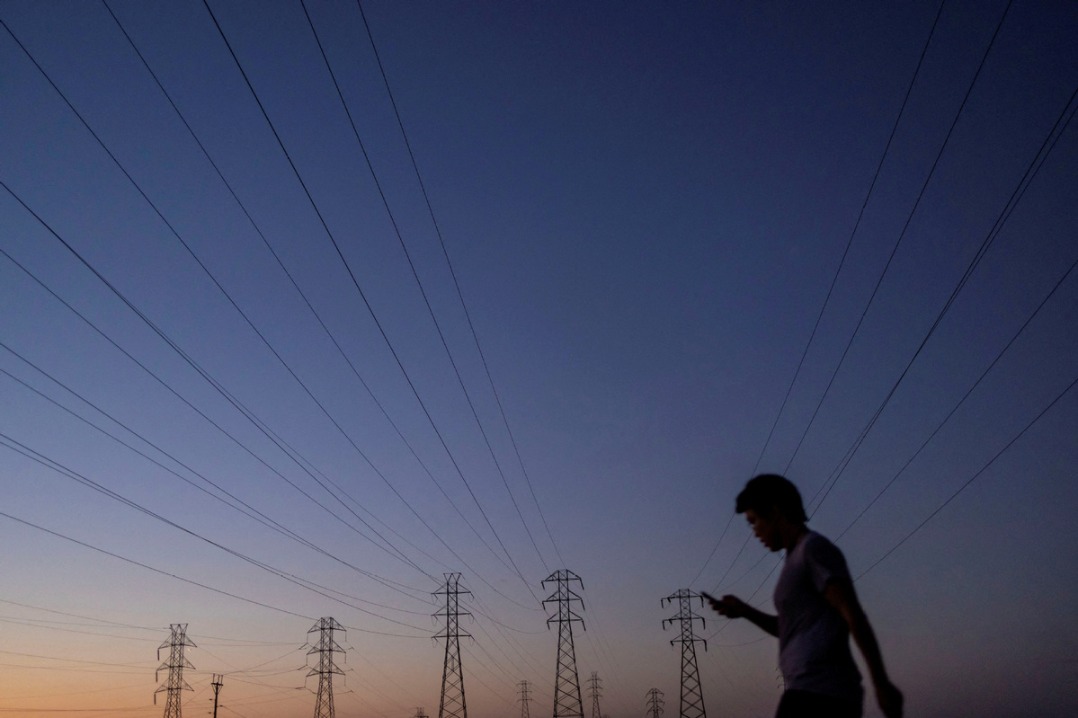
Across the United States, millions of ordinary households are facing a growing financial squeeze as energy costs surge, fueled in large part by ongoing geopolitical conflict between the United States and Iran that has disrupted global oil markets. For Houston handyman Robert, this crisis is not an abstract economic trend — it is a daily reality reshaping every part of his budget.
In late March, Robert joined thousands of local residents in receiving an official notice from Houston Public Works: starting April 1, water and wastewater service rates would climb by 7.87%. City officials framed the increase as unavoidable, noting that it would cover rising operational, repair, and maintenance costs, service outstanding municipal debt, and fund infrastructure expansion to accommodate the region’s growing population. Local data analysis bears out the steady upward trajectory of utility costs: the average monthly water bill for a single-family home using 4,000 gallons of water has jumped 66% since 2021, climbing from $75 five years ago to $125 in 2026.
For Robert, the water rate hike was just the latest blow. He already fears that electricity costs will follow the same upward path, as the Iran conflict has pushed global Brent crude prices to roughly $110 per barrel. His anxiety is well-founded: Houston electricity rates have already climbed 4% year-over-year this April, while nationwide, the average increase sits at 9.5%, according to data from energy shopping platform Choose Energy. This matches a years-long trend of soaring energy costs across the country: between 2020 and 2025, Houston saw electricity rates rise 30 to 40%, mirroring the national 38% jump over the same period.
Industry analysts point to a mix of factors driving the sustained increases, including volatile global energy commodity prices, mandatory infrastructure upgrades, more frequent extreme weather events tied to climate change, strict new environmental regulatory mandates, and the rapid expansion of energy-intensive data center facilities across the country. For millions of American households, these hikes have pushed energy affordability from a minor inconvenience to a major crisis.
The most recent available data from the U.S. Energy Information Administration underscores the scale of the problem: the share of U.S. households experiencing energy insecurity — defined as the inability to consistently pay for basic energy needs — rose from 27% in 2020 to 33% by 2024. Analysis from the American Council for an Energy-Efficient Economy adds that one in four households spent more than 15% of their total annual income on energy bills in 2024, with many of these households reporting that they have cut back on or entirely forgone essential spending on food and prescription medication to cover their energy costs. Last year alone, national energy rates rose 7.1%, a jump that has only worsened access barriers for low-income and vulnerable families.
The Iran conflict has rippled beyond electricity and water bills, driving a sharp increase in retail gasoline prices that has further strained household budgets. In the first week of April 2026, the national average price for regular unleaded gasoline hit $4.12 per gallon — a 26% increase since armed conflict between the U.S. and Iran began. The spillover effects of higher energy costs are already slowing local economic activity, Robert says: he has seen a drop in service requests from customers, many of whom complain his rates are too high even though he has not raised his own prices in two years. As households across the country cut discretionary spending to cover essential utility and fuel costs, Robert has been forced to adjust his own habits to save money: where he once used convenient local gas stations to save time, he now only refuels at discount warehouse chain Costco, and he has put his plan to buy a new car on indefinite hold to save cash for future price increases.
Like 90% of U.S. adults surveyed in recent polling, Robert says he wants to see the Iran conflict end as soon as possible, but he holds little optimism for a quick resolution. He cites inconsistent policy messaging from the Trump administration, noting that frequent shifts in the government’s position have left ordinary Americans with no clear sense of what to expect next. “If the war drags on, high inflation is going to be inevitable, because this conflict is upending the whole global oil market, and almost everything we do depends on energy,” he explained.
Research from the Brookings Institution confirms that sustained high gas prices take a measurable toll on public well-being beyond just household budgets. A 2009 study conducted after the 2008 global financial crisis found that rising gas prices caused a drop in self-reported happiness among U.S. citizens equivalent to the impact of a $530 monthly cut in income — a far larger effect than the direct increase in household gasoline spending alone. The study noted that even affluent households reported lower well-being when gas prices crossed the $4 per gallon threshold, as the increase was seen as a warning sign of broader economic instability, while low-income households faced immediate financial hardship from the price hikes.
In recent weeks, U.S. social media users have shared widespread frustration over rising fuel costs, but the complaints have not drawn sympathy from observers in other developed nations. Many international social media users have pointed out that U.S. gas prices remain far lower than those in other wealthy countries: as of April 2026, the average price of gas exceeds $9 per gallon in the United Kingdom and $8 per gallon in France. Critics also argue that U.S. policy decisions tied to the Iran conflict are the root cause of global energy price spikes, meaning American consumers’ current struggles are contributing to higher costs for households across the developed world.
-

Best-selling The Housemaid author Freida McFadden reveals true identity
One of the publishing world’s most talked-about open secrets has finally been laid to rest: globally adored psychological thriller writer Freida McFadden has stepped forward to reveal her real name is Sara Cohen, ending years of public speculation about her private identity.
For years, McFadden never hid that her famous pen name was a pseudonym, nor that she balanced a writing career with work as a full-time medical doctor. But she had guarded her birth name closely, turning away repeated requests to unmask her public persona to protect both her professional work and personal privacy.
In an exclusive interview with USA Today, Cohen explained she had reached a point in her career where keeping her identity secret no longer made sense. “I’m tired of this being a secret,” she said. “I’m tired of people debating if I’m a real person or if I’m three men. I am a real person and I have a real identity and I don’t have anything to hide.”
Cohen’s rise to literary stardom has been one of the most remarkable success stories of modern publishing. In 2025 alone, she claimed the title of the second highest-selling author in the United Kingdom, moving 2.6 million copies, and sold an additional 6 million print books in her native United States. Only beloved children’s author Julia Donaldson, creator of *The Gruffalo*, outranked her in UK sales that year.
Her commercial breakthrough came with the 2022 psychological thriller *The Housemaid*, a viral hit that spawned multiple sequels and was adapted into a major motion picture in 2024 starring A-list actors Sydney Sweeney and Amanda Seyfried. To date, the prolific author has published 29 novels, and three of her titles — *The Housemaid*, *Want to Know a Secret?*, and *Dear Debbie* — have already topped bestseller charts in 2026.
The origin of her pen name traces back to her early medical career, when she first self-published her debut book, *The Devil Wears Scrubs*, a fictionalized account of her experience as a medical resident, in 2013. The name “Freida” comes from a longstanding inside medical reference: the Fellowship and Residency Electronic Interactive Database, a common training registry used by hospitals across the United States, universally shortened to FREIDA.
For more than a decade, Cohen maintained strict separation between her two lives, working full-time as a brain disorder specialist in Boston, Massachusetts while writing thrillers in her spare time. She told *The New York Times* in 2024 that she chose to keep her identities separate out of professional concern: she worried her patients would feel uncomfortable being treated by a best-selling crime writer, and feared they would assume plot points in her medically themed stories were based on her actual patients, a misperception she saw as unethical.
Beyond professional boundaries, Cohen also cited social anxiety and a preference for privacy as core reasons for staying anonymous. “I don’t like to be the centre of attention,” she told *The Washington Post* that same year. “I love that people are reading my books, but the spotlight on me specifically is hard. It’s not just about privacy but also about social anxiety. I had this fear that I may not be that amazing person that everyone expects you to be.”
That dynamic shifted in 2023, when Cohen’s massive book sales allowed her to cut back to part-time medical work. She has since scaled back her clinical hours even further, now only working one or two shifts per month, creating the space for her to step forward publicly. “My whole goal was to keep it a secret until I was ready to step back from my doctor job, so it wouldn’t be like everyone I work with suddenly knew and it compromised my ability to do my job,” she explained to USA Today. “But I have stepped away from my job. I just realised I was completely overwhelmed from trying to do both.”
The push to reveal her identity also came after her cover was accidentally blown by a colleague earlier this year. She told *The New York Times* in January 2026: “One of my colleagues at the hospital recently recognised me in a Freida photo, and told everyone, so the cat is out of the bag. But they’ve been really respectful about not posting anything about me on social media, and I tried to repay them with a book signing at work.”
Addressing one more lingering fan rumor, Cohen clarified that the wig she has worn during all public appearances as Freida McFadden is not an attempt to further hide her identity — it is simply because she has no idea how to style her own hair.
Even as she reveals her real name, Cohen says she expects her loyal fanbase, who call themselves “McFans” and “Freida Readahs,” to continue connecting with her work under the pen name they know and love. “Even though I haven’t told my real name until now, I feel like I have shared the real me all along and everything I’ve told them has been the truth,” she said. “Even though the name will be a surprise, nothing else will. I’ve always been genuine with my readers.”
-
Asian airlines trim flights as fuel supplies tighten
The ongoing Middle East conflict, centered on tensions that led to the temporary closure of the Strait of Hormuz, has triggered an unprecedented jet fuel supply crunch across Asia, forcing regional carriers to slash flight schedules, adopt costly fuel-carrying workarounds, and raise ticket prices to weather the unfolding crisis.
According to trade data platform Kpler, Iran’s closure of the strategic Strait of Hormuz — a chokepoint through which roughly 20% of the world’s seaborne jet fuel transits daily — removed nearly one-fifth of global seaborne jet fuel supply from the market. While Iran, the United States, and Israel announced a tentative two-week ceasefire on Wednesday, uncertainties about the durability of the truce and the reopening of the strait persist. Iran has maintained it will assert full control over waterway access, impose transit fees on passing vessels, and continue its uranium enrichment program, leaving global energy markets on edge.
Unlike past oil market shocks that primarily drove up commodity prices, this crisis has created both pricing spikes and acute physical supply shortages, pushing governments, airport operators and airlines to contingency planning that includes fuel rationing. Aviation industry analysts note that Asia is far more vulnerable to the supply squeeze than other regions due to its thinner strategic fuel reserves and heavier reliance on energy exports that pass through the Strait of Hormuz. Within Asia, lower-income nations that depend almost entirely on jet fuel imports, such as Vietnam, Myanmar, and Pakistan, have seen the worst disruptions so far.
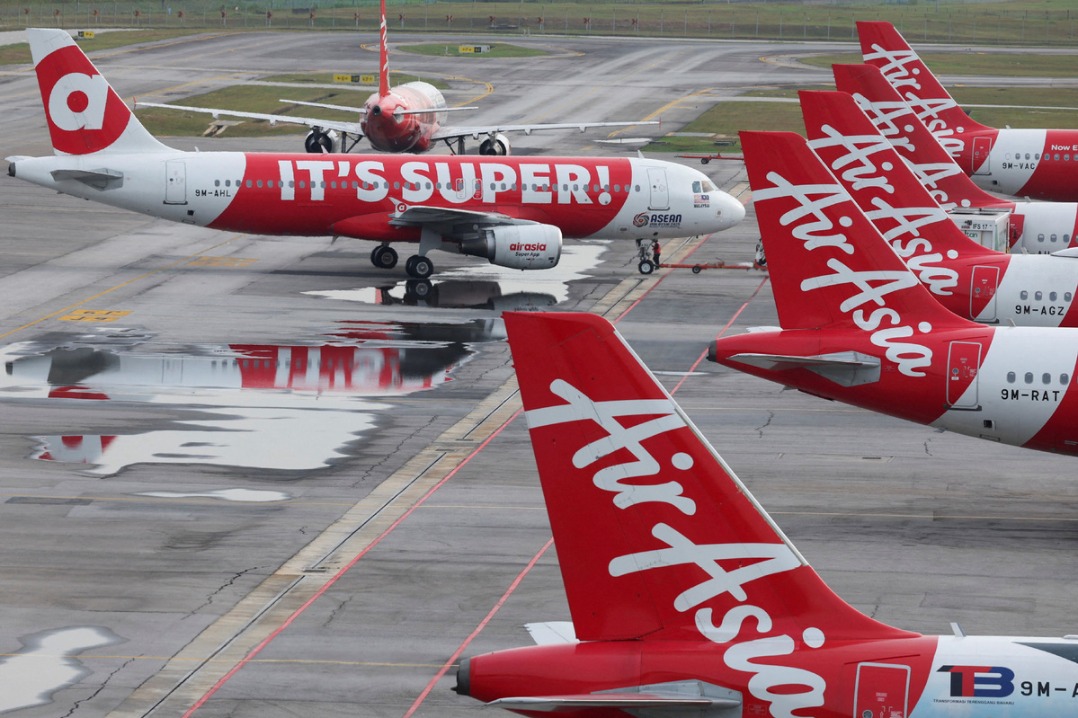
Carriers have already deployed a range of emergency measures to manage limited fuel access. One of the most common workarounds is “tankering” — the practice of loading up on extra fuel at an airline’s home airport before flying to destinations with restricted fuel supplies. AirAsia X CEO Bo Lingam confirmed that the long-haul budget carrier now carries extra fuel from Malaysia for all flights to Vietnamese airports, as local fuel providers cap the volume they sell to foreign carriers. Air India has also added a mandatory refueling stop in Kolkata on its Yangon-to-Delhi route, due to persistent fuel shortages at Myanmar’s main Yangon International Airport. While tankering resolves supply uncertainty, it is an expensive solution: carrying extra weight increases the jet fuel an aircraft burns in flight, eroding carrier profit margins.
For prolonged shortages, deep capacity cuts have become the go-to response for many airlines. Vietnam’s national aviation authority confirmed that Vietnam Airlines has cut 23 domestic flights every week to conserve limited fuel stocks. Myanmar’s transport ministry reported that local carriers suspended multiple domestic services for much of March amid total fuel shortfalls, and aviation data provider Cirium shows several Myanmar airlines have continued trimming capacity through April. Batik Air Malaysia, one of the region’s largest budget carriers, has gone even further, slashing 36% of its domestic capacity to mitigate risk. CEO Chandran Rama Muthy framed the cuts as a necessary proactive step, noting that continuing full operations would expose the airline to unacceptable operational and financial volatility amid the “crisis-mode” market environment.
Industry insiders warn that the uncertainty stretching far beyond the current two-week ceasefire is adding to already crippling pressure on an industry that has not fully recovered from post-pandemic demand shifts. “In my conversations with airlines, they are very concerned about what the future looks like, because we do not know when the war will end and we don’t know when the supply chain, the feedstock, will come from the Gulf area,” said Shukor Yusof, founder of Malaysia-based aviation consultancy Endau Analytics.
Brendan Sobie, an independent aviation analyst based in Singapore, explained that fuel access restrictions have a cascading effect across the region. “Some countries are in better shape than others. Some may be limiting (fuel for) foreign airlines, which then leads to tankering. This could be proactive as some countries fear they could run out,” he said.
European carriers are now bracing for similar disruptions, as the supply crunch spreads beyond Asian markets. Since the conflict began, jet fuel prices have more than doubled, prompting airlines that have not cut capacity to raise ticket fares and add new fuel surcharges to pass higher costs on to consumers. While the ceasefire has offered a brief reprieve for markets, the unresolved standoff over the Strait of Hormuz means widespread volatility in jet fuel supply and pricing is likely to continue for the foreseeable future.
-
Trump slams NATO again for being unhelpful for US
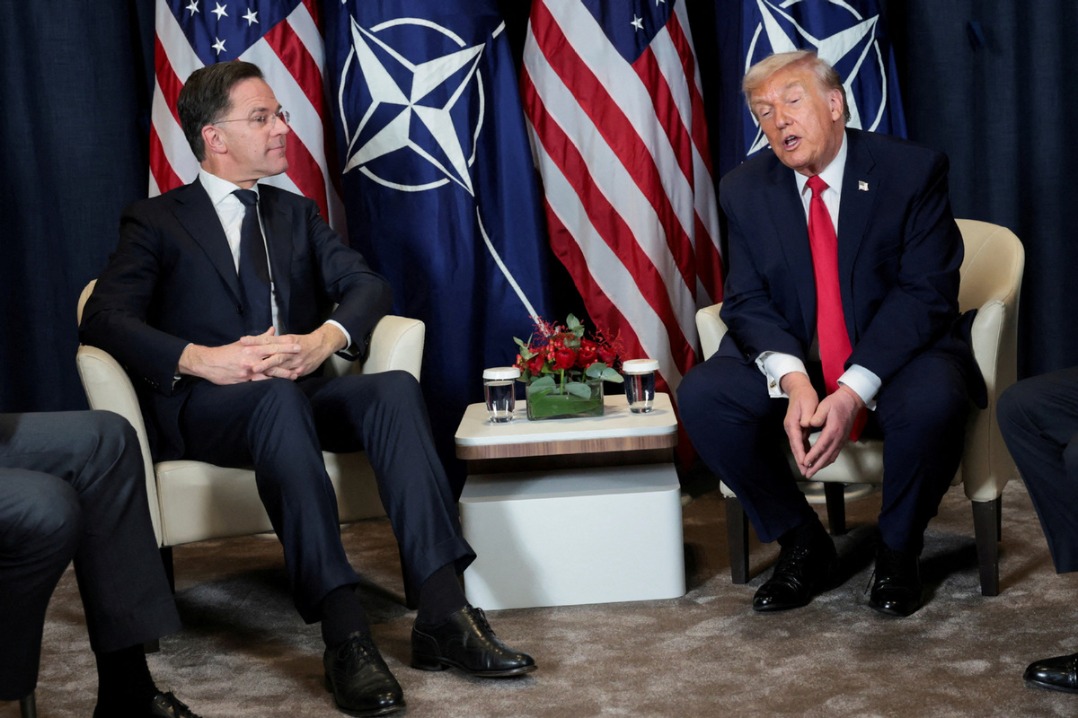
Tensions between the United States and its transatlantic NATO allies have reached a new boiling point, after U.S. President Donald Trump launched another sharp public rebuke of the alliance on Wednesday, accusing member states of failing to come to Washington’s aid during the ongoing conflict with Iran. The attack came the same day NATO Secretary General Mark Rutte arrived in Washington on a high-stakes trip designed to mend fraying ties between the two sides that have deteriorated sharply during Trump’s second term in office.
Trump’s criticism came after closed-door talks with Rutte at the White House, which the NATO chief later described as unflinchingly candid. In a post on his Truth Social platform following the meeting, Trump doubled down on his grievances, claiming “NATO wasn’t there when we needed them, and they won’t be there if we need them again.” He also invoked an earlier point of contention with European allies, referencing Greenland as “that big, poorly run, piece of ice” — a nod to his previous push for the U.S. to acquire the autonomous Danish territory, which drew widespread backlash across Europe.
Rutte acknowledged the depth of U.S. frustration in comments to CNN, confirming that “Trump is clearly disappointed with many NATO allies” and reiterating that the conversation had been “very frank, very open.”
The current rift stems directly from the outbreak of the Iran war earlier this year. After Trump called on NATO allies to join U.S. operations to reopen the Strait of Hormuz, which has been closed during the conflict, the alliance rejected the request. The anger deepened when several European nations, including Spain and Italy, refused U.S. requests to use their national airspace for military operations tied to the Iran campaign, a decision that left Trump publicly enraged.
Over the past month, Trump has stepped up his repeated attacks on NATO, repeatedly slamming the alliance for its lack of support for the U.S. war effort and issuing open threats to withdraw the U.S. from the decades-long collective defense treaty. This latest public criticism signals that even direct diplomatic outreach from the new NATO leadership has failed to ease the standoff. Longstanding tensions over defense spending, trade policy, and Trump’s unilateral approach to foreign policy have already strained transatlantic ties, and the combination of the Iran war and the Greenland dispute has widened the split to its widest point in decades.
Citing unnamed senior U.S. officials, The Wall Street Journal reported on Wednesday that the Trump administration is actively drafting a punitive plan to retaliate against NATO allies that have refused to back the 39-day U.S.-Israeli campaign against Iran. According to the report, the proposal has been circulating among senior administration officials for weeks and has gained tangible support from top Trump advisers.
Under the draft plan, the U.S. Department of Defense would reposition American troops currently stationed across NATO member states that Washington deems unhelpful, relocating these forces to European nations that have shown clear support for the U.S. position in the Iran war. The proposal also includes the potential permanent closure of at least one major U.S. military base in Europe, with Spain and Germany named as the most likely candidates for base closures. The Journal reported that nations widely viewed as supportive of the U.S. campaign — including Poland, Romania, Lithuania and Greece — would receive the relocated U.S. forces under the plan.
-
White House’s tough rhetoric puts US people on edge
On the eve of a self-imposed deadline that brought the United States and Iran to the brink of open conflict, a last-minute 14-day ceasefire brokered by Pakistani Prime Minister Shehbaz Sharif has averted immediate escalation, but widespread anger and anxiety over US President Donald Trump’s incendiary rhetoric continues to ripple across the US and the international community.
Trump announced the breakthrough on his social media platform Tuesday, just hours after he issued a shocking warning that “a whole civilization will die tonight” if Iran refused to reopen the strategically critical Strait of Hormuz and meet his demands for a new agreement. Under the terms of the deal, Iran confirmed it will enter two weeks of negotiations with US negotiators in the Pakistani capital of Islamabad, with formal talks set to kick off this Friday.
The 11th-hour U-turn capped a day of soaring tension that left ordinary American citizens, sitting lawmakers, and United Nations officials reeling from the president’s unprecedentedly harsh language. Just one day earlier, Trump had already threatened to annihilate all of Iran’s civilian infrastructure, promising to destroy “every bridge” and power plant across the country if his deadline was not met. Tuesday morning, he doubled down on the threat with the apocalyptic warning that an entire civilization would be erased if no deal was reached.
That aggressive rhetoric left many US residents deeply shaken. In New York City, 54-year-old Adam Turner told reporters he was reduced to tears by the persistent stress of Trump’s confrontational approach to Iran, a policy that reversed the 2015 nuclear deal struck under former president Barack Obama that Turner described as effective. “It is without respect. It is without intelligence, without dignity. And the fact that we are represented by that is a crime,” Turner said. “It makes me sad because I don’t think the Iranian people deserve it. He got rid of Obama’s Iran deal. We had a deal in place that was effective.”
Criticism of the president’s threats extended far beyond liberal opponents of Trump. Even Marjorie Taylor Greene, a long-time loyal ally of the president from his own Republican Party, condemned the rhetoric in a post on X, writing: “We cannot kill an entire civilization. This is evil and madness.”
Top Democratic leaders went further, calling on congressional Republicans to break with the president and intervene to stop the drift toward war. House Minority Leader Hakeem Jeffries, a Democrat representing New York, urged GOP lawmakers to put national interest above partisan loyalty. “Congress must immediately end this reckless war of choice in Iran before Donald Trump plunges us into World War III,” Jeffries wrote on X. “It’s time for every single Republican to put patriotic duty over party and stop the madness. Enough.”
A 66-year-old Manhattan resident, Lewis Fox, echoed that frustration, arguing that Trump’s bellicose language has redefined the US’s global role from a global protector to a global bully. “I think he doesn’t have a clue what he’s doing. He has converted the United States into the bully of the world versus the savior of the world. And therefore, he definitely shouldn’t be talking like that,” Fox said.
The United Nations also joined the chorus of concern, with a spokesperson for Secretary-General António Guterres saying the UN chief was “deeply troubled” by statements that put civilian lives at risk of catastrophic harm from military action.
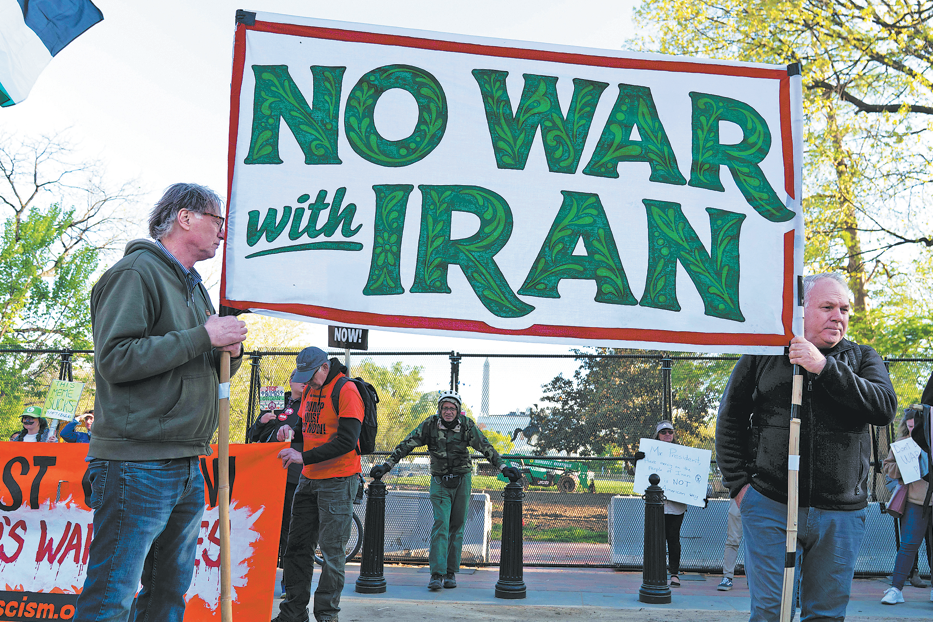
Protests also sprung up near the White House this week, with demonstrators gathering in Lafayette Square to condemn joint US-Israeli strikes on Iran and push for de-escalation. While the ceasefire has pulled the region back from the immediate brink of all-out war, the crisis triggered by Trump’s rhetoric has left deep divisions in the US and renewed global worries over the stability of the Middle East.