作者: admin

  • NPC deputy calls for development of ‘AI plus manufacturing’

    NPC deputy calls for development of ‘AI plus manufacturing’

    Zhang Fan, Vice-General Manager of China Electrical Equipment Group and National People’s Congress deputy, has positioned artificial intelligence integration with manufacturing as a national priority requiring comprehensive strategic planning. The prominent industry leader argues that China’s manufacturing sector must embrace AI technologies to achieve transformative innovation and maintain global competitiveness.

    During recent parliamentary sessions, Zhang emphasized that ‘AI plus manufacturing’ represents the future of industrial development, necessitating strengthened top-level design and clear industry guidelines. His advocacy builds upon previous policy recommendations submitted last year, which called for deeper integration between artificial intelligence and manufacturing processes to drive high-quality development.

    Zhang’s proposals have gained significant traction within China’s policy-making circles, receiving substantial attention from relevant government departments. His position combines practical industry experience with legislative influence, as demonstrated during his January 2026 inspection of China Electrical Equipment Group’s research facilities in Shanghai, where he assessed technological readiness for AI implementation.

    The manufacturing expert’s recommendations align with China’s broader technological ambitions, suggesting that systematic AI adoption could revolutionize production efficiency, product quality, and innovation capabilities across traditional manufacturing sectors. This approach mirrors global trends where advanced economies are increasingly leveraging AI to maintain industrial leadership.

    Zhang’s dual role as both industry executive and elected representative provides unique insights into the practical challenges and opportunities presented by AI integration, making his policy recommendations particularly valuable for China’s ongoing technological modernization efforts.

  • Qingdao Lantern Festival event draws crowds with folk crafts, trade fair

    Qingdao Lantern Festival event draws crowds with folk crafts, trade fair

    The coastal city of Qingdao in Shandong province witnessed a magnificent convergence of cultural heritage and economic activity during its recently concluded Lantern Festival celebrations. Held over the weekend as part of the national “Our Festival” initiative for 2026, the event successfully extended the festive atmosphere of the lunar new year period while showcasing regional traditions.

    Thousands of residents and visitors flocked to the festival grounds where they experienced an immersive cultural journey through various attractions. The celebration featured vibrant public performances that demonstrated traditional artistic expressions alongside extensive exhibitions of intangible cultural heritage handicrafts. Artisans displayed their mastery of time-honored techniques, offering attendees firsthand insight into China’s rich artisanal legacy.

    A significant commercial dimension complemented the cultural offerings through a specially organized Chinese New Year-themed trade fair. This marketplace created economic opportunities for local businesses and craftspeople while providing visitors with unique shopping experiences. The strategic integration of commerce with cultural preservation demonstrated how traditional festivals can serve dual purposes in contemporary society.

    The event particularly emphasized Qingdao’s distinctive century-old folk customs, blending universal Lunar New Year traditions with local characteristics. This careful curation resulted in a warm and lively atmosphere that captured the essence of the Year of the Horse celebrations. Organizers successfully created an environment where cultural education, entertainment, and economic activity coexisted harmoniously.

    Photographic documentation from the event shows enthusiastic participants engaging with various aspects of the festival, from admiring intricate lantern displays to purchasing handmade crafts. The successful execution of this large-scale public celebration highlights Qingdao’s ongoing commitment to preserving cultural traditions while adapting them to modern contexts.

  • India’s top court angry after junior judge cites fake AI-generated orders

    India’s top court angry after junior judge cites fake AI-generated orders

    India’s judicial system faces a critical test of technological integration as the Supreme Court intervenes in a landmark case involving artificial intelligence-generated legal judgments. The controversy emerged when a junior civil judge in Vijaywada, Andhra Pradesh, utilized AI to produce four fabricated legal citations during a property dispute ruling in August last year.

    The Supreme Court has characterized this incident as a matter of ‘institutional concern’ that directly impacts ‘the integrity of adjudicatory process.’ In a stern response, the court stayed the lower court’s ruling and differentiated between human error and technological misconduct, stating that reliance on AI-generated falsehoods constitutes more than mere mistake—it represents professional misconduct.

    The case reached India’s highest judicial authority after defendants successfully demonstrated that the referenced legal precedents were entirely fictitious. Although the Andhra Pradesh High Court had previously acknowledged the AI-generated nature of the citations, it upheld the original decision, accepting the judge’s claim that she acted in ‘good faith’ during her first experience with AI tools.

    This incident reflects a global pattern of judicial systems struggling with AI integration. Recent months have witnessed similar controversies in United States federal courts and England’s High Court, where lawyers presented fabricated AI-generated case materials. The international legal community increasingly recognizes that generative AI systems frequently ‘hallucinate’—creating convincing but entirely fictional legal references and sources.

    India’s Supreme Court has responded by issuing notices to the country’s Attorney General, Solicitor General, and the Bar Council of India, signaling potential regulatory developments. This action follows the court’s recent publication of a white paper on AI in judiciary, which emphasized the necessity of maintaining human oversight and institutional safeguards despite technological adoption.

    The case represents a pivotal moment in legal technology regulation, balancing efficiency gains against fundamental requirements for judicial accuracy and integrity.

  • Why Europe’s leaders have struggled to speak as one on Iran

    Why Europe’s leaders have struggled to speak as one on Iran

    European leadership finds itself grappling with profound strategic disarray as the US-Israeli military campaign against Iran enters its critical phase. Despite weeks of observable military buildup and escalating rhetoric from the Trump administration demanding Tehran abandon its nuclear ambitions, European nations have demonstrated fragmented responses that reveal deep structural weaknesses in continental coordination.

    The immediate humanitarian crisis looms large as European governments scramble to formulate evacuation plans for tens of thousands of citizens stranded in the conflict zone. Beyond personnel extraction, policymakers confront alarming economic repercussions as energy prices surge to levels unseen since Russia’s 2022 invasion of Ukraine, threatening consumer stability across the continent.

    Political divisions have become increasingly conspicuous. While France, Germany, and the UK managed a joint statement warning Iran of potential ‘defensive action’ against missile capabilities, their subsequent actions revealed significant divergence. The UK permitted use of its military bases for US operations despite Trump’s criticism of insufficient support. France enhanced its regional presence after Iranian strikes hit its UAE facility, while Germany emphasized strictly defensive posturing without offensive planning.

    Notably absent from European responses has been any substantive challenge to the legality of US-Israeli strikes under international law. This diplomatic caution reflects pervasive concern about alienating the Trump administration, particularly regarding continued US engagement in Ukraine where European security interests remain critically dependent on American support.

    Spain emerged as the most vocal dissenter, with Prime Minister Pedro Sánchez declaring opposition to both the Iranian regime and what he termed an ‘unjustified, dangerous military intervention outside international law.’ Madrid subsequently revoked US access to Spanish bases for offensive operations against Iran.

    The institutional disunity extends to the highest levels of EU governance. Foreign ministers cautiously avoided advocating regime change in Iran, while European Commission President Ursula von der Leyen publicly called for ‘credible transition’ in Tehran—highlighting the absence of coordinated messaging.

    This fragmentation occurs against the backdrop of Europe’s ambitious goals for strategic autonomy. French President Emmanuel Macron announced fundamental changes to France’s nuclear doctrine, increasing warhead production in response to evolving global threats. Meanwhile, Germany, Sweden and Poland have approached France seeking expanded nuclear protection beyond existing NATO arrangements—a significant shift in European security dynamics.

    Defense coordination challenges remain starkly evident. While the United States operates approximately 30 weapon systems, European nations maintain 178 frequently duplicated systems—described by European Parliament President Roberta Metsola as ‘inefficient, expensive and slow.’

    National historical contexts continue to shape responses. Germany maintains its conflict-averse stance rooted in twentieth-century history, despite becoming Ukraine’s largest military donor. Italy’s Prime Minister Giorgia Meloni navigates delicate balance between her pro-Western commitments and domestic public opinion that overwhelmingly opposes military escalation and increased defense spending.

    As ad-hoc coalitions emerge to address specific security challenges—from UK-Norway submarine tracking to Franco-British initiatives supporting Ukraine—European cooperation increasingly extends to like-minded nations beyond the continent, including Canada, South Korea and Japan participating in NATO exercises.

    This expanding web of partnerships reflects adaptation to an increasingly multipolar world where ‘might makes right’ dynamics prevail, yet simultaneously compounds the complexity of achieving coherent European action when confronting existential security threats.

  • China’s top political advisory body concludes standing committee session

    China’s top political advisory body concludes standing committee session

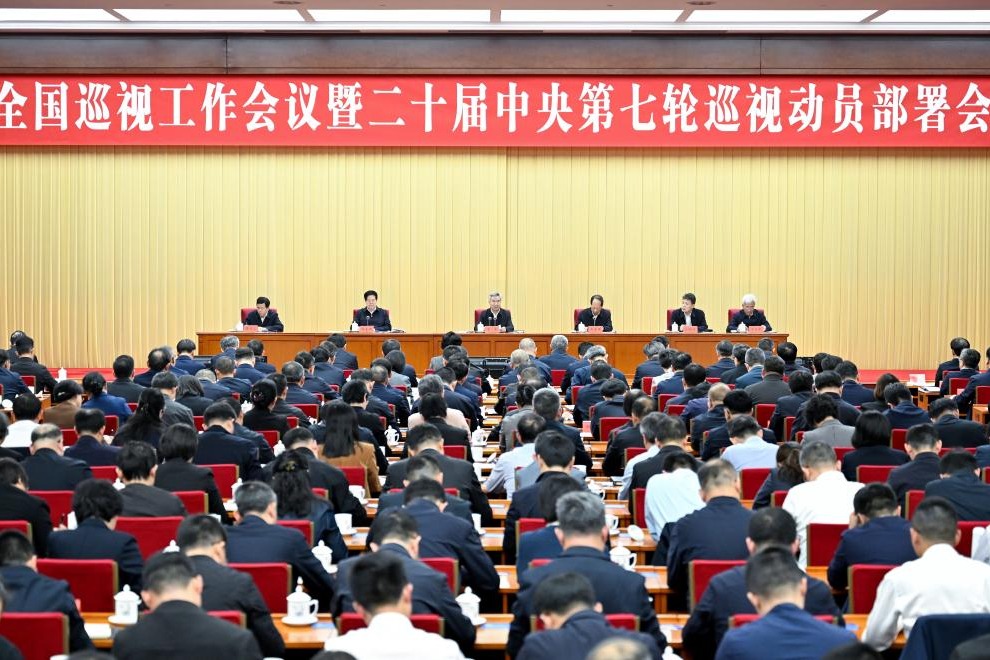
    Beijing witnessed the conclusion of the 15th standing committee session of China’s 14th National Committee of the Chinese People’s Political Consultative Conference (CPPCC) on March 2, 2026. The meeting, presided over by CPPCC National Committee Chairman Wang Huning, marked significant preparations for the upcoming annual full session while reviewing the advisory body’s annual accomplishments.

  • Operations in Iran could last a month

    Operations in Iran could last a month

    The United States administration has projected that its joint military campaign with Israel inside Iranian territory could extend for up to four weeks, a timeline disclosed amid mounting congressional scrutiny over the operation’s legal foundations. This development emerges as the Pentagon confirmed the deaths of four American service members during Iran’s initial retaliatory strikes, with four others sustaining injuries.

    The political landscape in Washington has fractured dramatically over the authorization of force. Republican Representative Thomas Massie of Kentucky condemned the operation as “acts of war unauthorized by Congress,” while former Trump ally Marjorie Taylor Greene denounced the strikes as betraying the “America First” doctrine. Conversely, North Carolina Republican Pat Harrigan contended the 1973 War Powers Resolution provides presidential authority for such military action for up to 60 days without congressional consultation.

    Democratic opposition has been unequivocal. Senator Tim Kaine declared the operation “an illegal war” during a Fox News appearance, emphasizing that the executive branch acted “without even notification to the vast majority of us.” Secretary of State Marco Rubio and defense officials are scheduled to brief Congress on Tuesday regarding the escalating situation.

    The assassination of Iran’s Supreme Leader Ali Khamenei has created a power vacuum that analysts predict will trigger significant regional realignment and prolonged instability. Abu-Bakr Al-Desouky, an Egyptian expert on Gulf affairs, warned that this violation of Iran’s red lines provides justification for Tehran to escalate and broaden its targeting scope.

    Internationally, the operation has drawn severe criticism from security experts. Marc Weller of Chatham House’s Global Governance and Security Centre asserted that Washington has “taken a further, major step in upsetting the global order” by bypassing United Nations Security Council protocols for authorized use of force.

    In a related domestic incident, a gunman in Texas wearing clothing with Iranian flag motifs and religious inscriptions killed two people and wounded fourteen before being neutralized by police. FBI investigators are examining potential terrorism connections despite the absence of a confirmed motive.

  • Various activities held across China to celebrate Lantern Festival

    Various activities held across China to celebrate Lantern Festival

    Communities throughout China erupted in vibrant celebrations on March 3rd, 2026, marking the traditional Lantern Festival that culminates the Lunar New Year festivities. The annual event, observed on the fifteenth day of the first lunar month, witnessed millions of citizens participating in time-honored traditions that blend ancient customs with contemporary expressions.

    Across numerous provinces, picturesque scenes unfolded as intricate lantern displays illuminated cityscapes and cultural venues. In Nanjing’s historic Fuzi Temple precinct, visitors navigated through spectacular exhibitions of traditional and innovative lantern designs, selecting symbolic pieces that represent hopes for the coming year. The Jiangsu province landmark served as one of countless centers where cultural preservation meets modern celebration.

    Beyond lantern exhibitions, the nationwide festivities incorporated diverse activities including riddle-solving competitions attached to lanterns, traditional yuanxiao (sweet rice balls) making ceremonies, dragon and lion dances, and nighttime processions. These celebrations demonstrated the enduring significance of lunar calendar traditions in contemporary Chinese society while fostering intergenerational connections through shared cultural practices.

    The widespread participation in this year’s events highlighted the continuing relevance of traditional festivals in modern China, with both rural and urban communities developing innovative approaches to cultural preservation. Local governments and cultural organizations collaborated to create immersive experiences that attracted domestic tourists and international visitors alike, contributing to cultural tourism while strengthening community bonds through shared heritage celebrations.

  • Asia braces for energy fallout as Gulf conflict rages

    Asia braces for energy fallout as Gulf conflict rages

    Asian nations are confronting severe energy security challenges as military operations intensify in the Gulf region, triggering widespread economic and diplomatic concerns across the continent. The escalating conflict between US-Israeli forces and Iran has sent shockwaves through global energy markets, with oil prices surging to multi-month highs and critical trade routes facing unprecedented disruption.

    South Korea’s National Assembly foreign affairs committee has scheduled an emergency session to address the crisis, reflecting the nation’s particular vulnerability. With approximately 70% of its crude oil imports originating from the Middle East—primarily transported through the strategically vital Strait of Hormuz—South Korea faces potentially catastrophic supply chain disruptions. Deputy Prime Minister Koo Yun-cheol emphasized the government’s commitment to implementing immediate measures to counter volatility in international energy markets.

    The economic impact manifested dramatically as benchmark Brent crude surged 13% in Asian trading, briefly reaching $82 per barrel before moderating to below $77. This price volatility represents the most significant market reaction since 2024, underscoring the conflict’s profound effect on global energy stability.

    Southeast Asian leaders have responded with grave concern. Malaysian Prime Minister Anwar Ibrahim unequivocally condemned recent developments, warning that these actions threaten to plunge the Middle East into sustained instability while directly jeopardizing Malaysia’s trade and energy security. Similarly, Singaporean Foreign Minister Vivian Balakrishnan advocated for peaceful resolution through diplomatic channels and adherence to international law.

    Thailand has implemented practical countermeasures by suspending oil exports and directing relevant agencies to develop comprehensive short and long-term response strategies. Indonesia reiterated the fundamental importance of respecting national sovereignty and resolving differences through peaceful means.

    Professor Yang Jun-sok, an economics expert at The Catholic University of Korea, warned that any closure of the Strait of Hormuz would trigger dramatic oil price increases and significant delivery delays. While noting that current market fluctuations remain within expected parameters, Yang emphasized that further escalation could compel energy-dependent nations to accelerate their search for alternative energy sources.

    United Overseas Bank’s analysis suggests the current crisis represents a more severe escalation than previous regional conflicts, particularly noting the closure of critical air transportation hubs including Dubai’s international airport. However, the bank observed that Iran has not yet targeted oil tankers directly, leaving some room for cautious optimism regarding energy supply continuity.

  • Philadelphia chef puts a new spin on old classics

    Philadelphia chef puts a new spin on old classics

    In Philadelphia’s culinary landscape, Chef Kurt Evans is pioneering a unique gastronomic movement that transcends traditional boundaries. The 40-year-old West Philadelphia native has transformed a former mom-and-pop Chinese takeout into Black Dragon, an establishment that masterfully blends American and Chinese culinary traditions with distinct African American flavors.

    The restaurant’s aesthetic carefully preserves its Chinese heritage while incorporating meaningful cultural elements. Vintage wallpaper displays historical photographs with empowering messages, while an orange neon sign proclaims ‘Food is our common ground’—a philosophy that co-owner Kyle Moore describes as essential to their mission. ‘Food is where different cultures, ethnicities can come together without separation,’ Moore emphasizes.

    Evans’ approach is deeply rooted in historical understanding. He explains how discriminatory policies historically channeled Chinese immigrants toward low-income neighborhoods, creating natural culinary cross-pollination. ‘Many Chinese stores may have been black Americans’ first cultural experience,’ Evans notes, highlighting how economic circumstances forged unexpected cultural connections.

    The chef’s personal journey began in the 1990s when a teacher introduced him to General Tso’s chicken—a flavor that remained etched in his memory. His professional path evolved from hospital cooking to various kitchen roles before conceptualizing Black Dragon, an idea that matured over nine years before its 2024 debut.

    What began as a neighborhood establishment has gained remarkable recognition, attracting visitors far beyond West Philadelphia. The restaurant’s growing prominence even captured political attention, with former Vice President Kamala Harris’s campaign team hiring Evans to cater events.

    Local patron Stepheneecee Williams, who works at a nearby pharmacy, appreciates the cultural synthesis: ‘Chinese restaurants are a staple in the black community… We do live side by side.’ Evans’ culinary innovation demonstrates how food can serve as both cultural preservation and bridge-building medium, creating spaces where diverse communities find common ground through shared culinary experiences.

  • Investors pile into gold as tensions send demand soaring

    Investors pile into gold as tensions send demand soaring

    A remarkable surge in global gold investment is underway as escalating geopolitical conflicts and economic uncertainties drive investors toward traditional safe-haven assets. From Hong Kong to Mumbai, financial institutions and retail investors are significantly increasing their gold allocations, creating unprecedented demand patterns across Asian markets.

    In Hong Kong, San Gold Coins reported extraordinary customer traffic at their flagship store, with physical door repairs necessitated by overwhelming client numbers seeking gold coins and bars. General Manager Sophia Chen observed that while seasonal factors typically influence gold sales, current demand patterns reflect a fundamental shift in investor perception rather than mere cyclical trends.

    “We’re witnessing a transformative moment where gold is being reevaluated as a core asset class rather than merely decorative jewelry,” Chen stated, noting that sustained price appreciation has fundamentally altered investment behavior across demographic segments.

    The commodity’s impressive performance trajectory has been particularly striking. Spot gold prices on New York’s COMEX exchange reached an unprecedented peak of $5,594.82 per ounce on January 29, establishing new benchmarks for the precious metal. Although profit-taking activities temporarily pushed prices below $5,000 in February, renewed Middle East tensions have reignited the rally, with prices rebounding to $5,400 per ounce following recent airstrikes involving the United States and Israel.

    Financial institutions are formally endorsing this strategic shift. Swiss banking giant UBS recently advised clients to allocate “a modest, up to mid-single-digit percentage” of total assets to gold, emphasizing its diversification benefits and protective qualities against geopolitical volatility.

    In India, market dynamics similarly reflect this paradigm shift. Motilal Oswal Financial Services analyst Manav Modi reported that January inflows into gold-backed exchange-traded funds (ETFs) surpassed those of equity mutual funds—a historically significant development indicating profound changes in retail investment patterns.

    “Investors are increasingly adopting central bank-style allocation strategies, utilizing gold as protection against currency fluctuations, inflationary pressures, and systemic financial risks,” Modi explained, highlighting exceptional returns from gold contracts traded on India’s Multi Commodity Exchange.

    Notably, Generation Z investors are emerging as substantial participants in this gold rush. Their engagement has expanded beyond traditional gold products to include silver investments, creating complementary demand for more accessible precious metals. Chen noted that silver’s relative affordability has made it an attractive entry point for first-time precious metal investors seeking portfolio diversification.

    This comprehensive shift toward tangible assets underscores deepening concerns about global stability and represents a fundamental revaluation of gold’s role in modern investment portfolios.