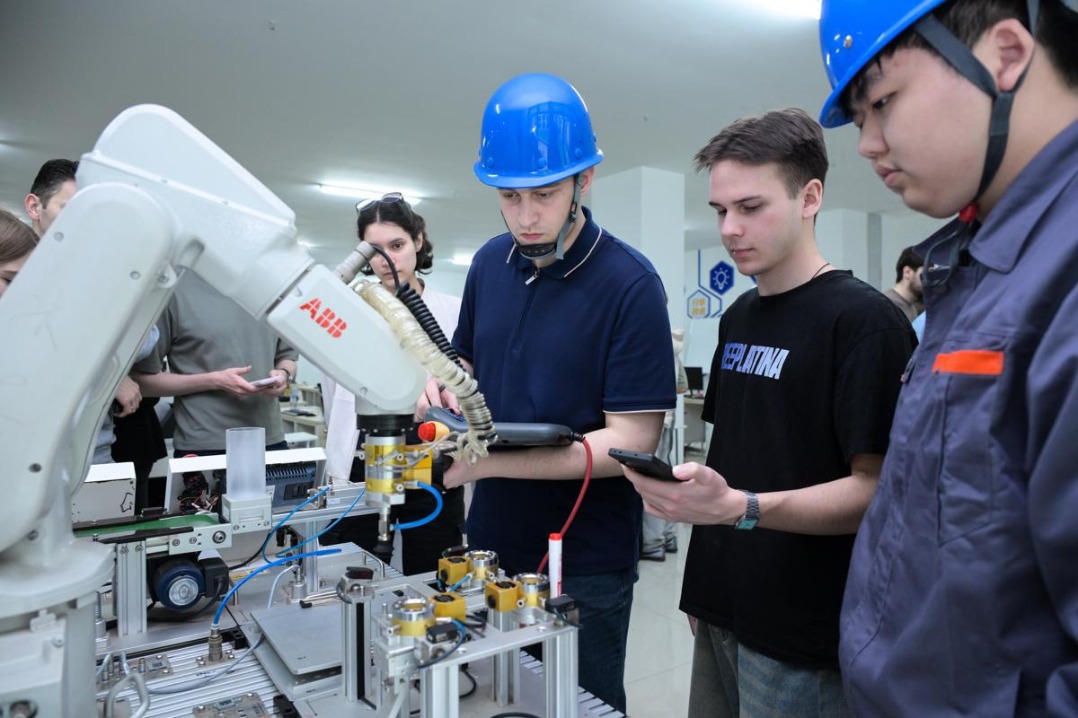
A landmark cross-border educational exchange event unfolded this week in southwest China’s Chongqing, where the Chongqing Vocational Institute of Engineering welcomed a 30-member delegation of students and faculty from Russia’s Moscow State University of Technology (STANKIN) for a friendly China-Russia robotics competition on April 8. Held on a Tuesday afternoon at the institute’s China-Russia International School of Intelligent Manufacturing, the event blended competitive challenge with collaborative learning, far exceeding the scope of a traditional contest. Beyond the robotics matches, the full schedule included expert academic lectures, hands-on technical practice workshops, and guided site visits to local industry and research facilities. Through these multi-format activities, the visiting Russian delegation gained first-hand, in-depth insights into the rapid development of intelligent manufacturing in Chongqing, as well as the region’s dynamic industry-university cooperation model focused on advancing industrial robotics innovation. This robotics competition stands as a core component of a seven-day joint study tour co-organized by the two higher education institutions. Launched on April 7, the tour is designed to mark the China-Russia Year of Education, a bilateral initiative that aims to strengthen people-to-people bonds and deepen educational collaboration between the two nations. By bringing young engineering and technology talent together around a shared interest in robotics and intelligent manufacturing, the program highlights the steady deepening of educational partnerships between China and Russia, opening new doors for future joint research, student exchanges, and technological cooperation between academic institutions on both sides.
作者: admin
-

‘My heart is about to explode’: BTS fans react as world tour begins
One of the biggest musical acts on the planet, global K-pop sensation BTS, has officially launched its extensive cross-continental world tour from its home country of South Korea, sending shockwaves of excitement across the entire global fan community. The opening leg of the ambitious tour, which fans have spent months eagerly awaiting, features a prominent spotlight on the group’s latest studio project, *Arirang*, blending new material with the chart-topping hits that turned the septet into a worldwide cultural phenomenon.
For loyal supporters of the group, known collectively as the ARMY, the launch of the tour marked an emotional milestone after years of limited live performances amid global event shutdowns. Countless fans took to social media immediately following the opening concert to share their overwhelming reactions, with many expressing that their excitement was so intense it felt like “my heart is about to explode.” The combination of dynamic stage production, the group’s signature high-energy choreography, and the debut of new tracks from *Arirang* has already set a high bar for upcoming stops across North America, Europe, Asia, and Oceania.
Industry analysts note that this tour is expected to break multiple attendance and revenue records, cementing BTS’s status as one of the most successful touring acts in modern music. It also represents a major moment for the global live entertainment industry, demonstrating the enduring power of K-pop to draw massive, devoted audiences across every region of the world.
-

Caf president would welcome corruption investigation
African football’s governing body, the Confederation of African Football (Caf), has been thrown into a deep credibility crisis following a controversial decision to reassign the 2025 Africa Cup of Nations title, a conflict that has now put the issue of systemic corruption within the organisation under the global spotlight. In a high-profile visit to Dakar this week, Caf president Patrice Motsepe made an unprecedented statement: he fully welcomes and actively encourages any independent investigation into corrupt practices at the organisation, regardless of whether the probe is launched by a national government, international regulatory body, or any other third party.
The controversy that triggered this moment traces back to the January 18 Afcon final held in Rabat. Senegal’s national team originally claimed a 1-0 victory over Morocco after extra time, securing what would have been their second consecutive continental title. The match was derailed by controversy, however, when referee awarded a last-minute stoppage-time penalty to Morocco. In protest, multiple Senegal players walked off the pitch, causing a 17-minute suspension of play. When the match finally resumed, Morocco striker Brahim Diaz’s penalty was saved by Senegal’s goalkeeper, and Senegal held on to win.
Two months later, on March 17, Caf’s internal appeals board issued a shock ruling: it stripped Senegal of their title, forfeited the match and awarded the trophy to Morocco. The decision prompted immediate outcry from the Senegalese government, which formally called for a full independent corruption investigation into Caf over the ruling. Senegal has since appealed the decision to the Court of Arbitration for Sport (Cas), football’s highest global judicial body, and is currently awaiting a final ruling. The controversy already led to one major casualty: former Caf general secretary Veron Mosengo-Omba stepped down from his post less than two weeks after the appeals board decision, amid growing pressure over the governing body’s handling of the crisis.
During his Wednesday meeting with Senegalese President Bassirou Diomaye Faye and senior leaders of the Senegalese Football Federation, Motsepe doubled down on his stated commitment to rooting out corruption, calling it the most destructive force across African society. “Corruption is worse than Covid and cancer,” Motsepe told reporters at a Dakar press briefing. “We have a clear duty to every football fan across the African continent. If any government or institution wants to launch an investigation, please go ahead. We will provide full and complete cooperation. In fact, I encourage you to do it.”
Motsepe, who was re-elected for a second four-year term as Caf president in March 2024, also stressed that he would never hide evidence of wrongdoing within the organisation. “I know there have been widespread reports of deep-rooted corruption issues in Caf’s past, and we have already taken steps to intervene,” he said. “Football cannot set a bad example for young people. We cannot allow the next generation to think that corruption is the way to get ahead. Putting strong anti-corruption rules in place and enforcing them honestly is the greatest gift we can give African football.”
Consistent with his previous public comments, Motsepe declined to comment on the ongoing Senegal-Morocco dispute that is now before Cas, noting that the governing body is legally and ethically bound to respect the court’s final decision. “You can ask me the same question 100 times, and I will give you the same answer 100 times,” he told BBC Afrique. “Cas is the highest decision-making authority in global football, and it is the obligation of Caf to wait for its ruling and implement it fully when it arrives.”
Motsepe also addressed a separate lingering issue from the final: the imprisonment of 18 Senegalese football fans by Moroccan authorities in the wake of post-match disturbances. He confirmed that the matter is currently being handled through official diplomatic channels between the two countries, with Caf facilitating communication between the two sides.
After concluding his meetings in Dakar, Motsepe traveled directly to Morocco on Wednesday evening. He is scheduled to meet with Moroccan Football Federation president Fouzi Lekjaa and senior Moroccan government officials on Thursday, followed by another public press conference to address the controversy.
-
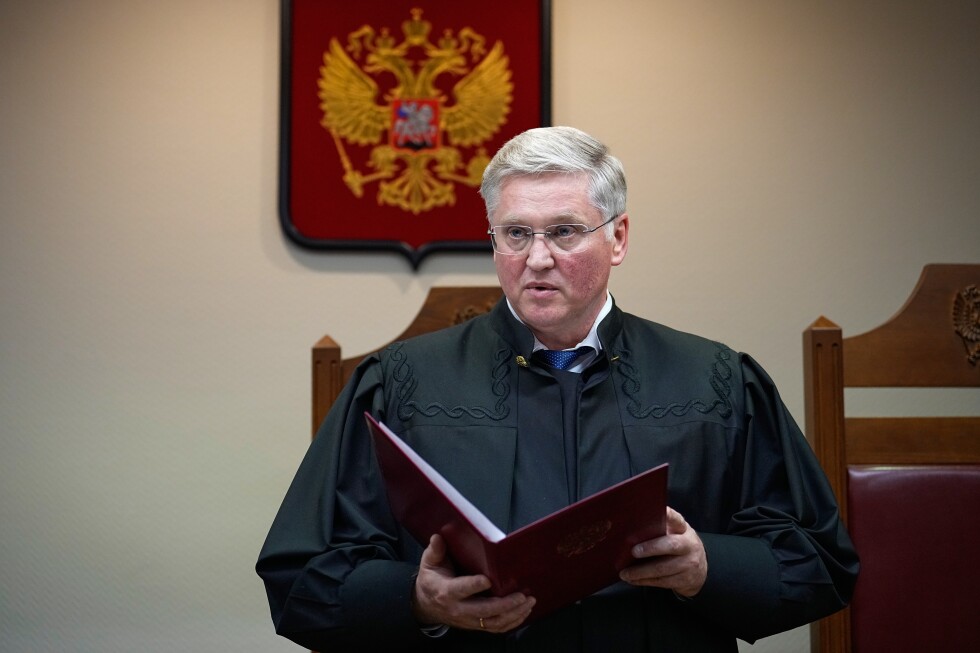
Russian court criminalizes the activities of the Nobel Prize-winning rights group Memorial
On Thursday, Russia’s highest judicial body delivered a landmark ruling that effectively outlaws all operations of Memorial, the Nobel Peace Prize-honored human rights organization, marking the most severe escalation yet in the Kremlin’s sustained crackdown on independent civil society and opposition voices amid its ongoing military campaign in Ukraine. The ruling came following a closed-door hearing on a petition filed by Russia’s Justice Ministry, which requested that the court label the so-called “Memorial international civic movement” an extremist organization and implement a full ban on its activities across Russian territory.
In a pre-ruling statement, Memorial representatives noted that the specific entity named in the government’s petition does not actually exist as a formal registered body in the country. Even so, the organization warned that the sweeping extremist designation would give Russian law enforcement and regulatory authorities broad legal authority to target any ongoing Memorial-linked projects, as well as persecute their participants and public supporters.
Founded in the late 1980s during the final years of the Soviet Union, Memorial emerged as one of Russia’s oldest and most widely respected human rights organizations, built originally on a mission to preserve the memory of millions of people killed or persecuted during the Soviet Union’s era of political repression. Over decades of operation, it grew into a sprawling global network of smaller independent groups spanning Russia and dozens of other countries, expanding its mandate to document ongoing human rights abuses across the region.
Less than a year after Moscow launched its full-scale military invasion of Ukraine in 2022, Memorial was awarded the Nobel Peace Prize in recognition of its decades-long work advancing human rights and accountability. It shared the prize with imprisoned Belarusian pro-democracy activist Ales Bialiatski and Ukraine’s Center for Civil Liberties, another prominent regional human rights organization.
This latest legal action is not the first attempt by Russian authorities to shut down the group. In 2021, Russian courts ordered the dissolution of Memorial’s two core Russian entities: its national human rights center and the original International Memorial. The government had already labeled the group a “foreign agent” years earlier, a regulatory designation that imposes strict government surveillance, carries a heavy public stigma, and subjected the organization to repeated crippling fines for alleged violations of Russia’s restrictive foreign agent legislation. Undeterred by the 2021 shutdown order, Memorial activists continued their work through loosely structured, decentralized projects across the country.
In 2023, former members formally established a new International Memorial Association based in Geneva, Switzerland, to coordinate the group’s global work. Earlier this year, Russian authorities designated the new Geneva-based association “undesirable” — a legal classification that allows the government to prosecute any Russian citizen found collaborating with the group. Thursday’s extremist designation raises the stakes even further: under Russian law, participating in activities linked to an extremist organization is a criminal offense punishable by multi-year prison sentences.
The Norwegian Nobel Committee, which awards the prestigious peace prize, pre-emptively spoke out against the Russian government’s actions in a statement released one day ahead of the ruling. The committee condemned the crackdown on Memorial as “an affront to the fundamental values of human dignity and freedom of expression” and called on Russian authorities to immediately end all forms of harassment against the organization and its members.
-
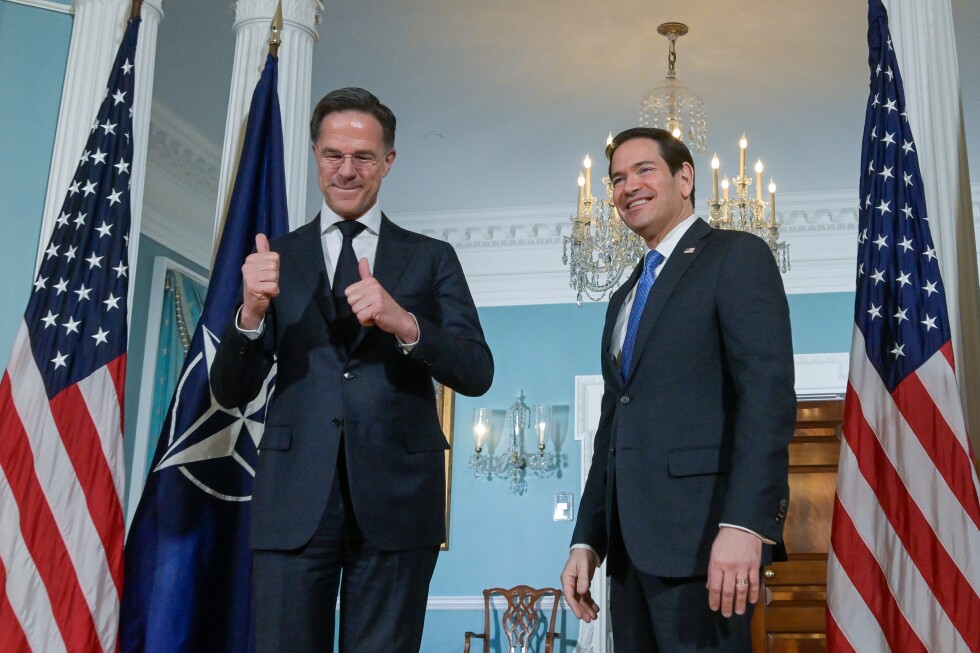
Rutte the ‘Trump whisperer’ faces a fresh test as Trump turns on NATO over Iran
BRUSSELS – Tensions between Washington and its trans-Atlantic allies have reached a new boiling point, as NATO Secretary-General Mark Rutte finds himself once again managing diplomatic fallout from U.S. President Donald Trump’s anger over the Iran conflict – a war that the 31-nation defensive alliance was never consulted on, and which falls far outside its core defense mandate. Since the U.S.-led war against Iran began, Trump has launched a series of scathing attacks against U.S. allies, labeling many of them cowards, dismissing NATO itself as a toothless paper tiger, and drawing a damaging comparison between British Prime Minister Keir Starmer and Neville Chamberlain, the former UK leader widely associated with failed appeasement policy toward Nazi Germany. This latest confrontation only adds to a growing rift that has already been stretched thin by Trump’s repeated threats to annex Greenland, a move that has alarmed European allies and sparked fears that a unilateral U.S. power grab could unravel the alliance entirely. The current friction centers on Trump’s frustration that NATO allies refused to back the U.S. after Iran shut down the Strait of Hormuz, the strategically critical global oil and trade chokepoint. Following Wednesday’s closed-door talks between Rutte and Trump, the U.S. leader made his disappointment public in a fiery social media post, writing: “NATO WASN’T THERE WHEN WE NEEDED THEM, AND THEY WON’T BE THERE IF WE NEED THEM AGAIN.” When pressed by CNN reporters on whether Trump planned to pull the U.S. out of the trans-Atlantic alliance – a threat he first issued during his first term in 2018 – Rutte acknowledged Trump’s deep dissatisfaction, admitting “He is clearly disappointed with many NATO allies, and I can see his point.” Known widely as a skilled “Trump whisperer” who has managed to keep the mercurial U.S. leader engaged with the alliance since taking the top NATO job in 2024, Rutte has previously scored diplomatic wins: he helped broker a deal that saw European allies and Canada purchase U.S. weapons for Ukraine, keeping the U.S. invested in managing Europe’s largest armed conflict in 70 years. Keeping the U.S. anchored in NATO has become Rutte’s top priority, especially as Washington has increasingly shifted its strategic focus to other global flashpoints, from the Indo-Pacific to Venezuela and now the Middle East. To maintain goodwill, Rutte has leaned into flattery, praising Trump for pushing NATO allies to meet their mandatory 2% GDP defense spending targets, congratulated the U.S. leader on the Iran war, and refused to push back on Trump’s apocalyptic warning that “a whole civilization will die” if Iran does not reopen the Strait of Hormuz. Describing his meeting with Trump as “very frank, very open discussion but also a discussion between two good friends,” Rutte declined to confirm unreported claims that Trump is weighing pulling U.S. troops out of European nations that refuse to back the war. When asked if the world is safer following the U.S.-Iran war, Rutte replied plainly: “Absolutely.” What makes this dispute particularly unusual is that NATO has no natural role in the conflict. As a defensive alliance built to protect the collective territory of its Euro-Atlantic members, NATO only stepped in once to back member Turkey after Iranian retaliatory missile strikes targeted Turkish soil. The war itself was launched unilaterally by the U.S., a NATO member, but no attack on the alliance prompted it. Rutte has repeatedly stated NATO will not join the conflict, and there is no public evidence that the U.S. formally brought the request for alliance support to NATO’s Brussels headquarters, though informal discussions have not been ruled out. When asked about security efforts for the Strait of Hormuz, NATO declined comment, referring all questions to the United Kingdom, which is leading a standalone non-NATO initiative to secure the waterway once a ceasefire holds. Smaller NATO allies have signaled they are open to discussions if a formal request is submitted. Estonian Foreign Minister Margus Tsahkna told CNBC Thursday that “If the U.S. or any other NATO ally is asking (for) our support, we are always ready to discuss it. But for that, we need of course the official ask to discuss then what is the mission, what is the goal? If allies need our support, then we need to plan together.” Rutte has doubled down on his position that NATO will only act to defend its own territory, and will avoid entanglement in conflicts outside the Euro-Atlantic area. “This is Iran, this is the Gulf, this is outside NATO territory,” he explained. While NATO has launched out-of-area operations in the past – most notably in Afghanistan and Libya – the alliance has little appetite for new foreign deployments after the chaotic 2021 U.S.-led withdrawal from Afghanistan, which former NATO Secretary-General Jens Stoltenberg openly labeled a defeat. Much of Trump’s anger has been directed specifically at two NATO members, Spain and France, rather than the alliance as an institution. Spain has already closed its airspace to U.S. military aircraft involved in the Iran war and blocked U.S. forces from accessing shared military bases on Spanish territory. After a two-week ceasefire was announced, Spanish Prime Minister Pedro Sánchez took to social media to criticize the war, writing that his government “will not applaud those who set the world on fire just because they show up with a bucket. What’s needed now: diplomacy, international legality, and PEACE.” France has also taken a critical stance, arguing the war was launched in violation of international law and that Paris was never consulted ahead of time. While France has not issued blanket restrictions on U.S. use of shared bases or French airspace, authorities have confirmed they will review all requests on an individual, case-by-case basis.
-
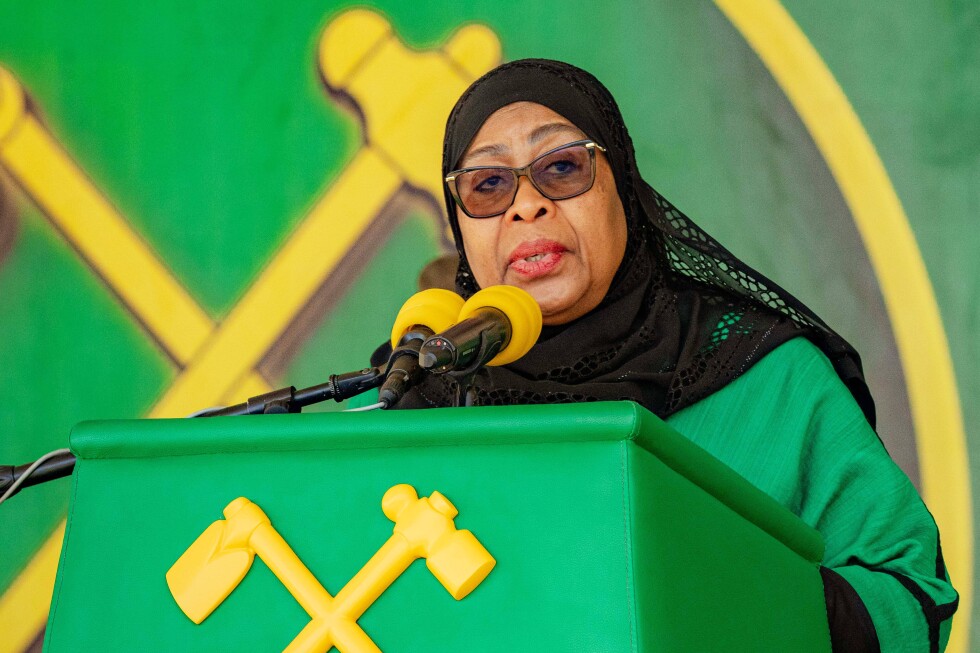
Tanzanian leader orders smaller convoys and shared buses to cut fuel use as prices rise
DAR ES SALAAM, Tanzania – As global oil markets roil and pump prices skyrocket across the African continent, Tanzania’s President Samia Suluhu Hassan has announced a sweeping cut to the oversized fleet of official and luxury vehicles in her presidential motorcade, a high-profile move aimed at slashing national fuel consumption amid a growing regional energy crisis.
Hassan, whose pre-reform motorcade was widely cited as one of the largest of any sitting head of state on the African continent, made the announcement Wednesday, detailing that all security and administrative personnel accompanying her on official travels will now travel in consolidated small-group transport rather than separate dedicated vehicles.
Prior to this policy shift, the president’s procession regularly included dozens of luxury vehicles assigned to government officials, protocol teams, and security detail. A viral video of a 30-vehicle Hassan motorcade circulated online in recent years, sparking widespread public discourse about the excessive scale of presidential motorcades across many African nations.
“This step is being taken to cut fuel use and bring down operational costs during this period of global price instability,” Hassan explained in her address.
Hassan’s reform comes as a wave of energy policy adjustments sweeps the African continent, with multiple national governments rolling out emergency measures to counter crippling fuel shortages and runaway price hikes. On Tuesday, Madagascar’s government declared a national state of emergency specifically to enforce mandatory fuel consumption cuts. South Africa has moved to ease consumer burden by cutting the national fuel levy, while Ethiopia has implemented formal fuel rationing to stem overuse. Senegal, for its part, has issued a blanket ban on non-essential foreign travel for all government ministers to cut national fuel expenditure.
While Hassan assured the public that Tanzania currently holds enough strategic fuel reserves to cover national demand for up to three months, she issued a stern warning to private fuel businesses against exploiting the crisis to artificially inflate prices and gouge consumers.
The current surge in global fuel prices, which has added roughly $0.40 per liter to Tanzanian pump costs over just the last two weeks, is being driven by escalating geopolitical conflict in the Middle East: ongoing hostilities between Iran and Israel and the associated risk of disruption to shipping through the Strait of Hormuz, a critical chokepoint through which roughly 20% of the world’s daily oil supply passes. Market volatility tied to this disruption has pushed up crude prices globally, with low- and middle-income importing nations like Tanzania bearing the brunt of the shock.
-
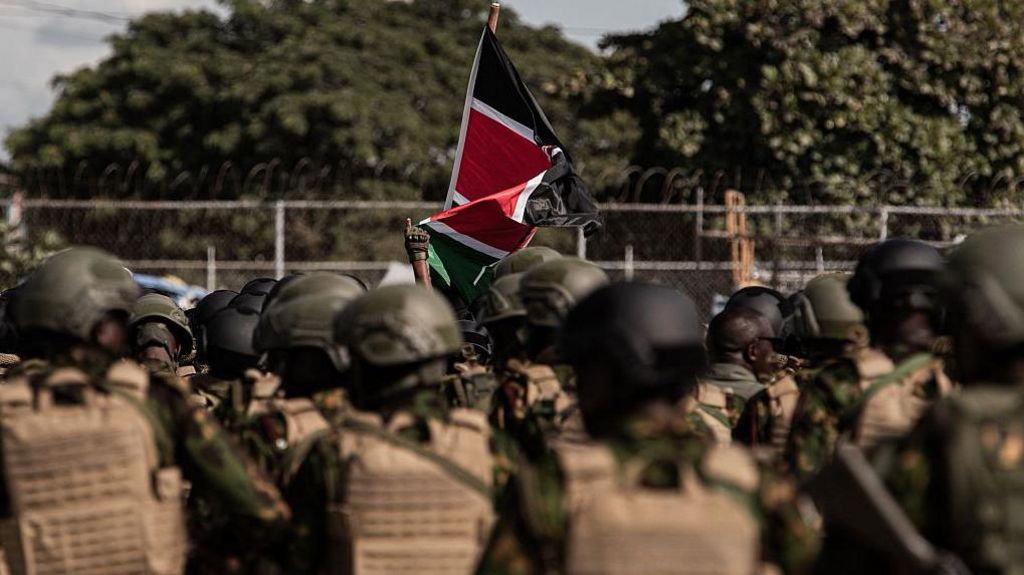
Kenya disputes UN report on rape allegations against its Haiti personnel
A long-simmering dispute between Kenya and the United Nations has boiled over into public view, after Nairobi formally pushed back against a published UN report that accuses Kenyan troops serving in the Haiti security mission of involvement in sexual abuse and exploitation, including assaults on minor children.
The Kenya-led Multinational Security Support Mission (MSS) was first deployed to Haiti in 2024, following a formal authorization from the UN Security Council. The deployment’s core mandate was to support Haitian authorities in quelling the rampant gang violence that has plunged the Caribbean nation into years of humanitarian and security crisis. Plagued by persistent underfunding, operational hurdles, and recruitment shortfalls, the 2,500-person target for the mission was never met, and the force ultimately failed to rein in the widespread bloodshed terrorizing Haitian communities. The MSS has since been phased out and replaced by a larger international contingent, the Gang Suppression Force, as international efforts to stabilize Haiti continue.
Last week, a public report from UN Secretary-General António Guterres linked Kenyan officers serving with the MSS to four separate incidents of rape and other sexual violence. Three of the reported victims are children: one 12-year-old and two 16-year-olds. The UN report notes that all four allegations were shared with the MSS force commander, and adds that investigations carried out by the Office of the United Nations High Commissioner for Human Rights found the claims to be credible and substantiated. The document emphasizes that any form of sexual exploitation and abuse by peacekeeping or security mission personnel constitutes a fundamental breach of the trust extended by local communities to the UN and its international partners, and the UN confirms the allegations remain under formal review.
In response to the public release of the report, Kenya’s Foreign Minister Musalia Mudavadi submitted a formal letter of protest to UN chief António Guterres, pushing back firmly against the claims. Mudavadi noted that the allegations first emerged back in August of last year, and that Kenyan authorities launched an immediate, full inquiry into the claims shortly after they were raised. The inquiry’s results, he said, found the accusations completely unsubstantiated.
“No formal complaints were filed with any national or international authority, and we shared the findings of our investigation transparently with both Haitian government bodies and relevant UN agencies,” Mudavadi stated in the letter. The minister added that all Kenyan personnel serving with the MSS have consistently adhered to every code of conduct and operational rule mandated for the mission, and no official inquiry has ever produced evidence of misconduct by Kenyan troops.
Despite widespread domestic opposition to the deployment and the well-documented operational and financial challenges that hampered the mission, Mudavadi reaffirmed that Kenya’s participation in the MSS reflected the East African nation’s steadfast commitment to supporting international efforts to restore peace and security to Haiti.
The dispute comes as international stakeholders continue to grapple with how to address Haiti’s ongoing security collapse, which has left hundreds of thousands of people displaced and millions in need of humanitarian assistance, with gangs controlling large swathes of the capital Port-au-Prince and other major urban centers.
-
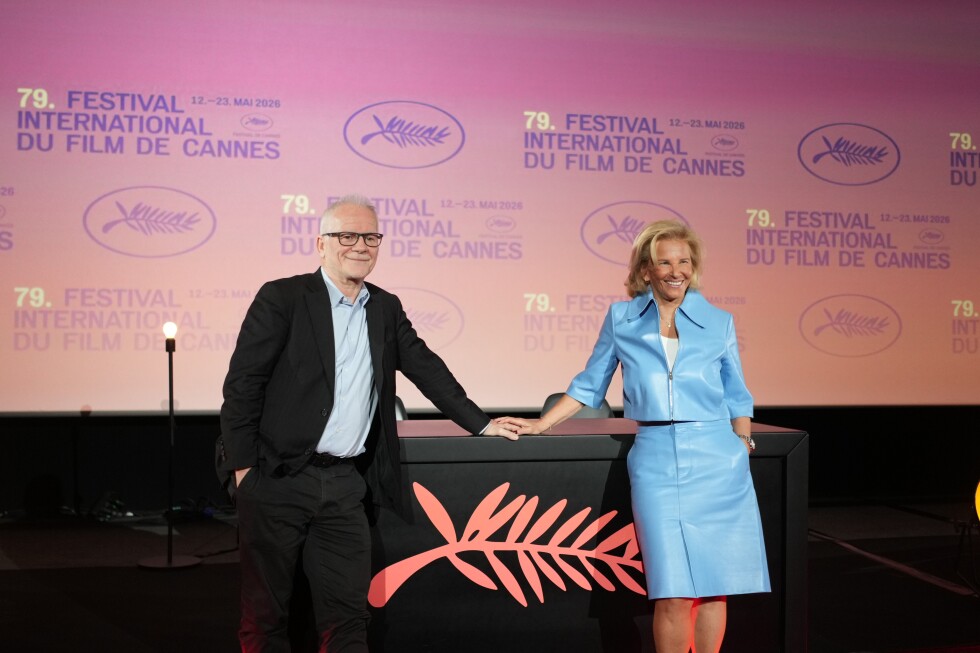
Films by Almodovar, Pawlikowski and Hamaguchi lead an auteur-heavy Cannes Film Festival lineup
The 79th annual Cannes Film Festival, one of the most prestigious and influential film gatherings on the global cultural calendar, is set to kick off next month from May 12 to 23 on the French Riviera. Organizers officially announced the highly anticipated 2025 lineup at a Paris press conference Thursday, assembling a slate packed with award-winning international auteurs that reaffirms the festival’s reputation as a launching pad for the year’s most acclaimed cinematic works. This year’s edition, however, marks a stark shift: major Hollywood studios are largely absent, a trend festival leadership has acknowledged as reflective of larger shifts in global film production and distribution.
The festival’s most prestigious category, the main competition for the coveted Palme d’Or, features 21 competing films from established and beloved filmmakers across the globe. Multiple previous Palme d’Or winners are returning to contest the top prize this year, adding extra prestige to the 2025 lineup. Polish filmmaker Paweł Pawlikowski, who earned international acclaim for *Ida* and *Cold War*, will premiere *Fatherland*, a Cold War-era drama starring Oscar-nominated performer Sandra Hüller. Japanese director Ryusuke Hamaguchi, whose *Drive My Car* won the Oscar for Best International Feature Film after its Cannes debut, will present *All of a Sudden* — his first French-language feature. Spanish cinematic icon Pedro Almodóvar’s *Bitter Christmas*, which has already launched in Spanish cinemas, will also make its world premiere in competition.
Past Palme recipients returning to the lineup include Romanian director Cristian Mungiu, whose 2007 winner *4 Months, 3 Weeks and 2 Days* remains a landmark of global art house cinema. His 2025 entry *Fjord*, set in Norway, stars recently Oscar-nominated Renate Reinsve and Sebastian Stan. Japanese filmmaker Hirokazu Kore-eda, who took home the Palme in 2018 for *Shoplifters*, will debut a new sci-fi work, *Sheep in the Box*, which follows a grieving couple in the near future who welcome a humanoid android into their home as their late son. Other notable returning competitors include Russian auteur Andrey Zvyagintsev, whose previous works *Loveless* and *Leviathan* both earned Oscar nominations after Cannes premieres, with his new drama *Minotaur*. Additional competition entries come from two-time Oscar winner Asghar Farhadi with *Parallel Stories*, Lukas Dhont with *Cowboy*, and László Nemes with *Moulin*.
American filmmakers are underrepresented in competition this year, with only a small handful of U.S. projects selected. The lone American competitive entry is Ira Sachs’ *The Man I Love*, a 1980s New York-based drama centered on the AIDS crisis, starring Rami Malek. In the festival’s Un Certain Regard sidebar, Jane Schoenbrun will premiere *Teenage Sex and Death at Camp Miasma* — their follow-up to 2024’s cult hit *I Saw the TV Glow* — a story about the production of a 1980s slasher film starring Hannah Einbinder and Gillian Anderson. Two prominent American directors will screen documentaries in special out-of-competition screenings: Steven Soderbergh’s *John Lennon: The Last Interview* and Ron Howard’s *Avedon*, a portrait of iconic fashion and fine art photographer Richard Avedon. John Travolta’s directorial debut *Propeller One-Way Night Coach* will also screen in the Cannes Premiere section.
Independent U.S. distribution company Neon has already secured distribution rights to three of the most anticipated competition titles: *Fjord*, *Sheep in the Box*, and *All of a Sudden*. The acquisition puts Neon in a position to extend an unprecedented historic streak: the distributor has won the Palme d’Or six consecutive years, most recently with Jafar Panahi’s *It Was Just an Accident* in 2024. Neon is also backing Nicolas Winding Refn’s out-of-competition thriller *Her Private Hell*, starring Sophie Thatcher and Charles Melton, which marks Refn’s first feature film since 2016’s *The Neon Demon*.
Festival leadership used the press conference to reaffirm the core mission of Cannes in a turbulent global era. “In this moment, bringing together films and artists from around the world is not a luxury, it’s a necessity,” festival president Iris Knobloch said. “Because when the world darkens, we lose our bearings. Showcasing films from all horizons is not a trivial act. It is defending what is most precious to humanity, its ability to dream and think freely.” Artistic director Thierry Frémaux added that 2,541 feature films were submitted for consideration this year, and that Thursday’s announcement covered roughly 95% of the official selection, with a small number of additional entries to be revealed in the coming weeks. He addressed the absence of major Hollywood studios, noting that while American filmmakers are still present, reduced studio participation reflects a broader retreat from the type of prestige theatrical cinema that once defined major studio output. Large studio blockbusters that made splashy Cannes debuts in recent years, such as *Top Gun: Maverick* and *Mission: Impossible — The Final Reckoning*, will not be on the 2025 lineup.
True to longstanding festival rules, all competition entries require a theatrical release in French cinemas, a stipulation that has excluded streaming platforms such as Netflix from the competitive lineup since 2017, aligned with France’s strict theatrical window protection laws. The festival will open with the 1920s French drama *The Electric Kiss*, screening out of competition, which will meet the requirement of opening day-and-date in French theaters this May.
This year’s Palme d’Or will be decided by a nine-member jury led by iconic Korean filmmaker Park Chan-wook. The festival will also bestow honorary Palme d’Or awards to two entertainment legends: singer, actor and filmmaker Barbra Streisand, and New Zealand director Peter Jackson, the visionary behind *The Lord of the Rings* trilogy. Coming off a 2024 edition that launched multiple Oscar contenders, including two Best Picture nominees Joachim Trier’s *Sentimental Value* and Kleber Mendonça Filho’s *The Secret Agent*, the 2025 Cannes Film Festival is positioned to uphold its status as the global premier stage for ambitious cinematic storytelling.
-

McIlroy ready for early start as 90th Masters begins
The 90th edition of the Masters Tournament officially got underway on Thursday at Augusta National Golf Club, with three of golf’s most legendary figures stepping into the spotlight for the traditional honorary opening tee ceremony ahead of defending champion Rory McIlroy’s bid for history.
Three icons of the sport — 86-year-old Jack Nicklaus, 90-year-old South African Gary Player, and 76-year-old Tom Watson — delivered the ceremonial opening drives to a cheering crowd gathered at the first tee under the early morning sun. Between them, the trio boasts 33 major championship titles, 11 of which were claimed at Augusta National: Nicklaus holds the all-time record of six Masters victories as part of his 18 total major titles, Player captured three green jackets among his nine major crowns, and Watson won two Masters titles as part of an eight-major career that also includes five Open Championship wins.
With the opening ceremony complete, attention turns to the 91-player field competing across four rounds for the sport’s most iconic green jacket. Defending champion Rory McIlroy, the Northern Irish five-time major winner ranked second in the world, is among the first to tee off, starting his first round at 10:31 a.m. local time (1431 GMT). He will be grouped alongside world number three Cameron Young, the American who claimed victory at the Players Championship last month, and 2023 U.S. Amateur champion Mason Howell. McIlroy’s goal this week is historic: a win would make him only the fourth golfer in Masters history to claim back-to-back green jackets, following Nicklaus, Nick Faldo, and Tiger Woods.
World number one Scottie Scheffler, who is hunting a third Masters title in five seasons, tees off later in the day at 1:44 p.m. local time as part of the penultimate group. He is joined by American compatriot Gary Woodland and Scottish golfer Robert MacIntyre.
Tournament organizers are predicting firm, fast playing conditions across the course this week, with lightning-fast greens that will challenge players to hold their approach shots on target. Hard fairways and quick putting surfaces are expected to test every competitor’s accuracy and course management from the opening round.
McIlroy and Scheffler are far from the only title contenders eyeing the 2025 crown. Former major champions in the chasing pack include LIV Golf stars Jon Rahm and Bryson DeChambeau, both two-time major winners, alongside American Xander Schauffele and England’s Matt Fitzpatrick. A number of top players are also chasing their first career major victory at Augusta this year, including Sweden’s rising star Ludvig Aberg and England’s consistent contender Tommy Fleetwood.
-

Century-old Tianjin skincare brand breaks ground on industrial park
A century-old heritage skincare brand rooted in Tianjin, China, has cemented its remarkable market comeback with the groundbreaking of a cutting-edge new industrial park, marking one of the most successful revitalization stories for China’s time-honored local consumer brands in recent years.
Wanzi Qianhong, the 115-year-old skincare label, launched construction on the integrated facility in Tianjin’s Xiqing District this month. The milestone comes on the heels of three straight years of 100% annual online sales growth, a staggering expansion that has pulled the once-forgotten brand back into the national spotlight.
Designed to integrate multiple core functions under one roof, the new industrial park will house scaled production lines, dedicated livestreaming e-commerce hubs, and public cultural exhibition spaces. Beyond its operational role, the site will also be added as an official stop on Tianjin’s developing industrial tourism route, offering visitors a chance to explore the brand’s long history and modern manufacturing processes.
The brand’s dramatic resurgence is no accident: it stems from a customer-centric innovation strategy that company leaders call “listening-style research and development.” Rather than relying solely on in-house design, Wanzi Qianhong has centered its product updates on the evolving preferences of young Chinese consumers, the largest demographic driving today’s domestic skincare market. When widespread customer feedback noted the brand’s classic cream felt too heavy for daily use, the development team quickly rolled out a lighter, non-greasy formulation. When shoppers asked for more travel-friendly packaging, the brand launched a convenient portable pouch version. As consumer demand for diversified facial care routines grew, the label expanded its catalog to include entirely new product lines tailored to modern needs.
“Our fans share their wishes, and we work to make them come true,” explained Kuang Huaqin, Wanzi Qianhong’s deputy general manager, in outlining the brand’s core philosophy.
Founded in 1911, Wanzi Qianhong rose to become a household name across northern China for its trusted, affordable skincare products, but gradually faded from public view amid rising competition from international and domestic new brands in the 1990s. The turning point for its comeback came in 2023, when a viral livestream appearance led to the entire available inventory selling out in just a few hours, catapulting the brand back into mainstream consciousness.
Today, the beloved “Great-Grandma brand,” as it is affectionately called by Chinese consumers, is setting its sights beyond China’s borders. Company leaders are preparing to expand into North American and European markets, bringing a century of Chinese skincare heritage to global consumers.
The success story of Wanzi Qianhong offers a compelling case study for how legacy consumer brands can remain relevant and thrive in the modern market: by embracing evolution and aligning product development with changing customer needs, heritage does not have to mean outdated. For this iconic century-old label, growth is just getting started.