On the eve of a self-imposed deadline that brought the United States and Iran to the brink of open conflict, a last-minute 14-day ceasefire brokered by Pakistani Prime Minister Shehbaz Sharif has averted immediate escalation, but widespread anger and anxiety over US President Donald Trump’s incendiary rhetoric continues to ripple across the US and the international community.
Trump announced the breakthrough on his social media platform Tuesday, just hours after he issued a shocking warning that “a whole civilization will die tonight” if Iran refused to reopen the strategically critical Strait of Hormuz and meet his demands for a new agreement. Under the terms of the deal, Iran confirmed it will enter two weeks of negotiations with US negotiators in the Pakistani capital of Islamabad, with formal talks set to kick off this Friday.
The 11th-hour U-turn capped a day of soaring tension that left ordinary American citizens, sitting lawmakers, and United Nations officials reeling from the president’s unprecedentedly harsh language. Just one day earlier, Trump had already threatened to annihilate all of Iran’s civilian infrastructure, promising to destroy “every bridge” and power plant across the country if his deadline was not met. Tuesday morning, he doubled down on the threat with the apocalyptic warning that an entire civilization would be erased if no deal was reached.
That aggressive rhetoric left many US residents deeply shaken. In New York City, 54-year-old Adam Turner told reporters he was reduced to tears by the persistent stress of Trump’s confrontational approach to Iran, a policy that reversed the 2015 nuclear deal struck under former president Barack Obama that Turner described as effective. “It is without respect. It is without intelligence, without dignity. And the fact that we are represented by that is a crime,” Turner said. “It makes me sad because I don’t think the Iranian people deserve it. He got rid of Obama’s Iran deal. We had a deal in place that was effective.”
Criticism of the president’s threats extended far beyond liberal opponents of Trump. Even Marjorie Taylor Greene, a long-time loyal ally of the president from his own Republican Party, condemned the rhetoric in a post on X, writing: “We cannot kill an entire civilization. This is evil and madness.”
Top Democratic leaders went further, calling on congressional Republicans to break with the president and intervene to stop the drift toward war. House Minority Leader Hakeem Jeffries, a Democrat representing New York, urged GOP lawmakers to put national interest above partisan loyalty. “Congress must immediately end this reckless war of choice in Iran before Donald Trump plunges us into World War III,” Jeffries wrote on X. “It’s time for every single Republican to put patriotic duty over party and stop the madness. Enough.”
A 66-year-old Manhattan resident, Lewis Fox, echoed that frustration, arguing that Trump’s bellicose language has redefined the US’s global role from a global protector to a global bully. “I think he doesn’t have a clue what he’s doing. He has converted the United States into the bully of the world versus the savior of the world. And therefore, he definitely shouldn’t be talking like that,” Fox said.
The United Nations also joined the chorus of concern, with a spokesperson for Secretary-General António Guterres saying the UN chief was “deeply troubled” by statements that put civilian lives at risk of catastrophic harm from military action.
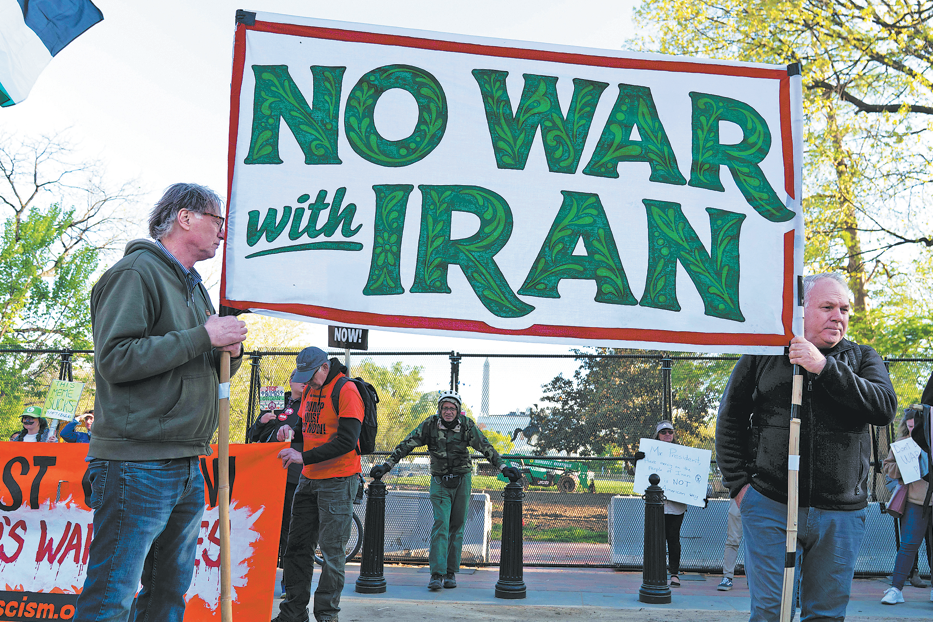
Protests also sprung up near the White House this week, with demonstrators gathering in Lafayette Square to condemn joint US-Israeli strikes on Iran and push for de-escalation. While the ceasefire has pulled the region back from the immediate brink of all-out war, the crisis triggered by Trump’s rhetoric has left deep divisions in the US and renewed global worries over the stability of the Middle East.