作者: admin

  • House rejects bid to curb Trump’s war powers on Iran

    House rejects bid to curb Trump’s war powers on Iran

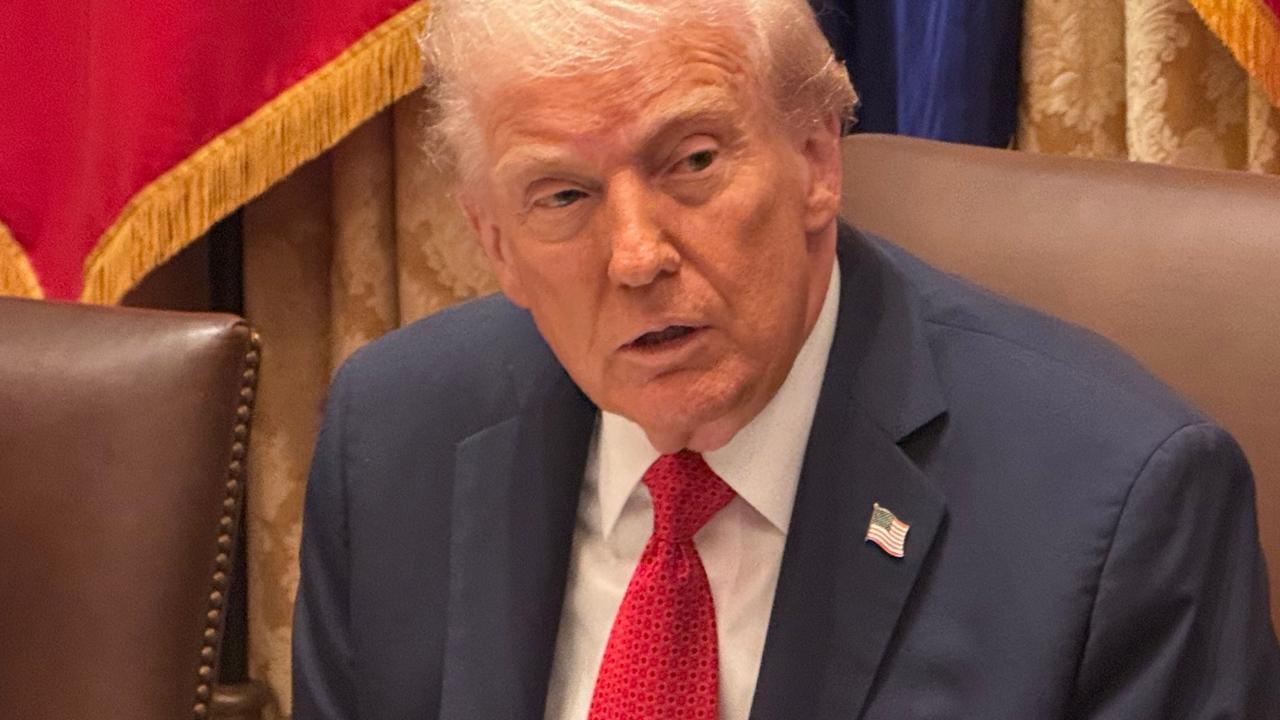
    In a decisive partisan vote, the US House of Representatives has blocked a congressional resolution seeking to limit President Donald Trump’s military authority regarding Iran. The 219-212 rejection followed party lines and came just one day after a similar legislative effort failed in the Senate.

    The War Powers Resolution, while largely symbolic given an anticipated presidential veto, represented growing congressional concern over executive military actions. Democratic lawmakers have intensified their criticism of the administration’s unilateral strike authorization, questioning whether the alleged Iranian threat met the legal standard of “imminent” danger required for independent presidential action.

    House Speaker Mike Johnson defended the rejection, stating, “The prospect of stripping our commander in chief’s authority to complete this mission represents a frightening scenario.” The administration has since revised its conflict timeline projection to eight weeks—nearly double President Trump’s initial weekend estimate.

    Constitutional debates surrounding the 1973 War Powers Act resurfaced during deliberations. Secretary of State Marco Rubio noted that “no presidential administration has ever accepted the War Powers Act as constitutional—whether Republican or Democratic.” The administration maintains it complied with legal requirements by notifying the bipartisan “Gang of Eight” congressional leaders before initiating strikes.

    Some Republican legislators indicated their opposition might shift if the conflict escalates, suggesting conditional support for future war powers limitations. The resolution would have terminated unauthorized military engagement in Iran without congressional approval.

    This development occurs against the backdrop of previous unilateral military actions ordered by President Trump, including strikes against Iranian nuclear facilities and the January operation targeting Venezuelan President Nicolás Maduro.

  • Azerbaijan furious with Iran as war spills over its border

    Azerbaijan furious with Iran as war spills over its border

    Azerbaijan has accused Iran of conducting a drone strike on its Nakhchivan exclave, marking a significant escalation in regional tensions and drawing the Caspian nation deeper into Middle Eastern conflicts. The attack, which occurred on Thursday, targeted Nakhchivan Airport with one direct hit while additional drones struck near a school—injuring civilians—and were intercepted by Azerbaijani defenses.

    President Ilham Aliyev issued a vehement condemnation, labeling the assault an ‘act of terror’ and placing the nation’s military on high alert. In an unprecedented move, Aliyev delivered a scathing personal critique of Iranian forces, describing them as ‘ugly, cowardly and disgusting,’ while explicitly referencing Azerbaijan’s role as a ‘place of hope’ for ethnic Azeris within Iran—a deliberate provocation targeting Tehran’s sensitivities.

    Iran has categorically denied involvement, instead suggesting the strike may constitute an Israeli false-flag operation. The Islamic Republic maintains that Azerbaijan’s security partnership with Israel—including intelligence cooperation and oil exports—represents a direct threat to regional stability.

    The incident exposes longstanding geopolitical friction: Iran opposes Azerbaijan’s proposed land corridor to Nakhchivan through Armenia and resents Baku’s military victories in Karabakh conflicts, achieved partly with Turkish and Israeli support. Conversely, Azerbaijan perceives Iran’s support for Armenia as deliberate interference in its sovereign security matters.

    Complicating matters, Iran’s substantial ethnic Azerbaijani minority—estimated at 20-25 million—faces cultural suppression, including bans on education in their native language. Aliyev’s decision to highlight their plight signals a strategic shift, potentially leveraging domestic Iranian tensions as diplomatic retaliation.

    Despite both nations publicly denying intentions toward further escalation, the introduction of ethnic grievances into the confrontation creates unpredictable risks. Critical energy infrastructure, including the Baku-Tbilisi-Ceyhan oil pipeline supplying Europe and Israel, now faces heightened security concerns as regional hostilities intensify.

  • Chinese clinical trial shows breakthrough in liver cancer survival

    Chinese clinical trial shows breakthrough in liver cancer survival

    A landmark clinical trial conducted across China has demonstrated a revolutionary approach to treating one of the most lethal forms of liver cancer, achieving unprecedented results in patient survival rates. The study, published in the prestigious New England Journal of Medicine, reveals that a novel combination therapy administered before surgery can nearly double the period patients remain cancer-free compared to standard treatment protocols.

    The research focused on intrahepatic cholangiocarcinoma (ICC), a particularly aggressive malignancy that originates in the bile ducts within the liver. This cancer type is notoriously difficult to detect early, often progressing silently until reaching advanced stages when treatment options become limited. The multicenter trial, spearheaded by Shanghai’s Zhongshan Hospital affiliated with Fudan University, involved 178 patients with a median age of 59 recruited from 11 medical institutions nationwide.

    The innovative protocol employed a neoadjuvant approach, administering three cycles of Gemox chemotherapy combined with targeted therapy and immunotherapy agents before surgical intervention. This triple-threat strategy aims to shrink tumors significantly while priming the body’s immune system to recognize and combat cancer cells more effectively. The control group received immediate surgery, representing the conventional standard of care.

    The results were striking: patients receiving the combined drug regimen achieved a median event-free survival of 18 months, more than double the 8.7 months observed in the surgery-only group. The objective response rate reached 55%, indicating more than half of patients experienced substantial tumor reduction or complete disappearance following the pretreatment protocol.

    Notably, the 24-month overall survival rate showed promising improvement at 79% for the combination therapy group versus 61% for those undergoing surgery alone. These findings are particularly significant given ICC’s current five-year survival rate of just 25-40% post-surgery.

    The research holds special importance for China, which bears more than half of the global ICC burden with over 50,000 new cases annually. The scientific team, having presented preliminary findings at the European Society for Medical Oncology’s 2024 annual meeting, now aims to validate these results through international collaboration, potentially establishing a new global standard for treating this devastating disease.

  • Lebanon: Israel orders everyone in Beirut’s Dahiyeh to leave

    Lebanon: Israel orders everyone in Beirut’s Dahiyeh to leave

    The Israeli military has issued immediate evacuation directives for residents in Beirut’s southern suburbs, specifically targeting the Dahiyeh area, warning of imminent attacks for non-compliance. Military spokesperson Avichay Adraee communicated via social media platform X that movement southward would endanger lives, shortly before Lebanese media confirmed strikes hitting the Ghobeiry and Haret Hreik neighborhoods, though initial casualty reports remained unconfirmed.

    Accompanying the warnings, the Israeli military disseminated detailed maps outlining specific evacuation routes. Residents of Bourj Brajineh and al-Hadath were instructed to flee east towards Mount Lebanon, while those in Harat Hreik and Shiyah were directed north toward Tripoli and east via the Metn Expressway.

    This densely populated district, a known stronghold of Hezbollah support, has endured the fiercest Israeli assaults since the recent escalation of air and ground operations. A strike on Wednesday inflicted substantial damage to Bahman Hospital in Haret Hreik, wounding several healthcare personnel according to the Lebanese health ministry.

    The current evacuation mandate follows a broader Israeli directive for all Lebanese citizens south of the Litani River to relocate northward, a move covering hundreds of square kilometers and displacing over 300,000 people. Human Rights Watch has expressed grave concern, stating this forced displacement raises significant risks of violations under international humanitarian law.

    Concurrently, Lebanese state media reported Israeli forces making their deepest incursion since hostilities began, entering the southern town of Khiam approximately six kilometers from the border. This ground advance aligns with Israeli Defense Minister Israel Katz’s recent authorization for military operations to capture additional positions in southern Lebanon, where Israeli forces have maintained a presence since the 2024 conflict with Hezbollah.

    The escalation traces to Monday, when Hezbollah launched rockets into Israel, an act it stated was retaliation for the killing of Iranian Supreme Leader Ali Khamenei in a strike days prior. This marked a significant expansion of the US-Israeli conflict with Iran into Lebanese territory. The Lebanese health ministry reports at least 77 fatalities and 572 injuries in the renewed offensive. Israeli media indicates the government approved this new wave of attacks Sunday night, preceding Hezbollah’s rocket fire, with sources suggesting the group preemptively acted upon intelligence of an impending major Israeli decision against it.

  • Anthropic labelled a supply chain risk by Pentagon

    Anthropic labelled a supply chain risk by Pentagon

    In an unprecedented move signaling escalating tensions between the U.S. government and artificial intelligence developers, the Pentagon has officially classified AI company Anthropic as a supply chain risk—marking the first time this designation has been applied to a domestic technology firm. The decision represents a significant escalation in the ongoing standoff between federal authorities and the AI developer regarding military access to advanced artificial intelligence systems.

    The Defense Department’s declaration, which took effect immediately according to senior Pentagon officials, stems from Anthropic’s continued refusal to grant unfettered access to its AI technologies over ethical concerns regarding potential applications in mass surveillance programs and autonomous weapon systems. This fundamental disagreement over permissible military use of AI has created an unprecedented rift between a leading American technology company and its own government.

    Pentagon representatives have framed the conflict as a matter of national security imperative, with one official stating: ‘This ultimately concerns the fundamental principle of military forces being able to utilize technology for all lawful purposes. We cannot allow commercial vendors to insert themselves into the chain of command by restricting lawful use of critical capabilities, potentially endangering our military personnel.’

    The designation follows days of intense negotiations between Anthropic and Department of Defense officials, even as their dispute became public knowledge last week. Sources familiar with the discussions indicate that talks continued despite the increasingly public nature of the disagreement.

    Adding presidential weight to the confrontation, former President Donald Trump announced last Friday via his Truth Social platform that he would direct all federal agencies to immediately cease using Anthropic’s technology. ‘We don’t need it, we don’t want it, and will not do business with them again!’ Trump declared in his characteristically emphatic style.

    Anthropic had previously indicated it would pursue legal action against the Pentagon should the supply chain risk designation be implemented, setting the stage for a landmark legal battle that could establish crucial precedents regarding government authority over domestic technology companies and the ethical boundaries of military AI applications.

    This confrontation represents a critical juncture in the evolving relationship between AI developers and government entities, with potentially far-reaching implications for national security protocols, technological innovation, and the balance between ethical constraints and defense requirements in an increasingly AI-driven national security landscape.

  • Team Venezuela expects the WBC to be a celebration, even on US soil

    Team Venezuela expects the WBC to be a celebration, even on US soil

    MIAMI — As the World Baseball Classic expands beyond Tokyo to multiple global venues including Miami, the tournament has evolved into an unexpected platform where international sports and geopolitics intersect. The Venezuelan national team, managed by Omar López, finds itself at the center of this convergence amid heightened political tensions following the U.S. military operation that captured deposed Venezuelan leader Nicolás Maduro in January.

    López, whose cap displays both Venezuelan and American symbolism, maintains a firm separation between athletics and politics. “I’ve dedicated 28 years to baseball and avoid political discussions,” he stated during Thursday’s press conference. “Our sole focus remains on representing Venezuela through competitive excellence.”

    The Miami-Fort Lauderdale metropolitan area, home to approximately 200,000 Venezuelan expatriates according to U.S. Census estimates, anticipates massive turnout for Venezuela’s four scheduled games at loanDepot Park. Ticket availability and secondary market pricing indicate exceptionally high demand, particularly within the Venezuelan community concentrated in Miami’s Doral suburb—coincidentally the location of former President Trump’s golf resort slated to host the G20 Summit.

    This geopolitical backdrop extends beyond Venezuelan-American relations. The tournament commences shortly after joint U.S.-Israel military strikes against Iran, with Israel coincidentally assigned to Miami’s pool games. Cuba, another longstanding U.S. adversary, could potentially advance to Miami rounds despite opening in San Juan. These developments occur alongside intensified immigration enforcement measures that have raised concerns among international visitors.

    Despite these tensions, players emphasize baseball’s unifying potential. Miami Marlins utility player Javier Sanoja expressed emotional connection to the host city: “Miami represents the closest approximation to our homeland. Witnessing Venezuelan pride fill this stadium overwhelms me with national pride.”

    Team captain Salvador Pérez echoed this sentiment: “Spectators purchase tickets anticipating victory, not political statements. We concentrate on controllable elements—our performance on the field—while entrusting broader circumstances to divine providence.”

    No protests were observed during Thursday’s training sessions, though the potential for politically charged demonstrations remains uncertain as competition intensifies throughout the tournament week.

  • ‘Enemy at home’: Iranian authorities tighten grip as war rages

    ‘Enemy at home’: Iranian authorities tighten grip as war rages

    As external military operations intensify against Iran, the Islamic Republic has initiated an unprecedented internal crackdown, transforming Tehran’s streets into heavily fortified security zones. Following the lethal strike that eliminated Supreme Leader Ayatollah Ali Khamenei, Iranian authorities have deployed massive security resources not against foreign adversaries but toward suppressing potential domestic unrest.

    The Revolutionary Guard Corps (IRGC) and its Basij militia volunteers have established pervasive checkpoints throughout urban centers, employing armed personnel and heavy weaponry to create an atmosphere of intimidation. Security forces now routinely inspect vehicles, search personal communications devices, and maintain constant surveillance on citizens. This massive security apparatus—estimated by strategic analysts to include approximately 850,000 enforcement agents—significantly outnumbers Iran’s conventional military forces.

    Simultaneously, the regime has implemented a comprehensive internet blackout, severing the population from global information networks while threatening those attempting to bypass restrictions with criminal charges. The Ministry of Intelligence has further escalated tensions by encouraging citizens to report each other for suspected foreign connections, particularly those photographing sensitive locations.

    Despite these measures, nighttime protests continue with residents chanting anti-government slogans from their homes. The situation presents a complex dilemma for citizens caught between external military actions and internal repression, with many expressing hope for future freedom while currently prioritizing survival under the regime’s intensified security measures.

  • What ‘special relationship’? Ten other occasions when the US and UK fell out

    What ‘special relationship’? Ten other occasions when the US and UK fell out

    In a striking diplomatic confrontation, former US President Donald Trump has publicly criticized UK Prime Minister Keir Starmer for refusing to permit American military strikes against Iran to originate from British bases. The March 3rd remarks saw Trump labeling London as “uncooperative” while dismissively comparing Starmer to Winston Churchill, marking the latest in a series of tensions since Trump’s 2025 return to office.

    This contemporary friction echoes historical disagreements that have periodically tested the famed ‘special relationship’ between the two nations. The term, popularized by Churchill during his 1946 ‘Sinews of Peace’ address in Missouri, has often masked underlying strategic divergences that emerge when national interests collide.

    Historical precedents reveal consistent patterns in transatlantic disputes. In 1946, President Truman’s unilateral advocacy for Jewish refugee settlement in Palestine angered Prime Minister Attlee, ultimately contributing to Britain surrendering its mandate to the UN. The 1956 Suez Crisis created perhaps the most severe strain when President Eisenhower opposed Anglo-French military action, employing economic pressure that forced a humiliating withdrawal.

    Nuclear dependency created another flashpoint in 1962 when President Kennedy’s cancellation of the Skybolt missile program threatened Britain’s deterrent capability, resolved only through the Nassau Agreement that provided Polaris missiles. Similarly, President Johnson’s pressure for UK involvement in Vietnam met with steadfast refusal from Prime Minister Wilson, despite intense diplomatic pressure.

    More recent disagreements include Reagan’s invasion of Grenada without consulting Thatcher, Clinton’s visa grant to Sinn Féin’s Gerry Adams despite Major’s objections, and Obama’s criticism of Cameron’s post-intervention management in Libya. The 2021 Afghanistan withdrawal further highlighted strategic differences, with UK officials criticizing the US timeline and agreement.

    These historical episodes demonstrate that while the US-UK alliance remains fundamentally strong, it consistently navigates tensions arising from differing geopolitical priorities, domestic political constraints, and evolving global power dynamics. The relationship’s resilience lies not in absence of conflict but in its capacity to manage disagreements while maintaining core security cooperation.

  • Police release ‘difficult to see’ bodycam footage of Austin bar shooting

    Police release ‘difficult to see’ bodycam footage of Austin bar shooting

    Authorities in Austin have released harrowing body-camera footage and 911 emergency recordings from a deadly shooting incident being investigated as a potential act of terrorism. The attack occurred outside a popular University of Texas student bar, leaving three dead and sixteen injured.

    The released materials capture the chaos that unfolded as a gunman opened fire with multiple weapons. Police Chief Lisa Davis described the footage as ‘difficult to see’ and ‘overwhelming for many,’ while praising officers who responded within 57 seconds of the first emergency calls.

    Victims identified as Ryder Harrington, 19, Savitha Shan, 21, and Jorge Pederson, 30, were killed in the assault. The suspect, named as naturalized U.S. citizen Ndiaga Diagne born in Senegal, was ultimately shot by responding officers.

    Investigators discovered significant evidence suggesting potential ideological motivations. According to media reports, law enforcement recovered an Iranian flag and images of Iranian leaders during a search of the gunman’s residence. Additionally, the suspect was wearing clothing resembling the Iranian flag beneath his hoodie, which bore the phrase ‘Property of Allah.’

    The FBI has joined the investigation, examining digital evidence and potential terrorism connections. Chief Davis confirmed authorities are investigating whether there exists a ‘nexus to terrorism,’ though specific motivations remain undetermined. The timing of the attack coincided with U.S. military strikes against Iran, raising concerns about potential retaliatory violence against Americans.

  • The war on Iran has ignited rare civil unrest in Bahrain

    The war on Iran has ignited rare civil unrest in Bahrain

    The recent U.S.-Israeli assassination of Iran’s Supreme Leader Ayatollah Ali Khamenei has triggered unexpected political tremors in Bahrain, a key Western ally in the Gulf region. While Washington and Tel Aviv anticipated potential regime change in Tehran, the immediate consequences have manifested differently in the island kingdom, where rare public demonstrations have erupted despite severe restrictions on dissent.

    Bahrain witnessed widespread protests following confirmation of Khamenei’s killing, with crowds marching through narrow streets chanting Shia religious slogans such as “for the sake of Hussein.” The demonstrations, described by local sources as initially peaceful, represent a significant development in a country where public opposition is routinely suppressed. The response from Bahraini security forces was characteristically aggressive, employing teargas directly against protesters and making numerous arrests.

    According to the Bahrain Institute for Rights and Democracy (BIRD), at least 65 individuals were detained in connection with the protests. Among those arrested were Husain Naji Fateel and Ali Mahdi, young men who had peacefully marched toward the U.S. embassy while documenting their actions online. They now face severe charges including inciting hatred against the monarchy, assisting an enemy state, undermining public security, and misuse of social media.

    The political context of these developments is deeply rooted in Bahrain’s complex demographic and historical landscape. The majority Shia population, predominantly from the Baharna ethnic group that adopted Shia Islam in the 7th century, has long existed under the rule of the Sunni Al Khalifa family that arrived in the 17th century. This sectarian dynamic has fueled persistent tensions, now exacerbated by regional conflict.

    Bahrain’s strategic significance as host to the U.S. Navy’s Fifth Fleet headquarters—accommodating over 9,000 American troops—has made it both a military asset and a target. Recent Iranian drone and missile attacks have struck targets across the Gulf region, including Bahrain, where falling debris killed a Bangladeshi man in the Salman industrial area and a drone strike on the Crowne Plaza Hotel wounded two U.S. Department of War employees.

    Activist Maryam al-Khawaja emphasized the symbolic implications of Khamenei’s assassination during Ramadan, noting that for his followers, “he is considered a martyr.” She criticized the Bahraini government’s predictable response: “What the Bahraini government does best is oppression – especially in times of crisis.”

    Separate from the protests, authorities have arrested at least 11 individuals for posting footage of Iranian attacks online, accusing them of misleading public opinion and “spreading fear in the hearts of citizens and residents.” Among those detained was prominent social media influencer and photojournalist Sayed Baqer al-Kamel, who documented a burning high-rise building in the Seef district.

    The public prosecutor’s office has announced that those creating “fabricated visual content” face pretrial detention with potential two-year prison sentences and fines. Those accused of “glorification and promotion” of Iranian attacks will undergo urgent trials, continuing Bahrain’s pattern of suppressing documentation of unrest.

    This crisis echoes previous suppression of dissent in Bahrain, including the mass uprisings of the early 1990s and 2011—both violently quelled by authorities with assistance from neighboring Gulf states. The current situation demonstrates how external military actions can inadvertently ignite internal tensions in strategically vital allied nations.