The ongoing conflict in Iran has upended global energy markets, with widespread disruptions to shipping through the Strait of Hormuz — the chokepoint through which most of the world’s traded oil and natural gas flows. With the strait mostly shut and most of its pre-conflict cargo bound for Asian markets, regional governments are racing to conserve existing supplies and rebuild depleted energy reserves, even as a fragile temporary ceasefire struggles to hold. Soaring gasoline prices have already hit consumers across the United States and Europe, and the crisis has laid bare the deep geopolitical and economic risks of global dependence on fossil fuels. For most energy-importing Asian nations, the shock has delivered severe economic pain. But against this backdrop, analysts and industry experts predict China, the world’s largest buyer of Iranian crude oil, is uniquely positioned to turn the global energy disruption into a major strategic and economic gain.
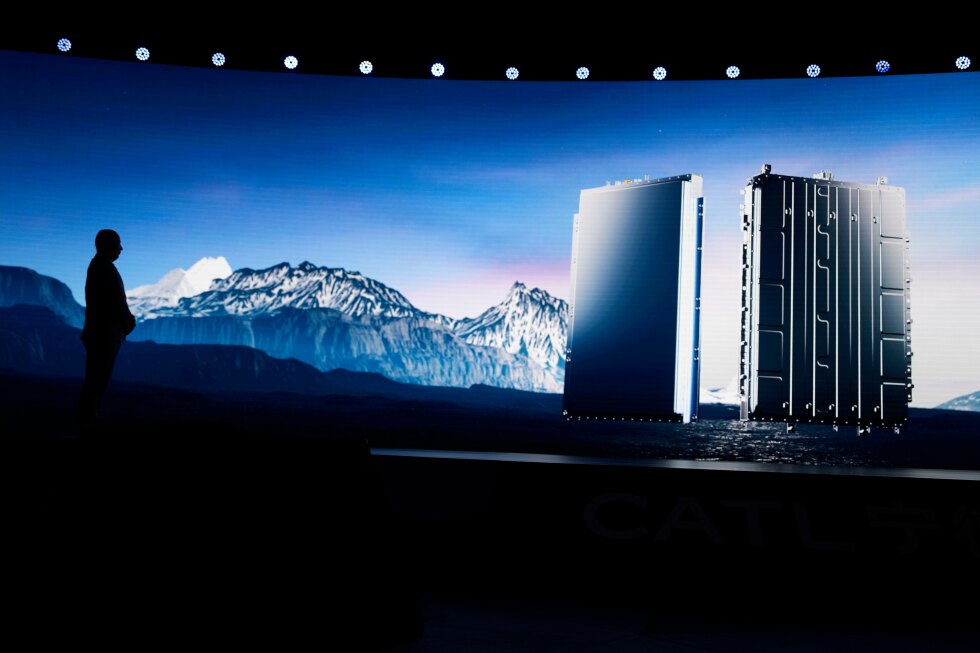
Decades of targeted investment have left China as the unrivaled global leader in the clean energy technologies the world is now scrambling to adopt. China controls more than 70% of global electric vehicle (EV) manufacturing capacity and roughly 85% of global lithium-ion battery cell production, according to data from the International Energy Agency. Its domestic industry giants, including EV manufacturer BYD and battery producer CATL, already dominate global export markets for these products, and years of policy prioritization have cemented this lead: China’s current five-year development plan running through 2030 reaffirms clean technology as a core national strategic priority.
This position is the result of a deliberate policy shift dating back more than a decade, when Chinese President Xi Jinping integrated long-term energy security into the country’s broader national security framework. While fossil fuels still make up the majority of China’s domestic energy mix, consistent government support has allowed its clean energy sector to outpace development in most other major economies, particularly the United States.
Under the second Donald Trump administration, U.S. energy policy has doubled down on fossil fuel development, leaning on the country’s vast domestic oil and gas reserves to pursue what Trump has called “energy dominance,” centered on the slogan “drill, baby, drill.” Washington has prioritized expanding exports of liquefied natural gas while scaling back federal support for renewable energy development. Even before the Iran conflict broke out in late February, this created what analysts call a “bifurcation” in global energy markets, with the world’s two superpowers pushing competing visions for the future of energy and leaving other nations to navigate complicated choices about which path to pursue.
Now, the energy shock from the Iran war is tilting that balance sharply in China’s favor. Global demand for affordable clean energy technology has spiked as governments, businesses and households wake up to the fragility of global fossil fuel supply chains. Data from London-based energy think tank Ember shows Chinese exports of solar panels, batteries and electric vehicles hit a record high of nearly $22.3 billion in December 2025, a 47% year-over-year increase, with most shipments bound for Southeast Asia and Europe. Credit rating firm Fitch Ratings projects investment in renewable power and battery storage will surge across energy import-dependent nations, particularly in Western Europe, as countries look to insulate themselves from future fossil fuel price shocks.
Financial markets have already priced in this expected growth: in March 2026, shares of CATL and BYD traded on the Hong Kong Stock Exchange rose roughly 24% and 11% respectively, as investors bet on rising global demand for Chinese clean energy products.
China’s EV sector was already outpacing U.S. and European rivals before the conflict, with aggressive expansion of production capacity and affordable pricing helping Chinese brands gain significant market share across emerging markets in Southeast Asia and beyond. Analysts say that growth will only accelerate in the wake of the energy crisis. “The energy shock is going to help the Chinese industry globally and hurt the American car industry globally,” said Amy Myers Jaffe, senior fellow at New York University’s Center for Global Affairs. While high U.S. tariffs have largely blocked Chinese EVs from the American market, surging domestic fuel prices are expected to further boost BYD’s sales growth within China’s own large EV market, according to Chris Liu, an analyst at research and advisory firm Omdia.
Early data from around the world already shows a sharp shift in consumer and government behavior in response to rising fuel costs. In Pakistan, which previously relied on the Strait of Hormuz for 80% of its oil imports, decades of gradual renewable expansion has already softened the blow of the current crisis. By December 2025, Pakistan had imported more than 50 gigawatts of Chinese solar panels as part of its national renewable rollout. Analysts from Renewables First and the Centre for Research on Energy and Clean Air estimate that if current fuel prices remain high, existing solar capacity will save Pakistan $6.3 billion in fossil fuel import costs over the next year. “The shock isn’t as big as it would have been without solar,” said Nabiya Imran of Renewables First.
In the United Kingdom, British renewable energy group Octopus Energy reported that EV leasing demand jumped more than a third in the first three weeks of March 2026 compared to the pre-conflict period in February, alongside sharp increases in sales of rooftop solar systems and customer inquiries about solar energy. Even in Southeast Asia, where regional EV maker VinFast has moved to offer discounts to offset rising fuel prices, the crisis has reinforced interest in transitioning away from gasoline-powered vehicles. While analysts note it will take time for long-term purchasing trends to shift, as consumers wait to see how the Iran conflict evolves, the prolonged price shock is expected to act as a lasting catalyst for EV adoption.
Even Indonesia, the world’s largest coal exporter, is accelerating its transition to electric transportation, a shift that stands to benefit Chinese clean energy firms. In March 2026, Indonesian President Prabowo Subianto announced a major national push into EV production and charging infrastructure development. Chinese firms already hold a dominant position in Indonesia’s clean energy supply chain: they signed more than $54 billion in deals with Indonesia’s state utility in 2023, and added a further $10 billion pledge during Prabowo’s 2024 visit to Beijing. “There will be direct financial benefits to Chinese companies,” said Sam Reynolds, energy analyst at the U.S.-based Institute for Energy Economics and Financial Analysis (IEEFA).
Experts say the conflict has fundamentally vindicated China’s long-term approach to energy policy and geopolitics. “China’s approach to energy sector development and geopolitics has been completely validated by the Iran conflict,” Reynolds noted. Li Shuo, director of the Asia Society Policy Institute’s China Climate Hub, added: “They are at the very forefront of this, more so than any other countries in the world, certainly more so than the United States.”
This reporting was contributed by Ghosal in Hanoi, Vietnam, Delgado in Bangkok, and AP Business Writer Paul Wiseman. The Associated Press’ climate and environmental coverage receives financial support from multiple private foundations, with the AP retaining full editorial control over all content.