
After more than a decade of bitter legal wrangling over one of Australia’s most profitable iron ore projects, the Supreme Court of Western Australia has delivered a split decision in the high-profile lawsuit against Gina Rinehart, the country’s wealthiest individual, granting partial wins to both sides of the dispute. Rinehart, who holds an estimated personal net worth of A$38 billion, inherited her father Lang Hancock’s iron ore holdings in 1992 and grew the portfolio into a dominant mining force across Western Australia’s resource-rich Pilbara region, anchored in part by the massive Hope Downs iron ore development. At the heart of the legal conflict is a decades-old joint venture agreement forged between Hancock and his close business partner Peter Wright, founders of the iron ore pioneering Hanwright partnership that first laid claim to the Pilbara’s mineral reserves decades ago. The heirs to Wright’s stake, organized under Wright Prospecting, launched the legal challenge alongside two of Rinehart’s own children – Bianca Rinehart and John Hancock – arguing that Rinehart had breached the original partnership agreement and wrongfully withheld rightful shares of profits and control from the claimants. The 51-day 2023 trial centered on competing claims to royalties and mining rights for the Hope Downs project, which is currently jointly operated by global mining giant Rio Tinto and Rinehart’s flagship company Hancock Prospecting. In 2023 alone, the site generated A$832 million in revenue for Hancock Prospecting, with Rio Tinto paying a 2.5% royalty on production to Rinehart’s firm. Justice Jennifer Smith, presiding over the case, ruled that half of all past and future royalties from the project must be awarded to the Wright family, upholding their core claim that they were entitled to a share of the project’s ongoing profits. However, the judge rejected the Wright family’s demand for a split of formal mining rights, leaving full ownership of those critical assets with Rinehart. The court also dismissed claims from Rinehart’s two children, who had argued that their mother moved lucrative Hope Downs mining rights out of a family trust to intentionally cut them off from an inheritance their grandfather intended for them. Rinehart’s defense had argued the transfer was made over legitimate concerns about irregularities in her father’s business dealings, while her children countered the move was designed to exclude Rinehart’s stepmother, Rose Porteous, from accessing the family fortune. A separate claim for royalties brought by the family of late engineer Don Rhodes was partially granted by the court. In responses to the ruling, representatives from both sides characterized the outcome as a victory. Jay Newby, executive director of Hancock Prospecting, noted that the judgment confirmed the company’s full ownership of the Hope Downs mining rights and firmly rejected the broader ownership claims brought by the Wright family and Rinehart’s children. Meanwhile, a spokesperson for Wright Prospecting said the organization was “pleased to finally receive a result in our favour” after 13 years of litigation. Beyond her control of Australia’s largest private mining empire, Rinehart is known as one of the country’s most influential private donors, contributing heavily to conservative political parties, national sports programs, and charitable causes across Australia.
作者: admin
-
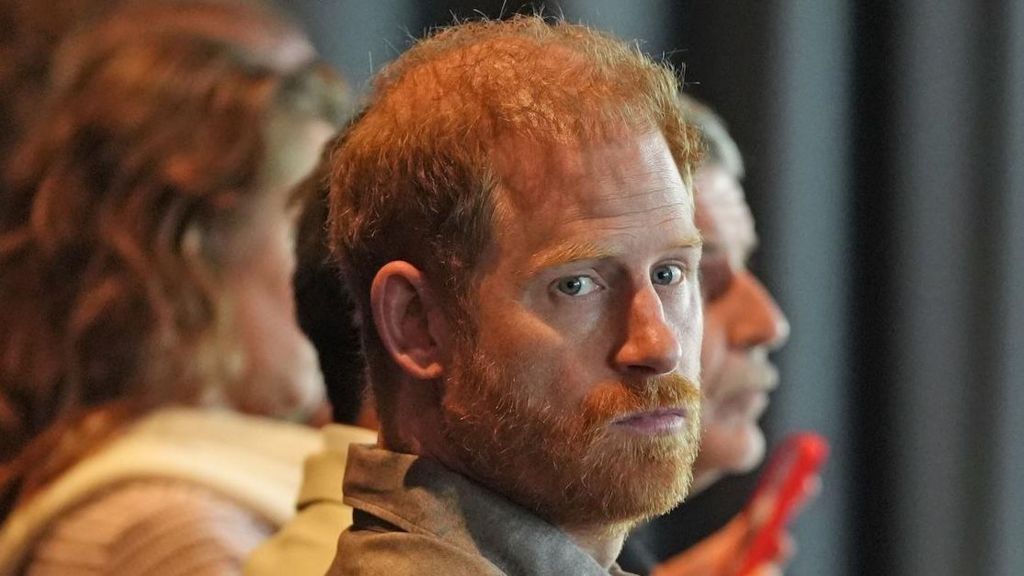
Harry says children should be an ‘upgrade’ of their parents
On the second day of his private working visit to Australia, Prince Harry, the Duke of Sussex, merged his longstanding advocacy for mental health and love of sport to launch a landmark new report on paternal well-being, opening up about his own journey as a father and the intergenerational shift shaping modern parenting.
Greeting the Melbourne crowd with a casual “G’day everyone” and a lighthearted nod to the Western Bulldogs AFL team’s strong start to the 2026 season, the Duke centered his remarks on evolving approaches to parenting, drawing a direct connection to his own experience growing up in the British royal family and raising his own children today. He noted that global social shifts have rendered outdated parenting models obsolete, arguing that each new generation of parents has the opportunity to build on the lessons of the past.
“The world around us has changed massively, so there is no version of where parenting is going to be the same as we experienced,” he told attendees. “From my perspective, our kids are our upgrades. That’s not how I was taught, but that was my take on it… Even if you had the best upbringing in the world, the best parenting in the world, there’s still room for improvement.” A longstanding public advocate for open discussion of mental health struggles, the Duke also pushed back against the persistent stigma that discourages fathers from seeking support when they are struggling, framing openness as a sign of strength rather than weakness.
“For so many years it has been seen as a weakness to stick your hands up. I find it’s the opposite,” he said. “The more grief I get for talking about it, the more I want to stand up and talk about it. I know if I go quiet about it – what does that say to everyone else?”
The event, hosted by men’s health charity Movember, marked the launch of new research that lays bare the unaddressed mental health challenges facing new fathers. The study’s findings are stark: one in five fathers report extreme feelings of isolation in the period after welcoming a child, while just under 60% of new dads were never asked how they were coping in their baby’s first 12 months. The report also found that more than 70% of surveyed fathers are actively committed to parenting differently than their own fathers did, a trend Movember leaders say aligns directly with Harry’s public messaging.
Dr. Zac Seidler, Movember’s Global Director of Research, praised the Duke for bringing authentic, personal experience to the advocacy effort. “He’s really passionate about this, it matters to him, and he told us real stories that he had experienced, stuff that he’d spoken about with his wife, with his therapist,” Seidler said. “He really just wanted to get to the heart of it and talk about advocating for change. I think Harry was just talking about this seismic intergenerational shift that we’re all experiencing. We want to do things differently; we want to learn from our fathers, whether it’s mistakes or otherwise and really lean into what it means to be a dad today.”
Nathan Appo, the first Indigenous Australian to sit on Movember’s global board and a Mamu man from Far North Queensland, acknowledged the complicated context of Harry’s visit, noting that many of the systemic health barriers facing First Nations Australians trace back to British colonialism carried out by the Duke’s ancestors more than 250 years ago. Even so, Appo praised Harry for centering Indigenous voices and engaging meaningfully with the community’s challenges.
“As you travel around the world, connecting with Indigenous people to understand their history and what our people face regularly, the barriers that we face… and how that impacts on health is really important,” Appo told the BBC. “Building your knowledge to give you a good understanding of how you can change policy for the better is really important, and I think Harry is someone who does that. He’s using his platform to promote and empower people around the world and do the right things. It’s hard not to be drawn to people like that.”
After the report launch, Harry leaned into the second half of his day’s agenda: trying his hand at Australian Rules Football, the dominant sport of Melbourne, with players from the Western Bulldogs. Under the guidance of Bulldogs midfielder Adam Treloar, the Duke, a former keen rugby player in his youth, learned the basics of holding the oval-shaped AFL ball and navigating the field. Treloar described Harry as enthusiastic and genuinely curious about the sport, noting that the interaction felt far from the stiff, scripted meetings common for high-profile visitors.
“He went alright, he was very keen on learning,” Treloar told reporters. “I don’t think we had enough time to really teach him, but he was super keen, asking how we hold the footy and where the laces go. It was pretty normal. We had a great conversation. One of the teammates that was with me has four pubs and was talking about his pubs and maybe coming down for a beer if he has some spare time, which obviously he doesn’t, but it just seemed really genuine and authentic.”
Harry’s wife, Meghan, Duchess of Sussex, did not attend Wednesday’s public event, and no public appearances have been scheduled for her on this day. A spokesperson for the couple did not respond to BBC requests for comment on Meghan’s plans during the trip. The couple, who stepped down as working British royals in 2020, are traveling to Australia in a private capacity, combining charitable engagements like Harry’s mental health launch with private commercial work. It is understood that Meghan is using the trip to explore plans for expanding her As Ever lifestyle brand into the Australian market. Following his Melbourne commitments, Harry is set to travel to Canberra for engagements later on Wednesday.
-
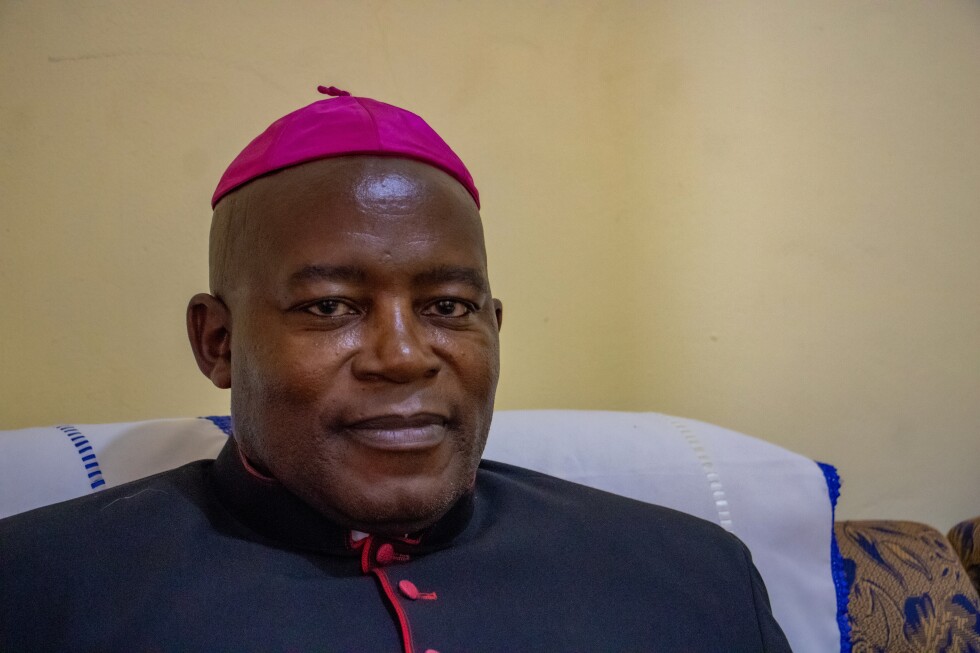
Cameroon hopes the pope’s visit brings healing after nearly a decade of conflict
In the violence-scarred city of Bamenda, the epicenter of Cameroon’s years-long Anglophone separatist conflict, 52-year-old nurse and mother of six Caro Bih carries a lifetime of trauma that has become all too common for residents of the country’s restive western regions. Once kidnapped, chained, and held for ransom by separatist fighters, Bih has lost multiple relatives to killing, imprisonment, and abduction. Her family home has been burned to the ground, a stroke she suffered while fleeing repeated violence has gone untreated due to conflict-related financial collapse, and her children’s once-bright dreams of professional futures have been cut short by poverty and instability. Today, her only hope for lasting change rests on the arrival of Pope Leo XIV, who is set to visit Cameroon this week as part of a four-nation African tour.
Millions of Cameroonians are awaiting the pope’s Wednesday arrival, which comes at a fragile turning point for the Central African nation. Just months prior, a deeply disputed presidential election that extended the 40-plus-year rule of 93-year-old Paul Biya, the world’s oldest sitting head of state, left dozens dead and deepened existing divisions across the country. The papal visit, centered on a public call for national reconciliation, will shine a long-overdue global spotlight on the separatist conflict that has torn through Cameroon’s two Anglophone regions since 2017, when fighters launched a rebellion seeking an independent state separate from the country’s Francophone-dominated government. The conflict, widely labeled by humanitarian organizations as one of the world’s most neglected crises, has already claimed thousands of lives and displaced hundreds of thousands. In a significant gesture to clear the way for the visit, separatist leaders announced Tuesday a three-day ceasefire to ensure safe passage for the pope, civilians, and visiting dignitaries.
During his time in Cameroon, the pope will preside over a peace gathering with local community leaders in Bamenda on Thursday, followed by a public Mass at the city’s airport. Cameroonian government officials have framed the visit as a historic opportunity to foster national unity across the country’s long-running ethnic and linguistic divides. But outside observers and opposition activists have raised sharp concerns that the Biya administration, which has been repeatedly accused of human rights abuses during the conflict and has rejected meaningful dialogue with separatist groups, will seek to exploit the papal visit to gain international legitimacy.
Benjamin Akih, a U.S.-based Cameroonian activist with the civil society group Council for the Sovereignty of Cameroon, warned that the pope must avoid letting the regime use his visit to distract from deep-rooted historical injustices with empty calls for unity. Eric Chinje, head of the diaspora-based democracy organization Project Cameroon, echoed that skepticism, noting the visit likely aligns more with the pope’s global evangelical mission than with tangible efforts to resolve Cameroon’s political crisis. He added that the pope is unlikely to publicly rebuke Biya, who has clung to power for decades through contested elections and authoritarian rule. This skepticism comes amid a recent controversial move by Cameroon’s parliament, which revived the country’s vice presidency, granting the aging Biya sweeping power to appoint his own successor, further consolidating his control over the state.
For many clergy and ordinary residents who have endured years of violence, however, the visit remains a source of cautious hope. Catholic priests have been repeatedly targeted by both sides of the conflict: in November, Rev. John Berinyuy Tatah was kidnapped alongside five fellow clergy by separatists and held for two weeks in remote bushland cut off from all outside contact. Despite his own trauma, Tatah, who plans to attend the pope’s Mass, said he believes the pontiff’s visit will plant a seed of reconciliation that can grow to heal the country if nurtured. “The cry of every Cameroonian is for the pope to help us mediate for dialogue in the ongoing crisis,” he said.
Beyond the Anglophone separatist conflict, Cameroon also faces persistent attacks from Boko Haram extremists operating across its northern border with Nigeria, compounding the country’s humanitarian crisis. According to the United Nations World Food Programme, more than 3.3 million Cameroonians impacted by conflict currently face acute food insecurity, with many families forced to skip meals, sell their only livestock, or take on crippling debt to survive.
Yeeika Desmond Nangsinyuy, a Bamenda-based spoken-word artist who has used his work to advocate for peace, was abducted by separatists in 2024 and ordered to stop his anti-violence performances. He refused to end his work, and now says he hopes the pope will center the pain of families torn apart by years of fighting. “My hope is that the pope touches the soft spot of our collective wounds,” he said. “I want him to speak directly to the pain of families torn apart by conflict, and to inspire renewed hope that peace is possible.”
For Caro Bih, that hope is deeply personal. Her family’s total monthly income, from the small vegetable plot she tends and sells from and the odd jobs her older children take to get by, amounts to roughly $53, barely enough to cover basic food needs. Only two of her six children remain in school; 9-year-old Lydiane, who dreamed of becoming an accountant, dropped out to help care for her younger siblings, and Bih’s husband, a former Catholic missionary teacher, was forced to abandon his job due to persistent insecurity. Bih herself abandoned stroke medication and physiotherapy in 2024 to save money for her family, relying instead on cheap herbal remedies to manage her symptoms. “I had dreamt of seeing my children become doctors, magistrates and so on,” she said quietly. “Now their future is uncertain.” But like millions of other conflict-weary Cameroonians, she says she believes the pope’s visit will mark a turning point. “We believe he will be a turning point,” she said.
This reporting is supported by the Gates Foundation as part of AP News’ global health and development coverage in Africa, with the AP retaining full editorial control over all content.
-

Homeric hangover cure: Greek claim over ancient bovine belly broth stirs feud with rival Turks
A decades-long culinary rivalry between Greece and Turkey has reignited over a humble, hearty offal soup, with both nations staking competing claims to the dish as Greece pushes to have it recognized as an official intangible cultural heritage by UNESCO.
In the northern Greek port city of Thessaloniki, Dimitris Tsarouhas, a third-generation restaurateur who has spent decades perfecting the recipe for what Greeks call patsa, is leading the charge for UNESCO registration. The dish, a slow-simmered broth made from bovine bellies and trotters, has long been a beloved staple in Greek culture — particularly as a soothing morning meal that locals swear eases the discomfort of hangovers and even treats chronic stomach ailments. Proponents of the Greek claim trace the dish’s origins all the way back to 8th century BCE, referencing a mention in Homer’s *Odyssey* that describes a similar preparation served at a feast for Penelope’s suitors, moments before Odysseus reveals his identity after 10 years of travel. According to Tsarouhas, the epic describes a dish of stuffed bovine belly mixed with suet and blood — a description he says matches the core of modern Greek patsa perfectly.
Tsarouhas has not undertaken this effort alone. Working alongside a local Thessaloniki cultural association and Lena Oflidis, the only historian to have published a full book on the soup’s history, he has compiled a comprehensive dossier to submit to UNESCO outlining Greece’s historical and cultural connection to the dish. For the chefs who prepare patsa daily, the recipe’s lineage is clear: 22-year veteran patsa chef Pantazis Koukoumvris explains that ancient Greek cooks developed the preparation, which was later adopted by Byzantine chefs, passed to the Ottoman Empire, and preserved through generations in Greek cooking.
Beyond its legendary roots, regular patrons and proponents point to the dish’s practical and cultural place in modern Greek life. Dozens of customers flock to Tsarouhas’ restaurant at all hours, starting at dawn, to enjoy a bowl, customized to preference with coarsely or finely chopped meat, topped with mustard, hot pepper flakes and sesame seeds. Tsarouhas, citing medical research, notes that the slow-cooked trotters contain nearly 33.4% consumable collagen, making it a popular remedy for joint pain after surgery, stomach ulcers and other digestive issues linked to alcohol consumption. Long-time patron Christos Mousoulis emphasizes that regardless of any similarities between the Greek and Turkish versions, patsa has been a fixture in Greek family life for generations. “We grew up with Greek patsa,” he explained. That shared cultural connection, he argues, is the foundation of Greece’s claim.
But across the Aegean Sea, Turkish chefs, restaurateurs and members of the public are pushing back hard against the Greek bid, calling it an attempt to appropriate a dish that Turks have called iskembe çorbası, or simply iskembe, as a national staple for centuries. Unlike Greek patsa, which includes both tripe and trotters, Turkish iskembe is made exclusively with slow-cooked tripe, simmered for 8 to 9 hours overnight before being served in a rich garlicky broth.
Ali Turkmen, a 59-year-old Istanbul restaurateur who has specialized in iskembe for decades, says the dish is inherently tied to Turkish cultural identity. “It’s been a staple in our culture for centuries. Tripe soup is something specific to Turks,” he said, echoing the long-running pattern of culinary disputes between the two neighbors that have already included competing claims to baklava, stuffed grape leaves, and Turkish coffee, all legacies of centuries of shared Ottoman history.
Turkish historical evidence points to 17th-century writings from famed Ottoman traveler Evliya Celebi, who documented street vendors selling tripe and trotter soup in the streets of Istanbul in his *Book of Travels*, proving a 400-year recorded history of the dish in Turkish lands. Turkish media has widely framed the Greek bid as cultural appropriation, and members of the public are calling for official pushback. “Tripe soup is one of the dishes we should be promoting to the world,” said Murat Pajik, a regular customer at Istanbul’s iconic Alem Iskembe restaurant. “Measures need to be taken to protect our heritage.” Another patron, Engin Cakar, called the Greek claim futile: “This tripe dish is from our grandfathers, our mothers. It belongs to us.”
Despite the public friction, Tsarouhas remains confident in Greece’s case, striking a conciliatory tone amid the dispute. “Nobody’s stopping them from making their own claim,” he said. “We believe that we have all the documentation to secure certification for patsa as Greek heritage. We don’t have anything to divide with our neighbors — rather the taste unites us.”
The UNESCO registration process is expected to take months, leaving the question of which nation can lay claim to the beloved soup still very much up in the air.
-
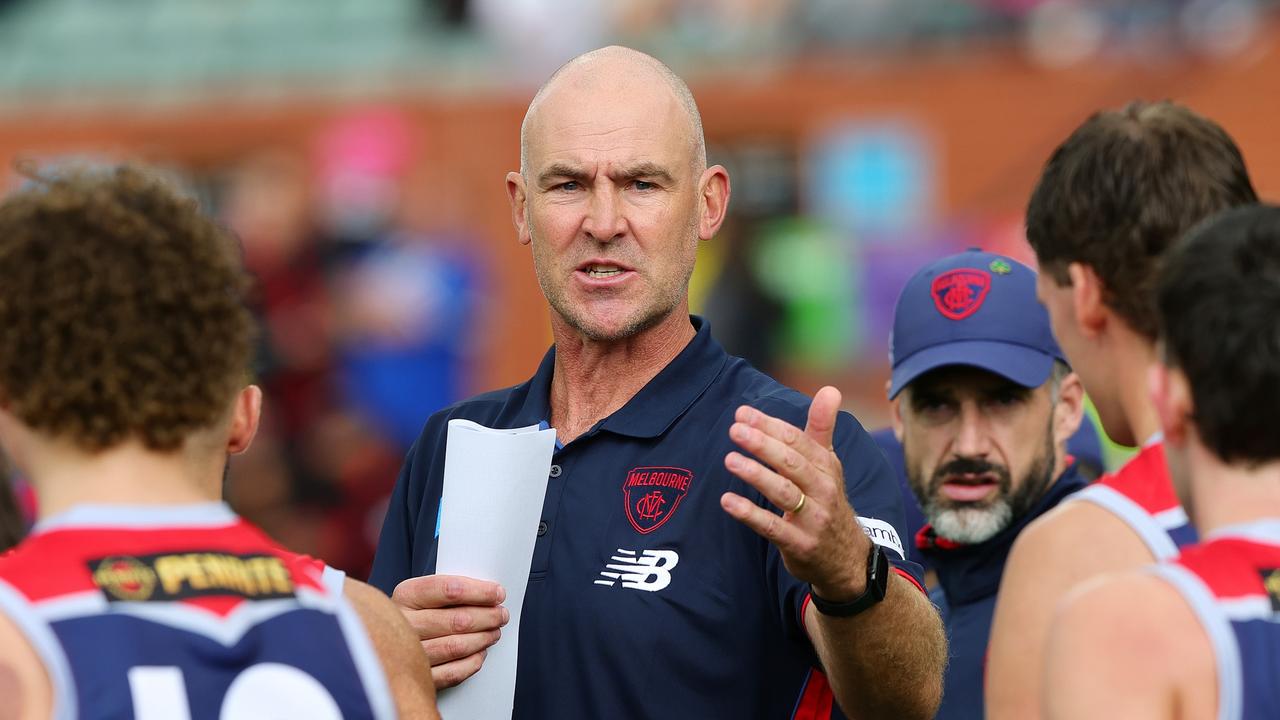
AFL 2026: Melbourne coach Steven King has united with his fellow coaches on a fixture flaw
Just six games into his tenure as Melbourne Football Club’s senior AFL coach, Steven King has added his voice to a growing cohort of league coaches pushing for major changes to the Victorian Football League (VFL) competition fixture, citing disruptive scheduling gaps that derail player development pathways.
The Demons’ reserves affiliate, the Casey Demons, have only been able to complete two regular matches through the first chunk of the 2024 season, with a scheduled bye for the club and a league-wide break to accommodate the VFL State of Origin exhibition match forcing the side into an extended break. The fragmented, stop-start schedule left King’s side with no official competitive outlet for their development players, prompting Melbourne to arrange an unofficial scratch match against Essendon’s reserves at the Bombers’ training base, the Hangar, this past Sunday.
King explained that the current scheduling structure fails star development players waiting for their chance to break into the senior AFL lineup. “I’ve got 12 to 15 players who are hungry to compete every week to prove they deserve an AFL call-up, and right now they can’t get that game time in the official competition,” King said. He pointed out a specific conflict with the State of Origin round: when the VFL pauses all club matches for the representative game, only a tiny handful of VFL-listed players get selected to participate, leaving dozens of AFL-listed reserves with no competitive match to play. “This is something the AFL should look into adjusting. If stand-alone clubs get a bye when they lose players to the State of Origin game, why can’t our AFL-listed reserves get the opportunity to keep playing?” he added.
The disjointed fixture has also forced awkward, difficult conversations between King and players on the cusp of senior selection. “Players come up to me and ask, ‘Does this mean I’m out of contention for the first six weeks because there are no games for me to prove myself?’ That’s a really tough question to answer,” King said. “All our guys want is to get out on the ground and play, so they can put their hand up for senior selection. I know most other clubs have already raised concerns about this issue, and I will be following the proper channels to push for change too.”
Looking ahead to this weekend, Melbourne is set to face the Brisbane Lions at the Melbourne Cricket Ground on Sunday for the annual Jim Stynes Foundation charity match. The game comes as a critical bounce-back opportunity for the Demons, who suffered an upset loss to Essendon during the league’s recent Gather Round.
When asked about his game plan for the Lions, who boast one of the deepest, most talented midfield groups in the competition, King said he would prioritize sticking to Melbourne’s own identity rather than completely overhauling the Demons’ game plan to counter the opposition. “We can’t be a club that just reacts every week and changes how we play to match the opponent,” King explained. “We know what works for our game and what fuels our belief. Of course we will tweak a few things to limit the Lions’ strengths — that’s just standard preparation. But as a young coach, I want this group to play our brand of footy and play to our own strengths.”
-
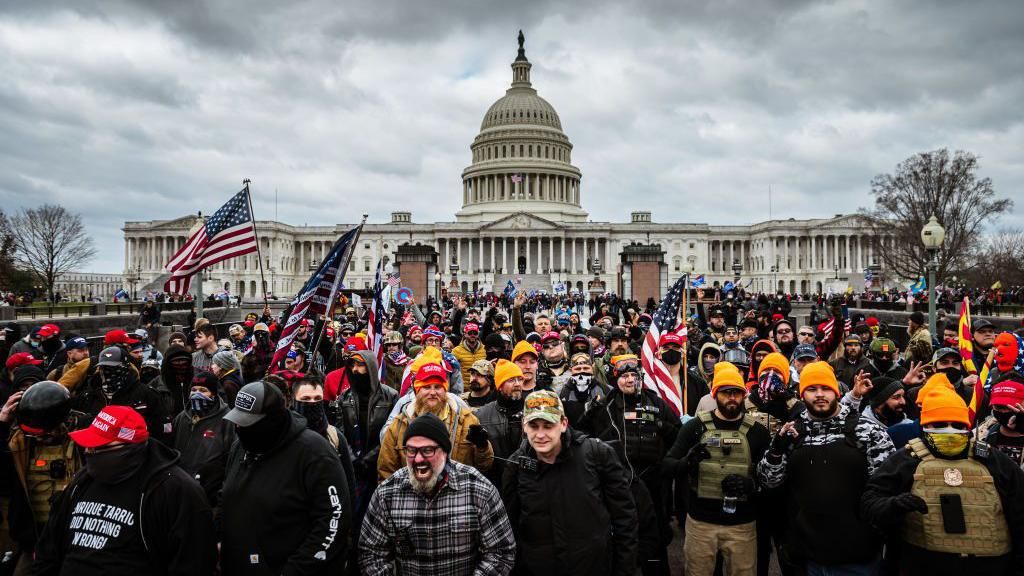
US justice department seeks to throw out Capitol riot convictions
In a major legal shift aligned with former President Donald Trump’s 2024 campaign pledges, the U.S. Department of Justice has formally requested a federal appeals court to dismiss the seditious conspiracy convictions of 12 individuals connected to the January 6, 2021, U.S. Capitol riot.
When Trump took office for his second term, he moved quickly to grant clemency to hundreds of people charged or convicted over their roles in the insurrection, issuing full pardons or sentence commutations to more than 1,500 individuals on his first day in office. Though Trump issued over 1,000 full pardons to January 6 rioters, he opted only to commute the sentences of the 12 rioters—most of whom are affiliated with the far-right militia groups the Oath Keepers and Proud Boys. This commutation allowed the defendants to secure early release from prison, but left their felony convictions intact on their official criminal records.
In a court filing submitted to the U.S. Court of Appeals for the District of Columbia Circuit on Tuesday, the U.S. Attorney’s Office for the District of Columbia stated that “The United States has determined in its prosecutorial discretion that dismissal of this criminal case is in the interests of justice.”
Among the 12 individuals seeking full expungement of their convictions is Stewart Rhodes, the founder of the Oath Keepers militia. A former U.S. Army paratrooper and Yale-trained lawyer, Rhodes led a contingent of Oath Keepers members to Washington, D.C., on the day of the riot, where the group plotted to disrupt Congress’s formal certification of Joe Biden’s 2020 presidential election victory over Trump. Prosecutors proved during Rhodes’ 2023 trial that the group stored weapons in a Virginia hotel room across the Potomac River, and that while Rhodes never entered the Capitol building himself, he directed his followers’ actions from outside the building during the melee. He was originally sentenced to 18 years in federal prison after a jury found him guilty of seditious conspiracy, the charge of attempting to overthrow the lawful U.S. government. The D.C. Circuit has set an April 17 deadline for all parties to submit formal filings in the expungement cases. If the court grants the DOJ’s request to throw out the convictions, it will eliminate the need for the Trump administration’s DOJ to defend the original convictions in ongoing expungement proceedings.
Notably, former Proud Boys national chairman Enrique “Henry” Tarrio, who was also convicted of seditious conspiracy over his role in organizing the riot and was originally sentenced to 22 years in prison, received a full pardon from Trump rather than a commutation, so he is not included in this latest request.
A successful ruling dismissing the convictions would mark a key symbolic victory for Trump, who centered a major campaign promise on supporting and pardoning rioters who participated in the insurrection aimed at overturning his 2020 election loss.
-
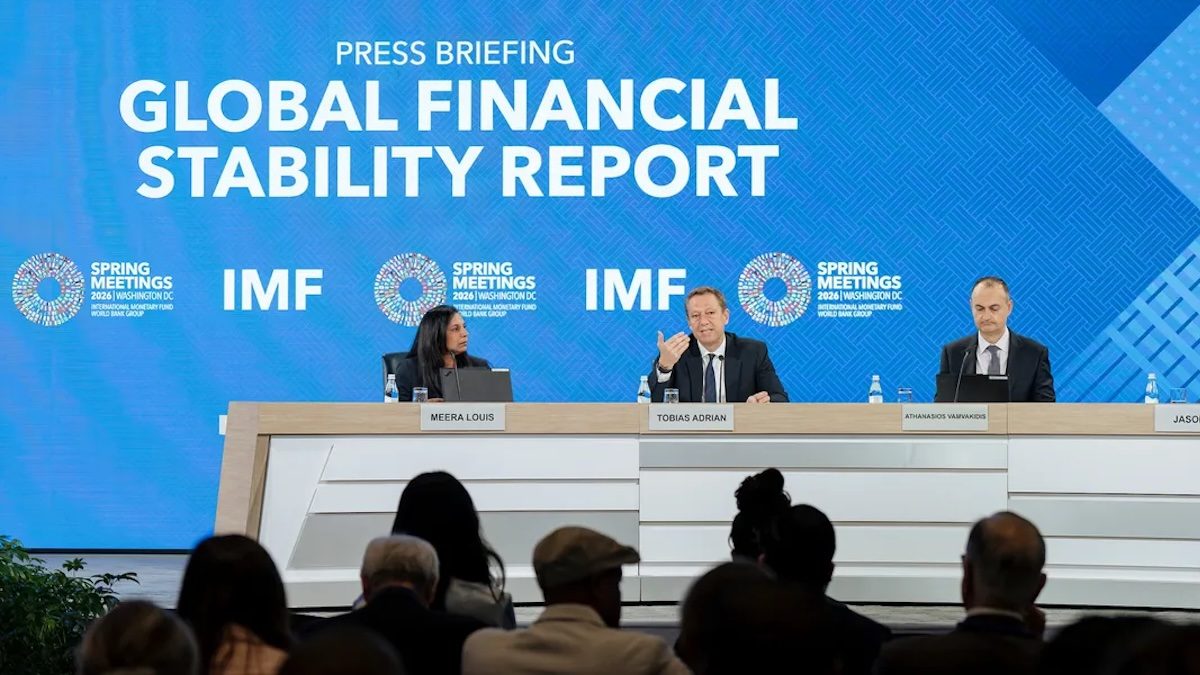
IMF warns Trump’s Iran war could unleash global recession
As international financial leaders gather in Washington D.C. for the International Monetary Fund’s annual Spring Meetings, the institution has issued a stark warning: the ongoing US-Israeli military conflict in Iran threatens to derail global economic momentum, trigger a new energy crisis, and push vulnerable economies into deep recession. The grim update, included in the IMF’s latest *World Economic Outlook*, comes as independent analysts and policy experts warn the long-term financial cost of the conflict to US taxpayers alone could top $1 trillion, with disproportionate harm falling on low-income and vulnerable communities worldwide.
Prior to the outbreak of hostilities, the IMF had upgraded its 2026 global growth forecast to 3.4%, buoyed by private sector adaptation to ongoing trade shifts, lower-than-expected US tariffs, targeted fiscal support, favorable financing conditions, and a productivity boom driven by emerging artificial intelligence technologies. That positive momentum has now come to a sudden halt, according to Pierre-Olivier Gourinchas, the IMF’s director of research. The conflict has already closed the Strait of Hormuz, a critical chokepoint through which roughly 20% of the world’s daily oil supplies pass, and damaged key energy infrastructure across the hydrocarbon-rich Middle East. If hostilities continue, the region’s central role in global energy markets makes a full-blown energy crisis increasingly likely.
Even in the best-case scenario of a quick end to fighting, the IMF projects lasting damage to the global economy. Under a limited conflict framework, global growth is forecast to hit just 3.1% in 2026 and 3.2% in 2027, figures that fall below recent growth outcomes and sit well below pre-pandemic averages. Global inflation, which had been on a downward trajectory, is projected to tick back upward in 2026 before resuming its decline in 2027. The brunt of the impact will fall on emerging market and developing economies, particularly commodity-importing nations that already faced preexisting financial vulnerabilities. Downside risks dominate the forecast: a prolonged conflict, deepening geopolitical fragmentation, underperformance of AI-driven productivity gains, or renewed trade tensions could further weaken growth and roil global financial markets. High public debt levels and eroded policy space leave many nations with little buffer to absorb new shocks. The IMF urges policymakers to prioritize economic adaptability, policy credibility, and strengthened international cooperation to mitigate harm.
The severity of the ultimate economic shock will depend on how long the conflict lasts and its geographic scale, as well as how quickly global energy production and shipping normalize once hostilities cease, the IMF notes. Impacts will vary sharply across regions: net energy-importing nations face the highest exposure, while low-income countries will see reduced tourism, slowing business activity, and falling remittances from migrant workers employed in the conflict region. Eric LeCompte, executive director of Jubilee USA Network and a United Nations finance expert, called the IMF’s new forecast deeply alarming, noting that the world’s poorest and most vulnerable populations will bear the worst of the crisis. “World leaders coming to Washington are receiving a very dark picture of the global economy,” LeCompte said. “The war is causing greater poverty and increases in our fuel and food costs.”
Beyond macroeconomic disruptions, a leading Harvard public policy expert who specializes in calculating the true long-term costs of US military conflicts says the total price tag for American taxpayers will almost certainly reach at least $1 trillion once all indirect and long-term expenses are accounted for. Linda Bilmes, the Daniel Patrick Moynihan senior lecturer at Harvard Kennedy School who co-authored *The Three Trillion Dollar War: The True Cost of the Iraq Conflict* with Nobel Prize-winning economist Joseph Stiglitz, estimates that just the first several days of the US-Israeli assault cost US taxpayers a minimum of $16 billion, nearly $5 billion higher than the Pentagon’s official $11.3 billion estimate.
Bilmes explains that the Pentagon understates short-term costs by valuing used munitions and equipment at their historical book value, rather than the much higher current cost to replace depleted stockpiles. She also points to multi-year, multibillion-dollar contracts the Trump administration has already signed with major defense contractors including Lockheed Martin that will add to long-term costs. Most significantly, the long-term costs of veterans’ care will create a decades-long financial burden. Roughly 55,000 deployed US troops have been exposed to toxins, burning fuel residues, and other environmental hazards linked to chronic long-term illness. Even if only one-third of these troops file for disability and medical benefits, Bilmes projects those costs alone will reach tens to hundreds of billions of dollars. “We are borrowing to finance this war at higher interest rates, on top of a much larger national debt base,” Bilmes explained. “The result is that the interest costs alone will add billions of dollars to the total cost of this war. And unlike the upfront costs, these are costs we are explicitly passing on to the next generation.” She added that she would not be surprised if the total cost has already surpassed the $1 trillion mark.
The Washington Post reports the Trump administration is expected to request between $80 billion and $100 billion in emergency war funding from Congress, as part of a broader fiscal 2027 budget proposal that calls for $1.5 trillion in annual military spending. If the request is fully approved, Bilmes notes, total US military spending will rise to levels roughly 20% higher than the peak spending of World War II. Even if Congress rejects the full increase, she projects the conflict will lock in a permanent $100 billion annual increase to the baseline defense budget – a change that compounds to $1 trillion in additional spending over the next decade.
Other independent economic analysts share the IMF’s warnings of severe global harm. A recent report from Oxford Economics analysts Ben May, Bridget Payne, and Paul Moroz found that an extended conflict in Iran could push the entire global economy into recession. In that scenario, Gulf economies would contract by more than 8% in 2026 before a gradual recovery, while advanced Asian economies heavily dependent on Gulf oil would face steep cost increases from more expensive energy imports and widespread supply chain disruptions. Europe would face a painful squeeze on natural gas and electricity prices, while the US – though buffered by its own domestic energy production – would still see a nearly 20% drop in equity markets that would weigh heavily on consumer spending.
Domestically, US policy experts have highlighted the conflict’s toll on American household finances and social spending. Dean Baker, senior fellow at the Center for Economic Policy Research, emphasized that the massive military spending required by the conflict comes at the expense of critical domestic social programs. “To be clear, the main reason to oppose this pointless war is its impact on the people of Iran and elsewhere in the region. But it also has a huge economic cost that is seriously underappreciated,” Baker said. Trump’s proposal to spend 5% of US GDP – or $1.5 trillion annually – on the military works out to $12,000 per household annually, he noted. To offset this record military spending, the Trump administration has proposed $73 billion in cuts to non-defense domestic spending, on top of historic cuts to Medicaid and the Supplemental Nutrition Assistance Program that already serve tens of millions of low-income Americans. “It is striking to see that Congress might be willing to quickly cough up this money for military funding when it has refused far smaller sums that could have made a huge difference in the lives of tens of millions of people,” Baker added.
-
Iran may opt to abide by US blockade in hopes of a deal, experts say
Washington’s maximum pressure campaign via a naval blockade of Iranian energy exports was designed as a short-term leverage tool to force Tehran into concessions at the negotiating table, but experts warn the gambit could backfire — with China positioned to quietly test the restrictions without triggering open military conflict, and energy markets already signaling growing confidence that a diplomatic breakthrough between the two rivals is within reach.
In theory, cutting off Iran’s 1.5 million barrels per day of crude exports, much of which flows through the strategically critical Strait of Hormuz, should send global energy prices soaring. Yet since the US blockade officially took effect this Monday, Brent crude, the global benchmark for oil, has defied expectations and fallen sharply, dropping 4.3% to trade at $95.08 per barrel as of mid-week.
Diplomats and industry analysts interviewed by Middle East Eye say the unexpected price dip stems from widespread optimism that both Washington and Tehran are committed to a two-week ceasefire and renewed negotiations, overshadowing immediate fears of disrupted energy supplies. US President Donald Trump announced Tuesday that talks between the two sides could resume as soon as within 48 hours in Islamabad, Pakistan, the site of earlier negotiations that ended without a final agreement.
Aaron David Miller, a former US Middle East peace negotiator now with the Carnegie Endowment for International Peace, told MEE that the coming days will be a critical test of the blockade’s durability. “The test right now is whether in the next several days we see a return to kinetic activity on the part of the Iranians to challenge the US blockade or US kinetic action against Iran,” Miller said.
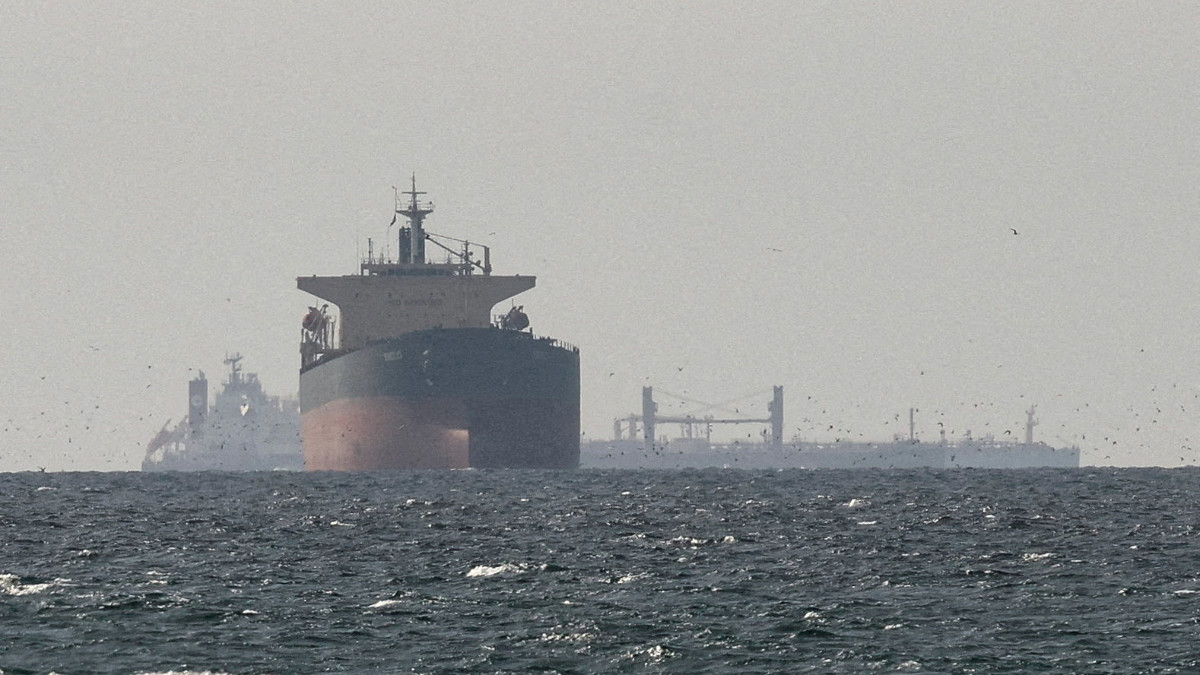
The Trump administration has claimed the blockade is already successfully halting Iranian oil shipments, and initial analysis of global ship tracking data appears to back that assertion, according to maritime analysts. On Tuesday, two vessels linked to Iranian energy exports — the Panama-flagged *Elpis* and Chinese-owned *Rich Starry*, a regular carrier of Iranian methanol — drew international attention after crossing the Strait of Hormuz but idling in the Gulf of Oman rather than exiting toward global markets.
Matthew Wright, principal freight analyst at energy analytics firm Kpler, explained that the exit from the Gulf of Oman is the key metric for tracking compliance, since US naval forces are positioned outside the Strait of Hormuz. “We haven’t seen any Iranian-linked vessel transiting the Strait of Hormuz and exiting the Gulf of Oman. That is what we are waiting on,” Wright said. Experts add that US warships have deliberately stayed outside the narrow strait and away from the Iranian mainland, recognizing they remain vulnerable to Tehran’s fleet of drones and short-range anti-ship missiles.
As the largest buyer of Iranian oil, purchasing roughly 90% of Tehran’s total exports, China is the only global power with the capacity to undermine the US blockade. In the aftermath of the June 2025 US-Israeli war against Iran, Beijing has already supplied Tehran with air defense systems and drones, and The New York Times reported over the weekend that China may have also delivered shoulder-fired missiles to Iranian forces. Beijing has denied all reports of arming Iran, and issued a public statement Tuesday calling the US blockade “dangerous and irresponsible” while urging an immediate ceasefire and a return to normal shipping traffic through the Strait of Hormuz.
Yun Sun, director of the China Program at the Stimson Center, told MEE that Beijing will avoid direct military confrontation with Washington over the blockade, even as it pursues quiet efforts to prop up the Iranian government. “The Chinese will not pick a fight with the US over Iran. They might do things behind the scenes to rebuild and rearm Iran, but not directly confront the US militarily,” Sun said. “The Strait of Hormuz is so far from China, and the geographical distance is a key barrier to any Chinese plan for effective military intervention.”
Still, one senior Arab diplomat told MEE that the entire US blockade ultimately relies on China’s quiet willingness to comply, pointing to a recent precedent where Washington allowed a Russian oil tanker to reach Cuba despite long-standing US sanctions on the Caribbean nation. The diplomat added that Tehran is well-positioned to outlast the restrictions: Iran pre-positioned massive volumes of crude ahead of the blockade, boosting loadings at its key Kharg Island export terminal before the February 28 US-Israeli attack. Kpler data shows Iran currently holds roughly 38 million barrels of crude stored on tankers at sea, much of it already anchored near the Chinese coast, with enough storage capacity to continue production for weeks before being forced to shut down operations. Iran also has alternative trade routes, including access to the Caspian Sea and overland land borders that reduce its reliance on open sea lanes for imports, unlike Cuba, which the US has targeted with a similar energy blockade.
Many foreign policy experts argue the US has based its blockade strategy on flawed timelines and miscalculations. Alan Eyre, a former senior State Department Iran expert, told MEE that the slow-acting restrictions will fail to pressure Tehran into making concessions within the timeframe the Trump administration needs for a diplomatic win ahead of any planned political milestones. “For any sort of time frame the US cares about to inflict pain on Iran’s economy, the blockade is just too slow-acting,” Eyre said. “It’s a short-term tool that will fail to move the Iranians at the negotiating table.” Eyre added that Iran already holds hundreds of millions of dollars in recent oil export revenue, giving it ample financial breathing room to wait out the standoff.
Experts note that if Tehran chooses not to immediately challenge the blockade, it is likely because Iranian leadership believes a negotiated deal with Washington is achievable. Earlier talks in Islamabad broke up without an agreement after US Vice President JD Vance walked away over disputes about the future of Iran’s nuclear program, but multiple regional and US media outlets have reported that the two sides came surprisingly close to reaching a framework agreement. Eyre compared Vance’s walkout to traditional Middle Eastern bazaar haggling, noting that it is a common negotiating tactic rather than a sign that talks are dead. “Vance walking away is like negotiating for a rug at a market in the Middle East. You ask the price, say it’s too high and walk away. But then you come back the next day,” Eyre said.
A key breakthrough in the earlier talks was a US concession offering Iran a 20-year moratorium on uranium enrichment, a significant shift from earlier US demands that Iran end all enrichment activities permanently. Iran has long maintained its right to enrich uranium for peaceful civilian energy purposes, and its late supreme leader Ayatollah Ali Khamenei issued a binding religious decree against developing nuclear weapons back in 2003, a position Tehran has repeatedly reaffirmed.
Miller noted that the US shift to accepting a moratorium, or temporary pause, rather than a permanent end to enrichment is a major step forward that makes meaningful negotiation possible. “If the administration has conceded to using the word ‘moratorium’, which means ‘pause’ and not ‘permanent ending’ – that’s a significant concession, and you might actually have a negotiation,” Miller said.
Despite the progress, several major sticking points remain to be resolved. These include Iran’s demand to charge transit tolls for commercial vessels passing through the Strait of Hormuz, the status of Iran’s existing stockpiles of enriched uranium, and the maximum level of enrichment that Washington will agree to allow Tehran to maintain. Experts add that Trump faces political pressure to secure a high-profile foreign policy win, and opening the strait to shipping is not enough to meet that goal. “I don’t think the Iranians will agree to a 20-year moratorium, but if they agree to a pause in single digits, that could open things up,” Miller said.
-

Trump’s McDonald’s stunt with DoorDash grandma sparks backlash over US healthcare costs
What was meant to be a carefully crafted public relations win for the Trump administration has instead ignited a fierce national conversation about systemic gaps in the United States’ healthcare and gig economy systems. In April 2026, the White House orchestrated a viral event to mark the one-year anniversary of former President Donald Trump’s signature “No Tax on Tips” policy, bringing 58-year-old Arkansas gig worker Sharon Simmons to Washington D.C. to deliver McDonald’s fast food to the Oval Office.
Simmons, a DoorDash driver from Fayetteville who took up the gig in 2022 to cover her husband’s stage-three cancer treatment costs, quickly became the face of a debate no PR team planned for. Trump himself joked about the staged nature of the moment as Simmons arrived, quipping to reporters, “This doesn’t look staged, does it?” DoorDash later confirmed the delivery was pre-planned as part of the anniversary celebration, and social media users quickly uncovered evidence of the coordinated collaboration between the company and the White House.
According to Simmons’ own public comments, the elimination of federal taxes on tipped income saved her roughly $11,000 in the first year of the policy, a sum that directly helped cover her husband’s mounting medical bills. That statement was picked up by supporters of the policy, who framed the “No Tax on Tips” measure as a critical win for working Americans, putting much-needed extra take-home pay into the pockets of gig and hospitality workers who rely heavily on gratuities to make ends meet.
But for critics, the viral moment was not a celebration of policy success—it was a damning indictment of long-standing structural failures in the U.S. healthcare system. As an independent contractor for DoorDash, Simmons does not qualify for employer-sponsored health insurance, paid medical leave, or other core benefits that traditionally protect workers from catastrophic medical costs. Since her husband’s 2025 cancer diagnosis, Simmons has completed more than 14,000 deliveries, leaning on the gig’s flexible hours to balance work and caregiving.
Commentators and political opponents quickly pointed out that the image of a grandmother in her late 50s making thousands of fast food deliveries just to afford her spouse’s life-saving treatment perfectly encapsulates the crisis facing millions of uninsured and underinsured Americans. The Democratic-led Ways and Means Committee summed up this perspective in a social media post, arguing that Simmons should not be forced to rely on delivery tips to cover healthcare costs, blaming Republican policies for driving up medical expenses for U.S. households.
Many online observers also criticized the ethics of staging the event, noting that Simmons was flown across the country to Washington to be used as a prop in a political photo op. Critics argued that the orchestrated nature of the moment undermined any claim that it was an authentic, spontaneous example of the policy’s benefits, instead turning a family’s medical hardship into political theater.
While there was scattered praise for the policy’s tangible financial benefit for Simmons, much of the national discourse that followed the viral clip centered on the broader reality it exposed: millions of older Americans are forced to work well past traditional retirement age, not by choice, but to cover basic needs including life-saving healthcare that their incomes otherwise cannot support. What began as a lighthearted viral moment of fast food delivered to the Oval Office ultimately transformed into a high-profile flashpoint for ongoing debates over healthcare access, gig worker rights, and economic inequality in the United States.
-

US lawmaker demands FIFA pay World Cup transport bill amid ticket hikes
The 2026 FIFA World Cup, the world’s biggest football tournament, has sparked a growing political controversy in the United States over proposed public transport fare hikes that would charge visiting fans and local commuters exorbitant prices to reach match venues. On Tuesday, Senate Minority Leader Chuck Schumer, a leading New York Democratic lawmaker, became the most prominent voice calling on football’s global governing body to cover all public transit costs tied to the tournament, arguing the multi-billion dollar organization should not pass its hosting expenses onto local communities.
Schumer’s public call to action came in response to an exclusive report first published by sports outlet The Athletic, which revealed that New Jersey Transit, the state’s main public transit agency, was considering charging fans more than $100 for a single round-trip ticket between Manhattan’s Penn Station and MetLife Stadium in East Rutherford, New Jersey. MetLife Stadium is set to host eight World Cup matches, including the tournament’s final on July 19, making it one of the most high-profile venues in this summer’s iteration of the World Cup.
For context, a standard off-event round-trip ticket on the same route currently costs just $12.90, meaning the proposed hike would represent a more than 675% increase over regular fares. Schumer took to social media platform X to outline his argument, noting that FIFA projects it will earn a record $11 billion in total revenue from the 2026 tournament. “FIFA is set to reap nearly $11 billion from this summer’s World Cup, yet New York area commuters and residents are being handed the bill,” Schumer said in his statement. “The least FIFA can do is ensure New York residents can go to the stadium without being gouged at the turnstile. I am demanding FIFA step up and cover transportation costs for host cities and states. New York commuters and residents should not subsidize an $11 billion windfall.”
Schumer was not alone in criticizing the proposed fare increases. New York Governor Kathy Hochul also joined the pushback, saying that exorbitant transport costs run counter to the goal of making the World Cup accessible to all fans. “The World Cup should be as affordable and accessible as possible,” Hochul wrote on X. “Charging over $100 for a short train ride sounds awfully high to me.”
When contacted by Agence France-Presse for comment on the controversy, NJ Transit did not issue an immediate response. The Athletic had previously obtained an official statement from an agency spokesperson noting that no final pricing decision has been confirmed. “The ticket prices for match day travel have not been finalized and any reference to cost would be unconfirmed speculation,” the spokesperson told the outlet. Still, unnamed NJ Transit sources cited by The Athletic estimate that arranging extra transit services for the eight matches at MetLife Stadium will cost the agency approximately $48 million, creating a major budget shortfall that officials are looking to offset.
New Jersey Governor Mikie Sherrill has already ruled out using state taxpayer funds to cover the additional costs. “We are not going to be paying for moving the people who are viewing the World Cup on the back of New Jersey taxpayers and New Jersey commuters,” Sherrill said Monday, leaving agency officials looking for alternative ways to cover the costs.
The transit fare controversy is not limited to New Jersey. Earlier this month, officials in Massachusetts confirmed that the Massachusetts Bay Transportation Authority will charge $80 for a round-trip ticket from downtown Boston to Gillette Stadium, which is hosting multiple World Cup matches. That price marks a 300% increase over the standard $20 off-event fare, highlighting a nationwide trend of host transit agencies looking to pass extra World Cup costs onto fans. As of Tuesday, FIFA has not issued a public response to Schumer’s demand to cover the transit costs.