作者: admin

  • Bitter times for cocoa farmers as chocolate market slumps

    Bitter times for cocoa farmers as chocolate market slumps

    A profound crisis is unfolding across West Africa’s cocoa belt, where farmers who produce the world’s chocolate supply face financial devastation despite global chocolate price increases. The paradoxical situation has left hundreds of thousands of agricultural workers in Ghana and Ivory Coast without payment for months, creating widespread economic hardship in rural communities.

    The core of the problem stems from a dramatic market reversal. Following record-high cocoa prices in 2024, global prices have since collapsed due to increased worldwide production coinciding with reduced demand. Chocolate manufacturers responded to previous price spikes by reducing bar sizes and cocoa content, ultimately decreasing their need for raw beans.

    In both Ghana and Ivory Coast, state regulatory bodies set fixed annual prices for cocoa farmers. Ghana’s Cocoa Board (Cocobod) established a rate of $5,300 per tonne last October, while Ivory Coast’s Coffee and Cocoa Council implemented similar guaranteed pricing. These fixed rates now substantially exceed current global market prices by approximately 40%, creating an unsustainable economic gap.

    The human impact has been severe. Akosua Frimpong, a 52-year-old Ghanaian widow, recounted how she couldn’t afford medical treatment for her husband before his death. ‘The money I was anticipating from my cocoa bean sales is currently inaccessible. I’m a widow now and I don’t have anyone to support me,’ she told BBC reporters.

    Ghana’s Cocobod has accumulated approximately $3 billion in debt attempting to bridge the price gap, implementing executive pay cuts of 20% for management and 10% for senior staff. The board has now slashed guaranteed prices to around $3,500 per tonne, though this remains above market rates.

    In Ivory Coast, warehouses in towns like Bangolo overflow with unsold cocoa sacks. Bahily Bakouli Issiaca, a cooperative member, reported trucks loaded with cocoa waiting unsold for nearly three weeks. The government recently announced plans to cut farmer payments by half to stimulate sales.

    The crisis affects approximately 800,000 cocoa farmers directly, with ripple effects throughout rural economies. Farmers like Robert Addae, with 14 years of experience, note that production costs remain unchanged despite price reductions. ‘The prices of farm inputs and implements remain the same, the cost of labour has not reduced, so the cut in cocoa prices will adversely affect us,’ he explained.

    With cocoa contributing 7% of Ghana’s GDP and 15% of foreign exchange earnings, the sector’s health directly impacts national economies. Both governments are implementing measures including increased domestic processing to capture more value from their cocoa industries.

  • Shelter rankings and shower-timing apps: Israelis, Palestinians adjust to Iranian rockets

    Shelter rankings and shower-timing apps: Israelis, Palestinians adjust to Iranian rockets

    In the wake of escalating Middle East tensions following US and Israeli strikes on Iran, civilians across Israel and annexed East Jerusalem are developing innovative coping mechanisms amid persistent rocket threats. The conflict has triggered waves of Iranian retaliatory fire, creating unprecedented challenges for daily life that have spawned both technological solutions and grim humor.

    A newly launched application has gained viral popularity by employing statistical analysis of recent air raid patterns to advise users on optimal shower times, minimizing interruptions from missile alerts. This practical innovation addresses a widespread concern, exemplified by an Israeli citizen’s social media post questioning the normality of being “naked in the dining room” during shelter mandates.

    Beyond personal hygiene optimization, publications like Time Out have pivoted from leisure recommendations to survival guidance, now cataloging Tel Aviv beaches based on their proximity to certified shelters. Simultaneously, journalist Ofek Tzach has initiated qualitative rankings of public shelters, critiquing facilities ranging from those overcrowded with tourists to others plagued by barking dogs.

    Remarkable human stories have emerged amidst the crisis, including that of Lior and Michael, who transformed a shopping center parking garage into their wedding venue four levels underground after security restrictions canceled their original plans. “It was a wonderful moment,” Michael recounted to Israel’s Channel 13, despite seventy percent of attendees being strangers.

    Online communities are sharing recommendations for making shelter time more bearable, suggesting books, music, and cushions—contrasting with official government advice emphasizing practical supplies like radios, batteries, and identification documents.

    In East Jerusalem, Palestinian responses have leaned toward dark humor amid inadequate shelter infrastructure. Pastry chef Mohammad Alayan noted on social media that Palestinians often take traditional Ramadan desserts to rooftops to watch missiles, while others mockingly questioned municipal guidance that offers little practical value for residents of areas like Shuafat refugee camp, where proper shelters are virtually nonexistent.

  • Judge clears man of sexually touching teen, finding he was asleep during ‘sexsomnia’

    Judge clears man of sexually touching teen, finding he was asleep during ‘sexsomnia’

    In a landmark legal decision, an Australian court has acquitted a married man of sexually assaulting a 14-year-old girl after medical experts successfully argued he was experiencing ‘sexsomnia’ – a rare sleep disorder – during the incident. The defendant, identified only as RE, was found not guilty despite conclusive evidence that inappropriate physical contact occurred during a 2021 holiday gathering on New South Wales’ Central Coast.

    The case centered around a nighttime incident where RE, his wife, the victim, and the victim’s mother were sharing a hotel room. Court testimony revealed the girl had entered RE’s bed seeking warmth, after which he allegedly touched her genitalia while apparently asleep. Critical evidence emerged when RE’s phone rang during the incident, requiring his wife to awaken him with raised voices – a detail that supported the sleep disorder defense.

    Medical specialists testified that RE exhibited classic symptoms of sexsomnia, a parasomnia condition characterized by engaging in sexual behaviors while unconscious. Dr. Antonio Fernando, a sleep expert witness, explained that such behaviors occur without conscious awareness, with 90% of patients having no memory of episodes. RE’s wife corroborated this diagnosis, describing his history of unconscious nighttime behaviors including sleepwalking and sleep-eating.

    The court heard RE had been taking strong prescription pain medication that reportedly increased libido, though Judge Phillip Mahony ultimately determined the defendant was asleep during the seven-minute incident and therefore incapable of forming criminal intent. Despite finding the victim’s testimony entirely credible and establishing that physical contact occurred, the judge ruled the acts were involuntary.

    The February 27 acquittal followed a retrial after RE successfully appealed an earlier conviction, highlighting evolving legal recognition of sleep disorders in criminal proceedings. The case represents a growing challenge for judicial systems worldwide as they grapple with rare neurological conditions intersecting with criminal law.

  • US, Israel bomb major Iran oil depots as US gasoline prices rise

    US, Israel bomb major Iran oil depots as US gasoline prices rise

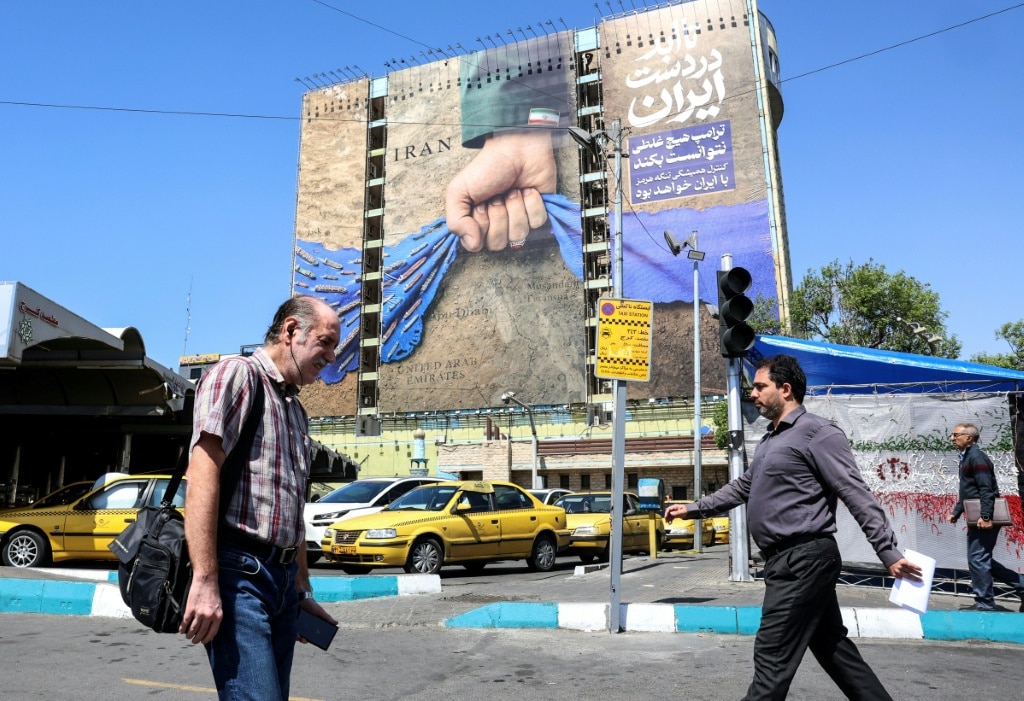
    A joint US-Israeli military operation struck critical oil infrastructure in Tehran over the weekend, creating what witnesses described as apocalyptic scenes across Iran’s capital. The coordinated bombardment targeted multiple fuel storage depots in Tehran and Alborz provinces, triggering massive firestorms that sent toxic plumes of black smoke billowing into the night sky.

    Residents awoke Sunday to an altered cityscape shrouded in ominous gray clouds, with reports of toxic black rain containing oil particles falling across metropolitan areas. Iranian emergency services worked desperately to contain the infernos while health officials warned citizens to remain indoors due to dangerously compromised air quality.

    The Iranian Foreign Ministry characterized the assault as a deliberate escalation into “chemical warfare against Iranian citizens,” alleging the attacks released hazardous materials that would create long-term environmental and humanitarian consequences. Energy analysts immediately noted dramatic market repercussions, with crude futures experiencing their largest weekly gain since 1983—jumping 35% following the strikes.

    International observers expressed grave concerns about the strategic targeting of civilian energy infrastructure. Iranian political commentator Kev Joon noted the unprecedented nature of the destruction: “These aren’t military targets. They’re the infrastructure of everyday life. This isn’t a liberatory war. It’s an attempt to break the backs of Iranian people.”

    The economic implications extended beyond immediate oil price spikes. Qatar’s Energy Minister had previously warned The Financial Times that potential closure of the Strait of Hormuz could drive prices to $150 per barrel—a scenario that could “bring down the economies of the world.” Despite these concerns, US leadership indicated limited apprehension about rising fuel costs.

    Environmental organizations and human rights advocates condemned the attacks as potential war crimes, citing the deliberate targeting of essential civilian infrastructure and the resulting ecological disaster. The Iranian Red Crescent Society issued specific exposure guidelines, warning that the toxic rainfall could be “highly dangerous and acidic” for Tehran’s approximately 10 million residents.

  • Spain’s migrants welcome amnesty: ‘It will help us in every way’

    Spain’s migrants welcome amnesty: ‘It will help us in every way’

    Spain is embarking on a landmark initiative to grant legal residency to hundreds of thousands of undocumented migrants, a move driven by both economic necessity and humanitarian principles. The program, which opens for applications in April, offers a one-year renewable residency visa to foreign nationals who can prove at least five months of residence and a clean criminal record.

    The decision emerges against a backdrop of severe challenges faced by an estimated 500,000 to over one million undocumented individuals. Migrants like Diana from Peru, who spoke to the BBC, describe a precarious existence marked by exploitation, underpayment, and restricted access to housing and banking services. ‘Employers can tell you one thing and then get you to do something else. Sometimes they pay you less than what you’ve agreed to,’ she recounted, highlighting the vulnerability of those without papers.

    However, the government, led by Prime Minister Pedro Sánchez’s Socialist coalition, frames the policy as a pragmatic solution to Spain’s economic realities. With unemployment at an 18-year low and the economy growing by nearly 3% last year, foreign labor is indispensable. Elma Saiz, Minister for Inclusion, Social Security and Immigration, revealed that foreign workers constitute 14.1% of the 22 million registered workforce and have driven half of Spain’s economic growth since 2022. A 2024 central bank report further underscored this dependency, projecting a need for 25 million migrants over the next three decades to sustain the economy and social security system.

    The initiative has garnered support from key business sectors. Farmers’ association ASAJA and the main employers’ federation, CEOE, have expressed broad approval, citing the critical role migrants play in agriculture, elderly care, and hospitality. Yet, they urge careful implementation to ensure workers secure long-term contracts.

    The policy faces fierce opposition in Spain’s polarized political landscape. The conservative People’s Party (PP) leader Alberto Núñez Feijóo condemned it as ‘the confirmation of the lack of an immigration policy,’ while the far-right Vox party warned of a ‘pull effect’ that would overwhelm public services. The European Commission has also urged caution, emphasizing that residency permits must not facilitate unlawful movement to other EU nations.

    Despite the controversy, the move is seen as a lifeline for countless individuals. In Madrid, organizations like Aculco are preparing workshops to guide applicants like Manuel, a Peruvian caregiver, through the process. ‘This will change the lives of a lot of people,’ said immigration lawyer Pilar Rodríguez, noting that regularization will allow migrants to work legally, pay taxes, and contribute fully to the society they help sustain.

  • Masked fan unplugs VAR monitor in German match

    Masked fan unplugs VAR monitor in German match

    In an extraordinary act of protest against video technology, a masked spectator disrupted a Bundesliga 2 match by deliberately disconnecting the Video Assistant Referee (VAR) equipment during Sunday’s fixture between Preussen Munster and Hertha Berlin. The incident occurred at the crucial moment when referee Felix Bickel approached the pitchside monitor to review a potential penalty decision.

    The technological sabotage took place just before halftime at Preussen Munster’s home ground, with the hosts trailing 1-0 in what would eventually become a 2-1 defeat. As Bickel attempted to review the contested incident, he discovered the monitor completely disabled, creating an unprecedented challenge for match officials.

    Club officials confirmed in an official statement that ‘a masked spectator from the active fan section illegally entered the pitch and unplugged the technical equipment.’ This forced the VAR review process to be conducted remotely by official Katrin Rafalski located in Cologne, who ultimately confirmed the penalty decision. Hertha Berlin successfully converted the spot kick, altering the match’s dynamics.

    The club expressed regret over the security breach while acknowledging evidence suggesting premeditation. ‘Initial findings indicate that this was a planned action,’ the statement continued, referencing the appearance of a banner in the home section reading ‘Pull the plug on VAR’ immediately following the technical failure. Preussen Munster has committed to identifying those responsible and implementing enhanced security measures to prevent similar incidents.

    This event represents one of the most direct physical interventions by spectators against VAR technology since its implementation in professional football, highlighting growing tensions between traditional football culture and technological advancement in the sport.

  • Courts help boost high-level opening-up

    Courts help boost high-level opening-up

    Amidst global economic complexities and a significant surge in international litigation, China’s judicial system is positioning itself as a pivotal force in shaping the nation’s high-level opening-up strategy. Supreme People’s Court President Zhang Jun revealed that Chinese courts have demonstrated remarkable capacity in handling cross-border disputes, concluding 128,000 first-instance foreign-related civil and commercial cases during the 14th Five-Year Plan period (2021-2025)—representing a 65% increase from the previous five years.

    The judicial expansion reflects China’s deepening integration into global markets, with cases spanning more than 100 countries and regions. In 2025 alone, courts nationwide handled over 67,000 foreign-related commercial and maritime cases, marking a 44% year-on-year increase. This growth parallels global supply chain restructuring and the rise of digital trade, bringing complex disputes involving international goods contracts, service trade, cross-border payments, transportation, and insurance.

    China has established specialized institutions to address this growing demand, including the pioneering International Commercial Courts in Shenzhen and Xi’an (established 2018), which have resolved 37 cases involving parties from 21 jurisdictions. Additionally, international commercial tribunals across 18 cities—including Beijing, Shanghai, and Suzhou—concluded over 1,700 foreign-related commercial and arbitration review cases in 2025, representing a 24% annual increase.

    The system’s efficiency was demonstrated in a notable case where a foreign oil tanker dispute at Qingdao port was resolved within 24 hours through coordinated efforts between maritime courts using both online and offline mediation techniques.

    Significantly, China’s judicial influence is gaining international recognition. In a landmark 2022 incident involving a collision between Liberian and Panamanian vessels in the Strait of Malacca, parties proactively selected China’s Ningbo Maritime Court despite jurisdiction options across five nations. This voluntary selection by international entities, even those without substantial connections to China, signals growing confidence in China’s judicial system.

    Reciprocity breakthroughs have further enhanced China’s legal standing. In March 2022, the Shanghai Maritime Court recognized a UK court judgment based on reciprocal principles—despite the absence of a formal judicial assistance treaty—prompting British courts to subsequently recognize two Chinese judgments and breaking the ‘zero record’ of mutual recognition between the nations.

    From 2024-2025, Chinese courts received 1,620 applications for recognizing and enforcing foreign judgments, concluding 1,510 cases, demonstrating commitment to protecting rights of all parties through fair and inclusive judicial practices.

    President Zhang emphasized that ‘openness is a key feature of Chinese modernization, and the rule of law is the foundation for achieving high-level global engagement.’ Chinese courts have actively contributed to legislative developments including the Foreign Investment Law and Law on Foreign Relations, while also playing a crucial role in international rule-making, notably through China’s full participation in developing the UN Convention on Negotiable Cargo Documents—the first transportation sector treaty originating from Chinese judicial practice.

    As global uncertainties persist, China’s judiciary positions itself as both a ‘navigator’ for opening-up and an ‘anchor of stability’ for global trade, using legal certainty to address external volatilities while providing judicial solutions that support both China’s economic stability and global economic development.

  • ‘Big year’ for Sino-US ties noted

    ‘Big year’ for Sino-US ties noted

    Chinese Foreign Minister Wang Yi has characterized 2026 as a pivotal year for Sino-American relations during his annual press conference held alongside China’s National People’s Congress sessions. The senior diplomat revealed that bilateral high-level exchanges between the two powers are already scheduled, emphasizing the necessity for both nations to engage with “sincerity and good faith” to advance their complex relationship.

    Minister Wang stressed that while China maintains its consistent openness to cooperation, parallel commitment from the United States remains essential. “What the two sides need to do now is to create a suitable environment, manage the differences that do exist, and remove unnecessary disruptions,” he stated, outlining the practical steps required for relationship stabilization.

    The Foreign Minister highlighted the crucial role of presidential diplomacy, noting that the continued positive interactions between President Xi Jinping and U.S. leadership have provided “important strategic safeguards” that have steadied the relationship following previous fluctuations. Wang expressed optimism that mutual sincerity could expand cooperation areas while reducing problematic issues, potentially making 2026 “a landmark year of sound, steady and sustainable development of China-US relations.”

    Addressing broader global governance concepts, Minister Wang explicitly rejected the ‘G2′ framework that suggests Sino-American co-management of world affairs. “We should not forget there are more than 190 countries on our planet,” he remarked, advocating instead for a multipolar international system where “the future of humanity will be forged through the collective efforts of all nations.”

    Wang cautioned against historical patterns of great-power rivalry and bloc confrontation, asserting that China “will never take the beaten path of seeking hegemony as its strength grows.” He called for major nations to demonstrate greater generosity and responsibility in observing international rules and upholding legal frameworks.

    Academic experts provided additional context to these diplomatic statements. Chen Bo of the China Institute of International Studies interpreted Wang’s comments as demonstrating “Beijing’s proactive gesture in advancing ties with major countries.” Professor Jia Qingguo of Peking University emphasized the need for enhanced communication mechanisms to manage differences before escalation occurs.

    Looking forward, Minister Wang previewed an active year for Chinese diplomacy, with President Xi scheduled to host numerous foreign leaders and undertake significant international visits. Major diplomatic events including the APEC Economic Leaders’ Meeting and the second China-Arab States Summit will further China’s foreign policy objectives of building “a community with a shared future for humanity.”

  • UAE officials deny Israeli reports of strike inside Iran

    UAE officials deny Israeli reports of strike inside Iran

    The United Arab Emirates has issued a formal denial of reports circulating in Israeli media that alleged Emirati involvement in an airstrike targeting an Iranian water desalination facility. The Emirati foreign ministry released an official statement clarifying its defensive posture while explicitly rejecting any participation in the alleged attack on Qeshm Island in the Strait of Hormuz.

    The diplomatic rebuttal emerged following multiple Israeli media publications, citing anonymous sources, that pointed to UAE responsibility for the incident. Iranian Foreign Minister Abbas Araghchi had previously attributed the bombing to the United States, though both American and Israeli authorities have denied conducting the strike.

    Dr. Ali Rashid Al Nuaimi, chairman of the UAE’s Defense Affairs, Interior and Foreign Affairs Committee, characterized the reports as ‘fake news’ via social media platform X, asserting that the UAE would openly claim responsibility for any actions it undertakes. The escalating situation has revealed apparent tensions in Israeli-Emirati communications, with a senior UAE official expressing confusion over ‘Israeli conduct’ and the nature of briefings emerging from Israeli sources.

    The incident occurs against a backdrop of increasing regional instability, with Iran conducting near-daily strikes against what it identifies as US bases and assets throughout the Gulf. Gulf states have uniformly condemned these violations of their sovereignty while reserving the right to respond appropriately.

    This episode has raised significant concerns about the vulnerability of critical water infrastructure throughout the region. The Gulf nations rely heavily on desalination technology, with approximately 400 facilities providing the majority of drinking water—90% in UAE and Kuwait, 86% in Oman, and 70% in Saudi Arabia. The reported attack on Iranian water infrastructure coincided with Israeli airstrikes on fuel storage facilities in Tehran, further heightening anxieties about the targeting of essential civilian infrastructure amid escalating conflict.

  • ‘The best’: Major off-season change results in terrifying first round performance from star playmaker

    ‘The best’: Major off-season change results in terrifying first round performance from star playmaker

    A formidable new partnership has emerged in the National Rugby League as Cronulla Sharks’ halves combination of Nicho Hynes and Braydon Trindall demonstrated unprecedented synchronization during their spectacular 50-10 victory over the Gold Coast Titans in Round 1. Despite coach Craig Fitzgibbon’s insistence that their tactical approach remains fundamentally unchanged, the performance revealed significant evolution in their on-field dynamics.

    Trindall, wearing the five-eighth jersey, emerged as the dominant playmaker in attack, contributing two tries, four try assists, and a spectacular 40/20 kick. His collaboration with halfback Hynes, who also scored a double, represented what both players acknowledged as their most effective partnership to date.

    “The connection felt exceptional – undoubtedly our strongest performance as a duo,” Trindall revealed post-match. “This synergy results from extensive work during training sessions and our commitment to maintaining off-field connectivity.”

    Coach Fitzgibbon elaborated on the strategic refinement behind their success: “Our fundamental structure remains consistent, but their execution has reached new heights. We prioritize positioning Hynes as the primary runner during midfield opportunities, while Trindall orchestrates set plays. Their decision-making has become remarkably intuitive.”

    The breakthrough performance stems from Trindall’s transformed approach to preseason preparation. The playmaker acknowledged adopting a more professional regimen: “I returned in optimal physical condition after implementing intensified off-season training. Previous years involved last-minute preparations, but maturity and commitment to the team prompted this change.”

    Following their record-setting opener, the Sharks confront a formidable challenge against the Penrith Panthers, who demonstrated defensive dominance by keeping the defending premiers scoreless. The upcoming match carries added significance as Penrith eliminated Cronulla during the 2024 preliminary finals – a memory that continues to motivate the Sharks squad.

    “Those postseason losses drive our determination,” Trindall acknowledged. “While we celebrate this victory, we recognize the necessity of consistent development throughout the season. Facing elite competitors like Nathan Cleary represents the challenges we embrace.”

    The Sharks will test their refined combination against Penrith’s formidable defense in Bathurst, marking a critical early-season showdown between two premiership contenders.