作者: admin

  • Stock markets slump as oil prices surge over Strait of Hormuz fears

    Stock markets slump as oil prices surge over Strait of Hormuz fears

    Financial markets across Asia-Pacific plummeted while global oil benchmarks skyrocketed beyond $114 per barrel on Monday, as escalating military actions between the US-Israel coalition and Iran triggered severe supply disruption fears through the critical Strait of Hormuz.

    The weekend witnessed intensified airstrikes targeting Iranian energy infrastructure, including key oil depots, coinciding with Iran’s announcement of Mojtaba Khamenei as successor to his father Ali Khamenei as Supreme Leader—solidifying hardliner control amid the ongoing conflict.

    Brent crude futures surged 24% to $114.74, while Nymex light sweet crude jumped over 26% to $114.78 during Asian trading hours. Equity markets mirrored the panic: Japan’s Nikkei 225 collapsed 7%, South Korea’s Kospi triggered circuit breakers after plunging 8%, while Hong Kong’s Hang Seng and Australia’s ASX 200 dropped over 3% and 4% respectively.

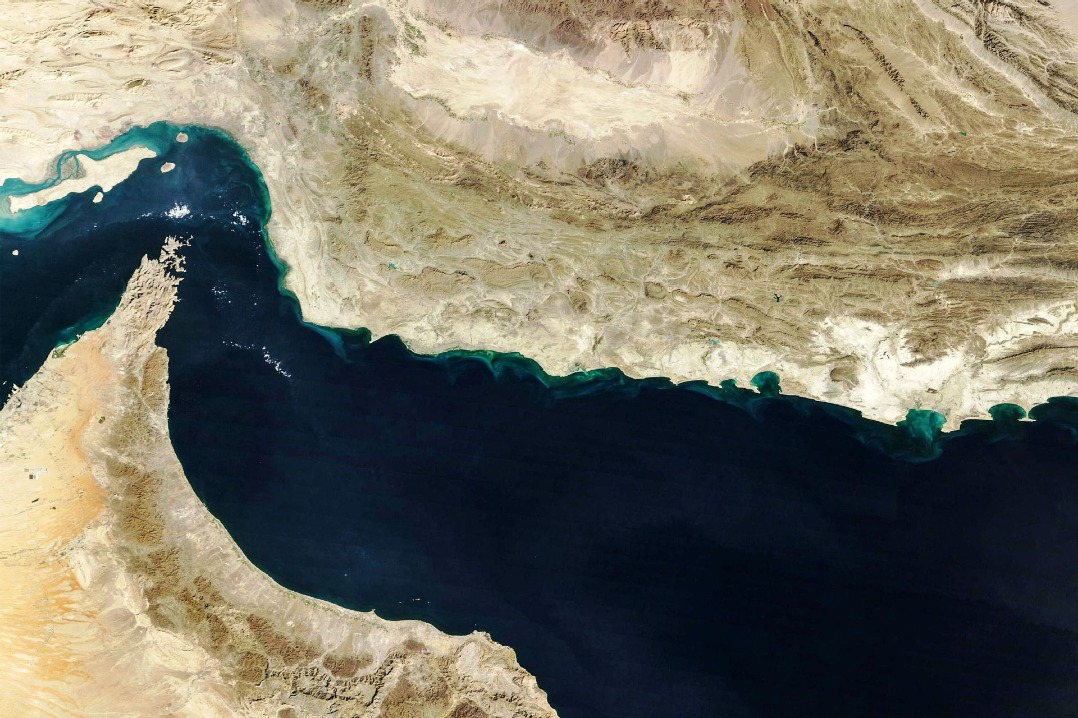
    The crisis stems from the effective closure of the Strait of Hormuz—a maritime chokpoint typically handling 20% of global oil shipments—where transit has virtually ceased since hostilities commenced last week. Energy analysts now warn that prolonged disruption could drive prices toward historic highs exceeding $150 per barrel if the situation persists through March.

    Adnan Mazarei of the Peterson Institute for International Economics noted, ‘Markets are realizing this conflict won’t resolve quickly. Production halts in Gulf states and escalating infrastructure damage suggest sustained supply constraints.’ The price surge is already radiating through energy derivatives, elevating jet fuel and fertilizer production costs globally.

    While Asian nations consume most Gulf oil exports, early indications show redirected LNG tankers from the Atlantic toward Asia as buyers scramble for alternatives. US President Donald Trump defended the price increases as a ‘small price to pay’ for addressing Iran’s nuclear ambitions, though domestic pressure mounts over rising fuel costs.

  • Australians not to panic buy food as Iran war enters 10th day

    Australians not to panic buy food as Iran war enters 10th day

    Australian authorities have issued firm reassurances to citizens regarding fuel and food security as geopolitical tensions in the Middle East enter their second week. With the US-Israeli conflict with Iran disrupting global shipping routes including the critical Strait of Hormuz, domestic fuel prices have seen noticeable increases across major Australian cities.

    Transport Minister Catherine King addressed mounting public concerns, emphasizing that while the government recognizes the strain on household budgets during the ongoing cost-of-living crisis, there is no justification for panic buying. “We are much more resilient than we were in previous years when it comes to fuel security,” Minister King stated, confirming that national fuel reserves remain above mandatory minimum levels despite emerging challenges.

    The situation has drawn political scrutiny, with Opposition figures raising alarms about supply chain vulnerabilities. Nationals Leader David Littleproud reported that some farmers and small wholesalers are experiencing constrained access to fuel supplies, potentially threatening agricultural production. However, he joined government officials in urging calm, noting that adequate supplies exist but require improved distribution management.

    Energy Minister Chris Bowen faces growing pressure to demonstrate the government’s contingency planning amid opposition claims that Australia risks returning to wartime-style rationing without proper intervention. The conflict has highlighted the nation’s dependence on imported fuels and the critical importance of maintaining robust energy security protocols during international crises.

  • Osaka tops Osorio to set Indian Wells Sabalenka clash

    Osaka tops Osorio to set Indian Wells Sabalenka clash

    The stage is set for a blockbuster fourth-round encounter at the BNP Paribas Open in Indian Wells, pitting World No. 1 Aryna Sabalenka against former champion Naomi Osaka. Both superstars advanced with commanding performances on Sunday, setting up a highly anticipated rematch of their sole 2018 meeting.

    Sabalenka, the top seed from Belarus, showcased her formidable power in a decisive 6-4, 6-1 victory over Romania’s Jaqueline Cristian. Despite a momentary lapse with a double fault on break point while serving for the first set, Sabalenka responded emphatically, firing 23 winners in a display of focused dominance. Reflecting on her performance, Sabalenka emphasized her strategic intensity, particularly on serve, to deny her opponent any significant opportunities.

    Meanwhile, Japan’s Naomi Osaka, seeded 16th, navigated a tougher path to secure her spot. She avenged a demoralizing 2023 loss to Colombia’s Camila Osorio with a 6-1, 3-6, 6-1 triumph. After a roaring start, Osaka encountered resistance in the second set as Osorio found her rhythm. A crucial mental reset proved decisive for the four-time Grand Slam champion, who later revealed she adjusted her negative attitude after considering her daughter might be watching. This propelled her to a dominant third-set performance, sealing the match without facing another break point.

    The upcoming clash is rich with narrative. Sabalenka is pursuing her maiden Indian Wells title after two previous final defeats, while Osaka, the 2018 champion here, is playing her first tournament since an abdominal injury forced her withdrawal from the Australian Open. Their only prior meeting was Osaka’s victory en route to her 2018 US Open title.

    In other action, American fourth seed Coco Gauff prepares for a night-session duel against Philippines’ rising star Alexandra Eala, seeking to replicate her dominant Dubai victory. The winner will face Czech Linda Noskova, who staged a comeback to defeat Sorana Cirstea. The draw also saw straightforward advances for sixth seed Amanda Anisimova, who delivered a stunning 6-1, 6-1 defeat to Britain’s Emma Raducanu, and seventh seed Jasmine Paolini of Italy.

  • Fake AI satellite imagery spurs US-Iran war disinformation

    Fake AI satellite imagery spurs US-Iran war disinformation

    A sophisticated disinformation campaign exploiting artificial intelligence has surfaced amid escalating tensions between the United States and Iran, demonstrating how rapidly evolving technology is transforming information warfare landscapes. The controversy centers on fabricated satellite imagery that circulated across social media platforms, purportedly showing extensive damage to American military installations in the Middle East.

    Tehran Times, an English-language publication with ties to the Iranian government, disseminated manipulated imagery through its social media channels claiming to depict ‘completely destroyed’ US radar equipment at a Qatari military base. Digital forensic analysis subsequently revealed the images to be artificially generated adaptations of authentic Google Earth photography from a Bahrain facility, with telltale signs of manipulation including identical vehicle positioning in both original and altered versions.

    This incident represents part of a broader concerning trend where state-aligned actors leverage generative AI capabilities to produce convincing visual misinformation during international conflicts. According to open-source intelligence researcher Brady Africk, there has been a measurable increase in manipulated satellite imagery appearing across social networks following major geopolitical events. These fabrications frequently exhibit characteristic flaws of AI generation including anomalous angles, blurred details, and logically inconsistent features that don’t correspond with physical reality.

    Information warfare specialist Tal Hagin identified additional AI-generated content portraying fictional military scenarios, complete with nonsensical geographical coordinates embedded within the metadata. Some fabricated images even carried invisible digital watermarks (SynthID) indicating their origin through Google’s AI image generation tools.

    The emergence of these sophisticated forgeries coincides with the proliferation of impersonator open-source intelligence (OSINT) accounts on social media platforms, which deliberately undermine the work of legitimate digital investigators. This development is particularly significant given that OSINT methodologies originally emerged as tools to circumvent state censorship and verify events in conflict zones like Iran.

    Historical precedents exist in both the Russia-Ukraine conflict and the brief India-Pakistan military engagement last year, where similar AI-manipulated satellite imagery was deployed for psychological operations. The implications extend beyond mere misinformation, potentially influencing public opinion on military engagement decisions and even affecting financial market behaviors based on false premises.

    In response to these developments, security experts emphasize the growing importance of real-time, high-resolution satellite imagery for government decision-makers to authenticate claims and counter false narratives. Recent incidents, including fabricated images of an airport attack in Niger that were debunked through satellite verification, demonstrate the critical need for technological countermeasures.

    University of Washington researcher Bo Zhao cautions that as AI-generated visuals become increasingly indistinguishable from reality, the public must cultivate heightened critical awareness when encountering potentially manipulated content presented as photographic evidence in conflict situations.

  • ‘Not going to say I felt sorry for him’: Angus Crichton weighs in on Zac Lomax move ahead of potential Wallabies reunion

    ‘Not going to say I felt sorry for him’: Angus Crichton weighs in on Zac Lomax move ahead of potential Wallabies reunion

    In a significant cross-code transition, former Parramatta Eels star Zac Lomax has officially signed with the Western Force rugby union team, commencing immediately. The 26-year-old’s move follows the collapse of his anticipated shift to the Melbourne Storm, which was obstructed by a contentious clause in his NRL release agreement.

    The contractual complication emerged from Lomax’s departure from Parramatta last year, initially intended to facilitate his participation in the postponed R360 competition. When that league’s launch was deferred until 2028, Lomax found himself in contractual limbo. The Melbourne Storm attempted to secure his services during the offseason, but the existing clause prohibited his signing with any rival rugby league club until October 2027.

    This impasse prompted Lomax’s dramatic code switch, facilitated through a two-year arrangement with Rugby Australia and the Western Force. The opportunity to potentially represent the Wallabies in next year’s home World Cup served as a powerful incentive for the athletic convert.

    Current NRL players have expressed strong support for Lomax’s transition. Connor Watson, Lomax’s former State of Origin teammate and current Sydney Roosters utility, described him as “a freak” athlete who will “dominate in another sport.” Watson acknowledged the challenging position Lomax faced, stating: “I felt really badly for him. I’m just glad to see that he’s got his future worked out.”

    Fellow Rooster Angus Crichton, who has also signed with Rugby Australia and could become Lomax’s Wallabies teammate, offered a more measured perspective. While expressing care for Lomax’s “compromising position,” Crichton noted that “he put himself in that position” through the original contract agreement. Nevertheless, Crichton emphasized that “it’s good to see that he’s come out of it because he’s a quality player.”

    Lomax himself expressed enthusiasm for the challenge, stating: “This is a huge opportunity and a challenge I’m really looking forward to embracing. Stepping into a new code will push me as a player and that’s something that genuinely motivates me.” He specifically highlighted the allure of potential Wallabies selection and World Cup participation as “powerful motivation” for his code transition.

  • Trump says Iran’s new supreme leader won’t ‘last long’ without his approval

    Trump says Iran’s new supreme leader won’t ‘last long’ without his approval

    In a provocative statement that escalates tensions with Tehran, former U.S. President Donald Trump has declared that Iran’s newly appointed supreme leader would not remain in power without his personal approval. The remarks came during a televised interview with ABC News on Sunday, March 8, 2026.

    Trump asserted unprecedented influence over Iran’s internal governance, stating, “He’s going to have to get approval from us. If he doesn’t get approval from us he’s not going to last long.” The comments represent a significant escalation in rhetoric following recent military actions against Iran.

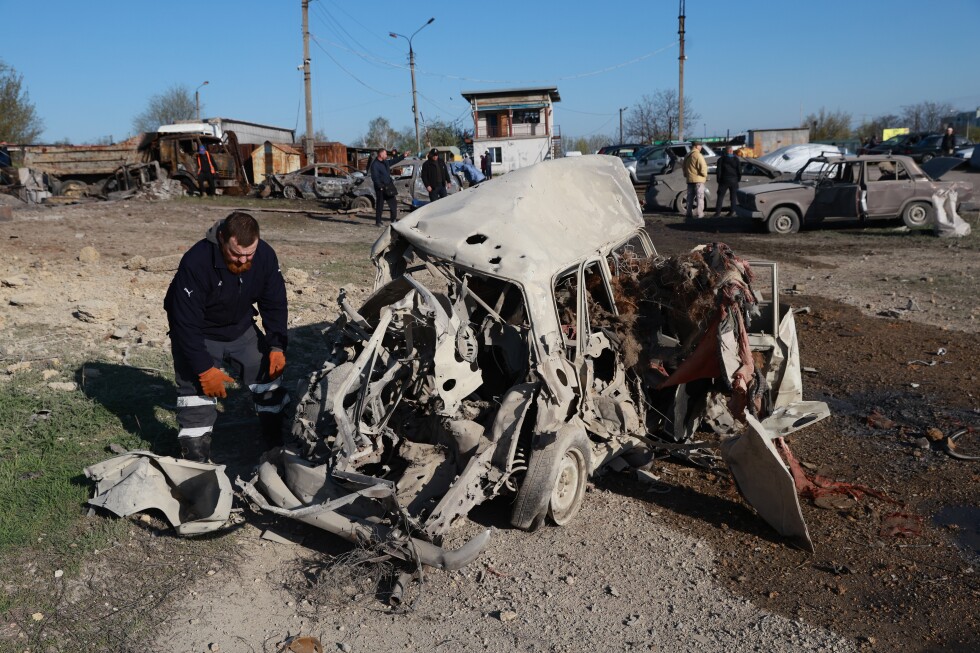
    The context for these statements stems from the February 28 joint U.S.-Israeli offensive that targeted Tehran and several other Iranian cities. The attacks resulted in the death of former Supreme Leader Ayatollah Ali Khamenei, along with dozens of senior officials, military commanders, and hundreds of civilians.

    Iran’s semi-official Mehr news agency confirmed on Sunday that the Assembly of Experts had finalized their decision regarding the succession. Trump previously indicated that he expected to be personally involved in the selection process of Iran’s next leader.

    The former president justified his position by expressing concerns about nuclear proliferation, stating, “I don’t want people to have to go back in five years and have to do the same thing again or worse let them have a nuclear weapon.”

    The medical community in Tehran has been visibly affected by the recent hostilities, with healthcare workers rallying in front of a hospital damaged during the strikes, as documented in photographic evidence from March 7.

  • Rihanna’s Beverly Hills home hit by gunfire, police say

    Rihanna’s Beverly Hills home hit by gunfire, police say

    Pop icon Rihanna’s Beverly Hills residence became the scene of a security breach on Sunday when an unidentified individual opened fire on the property. According to the Los Angeles Police Department, officers responded to emergency calls reporting gunshots at approximately 13:15 local time (21:15 GMT).

    Law enforcement officials confirmed that a suspect was promptly apprehended at the scene and taken into custody without further incident. While the property sustained damage from the gunfire, no injuries were reported among the occupants or staff.

    The Los Angeles Times, citing anonymous law enforcement sources, revealed that Rihanna was present inside the mansion during the shooting. The Barbadian superstar, born Robyn Fenty, has maintained her primary residence in the exclusive Los Angeles neighborhood despite her global business commitments.

    This security incident occurs during a particularly significant period in the artist’s personal life. Last September, Rihanna welcomed her third child—a daughter—with partner A$AP Rocky. The couple, who already parent two sons named Riot and RZA, had previously announced the pregnancy during last year’s Met Gala celebrations.

    The shooting follows closely on the heels of legal proceedings involving A$AP Rocky, who was acquitted in February of charges related to allegedly firing a gun at a former associate. During that trial, Rihanna made headlines by bringing their young children to the courtroom in a show of support.

    Beyond her musical career that launched with early 2000s hits like “Pon de Replay” and “Umbrella,” Rihanna has evolved into a formidable business magnate. Her beauty empire Fenty Beauty and Savage X Fenty lingerie line have contributed significantly to her billionaire status, as recently documented by Forbes.

    The investigation remains ongoing as authorities work to determine the motive behind the targeted attack on one of music’s most influential figures.

  • What China’s latest economic plans say about its tech ambitions and rivalry with the US

    What China’s latest economic plans say about its tech ambitions and rivalry with the US

    BEIJING — China’s recently concluded National People’s Congress revealed a nuanced dual-track economic approach that balances immediate domestic concerns against ambitious long-term technological objectives, with significant implications for global markets.

    The government’s immediate priority for 2026 focuses squarely on stimulating domestic consumption to counter current economic sluggishness that has dampened both consumer and business confidence. This near-term strategy acknowledges the pressing need to address economic headwinds through internal market reinforcement.

    Concurrently, China’s five-year development blueprint emphasizes technological sovereignty as the cornerstone of its economic transformation. The comprehensive plan targets breakthroughs in artificial intelligence, quantum computing, biotechnology, new energy solutions, and next-generation 6G networks. This technological push aligns with President Xi Jinping’s vision of establishing China as a global power capable of competing with the United States across trade, technology, and geopolitical spheres.

    The strategic emphasis on technology has intensified amid ongoing trade tensions with the United States, particularly following restrictions on advanced semiconductor exports. In response, China has accelerated efforts to develop domestic capabilities in critical technologies, including commercial aviation (through its C919 passenger jet program), semiconductor manufacturing, and rare earth processing where it already maintains global dominance.

    Despite export growth providing economic stability, record trade surpluses approaching $1.2 trillion have raised international concerns about manufacturing job losses elsewhere. This external pressure has reinforced China’s determination to rebalance its economy toward domestic consumption while maintaining aggressive technological investment.

    Economic analysts note that while the announced 4.5-5% growth target for 2026 suggests potential economic cooling, substantial government subsidies will continue flowing to high-tech manufacturing sectors. However, this approach risks recreating the oversupply dynamics seen previously in solar and wind industries, potentially exacerbating global trade imbalances while further widening the gap between China’s manufacturing capacity and domestic demand.

  • US begins large military drill with South Korea while waging war in the Middle East

    US begins large military drill with South Korea while waging war in the Middle East

    SEOUL, South Korea — The United States and South Korea have commenced their extensive Freedom Shield military exercise, mobilizing approximately 18,000 South Korean troops alongside an undisclosed number of American forces. This annual command post exercise, running through March 19, represents a significant demonstration of allied military coordination despite escalating global tensions.

    The drills commence amid speculation regarding potential redeployment of U.S. military assets from the Korean Peninsula to support Middle Eastern operations. While neither U.S. Forces Korea nor South Korean officials would confirm reports regarding the movement of Patriot anti-missile systems and other equipment, both authorities maintained that any such movements would not compromise the allies’ combined defensive capabilities.

    North Korea has historically characterized these joint exercises as invasion rehearsals, frequently responding with military demonstrations and weapons tests. The timing is particularly sensitive following Pyongyang’s recent political conference, where leader Kim Jong Un reaffirmed his hard-line stance toward Seoul while suggesting potential openness to dialogue with Washington—provided the U.S. abandons its denuclearization prerequisites.

    The current drills occur against a backdrop of suspended diplomacy since the collapse of the 2019 Kim-Trump summit. Tensions have intensified as North Korea capitalizes on geopolitical distractions, including Russia’s invasion of Ukraine, to accelerate its nuclear weapons development and strengthen military ties with Moscow.

    Freedom Shield represents one of two major computer-simulated command exercises conducted annually, designed to evaluate joint operational capabilities against evolving security challenges. The accompanying Warrior Shield field training program will feature significantly reduced live exercises—22 compared to last year’s 51—potentially indicating a calibrated approach to avoid escalating tensions while maintaining readiness. This reduction has sparked speculation that allies may be creating diplomatic space for potential engagement with Pyongyang, particularly with the anticipated visit of former President Trump to China in coming months.

  • Japan’s Nikkei 225 share index falls more than 6% as oil soars over $100 a barrel

    Japan’s Nikkei 225 share index falls more than 6% as oil soars over $100 a barrel

    Asian financial markets experienced severe turbulence on Monday as Japan’s Nikkei 225 index plummeted over 6% in early trading, triggered by escalating oil prices exceeding $100 per barrel amid Middle East hostilities. The benchmark Nikkei dropped to 52,166.92 shortly after opening, while South Korea’s Kospi index witnessed a dramatic 6.3% decline. Australia and New Zealand markets similarly faced substantial losses, with both falling more than 3% in response to the energy crisis.

    The commodity markets registered unprecedented movements as Brent crude surged to $107.97 per barrel on the Chicago Mercantile Exchange—a striking 16.5% increase from Friday’s closing price of $92.69. This elevation represents the highest crude valuation in over three and a half years, primarily driven by supply chain disruptions affecting major oil-producing nations and export operations in the Persian Gulf region.

    These developments follow last week’s remarkable price surges, where U.S. crude escalated by 36% and Brent crude increased by 28%. The ongoing conflict, now entering its second week, has critically impacted regions vital to global oil and gas production and transportation.

    U.S. market indicators also pointed toward negative momentum, with S&P 500 and Dow Jones Industrial Average futures declining 1.9%. This downward trend continues from Friday’s performance, where the S&P 500 dropped 1.3% following disappointing employment data showing net job losses and oil prices breaching the $90 threshold.

    Financial analysts express concern that sustained oil prices above $100 could inflict significant damage on the global economy. The simultaneous occurrence of economic weakness and rising inflation presents a particularly challenging scenario for policymakers, as conventional tools struggle to address both issues effectively.