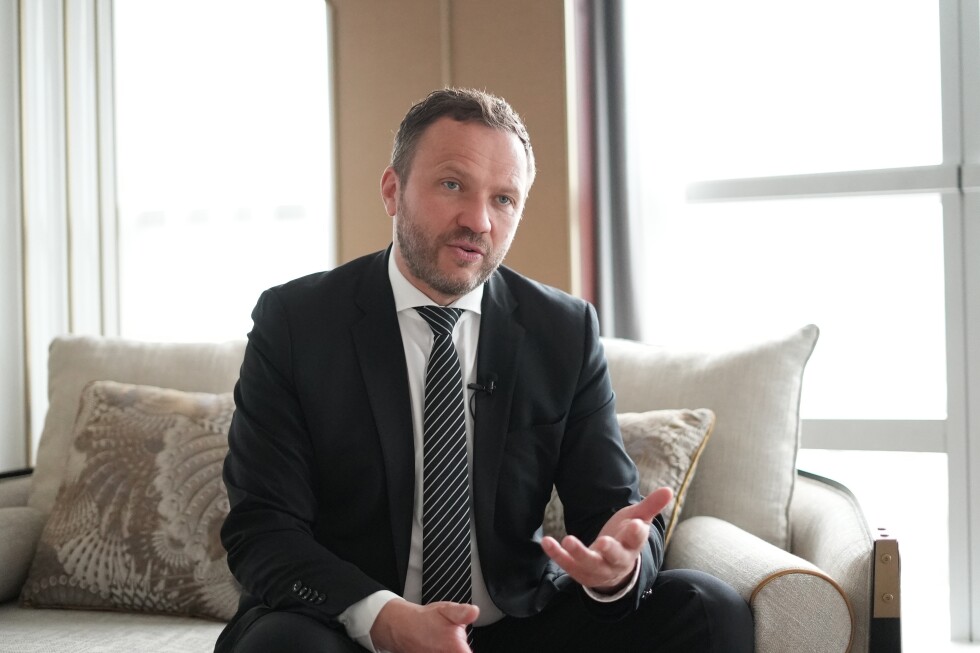
During a high-level diplomatic visit to Hanoi this week, Estonian Foreign Minister Margus Tsahkna held substantive talks with Vietnamese Prime Minister Le Minh Hung, outlining a bold agenda to expand bilateral collaboration across trade, digital technology and governance transformation. Diplomatic ties between the small Baltic EU member and the Southeast Asian economic heavyweight have warmed considerably in recent years, with a landmark bilateral digital cooperation agreement already set to take effect in 2025. Though Estonia contributes only 0.2% of the entire European Union’s total gross domestic product, the nation has carved out a global reputation as a pioneering leader in digital governance and e-government innovation, expertise it is eager to share with Vietnam as Hanoi pursues sweeping domestic reforms to reach high-income economy status by 2045. Tsahkna emphasized that partnering to digitize Vietnam’s public services would deliver tangible benefits: cutting through bureaucratic red tape, boosting government transparency, and reducing operational costs for both citizens and businesses. “It becomes far faster for people to access public sector services when systems are fully digitized,” Tsahkna told reporters from the Associated Press on the sidelines of the Hanoi meetings. He added that Vietnamese officials had already tabled a proposal for a new bilateral education cooperation agreement, opening another avenue for people-to-people ties. According to Vietnamese state media, Prime Minister Hung made two key requests of Estonia during the talks: that the Baltic nation push the European Union to formally ratify the stalled EU-Vietnam Investment Protection Agreement, and that it back Hanoi’s efforts to have the European Commission’s “yellow card” warning lifted. The trade restriction currently blocks many Vietnamese seafood imports over unsubstantiated claims of illegal, unreported and unregulated fishing. Beyond economic and digital cooperation, Tsahkna framed the bilateral partnership as mutually beneficial in broader strategic terms: Estonia can act as a convenient, low-barrier gateway for Vietnamese companies seeking access to the 27-nation EU single market, while Vietnam gives Estonia a strategic foothold and access to one of the fastest-growing consumer markets in the Southeast Asian region. “For us, Vietnam is one of the priority countries in the entire Indo-Pacific region,” Tsahkna said. The visit also gave Estonian officials a platform to share Europe’s perspective on the ongoing conflict in Ukraine, where Estonia views Russian aggression as an “existential threat” to European security. This outreach comes as Vietnam has maintained a long-standing diplomatic relationship with Moscow stretching back to 1950, and has stuck to a carefully calibrated neutral stance on the war, calling for peaceful negotiations while declining to issue direct public criticism of Russia. Tsahkna acknowledged that Estonia’s renewed diplomatic focus on Vietnam and broader Southeast Asia is shaped by both shifting geopolitical pressures and new economic opportunities. In particular, he noted that former U.S. President Donald Trump’s repeated criticism of European defense spending and persistent transatlantic tariff tensions have pushed the EU to diversify its diplomatic and economic partnerships beyond traditional allies, turning greater attention to fast-growing emerging markets across the Indo-Pacific.
作者: admin
-
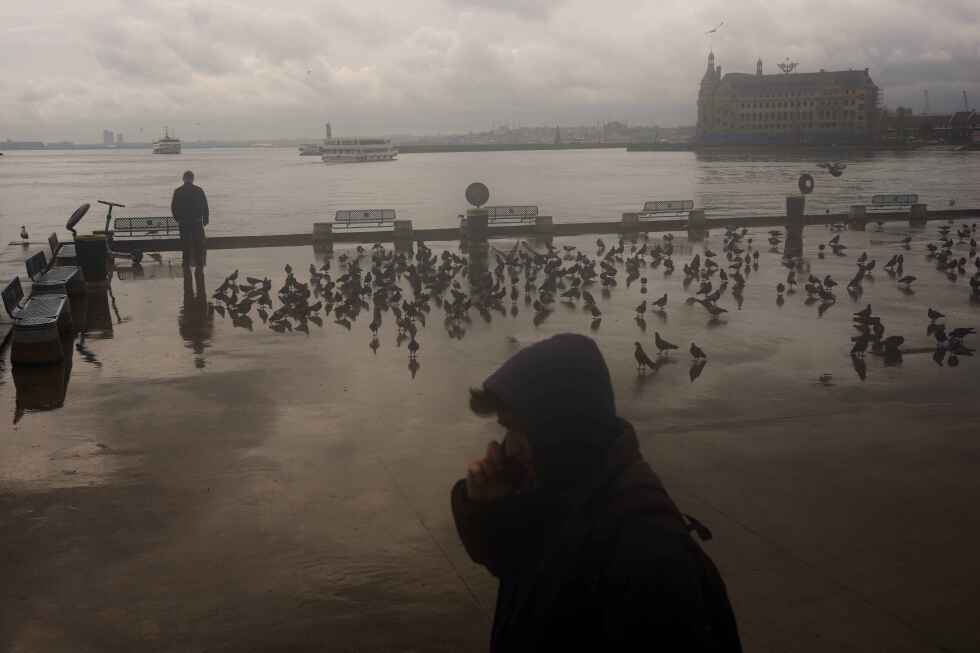
Turkish parliament passes bill to restrict social media access for under-15s
Late Wednesday, Turkish lawmakers passed a controversial new bill that would enforce sweeping restrictions on social media access for children younger than 15, marking the latest entry in a growing global policy push to shield minors from documented harms of unregulated online engagement. The vote came just seven days after a horrific gun attack at a southern Turkish middle school in Kahramanmaras, where a 14-year-old male perpetrator killed nine students and one teacher before dying himself. Turkish law enforcement is currently examining the shooter’s past online activity to identify potential motives for the violence, adding urgent political momentum to the regulatory proposal.
According to Turkey’s state-run Anadolu News Agency, the new legislation mandates that all major social media platforms operating within the country implement mandatory age-verification systems to stop underage users from creating new accounts, build integrated parental control tools for guardians to monitor and manage minor access, and respond quickly to takedown requests for content classified as harmful to young people. The rules also extend to online game companies, which are required to appoint a local in-country representative to ensure compliance with Turkish regulatory standards. Platforms that fail to meet these requirements face stiff penalties, including cuts to internet bandwidth and substantial fines issued by Turkey’s national communications watchdog.
The bill now moves to the desk of Turkish President Recep Tayyip Erdogan, who has 15 days to sign the legislation into effect. Erdogan has already publicly voiced strong support for tighter online protections in the aftermath of the Kahramanmaras attack, arguing in a televised address just days before the vote that unmoderated digital platforms are eroding youth well-being. “We are living in a period where some digital sharing applications are corrupting our children’s minds and social media platforms have, to put it bluntly, become cesspools,” he told the public.
Not all political factions in Turkey back the new restrictions, however. The country’s main opposition bloc, the Republican People’s Party (CHP), has issued sharp criticism of the policy, arguing that effective youth protection requires rights-centered policy frameworks rather than blanket access bans. The proposal also fits into a wider pattern of Turkish government regulation of online platforms that has drawn scrutiny in recent years. As social media has emerged as a key space for organizing anti-government dissent, the administration has implemented repeated access restrictions, including broad blackouts during 2023 mass protests supporting jailed Istanbul opposition mayor Ekrem Imamoglu.
Turkey’s new rule is far from an isolated policy. Around the world, governments are rolling out or considering similar age limits for social media use amid growing public concern over the impacts of unregulated content on adolescent development. Australia first implemented a ban on social media access for users under 16 in December 2023, where platforms moved to revoke access for roughly 4.7 million accounts confirmed to belong to underage users. Just last month, Indonesia enacted its own regulation barring minors under 16 from accessing digital platforms that could expose young people to cyberbullying, pornography, online scams, and problematic screen addiction. Several other European nations, including Spain, France, and the United Kingdom, are currently drafting or evaluating their own regulatory measures to limit underage exposure to harmful social media content.
-
Two trains collide head-on in Denmark, leaving four critically hurt
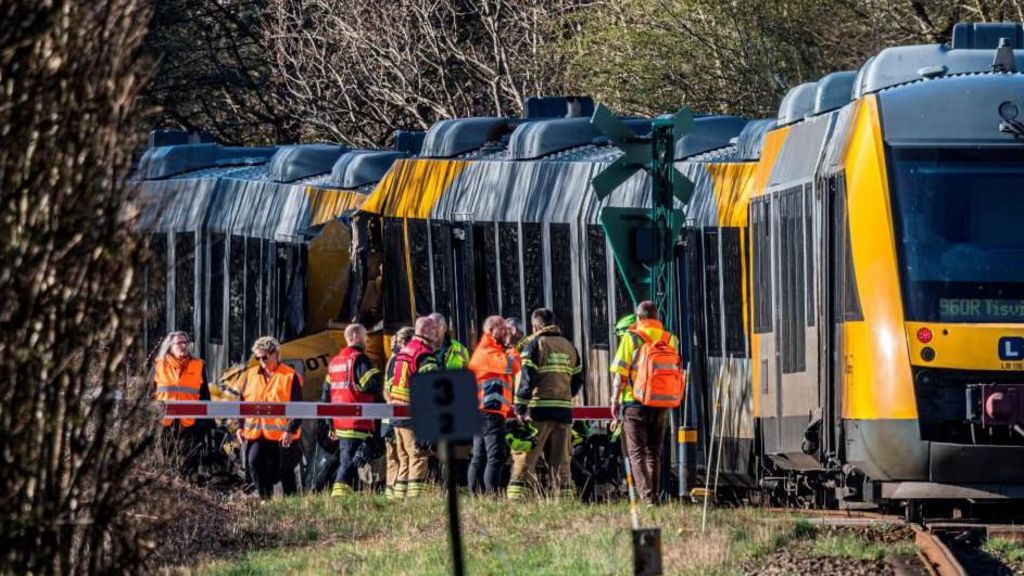
A devastating head-on collision between two trains has rocked northeastern Denmark, leaving multiple people severely injured and triggering urgent questions about regional rail network safety. The crash unfolded shortly after 6:30 a.m. local time Thursday on a track connecting the small towns of Hillerød and Kagerup, located approximately 40 kilometers northwest of Copenhagen, Denmark’s capital.
Emergency response teams rushed to the wooded accident site immediately after receiving the alert. According to Tim Ole Simonsen, a representative of the Greater Copenhagen Fire Department, all injured passengers and crew were evacuated from the scene within hours, transported to area medical facilities via both ambulance and medical air transport. As of initial official updates, four people are being treated for critical injuries, while an additional 11 people sustained harm serious enough to require inpatient hospital care.
Photos broadcast by Danish national public broadcaster DR show the two yellow and grey commuter trains, their front carriages heavily damaged, positioned facing one another on the open line near a level crossing. Trine Egetved, mayor of the Gribskov Municipality where the crash occurred, told local media she was deeply shaken by the unexpected tragedy. The critically injured patients were transferred to Copenhagen’s National Hospital, Denmark’s leading tertiary medical center, for specialized care, Egetved confirmed.
In a public post shared on Facebook, Egetved noted that the affected regional line is a core transit route for hundreds of local residents, daily commuters heading to work, and students traveling between communities. Speaking to DR, the mayor expressed shock that such a severe head-on collision could occur in Denmark, saying, “We must ensure it never happens again.”
Train collisions are extremely rare in Denmark, which maintains a generally high standard for rail safety. However, early preliminary analysis from industry experts has pointed to a potential safety gap on the line. One anonymous expert suggested the crash may have occurred after one of the train operators overrode a stop signal as the train departed a local station, accidentally entering the wrong track in the path of the oncoming service. Preliminary checks also indicate that the Gribskov line has not been retrofitted with modern automated collision prevention safety systems that automatically stop trains if a signal is violated, a detail that is expected to feature heavily in the official investigation.
-
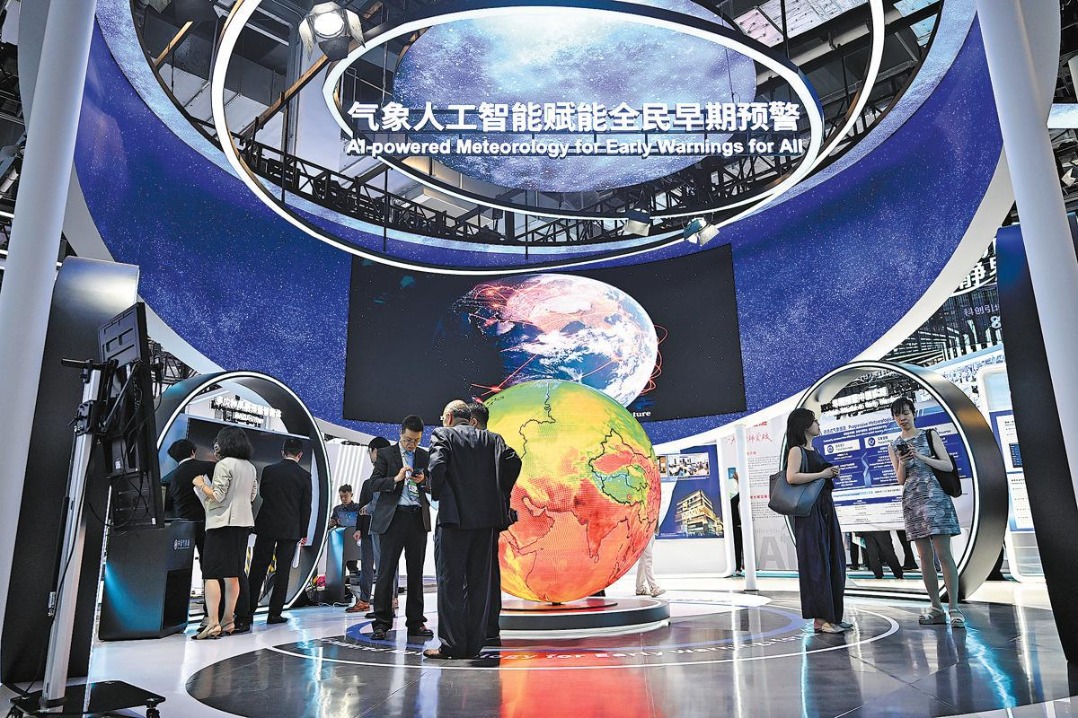
Upgraded MAZU to enhance forecasting
Against a backdrop of rising global climate risks and intensifying extreme weather events, China has launched an upgraded iteration of its MAZO cloud-based meteorological early warning platform, a cutting-edge system built to enhance global capacity for anticipating and preparing for climate disasters. The rollout took place Wednesday during a side forum of the Third High-Level Conference of the Forum on Global Action for Shared Development, where policymakers and leading meteorological experts gathered to advance international cooperation on climate resilience and universal early warning access.
Developed in-house by the China Meteorological Administration (CMA), the updated MAZU platform forms a core part of China’s contribution to the United Nations’ Early Warnings for All initiative, which aims to ensure every person on Earth is protected by life-saving early warning systems by 2027. Describing the platform as a global public good forged through decades of scientific advancement and artificial intelligence innovation, Zhang Xingying, CMA’s Department of International Cooperation director, emphasized that effective meteorological disaster mitigation and climate action are foundational pillars of global sustainable development. He added that China’s top priority is expanding equitable access to this technology for developing nations, particularly those across the Global South that bear the brunt of climate change but lack robust forecasting infrastructure.
Dai Kan, deputy director of China’s National Meteorological Center, outlined key technical upgrades that boost the system’s performance. The revamped MAZU now integrates multiple cutting-edge AI forecasting models, including China’s AI-powered Fengshun seasonal prediction system and Fengqing medium-range forecasting framework, delivering marked improvements in prediction accuracy for extreme events such as intense rainfall and other severe weather. To better serve international users, the CMA has deployed new overseas cloud nodes, which have accelerated platform loading speeds sixfold and cut data response times by seven times, drastically improving access stability for users in regions including Africa. Beyond traditional weather forecasting, the upgraded system has expanded into impact-based forecasting, adding hydrometeorological tools such as global rainfall projections and flood risk warnings for major river basins. It now also offers sector-specific forecasting tailored to support data-driven decision-making in agriculture, transportation, and public health.
Andrea Celeste Saulo, Secretary-General of the World Meteorological Organization (WMO), praised the MAZU initiative for advancing the goal of making early warning systems a universally accessible global public good, noting that the project is rooted in open sharing of knowledge, technical expertise, and innovative solutions. She highlighted that China’s approach is intentionally adaptive, recognizing the system must be customized to fit local geographic and climatic contexts rather than imposing a one-size-fits-all model.
During the forum, the CMA formally handed over customized MAZU systems to the national meteorological authorities of Sri Lanka and Jordan, two nations that face growing climate-driven disaster risks. For Sri Lanka, a tropical Indian Ocean island nation that grapples with recurring extreme weather including devastating floods and prolonged droughts, the platform is expected to dramatically strengthen national disaster preparedness. Athula Kumara Karunanayake, director of Sri Lanka’s Department of Meteorology, explained that MAZU delivers forecasting across multiple time scales, from 24-hour early warnings for emergency response to monthly and seasonal outlooks that are critical for planning in key economic sectors including agriculture, fisheries, aviation, and water resource management. By integrating forecasting data directly with disaster management agencies and other government departments, the system will streamline early warning dissemination, helping cut both economic losses and climate-related casualties, he added.
In Jordan, which faces growing climate threats including frequent sandstorms, extreme heatwaves, and persistent drought, the customized MAZU system will also strengthen national risk mitigation capacity. Raed Rafid, director of the Jordan Meteorological Department, noted that the platform’s ability to integrate multiple forecasting models, satellite data, and AI tools empowers local forecasters to issue more accurate, timely warnings to the public. Bilateral cooperation between Jordan and China has already included targeted training programs and technical workshops for Jordanian forecasters and engineering staff, and Rafid said the handover of the customized system paves the way for deeper collaborative work on meteorological innovation in the future.
Since its initial public launch in 2025, the MAZU platform has been permanently deployed in seven countries, supports cloud-based access for users in more than 40 additional nations, and provides meteorological data products to 153 countries and regions worldwide, CMA data shows. International training programs tied to the platform have also built local capacity for experts from 89 countries around the globe.
-

Inter Milan has been routed and defeated in Europe yet remains a force at home in Italy
ROME – In what has shaped up to be one of the most surprising domestic turnarounds in top-tier Italian soccer this campaign, Inter Milan has positioned itself on the cusp of a long-awaited Serie A championship, even as its recent European performances have been marked by devastating high-profile defeats. The 2024-25 season marks Cristian Chivu’s debut at the helm of the Nerazzurri, and the rookie head coach has already guided the club to not just a near-certain title push but also a spot in the Italian Cup final, putting an unprecedented domestic double within Inter’s reach with just four matches remaining on the league calendar.
If Inter secures three points against Torino this coming weekend, and neither second-place Napoli nor city rival AC Milan claim a victory in their own fixtures, the club will lift the Scudetto weeks before the regular season concludes. This dominant domestic run stands in stark contrast to Inter’s fortunes in continental competition this year: the club was knocked out of the 2024-25 Champions League by unfancied Norwegian side Bodø/Glimt, a result that echoed the humiliating 5-0 defeat to Paris Saint-Germain in the 2023-24 Champions League final.
Should Inter go on to claim both the Serie A trophy and the Italian Cup, it will mark the first time the club has earned a domestic double since 2010, when legendary manager José Mourinho led Inter to a historic treble that also included the Champions League title. Fittingly, Chivu was a member of that 2010 squad, and the former defender has rapidly emerged as one of the most promising new coaching talents in Italian soccer, just one year after steering Parma to a successful relegation escape last season.
When pressed about comparisons between his current run and Mourinho’s iconic 2010 treble campaign, Chivu struck a humble tone. “I’m just Cristian. My only responsibility is to these players,” he said. “I’m just trying to do my job in the best manner possible for those who believed in me, for these wonderful players, and I hope to achieve some of our objectives.”
Chivu’s side booked its Italian Cup final spot after a dramatic 3-2 comeback win over Como in the semi-finals, where Inter overturned a two-goal deficit to secure victory. The club will face Lazio in the title decider on May 15.
Beyond Inter’s title push, this weekend’s Serie A fixture list holds extra intrigue: a crucial clash between second-place AC Milan and fourth-place Juventus carries far more than just stakes for Champions League qualifying spots. The match will also pit two of the top United States men’s national team players plying their trade in Italy against each other. AC Milan winger Christian Pulisic has endured a notable goal drought stretching back to December across both club and international play, while Weston McKennie has become a core fixture for Juventus following Luciano Spalletti’s appointment as head coach last October. After Sunday’s meeting, the pair will not reunite until the U.S. gathers for training camp ahead of the 2026 FIFA World Cup, which the United States will co-host.
In pre-match notes for Inter’s weekend trip to Torino, second-choice goalkeeper Josep Martínez has drawn attention for an unorthodox technique he used to great effect during the semi-final win over Como: Martínez pulled off multiple stunning saves using a butterfly positioning method borrowed from ice hockey goaltenders. By dropping to his knees and extending his arms wide to cover more of the goal frame, the backup keeper made high-pressure reflex saves look routine. Despite the standout performance, starting keeper Yann Sommer is still expected to get the nod between the posts for Sunday’s pivotal title clash against Torino.
Inter will still be without one key contributor, however: captain and Serie A top scorer Lautaro Martínez remains sidelined with a lingering muscle injury, a major absences for Chivu’s side as they close out the season.
Off the pitch, authorities in Milan are continuing an investigation into an alleged prostitution ring linked to more than 70 active professional soccer players. Four people have been arrested on charges of operating the illegal escort service, though no players have yet been formally named as targets of the investigation.
-
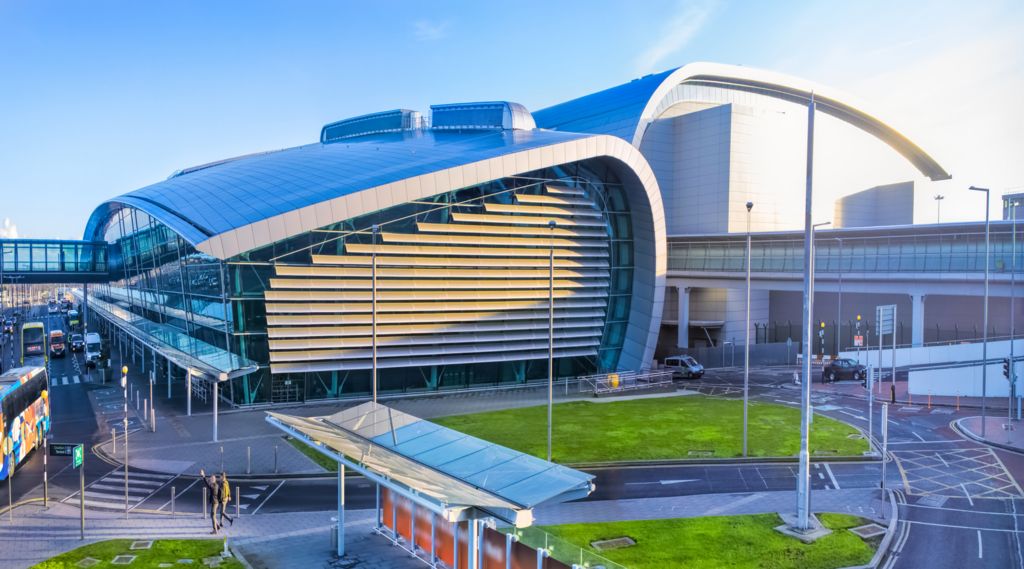
Man dies after being hit by bus at Dublin Airport
A tragic traffic incident has claimed the life of a man in his 60s after he was struck by a bus on the grounds of Dublin Airport, Irish authorities confirmed Thursday.
The collision occurred just after midnight on Corballis Road, a key route located within the airport’s boundary, according to official updates. Members of Gardaí, the Republic of Ireland’s national police service, responded to the emergency alongside local first responders and medical teams. Upon arrival at the scene, emergency personnel pronounced the man dead.
In the wake of the incident, law enforcement has implemented a partial closure of the main access road leading into Dublin Airport, one of the busiest travel hubs in the country. Official traffic management plans have activated detour routes for drivers heading to and from the airport, and Gardaí have issued a public advisory urging motorists to allocate additional travel time when planning journeys through the area to avoid unexpected delays.
As investigations into the circumstances of the collision get underway, Gardaí are calling on members of the public who may have witnessed the incident, or who hold relevant dashcam footage or other information related to the event, to reach out to official lines to assist with the inquiry. No further details about the identity of the victim, the bus driver, or the specific context of the collision have been released to the public as of yet.
-
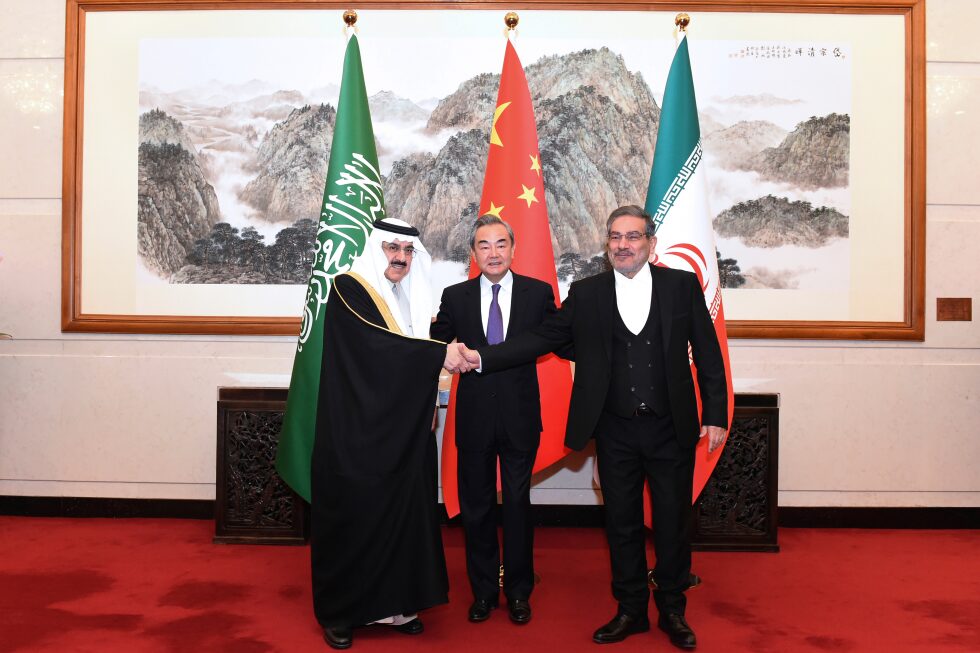
A look at China’s behind-the-scenes role in Iran war diplomacy
BANGKOK – As the latest Middle East conflict roils global energy markets and upends regional security, China’s emergence as an informal behind-the-scenes mediator has captured international attention, marking a key milestone in Beijing’s push to frame itself as a responsible global power at a moment when U.S. policy has frayed long-standing American alliances.
Over the past decade, China has deliberately expanded its diplomatic footprint across the globe, a sharp departure from its historic approach of avoiding deep involvement in conflicts far from its borders. Today, Beijing has positioned itself as a major diplomatic player, stepping in to facilitate de-escalation in disputes stretching from the Southeast Asian border to Eastern Europe. In the ongoing Iran conflict, while Beijing has not claimed the title of official mediator, both Washington and Tehran have acknowledged its meaningful contributions to cooling hostilities.
Experts note that China’s mediation strategy across multiple conflicts follows a consistent pattern, with mixed results in shaping final negotiation outcomes. However, its current engagement in the Iran war comes at a uniquely opportune moment: the unilateral, alliance-straining policies of the Donald Trump administration have left traditional U.S. partners increasingly wary of American leadership, opening space for China to step into the diplomatic gap.
In the Iran conflict specifically, China’s deep economic and political ties to Tehran grant it a rare level of influence, a particularly critical advantage at a time when fighting has disrupted global energy supplies, most acutely impacting Asian markets. Former President Trump has publicly stated he believes China pushed Iran to enter ceasefire negotiations, a step that led to the extended fragile truce currently in place. Unnamed diplomatic sources told the Associated Press that Beijing, which is the largest buyer of Iranian oil under international sanctions, used its economic leverage to encourage Iranian negotiators to attend the landmark face-to-face talks held in Pakistan earlier this month.
Yaqi Li, a researcher at the S. Rajaratnam School of International Studies at Singapore’s Nanyang Technological University, explained that Beijing has not publicly confirmed this account, largely because it seeks to avoid being framed as a participant in a U.S.-led security architecture. Still, the move has been widely viewed as a pivotal moment for China, which has openly criticized the U.S.-Israeli military campaign against Iran.
Since the conflict began with U.S.-Israeli strikes on February 28, senior Chinese diplomats have maintained intense outreach to all regional parties. Chinese Foreign Minister Wang Yi has held 30 phone calls with officials from Iran, Israel, Saudi Arabia, Bahrain, the United Arab Emirates, and other relevant stakeholders as of mid-April, according to official foreign ministry records. Wang also hosted his counterpart from Pakistan – which serves as the official lead mediator for the current talks – to unveil a five-point Chinese peace proposal that calls for an immediate end to hostilities and the full reopening of the strategic Strait of Hormuz.
In an unusually public shift, Chinese President Xi Jinping has also taken an outspoken stance on the conflict. Last week, he warned against a global return to the “law of the jungle,” and this week he explicitly called for the Strait of Hormuz, a critical chokepoint for 20% of the world’s daily oil supply, to be reopened to commercial traffic.
Analysts point out that China’s influence in the region stems directly from its status as an economic superpower. George Chen, a partner at the global consultancy The Asia Group, noted that China’s role in the Iran situation is functionally irreplaceable. As Tehran’s top oil customer, its diplomatic input carries far more weight than many other global actors, and it is one of the few major powers that has publicly expressed sympathy for Iran’s position at the United Nations. The U.S. government has also documented that Iran’s ballistic missile program was developed using Chinese technology, and China continues to sell dual-use industrial components that can be adapted for missile production.
While China has not taken the lead in active on-the-ground mediation like Pakistan and key Gulf Arab states, it holds a unique position as a critical economic partner for nearly every major actor in the region. Tuvia Gering, a nonresident fellow at the Atlantic Council’s Global China Hub, explained that Beijing is uniquely able to offer Tehran tangible economic incentives that will matter greatly after the war ends, including pledges of reconstruction investment and commercial relief that few other countries can match. “It could be one of the few actors capable of giving Tehran both political cover and material incentives to accept constraints and stick to them,” Gering noted.
This current mediation effort is just one part of a broader trend of growing Chinese global diplomatic engagement in recent years. One of Beijing’s most high-profile diplomatic successes came in 2023, when it helped broker the historic reconciliation between Saudi Arabia and Iran that restored official diplomatic ties between the two long-time rivals. The breakthrough was widely celebrated as a major geopolitical achievement that reduced the risk of open conflict across the Middle East.
However, Muhammad Zulfikar Rakhmat, a researcher at the Center of Economic and Law Studies in Indonesia, pointed out that China carefully selects which conflicts it engages in, often stepping in only when conditions are already ripe for a deal. “Its mediation tends to be opportunistic and low-risk, often occurring when the parties themselves already have incentives to reach agreement,” Rakhmat explained.
Beyond the Middle East, China has also tested its mediation model in other regional conflicts. It hosted multiple rounds of talks between Thailand and Cambodia during their 2024 border dispute, joined U.S. negotiators for initial ceasefire discussions in Malaysia, and helped broker a second truce after fighting reignited in December. Beijing has also put forward a formal peace proposal for the ongoing war in Ukraine, and even hosted the Ukrainian foreign minister for talks, despite its stated “no-limits” strategic partnership with Russia.
Across all of these mediation efforts, experts note that China’s public messaging follows a consistent script, with heavy emphasis on upholding the United Nations Charter, respect for national sovereignty, and adherence to international law. In comments on the Iran conflict, Xi echoed this standard framework, calling for “upholding the principles of peaceful coexistence, upholding national sovereignty, upholding the rule of international law, and coordinating development and security.”
Hoo Tiang Boon, a professor of Chinese foreign policy at Nanyang Technological University, noted that this consistent framing is a deliberate choice. “A lot of the points are remarkably consistent,” he said.
Thitinan Pongsudhirak, a professor of international relations at Thailand’s Chulalongkorn University, argued that for China, engaging in distant conflicts carries low direct strategic risk but offers major reputational benefits, especially as the international community adjusts to the Trump administration’s unconventional negotiation approach. “What the U.S. is doing is deeply damaging, and everyone suffers from it … and China is displaying global leadership and exerting its global role by speaking to the rules-based international system,” he said. “It’s an inescapable contrast.”
Leung contributed reporting from Hong Kong.
-
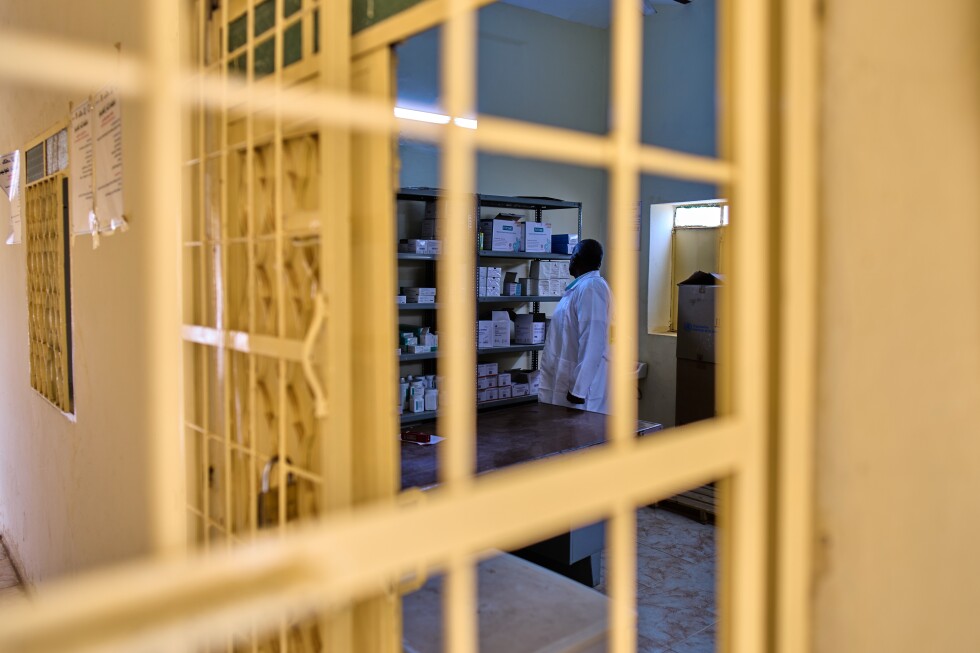
Residents in rural Sudan say the Iran war has made it harder to get medicines
In the quiet, conflict-battered village of Qoz Nafisa on the outskirts of Sudan’s capital Khartoum, 61-year-old Abbas Awad faces a desperate daily battle to preserve his sight. For years, accessing the glaucoma medication he needs to avoid blindness has been an uphill climb, but the outbreak of war in Iran has turned that climb into a steep, almost insurmountable cliff. Today, Awad deliberately stretches out his doses, rationing each pill to stretch his current supply as far as it can go, terrified that when it runs out, he will neither find more on local markets nor afford whatever scarce stock remains.
Awad’s struggle is far from an isolated case. It is a direct ripple effect of the new conflict unfolding thousands of kilometers away in the Middle East, a crisis that is compounding the damage of Sudan’s own three-year long civil war, which has already pushed the country into what global aid groups widely call the world’s worst humanitarian catastrophe.
The International Rescue Committee (IRC), one of the few aid organizations still providing critical support to the Qoz Nafisa public health clinic that serves 5,000 vulnerable local residents, explains how the Iran conflict has shattered already fragile global supply chains for life-saving aid. Rising tensions between the United States and Iran have effectively closed off the Strait of Hormuz, one of the world’s most critical oil and commercial shipping chokepoints, and disrupted alternative logistics routes passing through major regional hubs like Dubai. Aid groups report that shipping costs for essential goods have jumped by as much as 20% according to United Nations estimates, driven by skyrocketing fuel prices and inflated insurance premiums for vessels traveling through conflict-affected waters. Many shipments that would normally move directly through the Persian Gulf are now being rerouted across long, inefficient alternative paths, causing massive delays that can stretch for weeks or even months.
One clear example of this disruption is a $130,000 shipment of pharmaceuticals bound for Sudan, including critical antibiotics, painkillers, and basic medical equipment like stethoscopes. The shipment was originally meant to be flown from the United Arab Emirates directly to Port Sudan, but was stranded in Dubai for weeks. It was eventually forced to take a much longer, costlier route: overland by road to neighboring Oman, before being loaded onto a flight bound for Sudan. The shipment only just began moving toward the country after weeks of gridlock.
At the Qoz Nafisa clinic, the impact of these delays is already being felt on a daily basis. Dr. Amira Sidig, the clinic’s medical director, told AP journalists during a recent visit that the facility has not received a scheduled supply shipment from the IRC since December. Planned shipments for February and April never arrived. While Sudan’s Ministry of Health has attempted to step in to fill the gap, it can only cover half of the clinic’s total needs, and the government itself is grappling with widespread shortages across the country. As a result, the clinic’s stock runs out almost as soon as new supplies arrive.
Earlier this month, the clinic completely ran out of malaria treatment for several days. Half of all patients seeking care at the facility present with malaria, a life-threatening disease that is endemic to the region. Patients who cannot get free medication at the clinic are forced to travel to other facilities and pay for drugs out of pocket, a cost most of them simply cannot afford after three years of war that has gutted local livelihoods. Ahmed Ibrahim, a clinic staff member, says frustration is growing among residents who have nowhere else to turn for care. “When people come to the window, they say, ‘Why are you here and there is no medicine?’” he shared.
Even though U.S. President Donald Trump announced an extension of a fragile ceasefire with Iran this week, aid leaders remain deeply concerned that the damage to supply chains will not reverse quickly. “There’s still a real lag in the system. Shipments remain blocked or delayed, and that’s deeply worrying,” said Madiha Raza, associate director for global public affairs and communications for the IRC. Raza emphasized that for a country already on the brink of collapse like Sudan, even small delays to food, medicine, and fuel shipments have catastrophic, irreversible consequences for millions of vulnerable people.
This reporting is part of AP News’ Africa Pulse coverage, supported by a grant from the Gates Foundation. The AP maintains full independent editorial control over all content, with public transparency standards for philanthropic partnerships available on AP.org.
-

Samsung workers rally in South Korea, demanding higher pay and threatening to strike
In the heart of Samsung Electronics’ flagship Pyeongtaek chip manufacturing complex in South Korea, tens of thousands of unionized workers gathered in a mass public rally on Thursday, throwing their weight behind demands for transparent compensation and higher performance bonuses amid an unprecedented AI-driven surge in global memory chip profits. Organizers said around 40,000 union members participated in the demonstration, where attendees carried hand-painted signs and unfurled large banners, chanting calls for the removal of arbitrary bonus caps while a large contingent of local police monitored the gathering to maintain order. Official crowd estimates from law enforcement were not released immediately after the event.
The demonstration came just hours after Samsung’s cross-country competitor SK Hynix announced jaw-dropping quarterly financial results, posting all-time record highs for both revenue and operating profit in the first three months of the year. SK Hynix leadership directly attributed the explosive growth to soaring global demand for high-end memory chips, fueled by widespread investments in artificial intelligence infrastructure, including data centers that power large language models and generative AI services.
Together, Samsung and SK Hynix control roughly two-thirds of the entire global memory chip market, placing the two South Korean firms at the center of the AI boom reshaping the global technology economy. Earlier this month, Samsung forecast its own first-quarter operating profit would hit a record 57.2 trillion South Korean won, equal to roughly $38.6 billion, outstripping the 37.6 trillion won ($25.4 billion) that SK Hynix reported Thursday. Samsung’s larger profit forecast also reflects its more diversified business portfolio, which includes leading market positions in consumer smartphones and home electronics beyond its semiconductor division.
The Samsung Electronics union, which represents 74,000 workers across the company’s operations, has argued that frontline employees have been shut out of the massive windfall generated by the AI boom. Union leaders have rejected management’s current compensation proposal, which includes restricted stock as part of bonus packages, and are pushing hard to eliminate the formal cap the company places on performance-based bonus payouts.
If negotiations between the union and Samsung management fail to resolve the dispute by mid-May, the union has threatened to launch an unprecedented 18-day full strike starting May 21. Union officials estimate that a sustained work stoppage would cost the company more than 1 trillion won, or roughly $676 million, in lost revenue every single day the strike continues. Speaking to the crowd from an elevated platform mounted on a crane, union leader Choi Seung-ho reaffirmed the group’s commitment to its demands, telling attendees, “We won’t stop this fight until our fair demands are met.”
While the AI boom has delivered unprecedented profits to the world’s leading memory chip manufacturers, industry leaders still face growing uncertainty in the months ahead. Ongoing conflict in the Middle East has disrupted global supply chains for critical chipmaking inputs, most notably helium, and has pushed up global energy costs, casting a shadow over the strong short-term growth outlook for the sector.
-
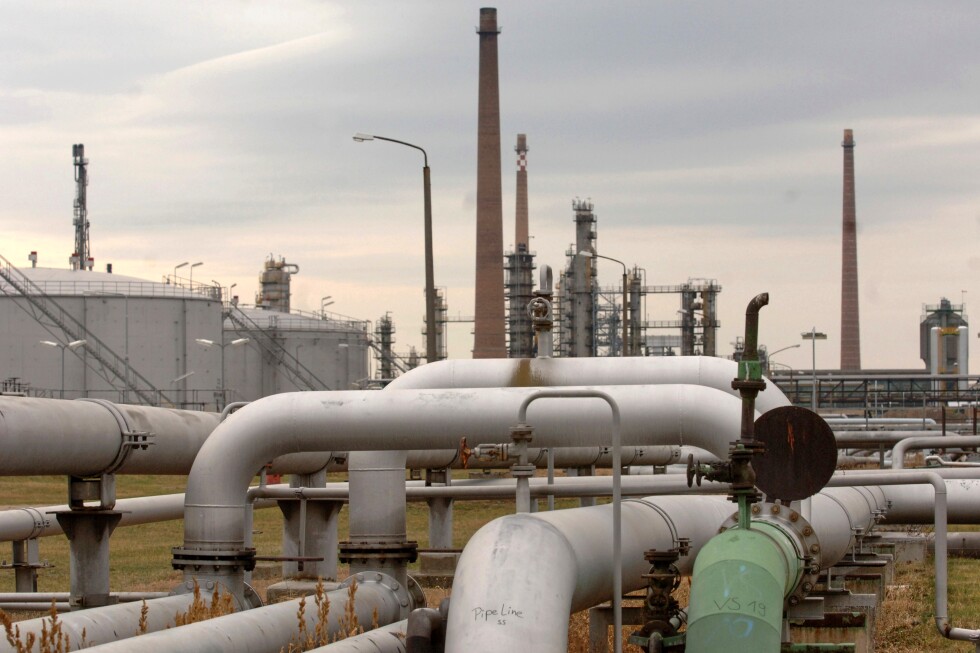
Russian oil to Slovakia resumes flowing through pipeline that crosses Ukraine
BRATISLAVA, SLOVAKIA – Three months after Russian oil deliveries through the key Druzhba pipeline were unexpectedly halted, supplies have finally resumed flowing to Slovakia, the country’s economy chief confirmed Thursday. The resumption of oil transit, which got underway at 2 a.m. local time, brings an end to a tense standoff that has rippled across European Union politics and strained ties between Kyiv and two of its neighboring EU states. The disruption, which began back in January, put Hungary and Slovakia at sharp odds with Ukraine, worsening an already fraught geopolitical environment on the continent. Unlike the vast majority of European Union member states that have drastically cut their reliance on Russian fossil fuels since Russia’s full-scale invasion of Ukraine, both Central European nations have retained deep dependence on Russian crude for their domestic energy systems. When the cross-border pipeline crossing Ukrainian territory was shut down, the two governments quickly placed blame on Kyiv, accusing Ukrainian authorities of dragging their feet on repairs to the damaged section of infrastructure. The halt in deliveries triggered tangible political fallout across the bloc: Hungary moved to block a large-scale EU financial aid package designed to support Ukraine’s war effort, while Slovakia publicly refused to back a new round of proposed European sanctions targeting Moscow until pipeline operations returned to normal. After weeks of diplomatic wrangling and technical work, the flow of oil is once again moving along the strategic route, bringing a temporary resolution to a dispute that threatened to undermine EU unity on policy toward Russia.