作者: admin

  • US, China hold ‘constructive’ talks on trade, but Trump visit in doubt

    US, China hold ‘constructive’ talks on trade, but Trump visit in doubt

    Senior officials from the United States and China convened in Paris for trade discussions characterized by both nations as “constructive,” signaling a potential stabilization of their volatile economic relationship. However, the prospect of an upcoming summit between President Donald Trump and President Xi Jinping appears increasingly uncertain, likely delayed by escalating Middle East tensions.

    US Treasury Secretary Scott Bessent affirmed the positive nature of the dialogue, telling reporters the talks “were constructive and they show the stability of the relationship.” Chinese state media Xinhua similarly described the exchange between Bessent and Chinese Vice Premier He Lifeng as “candid, in-depth and constructive,” noting it would inject “greater certainty and stability” into global trade.

    The Paris meeting was intended to lay groundwork for President Trump’s state visit to China, originally scheduled for late March. US officials confirmed the trip is now likely postponed due to Washington’s military engagement with Iran. The closure of the critical Strait of Hormuz by Iran in retaliation against US and Israeli actions has created a flashpoint in US-China relations, with Trump pressuring NATO allies and China to assist in reopening the vital oil transportation route.

    Beijing’s Foreign Ministry confirmed both capitals “are maintaining communication regarding President Trump’s visit to China,” with spokesman Lin Jian emphasizing that “head-of-state diplomacy plays an irreplaceable strategic guiding role in China-US relations.” When questioned about Trump’s pressure campaign regarding Hormuz, Lin acknowledged the “tense situation” has “disrupted international trade routes for goods and energy” without directly addressing the US demands.

    The trade discussions occurred against a backdrop of renewed US trade investigations announced last week targeting excess industrial capacity in 60 economies, including China. These probes will examine alleged “failures to take action on forced labor” and whether these practices burden US commerce. Bessent noted his team provided Chinese counterparts with “a preview of what we’re doing on US trade policy as we adjust to the Supreme Court” following its striking down of Trump’s global tariffs.

    China’s Commerce Ministry responded forcefully, calling the investigations “extremely unilateral, arbitrary and discriminatory” and accusing Washington of “attempting to construct trade barriers.” Beijing stated it had “lodged representations” and urged the US to “correct its erroneous” trade practices, reaffirming its preference to “resolve issues through dialogue and negotiations.”

    The Middle East conflict has driven global oil prices up 40-50 percent since its inception, with Iran’s blockade of Hormuz and attacks on regional energy infrastructure creating significant market disruption. While experts note China’s substantial oil reserves position it better than many nations to weather the energy shock, Beijing remains concerned about the conflict’s broader impact on global trade. Recent Chinese trade data from January and February, collected before the Iran war began, showed exports and international trade continue to be crucial drivers of the Chinese economy.

  • Pope’s upcoming Africa odyssey takes him to a mosque, a prison and the site of a deadly 2021 blast

    Pope’s upcoming Africa odyssey takes him to a mosque, a prison and the site of a deadly 2021 blast

    The Vatican has unveiled comprehensive details for Pope Leo XIV’s forthcoming diplomatic journey across four African nations, scheduled from April 13-23. This significant tour will emphasize Christian-Muslim reconciliation, offer solace to victims of violence, and engage with Catholic communities in countries with complex colonial histories.

    The pontiff’s itinerary begins with a groundbreaking visit to Algeria, marking the first papal visit in the nation’s history. In Algiers, His Holiness will conduct high-level meetings with government officials, tour the renowned Great Mosque, and engage with local Catholic faithful. The Algerian leg continues in Annaba (ancient Hippo), the final resting place of St. Augustine, where Pope Leo will convene with Augustinian religious orders and celebrate Mass at the capital’s St. Augustine Basilica.

    Cameroon represents the tour’s second stop, where the Pope will host a major ‘peace meeting’ in Bamenda on April 16. This northwestern region has suffered devastating violence since 2017, with English-speaking separatists clashing with government forces, resulting in over 6,000 fatalities and 600,000 displacements according to International Crisis Group data. The visit occurs amid political tensions following President Paul Biya’s controversial re-election, with some activists expressing concern about potential political instrumentalization of the papal visit.

    Angola, a predominantly Christian former Portuguese colony, will welcome the Pope to its capital Luanda and the significant Marian shrine at Muxima. This 16th-century sanctuary, originally established by Portuguese colonizers, served as a baptismal site for enslaved Africans before their transatlantic passage, representing both deep religious significance and colonial legacy.

    The final destination, Equatorial Guinea, maintains one of Africa’s highest Catholic populations at approximately 70%. Pope Leo will visit three dioceses, meet with prison inmates, and pray at a memorial for victims of the 2021 military barracks explosion that claimed over 100 lives. The nation’s political landscape remains dominated by President Teodoro Obiang Nguema Mbasogo, Africa’s longest-serving leader, who has maintained power since 1982 amid allegations of autocratic rule despite the country’s oil wealth and widespread poverty.

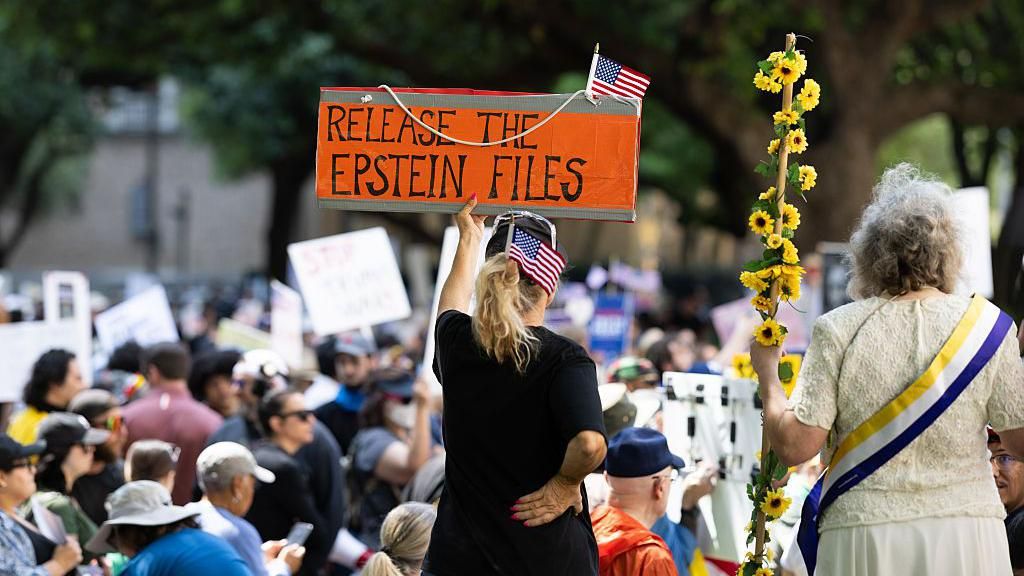
  • Bank of America settles over Epstein claims

    Bank of America settles over Epstein claims

    Bank of America has reached a settlement agreement in a class-action lawsuit alleging the financial institution facilitated Jeffrey Epstein’s sex trafficking operation. The resolution, which requires court approval, follows similar settlements by JPMorgan Chase ($290 million) and Deutsche Bank ($75 million) in related cases.

    The lawsuit was originally filed in October by a Florida woman who reported being abused by Epstein on numerous occasions between 2011 and 2019. Court documents revealed she maintained two Bank of America accounts under the direction of Epstein’s business team. The complaint alleged the bank possessed substantial evidence of Epstein’s trafficking activities but prioritized profits over victim protection.

    Evidence presented included records showing “incredibly alarming and erratic banking behavior” through accounts controlled by Epstein’s associates. The filing also referenced over $150 million in payments from billionaire Leon Black, Apollo Global co-founder, to Epstein for purported consulting services. Black, who resigned from Apollo following scrutiny of his Epstein connections, has denied any wrongdoing and was scheduled for deposition later this month.

    Bank of America had previously sought dismissal of the lawsuit, characterizing the allegations as “threadbare and meritless” and maintaining it provided routine banking services to clients without known Epstein connections at the time. Both parties notified the court Monday of their “settlement in principle” and are expected to provide additional details on March 27th, with a hearing scheduled for April 2nd.

    Sigrid McCawley, legal representative for the victims, described the settlement as “one more step on the road to much deserved justice.” Bank of America declined to comment on the agreement, whose financial terms remain undisclosed.

  • Mexico City breaks Guinness Record with giant football training session

    Mexico City breaks Guinness Record with giant football training session

    Mexico City has officially entered the Guinness World Records by orchestrating the largest football training session in history. A staggering 9,500 participants converged upon the iconic Zocalo square, the city’s main plaza, creating a monumental sporting event that dwarfed previous attempts. The meticulously organized gathering was strategically timed to capitalize on the global excitement building towards the upcoming World Cup tournament.

    The event transformed the historic heart of the Mexican capital into a vast, open-air training ground. Participants, ranging from amateur enthusiasts to aspiring athletes, executed synchronized drills and exercises under the guidance of certified coaches. Guinness World Records adjudicators were present to officially verify the count and ensure all strict guidelines were met, culminating in the formal recognition of this unprecedented achievement.

    This record-breaking endeavor serves multiple purposes beyond the athletic spectacle. City officials and sports organizers designed the event to foster national pride, promote grassroots football development, and harness the unifying power of sport. The Zocalo square, traditionally a space for political and cultural gatherings, witnessed an extraordinary demonstration of communal engagement and athletic spirit, setting a new benchmark for large-scale sporting participation worldwide.

  • Pope Leo will accept the Liberty Medal in a remote broadcast from Rome

    Pope Leo will accept the Liberty Medal in a remote broadcast from Rome

    In a significant departure from tradition, Pope Leo XIV will accept the prestigious Liberty Medal from Rome via remote broadcast on July 3rd, rather than traveling to Philadelphia during the United States’ 250th anniversary celebrations. The first American pontiff, born Robert F. Prevost in Chicago and educated at Villanova University, will instead mark Independence Day on the Italian island of Lampedusa—a symbolic location known as a primary landing point for African migrants seeking refuge in Europe.

    The National Constitution Center, which bestows the annual honor, announced the decision Monday, recognizing Pope Leo’s lifelong dedication to advancing religious freedom, conscience rights, and expression liberties worldwide—fundamental principles embedded in America’s First Amendment. The Liberty Medal traditionally celebrates individuals of exceptional courage and conviction who have significantly contributed to global liberty, with previous recipients including Ukrainian President Volodymyr Zelenskyy, the late Supreme Court Justice Ruth Bader Ginsburg, and civil rights icon Congressman John Lewis.

    Vatican officials confirmed the Pope’s packed travel schedule for the year includes extensive tours throughout Italy and visits to four African nations, but explicitly excludes any journey to the United States despite a personal invitation from President Donald Trump. This strategic decision aligns with Pope Leo’s continued emphasis on migrant advocacy, following the path of his predecessor Pope Francis who made Lampedusa his first official visit outside Rome in 2013. During that historic trip, Francis conducted Mass on an altar constructed from wrecked migrant boats and condemned what he termed the ‘globalization of indifference’—a stance that previously created diplomatic tensions with the Trump administration.

    The Pope’s deliberate choice to stand in solidarity with migrants on America’s independence celebration reinforces his commitment to humanitarian causes over ceremonial appearances, continuing the Vatican’s focus on global displacement crises despite the symbolic significance of the U.S. semiquincentennial.

  • US airline CEOs urge Congress to end shutdown and pay airport workers

    US airline CEOs urge Congress to end shutdown and pay airport workers

    In an unprecedented move, chief executives from America’s largest airlines have jointly appealed to U.S. lawmakers to immediately resolve the ongoing government shutdown that has left transportation security workers unpaid since February. The coordinated action comes as travel disruptions intensify nationwide.

    Top executives from American Airlines, Delta Air Lines, Southwest Airlines, and JetBlue Airways have formally requested Congress restore funding to the Department of Homeland Security (DHS), which oversees the Transportation Security Administration (TSA). The funding impasse stems from Congressional disagreements over immigration policy reforms demanded by Democrats as a condition for DHS funding.

    The airline leaders characterized air travel as a ‘political football’ in shutdown negotiations, emphasizing the immediate need for bipartisan agreement to fund DHS operations. They further advocated for permanent legislative solutions that would guarantee compensation for air traffic controllers regardless of government funding status.

    The human impact has become increasingly severe. TSA employees missed their first full paycheck on Friday, yet remain obligated to work as essential personnel. Over 300 security officers have resigned according to DHS reports, while absentee rates have more than doubled since the funding lapse began. Union representatives describe workers struggling to afford basic necessities like food, gasoline, and rent.

    Operational consequences are mounting. Severe weather patterns combined with spring break travel volumes and staffing shortages created significant disruptions over the weekend. Passengers at Austin-Bergstrom International Airport faced security wait times exceeding 100 minutes, prompting officials to recommend arriving 2.5 hours before domestic flights. Similar delays occurred at Fort Lauderdale and Atlanta’s major hubs.

    Several airports, including those in Denver, Seattle, and Las Vegas, have initiated donation programs asking travelers to contribute gift cards and essential items to support unpaid TSA workers. The American Federation of Government Employees expressed deep concern about the psychological and financial toll on security personnel, noting that such treatment would be ‘inexcusable’ in any other employment context.

    The political standoff centers on Democratic demands for immigration enforcement reforms following the deaths of two Minneapolis protesters during ICE operations in January. Democrats seek to prohibit immigration agents from wearing masks, improve officer identification, and strengthen warrant requirements—conditions the Trump administration has rejected.

    President Trump addressed TSA workers via Truth Social on Sunday, encouraging them to ‘go to work’ while promising ‘I will never forget you!!!’ The partial shutdown continues as negotiations remain deadlocked over immigration policy provisions.

  • Trump’s White House chief of staff Susie Wiles diagnosed with breast cancer

    Trump’s White House chief of staff Susie Wiles diagnosed with breast cancer

    In a personal health disclosure from the highest levels of U.S. government, White House Chief of Staff Susie Wiles has been diagnosed with early-stage breast cancer. President Donald Trump announced the news via his Truth Social platform on Monday, praising Wiles’s decision to confront her diagnosis immediately rather than delay treatment.

    Despite her health challenge, the 68-year-old political strategist will continue to perform her duties ‘virtually full time at the White House’ throughout her treatment regimen. Wiles occupies a historically significant position as the first woman to serve as White House Chief of Staff, a role considered the most crucial staff position in the executive branch responsible for maintaining the president’s agenda.

    Wiles, who played an instrumental role in Trump’s political resurgence and guided his successful 2024 campaign, addressed her diagnosis with characteristic resolve. In a statement to the New York Times, she contextualized her personal health battle within broader national health patterns, noting that ‘nearly one in eight women in the United States will face this diagnosis.’

    The Chief of Staff emphasized the continuing strength of women who maintain their professional and personal responsibilities while undergoing treatment, stating she now joins their ranks. Wiles expressed confidence in her prognosis, describing it as ‘strong,’ and acknowledged President Trump’s supportive response to her health situation.

  • Illinois State University delegation explores Liaoning’s cultural heritage

    Illinois State University delegation explores Liaoning’s cultural heritage

    A delegation comprising twenty students and faculty members from Illinois State University has successfully concluded an immersive cultural study tour in Shenyang, the capital of China’s northeastern Liaoning Province. The four-day educational program, which wrapped up on Thursday, was coordinated by the Institute of International Education at Liaoning University as part of ongoing China-US youth exchange initiatives.

    The visit featured extensive cultural exploration, including a detailed examination of Liaoning’s historical artifacts at the prestigious Liaoning Provincial Museum. The museum visit, which occurred on Wednesday, provided the American delegates with firsthand exposure to the region’s rich cultural heritage and historical significance.

    This exchange program represents continuing efforts to strengthen educational and cultural ties between academic institutions in China and the United States. Such initiatives aim to foster mutual understanding and create opportunities for cross-cultural learning among the next generation of global citizens. The program’s structure allowed participants to engage deeply with local culture while establishing academic connections that may lead to future collaborative ventures between the two universities.

    The successful completion of this tour underscores the growing importance of international educational exchanges in promoting diplomatic relations through cultural diplomacy. As similar programs continue to develop, they contribute significantly to building bridges between nations through academic collaboration and cultural immersion.

  • A look at South Africa’s extreme move to deploy the army to fight crime, by the numbers

    A look at South Africa’s extreme move to deploy the army to fight crime, by the numbers

    CAPE TOWN, South Africa — In a decisive move against organized crime, President Cyril Ramaphosa has authorized an extensive military deployment spanning 13 months across five South African provinces. The unprecedented operation will deploy 2,200 soldiers to support police forces in combating two particularly destructive criminal enterprises: gang-related violence and illegal mining operations controlled by criminal syndicates.

    The deployment, effective from March 1, 2024, through March 31, 2025, represents the most prolonged military anti-crime initiative in recent years. With an allocated budget of $49.2 million, the operation will focus on Gauteng Province (home to Johannesburg), Western Cape (including Cape Town), North West, Free State, and Eastern Cape provinces.

    This strategic intervention highlights South Africa’s ongoing struggle with violent crime despite its status as Africa’s leading economy. Gang violence claims hundreds of lives annually, particularly in Cape Town’s impoverished Cape Flats district. Simultaneously, an estimated 30,000 illegal miners operate within approximately 6,000 abandoned gold and mineral mines, often employing armed violence to protect their illicit operations.

    Police authorities have outlined four primary objectives for the joint operation: significant crime reduction in targeted areas, apprehension of offenders, recovery of illegal firearms and explosives, and confiscation of narcotics. The deployment has received broad public support, with residents in crime-affected communities reportedly welcoming military presence in Johannesburg last week.

    While some opposition parties initially questioned the operation’s substantial cost, the government maintains that both gang violence and illegal mining pose fundamental threats to South Africa’s democratic institutions and economic development. This deployment marks the third military intervention against crime since 2023, though previous operations were significantly shorter in duration.

  • Wary allies show there’s no quick fix to Trump’s Iran crisis

    Wary allies show there’s no quick fix to Trump’s Iran crisis

    Former President Donald Trump’s latest remarks regarding NATO’s role in securing the Strait of Hormuz have ignited fresh tensions within the transatlantic alliance, revealing fundamental disagreements about its strategic purpose. Trump suggested that failure to secure the vital waterway would prove “very bad for the future of NATO,” implying offensive obligations that contradict the alliance’s defensive foundation.

    This perspective has drawn sharp criticism from European leaders and military experts. Germany’s Defense Minister Boris Pistorius openly questioned what “a handful of European frigates” could accomplish that the powerful U.S. Navy could not, emphasizing that “This is not our war. We have not started it.” The sentiment echoes across European capitals, where governments are resisting pressure to join military operations against Iran.

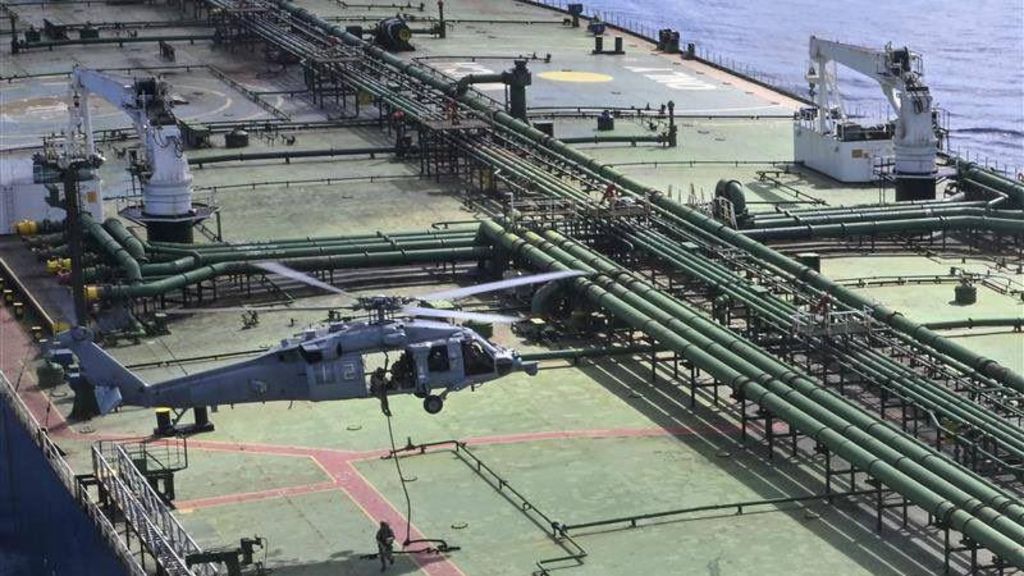
    The crisis stems from Iran’s effective blockade of the Strait of Hormuz, except for vessels carrying Iranian oil to allies like India and China. This has created urgent economic concerns as Western governments scramble to address the disruption to global shipping routes.

    Military capabilities present another challenge. Former Royal Navy Commander Tom Sharpe noted that Western navies have largely neglected mine-clearing capabilities since the last major naval de-mining operation in 1991. The Royal Navy currently has no mine-clearing ships in the region, instead offering newly developed seaborne drones that remain combat-untested.

    Complicating matters further, Iran’s Revolutionary Guard possesses sophisticated asymmetric capabilities including armed fast boats, naval suicide drones, and shore-based missiles. Recent imagery from Iranian media shows extensive preparations with boats and drones stored in underground tunnels.

    While Trump has characterized keeping the strait open as “a very small endeavour” potentially involving attacks on the Iranian coastline, European allies are advocating for de-escalation. EU foreign ministers are considering expanding the mandate of Operation Aspides, currently focused on Red Sea security, though member states including Spain and Italy have expressed reservations.

    French President Emmanuel Macron has emerged as the most willing European leader to participate in escort operations, but only after the “hottest phase” of conflict concludes. The complex threat environment—with dangers from air, surface, and underwater dimensions—makes any escort operation significantly more challenging than previous missions against Houthi rebels.

    With no clear resolution in sight, NATO allies remain caught between American pressure for involvement and their own strategic calculations about engaging in a conflict they did not initiate.