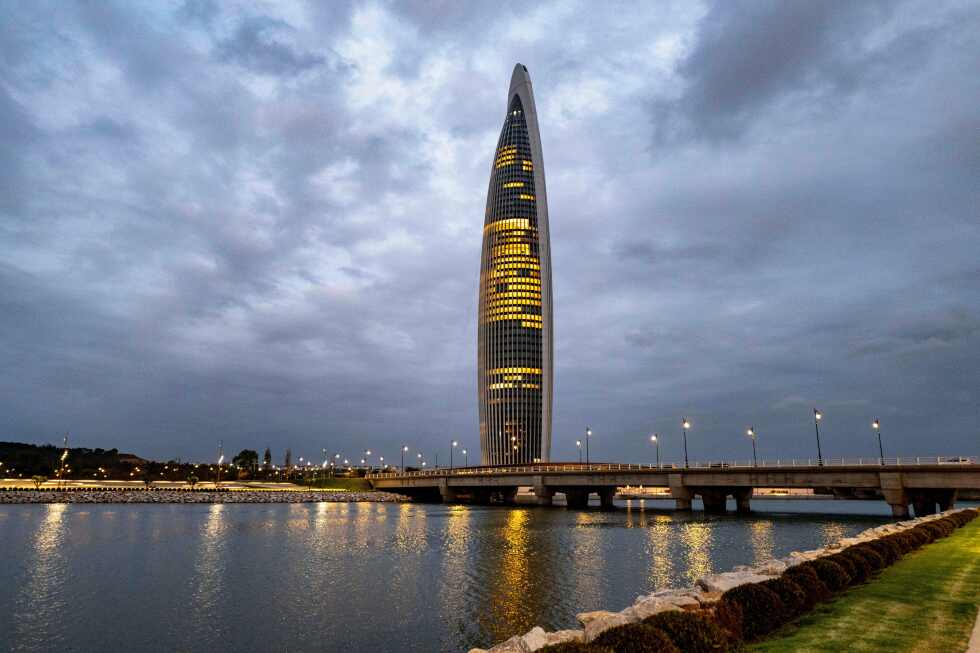
RABAT-SALÉ, MOROCCO – After eight years of collaborative construction involving thousands of workers from more than a dozen nations, Morocco has opened the doors to its landmark Mohammed VI Tower, a 55-story, 820-foot megaproject that encapsulates the North African nation’s growing global and regional ambitions. Priced at $700 million and towering over the twin cities of Rabat and Salé, the skyscraper ranks among the tallest structures on the African continent, with a rocket-inspired design tracing its origins to a little-known 1969 NASA experience by the project’s visionary.
Conceived by 93-year-old Moroccan billionaire Othmane Benjelloun – founder and owner of the continent-spanning Bank of Africa – the tower’s distinctive shape draws direct inspiration from Benjelloun’s invitation to a 1969 Apollo 12 pre-mission spaceflight simulation hosted by NASA. Management of the development confirms that the image of a rocket poised on its launchpad stayed with Benjelloun for decades, ultimately shaping the tower’s sleek, towering silhouette that now dominates the region’s historic skyline. Named for Morocco’s ruling monarch King Mohammed VI, the 102,800-square-meter mixed-use development will host a luxury Waldorf Astoria hotel, premium commercial office space, high-end retail outlets, fine dining restaurants, and upscale residential apartments.
Project developer O Tower’s director Leila Haddaoui confirmed to reporters that the completed tower is projected to create 450 direct employment positions, alongside an estimated 3,500 indirect jobs across local supply chains and support services. Over the course of its eight-year construction, more than 2,500 workers from across the globe contributed to the build, which has already earned such a prominent place in Moroccan national identity that it now features on the country’s 200-dirham banknote, worth approximately $20. Positioned adjacent to Zaha Hadid’s iconic Grand Theatre of Rabat, the skyscraper also offers unobstructed panoramic views of the Atlantic Ocean and the adjacent twin cities.
For Moroccan leaders and developers, the tower is far more than a real estate development: it is a tangible demonstration of the country’s expanding soft power across Africa and the Middle East, part of a deliberate strategy to position Rabat and Salé – long overshadowed by more popular tourist destinations like Marrakech – as key global hubs. The opening aligns with a broader national push to boost tourism, a core pillar of Morocco’s economy that already supports millions of jobs as the country remains Africa’s most visited destination. With regional conflicts shifting traveler preferences toward destinations perceived as stable and safe, Morocco is leaning into this advantage while preparing to co-host the 2030 FIFA World Cup, a global event expected to draw millions of international visitors in the coming years.
Despite the fanfare surrounding the tower’s inauguration, the project has drawn pointed criticism from observers who highlight stark regional inequality in Morocco’s development strategy. Critics note that large-scale, high-profile investments continue to concentrate along Morocco’s heavily developed Atlantic coastal corridor, leaving large swathes of the country underdeveloped and underserved. These grievances echoed widespread Gen Z-led protests that swept across the nation in 2023, where demonstrators highlighted persistent high youth unemployment and underfunded, struggling public services that have not kept pace with elite infrastructure projects.