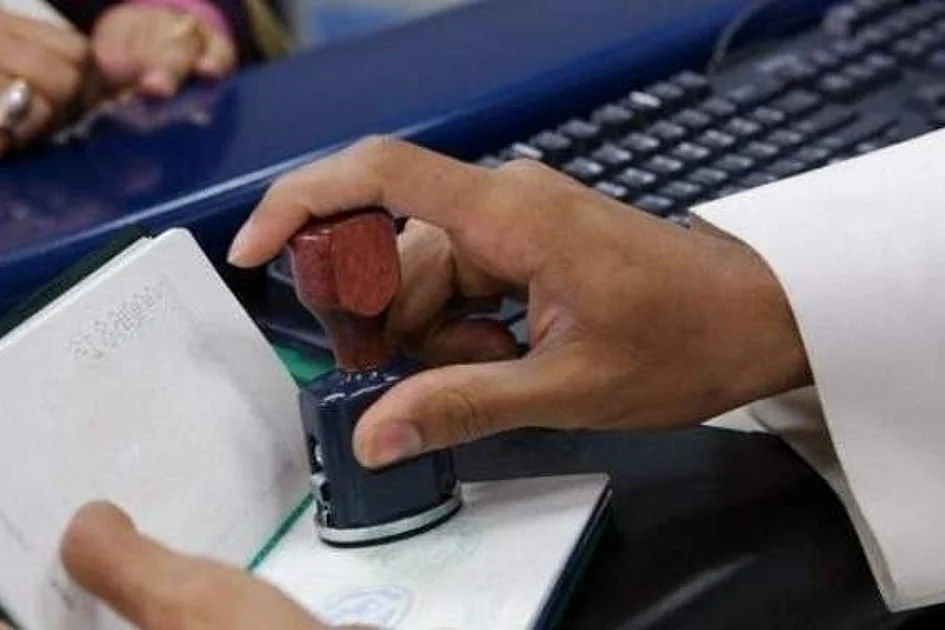
India has significantly expanded its visa-on-arrival (VoA) facility for UAE nationals, now including nine international airports across the country. The Indian Embassy in the UAE announced that Cochin, Calicut, and Ahmedabad airports have been added to the list, which previously included Bangalore, Chennai, Delhi, Hyderabad, Kolkata, and Mumbai. This move aims to streamline travel for UAE citizens who have previously obtained an e-Visa or regular visa for India. First-time visitors, however, must still apply for an e-Visa or regular visa before their trip. The VoA facility is available for UAE nationals visiting India for business, tourism, conference, or medical purposes, with a stay not exceeding 60 days. Applicants must hold a passport with a minimum validity of six months and may be required to provide proof of sufficient funds, accommodation, and a return or onward ticket. The VoA is non-extendable and non-convertible, but there are no restrictions on the number of times it can be availed. Notably, this facility is not available to individuals with Pakistani origins or residency. The application process involves filling out a form upon arrival, either online or via the ‘Indian Visa Su-Swagatam’ mobile app, and paying a fee of Rs 2,000 (Dh83) per passenger. This expansion follows the UAE’s earlier decision in February 2025 to broaden its visa-on-arrival program for Indian nationals, allowing entry with valid visas or residency permits from additional countries, including Singapore, Japan, and Australia.
作者: admin
-
Hasina’s conviction for crimes against humanity is testing India-Bangladesh ties
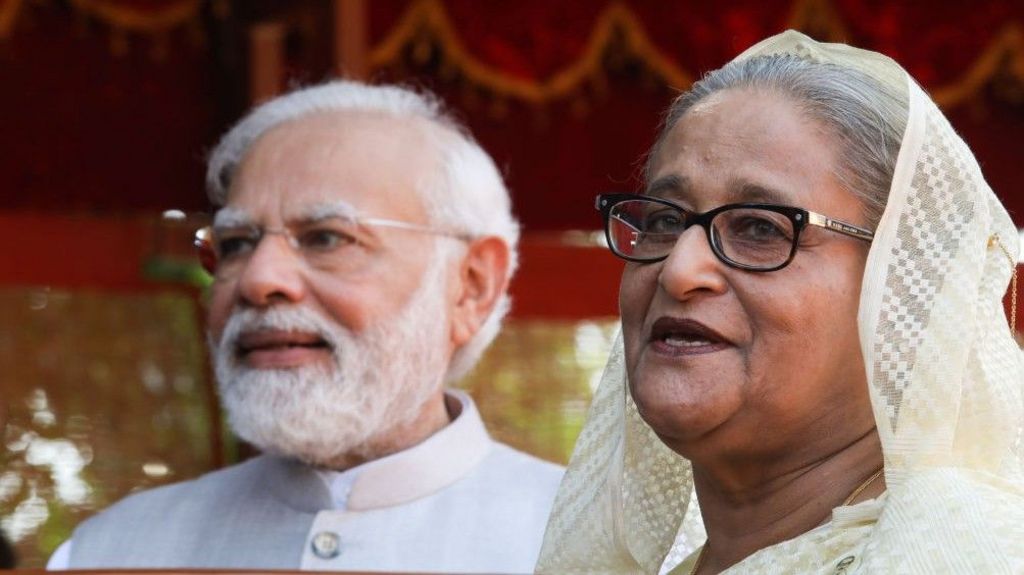
The longstanding relationship between India and Bangladesh has reached a critical juncture, with the exile and death sentence of Bangladesh’s former leader Sheikh Hasina creating a complex diplomatic bind. Hasina, who ruled Bangladesh for 15 years, was a key ally for India, ensuring stability and connectivity in the region while aligning with Delhi’s interests over Beijing’s. However, her crackdown on student-led protests in 2024 led to her ousting and subsequent exile in India, where she has been granted asylum. A special tribunal in Bangladesh has sentenced her to death for crimes against humanity, but India has shown no inclination to extradite her, leaving the sentence unenforceable.
This situation has placed India in a precarious position. South Asia expert Michael Kugelman outlines four unappealing options for Delhi: extraditing Hasina, maintaining the status quo, pressuring her to remain silent, or finding a third country to take her in. Each option carries significant risks, particularly as Bangladesh’s interim government, led by Nobel laureate Muhammad Yunus, seeks to rebalance its foreign policy by reducing reliance on India and strengthening ties with China, Pakistan, and Turkey.
The India-Bangladesh relationship is deeply intertwined, with Bangladesh being India’s largest trading partner in South Asia and India serving as Bangladesh’s biggest export market in Asia. Over the past decade, India has provided billions in concessional credit, built cross-border infrastructure, and supplied energy and raw materials. Despite this economic interdependence, public sentiment in Bangladesh has soured, with a recent survey revealing that 75% of Bangladeshis view ties with China positively, compared to just 11% for India. Many blame Delhi for supporting Hasina’s increasingly authoritarian regime.
Experts argue that while political and diplomatic relations may fluctuate, economic and cultural ties often endure. However, the current situation poses significant challenges for India, particularly in managing border security and counterterrorism efforts along the 4,096 km shared border. The path forward, according to Avinash Paliwal of SOAS University of London, requires quiet and patient engagement with key stakeholders in Dhaka, including the armed forces.
The uncertainty surrounding Bangladesh’s upcoming elections adds another layer of complexity. If the interim government can conduct credible elections, it may open opportunities for India and Bangladesh to renegotiate their relationship. However, the Hasina factor remains a wildcard, with the potential to strain bilateral ties further. Ultimately, the next elected government in Bangladesh will need to balance core national interests against domestic politics and public sentiment, making the future of India-Bangladesh relations fragile at best.
-
Exclusive: Saudi-US defence partnership will fast track arms sales, sources say
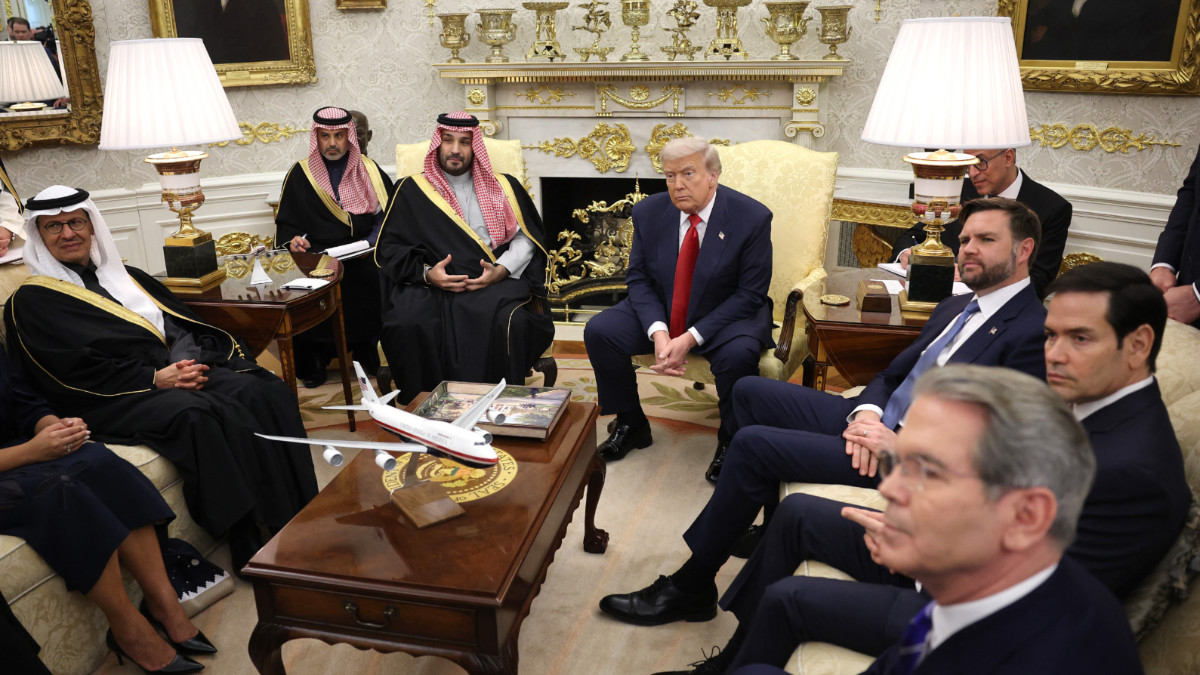
In a significant move to bolster military cooperation, the United States and Saudi Arabia have inked a Strategic Defence Agreement (SDA), paving the way for expedited arms sales to the kingdom. The deal, signed by US President Donald Trump and Crown Prince Mohammed bin Salman, marks a pivotal shift in bilateral relations, with Saudi Arabia poised to gain access to cutting-edge US defence technology, including the coveted F-35 warplanes. The agreement, currently under detailed negotiation by US officials, is expected to position Saudi Arabia ahead of other Gulf states in acquiring sophisticated US weaponry. A former senior US official revealed that the Saudis have received Trump’s approval to secure the best in defence technology, despite Israeli lobbying efforts to limit the capabilities of the F-35s sold to the kingdom. Beyond the F-35, Saudi Arabia is exploring futuristic weapons systems like Collaborative Combat Aircraft (CCA) drones, designed to operate alongside manned aircraft. The kingdom is also in talks with US firms, including Shield AI and General Atomics, for advanced drone acquisitions. The SDA extends beyond military technology, with separate deals anticipated in civilian nuclear technology and AI chips. Additionally, the US has designated Saudi Arabia as a major non-NATO ally, a status that accelerates weapons transfers and deepens military training. This designation places Saudi Arabia alongside other Middle Eastern allies like Bahrain, Qatar, and Kuwait. Crown Prince Mohammed bin Salman’s visit to Washington, his first since 2018, underscores Riyadh’s ambition to strengthen economic and security ties with the US. The crown prince’s diplomatic efforts, including navigating Israel’s war on Gaza and rekindling relations with Iran, have bolstered his international standing. However, Saudi Arabia seeks a more binding defence commitment from Washington, akin to the US-Japan mutual defence treaty. Talks on such a treaty are ongoing, contingent on Saudi Arabia’s recognition of Israel. The crown prince expressed a desire to join the Abraham Accords, emphasizing the need for a clear path toward a two-state solution. The agreement reflects Saudi Arabia’s strategic importance as the world’s largest oil exporter and the Arab world’s only G-20 economy, amid evolving regional dynamics.
-
Japan’s PM seen as playing to right wing
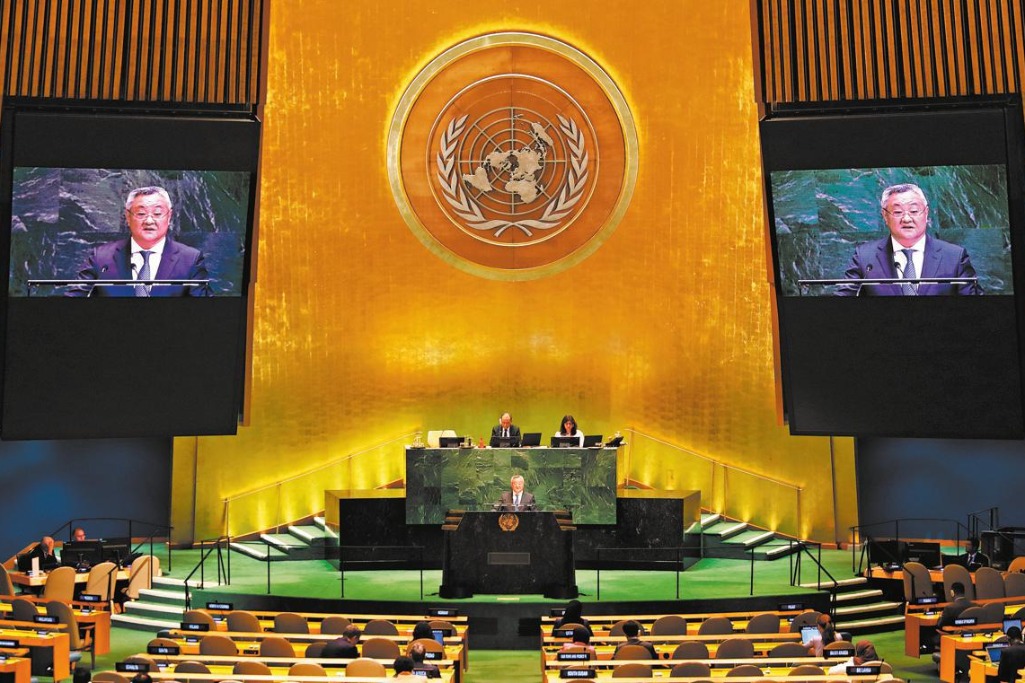
Japanese Prime Minister Sanae Takaichi has drawn sharp criticism for her recent comments suggesting potential military intervention in Taiwan, a move widely seen as an attempt to rally right-wing support and bolster her ruling Liberal Democratic Party (LDP), which recently lost its parliamentary majority. Speaking in Japan’s parliament earlier this month, Takaichi framed such intervention as a response to a ‘survival-threatening situation,’ marking the first time an incumbent Japanese leader has publicly entertained such a possibility. However, her remarks directly contradict Article 9 of Japan’s pacifist Constitution, which renounces war and the use of force in international disputes. Chinese officials and analysts have condemned the comments as a dangerous echo of Japan’s militarist past. Chinese Foreign Ministry spokeswoman Mao Ning highlighted historical parallels, noting that Japan has previously used similar justifications for aggression, including the 1931 Manchurian Incident and the attack on Pearl Harbor. At the UN General Assembly, China’s Permanent Representative Fu Cong argued that Takaichi’s statements undermine the postwar international order and Japan’s commitment to peaceful development. Domestically, Takaichi’s strategy appears aimed at shoring up support among right-wing factions and voters, even as her government faces significant challenges. Critics, including Japanese lawmakers and social media influencers, have warned against escalating tensions with China, emphasizing the potential economic fallout. In response to Tokyo’s refusal to retract Takaichi’s remarks, China has suspended imports of Japanese aquatic products, citing safety concerns and public sentiment. Mao reiterated that Japan would bear full responsibility for any consequences of its actions.
-

Algerian ‘Hirak poet’ facing death sentence begins hunger strike
International human rights organizations and activists are rallying for the immediate release of Algerian poet and activist Mohamed Tadjadit, who faces a potential death sentence in Algeria. Tadjadit, known as ‘the poet of the Hirak’ for his influential role in the 2019 pro-democracy protests, has been arbitrarily detained since January and recently began a hunger strike to protest his treatment in prison. On November 11, he was sentenced to five years in prison on charges including ‘condoning terrorism’ and ‘spreading extremist ideas,’ which rights groups have condemned as baseless. A new trial on November 30 could see him charged with ‘conspiring to incite citizens against the state,’ a crime punishable by death. Algeria has not carried out executions since 1993, but the threat remains. Tadjadit will be tried alongside 12 other activists, including whistleblowers and former military members. Rights groups, including Amnesty International and PEN America, have decried his prosecution as a crackdown on free expression. Index on Censorship awarded Tadjadit its Freedom of Expression Award, calling him ‘truly inspiring’ and urging his release. Tadjadit has been imprisoned multiple times since 2019, reflecting Algeria’s broader suppression of dissent. The Hirak movement, which forced the resignation of former President Abdelaziz Bouteflika, has been largely repressed, but sporadic protests continue. Critics accuse the ruling National Liberation Front of corruption and undemocratic practices. The government has also targeted individuals using the hashtag #Manich_Radhi (‘I am not happy’) to express discontent. Human rights defenders estimate there are 200–250 prisoners of conscience in Algeria, many linked to the 2019 protests. The case highlights ongoing tensions between the Algerian government and its critics.
-
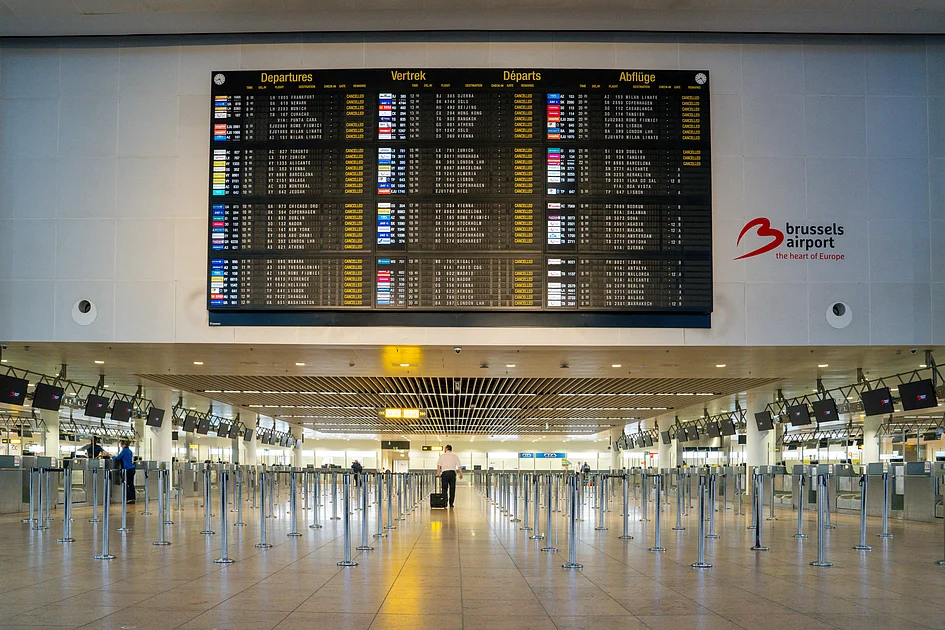
Brussels Airport cancels all departing flights on November 26 due to strike
Brussels Airport has announced the cancellation of all departing flights scheduled for November 26, 2025, due to a nationwide strike involving a significant portion of its security and handling staff. The airport issued a statement on Wednesday, November 19, warning travelers of potential disruptions. In addition to departures, some arriving flights may also face cancellations, and public transportation services to and from the airport could be severely impacted. The strike, which is part of broader labor actions across the country, is expected to cause widespread inconvenience for passengers and airlines alike. Authorities are urging travelers to monitor updates and make alternative arrangements if necessary. This disruption comes at a time when the aviation industry is already grappling with challenges such as fluctuating demand and operational complexities.
-
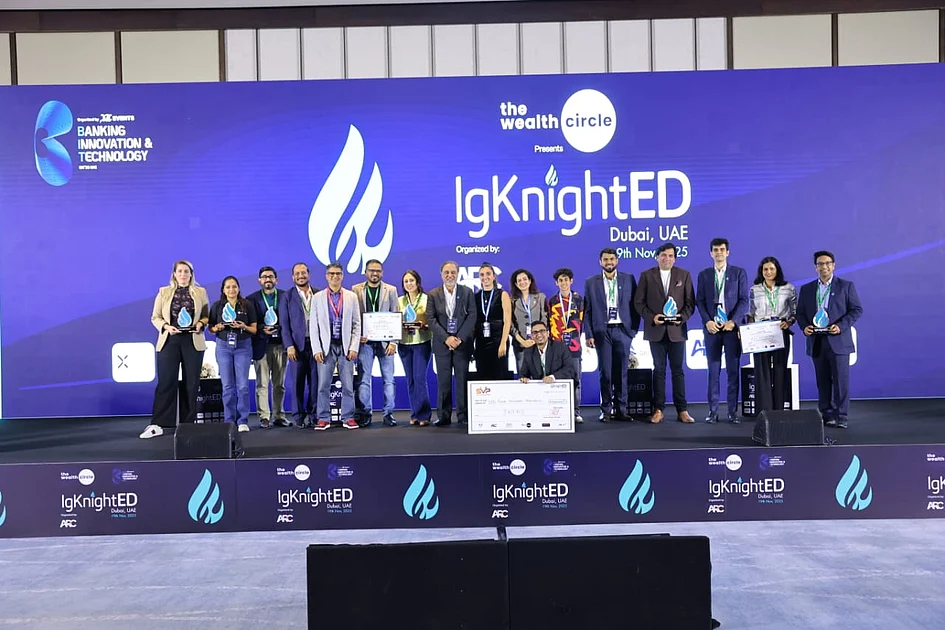
Dubai’s new pitching arena gives SMEs, young founders bigger stage
In a significant stride for the Gulf’s burgeoning innovation economy, Dubai has unveiled a new pitching arena designed to empower Small and Medium-sized Enterprises (SMEs) and young entrepreneurs. The initiative, spearheaded by IgKnightED, aims to provide a platform for aspiring founders to attract investor interest, refine their business strategies, and foster growth. The inaugural pitching session, held at the Address Skyview in Dubai, was organized by Khaleej Times Events and brought together startups, investors, and industry leaders. Bicky Carlra, President of WeValue, highlighted the initiative’s focus on nurturing job creators rather than job seekers, emphasizing the importance of youth entrepreneurship and undergraduate training. IgKnightED, which originated from a collaboration between ICC Oman and WeValue, has rapidly evolved into a cross-regional ecosystem connecting sectors, countries, and skill levels. The platform’s early focus on the BFSI (Banking, Financial Services, and Insurance) industry and AI-powered innovation has now expanded to include diverse sectors such as travel, retail, real estate, health, education, and sports. In partnership with The Wealth Circle, IgKnightED is set to launch a dedicated mobile app, enabling seamless collaboration between students, SMEs, startups, and investors across the region. This initiative aligns with the UAE’s broader vision to enhance entrepreneurship, as evidenced by its $8.7 billion ‘Projects of the 50’ initiative and its ranking as the top startup ecosystem in the Arab world. The GCC’s venture capital ecosystem has also seen significant growth, with $1.7 billion deployed in 2024 alone. IgKnightED’s expansion reflects the region’s commitment to fostering innovation and economic growth, with governments creating ecosystems where startups drive GDP and national strategy.
-

UAE: Talabat, K2 sign agreement on commercial drone delivery service
In a groundbreaking move, Talabat, the leading on-demand delivery platform in the MENA region, has joined forces with K2, a trailblazer in advanced technology, to launch a commercial drone delivery service for food and groceries. This collaboration, formalized through a Memorandum of Understanding (MoU), aims to revolutionize urban logistics by enhancing delivery efficiency, reducing carbon emissions, and optimizing operations. The initiative underscores both companies’ dedication to innovation, sustainability, and community impact. The partnership will focus on developing and testing a drone-to-station delivery model, designed to address the challenges of high-demand urban areas. Mayank Khaitan, Director of Logistics at Talabat, emphasized the company’s commitment to leveraging cutting-edge technology to create smarter, safer, and more efficient delivery systems. Waleed AlBlooshi, Vice President of Strategy at K2, highlighted the significance of integrating drone delivery into Abu Dhabi’s smart-city ecosystem, transforming autonomy from a concept into a practical service that enhances daily life. This pilot project aligns with the UAE’s vision for intelligent mobility and future-ready logistics, marking a significant step toward redefining last-mile delivery across the region.
-

Watch: Nasa releases new images of interstellar comet 3I/ATLAS
NASA has recently unveiled a series of breathtaking new images of the interstellar comet 3I/ATLAS, marking a significant milestone in astronomical research. First discovered in July 2025, this celestial body is only the third confirmed object to traverse our solar system from interstellar space. The images, captured using advanced telescopic technology, provide unprecedented insights into the comet’s composition, structure, and trajectory. Scientists are particularly intrigued by the comet’s unique characteristics, which could offer clues about the origins of celestial bodies beyond our solar system. The release of these images has sparked widespread excitement among the scientific community and space enthusiasts alike, as they continue to unravel the mysteries of the cosmos. This discovery underscores the importance of ongoing space exploration and the potential for future interstellar missions to expand our understanding of the universe.
-
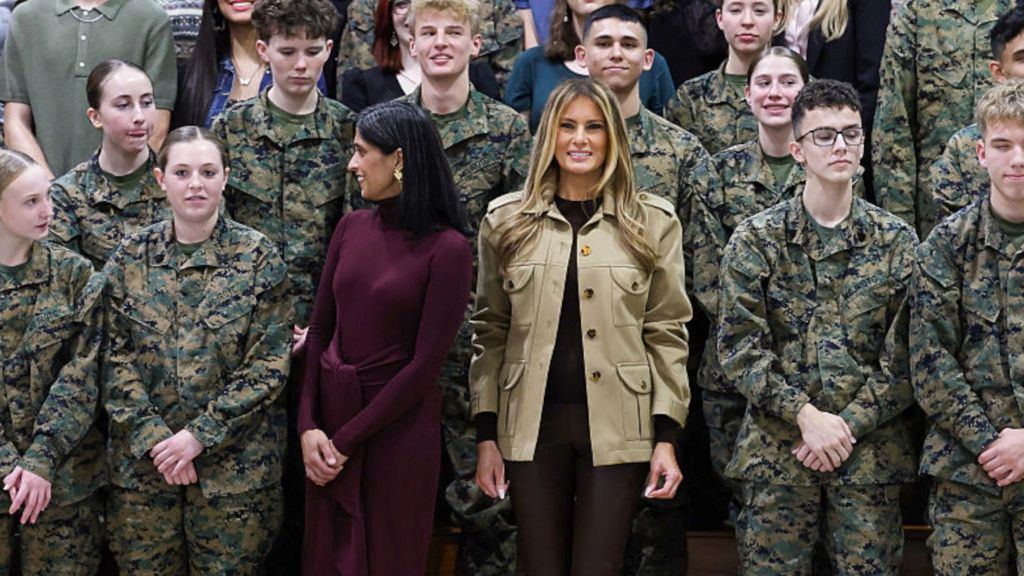
Melania Trump and Usha Vance meet with military families in first joint visit
In a significant display of solidarity and support, Melania Trump, former First Lady, and Usha Vance, wife of Vice President-elect, made their inaugural joint appearance at Camp Lejeune, North Carolina. The visit, marked by heartfelt interactions, aimed to honor and uplift military families, including active-duty personnel and their children. The duo engaged in meaningful conversations, expressing gratitude for the sacrifices made by service members and their loved ones. This collaborative effort underscores the enduring commitment of political families to the well-being of those who serve the nation. The event not only highlighted the importance of military support systems but also fostered a sense of community and appreciation among attendees.