作者: admin

  • Trump pulls envoys out of Iran talks trip to Pakistan

    Trump pulls envoys out of Iran talks trip to Pakistan

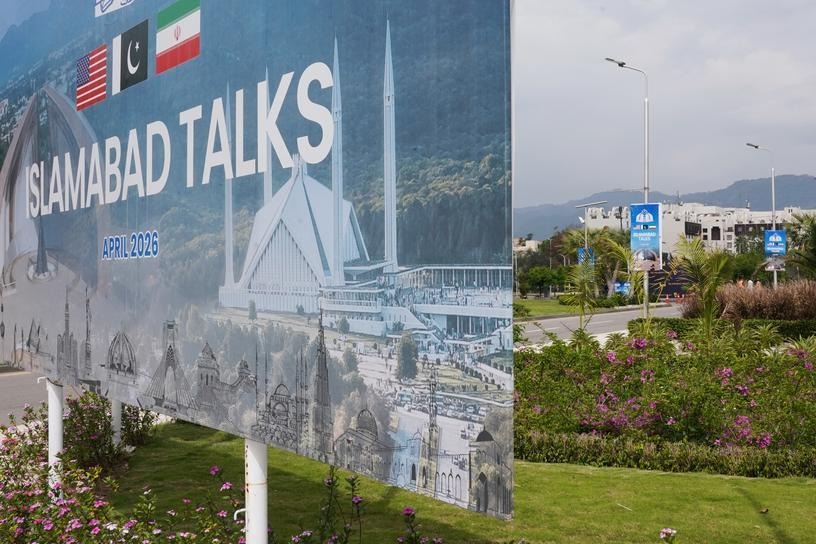
    In a sudden shift to ongoing diplomatic efforts between Washington and Tehran, U.S. President Donald Trump has officially confirmed that the White House scrapped a planned visit to Pakistan by two senior American envoys, Jared Kushner and Steve Witkoff, that was intended to facilitate negotiations with Iran. The decision was announced Saturday, and it follows closely on the heels of a key diplomatic move from Tehran: Iranian Foreign Minister Abbas Araghchi had already departed Islamabad earlier that same day after concluding high-level bilateral talks with top Pakistani government officials.

    Taking to his Truth Social platform to break the news of the cancellation directly to the public, Trump stated that he personally made the call to call off the trip. He justified the reversal by pointing to what he called unnecessary travel delays, as well as what he described as ongoing infighting and organizational confusion within Iran’s top governing bodies. Despite the abrupt cancellation, the former president struck a confident tone, asserting that the United States currently holds all the leverage in any future interactions with Iran.

    In an additional comment to U.S. news outlet Axios, Trump sought to dampen speculation that the sudden cancellation signaled a looming shift toward military confrontation with Iran. He emphasized that the move does not mean Washington has made any decision to resume offensive military action against Tehran, adding that the administration has not even considered that option at this stage.

    For his part, Araghchi offered a mixed assessment of his own diplomatic visit to Pakistan in a post on the social platform X. The Iranian foreign minister described his meetings in Islamabad as “fruitful,” and publicly commended Pakistan’s sustained efforts to mediate and advance peace efforts across the volatile Middle East region. However, he also made clear his government remains skeptical of U.S. diplomatic commitments, writing that Tehran has yet to see concrete evidence that Washington is genuinely serious about pursuing diplomatic solutions to ongoing tensions between the two countries.

    This report included contributions from multiple international news agencies.

  • Moment Trump rushed from White House Correspondents’ Dinner after  gunshots heard

    Moment Trump rushed from White House Correspondents’ Dinner after gunshots heard

    A routine appearance by former U.S. President Donald Trump at the annual White House Correspondents’ Dinner took a frightening turn Saturday evening when sudden gunshots rang out, forcing an immediate emergency evacuation of the commander-in-chief. Witnesses reported that the former president was in the middle of an on-site conversation with guests when multiple loud bangs echoed through the event venue, cutting the interaction short abruptly. Within seconds of the sounds being identified as gunfire, Secret Service agents, who are tasked with 24/7 protection for former U.S. presidents, moved quickly to surround Trump and rush him out of the banquet hall to a secured location. Attendees and staff at the dinner, a high-profile annual gathering that brings together top White House officials, journalists, and national media figures, were immediately placed on lockdown as law enforcement units swept the venue to locate the source of the gunfire and neutralize any potential threat. While initial reports confirmed that Trump was escorted to safety unharmed, the incident has sparked renewed discussions about security protocols at high-profile political events open to large public and media gatherings. As of the latest updates, law enforcement is continuing to investigate the circumstances surrounding the gunshots and has not yet released details on whether any suspects have been detained or if any injuries were reported at the scene.

  • Angus Taylor takes on ‘bad countries’, Pauline Hanson to rally outside parliament

    Angus Taylor takes on ‘bad countries’, Pauline Hanson to rally outside parliament

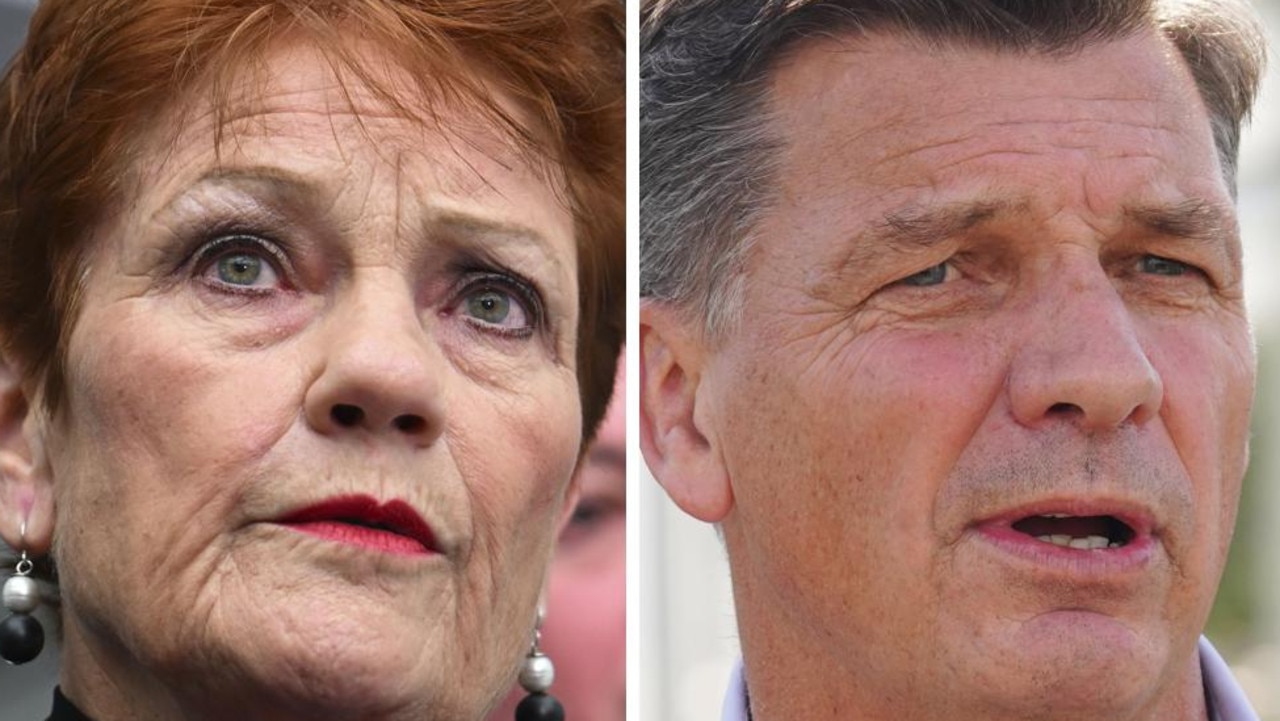
    As preparations got underway Sunday for a controversial anti-mass immigration rally led by One Nation founder Pauline Hanson on the grounds of Australia’s Parliament House in Canberra, senior Liberal Party figure Angus Taylor has publicly admitted he shares some policy ground with the far-right leader, while pushing for sweeping changes to Australia’s immigration system centered on “Australian values” screening.

    By early Sunday morning, event organizers had already begun setting up rally infrastructure, installing Australian national flags and immigration-focused posters emblazoned with flag motifs, with a large contingent of Australian police deployed to the site to maintain public order. Hanson is scheduled to address attendees of the “Rally To End Mass Immigration” later that day.

    In an interview with public broadcaster ABC, Taylor responded to questions about Hanson’s hardline anti-immigration position, confirming that the two politicians see eye-to-eye on some key issues, though disagree on others. Taylor’s core starting point for immigration reform, he said, is that Australia’s current annual migration intake has remained far too high, while entry standards have dropped to unacceptably low levels.

    The Liberal MP has repeatedly called for a full review and restructuring of Australia’s migration framework, one that enshrines Australian values as a core requirement for entry, including explicit provisions to block radical extremists from gaining entry to the country.

    Taylor pushed back on suggestions that his framing of values-based screening would advantage migrants from majority Western nations such as the United Kingdom over migrants from Asian countries including China and Vietnam. He clarified that while “many good people come from bad countries”, noting that some of Australia’s most accomplished citizens trace their roots to nations that were considered unstable or hostile at the time they migrated, he believes “bad countries” inherently carry a higher risk of producing “bad people” seeking entry to Australia.

    Despite this, Taylor insisted that the proposed screening process would not be based on country of origin, religion, or race, but exclusively on alignment with Australian values.

    When pressed to confirm whether China – which critics frequently accuse of mass imprisonment of journalists and broad application of the death penalty – qualifies as a “bad country”, Taylor avoided a direct answer, instead pointing to other examples. “To claim that Iran is a good country right now. Seriously?” he said, noting that the current federal Labor government has already implemented legislation restricting entry for Iranian citizens, a move Taylor supports.

    Taylor also repeated his earlier critical remarks about resettling Palestinian refugees from the Gaza Strip, pointing to ongoing “terrible acts of atrocity” connected to the Israel-Hamas war in the blockaded enclave.

    The public alignment between Taylor and Hanson comes at a tense political moment for the Liberal Party, as One Nation is widely predicted to win the New South Wales federal seat of Farrer from the Liberals following the resignation of former Liberal leader Sussan Ley. The Victorian-based MP addressed questions about the Coalition’s controversial decision to give One Nation candidate preferences ahead of Climate 200-backed independent candidate Michelle Milthorpe, brushing off concerns about the strategic choice.

    Taylor said the Liberal Party continues to prioritize earning first-preference votes from Farrer voters, and has ranked the National Party second on its how-to-vote cards. Pressed on whether One Nation poses an existential threat to the Liberal Party, Taylor argued that the “existential threats” to Australia’s regional communities are teal independent policies and federal Labor policies.

    Speaking to the impacts of current policy on regional Australia, Taylor said residents of rural areas are already facing acute anxiety over access to diesel, a critical resource for planting crops and operating freight transport that underpins regional economies across the country.

  • Man subdued with Taser after attacking nurses at Sydney hospital

    Man subdued with Taser after attacking nurses at Sydney hospital

    A violent outburst by a patient at a major Sydney public hospital left multiple medical staff and a bystander injured Saturday night, prompting police to deploy a Taser to subdue the attacker before taking him into custody, New South Wales Police confirmed.

    Officers were already present on the grounds of Prince of Wales Hospital in Randwick when emergency alerts of an ongoing assault came in just after 8:30 p.m. local time. According to official statements from NSW Police, the aggressor — identified as a 51-year-old male patient at the facility — launched a sustained attack that left one nurse with severe leg wounds. The patient also assaulted two additional nurses and a hospital security guard in the incident.

    A 26-year-old woman who stepped in to protect another patient during the chaos was also attacked by the man, police added. After the situation escalated, responding officers used a Taser to disable the aggressor and took him into custody. He was subsequently moved to a secured unit within the Randwick hospital for holding.

    As of the latest update, the nurse who sustained serious leg injuries remains admitted to the hospital for ongoing treatment. The other four people hurt in the attack — the two additional nurses, the security guard, and the 26-year-old woman — received on-site medical care for their injuries and did not require admission.

    The Eastern Beaches Police Area Command has launched a formal investigation into the assault to determine the full circumstances of the incident and prepare potential criminal charges against the suspect. This attack comes amid growing national conversation in Australia about rising rates of violence against frontline hospital workers, who have repeatedly called for greater workplace protections to prevent similar harm.

  • AP Was There: Early Chernobyl victims buried in Moscow cemetery

    AP Was There: Early Chernobyl victims buried in Moscow cemetery

    Forty years after the world’s worst nuclear accident, the Associated Press is republishing a groundbreaking 1986 report that first pulled back the Soviet Union’s veil of secrecy around the human cost of the Chernobyl disaster. On April 26, 1986, an explosion and subsequent fire destroyed reactor No. 4 at the Chernobyl Nuclear Power Plant in northern Ukraine, then part of the USSR. In the chaotic, information-blackout weeks that followed, Soviet authorities released only sparse, deliberately vague statements about the scale of death and destruction stemming from the catastrophe. It took a tip from an anonymous source and a risky on-the-ground investigation by two Western journalists to reveal the quiet toll unfolding hundreds of miles away in Moscow’s suburbs.

    Acting on a telephone tip, then-AP Moscow correspondent Carol J. Williams and a fellow Western reporter traveled to Mitinskoye Cemetery, a sprawling green space on the capital’s northwestern outskirts. What they found there confirmed what Soviet officials had long hidden: a dedicated burial plot exclusively for those killed by the Chernobyl accident. Just inside the cemetery’s main gate, 23 freshly dug, uniform graves sat ready, with no public signage marking them as a memorial to nuclear disaster victims. Each mound of turned earth bore fresh floral arrangements from grieving relatives and had a poured concrete border; work crews were already busy installing identical plain marble headstones, while eerie, empty stretches of prepared ground made clear that more fatalities were expected.

    Six of the completed headstones already bore the names of firefighters, whose deaths from radiation exposure had been briefly acknowledged in Soviet state media. A cemetery official, who spoke on condition of anonymity to the visiting reporters, confirmed the entire plot was reserved for people who died as a result of the April 26 accident. Every death date etched into the installed headstones fell after the Chernobyl explosion, with details of each victim’s name, birth year, and date of death painted in gold leaf. Some graves still only had handwritten temporary name placards, while the official confirmed a larger central monument would eventually be erected to honor all those buried here. “They will all be brought here,” he told the reporters, though he refused to disclose the expected final death toll.

    At the time of Williams’ original reporting on June 24, 1986, the last official Soviet casualty update had been released 19 days earlier, on June 5. That statement put the official death toll at 26: two killed in the initial explosion and fire, and 24 more who died later from acute radiation sickness. Two of those initial fatalities were not buried in the Moscow plot: plant worker Valery Khodemchuk’s body was never recovered from the destroyed reactor, so he remains entombed within the ruined structure, as reported by the Communist Party daily *Pravda* in late May. Another, plant employee Vladimir Shashenok, was killed instantly in the blast and buried in a small village near the disaster site.

    Even as Soviet officials declined to update the death toll, outside medical experts warned more fatalities were inevitable. Dr. Robert Gale, an American bone marrow specialist who traveled to Moscow to assist Soviet doctors in treating dozens of patients with severe acute radiation sickness, publicly noted that between 55 and 60 patients remained in critical condition, and many would not survive. All patients with severe radiation exposure from the accident were transferred to Moscow specialty hospitals, meaning any subsequent deaths would occur in the capital, explaining why victims were being buried hundreds of miles from their home region near Chernobyl.

    The layout of the Mitinskoye plot made clear that more burials were planned: the 15 existing graves in the back row were followed by a second row of eight, with a gap that could fit seven more, signaling officials had already prepared for at least seven additional fatalities. For the six fallen firefighters buried in the plot, their headstones bore additional markings: gold-etched stars and the ranks they held in the elite military fire brigade that was first on scene to battle the reactor blaze, all of whom absorbed lethal doses of radiation while containing the fire.

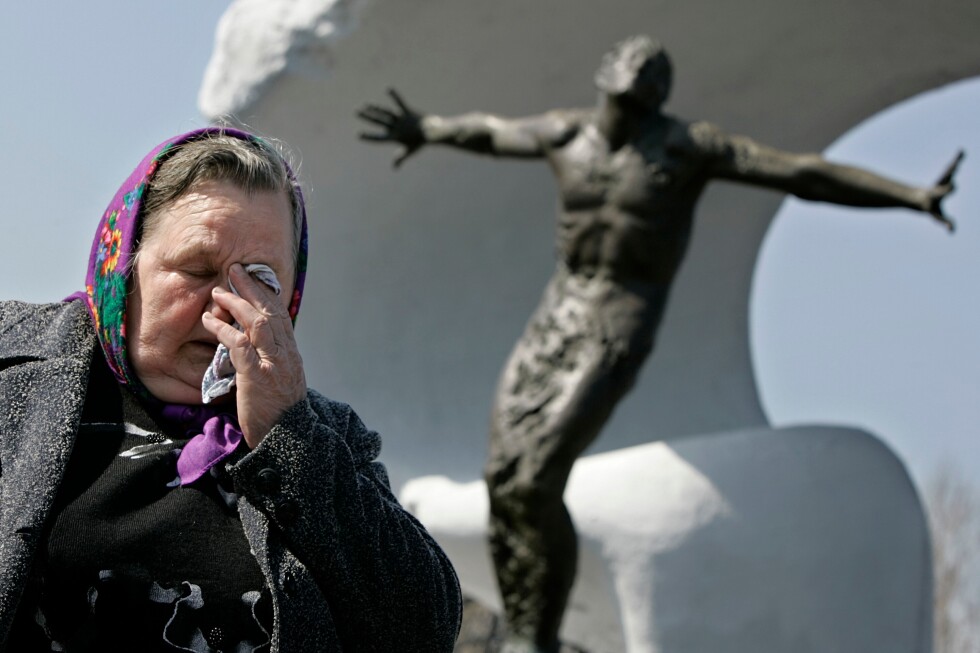
    Graveyard workers would not say when the burials had been carried out, nor whether funerals were held individually or as a single group service. Relatives had left carefully arranged bouquets of red and pink roses on each grave, quiet testaments to the lives cut short. An elderly Moscow woman visiting another section of the cemetery shared her quiet grief with the reporters: “It’s very sad, they were so young. They were brought here to be treated at hospitals, but they couldn’t be sent home to be buried.”

    By the time of the reporters’ visit, Soviet authorities had already established an exclusion zone around the damaged Chernobyl plant, evacuating every resident from nearby contaminated towns and villages, leaving no local communities to host burials for the victims who died in Moscow.

    The investigation did not come without consequences. After the reporters began documenting what they saw, cemetery officials confiscated their notebooks and film, noting that journalist access to the plot required special government approval. A police officer stationed at the cemetery confirmed the entire section was off-limits to anyone other than immediate family members of the deceased, and special permission from local government officials was required to photograph the headstones or record the victims’ names. Eventually, officials escorted the reporters out of the cemetery section after allowing them a brief, unrecorded look at the graves.

  • Donald Trump evacuated from Washington dinner as ‘shooter’ arrested

    Donald Trump evacuated from Washington dinner as ‘shooter’ arrested

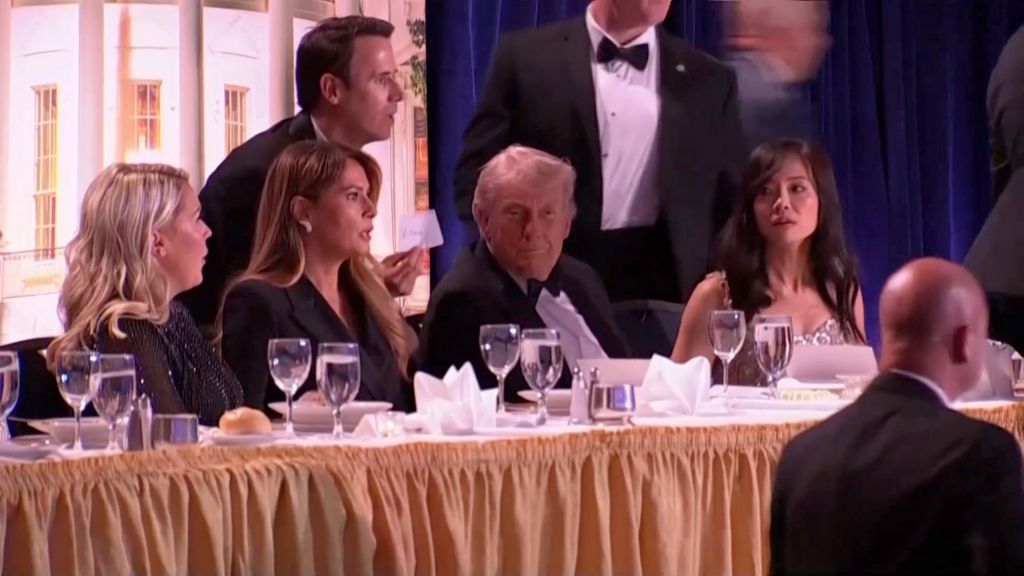
    On Saturday evening local time, a violent security breach disrupted the annual White House Correspondents’ Dinner at Washington D.C.’s Hilton Hotel, where former President and current U.S. President Donald Trump was among 2,500 high-profile attendees. Newly released surveillance footage and first-person accounts have now shed light on the chaotic sequence of events that unfolded shortly after 8:30 p.m.

    The alleged attacker, identified by authorities as 31-year-old Cole Thomas Allen, a California-based professional with backgrounds in mechanical engineering, computer science, game development, and K-12 education, forced his way through a lobby security checkpoint armed with a shotgun, a handgun, and multiple bladed weapons. According to D.C. Police Chief Jeffery W. Carroll, Allen was a registered guest of the hotel and was acting entirely alone, with no prior criminal record or known ties to extremist groups. Law enforcement officials confirmed Allen opened fire at close range on a U.S. Secret Service officer stationed at the checkpoint; the officer survived thanks to his bulletproof vest, and Trump told reporters Sunday he had spoken directly to the officer, who is in stable condition and recovering well.

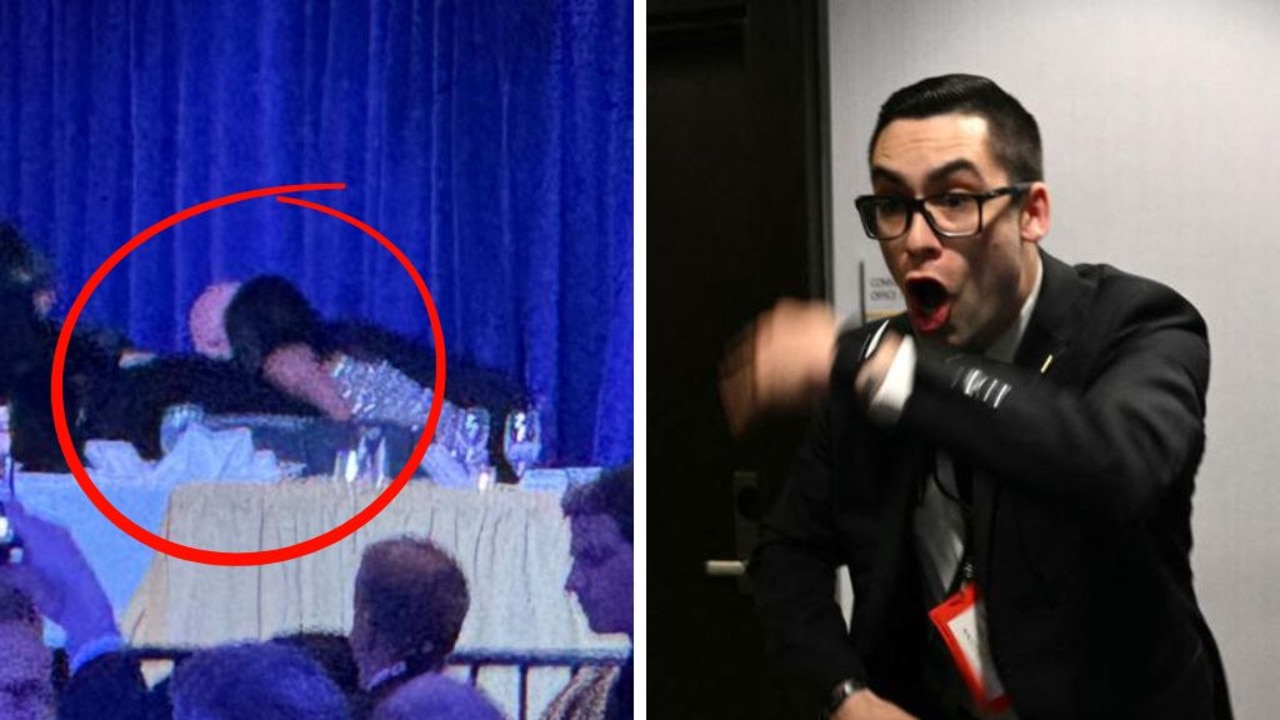
    Surveillance footage released in the hours after the incident captures Allen moving rapidly through the screening area, a detail Trump highlighted in his post-incident comments: “He was really moving … He looked pretty evil … he was a sick person.” For the President, the first sign of trouble was indistinguishable from a common event disruption: Trump told reporters he initially mistook the gunfire for a loudly dropped catering tray, before security personnel reacted within seconds to evacuate the venue. Footage from inside the packed ballroom shows Trump and First Lady Melania Trump seated at the head stage table when the shots rang out. Secret Service agents immediately rushed the President out of the room, an incident during which he appeared to stumble briefly, before evacuating the First Lady, Vice President JD Vance, and multiple senior cabinet members in attendance.

    Eyewitness accounts from journalists inside the venue paint a picture of sudden, widespread panic. Veteran CNN anchor Wolf Blitzer, who was just feet from the shooter near a lobby restroom, told his network he saw Allen brought to the ground by responding agents. “I did see the gunman on the ground after he started shooting,” Blitzer said, adding that the suspect carried a “very, very serious weapon.” ABC News editor John Lyons, who was in the ballroom, described a chaotic scene where attendees scrambled to take cover under tables for 15 full minutes: “There was shouting and fear and you heard this kerfuffle,” he said. Sky News correspondent James Matthews called the mood “an atmosphere of extreme fear,” noting that agents moved Trump out of the venue in seconds.

    By the time the scene was secured, Allen was taken into custody unharmed. Images from the hotel lobby show the suspect lying face-down on the floor, secured by law enforcement and wrapped in a thermal blanket. Overnight Sunday, FBI agents executed a search of Allen’s residence in Torrance, California, a suburban community roughly 20 miles south of Los Angeles, after securing a federal search warrant from a judge in the Central District of California.

    Allen is scheduled to appear in federal court Monday to face multiple felony charges, including weapons violations during a violent crime. Attorney General Todd Blanche told reporters Saturday that charges would be filed “shortly,” noting that the nature of the charges would be clear given the suspect’s actions.

    In comments to reporters Saturday night at the White House, Trump framed the attack as an assault on the U.S. Constitution, praising the “very brave members of the Secret Service” for their rapid response that prevented any fatalities. He later posted to his Truth Social platform shortly after the incident, writing: “Quite an evening in DC. Secret Service and Police did a fantastic job. The shooter has been apprehended. I have recommended that we “LET THE SHOW GO ON” but, will entirely be guided by Law Enforcement. Regardless of that decision, the evening will be much different than planned, and we’ll just, plain, have to do it again.”

    Event organizers ultimately canceled the dinner and announced plans to reschedule the event within 30 days. When asked whether the attack was an assassination attempt against him, coming after a previous failed assassination attempt during the 2024 presidential campaign, Trump offered a characteristic response. He noted that throughout U.S. history, assassination attempts and successful attacks have targeted high-profile, transformative leaders, citing Abraham Lincoln as an example. “They don’t go after the ones that don’t do much because they like it that way,” Trump said. “And when you look at the people that have either whether it was an attempt or a successful attempt, that they’re very impressive, inspirational. … I hate to say I’m honoured by that, but I do know we’ve taken this country … and now we’re the hottest country anywhere in the world with this country. And there are a lot of people that are not happy about that. So I think that’s the answer.”

    Saturday’s dinner marked the first time Trump has attended the annual press corps dinner during his two terms in office, an event held with extensive pre-planned security arrangements in response to ongoing threats against the President.

  • Colombian president says rebels responsible for highway bombing killing 14 people

    Colombian president says rebels responsible for highway bombing killing 14 people

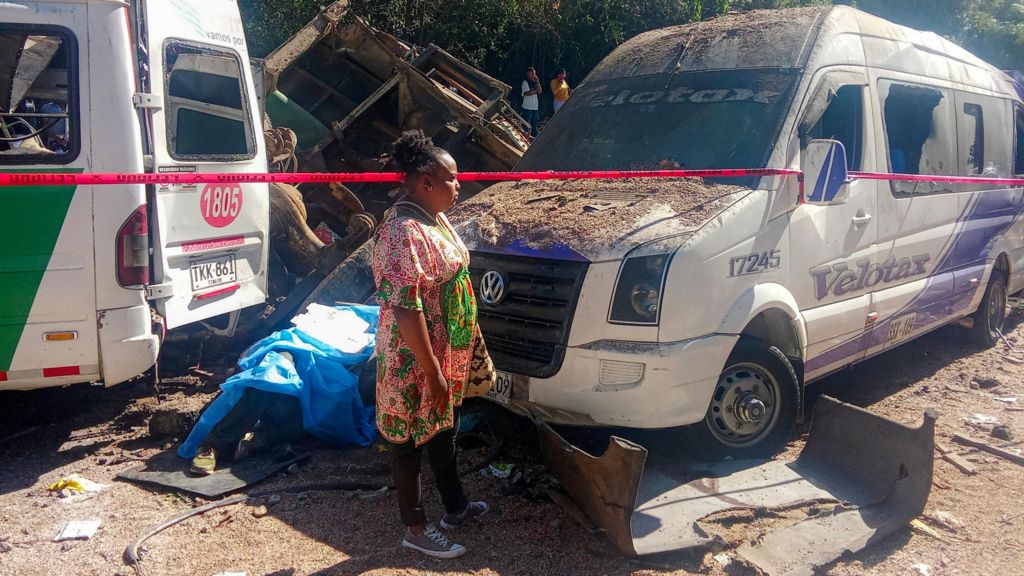
    A devastating improvised explosive attack on a major Colombian highway has killed at least 14 people and left dozens of others critically wounded, among them several underage victims, in a region long plagued by insurgent violence. Colombian national authorities have directly linked the coordinated attack to dissident guerrilla factions operating in the country’s southern territory. The attack unfolded on a busy public highway in Cauca, a southern province that has faced persistent resurgences of armed conflict in recent years. Footage circulated from the blast site immediately after the explosion shows multiple passenger and civilian vehicles reduced to charred, crumpled wreckage, with debris scattered hundreds of meters across the asphalt. Witness accounts collected by Agence France-Presse confirm the force of the blast was powerful enough to throw bystanders several meters back from the roadside, leaving onlookers shaken and stunned.

    Colombian President Gustavo Petro, whose current term ends later this year and who has centered his administration on a flagship “total peace” negotiation strategy with armed groups, publicly condemned the attack in a post to social media platform X. He labeled the perpetrators “terrorists, fascists and drug traffickers” and called on Colombia’s top military personnel to launch an immediate, full-scale response against the responsible factions. President Petro specifically tied the bombing to breakaway dissident groups originating from the Revolutionary Armed Forces of Colombia (Farc), Latin America’s one of the longest-running insurgent movements that formally disarmed following a 2016 peace deal with the Colombian government.

    Local Cauca Governor Octavio Guzman echoed the president’s condemnation, sharing his own on-site footage showing upturned vehicles and deep craters pockmarking the highway. He described the bombing as an “indiscriminate” act of barbarism, stressing that the province cannot continue to bear the brunt of escalating violence without greater national support. Guzman also confirmed that the highway bombing is not an isolated incident: a wave of smaller coordinated attacks has swept through Cauca since the previous Friday. Among these parallel attacks was an assault on a military base in the nearby city of Cali that left two service members injured. Colombian Defense Minister Pedro Arnulfo Sánchez added that authorities also intercepted and disabled a vehicle-borne explosive device, hidden in a passenger bus, that failed to detonate earlier the same day as the highway bombing, an attack he attributed to drug trafficking cartel operatives with ties to armed insurgent groups.

    The string of attacks comes exactly one month before Colombia’s scheduled May 31 presidential election, casting a shadow over the final stretch of campaigning and reigniting fierce debate over the government’s ongoing peace efforts. President Petro, a former guerrilla fighter himself, has pursued a controversial, multipronged negotiation strategy that has secured intermittent ceasefires and periods of reduced violence across many conflict zones, but has failed to reach lasting agreements with hardline Farc dissident factions that rejected the 2016 peace deal from the start. Those dissident groups have repeatedly stalled negotiations with Petro’s administration in recent years, and have gradually reclaimed territory in rural and southern regions of the country.

    The election campaign has already been marred by deadly political violence: in June last year, right-wing presidential candidate Miguel Uribe Turbay was shot by a 15-year-old assailant at a campaign rally in the capital Bogotá, and died from his injuries two months later. Current polling puts leftist Senator Ivan Cepeda, a leading public supporter of Petro’s negotiation strategy with armed factions, in the lead ahead of next month’s vote.

  • Voice notes are massive in some countries but not the UK – here’s why

    Voice notes are massive in some countries but not the UK – here’s why

    It has been 13 years since Meta-owned WhatsApp first introduced the voice note feature to the world, a quiet launch that would go on to split global public opinion on digital communication. Lauded by the platform as a way to connect users beyond what text can capture—bringing the warmth of a loved one’s voice into everyday messaging—the tool has since become one of the most divisive functions in modern digital communication. Today, receiving a 10-minute rambling voice note detailing a workplace conflict or family dispute sparks joy for some and deep frustration for others.

    Usage data reveals a stark geographic divide in how the feature is received. In populous and high-usage regions including India, Mexico, Hong Kong, and the United Arab Emirates, voice notes have grown to nearly rival text messages as the preferred mode of casual digital communication. But one major market has stood out for its persistent resistance: the United Kingdom, which never embraced the voice note trend the way much of the world has.

    New survey data from YouGov, published this month based on responses from more than 2,300 British adults, quantifies this resistance. While voice note usage has ticked up slightly over the past year, just 15% of UK adults use the tool regularly (defined as multiple times per week). Across genders and every age bracket—including digital-native Gen Z—voice notes rank as the least popular method of digital messaging. A 2024 cross-national YouGov study of 17 mostly high-income countries reinforced this finding: Britain ranked as the most voice note-averse nation, with 83% of respondents stating they prefer text-based communication over voice, and only 4% saying they favor voice notes.

    To unpack why voice notes have conquered some regions but failed to gain traction in the UK, experts and social observers have turned to psychology, cultural norms, linguistics, and diaspora dynamics to find answers.

    Decades of research has long confirmed the unique emotional power of human voice. A 2011 study conducted by researchers at the University of Wisconsin-Madison examined hormonal responses in children receiving communication from their parents via either phone call or text message. The results were clear: cortisol, the body’s primary stress hormone, dropped when children heard their parent’s voice during a call, while oxytocin—the hormone linked to social bonding and positive connection—rose. Though the study focused on live calls rather than pre-recorded voice notes, lead researcher Professor Seth Pollak notes that its core insight about the value of hearing a loved one’s voice likely extends to voice messaging. Pollak says a follow-up study focused specifically on pre-recorded voice notes would add critical context to this research, and his preliminary hypothesis is that pre-recorded clips would still carry emotional weight, though less than a real-time interactive call.

    Dr. Martin Graff, a psychologist specializing in online communication at the University of South Wales, frames voice notes’ appeal through media richness theory. Unlike plain text, voice carries layers of tone, inflection, and nuance that reduce uncertainty about a sender’s intent and emotion, helping conversational partners feel more connected to one another. It is this benefit that has led major dating platforms including Bumble, Happn, and Grindr to add voice note functions to their services over the past half-decade, helping users build rapport before meeting in person.

    For sociologists, the UK’s resistance to voice notes boils down in part to long-observed cultural norms around communication. Professor Jessica Ringrose, a sociology scholar at University College London, points out that British communication style is widely characterized as more reserved and emotionally reticent than many other global cultures. Voice notes lean into conversational expressiveness and performative communication that fits more naturally into cultures comfortable with open emotional expression, a style that is less common in mainstream UK culture. “I could definitely see that British people would be less inclined [to send voice notes] and briefer in their interactive style,” Ringrose explains, while noting that generalizations about national culture carry inherent risk of stereotyping.

    Unscientific firsthand anecdotes from British users mirror this divide, even within personal networks. For BBC reporter Josh Parry, an avowed voice note fan who occasionally sends 15-minute clips, the tool allows for nuance and context that is difficult to capture in text, and offers a hands-free option for activities like walking his dog. Small business owner Naomi echoes this, noting that voice notes make multitasking easier when juggling childcare and work, and add a sense of closeness that text cannot match. But for many other British users, the convenience for senders becomes a burden for recipients. Ramya, a vocal voice note critic, points to the inherent asymmetry: sending a voice note takes just a tap of a button, but receiving a six-minute clip requires the recipient to set aside all other activities to listen, with no way to quickly scan the content to gauge its urgency. Gen Z user Gyasi adds that voice notes require headphones to listen to in public, making them an inconvenience for on-the-go communication, while 30-year-old Daniela says the unskippable format causes unnecessary stress: once you open a voice note, you feel committed to listening to the entire thing.

    On the opposite end of the spectrum, India—one of the world’s most pro-voice note nations—offers key insights into the tool’s popularity. The 2024 YouGov data shows that 48% of Indian respondents either prefer voice notes or like them equally as much as text, compared to just 18% in the UK, and the feature is now deeply embedded in daily digital communication. WhatsApp’s Indian division even released a nine-minute promotional advertisement centered on a fictional rural newlywed couple who build their relationship through voice notes.

    Multiple factors explain India’s embrace of the tool. First, linguistic practicality: as a multilingual society where many users regularly blend multiple languages in casual conversation, voice notes eliminate the friction of complex non-English keyboard layouts. For example, many young Indians switch between regional languages and English mid-conversation; typing in regional language scripts is often clunky and unintuitive, but speaking comes naturally. For users who may be fluent in spoken multiple languages but not literate in all of them, voice notes also remove barriers to communication. Professor Kathryn Hardy, a sociology scholar at Ashoka University in Haryana, notes that this accessibility has made voice notes particularly popular in rural communities with lower rates of written literacy, where the tool bypasses structural barriers to written digital communication.

    Voice notes also serve a unique social function that transcends borders: they add nuance and expression to gossip, making them a go-to for sharing casual news among friend groups. As Pune-based college student Shreya puts it, “when it comes specifically to spilling the tea, we expect a voice note.”

    Another key driver of voice note popularity in high-usage regions is large diaspora communities. India is home to the world’s largest diaspora, with more than 35 million people of Indian origin living abroad, and 2.5 million more moving overseas annually. Mexico, where 53% of the population reports liking voice notes, also has a large cross-border diaspora concentrated in the United States. For separated family and friends spread across multiple time zones, voice notes offer a middle ground between rigid, scheduled live phone calls and impersonal text: they are asynchronous, so recipients can listen on their own time, but still carry the personal warmth of a human voice that text cannot match. Hardy, an American scholar who has lived in India for nearly a decade, confirms this dynamic: her family uses voice notes 10 to 20 times a week to help her children stay connected with grandparents back in the United States.

    Could linguistic factors also explain British resistance to voice notes? The Spectator columnist Rory Sutherland argues that English is a particularly concise language, making quick text communication more efficient than it is in many other languages. For many British users, the resistance also boils down to etiquette: Sutherland argues that sending an unrequested five-minute voice note is inherently discourteous to the recipient, who is forced to dedicate more time to the message than the sender did.

    To date, there is no definitive research confirming whether pre-recorded voice notes trigger the same oxytocin boost seen in live phone calls, and even if they did, it is unlikely to shift entrenched opinions on both sides of the divide. For proponents, the tool fills an important gap in an era where many people feel increasingly disconnected from friends and loved ones. As voice note advocate Josh Parry puts it: “I hope they never ever go away. The gossip in our lives would be much less rich without voice notes.”
  • The detained anti-colonial activist grabbing attention in West Africa: Who is Kemi Seba?

    The detained anti-colonial activist grabbing attention in West Africa: Who is Kemi Seba?

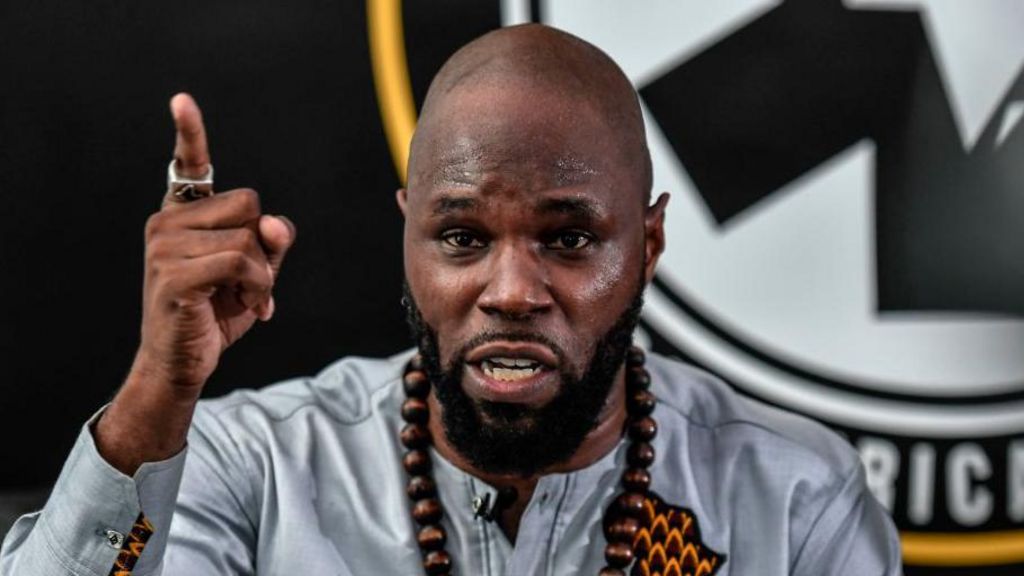
    Controversial radical Pan-African anti-colonial activist Kemi Seba, 45, is currently behind bars in South Africa following his arrest last week during a sting operation in Pretoria, where authorities allege he was attempting to escape to Europe via Zimbabwe alongside his 18-year-old son and a South African Afrikaner nationalist leader. The detention caps decades of high-profile run-ins with law enforcement across multiple African and European nations, tied to Seba’s unflinching opposition to French post-colonial influence in West Africa and his open alignment with anti-French military juntas in the Sahel region.

    Born Stellio Gilles Robert Capo Chichi in Strasbourg, France, to Beninese parents in 1981, Seba’s ideological trajectory began taking shape during his teenage years, when a trip to the United States exposed him to the black nationalist teachings of the Nation of Islam, the organization once led by prominent civil rights figure Malcolm X. Returning to France at 18, he stepped into a role as a national ambassador for the group, before a subsequent trip to Egypt led him to adopt Kemetism, a belief system rooted in ancient Egyptian theology.

    In 2004, Seba founded Tribu Ka, a radical black segregationist movement that became a vehicle for spreading antisemitic rhetoric. The French government banned and dissolved the organization just two years later, handing Seba a one-month prison sentence for his role in leading the group. Undeterred, he relaunched the movement under the new name Generation Kemi Seba, and in 2008 he was handed a six-month prison sentence, four months of which were suspended, for reestablishing the banned group. Mounting legal and public pressure eventually pushed him to leave France for Senegal following his release.

    Over the next 15 years, Seba built a large and loyal following across West Africa, particularly among young social media users, by centering his activism on ending what he frames as neocolonial French control of the region. A core pillar of his campaign has been the demand to abolish the CFA franc, the currency created by France in the 1940s for its African empire that remains pegged to the euro and backed by the French treasury, used today by 14 West African nations including Benin, Senegal, and Ivory Coast. In 2015, he launched Pan-Africanist Emergency, the NGO he still leads, which frames its mission as advancing black rights, African sovereignty, and social justice while combatting neocolonialism.

    The high point of his anti-CFA activism came in 2017, when he burned a 5,000 CFA franc note at a protest in Dakar to denounce *Francafrique*, the term for France’s enduring post-colonial political and economic influence over its former African holdings. He was arrested immediately after the protest but acquitted days later on a technicality, with thousands of his supporters taking to the streets of Dakar to celebrate his release. A month later, Senegalese authorities, citing threats to public order, deported him back to France.

    Deportations and arrests would become a recurring pattern across the region for Seba, who has been expelled from Togo, Guinea, and Ivory Coast over the past decade for his anti-French organizing and criticism of pro-French regional leaders. He has also been repeatedly detained in Benin, where he has been a vocal opponent of outgoing President Patrice Talon. In 2024, France stripped Seba of his citizenship in response to his activities; he publicly burned his French passport in protest, and just one month later, the military junta that seized power in Niger granted him a diplomatic passport and named him a special advisor to junta leader Brig Gen Abdourahmane Tchiani.

    In the years since a wave of military coups swept the Sahel, bringing anti-French military regimes to power in Niger, Mali, and Burkina Faso that have cut military ties with Paris and aligned closely with Moscow, Seba has become one of the most visible and polarizing figures in pan-African politics. Chatham House Africa Programme researcher Paul Melly notes that Seba has shifted from early activism marked by widespread accusations of antisemitism to a near-exclusive focus on his anti-French, anti-colonial platform that resonates deeply with growing anti-French sentiment among young West Africans. Critics, including senior French officials, have repeatedly accused Seba of acting as a mouthpiece for Russian propaganda and maintaining ties to the Russian paramilitary group Wagner, claims that Seba has never publicly confirmed. In 2025, French authorities detained him on suspicion of links to Wagner before releasing him without charge.

    Today, Seba faces his most serious legal jeopardy yet. He was arrested in South Africa last week on charges of violating immigration rules, having overstayed his visa by roughly two months after living in the country for five months. South African police confirm Seba is a wanted fugitive in both France and Benin, with extradition proceedings already underway. Benin’s special prosecutor Elonmario Metonou confirmed the country is preparing an official extradition request, after issuing two international arrest warrants for Seba in December 2025. The warrants stem from Seba’s alleged support for a foiled coup attempt against Talon’s government that same month; hours after the coup attempt, Seba published an online video calling the event a “day of liberation” for Benin. Benin has also added an additional charge of money laundering against the activist.

    Two other people were arrested alongside Seba during the Pretoria sting: his son, Khonsou Seba Capo Chichi, and Francois van der Merwe, leader of the Afrikaner nationalist group Bittereinders, who authorities accuse of helping the pair organize their escape to Europe.

    Seba has not yet issued any public comment on the charges against him, but leaders of his organization have pushed back aggressively against Benin’s allegations. Pan-Africanist Emergency international coordinator Hery Djehuty, the group’s second-in-command, told reporters that Benin’s claims will not “stand up to scrutiny,” describing the late addition of money laundering charges as a deliberate fabrication designed to strengthen the extradition request. Djehuty also denied widespread reports that Seba had applied for political asylum in South Africa.

    In an official statement, Pan-Africanist Emergency called on its supporters to remain calm amid what it frames as a coordinated disinformation campaign against Seba led by pro-*Francafrique* media outlets. “Far from weakening him, these manoeuvres only strengthen the legitimacy and scope of his commitment to social justice, sovereignty, and African dignity,” the statement read. “History teaches an immutable truth: you cannot silence a people by breaking its bravest voices. There is an eternal Benin, just as there remains an African DNA of insubordination.”

    Seba’s bail hearing is scheduled to take place on 29 April, with the timeline for any potential extradition still unclear as South African authorities have not yet confirmed which country will receive priority for the request.

  • ‘We don’t come to play’: Is Gawdland’s RuPaul win Asia’s big drag moment?

    ‘We don’t come to play’: Is Gawdland’s RuPaul win Asia’s big drag moment?

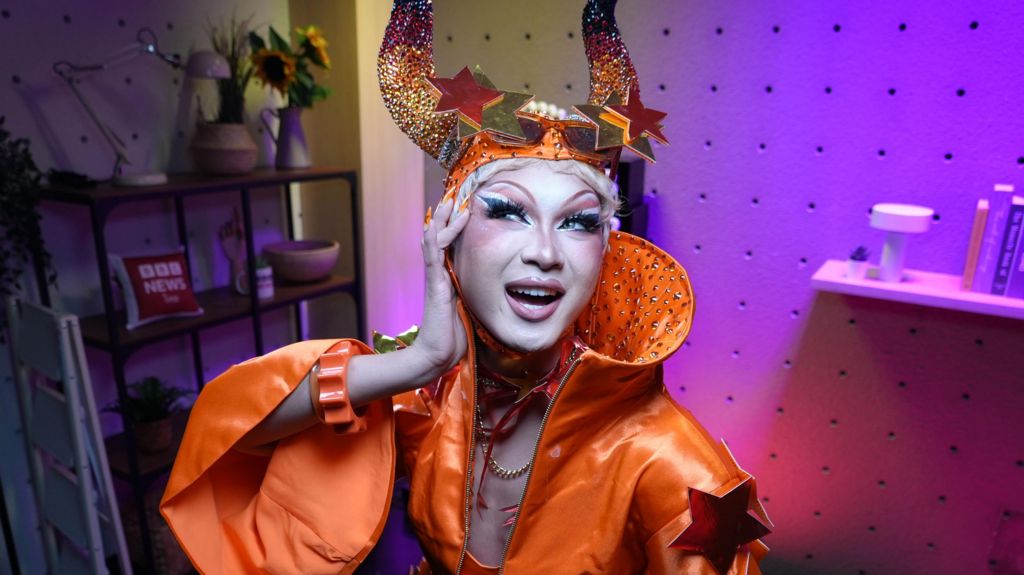
    In a landmark moment for global drag culture, 24-year-old Thai performer Gawdland — born Tharathep Thaweephon — has etched her name into the history books as the first Southeast Asian to take home the crown in *RuPaul’s Drag Race UK vs the World*, breaking a long-running glass ceiling for regional performers on the world stage.

    The victory, which caps off a hard-fought competition against fan-favorite queens from seven different countries including the U.S., UK, Canada, Mexico, Germany, Sweden, and the Philippines, fulfills a lifelong dream the drag artist nurtured growing up in the quiet northern Thai town of Lamphun. Long before her rise to international fame, Gawdland carried her regional identity as a core part of her art, a choice that ultimately became her greatest competitive advantage.

    Gawdland, who entered the competition determined to avoid the early elimination fate that felled prominent Southeast Asian predecessors like Thailand’s Pangina Heals in 2022 and the Philippines’ Marina Summers in 2024, leaned fully into distinctly Thai aesthetics for every runway look. Her iconic designs drew inspiration from Lamphun’s ancient temples, and she brought iconic Thai cultural figures to life on stage: she sashayed as a Muay Thai warrior, embodied the vivid energy of a Siamese fighting fish, and reimagined the mythic half-bird, half-woman Kinnaree from Thai folklore. A consistent undercurrent of warrior strength ran through every one of her creations. Initially unsure how much of her Thai identity to center in the global competition, Gawdland credited her stylist and friend Art Arya for pushing her to embrace her roots unapologetically. “She told me that this Thai-ness is exactly what would make me stand out. Our culture, this difference that sets us apart from everyone else,” Gawdland shared. “Once you’re standing on that main stage next to the others, you will be outstanding.”

    That unapologetic authenticity culminated in a viral standout performance of her original track *Firecracker*, during which she interacted with flames bursting from a fireworks prop in a bold, memorable routine. The performance resonated so deeply across Southeast Asia that a group of young Filipino jasmine garland sellers in Manila spontaneously broke into a dance to the track after recognizing Gawdland in public. The 24-year-old queen posted a joyful clip of the encounter, cheering the boys on using the Filipino queer slang term “nakshie” (meaning daughter), a moment that captured the outpouring of regional support that followed her historic win.

    Speaking to BBC Thai after her victory, Gawdland framed the win as far more than a personal achievement. “For me to win this crown, to have this victory, it means the world. It means representation, it means taking up space. It means that we can dream big. We can dream an impossible dream,” she said. “I am the proof of Asian drag excellence. When we do drag in Asia, in South East Asia, we’re not here to play. We’re here to win.” Her greatest hope, she added, is that her victory will inspire marginalized young queer people across the region — like the three young flower sellers in Manila — to pursue their own dreams, no matter how out of reach they may seem.

    While Gawdland’s victory marks a historic milestone for Southeast Asian drag, the community still faces significant structural and social challenges across the region. Home to nearly 700 million people, much of Southeast Asia remains socially conservative, with widespread legal and cultural discrimination against LGBTQ+ communities. Homosexuality is criminalized in Malaysia, and in Indonesia’s Aceh province, same-sex relations are punishable by public caning under Sharia law. Even in the comparatively progressive Philippines, same-sex couples lack formal legal recognition and protections. To date, Thailand is the only nation in the region that recognizes same-sex unions.

    Drag performers across the region also face growing scrutiny as their profile rises. Gawdland herself faced online backlash for wearing an outfit featuring the colors of the Thai flag, while two years prior, Filipina drag artist Pura Luka Vega was arrested after a performance in which she wore a costume portraying Jesus Christ. Though charges were ultimately dropped, the incident sparked widespread conservative outrage in the predominantly Catholic nation. For Gawdland, this scrutiny underscores a core truth of the art form: “Drag is political. It has always been. It’s been that way for a long time. The origins of drag are protest, a refusal to submit to tradition. Society wants us to be men, but no, I’ll be a woman,” she said. “That question — ‘What is she doing? Why is she doing this?’ — that is the very core of drag. It leaves behind a conversation, dialogue, debate.”

    Beyond social and political barriers, the Southeast Asian drag industry also faces systemic underfunding. Gawdland had to raise 1 million Thai baht (approximately $31,000) to cover the costs of competing on *UK vs the World*, pulling together savings from her own performances, support from producers, and contributions from senior drag queens in Thailand. Sakol Sopitachasak, an assistant professor at Bangkok’s Thammasat University who has published research on Thai drag, explained that while the Thai government supports traditional arts, drag rarely qualifies for public funding. “It’s a profession that requires you to put everything into one person. You have to do your makeup, your costumes, be creative, and you have to be able to act, be a good speaker, be funny, be sarcastic… You need so much,” Sakol noted.

    Gawdland’s £50,000 prize for winning the competition, paired with her new title of “Queen of the Mothertucking World,” offers a lifeline not just for her, but for the broader Thai drag ecosystem. She emphasized that booking a single drag queen supports an entire network of behind-the-scenes workers, from costume designers and hair stylists to choreographers and dancers. “Hiring one drag queen goes on and on. Everyone gets paid because we’re essentially a money distributor,” she explained.

    In the weeks since her victory, Gawdland has returned to Thailand for a triumphant homecoming, headlining this year’s Songkran (Thai New Year) celebrations in Bangkok — an event that has become a major draw for LGBTQ+ tourists from across the region. Carried on a throne through crowds of revelers under a central Bangkok train station, the newly crowned queen reflected on the journey that brought her from a small northern town to the global drag throne. Just months earlier, waiting for her flight to London at Bangkok’s Suvarnabhumi Airport, she said she had worried about how domestic audiences would receive her. But the outpouring of support from Thai fans after the show premiered has erased any doubt. “It’s beyond the word worth it. Every exhaustion, every effort, every tear and drop of blood, every pain, every heartbreak — it all vanished instantly. It is so, so worth it for everything I have now,” she said.