作者: admin

  • Police: Correspondents’ dinner suspect charged checkpoint, had multiple weapons

    Police: Correspondents’ dinner suspect charged checkpoint, had multiple weapons

    A suspect accused of attempting to breach a security checkpoint ahead of the annual White House Correspondents’ Dinner has been formally charged, law enforcement officials have confirmed. The individual was found to be in possession of multiple firearms after the alarming incident that triggered an immediate security lockdown in the area.

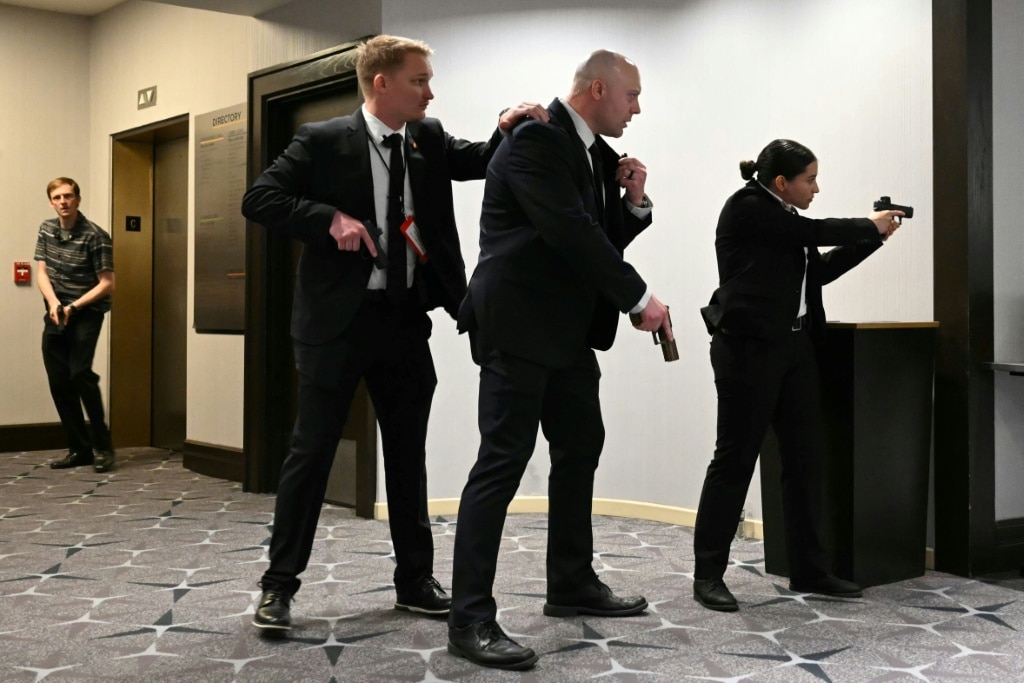
    Surveillance footage, later publicly released by former U.S. President Donald Trump, captures the moment the suspect sprinted past stationary metal detectors as responding security agents quickly drew their weapons in response to the breach. The incident unfolded just hours before hundreds of high-profile journalists, political leaders, and media personalities were set to gather for the traditional dinner, an event that has long served as a centerpiece of Washington D.C.’s media and political calendar.

    Local law enforcement agencies have not yet released additional details about the suspect’s identity, motive, or background, but confirmed that ongoing investigations are underway to determine whether the incident was connected to any broader plot. Security officials have reiterated that the situation was quickly contained, and no injuries were reported during the confrontation or subsequent apprehension of the suspect. The breach has sparked renewed conversations about the adequacy of security protocols for major political events in the nation’s capital, amid ongoing concerns over violence targeting political gatherings.

  • What it was like in the room as shots rang out at correspondents’ dinner

    What it was like in the room as shots rang out at correspondents’ dinner

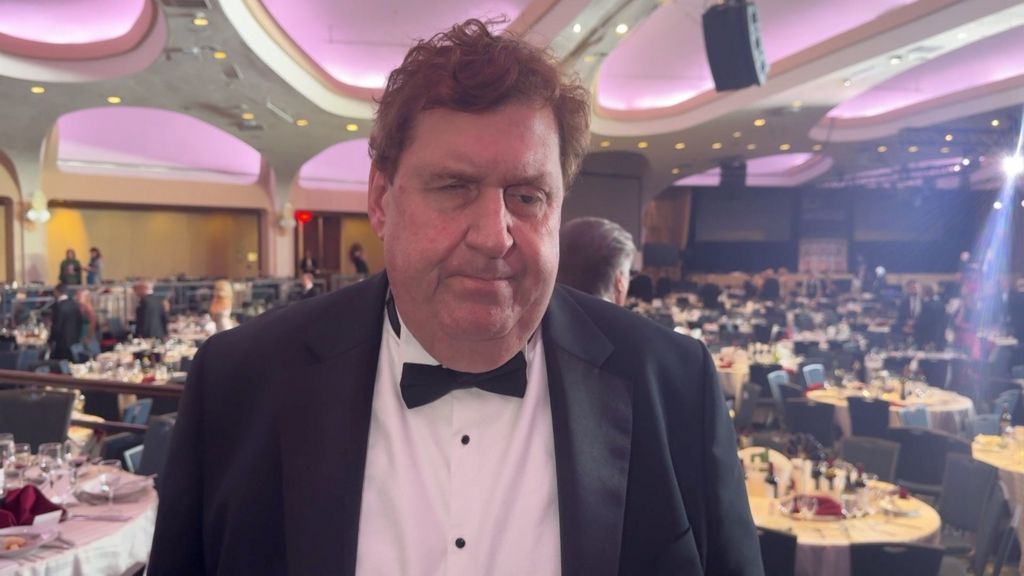
    It was a routine Saturday night at the Washington Hilton’s ballroom for the annual White House Correspondents’ Dinner, until the moment veteran reporter Gary O’Donoghue set down his knife and fork. A low, booming rumble rolling from the direction of the main entrance caught his attention — a sound that would instantly trigger familiar dread for a journalist who has covered multiple mass shooting incidents and assassination attempts.

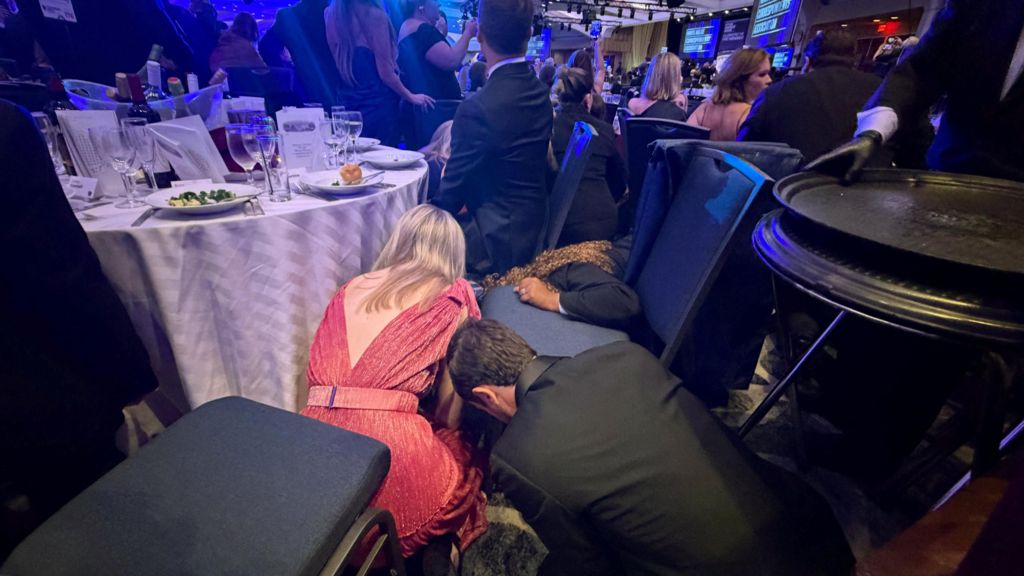
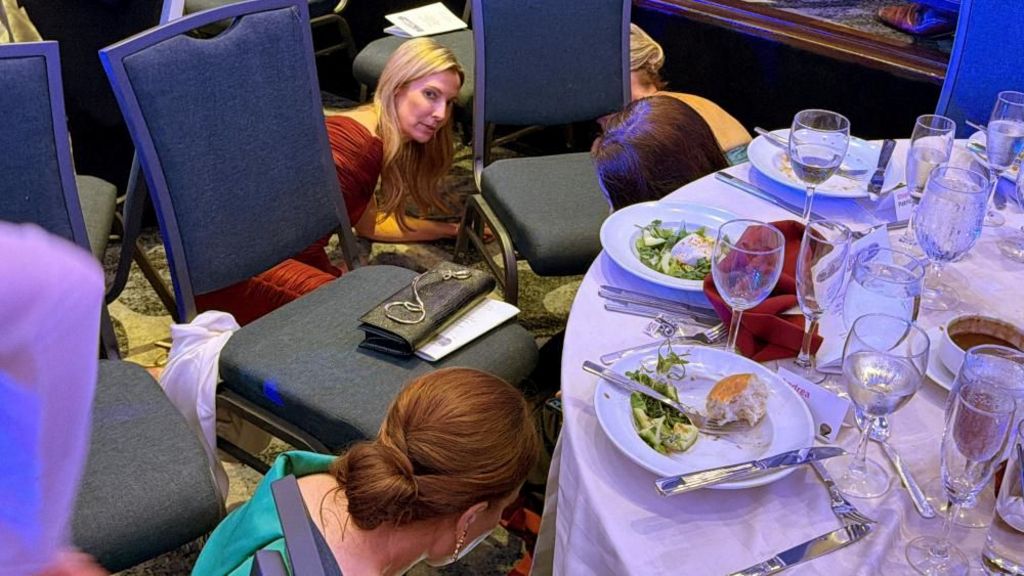
    As a blind reporter, O’Donoghue relies heavily on audio cues to parse his surroundings, and the noise immediately struck him as the distinct thud of semi-automatic gunfire. Moments later, he heard glass shatter across the room, before feeling the head of his colleague Daniel brush past him as the man dove for cover under the table. Without hesitation, O’Donoghue followed, dropping to his knees beneath the tablecloth as fear raced through his mind.

    This was not the first time O’Donoghue had found himself in the middle of an assassination attempt against a sitting U.S. president. Just 21 months earlier, he was on the ground in Butler, Pennsylvania, when a shooter opened fire on then-candidate Donald Trump, coming inches away from taking the former president’s life. As panic erupted across the ballroom that night in D.C., with hundreds of attendees screaming and scrambling for safety, this experience left O’Donoghue bracing for the worst.

    Unlike the chaotic aftermath of the Butler attempt, the ballroom quickly settled into a terrified hush, with thousands of attendees dropping under tables within seconds of the first shots. For five to ten long minutes, those hiding waited in breathless silence, uncertain whether the gunman had breached the ballroom and was preparing to open fire on the crowd of 2,500 political leaders, journalists, and public figures gathered for the event.

    Multiple witnesses confirmed that Secret Service agents immediately moved to evacuate former president and current 2026 officeholder Donald Trump, First Lady Melania Trump, and Vice President JD Vance from the stage moments after the incident. Other agents, clad in full tactical gear including helmets and bulletproof vests, took positions across the room with weapons drawn, scanning the crowd for any additional potential threats.

    O’Donoghue shared small, human details that put the chaos in perspective: just minutes before the shooting, he had run into Health Secretary RFK Jr. in a small anteroom off the ballroom, where the secretary told him he was simply hungry and ready for the dinner to begin. Kennedy was seated just a few tables behind O’Donoghue when the shots rang out. Roughly 30 meters closer to the main entrance, FBI Director Kash Patel also took cover on the floor alongside other attendees, shielding his girlfriend from potential harm as a Secret Service agent rushed across the ballroom to secure his position.

    In the aftermath of the incident, O’Donoghue says one question weighed more heavily on his mind than any other: How could a potential shooter get this close to the president, for the second time in less than two years? In the hours leading up to the dinner, all roads surrounding the Washington Hilton had been fully closed and secured by local law enforcement, but venue security itself felt surprisingly lax. O’Donoghue recalls that the ticket checker at the entrance only glanced at his credential from a distance of roughly six feet, with no closer inspection. When he went through screening to enter the ballroom, an agent waved a wand over his person but did not investigate the device that triggered the alarm from items in his inner jacket pocket, nor did they ask him to empty his pockets for a closer search.

    In the end, O’Donoghue notes, the security detail matched that of a typical White House Correspondents’ Dinner where no sitting president is in attendance — a fatal oversight that left thousands of people vulnerable. For the duration of the post-incident lockdown, attendees struggled to get cellular service to report on the incident or gather updates on what had unfolded outside the ballroom. Even as O’Donoghue tried to push thoughts of worst-case scenarios out of his mind, he couldn’t shake the emotional weight of the moment. As a reporter covering U.S. politics, he wondered, how many more close calls must the country endure before a catastrophic tragedy occurs that ends the pattern of near-misses that have become a grim new normal for political events.

  • What we know about the shooting incident at the White House Correspondents’ Dinner

    What we know about the shooting incident at the White House Correspondents’ Dinner

    On Saturday night, an unfolding security crisis disrupted one of Washington D.C.’s most enduring political press traditions, as US President Donald Trump and First Lady Melania Trump were hurriedly evacuated from the annual White House Correspondents’ Dinner at the Washington Hilton following reports of active gunfire on the venue’s premises.

    The US Secret Service quickly issued an official confirmation that no civilians or government officials had been injured in what law enforcement describes as a targeted shooting incident, and that a single suspect had been taken into custody within minutes of the first shots being fired. In a public address delivered shortly after returning to the secured White House compound, Trump reflected on the incident, noting “it was always shocking when this happens, that never changes.”

    Shortly after the situation was contained, the president posted multiple updates to his Truth Social platform. In his first post, he confirmed that the suspect had been apprehended, and stated that he had personally pushed to “LET THE SHOW GO ON”, adding that he would defer fully to law enforcement guidance on next steps. A follow-up post clarified that law enforcement officials had formally requested the president and first lady evacuate the venue out of an abundance of caution.

    Speaking to reporters roughly an hour after the incident, Trump provided additional details: the suspect had charged security barriers at the hotel while armed with what the president described as a “powerful” weapon, before being taken into custody. The president went on to say that one Secret Service agent was struck by gunfire at close range, but survived unharmed thanks to his bulletproof vest. “I just spoke to the officer, and he’s doing great,” Trump told reporters. “He has very high spirits, and we told him we love him and respect him, he’s a very proud guy.”

    Trump also highlighted the response of dinner attendees, describing the ballroom as “totally unified” in the wake of the gunfire, with a “tremendous amount of love and coming together” as the situation unfolded. The president emphasized that he had pushed for the dinner to resume immediately after the suspect was detained, but formal security protocol prevented the event from continuing. He added that the dinner would be rescheduled, and vowed the new event would be “bigger and better and even nicer” than the original.

    The incident marked the third known threat to Trump’s life since he took office, and the president referenced two prior attempts: an assassination attempt at a campaign rally in Butler, Pennsylvania, and another incident at his golf course in Palm Beach, Florida. He added that the first lady had been left “rather traumatised” by the sudden disruption and violence. In a rare show of praise for the press, Trump thanked media attendees for their responsible coverage of the unfolding emergency.

    Shortly before addressing the press, the president authorized the release of surveillance images and a video clip of the alleged suspect to the public. A still close-up image shows a shirtless man in handcuffs on the hotel floor, surrounded by Secret Service personnel, while grainy surveillance footage captures the suspect rushing past uniformed security officers, who immediately pursued and detained him.

    CBS News, the North American partner of the BBC, has identified the suspect as 31-year-old Cole Tomas Allen, a resident of Torrance, California. Washington D.C. Interim Police Chief Jeffery Carroll confirmed that Allen was a registered guest at the Washington Hilton, the venue hosting the dinner, and stated that there was no credible information suggesting any additional accomplices or ongoing public danger. While law enforcement has confirmed that an exchange of gunfire occurred between the suspect and security personnel, the exact number of shots fired has not yet been released.

    Carroll added that the suspect was found to be carrying a shotgun, a handgun, and multiple knives at the time of his arrest. US Attorney for Washington Jeanine Pirro announced that Allen faces two initial federal charges: use of a firearm during a crime of violence, and assault on federal officers with a dangerous weapon. A formal arraignment to officially file the charges is scheduled for Monday. As of Saturday evening, the suspect’s motivation for the attack remains unclear, though Trump stated he expects to release additional updates on the investigation on Sunday.

    The White House Correspondents’ Dinner, a tradition that dates back to 1921, is almost always attended by the sitting US president, and Saturday’s event marked Trump’s first appearance at the dinner since he began his second term as president. His last attendance at the event was in 2011, when he appeared as a private citizen. Multiple BBC correspondents who were in attendance during the incident reported scenes of widespread confusion immediately after gunshots were heard near the main ballroom. In addition to the Trumps, senior cabinet officials including Health Secretary Robert F. Kennedy Jr. and Defence Secretary Pete Hegseth were also hurriedly evacuated by their personal security details. Other guests remained locked down in the ballroom for roughly an hour, with many working journalists filing initial reports of the incident from inside the secured room.

    The US Secret Service and FBI have launched a joint investigation into the incident, with law enforcement executing search warrants at Allen’s last known address in California as of Saturday night.

  • ‘You just didn’t know’: Gary O’Donoghue describes confusion and fears at correspondents’ dinner

    ‘You just didn’t know’: Gary O’Donoghue describes confusion and fears at correspondents’ dinner

    The annual correspondents’ dinner, a longstanding tradition that brings together journalists, media figures, and other public figures for an evening of conversation and celebration, was suddenly upended by a shocking act of violence that left attendees shaken and confused. In the wake of the incident, veteran BBC correspondent Gary O’Donoghue has opened up about the disorientation and deep-seated fear that spread through the venue the moment the disturbance unfolded.

  • Getting the most out of barrier-free tours for yourself or someone with a disability

    Getting the most out of barrier-free tours for yourself or someone with a disability

    For millions of people living with disabilities around the world, tourism has long been marked by preventable obstacles. These barriers range from highly visible infrastructure gaps — such as a broken elevator at a popular attraction — to invisible challenges that are often overlooked: an overly long walking itinerary that causes exhaustion, or a crowded, loud environment that triggers sensory overload.

    As the large baby boomer generation continues to age, the global travel industry has begun to shift toward catering to older adults, who typically have both disposable income and flexible time for international sightseeing, and many of whom require some form of travel assistance. But industry advocates note that true inclusive accessibility extends far beyond just aging travelers, needing to accommodate a far broader range of visitors: from people living with permanent physical disabilities, to neurodivergent travelers on the autism spectrum, to those living with dementia.

    To better serve both travelers with visible and invisible disabilities, museums, cultural institutions and tourism organizations across the globe are rolling out specialized programming and barrier-free tour options, many enabled by modern technological innovation. These customized offerings include sign-language guided tours for Deaf and hard-of-hearing visitors, tactile exhibit experiences for guests who are blind or have low vision, and structured outings designed specifically to meet the needs of neurodivergent travelers. Dedicated travel agencies focused exclusively on serving disabled travelers have also emerged in regions across the world to fill gaps in mainstream offerings.

    Ashley Grady, an accessibility program specialist at the Office of Visitor Accessibility at Washington D.C.’s Smithsonian Institution, explains that offering intentional barrier-free services sends a clear message that disabled travelers are valued guests in public cultural spaces. “These services are a way of saying, ‘we’ve thought of you,’” Grady said. “We want you to come to our museums. We want you to see yourselves reflected in our staff and our collections. And we want to make these programs as accessible as possible for you, your family, your loved ones, your friends.”

    Despite this progress, significant gaps in accessible tourism remain industry-wide. Ivor Ambrose, managing director of the nonprofit European Network for Accessible Tourism, points out that there is still a widespread lack of awareness about the wide spectrum of accessibility needs that different disabled travelers require. “This is actually a really big market and an opportunity, which is still not fulfilled by the operators in all these different areas of tourism,” Ambrose noted.

    To help disabled travelers navigate existing options and advocate for themselves, accessibility experts share three key pieces of advice for planning an enjoyable, accessible trip.

    First, prioritize detailed research and advance planning. Josh Grisdale, founder of Accessible Japan — a resource platform for disabled travelers visiting Japan — has cerebral palsy and uses a power wheelchair. When planning trips to new destinations, he cross-references information from multiple public sources: browsing travel discussions on Reddit, watching user-generated travel videos on YouTube, and using Google Street View to scout for potential barriers like stairs that would block wheelchair access. Grisdale also recommends contacting a destination’s concierge or visitor services ahead of time to confirm accessibility details, as most cultural institutions now publish their barrier-free offerings online. To address the global lack of centralized, lived-experience accessibility information, Grisdale launched *tabifolk*, a crowdsourced platform where disabled travelers can share on-the-ground knowledge about accessible destinations worldwide. “Even though I’m in a wheelchair and I’ve had a disability my whole life, there’s things that I don’t know about other disabilities,” he explained.

    In Africa, where iconic travel experiences like safaris and Mount Kilimanjaro climbs are often out of reach for disabled travelers without advance planning, advance preparation is equally critical, according to Joanne Ndirangu, founder and director of the Kenyan accessible tourism agency Scout Group Agency. Ndirangu, who advocates for expanding accessible tourism across the continent, urges disabled travelers to partner with local travel experts who have first-hand knowledge of the region’s existing accessible options. Many local experts have worked directly with hotels and restaurants to install accessibility features like ramps and train staff to support neurodivergent guests, and can steer travelers away from inaccessible spots while offering equally compelling alternatives. “Let’s say you want to see giraffes somewhere,” Ndirangu gave as an example. “I can now advise you, ‘That place is not viable if you’re on a wheelchair or on crutches because of the hills and the valleys.’ So I can give you an alternative — and you get to see the giraffes.”

    Second, seek out specialized accessible programming instead of defaulting to general public tours. Mass-market tours are often designed for able-bodied, neurotypical travelers, with features that create barriers — from exhibits placed too high for wheelchair users to view, to loud, crowded environments that trigger sensory distress. The Smithsonian Institution, the world’s largest museum complex, addresses this gap with its popular sensory-friendly “Morning at the Museum” program, which opens participating museums to neurodivergent travelers and their families one morning a month before general public entry. During these events, visitors can explore at their own pace or participate in structured multi-sensory activities, without overwhelming crowds or noise. “We can control the environment, we can reduce the crowds,” Grady said. “It’s a completely judgment-free environment and one that’s really meant to hopefully be that full bridge to inclusion, where they are able to come to a museum, have a great experience, and then maybe come back when we’re open to the public.”

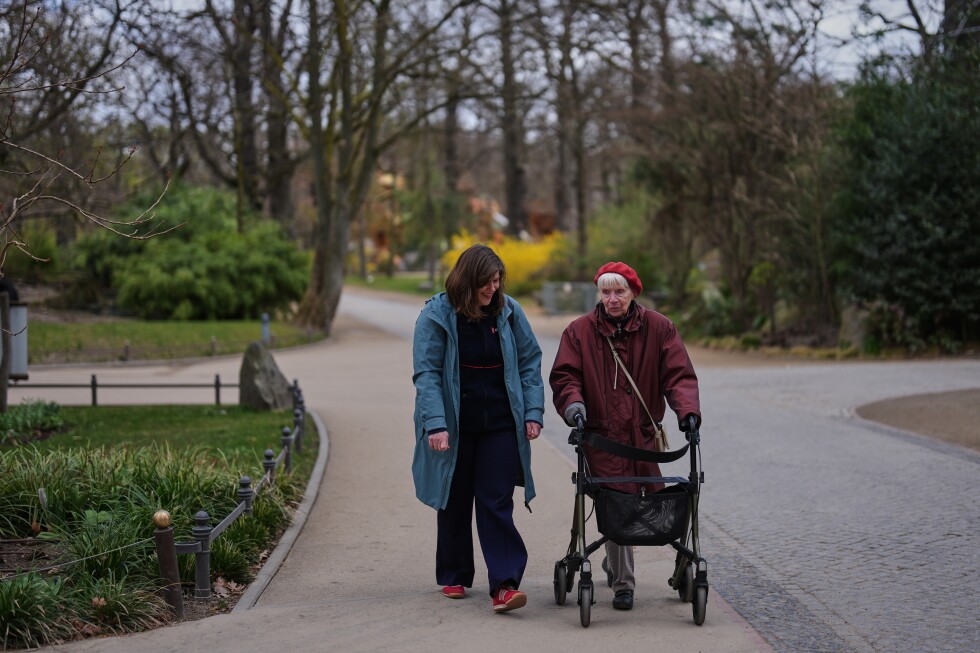
    In Berlin, the Catholic aid organization Malteser Deutschland has stepped in to address another overlooked gap: accessible programming for people living with dementia. The organization developed customized barrier-free tours for this population at top local destinations including Berlin Zoo, the Museum of Natural History, Britzer Garden, and Charlottenburg Palace, with plans to expand to more locations. The Berlin Zoo tour, for example, is limited to a small group of participants and capped at 90 minutes, focusing on just a small selection of animal habitats instead of trying to cover the zoo’s entire collection, to avoid tiring or overwhelming guests.

    Third, don’t hesitate to communicate your needs ahead of time, and share feedback after your visit to help improve options for future travelers. Ndirangu notes that her team proactively asks all guests about required accessibility accommodations upfront, but many travelers don’t disclose their needs, leaving agents unable to adjust plans. For example, most hotels in Kenya only offer one or two fully accessible rooms, which can be fully booked if a guest’s need isn’t communicated in advance. “Give us that opportunity to give you solutions,” Ndirangu said. “We’ve had guests who don’t mention anything.”

    The European Network for Accessible Tourism encourages travel providers to fold the cost of accessibility services into overall trip pricing, rather than charging extra only to disabled guests, a model that many major cultural institutions already follow. Most museums already offer discounted entry for disabled visitors, often with free or reduced admission for travel companions.

    Grady adds that the Smithsonian regularly updates its accessibility offerings based on feedback from visitors and a disabled advisory board, with changes ranging from adjusting app color contrasts for low-vision visitors to working with curators to design new exhibits to be fully accessible from the planning stage. At the end of the day, Grady says, disabled travelers aren’t asking for special treatment: “They’re not asking for anything out of the ordinary,” she said. “They’re literally just trying to experience a visit just like anyone else.”
  • The threat of light pollution puts the world’s darkest skies in the Atacama Desert at risk

    The threat of light pollution puts the world’s darkest skies in the Atacama Desert at risk

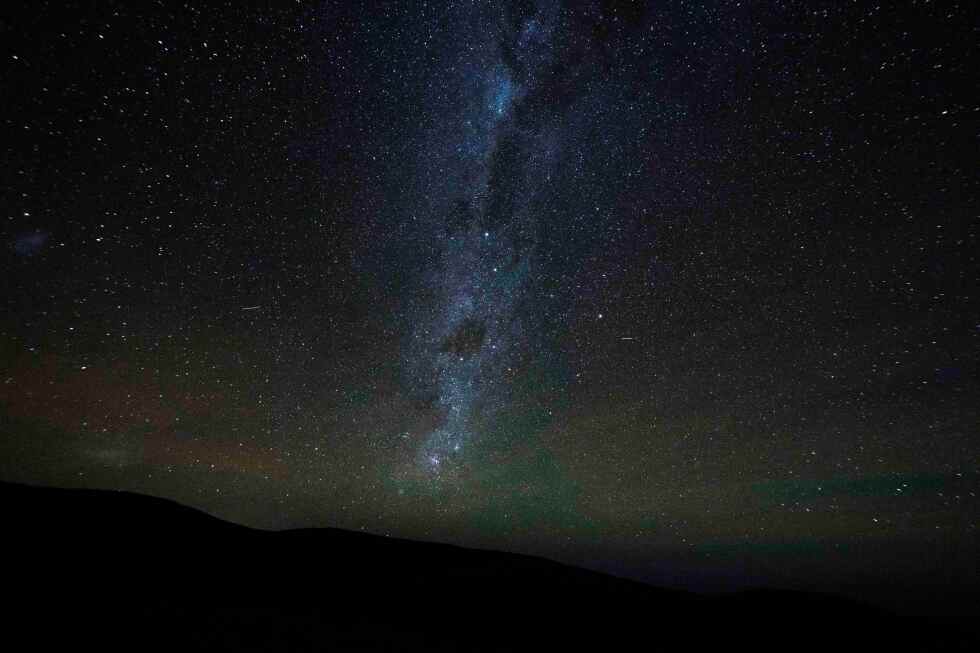
    Tucked into northern Chile, the Atacama Desert — widely recognized as the driest terrestrial landscape on the planet — offers one of the clearest unobstructed views of the cosmos available anywhere on Earth. For first-time visitors, the experience of gazing up at its night sky is transformative: eyes adjust slowly to the profound darkness, first picking out faint pinpricks of light, then brighter stars, until entire galaxies stretch out in full view, visible to the naked human eye.

    This extraordinary stargazing environment is the product of a rare confluence of natural conditions: extreme aridity, high elevation, and, most critically, geographic isolation far from the glow of urban light pollution. This combination has turned Atacama into the global gold standard for ground-based astronomy, hosting more of the world’s largest and most advanced astronomical observatories than any other region on Earth.

    “The conditions in the Atacama Desert are unique in the world,” explained Chiara Mazzucchelli, president of the Chilean Astronomical Society. “There are more than 300 clear nights per year, meaning no clouds and no rain.”

    Today, the desert’s nearly 41,000 square miles of open, high-altitude terrain are home to nearly 30 separate astronomical research sites, most run by international scientific collaborations. Dubbed “Photon Valley,” this concentrated corridor of cutting-edge observation facilities draws thousands of scientists from across the globe annually, all pursuing answers to fundamental questions about the origins of the universe. Even with the region’s popularity, access is highly competitive: Julia Bodensteiner, an assistant professor at the University of Amsterdam and a visiting researcher at the European Southern Observatory’s (ESO) Paranal Observatory, the flagship facility in Atacama, notes that only 20 to 30 percent of competing research proposals win observation time.

    While the harsh desert terrain — with altitudes pushing past 10,000 feet, where oxygen is scarce, scorching daytime heat gives way to freezing nighttime temperatures, and rocky ground makes travel difficult — poses challenges for human researchers, it is perfectly suited for astronomical observation. The region is currently host to the most ambitious ground-based telescope project in history: ESO’s $1.5 billion Extremely Large Telescope (ELT), scheduled for completion in 2028 at Paranal. With 798 individual mirrors and a total light-collecting area of nearly 1,000 square meters, the ELT will be 20 times more powerful than any existing leading optical telescope, and capable of producing images 15 times sharper than NASA’s iconic Hubble Space Telescope.

    For astronomers, the ELT promises to unlock breakthroughs that were previously unthinkable. “We should be able to see Earth-like planets in what we call the habitable zone, so basically the planets which are candidates towards life,” explained ESO astronomer Lucas Bordone. Data collected from Atacama’s observatories does not only advance our understanding of deep space; it also delivers critical insights for life on Earth, and research into the future of human exploration beyond our home planet. That makes protecting these sites a global scientific priority.

    But the world’s most valuable window into space is under growing threat. Last year, a proposed green energy complex just 6 miles from Paranal Observatory ignited a global dispute between the energy company developing the project and the international astronomical community. The proposal exposed a critical gap: Chile’s existing regulations designed to protect dark skies for astronomical research are lax, outdated, and unclear, leaving the region’s unique scientific assets vulnerable to unregulated industrial development.

    After widespread outcry from astronomers, physicists, and even Nobel laureates, the energy company canceled the project in January. But the risk of future development remains. The incident sparked a review of Chile’s environmental regulations governing protected astronomical zones, but scientists warn that no meaningful regulatory update has been enacted to prevent similar proposals from moving forward in the future.

    “We are working to ensure the new criteria are strict enough to guarantee that there will be no impact on astronomical areas,” said Daniela González, director of the Cielos de Chile Foundation, a non-profit founded in 2019 dedicated to preserving the quality of Chile’s night skies for research.

    Eduardo Unda-Sanzana, director of the Astronomy Center at the University of Antofagasta and a member of the ministerial advisory commission that delivered regulatory recommendations to the Chilean government after the energy project controversy, recalled how dramatically the Atacama has changed over the past two decades. “Twenty years ago, the Atacama Desert was ‘an ocean of darkness,’” he said. “It was just you and the universe.”

    Today, urban expansion, industrial growth, mining operations, and renewable energy development have turned the remote desert into a highly coveted territory, and balancing competing interests has grown increasingly difficult. Even small amounts of human activity can derail cutting-edge astronomical observation: at Paranal, researchers live in an underground residential facility designed to minimize their impact, with all windows covered, hallways kept dark, and outside movement limited to red-filtered flashlights to avoid even the faintest light pollution interfering with telescope data.

    The proposed energy project near Paranal posed multiple threats beyond light pollution: project construction and operation would have generated constant micro-vibrations, increased dust pollution, and disrupted atmospheric stability, all of which would have rendered high-precision astronomical observation impossible. As Itziar de Gregorio-Monsalvo, ESO’s Chile representative, put it: “If you place the ELT next to a city, it doesn’t matter that its diameter is 40 meters long. It’s just the same as having a tiny telescope.”

    History offers a stark warning of what is at stake. In the early 20th century, the first international heliophysics observatory in Chile — a major solar research station operated by the U.S. Smithsonian Institution — was forced to permanently close in 1955 after expanding mining operations in the area created irreversible pollution that made research impossible.

    “We’ve had 70 years to learn from history and avoid repeating those same mistakes,” Unda-Sanzana said. Despite the high-profile cancellation of last year’s energy project, he warned that without updated, enforceable protections, the Atacama’s irreplaceable astronomical resource remains at risk: “Despite all the media hype in 2025, we find ourselves exactly where we were last year.”

  • Bad to worse: Season from hell for the Storm continues with Jahrome Hughes ruled out

    Bad to worse: Season from hell for the Storm continues with Jahrome Hughes ruled out

    The Melbourne Storm’s nightmare 2026 NRL season has taken another devastating turn, with star playmaker Jahrome Hughes confirmed to miss next Friday’s critical Round 9 showdown against the Dolphins after failing a mandatory head injury assessment. While initial scans have cleared the representative halfback of any serious structural damage to a worrying wrist injury that hampered his performance during Saturday’s heavy home defeat, the concussion protocol ruling has ruled him out of what is already a must-win game for the struggling club.

    Hughes’ absence is the latest in a string of crippling blows for the Storm, who are currently mired in their longest losing streak under legendary head coach Craig Bellamy, having dropped six consecutive matches. After Saturday’s humiliating defeat to the South Sydney Rabbitohs at AAMI Park, which saw Melbourne’s long-unbeaten home record against the Sydney club completely erased, the club sits second-from-bottom on the NRL ladder, only ahead of the still-winless St George Illawarra Dragons.

    During the second half of Saturday’s defeat, Hughes repeatedly grabbed at his left wrist and forearm after taking multiple heavy knocks during the match, sparking immediate concern over a potential long-term layoff. Earlier in Round 8, the halfback was forced from the field early due to an unspecified injury, with Bellamy admitting post-match he could not confirm whether the issue was linked to the wrist or shoulder. However, post-match scans delivered one small piece of positive news: no significant ligament or bone damage was found, and Hughes will continue to be monitored by the club’s medical staff throughout the week.

    That small reprieve was overshadowed by confirmation that a head knock sustained during the match has ruled Hughes out of the Dolphins clash. In an official statement, the Storm confirmed: “The club can confirm Hughes’ initial assessments of his wrist show no significant injury and he will continue to be assessed throughout the week, however the halfback failed his HIA and will enter concussion protocols. Hughes will be unavailable for Storm’s Round 9 game against the Dolphins.”

    With Hughes sidelined, utility Tyran Wishart is widely expected to step into the starting halves combination for Melbourne.

    The six-game losing run is unprecedented during Bellamy’s more than two-decade tenure at the club, and the veteran coach did not mince words after Saturday’s Anzac Day defeat, admitting it was the most embarrassed he had ever been in his decades-long coaching career. “It’s probably the most embarrassed I’ve ever been in my footy life to be quite honest,” Bellamy told reporters post-match. “There are obviously a few things the off-field staff is doing wrong and I’m included in that, so obviously I’m not doing my job as well as I should be… but to come up with a performance like that and a lack of effort like that on Anzac Day is embarrassing. I can’t say too much more than that.”

    At this stage of the season, the Storm’s slim hopes of reaching the 2026 finals are already hanging by a thread, and the loss of their most influential playmaker has all but crushed early-season optimism among fans and analysts alike.

  • Foran plenty: Sea Eagles continue perfect start under Kieran Foran after belting the Eels

    Foran plenty: Sea Eagles continue perfect start under Kieran Foran after belting the Eels

    Just one month ago, Manly Sea Eagles supporters booed their team off the home pitch at 4 Pines Park, calling for immediate leadership change after a third consecutive defeat that saw former head coach Anthony Seibold lose his job. Ironically, that loss came at the hands of the Sydney Roosters, led by ex-Sea Eagles star Daly Cherry-Evans, leaving fans fearing the club would spend the 2026 NRL season fighting to avoid the wooden spoon. Today, that narrative has flipped entirely: a dominant 33-18 second-half victory over the Parramatta Eels has pushed Manly to four straight wins, and club legend-turned-interim coach Kieran Foran has turned early-season despair into legitimate finals contention.

    Foran’s incredible turnaround since taking the top job has been nothing short of miraculous. The undefeated 4-0 start under his guidance has erased all talk of a last-place finish, with fans and analysts now openly debating whether the Sea Eagles can sustain their red-hot form to climb all the way into the top four. This win against the Eels was Foran’s biggest test to date, with star fullback Tom Trbojevic sidelined by injury – but Tom’s brothers stepped up to fill the gap seamlessly. Within the opening minutes of the match, Jake Trbojevic crashed over the try line off a well-placed kick to put Manly on the board early.

    Midway through the second half, Ben Trbojevic delivered a pinpoint offload to halfback Jamal Fogarty, who sprinted 50 metres to score a breakaway try that blew the game wide open and cemented Manly’s lead. While the win was a massive boost for the club’s finals hopes, it did come with fresh injury concerns: Fogarty was taken off the field late in the match, and forward Corey Waddell was forced to exit early with a pectoral injury. The Sea Eagles’ credentials will face their toughest test this coming Sunday night, when they take on defending premiers Penrith in a clash that will prove just how far this revitalized side has come.

    For the Parramatta Eels, the result extends a devastating run of poor form and crippling injury woes that have left them sitting 15th on the ladder ahead of the round 12 bye. The club’s injury crisis deepened during the match, when center Dylan Walker suffered an arm injury that saw him return for the second half with his left arm strapped in a sling. Walker is the latest key player sidelined for Parramatta, joining a long list of starters including Jonah Pezet, Isaiah Iongi, J’maine Hopgood and Bailey Simonsson who are already out long-term. Walker had been one of the Eels’ most consistent playmakers through the early rounds, and his absence will be a major blow for the side moving forward. The Eels also face potential further disruption, with dummy-half Tallyn Da Silva facing possible suspension after being sin-binned for a dangerous lifting tackle on Jake Simpkin. While Parramatta put up a solid defensive fight in the first half, they collapsed in the second, as Manly carved through their edges repeatedly – winger Brian Kelly had a particularly tough day, committing five costly errors. The Eels will face tough matches against the New Zealand Warriors, North Queensland Cowboys and Melbourne Storm before their bye, leaving them with little room to claw their way back up the ladder in the coming weeks.

    One of the standout individual performances of the match came from Manly back-rower Haumole Olakau’atu, whose barnstorming display dragged the side through an otherwise unremarkable first half and pushed him into contention for a call-up to the NSW Blues State of Origin side. The powerful forward ran 201 metres from 21 carries, notched four offloads, broke seven tackles and delivered a brutal hit on Dylan Walker just before halftime that set up a field goal to give Manly a 7-6 halftime lead. Olakau’atu, who came off the bench in two Origins for the Blues in 2024, is now firmly on NSW coach Laurie Daley’s radar after a string of dominant displays showcasing his explosive running and elite aerial skills.

    Speed winger Jason Saab also delivered a memorable moment for the Sea Eagles, showcasing unexpected soccer skills to score one of the match’s most talked-about tries. After Fogarty put up a high kick into the in-goal area, Saab out-jumped the Eels defence to notch a perfect header that set him up for a clear run to the line, capping off a stunning day for the revitalized Manly side.

  • Loud bangs and a Trump evacuation: chaos at correspondents’ dinner

    Loud bangs and a Trump evacuation: chaos at correspondents’ dinner

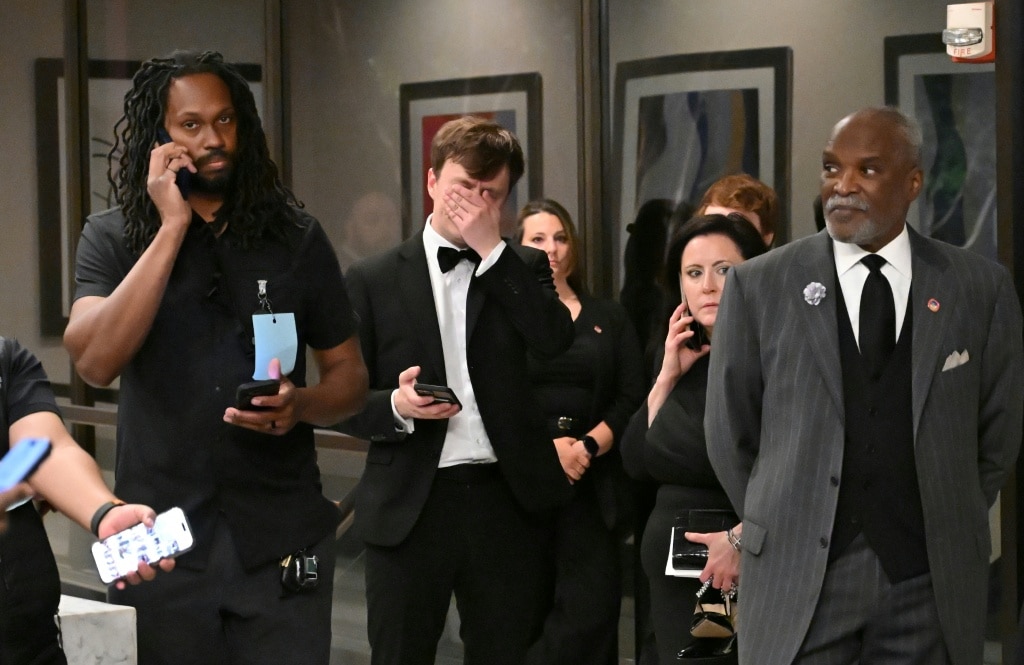
    What was supposed to be a glamorous, landmark Saturday evening at Washington D.C.’s Washington Hilton — marking Donald Trump’s first attendance at the annual White House Correspondents’ Association (WHCA) dinner as sitting president — quickly descended into chaos when reports of gunshots sent attendees scrambling for cover and security agents rushing the commander-in-chief to safety. The incident unfolded as Trump sat on the event’s main dais, with sudden loud bangs cutting through the atmosphere of celebration, catching the president and other stage guests off guard, who immediately looked up in alarm. Footage captured by AFPTV, independent journalists on site, and other media outlets documents the panicky scene that unfolded in seconds. Moments after the loud reports, which attendees initially believed were gunshots, urgent shouts of “Get down!” and “Stay down!” rippled through the packed ballroom. Attendees ranging from veteran White House correspondents to senior Trump administration officials and cabinet members dropped to the floor or dove under tables to take cover. In the immediate aftermath of the disturbance, U.S. Secret Service agents surrounded President Trump with weapons drawn, swiftly escorting him off the stage through a rear curtain as the stunned crowd remained crouched in their places. The event’s big band performance came to an abrupt halt, and the normally festive room full of guests in formal ball gowns and tuxedos fell dead silent. Agents swarmed through the massive ballroom, moving past guests huddled on the floor, in a venue that carries grim historical weight: it is the same hotel where President Ronald Reagan survived an assassination attempt 45 years prior to this incident. Mehmet Oz, Trump’s pick to lead the Centers for Medicare and Medicaid Services, was being evacuated when he told reporters on site, “Shots fired upstairs.” Also hurried out of the ballroom by security was U.S. Health and Human Services Secretary Robert F. Kennedy Jr., who carries his own family history of assassination: his uncle, President John F. Kennedy, was killed by an assassin’s bullet in Dallas, Texas in 1963. Alexandra Ingersoll, a correspondent with One America News, who was inside the ballroom when the chaos began, described the rapid response from the Secret Service to protect the president. “I just ducked under the table and I was like ‘I’m not going to risk this,’” Ingersoll told AFP. “I didn’t know if the shooter was neutralized or what was going on.” With few immediate details available about what had actually triggered the disturbance, officials ordered a full evacuation of the ballroom. Hundreds of attendees filed out into the Hilton lobby and eventually into the chilly Washington evening, where many gathered outside. Guests could be seen hugging one another, frantically calling and texting friends, family members and their news organizations to update them on their safety. In an official statement released shortly after the incident, the Secret Service confirmed it was investigating a shooting near the main security screening perimeter for the dinner. “The president and the first lady are safe, along (with) all protectees,” the agency confirmed. “One individual is in custody.” As of Saturday evening, it remained unclear whether the person taken into custody had fired shots, or if the gunfire reported was from Secret Service agents responding to the threat. Around 8:40 pm local time (0040 GMT), an AFP reporter on the scene observed uniformed police sprinting through the streets surrounding the hotel, moving barriers to redirect foot traffic, clearing vehicles from the area as quickly as possible, while a police helicopter circled overhead. Minutes after the evacuation, a presidential motorcade departed the Hilton, heading toward the White House. No further updates on the condition of the individual in custody or the nature of the threat had been released as of the initial reporting.

  • Shots fired, Trump evacuated unhurt from press dinner in Washington

    Shots fired, Trump evacuated unhurt from press dinner in Washington

    On Saturday night, a shooting incident disrupted the annual White House Correspondents’ Dinner at Washington Hilton, triggering an immediate emergency evacuation of former president and current officeholder Donald Trump. What was meant to be a landmark appearance—Trump’s first attendance at the iconic media gala during his term in office—descended into chaos when gunshots rang out near the venue’s main security screening checkpoint, located just outside the packed ballroom where hundreds of formally dressed guests had gathered.

    Within seconds of the loud bangs being reported, United States Secret Service agents drew their weapons, rushed Trump from the stage he was preparing to speak from, and swarmed through the crowds of attendees. Panicked guests dove under tables to take cover as tactical security units established defensive positions around the stage, while uniformed police flooded the hotel perimeter and law enforcement helicopters circled overhead.

    The suspect, identified as the gunman, was taken into custody at the screening area shortly after the incident, and Trump confirmed he emerged from the evacuation completely unharmed. In a post to social media immediately after the incident, Trump praised the rapid response of security teams, writing, “Secret Service and Law Enforcement did a fantastic job. They acted quickly and bravely. The shooter has been apprehended.”

    He also confirmed that all other senior officials, including First Lady Melania Trump, Vice President and Cabinet members, were unharmed, stating, “The First Lady, plus the Vice President, and all Cabinet members, are in perfect condition.” Shortly after the evacuation, Trump announced he would hold an official press conference at the White House to address the incident, and shared plans to reschedule the gala event within 30 days.

    This incident marks the third high-profile security threat targeting Trump in less than a year. In 2024, an assassination attempt at a campaign rally in Butler, Pennsylvania left one attendee dead and Trump with a minor wound to the ear. Just months after that attack, a second man was arrested after a Secret Service agent spotted a rifle barrel protruding from bushes on the perimeter of a West Palm Beach golf course where Trump was playing a round.

    Adding historical weight to the incident, the Washington Hilton—site of Saturday’s gala—was also the location of the 1981 assassination attempt on Republican president Ronald Reagan, who survived a gunshot wound after the attack just outside the venue.

    Confusion lingered in the immediate aftermath of the shooting, with senior administration officials evacuated first, and no clear initial details emerging on the severity of the incident or the suspect’s motives. Cabinet member Mehmet Oz, who was escorted out by security, confirmed to reporters he had been told “shots fired upstairs” as the evacuation began. Organizers initially told guests the dinner would continue following the incident, but later reversed course and announced the event would be postponed.

    This year’s dinner was already notable for breaking decades of precedent: the White House Correspondents’ Association extended an invitation to Trump despite his years of public attacks on the mainstream media, and his attendance marked the first time he had appeared at the annual gathering during his current term in office. For more than a century, every sitting U.S. president has attended the dinner regularly, a tradition Trump had declined to uphold until this year.

    Dubbed the “Nerd Prom” by attendees, the annual event brings together hundreds of Washington-based journalists, media executives, and political figures to raise funds for journalism scholarships and honor outstanding reporting. The gala traditionally features a stand-up comedian routine skewering the sitting president, followed by comedic remarks from the president himself—but organizers did not book a comedian for the 2025 iteration of the event.