On a sun-drenched, dry Sunday along the streets of London, distance running entered a new era when Kenya’s Sabastian Sawe etched his name into sports history as the first athlete to break the mythical 2-hour marathon mark in an officially sanctioned race. The 29-year-defending champion crossed the finish line on The Mall in a stunning 1 hour, 59 minutes and 30 seconds, shattering the previous world record set by Kenya’s Kelvin Kiptum at the 2023 Chicago Marathon by a massive 65 seconds. What made the performance even more extraordinary was the depth of elite competition on display: Ethiopia’s Yomif Kejelcha, running his very first career marathon, also finished under the 2-hour barrier with a time of 1:59:41, while Uganda’s Jacob Kiplimo clocked 2:00:28 – seven seconds faster than Kiptum’s prior world record.
Sawe, who retained his London Marathon title, gave credit to the tens of thousands of cheering spectators that lined the entire 26.2-mile course for pushing him to the historic achievement. “What comes today is not for me alone, but for all of us today in London,” he told reporters after the race. “I think they help a lot, because if it was not for them you don’t feel like you are so loved … with them calling, you feel so happy and strong.”
Race analysts and observers noted Sawe’s remarkable pacing strategy: he accelerated as the race progressed, covering the second 13.1 miles in just 59 minutes and 1 second. After breaking away from the lead pack alongside Kejelcha at the 30-kilometer mark, Sawe made his decisive solo push in the final two kilometers, sprinting to the finish line to roars from the crowd.
While the 2-hour barrier has been broken before, it never came in an official race context. Kenyan running legend Eliud Kipchoge first cracked 2 hours at the custom 2019 Ineos 1.59 Challenge in Vienna, an event organized specifically to target the milestone. That race used a repeated closed circuit, rotating pacemakers, and optimized conditions that did not meet World Athletics official race requirements, so Kipchoge’s 1:59:40 time was never ratified as an official world record. Sawe’s 1:59:30 mark not only bests Kipchoge’s unofficial time by 10 seconds, but came on the open, public London course under standard competition rules.
Former London Marathon champion Paula Radcliffe, commentating for the BBC, summed up the magnitude of the moment: “The goalposts have literally just moved for marathon running.” For context, at the turn of the 21st century, the men’s marathon world record stood at 2:05:42, set by Khalid Khannouchi at the 1999 Chicago Marathon. Over the subsequent 24 years, the record has been steadily lowered by a generation of elite East African runners including Haile Gebrselassie, Wilson Kipsang, Kipchoge, and Kiptum, with Sawe’s run marking the most dramatic drop in the record’s history.
The historic day delivered more than one world record, with Ethiopia’s Tigst Assefa also claiming a landmark win in the women’s race. Assefa pulled away from the field in the final 500 meters to defend her title in 2:15:41, the fastest time ever recorded in a women’s-only elite marathon. The time was 16 seconds off the overall London course record set by Radcliffe in 2003, when the women’s race ran in a mixed field alongside men.
In the wheelchair divisions, Switzerland completed a sweep of both titles. Marcel Hug claimed his sixth consecutive London men’s wheelchair championship – and eighth total – while Catherine Debrunner defended her women’s wheelchair title with a tight finish over American star Tatyana McFadden.
作者: admin
-

Sabastian Sawe of Kenya becomes first person to run a sub-2-hour marathon to win in London
-
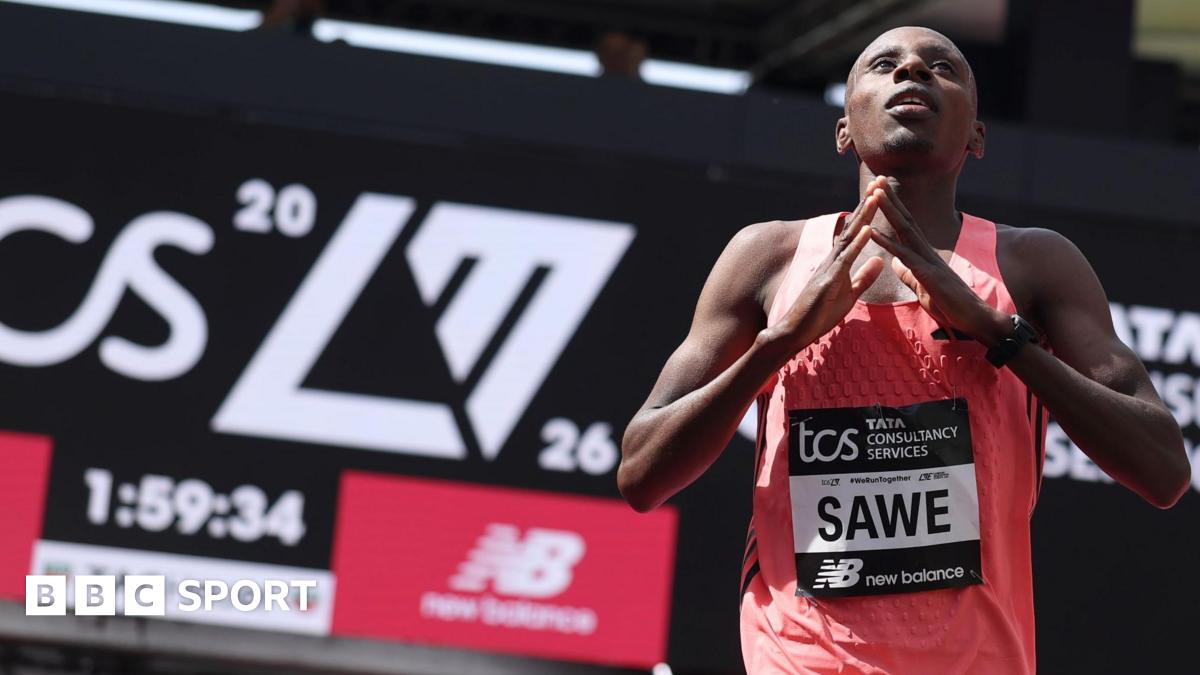
Sawe smashes two-hour barrier to make history in London
The 2025 London Marathon delivered one of the most groundbreaking moments in distance running history on Sunday, as Kenya’s Sabastian Sawe became the first athlete ever to complete a marathon in under two hours during an officially sanctioned competitive race. The 30-year-old Kenyan champion crossed the finish line on The Mall with a stunning time of 1 hour 59 minutes 30 seconds, smashing the previous world record of 2:00:35 set by the late Kelvin Kiptum in 2023 by more than a full minute.
While Olympic legend Eliud Kipchoge previously ran a sub-two-hour marathon in 2019, that achievement came in a specially staged, controlled exhibition event that did not qualify for official world record status. Sawe’s run on Sunday is the first to hit the historic milestone in open, competitive race conditions.
From the opening kilometers, Sawe stuck to a blistering world record pace, crossing the halfway mark in 1:00:29. Instead of fading in the second half as many long-distance runners do, he accelerated, dropping his split for the final 21.1 kilometers to an incredible 59:01. Sawe made his decisive breakaway before the final 10 kilometers, with only debutant Yomif Kejelcha able to match his surge. In one of the most stunning men’s fields in marathon history, Kejelcha also crossed the line under the two-hour barrier, finishing second in 1:59:41 to become just the second man to hit the mark in official competition. Half marathon world record holder Jacob Kiplimo rounded out the podium in 2:00:28, a time that also beat Kiptum’s previous world record.
In a post-race interview with BBC TV, an elated Sawe called the day one he would never forget. “I am feeling good. I am so happy. It is a day to remember for me,” he said. “We started the race well. Approaching finishing the race, I was feeling strong. Finally reaching the finish line, I saw the time, and I was so excited.” He also credited the hundreds of thousands of cheering fans lining the London course for pushing him to the historic feat: “That is why I can say what comes for me today is not for me alone but all of us in London.”
Long in pursuit of the record, Sawe, who has won all four marathons he has entered in his professional career, first targeted the world mark at last September’s Berlin Marathon, but unseasonably hot weather derailed his attempt. He had openly stated in pre-race interviews that breaking Kiptum’s world record was “only a matter of time,” and that he hoped he would be the one to become the first to hit the sub-two-hour mark in an official race. To address any questions around the legitimacy of his performance, Sawe has also undergone frequent out-of-competition drug testing, with 25 tests conducted ahead of his Berlin attempt, a step he says he takes to build confidence and trust in his results.
In the women’s elite race, Ethiopia’s Tigst Assefa delivered another dominant performance to retain her London title, breaking her own world record for a women-only field with a winning time of 2:15:41, nine seconds faster than her previous record set 12 months earlier. The pre-race favorite after Olympic champion Sifan Hassan and world champion Peres Jepchirchir withdrew due to injury, Assefa battled neck-and-neck with Kenyan duo Hellen Obiri and Joyciline Jepkosgei until the closing kilometers, before pulling away to secure the win. Obiri finished second just 12 seconds behind, with Jepkosgei taking third. Britain’s Eilish McColgan was the top British finisher, placing seventh overall in 2:24:51.
In the elite wheelchair races, Swiss athletes continued their reign of dominance at the London Marathon. Marcel Hug claimed a record-equaling eighth title, matching the all-time record set by Great Britain’s David Weir, with his fifth consecutive victory. The 40-year-old crossed the line in 1:24:13, more than four and a half minutes ahead of China’s Luo Xingchuan, with Weir himself taking third in his 27th consecutive start at the event. Catherine Debrunner retained the women’s wheelchair title, her fourth overall victory in London, outrunning America’s Tatyana McFadden to finish just five seconds clear in 1:38:29.
For British athletics, the event also produced a new national milestone: Mahamed Mahamed became the second-fastest British male marathon runner in history, finishing 10th overall in 2:06:14, beating the previous mark set by Alex Yee.
-

Chinese costume dramas top Southeast Asian streaming platforms
A viral social media moment this month has underscored just how far Chinese costume dramas have penetrated mainstream popular culture across Southeast Asia: Thailand’s Royal Thai Army turned to a hit new Chinese historical romance to boost military recruitment, leveraging the show’s massive local fanbase to draw new applicants.
The service’s official Facebook page shared recruitment creatives featuring lead characters from *Pursuit of Jade*, a lavishly produced Chinese costume drama that has taken global streaming platforms by storm since its March premiere. One playful poster read: “Do you want a boyfriend with the same heroic spirit as Marquis Wu’an, the male lead of *Pursuit of Jade*? Ask your partner to join the cavalry!” The post racked up nearly 100,000 likes from Thai internet users, who widely praised the military’s clever, trend-savvy approach to outreach.
“This is one of the most creative recruitment posters I’ve seen in years — the army is really keeping up with the times,” commented Thai netizen Ratchaneekorn. Other users joked with the page’s administrator, asking whether the account team itself counted itself among the drama’s legion of local fans. For *Pursuit of Jade*, the viral recruitment moment is just the latest marker of its unexpected global success: the series currently tops Google Trends search rankings for Chinese dramas across 15 international markets, including Thailand, Malaysia, Singapore, South Korea, the United States and Canada. It has broken viewership records on Chinese streaming giant iQIYI’s international platform, and became the first Chinese drama to top Netflix’s trending charts in multiple Asian regions, earning high user ratings on popular global entertainment site MyDramaList.
For many viewers across Southeast Asia, the appeal of Chinese costume dramas extends far beyond catchy plotlines. Amy Chen, a 34-year-old Chinese-Malaysian professional based in Kuala Lumpur who has followed Chinese content for years, counts *Pursuit of Jade* as her current favorite series. She attributes the genre’s growing regional popularity to a combination of cultural proximity and uncompromising production quality: “We get the cultural references naturally, and on top of that, you get opulent set designs, exquisite costumes and makeup, tightly crafted storylines, and seamless streaming access on major platforms — it’s a complete package that’s hard to beat.” *Pursuit of Jade* also weaves traditional Chinese cultural elements like Qin opera and shadow puppetry into its narrative, giving international viewers a window into unique aspects of Chinese heritage while delivering a compelling, modern viewing experience.
The breakout success of *Pursuit of Jade* is no isolated incident; it is the most visible sign of a years-long growth trend in Chinese television exports. Data from the Development and Research Center of China’s National Radio and Television Administration (NRTA) shows that China’s TV series export revenue jumped nearly threefold between 2012 and 2023, rising from $24 million to $70 million. Per NRTA analysis, costume dramas — one of the first Chinese genres to build an international fanbase — remain the most popular category of Chinese content in the global market, with 2023 hits like *Bright Moon Citation*, *The Song Inquisitor*, and *Flourished Peony* all earning top rankings across multiple overseas markets.
Southeast Asia has emerged as the largest and fastest-growing core market for Chinese drama exports, drawing major investment from leading Chinese streaming platforms including iQIYI, WeTV, Youku and Mango TV, all of which have launched localized regional services with Thailand as a key operational hub. Industry leaders note that Chinese content has carved out a large, loyal audience in Thailand following decades of K-drama dominance, with appeal cutting across age groups.
Sirisak Koshpasharin, vice-chairman of Thailand’s National Federation of Motion Pictures and Contents Associations, explained that Chinese content has deep roots in the country: “Older generations of Thais, many of whom have Chinese immigrant heritage, grew up loving classic Chinese dramas like *Justice Pao*. What’s really striking now is that more and more young Thais are also falling in love with modern Chinese series.” He cited overlapping cultural values and lifestyle similarities as a key foundation for the trend, adding that improved production quality and wider distribution have accelerated growth: “Today’s Chinese dramas have compelling stories, high production value, and addictive cliffhangers that keep Thai viewers coming back. Short-video apps and major streaming platforms now prioritize Chinese content, so it’s easier than ever for young people to discover it.”
Beyond full-length costume dramas, the region’s fast-growing base of internet users has also created fertile ground for the expansion of Chinese micro-dramas — bite-sized series that typically run between one and 10 minutes per episode, with hundreds of episodes per series. Data from analytics firm DataEye shows that the number of paying micro-drama users in Southeast Asia grew 28% year-on-year in the latest reporting period, confirming the region as a core market with strong commercial potential and a loyal established audience.
Beyond entertainment value, the rising popularity of Chinese content is also shifting young Southeast Asians’ perceptions of China and sparking deeper curiosity about the country. Chompoo, a 21-year-old Thai university student and lifelong fan of Chinese dramas who grew up watching the classic costume hit *My Fair Princess* and now follows *Pursuit of Jade*, said Chinese content has shaped her desire to visit the country. “I’ve never been to China, but I really want to go. The landscapes, modern trends, and food all sound so attractive, and Chinese technology and innovation are really impressive. I admire how Chinese creators integrate different influences and build on existing ideas to make something new,” she said.
Kampol Piyasirikul, head of the Chinese Studies Program at Bangkok’s Thammasat University, noted that costume dramas are just one part of a broader wave of Chinese cultural content gaining traction among young Thais, from pop idols to fashion collectibles. He emphasized that people-to-people cultural exchange through popular content plays an increasingly critical role in building mutual understanding and trust between Chinese communities and audiences across the globe.
-
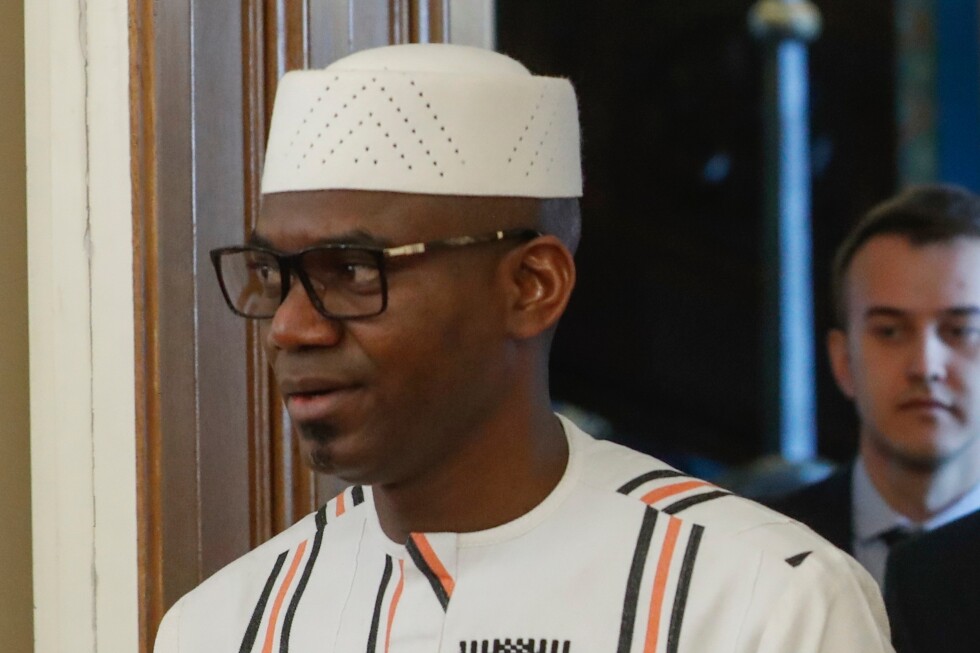
Malian defense chief is killed as jihadis and rebels seize towns and military bases
In a devastating wave of coordinated assaults across Mali that has shaken the junta-led West African nation and its key security ally Russia, the country’s top defense official has been killed, and a strategically important northern stronghold has fallen into separatist hands. Official announcements confirmed the death of General Sadio Camara, Mali’s Minister of Defense, over the weekend, marking one of the most significant losses for the country’s military leadership amid its decade-long battle against Islamist insurgency and separatist unrest.
The multi-front attacks unfolded across the country Saturday, targeting locations ranging from the capital Bamako to multiple remote towns and military bases. According to an official statement released via the Malian defense ministry’s Facebook page and broadcast on state television by government spokesman General Issa Ousmane Coulibaly, Camara’s residence was breached by a suicide car bomber and a team of armed assailants. The statement detailed that Camara engaged directly in a firefight with the attackers, neutralizing multiple assailants before suffering fatal injuries that led to his death after evacuation to a local hospital. The government extended official condolences to Camara’s family following the confirmation of his death.
By Sunday, authorities stated that the initial wave of attacks had concluded, but critical uncertainties remained, most notably over territorial control of Kidal, a key northern city that separatist forces claim to have seized. A new, united front of separatist fighters and al-Qaida-linked militants carried out the coordinated operations, a rare collaboration that security analysts describe as an unprecedented escalation of the country’s long-running conflict.
The separatist faction, the Tuareg-led Azawad Liberation Front (FLA), confirmed its joint operation with Jama’at Nusrat al-Islam wal-Muslimin (JNIM), the al-Qaida-affiliated insurgent group that has waged war against the Malian government for more than a decade. FLA spokesperson Mohamed El Maouloud Ramadan announced Saturday that Malian government forces and troops from Russia’s Africa Corps had completed a peaceful withdrawal from Kidal, declaring the city “free.” Late Sunday, Malian armed forces chief General Oumar Diarra confirmed the withdrawal in a state television address, noting that Malian troops had repositioned to Anefis, a city roughly 100 kilometers south of Kidal.
Kidal, which has long been the symbolic heart of the Tuareg separatist movement, was captured by Malian forces and Russian mercenaries in 2023, a victory that was framed as a major milestone for the ruling junta and its Russian partnership. Its recapture by the alliance of separatists and insurgents thus represents a sharp symbolic and strategic setback for the Bamako government.
Wassim Nasr, a senior research fellow at the Soufan Center security think tank and a leading expert on Sahel security, noted that this open collaboration between separatist and jihadi forces, paired with coordinated national-level attacks and a public call for Russia to end its support for the junta, is a historic first for the conflict. “This coordination, conducting attacks all over the country at the same time, the united push by the two groups and the call for the Russian military to leave was a first,” Nasr explained. Beyond military gains, he added, the collaboration extends to the political level, as both groups openly acknowledged their joint effort.
In the wake of the attacks, Malian authorities implemented a three-night curfew for the Bamako district, running from 9 p.m. to 6 a.m. daily. To date, the government has only confirmed 16 wounded people, a mix of civilian and military personnel, and stated that multiple attackers were killed. No full civilian or military death toll has been released to the public.
The attack has drawn widespread regional condemnation, with the Economic Community of West African States (ECOWAS) issuing a statement calling for unified action across the region to counter the growing extremist threat. “We call on all states, security forces, regional mechanisms and populations of West Africa to unite and mobilize in a coordinated effort to combat this scourge,” the regional bloc said.
The assault also underscores the growing instability across the Sahel, following a series of military coups that have seen the ruling juntas of Mali, Niger and Burkina Faso abandon long-standing security partnerships with Western nations and turn to Russia for counter-insurgency support. Despite this shift, security across the region has deteriorated sharply, with militant attacks reaching record highs in recent years. Both government forces and Russian mercenaries have also been repeatedly accused of extrajudicial killings of civilian populations suspected of collaborating with insurgents. Earlier this year in 2024, an al-Qaida-linked group claimed responsibility for coordinated attacks on Bamako’s international airport and a military training camp in the capital that left dozens of people dead.
Ulf Laessing, a Sahel analyst with the Konrad Adenauer Foundation, noted that the coalition of separatists and JNIM is unlikely to seize control of Bamako in the near future, due to widespread local opposition to the alliance. Even so, the attacks deliver a major blow to the credibility of Russia’s security engagement in Mali. “The attacks are a major blow to Russia as the mercenaries had no intelligence about the attacks and were unable to protect major cities,” Laessing said.
-

Japanese government’s push to revise Self-Defense Forces rank titles sparks doubts
A controversial proposal from Japan’s central government to revise the rank nomenclature of the nation’s Self-Defense Forces (SDF) has triggered widespread doubt and criticism across the country, after local media confirmed the administration’s plan to submit amending legislation to the national Diet before the end of 2026.
Among the most contentious changes proposed is the rebranding of the rank currently called “issa”, which translates directly to “first field officer”, to “taisa” — a term that was widely used for officer ranks in the defunct Imperial Japanese Army, the military force that led Japan’s aggressive expansion across Asia in the years leading up to and during World War II. The revival of this pre-1945 military terminology has put the government’s motivations under intense scrutiny.
Japan’s SDF has operated with a unique set of rank titles since the force was formally established in 1954, a deliberate structural choice designed to align with the constraints of Japan’s post-war pacifist constitution. The SDF has long been positioned as a defensive force distinct from conventional national militaries, and this upcoming reform marks the first time the country has revised its military rank naming system since the SDF’s founding. According to a report from Japan’s leading daily newspaper *Yomiuri Shimbun*, the change represents a major policy departure from the framework that has stood for more than 70 years.
Concerns over the reform have spread rapidly across Japanese social media, with many users questioning the government’s reasoning. One user asked publicly, “Titles like ‘taisa’ belonged to the old Imperial Japanese Army. Why are we bringing them back now?” Another commentator pushed back against the government’s official justifications, which frame the changes as a way to build a greater sense of honor and pride among SDF personnel and bring Japanese ranks into alignment with international naming standards. “Can’t our current ranks already instill honor and pride?” the user wrote, adding that the move is a clear reflection of the right-leaning policy orientation of the current Takaichi administration.
Veteran Japanese military journalist Kazutaka Kimura has gone as far as labeling the renaming initiative a “stupid policy” in public commentary. Ryo Tsunoda, a senior researcher at Japan’s Ritsumeikan University, noted that for decades, the Ground Self-Defense Force has intentionally distanced itself from the legacy of the Imperial Japanese Army as part of Japan’s broader reflection on its wartime responsibilities. Tsunoda added that the government’s claim that the public will accept the renaming as nothing more than a symbolic measure to boost respect for the SDF remains highly unproven, with broad public skepticism still lingering across Japanese society.
-
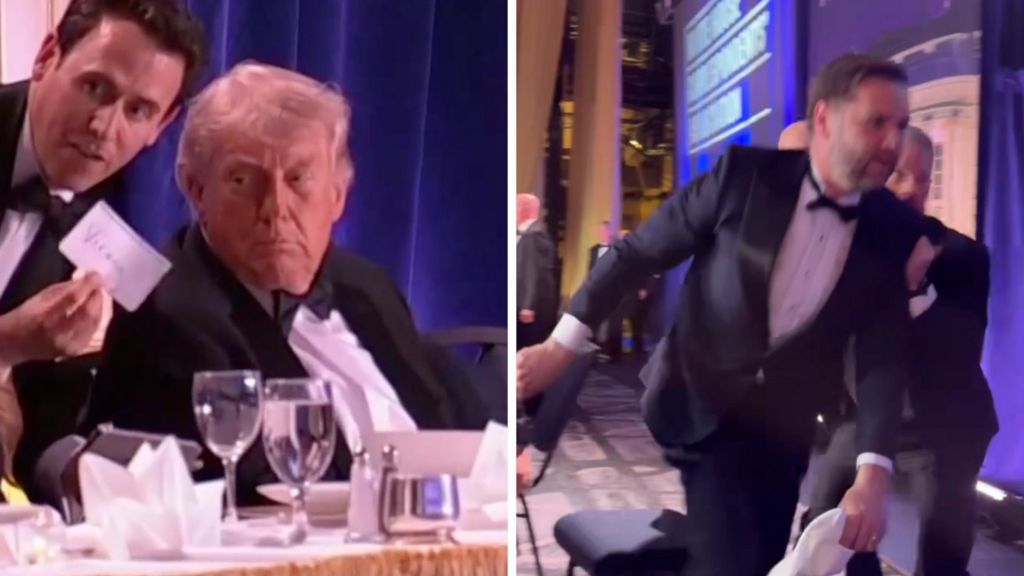
Watch: How gunfire sparked chaos at Trump press dinner
A routine press dinner hosted at Washington D.C.’s iconic Washington Hilton hotel took a terrifying turn Wednesday night when sudden gunfire echoed through the venue, triggering immediate chaos and forcing a rapid emergency evacuation of former President Donald Trump and Vice-President J.D. Vance. Witnesses at the event describe a scene of sudden panic, with attendees scrambling for cover moments after the first shots rang out, cutting off remarks that Trump was delivering from the main stage.
Within seconds of the gunfire being reported, Secret Service personnel, tasked with protecting the former president and other high-ranking officials in attendance, moved quickly to secure the stage and escort Trump and Vance away from the area to a secure location. Local law enforcement units swarmed the hotel immediately after receiving emergency calls, locking down the entire venue to conduct a systematic search for the shooter and secure any potential evidence. As of initial reports, there has been no immediate confirmation of injuries to attendees or the evacuated officials, though investigations are still ongoing to determine the source of the gunfire, the identity of the perpetrator, and any potential motive for the attack. The incident has once again reignited conversations around security protocols for high-profile political events in the United States, as authorities work to piece together exactly what unfolded at the Washington Hilton Wednesday night.
-
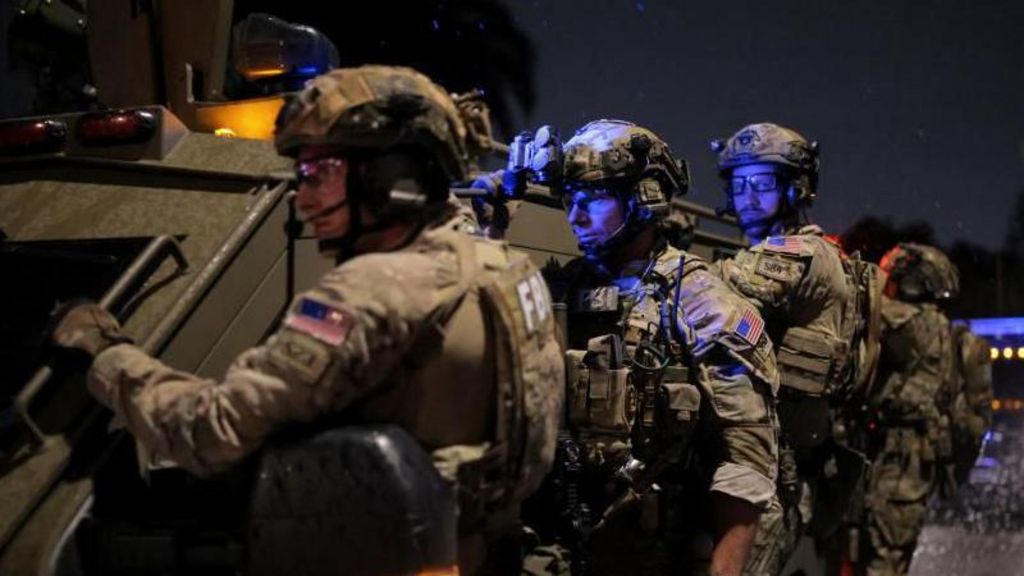
What we know about press dinner shooting suspect
On Saturday evening, a chaotic shooting incident unfolded at the Washington Hilton, the venue hosting the annual White House Correspondents’ Dinner, leading to the immediate arrest of a male suspect identified by law enforcement sources as 31-year-old Cole Tomas Allen. A native of Torrance, a community in California’s Los Angeles region, Allen’s actions have sent shockwaves through Washington D.C.’s political and media circles. Multiple senior law enforcement sources confirmed to CBS News, the BBC’s U.S. news partner, that after being taken into custody by hotel security personnel, Allen explicitly told investigators he had entered the venue with the goal of targeting and shooting current and former officials from the Donald Trump administration. Initial witness and law enforcement accounts indicate between five and eight gunshots rang out inside the hotel during the incident. Closed-circuit security footage later shared by former President Donald Trump on his Truth Social platform captures the suspect rushing past uniformed security officers, who immediately pivot to pursue him through the hotel corridors. During a late-night emergency press briefing shortly after the incident was contained, Washington’s interim police chief Jeffery Carroll confirmed that security personnel and the suspect exchanged gunfire during the confrontation, though he declined to confirm the total number of shots fired at that time. Carroll clarified that the suspect was not hit by any gunfire during the exchange, but was transported to a local medical facility for mandatory psychological evaluation following his arrest. Further details released by Carroll confirmed Allen was registered as a guest at the Washington Hilton the night of the dinner, and was found to be carrying an arsenal of weapons upon arrest: a shotgun, a loaded handgun, and multiple edged weapons. “At this point in our ongoing investigation, it does appear he is a lone actor, a lone gunman,” Carroll told reporters, adding that no accomplices have been identified at this stage of the probe. Hours after the arrest, former President Trump shared a close-up photograph on his Truth Social account showing a shirtless Allen on the hotel floor, his hands cuffed behind his back, surrounded by uniformed U.S. Secret Service agents. The photograph has circulated widely across social media platforms in the hours since the incident. Law enforcement teams have also expanded their investigation to California, where visual evidence shows FBI agents and local law enforcement officers searching a residential address linked to Allen. Additional background checks have uncovered that Allen was employed by C2 Education, a private tutoring firm based in his hometown of Torrance. Two law enforcement sources confirmed to CBS that Allen was even recognized by the company with a “Teacher of the Month” award in December 2024, though it remains unclear whether he was still actively employed by the firm at the time of the incident. In a public statement, the Torrance Unified School District clarified that Allen had never been employed as a staff or faculty member at any of the district’s campuses. The California Institute of Technology also confirmed in an email to CBS that Allen graduated from the prestigious research institution in 2017, but declined to release any further information about his academic record or time on campus. On Sunday, U.S. Attorney for Washington Jeanine Pirro announced formal criminal charges against the suspect: two felony counts, including use of a firearm during a crime of violence and assault on federal officers with a dangerous weapon. Pirro confirmed Allen is scheduled to make his first formal court appearance for arraignment in federal court on Monday. As of Sunday, investigators continue to work to map out the suspect’s radicalization process, travel planning, and potential motives beyond his stated intention to target Trump administration officials.
-
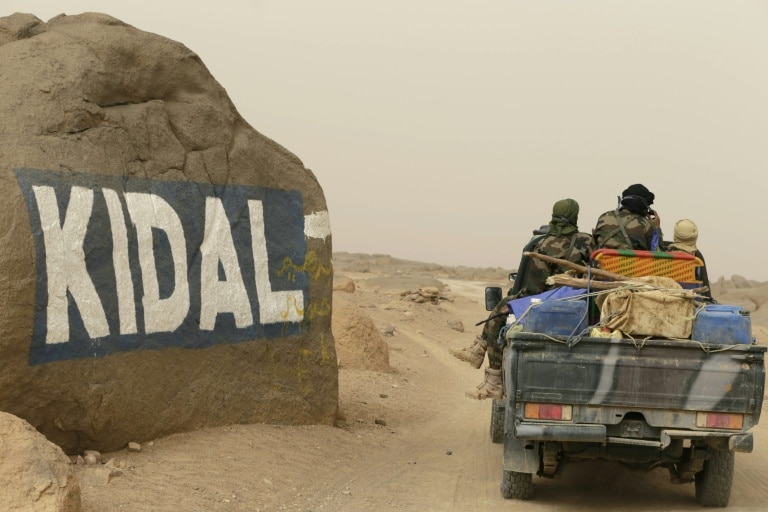
New fighting in Mali’s Kidal between army and rebels
Renewed armed confrontation broke out on Sunday in Kidal, the strategically critical northern Malian town long centered in the country’s decade-long conflict, pitting Tuareg rebel forces aligned with jihadist fighters against Malian government troops backed by Russian personnel. The outbreak of new fighting comes just 24 hours after insurgents launched a wave of coordinated attacks across the restive Sahel country, the most violent assault to hit Mali since the ruling military junta seized power in 2020.
Mohamed Ramdane, a spokesperson for the Tuareg rebel coalition the Azawad Liberation Front (FLA), confirmed Sunday that hostilities had resumed in Kidal. “Fighting resumed in Kidal this morning. We want to drive out the last Russian fighters who have taken refuge in a camp,” Ramdane stated. A local elected official, speaking on condition of anonymity, also verified the renewed clashes, confirming that residents across the town have heard sustained gunfire.
Kidal, long considered a historic stronghold of the Tuareg movement, was recaptured by Malian army forces in November 2023 with backing from Russia’s Wagner paramilitary group. That seizure ended more than 10 years of direct rebel control over the northern town, making it a powerful symbolic prize for both sides in the ongoing conflict. Beyond Kidal, the FLA has also claimed to have seized new positions in Mali’s northern Gao region, expanding the scope of their recent offensive.
A anonymous security source speaking to Agence France-Presse clarified the strategic logic behind the recent insurgent campaign: “The aim of the attackers was not to seize and control cities permanently, but to carry out coordinated actions in order to at least capture Kidal, which is a rather powerful symbol.”
Mali has been ravaged by jihadist insurgency and intercommunal conflict for more than 11 years, but Saturday’s coordinated attacks marked the deadliest and most extensive assault since the 2020 military coup that brought the current junta to power. Strikes were launched not only in northern regions but also on the outskirts of Mali’s capital Bamako, hitting multiple population centers across the large West African nation.
In an official statement released Saturday evening, the Malian government reported that the violence left 16 civilians and military personnel wounded, alongside what it described as “limited material damage.” The government also claimed that “the situation is totally under control in all the localities” targeted in the attacks.
However, developments in the capital and surrounding areas have sparked widespread anxiety among residents. Multiple witnesses and a medical source confirmed that on Sunday morning, Malian soldiers deployed heavy security around a Bamako clinic where Defense Minister Sadio Camara was admitted the previous day. Residents also reported that Camara’s official residence in Kati, a garrison town adjacent to Bamako that serves as a key stronghold of the ruling junta, was heavily damaged in a powerful explosion. Aides to the defense minister have denied claims that Camara was wounded in the attack.
An AFP journalist reporting from Bamako confirmed that access to all military facilities in the capital has been blocked by road barriers and makeshift barricades of burning tires. In Senou, the outlying Bamako district that houses the city’s main airport and saw heavy fighting on Saturday, residents remain on high alert. “I still hear the blasts ringing in my ears. It’s traumatising,” one local resident told reporters. In Kati, while calm has returned to the area after jihadist fighters withdrew, residents continue to live in constant fear of new attacks. “The jihadists left the area, but we are living in fear,” one Kati resident said Sunday.
United Nations Secretary-General António Guterres has formally condemned the wave of violence across Mali. “The Secretary‑General is deeply concerned by reports of attacks in several locations across Mali,” his spokesperson Stephane Dujarric said in an official statement. Guterres also called for unified global action to address the growing security crisis in the Sahel, adding: “The Secretary-General calls for coordinated international support to address the evolving threat of violent extremism and terrorism in the Sahel and to meet urgent humanitarian needs.”
In recent years, Mali’s ruling military leadership has shifted the country’s foreign policy dramatically, cutting long-standing security and diplomatic ties with former colonial power France and other Western nations, and forging a close alliance with Russia. Following the mutiny that ended the Wagner Group’s operations in Mali, the Russian Africa Corps, a paramilitary organization under direct control of the Russian Ministry of Defense, has taken over Wagner’s role supporting Malian government forces in their fight against insurgent and jihadist groups. Mali holds significant untapped reserves of gold and other valuable strategic minerals, making its ongoing instability a critical concern for global markets and regional security.
-
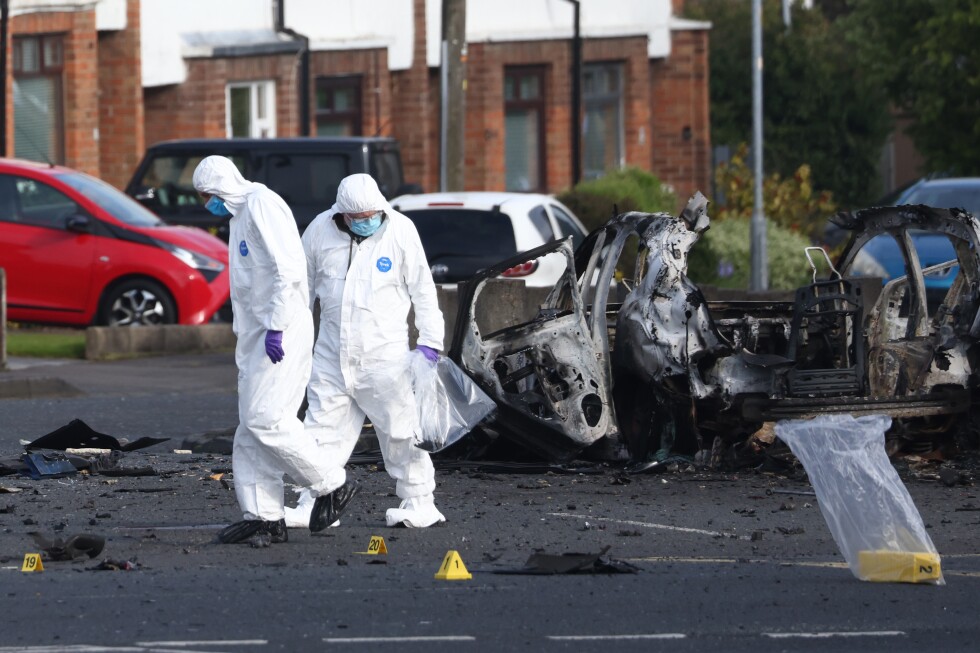
Police in Northern Ireland declare security alert after reports of a car bomb explosion
BELFAST, Northern Ireland – Law enforcement in Northern Ireland has activated a major security alert in Dunmurry, a suburban town on the edge of Belfast, following confirmation that a vehicle-borne explosive device detonated close to a local police station. The Police Service of Northern Ireland (PSNI) announced Sunday that residents living in the surrounding area have been evacuated from their homes, and the general public has been urged to steer clear of the cordoned-off zone to avoid potential risks from further explosive hazards.
Local UK Member of Parliament Sorcha Eastwood, who represents the Lagan Valley constituency southwest of Belfast, spoke publicly about her reaction to the overnight incident, describing the news as deeply unsettling. “It is distressing and disturbing to wake up to the news that a car bomb exploded outside Dunmurry police station last night,” Eastwood said. She went on to note that the targeted area is a densely populated hub that is home to residential neighborhoods, local small businesses, and regularly sees large numbers of residents out for social activities or work on weekend evenings. She emphasized that the absence of any injuries or fatalities was nothing short of a stroke of luck. “It is only through the grace of God that there are no casualties,” she added.
As of Sunday, investigators have not released any confirmed details about potential suspects or the underlying motive for the attack. The incident also comes in the wake of a similar attempted bombing just one month prior roughly 32 kilometers southwest of Dunmurry, targeting another PSNI station in the town of Lurgan.
According to law enforcement accounts of the Lurgan incident, two men wearing masks intercepted a delivery driver, forced the driver at gunpoint to drive a vehicle fitted with a crude but functional improvised explosive device to the station’s entrance. The incident forced the evacuation of more than 100 local homes before a controlled explosion could be carried out to disable the device. Officials concluded the attack was orchestrated by dissident Republican factions opposed to the 1998 Good Friday Agreement, a landmark peace deal that brought an end to decades of sectarian conflict in Northern Ireland. PSNI characterized the Lurgan attack as a “pathetic attempt to remain relevant and provoke fear” among local communities.
The Good Friday Agreement, brokered in 1998, effectively ended 30 years of violent unrest known as The Troubles, which pitted Republican groups seeking unification with the Republic of Ireland against pro-union factions that wish to keep Northern Ireland part of the United Kingdom. While the peace deal has drastically reduced large-scale violence, small dissident groups that reject the power-sharing framework of the agreement continue to carry out sporadic low-level attacks targeting police and government infrastructure.
-
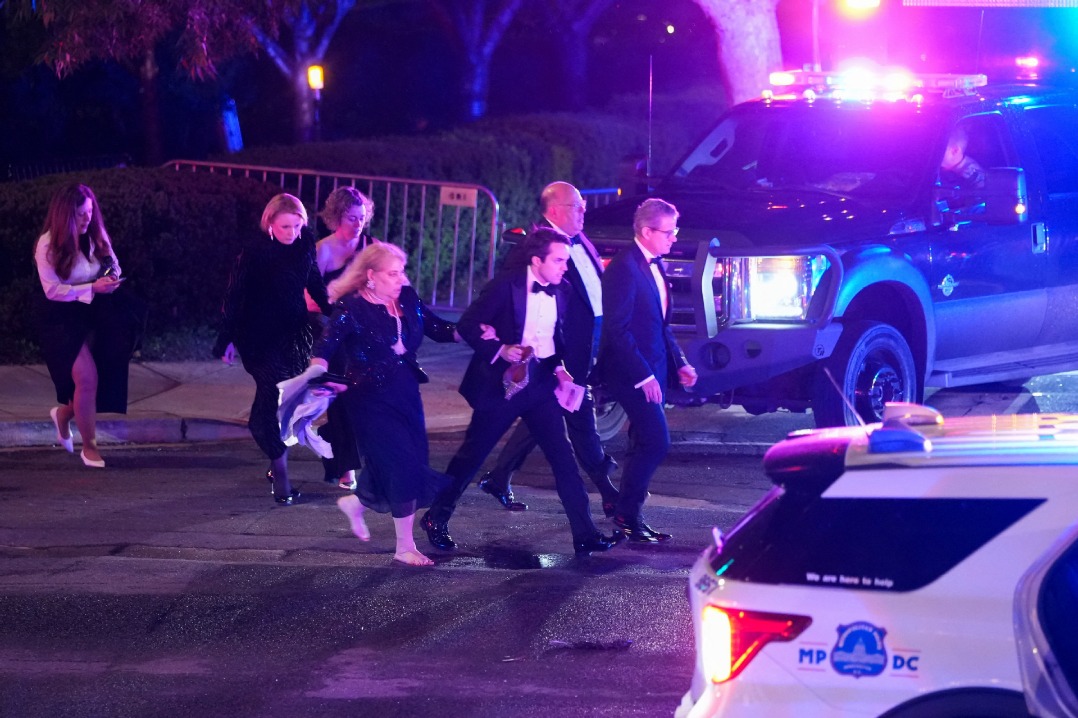
Shooting triggers evacuation at White House correspondents’ dinner
A late-afternoon shooting incident at the annual White House Correspondents’ Association (WHCA) dinner in downtown Washington, D.C. on April 25, 2026, sparked immediate mass evacuation of high-profile attendees, prompting a rapid large-scale response from U.S. security forces. The high-profile annual gathering, which draws top administration officials, congressional leaders, national media figures, and former presidents, was interrupted abruptly when gunfire was reported near the venue, setting off emergency protocols.
Eyewitness and agency footage shows security teams immediately moving to extract key attendees from the event. Among those evacuated was U.S. House Speaker Mike Johnson, a Republican from Louisiana, who was quickly escorted away from the venue by Secret Service personnel. Former President Donald Trump, who was in attendance at the dinner, was also removed from the premises by security responders as a precaution. Alongside Trump, U.S. Senator JD Vance, another prominent attendee, was also moved to a secure location shortly after the incident began.
Within an hour of the first reports of gunfire, law enforcement officials confirmed that the suspected shooter had been taken into custody. Responding units including the National Guard were deployed to the perimeter of the venue within minutes, securing the red carpet entrance and surrounding areas to prevent further risk. In an official update released shortly after the situation was contained, authorities confirmed that neither Trump nor Vance suffered any injuries during the incident or evacuation process.
The WHCA dinner, a decades-old tradition that bridges the White House, Congress, and the national press corps, was put on indefinite hold following the security breach. Event organizers have not yet released further details about potential casualties, the motive of the suspect, or plans to resume or cancel the remainder of the event. This incident marks an unprecedented security disruption to one of Washington D.C.’s most high-profile annual political-media gatherings, prompting immediate discussions about revising security protocols for future major open political events in the nation’s capital.