作者: admin

  • Canada’s Carney launches a sovereign wealth fund. What is it?

    Canada’s Carney launches a sovereign wealth fund. What is it?

    OTTAWA – Canadian Prime Minister Mark Carney has announced the launch of the nation’s first-ever government-owned sovereign investment vehicle, the Canada Strong Fund, an initiative designed to inject capital into large-scale domestic development projects and shore up the country’s economy amid looming U.S. tariff pressures.

    Backed by an initial seed investment of C$25 billion (equal to roughly $18.4 billion USD or £13.5 billion GBP), the new fund will target projects across five high-priority sectors: energy, transportation infrastructure, mining, agriculture, and technology. In a departure from the structure of most established sovereign wealth funds globally, the Canada Strong Fund will also open direct investment opportunities to ordinary Canadian citizens who have disposable capital to contribute.

    Carney framed the launch as a long-overdue step to align Canada with other resource-rich nations that have built national wealth through dedicated sovereign investment vehicles. Speaking at the official announcement in Ottawa on Monday, he noted: “Many countries that are blessed with natural resources like Norway have sovereign wealth funds. Canada hasn’t had one, until now.” The prime minister also credited other nations for the decades-long foresight that allowed them to build their own successful funds, pointing to Norway’s $2.1 trillion fund, the largest of its kind globally according to 2025 Bloomberg data, as a prominent example.

    Unlike Norway’s fund, which was established in 1990 to invest surplus oil and gas revenues exclusively in international markets, the Canada Strong Fund differs in two fundamental ways, according to independent economic experts. University of Toronto economics professor Joseph Steinberg explained that Canada currently operates with significant national debt, meaning the initial capital for the fund will not come from surplus natural resource revenue – the standard funding model for most sovereign wealth funds – but from borrowed money. Additionally, while most global sovereign wealth funds invest the majority of their capital overseas, the Canada Strong Fund will allocate nearly all of its resources to domestic “nation-building projects”, partnering with private sector stakeholders to deliver upgrades to port infrastructure, expand natural resource development, and advance other domestic priorities. The option for direct individual Canadian investment is also a unique feature not seen in other sovereign wealth funds around the world.

    The new initiative has already drawn criticism from independent economic think tanks. The Montreal Economic Institute issued a statement on the same day of the announcement warning that the fund “risks costing taxpayers dearly while generating limited returns.” Other industry analysts have echoed this concern, noting that the fund’s focus on domestic projects and reliance on borrowed capital creates unusual market risk not present in most traditional sovereign wealth structures.

    The Carney administration has indicated that it will conduct open public and stakeholder consultations over the coming months to finalize the fund’s operational rules, governance structure, and investment eligibility criteria. The initiative forms a core plank of the government’s broader economic strategy to strengthen Canada’s economic resilience ahead of potential trade barriers from the United States, Canada’s largest trading partner.

    Globally, sovereign wealth funds with assets exceeding $1 trillion are currently operated by Norway, China, the United Arab Emirates, and Kuwait. The United States has also moved toward exploring the creation of its own sovereign wealth fund in recent months: shortly after taking office for his second term, former President Donald Trump signed an executive order last February directing the U.S. Treasury and Commerce departments to draft a framework for a U.S. fund within 90 days, with a stated goal of “help maximise the stewardship of our national wealth.”


  • Taiyuan’s 400-year-old peonies draw crowds to annual culture month

    Taiyuan’s 400-year-old peonies draw crowds to annual culture month

    As spring unfolds across northern China, 400-year-old living treasures have turned a historic Taiyuan cultural site into a major tourist draw for the kickoff of the city’s beloved annual peony celebration. The 43rd Taiyuan Shuangta Peony Culture Month officially opened recently at Yongzuo Temple, located within the grounds of Taiyuan’s Shuangta Museum in Shanxi province, and seven ancient peony trees that have stood for more than four centuries have emerged as the event’s unrivaled centerpiece. These centuries-old botanical specimens, which have survived generations of political, environmental and social change, now draw thousands of flower enthusiasts, culture lovers and curious tourists from across the country each spring when they burst into full, vibrant bloom. For many returning visitors, the annual pilgrimage to see these ancient peonies has become a cherished intergenerational tradition. Eighty-two-year-old Hao Guixiang is one such visitor who has maintained a decades-long connection to the trees. She recalled visiting the site to admire the peonies starting from her childhood, and in her later years, she regularly returns to the temple grounds to sketch the plants, drawing natural inspiration from their lush blooms for her traditional Chinese fine brushwork paintings. First-time visitors are equally enchanted by the unique experience of seeing flowers planted centuries before the modern city took shape around them. Thirty-six-year-old Deng Li, who made her first trip to the celebration this year, chose to wear a traditional Tang Dynasty-style Hanfu garment to match the elegant, stately grandeur that peonies have long symbolized in Chinese culture, turning her visit into an immersive celebration of natural beauty and cultural heritage. The annual culture month, now in its fifth decade of operation, has grown from a small local gathering of horticulture fans into a major regional cultural event that highlights Taiyuan’s long history and blend of natural and cultural heritage, supporting local cultural tourism and creating a space for people to connect with both centuries-old natural treasures and living Chinese cultural traditions.

  • Trains collide near Indonesia’s capital, killing at least 3 people

    Trains collide near Indonesia’s capital, killing at least 3 people

    On Monday morning, a devastating high-speed collision between two passenger trains shook a suburban station just outside Indonesia’s capital Jakarta, leaving at least three people dead and dozens more injured, local law enforcement confirmed. The crash unfolded at Bekasi Timur Station in the Jakarta satellite city of Bekasi, where the long-distance intercity service Argo Bromo Anggrek struck the back of a stationary commuter train, inflicting catastrophic damage on the rear carriage, said Jakarta Police Chief Asep Edi Suheri during an on-site press briefing. “A total of 29 injured victims have been evacuated to three medical facilities located within close proximity of the station,” Suheri told assembled reporters, adding that a full official investigation into the root cause of the incident is already underway.

    Notably, the damaged rear carriage of the commuter train was a women-only carriage, a widely implemented policy across Indonesia’s public transit systems designed to reduce sexual harassment and improve safety for female passengers. Footage captured by local broadcast networks and shared widely across social media platforms captured the chaotic aftermath of the crash: passengers stranded on station platforms fled in panic, while first responders worked alongside local civilian residents to extract trapped passengers from the wrecked train cars. Outside the station, dozens of anxious family members gathered, waiting for updates on the status of their loved ones who had been aboard the trains at the time of the collision.

    PT Kereta Api Indonesia, the state-owned national railway operator that manages all intercity and commuter rail services across Indonesia, has issued a formal public apology to affected passengers and their families. “Right now, every available resource is being directed toward evacuating passengers and crew, and providing urgent support to victims at the scene. Safety remains our absolute top priority,” Anne Purba, the company’s vice president for corporate communications, said in an official statement. Purba also confirmed that regular commuter rail operations through the affected area have been temporarily suspended, with major service disruptions expected for daily commuters while investigators work to clear the crash site.

    This latest collision has drawn renewed attention to longstanding safety concerns over Indonesia’s aging national railroad network, where accidents are far too frequent. Just 10 months prior to this incident in January 2024, another collision between two trains in Indonesia’s West Java province claimed at least four lives. Looking further back, a 2013 collision between a passenger train and a minibus at an unmarked, unguarded level crossing in West Java killed 13 people, and a 2010 rear-end crash at a Central Java station, nearly identical to this week’s incident, left 36 people dead.

  • Venice opera house drops incoming music director after nepotism remarks

    Venice opera house drops incoming music director after nepotism remarks

    One of Italy’s most iconic cultural institutions, Venice’s historic La Fenice opera house, has cut ties with its incoming music director Beatrice Venezi just months before she was set to assume the role, capping off months of escalating controversy that pitted the 36-year-old conductor against the theater’s musicians, staff, and even segments of the audience. The final break came after Venezi gave an inflammatory interview to an Argentine newspaper that reignited long-simmering tensions with the La Fenice community. In the conversation, Venezi implied that open positions in the opera’s orchestra were effectively passed down through familial nepotism, arguing that many long-time orchestra members opposed her appointment because they feared disruption to their closed system. “I have no godfathers. That is the difference. I do not come from a family of musicians,” Venezi said in the interview, adding that critics of her selection were “afraid of change, of renewal”. Days after the interview went public, La Fenice’s leadership released an official statement announcing Venezi’s dismissal, citing her “repeated and serious public statements, which were offensive and damaging to the artistic and professional standing” of both the theater and its orchestra. Controversy has dogged Venezi’s appointment ever since it was first announced in September of last year. Critics immediately raised two core objections: first, that Venezi, unusually young for such a prestigious role and with far less professional experience than past holders of the post, lacked the qualifications to lead one of Italy’s most celebrated opera houses. Second, widespread speculation that the appointment stemmed not from Venezi’s artistic resume, but from her close personal ties to Italian Prime Minister Giorgia Meloni. Venezi, whose father was a former leader of the far-right neo-fascist party Forza Nuova, has served as a musical consultant for Italy’s Ministry of Culture since 2022. In her recent Argentine interview, Venezi praised Meloni as a “powerful, competent woman” and confirmed the pair have known each other since before Meloni rose to national political leadership. She pushed back against claims of political favoritism, however, insisting she has never been involved in politics and has no desire to enter the field. From the moment the appointment was announced, resistance from within La Fenice was swift and sustained. In October, the theater’s workers’ union held a strike to protest Venezi’s selection. In an open letter to La Fenice General Manager Nicola Colabianchi, staff argued that Venezi’s resume was “not remotely comparable to that of the great conductors who have previously held the post of Music Director of this theatre”. By convention, La Fenice’s general manager holds the formal authority to appoint a music director unilaterally, but long-standing institutional practice requires consultation with the orchestra to ensure collaborative alignment between musicians and leadership. Colabianchi broke with this norm, only notifying the orchestra of Venezi’s appointment after the decision was already finalized. Tensions remained high through the end of last year: during La Fenice’s traditional televised New Year’s Eve concert, orchestra members, choristers, and technicians wore matching golden pins to publicly signal their disapproval of the appointment. Discontent also spilled over to audiences, with multiple spectators dropping flyers reading “Music is art, not entertainment” from the upper stands of the theater following several performances in 2025. Even after Venezi’s dismissal, questions of political involvement remain unresolved. Italy’s leading daily newspaper Corriere della Sera reported this week that Meloni’s office had authorized the termination, responding to the steady accumulation of controversy surrounding the appointment. Meloni’s office quickly issued a public statement denying the report, pushing back against claims that the national government intervened in the institutional decision. Venezi, who began her career as a conductor at age 22, has led performances across Italy and in multiple international venues, including Armenia, Uruguay, and Argentina, though she has never held a top leadership post at a major European opera house.

  • Japan’s prime minister launches a panel to review her country’s defense policies as threats escalate

    Japan’s prime minister launches a panel to review her country’s defense policies as threats escalate

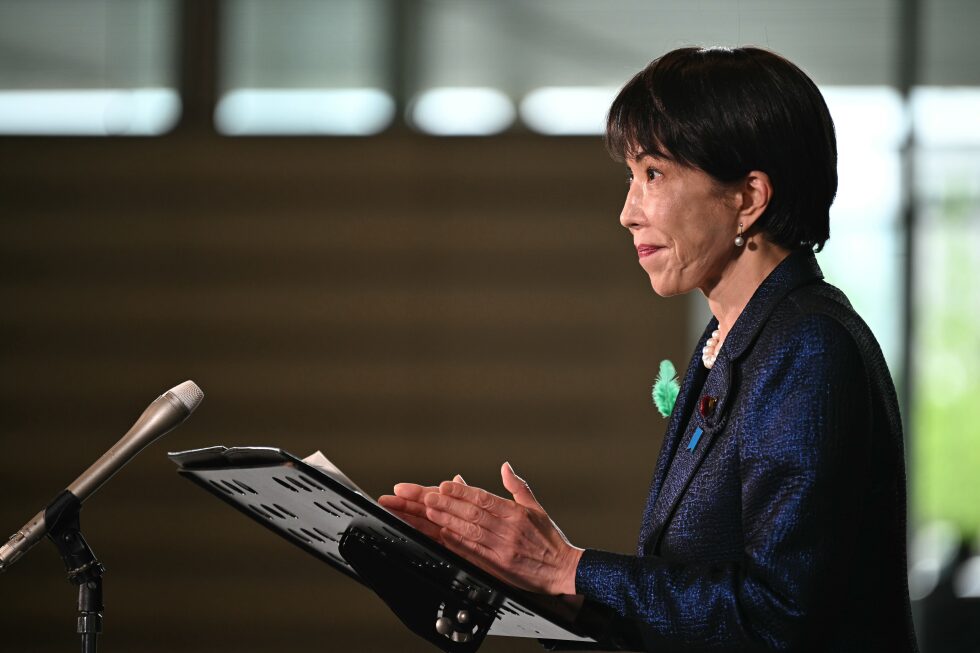
    TOKYO – In a landmark move signaling a major shift in Japan’s post-war security posture, Prime Minister Sanae Takaichi officially launched a high-level expert panel Monday to conduct a comprehensive review of the nation’s core security and defense strategies. The initiative comes as mounting geopolitical tensions across East Asia, from intensifying military activity by China to heightened provocations from North Korea and expanded Russian military presence in the region, have pushed Tokyo to accelerate its long-planned military expansion.

    Takaichi, who assumed the premiership in October, has positioned defense upgrading as the centerpiece of her administration’s agenda, framing the expanded military capability as a critical deterrent against growing regional threats. In opening remarks delivered at her official residence at the panel’s inaugural meeting, Takaichi emphasized the urgent need to reorient Japan’s defense priorities to counter emerging threats. “The relatively stable post-Cold War international order has become a thing of the past,” she told the gathered experts. “The international situation has completely changed.”

    Drawing global lessons from ongoing conflicts, Takaichi argued Japan must adapt its military doctrine to account for new styles of combat, including asymmetric tactics and the widespread use of unmanned drone systems, while building capacity to withstand prolonged large-scale conflicts. “We need to learn the lesson from Russia’s invasion of Ukraine and the ongoing war in the Middle East,” she added. “As the world enters an era of turbulence and Japan faces many challenges, the upcoming revision … is a crucial effort that affects Japan’s fate.”

    The security policy review is the latest step in Takaichi’s push to expand Japan’s military reach. Just one week before launching the panel, her cabinet approved a historic rollback of long-standing restrictions on lethal weapons exports, a policy shift that marked a major break from Japan’s post-World War II pacifist framework that restricted the country to self-defense-only military activity. The rollback has been widely praised by the United States and other regional defense allies, who say it will open new avenues for deepening military-industrial cooperation and integrated defense production. However, the move has drawn sharp criticism from domestic pacifist groups and the Chinese government, which argue it deviates dramatically from Japan’s post-war commitment to pacifism.

    The 15-member review panel brings together leading specialists in diplomacy, national defense, and economic policy. Over the coming months, the group will examine Japan’s existing defense frameworks against a range of plausible emergency scenarios, evaluate the current defense budget and long-term funding mechanisms, and prepare concrete policy recommendations for revision. Japan’s current national defense strategy, adopted in December 2022, set a target of doubling defense spending to 2% of gross domestic product by 2027, a commitment that totals roughly 43 trillion yen ($270 billion). Takaichi’s administration has already hit that spending target ahead of schedule, leaving analysts widely expecting the panel to consider additional increases to military outlays in its final report.

  • Draft law targets faster, easier social assistance access

    Draft law targets faster, easier social assistance access

    China’s top legislative body is moving forward with a landmark piece of social policy legislation that seeks to transform how vulnerable residents access life-changing support. The draft Social Assistance Law was tabled this Monday for its third reading at the ongoing session of the Standing Committee of the National People’s Congress (NPC), the country’s highest legislative organ. Under China’s standard legislative process, most bills receive final approval following three readings by the NPC Standing Committee, putting this legislation one step away from becoming official law.

    Social assistance forms a foundational pillar of China’s social safety net, designed to address sudden hardships, chronic poverty, and urgent basic needs for low-income households, people with disabilities, and other vulnerable groups. In its latest iteration, the draft legislation retains existing requirements to maintain full transparency and procedural fairness in the allocation of assistance. It also adds a new, explicit mandate that regulatory authorities must streamline and adapt application and approval workflows to local conditions, cutting unnecessary red tape to make it simpler for eligible people to submit applications and receive their benefits in a timelier manner.

    Alongside the social assistance bill, the legislative session is also reviewing several other key pieces of legislation aligned with China’s ongoing policy and economic priorities. These include a revised draft of the Law on State-owned Assets of Enterprises, an amendment to the Agriculture Law, and a proposed new law on national healthcare security. This slate of legislative reviews underscores the government’s ongoing push to update its legal framework to better serve public needs and support long-term social and economic development.

  • UAE ranks first globally in GEM report for fifth year

    UAE ranks first globally in GEM report for fifth year

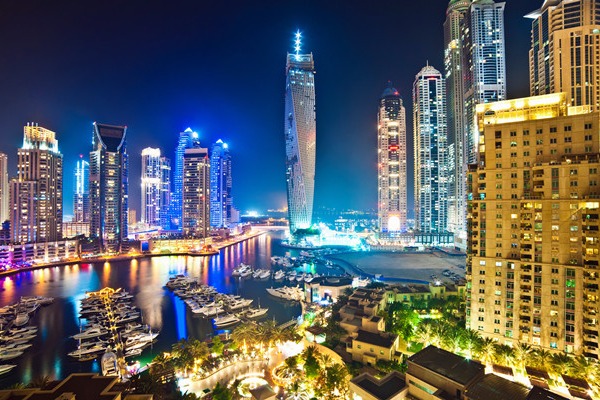
    For the fifth year running, the United Arab Emirates has retained its position as the world’s leading nation for entrepreneurship, according to the newly released 2025/2026 Global Entrepreneurship Monitor (GEM) report. Outperforming dozens of advanced economies across the globe, the country has once again solidified its reputation as the world’s most favorable environment for launching and scaling new business ventures.

    Across eight core performance metrics for high-income economies, the UAE claimed the number one spot. These metrics span physical infrastructure development, targeted and supportive government policy frameworks, tax and administrative procedural policies, national government-led entrepreneurship programs, research and development knowledge transfer, market dynamic-fueled ease of new entry, regulatory burden reduction for new market entrants, and formal entrepreneurial education.

    On two additional key indicators – entrepreneurial financing and access to startup capital – the UAE took second place globally, showcasing the strength and adaptive capacity of its national financial system. This strong performance confirms that the UAE’s economic landscape is fully prepared to empower early-stage startups and expand their opportunities for sustainable growth and regional or global expansion.

    Notably, the UAE is one of only four countries worldwide that have met or exceeded the “sufficiency” benchmark across every foundational framework condition measured by the GEM entrepreneurship index. This achievement underscores its status as a global leader in entrepreneurial ecosystems, underpinned by world-class infrastructure, efficient and proactive government policies, and robust digital readiness.

    Abdullah bin Touq Al Marri, UAE Minister of Economy and Tourism, emphasized the country’s pride in this milestone, noting that the consecutive top ranking reflects the nation’s longstanding commitment to strengthening its entrepreneurial ecosystem and locking in its status as the world’s most entrepreneur-friendly economy and top global destination for business establishment.

    He attributed the sustained success directly to the UAE leadership’s forward-thinking vision, which centers entrepreneurship and small and medium-sized enterprises (SMEs) as core pillars of building a competitive, innovation-driven knowledge economy. Al Marri also highlighted the UAE economy’s proven high resilience and its proven ability to adapt rapidly to shifting regional and global economic conditions.

    The minister added that the GEM results reflect the strength and cohesive integration of pro-competitive policies and regulatory reforms rolled out by the UAE to nurture a supportive entrepreneurial landscape. Key initiatives driving this success include the national “UAE: Global Entrepreneurship Capital” campaign, which has successfully positioned the country as the premier destination for global talent, innovators, and founders.

    These outcomes also align directly with the goals of the UAE’s “We the UAE 2031” national vision, which aims to establish the country as a global hub for the new economy by supporting high-growth potential sectors including advanced technology, artificial intelligence, renewable energy, space exploration, and financial technology.

    In the 2025 National Entrepreneurship Context Index (NECI), which measures a country’s overall entrepreneurial climate based on independent expert assessments, the UAE scored a robust 7.0 out of 10. This high score reflects the deep robustness of the country’s entrepreneurial ecosystem and the high level of confidence among local business owners and international investors operating in the UAE.

    The GEM report also highlighted that the UAE is among just six countries where entrepreneurs uniformly identify artificial intelligence as a critical driver of growth over the next three years, demonstrating the nation’s advanced preparedness for the transition to a digital, knowledge-based economy.

    In the “international access” metric, the UAE ranked among the top five countries worldwide for startups’ ability to enter and scale in external global markets. The report attributed this success to the UAE’s world-class physical infrastructure and integrated logistics network, which it described as exceptional in connecting local entrepreneurs with global consumer markets.

    Data from the report confirms the UAE has built a dynamic, fast-growing entrepreneurial ecosystem: more than one in five UAE adults (over 20 percent of the adult population) are currently engaged in launching new business ventures. This high participation rate reflects the strength of the incentives and enabling frameworks the country has put in place to support early-stage founders.

    The UAE’s Total Early-stage Entrepreneurial Activity (TEA) rate hit a strong 19.2 percent, signaling a healthy, consistent pipeline of new ventures. The GEM report notes that this steady flow of new entrepreneurial projects stems from a supportive ecosystem where launching a business is widely viewed as an attractive career choice, facilitated by streamlined registration processes and backed by robust government and financial support.

    The UAE continues to draw global entrepreneurial talent, with 19.6 percent of citizen adults and 22.4 percent of resident adults engaged in early-stage entrepreneurial activity. This gap highlights the country’s success in attracting skilled, ambitious founders from across the globe and encouraging entrepreneurial participation across all segments of society.

    The report also singled out the UAE’s success in advancing female entrepreneurship, noting that the country’s integrated ecosystem guarantees women founders equal access to critical resources and growth opportunities.

    More than half of UAE-based entrepreneurs identify family cultural traditions as a key motivator for launching and growing their businesses, reflecting the deep embeddedness of entrepreneurial culture across UAE society.

    In school-based entrepreneurial education, the UAE also made notable gains, ranking among the top five countries globally. The country’s education system prioritizes building core entrepreneurial competencies in students, including creative thinking, complex problem-solving, risk assessment, and opportunity identification, laying the groundwork for a new generation of future founders.

    Finally, the report emphasized that UAE entrepreneurship is supported by an advanced, flexible financing landscape that offers founders a wide range of pathways to secure capital for launching and scaling their businesses. This strength is visible in the diversity of funding sources available, from government-backed grant and seed initiatives to independent investment funds and global venture capital firms. This comprehensive support boosts founder confidence and enables innovators to turn early-stage ideas into scalable, globally competitive businesses, advancing the country’s vision of building a knowledge- and innovation-led national economy.

    As one of the world’s most authoritative independent research projects tracking global entrepreneurial activity, GEM has conducted more than two million interviews with stakeholders since its launch. The 2025/2026 edition of the report covers 53 global economies, representing approximately 43 percent of the world’s population and 57 percent of total global GDP, with analysis drawn from extensive input from hundreds of entrepreneurship experts.

  • Taylor Swift files to trademark voice and image after AI concerns

    Taylor Swift files to trademark voice and image after AI concerns

    As artificial intelligence tools become increasingly accessible and capable of replicating distinct human characteristics, high-profile public figures are moving quickly to secure legal protections against unauthorized deepfakes and AI impersonation. Global pop icon Taylor Swift is the latest celebrity to take decisive action, submitting three new trademark applications with United States regulators to shield her name, iconic appearance and recognizable voice from exploitative AI misuse.

    The filings, first uncovered and published by trademark attorney Josh Gerben on his professional blog, mark one of the most high-profile recent attempts by a public figure to leverage existing intellectual property law against the fast-growing problem of AI-generated impersonations. Two of the applications center on short audio clips that Swift recorded last autumn to promote her latest album *The Life of a Showgirl* for streaming platforms Spotify and Amazon Music. The clips feature Swift’s iconic opening lines: “Hey, it’s Taylor” and “Hey, it’s Taylor Swift”. The third application is tied to a widely used promotional photograph of Swift captured during her record-breaking Eras Tour, showing the singer on stage holding a pink acoustic guitar with a black strap, clad in a multi-colored iridescent bodysuit and silver boots. This same image was previously used for official marketing of the Disney+ Eras Tour concert film.

    The push for legal protection comes amid a rising tide of problematic AI-generated content targeting Swift and other A-list celebrities. In recent years, deepfake versions of the pop star have spread across the internet in a range of unauthorized forms, from non-consensual explicit imagery to manipulated political content – including a fake election advertisement that purported to show Swift urging voters to support former president Donald Trump. These high-profile incidents have underscored the urgent need for clear legal protections for public figures against AI exploitation.

    Swift’s action follows a similar move from Hollywood actor Matthew McConaughey, who became the first major celebrity to use trademark law to protect his voice and image from AI misuse earlier this 2025. Prior to this, most celebrities relied on personality rights laws to address unauthorized use of their likeness, but trademark registration offers an additional layer of legal protection that can cover more types of AI-generated reproductions.

    According to legal expert Gerben, these trademark filings offer Swift broader protection than just preventing direct copying of the exact photo and audio clips. Under U.S. trademark law, holders can challenge any use that is considered “confusingly similar” to the registered trademark. This means that even AI-generated imitations that do not directly reproduce the registered files could still be challenged legally.

    “By registering specific phrases tied to her voice, Swift could potentially challenge not only identical reproductions, but also imitations that are ‘confusingly similar,’ a key standard in trademark law,” Gerben explained. “Theoretically, if a lawsuit were to be filed over an AI using Swift’s voice, she could claim that any use of her voice that sounds like the registered trademark violates her trademark rights. Same with the image filing. If someone creates an AI-generated version of Taylor in a jumpsuit with a guitar, or something close to it, now Swift has a federal trademark claim.”

    As generative AI technology continues to advance and spread, intellectual property and entertainment legal experts expect more high-profile celebrities to follow this trend, turning to trademark law as a new tool to combat the growing threat of unauthorized AI deepfakes and impersonations.

  • Encrypted texts key evidence against ‘senior lieutenant’ in Kinahan gang, court hears

    Encrypted texts key evidence against ‘senior lieutenant’ in Kinahan gang, court hears

    On Monday, a Dublin court laid bare the extent of a senior Kinahan organized crime cartel figure’s role in the gang’s brutal Irish operations, opening a high-stakes case that will set a precedent for the future prosecution of the cartel’s top leader, Daniel Kinahan. Sean McGovern, identified by prosecutors as a top on-the-ground lieutenant for the transnational crime group, has already pleaded guilty to two grave criminal charges connected to the long-running and deadly feud between the Kinahan and Hutch gangs. The case, being heard at Dublin’s non-jury Special Criminal Court, relies heavily on damning evidence gathered by Ireland’s national police force, Gardaí, including encrypted communications, GPS tracking devices, CCTV footage, and telephone records. McGovern, who was arrested in Dubai and extradited back to Ireland to face charges, admitted to directing criminal organization activities between October 2016 and December 2016 linked to the murder of innocent bystander Noel ‘Duck Egg’ Kirwan. He also pleaded guilty to directing criminal activity between October 2015 and April 2017 that involved the prolonged surveillance of James Gately, a member of the rival Hutch gang, in preparation for an assassination attempt. Court testimony laid out the context for the targeted attacks: both men were marked for death solely because of their attendance at funerals of deceased Hutch gang associates. Gately carried the coffin of Gary Hutch at his funeral, while Kirwan attended the service for Eddie Hutch. The long-running Kinahan-Hutch feud escalated dramatically following the 2016 Regency Hotel shooting in Dublin, an incident where McGovern himself was wounded, Detective Garda Superintendent David Gallagher told the court. In building the case against McGovern over the planned attack on Gately, prosecutors outlined six distinct strands of evidence. Among the most damning pieces are three encrypted devices seized directly from McGovern, where cartel members used coded codenames to communicate; McGovern’s codename was “Knife”. Exchanges captured on these devices reveal chilling details of the assassination plot. In one message, McGovern shared live GPS tracker data on Gately’s location with other cartel associates. Imre Arakas, a hired hitman who was later arrested and jailed for the conspiracy to kill Gately, messaged an unidentified senior Kinahan leader to discuss the best locations for the attack, writing “silencer would be good” and noting that “if picture on Google is the same as in real life it could be one shot to the head and that’s it.” When Gardaí disrupted the plot before it could be carried out, McGovern exchanged messages confirming his commitment to the cartel, writing to an associate: “Me and you ain’t any rats we are the ones up to our bollox [sic] in it”. After associates noted that the attack could still be carried out within two to four weeks, McGovern replied that the news would be “the best news of the year that will be once everyone is safe”. When the plot fell through completely, he responded to a message calling for a new strategy by writing: “100pc or all going to jail with stitch ups mate”. Beyond the Gately plot, Gardaí also presented detailed evidence connecting McGovern to the tracking and eventual murder of Kirwan. Detective Sergeant Donal Daly told the court that investigators recovered tracker data from devices placed on Kirwan’s car, as well as forensic evidence from a laptop used by McGovern. Investigators also found an instruction manual for the operation hidden behind a mirror in a Kinahan cartel safe house. During the hearing, Donna Kerwin, Kirwan’s daughter, delivered a powerful victim impact statement describing the irreversible harm the murder has caused her family. “We have been stripped of everything,” Kerwin said. “We will have to live with this nightmare every day for the rest of our lives. My dad was an innocent man who was not involved in crime, the only thing he was guilty of was showing his respect at a childhood friend’s funeral. You will get out one day to live a normal life with your children. We will never have that.” Legal observers note that the outcome of McGovern’s sentencing, which is set to resume on Friday, will serve as a key indicator of how Irish courts will handle the upcoming extradition and trial of Daniel Kinahan, the cartel’s alleged leader, who was recently arrested in Dubai. The Kinahan cartel has been the target of international law enforcement action for years, with the U.S. government imposing formal sanctions on Daniel Kinahan and other core family members in April 2022, after they were publicly identified as the leaders of the transnational organized crime syndicate.

  • Torrential rain floods Qinzhou, Guangxi, as city raises flood alert

    Torrential rain floods Qinzhou, Guangxi, as city raises flood alert

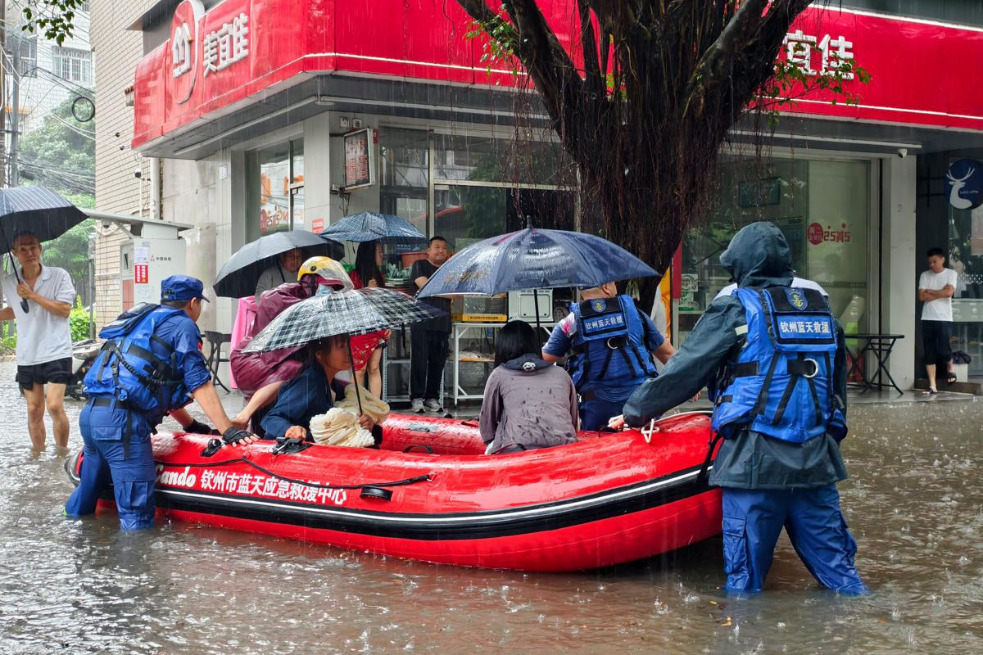
    On Monday, an intense weather system delivered record-breaking torrential downpours to Qinzhou, a coastal city in South China’s Guangxi Zhuang Autonomous Region, triggering widespread flash flooding that forced local authorities to activate a Level III flood control emergency response.

    Local meteorological authorities confirmed that the heaviest precipitation was concentrated between midnight and 8 a.m. that day, drenching the city’s central urban districts and outlying surrounding townships. The most severe rainfall was recorded in Jiulong town, located in Qinzhou’s Qinnan district, which measured a total accumulated rainfall of 362.2 millimeters over the eight-hour window. At the storm’s peak around 4 a.m. Monday, the area also registered an extreme hourly rainfall rate of 143.3 millimeters, far exceeding the threshold for severe flash flood warnings.

    The downpour quickly overwhelmed local drainage systems, leading to rapid waterlogging in multiple downtown neighborhoods and surrounding suburban areas, as documented by on-site photojournalists covering the disaster response. As of the latest update, local emergency management teams have been deployed to conduct evacuation operations, clear blocked drainage lines, and monitor water levels across at-risk river basins to mitigate further risks to residents and their property.