作者: admin

  • Ukrainian strikes hit oil sites in Russia and Crimea

    Ukrainian strikes hit oil sites in Russia and Crimea

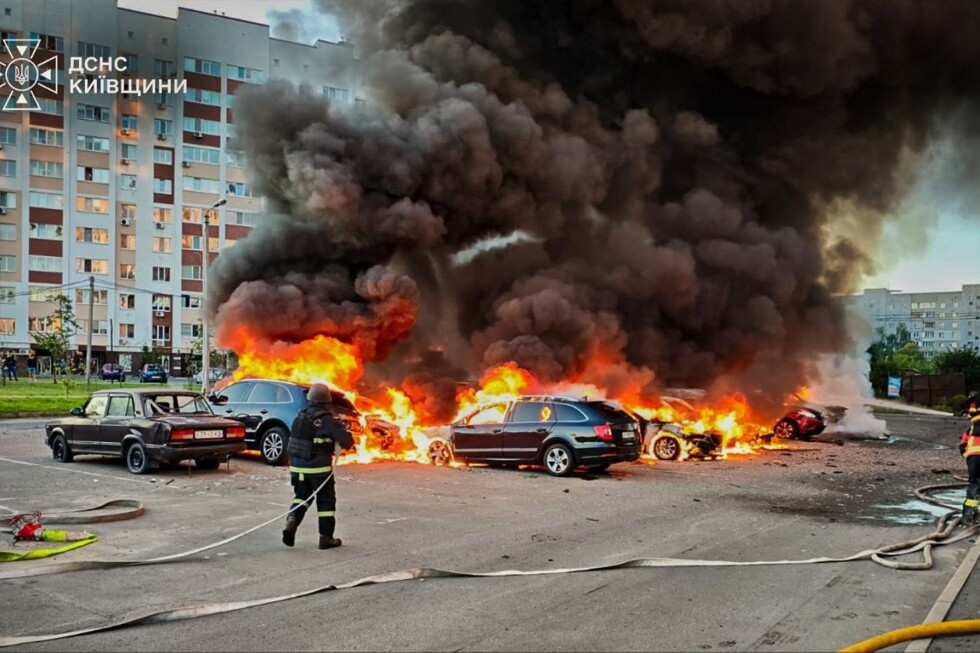
    In a coordinated overnight campaign designed to ramp up economic pressure on Moscow amid the ongoing full-scale invasion, Ukrainian forces have carried out multiple drone strikes targeting key oil and energy infrastructure across Russia and Russian-occupied Ukrainian territories, officials from both sides confirmed on Monday. The cross-border attacks marked one of the largest mutually exchanged drone barrages in recent weeks of the war.

    Russia’s defense ministry announced that its air defense systems intercepted and destroyed 310 Ukrainian drones launched throughout the night, with targets spread across the Moscow region, western and southwestern areas of Russia, the Russian-occupied Crimean Peninsula, and the maritime zones of the Black and Azov Seas. In a reciprocal strike, Russia launched 155 drones at Ukrainian territory; Ukraine’s Air Force reported that its air defense units successfully neutralized 124 of these incoming unmanned aerial vehicles through a combination of shootdowns and electronic jamming.

    Ukraine’s General Staff confirmed that one of its primary targets was the Grushovaya oil transshipment base located near Novorossiysk in Russia’s Krasnodar Krai region. This facility ranks among the largest oil and petroleum product transshipment hubs in southern Russia, playing a critical role in Russia’s domestic and export energy logistics. Regional Russian authorities verified that a drone attack triggered a large blaze at the site, though they confirmed no fatalities or injuries were reported in the incident. While officials declined to disclose the full scale of damage to the infrastructure, they confirmed that more than 130 emergency response workers and 39 pieces of fire-fighting equipment were deployed to contain and extinguish the fire.

    A second key target inside Russia was the Krasny Yar linear production and dispatching station in the Volgograd region, which also sustained a direct hit that sparked an outbreak of fire. Andrei Bocharov, the governor of Volgograd region, confirmed the attack and stated that no personnel had been injured, though he offered no additional details about the facility’s core operations or the extent of damage to the site.

    Beyond Russian territory, Ukrainian forces carried out two coordinated strikes on energy facilities in the Russian-occupied Crimean Peninsula on Sunday night. First, drones hit the Semykolodezkaya oil base, which Ukrainian military officials stated is used to store fuel reserves exclusively for Russian military operations in the region. A second strike targeted an oil depot near the Crimean coastal city of Feodosia, according to the General Staff’s official statement posted to Telegram. Both strikes resulted in large fires at the target sites.

    In a separate attack in Crimea, a Ukrainian drone hit a passenger train traveling on the Moscow-Simferopol route early Monday, Sergei Aksyonov, the Kremlin-appointed head of the occupied region, confirmed. The strike left the train’s driver with injuries and killed the driver’s assistant, Aksyonov said, adding that all passengers on board remained unharmed. Following the attack, all passenger rail traffic across Crimea was suspended indefinitely to allow for security and repair work. Russian rail operator Grand Service Express announced that passengers had been safely evacuated and replacement bus service had been arranged for travelers to complete their journeys.

  • Celebrating a wedding amid the Ebola outbreak: No kisses or close contact, but love lives here

    Celebrating a wedding amid the Ebola outbreak: No kisses or close contact, but love lives here

    BUNIA, Democratic Republic of Congo — Weddings in eastern Congo are traditionally vibrant, day-long affairs filled with warm embraces, crowded dance floors, and hundreds of joyful well-wishers gathering to celebrate a couple’s new chapter. But as the country grapples with a deadly Ebola outbreak that has already claimed 91 lives among more than 500 confirmed cases, the rituals of marriage have been fundamentally reshaped by life-saving public health restrictions. Even so, love finds a way to prevail.

    The current outbreak, driven by the rare Bundibugyo Ebola virus, is centered entirely in Ituri, an eastern province of the DRC. Local and national health authorities have moved quickly to curb transmission, rolling out strict measures that include bans on large public gatherings and mandatory social distancing protocols. Unlike previous Ebola outbreaks, this strain has no approved vaccine or targeted treatment, and a weeks-long delay in confirming the outbreak means actual case counts are likely higher than official numbers, making response efforts all the more challenging.

    For Jean Claude Érable and his new wife Solange Hahati, who exchanged vows on a recent Saturday, these restrictions transformed one of life’s most celebrated milestones. The couple originally planned to welcome 300 guests to their big day, but local rules capped attendance at just 50, forcing many beloved family members and close friends to miss the ceremony. “It was really difficult because we wanted to celebrate with our friends,” Hahati shared in an interview with the Associated Press, reflecting on the disappointment of the scaled-back event.

    At the main Catholic Church in Bunia, Ituri’s provincial capital, where Érable and Hahati’s wedding was held, multiple couples celebrated their marriages alongside the pair on the same day. Inside the sanctuary, the small group of attending guests stayed spaced apart in their pews, following social distancing guidelines as the choir sang and brides walked down the aisle. Cheering and photo-taking still filled the space, while a larger crowd of uninvited guests gathered outside the church walls to sing excitedly for the newlyweds.

    Despite the scaled-back celebration, the groom emphasized that the couple has fully embraced the public health rules to protect their community. “We are adhering to the preventive measures and respecting social distancing,” Érable said. “I must say that there is no problem, no obstacle, because we are doing our best to respect all the measures dictated by the state.”

    After the ceremony, as Érable placed the wedding ring on his bride’s finger, Hahati smiled through the moment. Following the mass, she happily showed off her new ring to waiting onlookers before the couple departed for their reception, which they moved outdoors to allow guests to spread out more comfortably and lower transmission risk.

    Father Aimé Lokanabego, the priest who officiated the wedding, explained that adapting daily religious and community life has become a necessity amid the crisis. Many families have already chosen to postpone their upcoming weddings entirely rather than hold them under restrictions, he said, and the church has paused other high-risk religious gatherings, including large baptism ceremonies, to slow the spread of the virus. “This is, in a way, how we are dealing with this Ebola epidemic at our level. The situation is critical,” Lokanabego noted.

    Across Ituri, these precautions, while inconsistently followed by all members of the public, have upended long-held social traditions that bind communities together. For couples like Érable and Hahati, that means a different wedding than they ever imagined — but still a celebration of love that persists even in a public health crisis.

  • UAE students chase Chinese dream through culture

    UAE students chase Chinese dream through culture

    Against the backdrop of expanding cultural and educational cooperation between China and the United Arab Emirates, young Emirati students are turning their growing fascination with Chinese language, culture and innovation into concrete ambitions to build their futures in China, and to serve as bridges for bilateral friendship.

    These sincere aspirations took center stage on Saturday at the 2026 regional final of the Chinese Bridge Chinese Proficiency Competition, hosted at Zayed University’s Dubai campus. Twenty-two contestants drawn from primary, secondary and higher education institutions across the UAE gathered to share how engaging with Chinese language and culture has transformed their personal outlooks and life trajectories.

    One standout participant was 17-year-old Ali Bilal Masood Ali Aldhuhoori, a soon-to-graduate student from Saif Bin Hamad Boys’ High School in Fujairah. Aldhuhoori previously joined a short-term exchange program in Shanghai, where he immersed himself in traditional Chinese culture and gained first-hand insight into China’s world-leading advances in artificial intelligence. That experience taught him the unique power of combining language proficiency with technological expertise, reshaping his long-term career and education goals.

    “For me, Mandarin is far more than just a foreign language — it is a clear path to my future,” Aldhuhoori explained. “I have a firm goal: to pursue further study in China, combine academic learning with hands-on social practice, and achieve my personal Chinese Dream.” During the competition, he showcased his deep appreciation for traditional Chinese culture by reciting several classic ancient Chinese poems, noting that the concise, evocative verses have opened entirely new intellectual and cultural horizons for him. “By learning Mandarin and understanding Chinese poetry, I get to see the whole world through China’s perspective,” he said. Following his competition appearance, he expressed hope that his participation would inspire younger Emiratis to master Mandarin and seize every opportunity to visit China, echoing an ancient Chinese proverb that encourages both extensive reading and broad travel.

    Another top performer was Khadija Sultan Alkhoori, a middle school student from Abu Dhabi, who claimed first place in the middle school division. She wowed judges and audiences with a smooth, cohesive tai chi performance delivered in a traditional red training uniform, paired with near-fluent Mandarin that earned her hearty applause. Khadija’s ultimate goal is to travel to China to study traditional Chinese medicine, a dream that has the full support of her entire family.

    “I am extremely proud of my daughter’s outstanding achievement here today,” said her father Sultan, an IT engineer who has traveled to both Shanghai and Chengdu. “Learning Mandarin has opened up far broader prospects for her future. China has such a long, profound cultural heritage and incredible modernization achievements that I got to see firsthand during my visits. I hope Khadija will keep advancing her Mandarin skills, dive deeper into Chinese culture, and grow up to be a true friendship envoy for exchanges between the UAE and China.”

    The growing enthusiasm for Chinese language learning among young Emiratis did not emerge by accident: it is the result of years of structured bilateral cooperation rooted in shared goodwill. Back in July 2019, in the presence of senior leaders from both nations, the UAE launched the “Hundred Schools Project”, a landmark Chinese language education initiative. Since its launch, the program has introduced Mandarin courses to more than 170 UAE schools, reaching over 71,000 students across the country.

    “In recent years, China and the UAE have achieved fruitful outcomes in people-to-people exchanges and educational collaboration,” noted Zeng Jixin, China’s Ambassador to the UAE. “Known as the top global event for international Chinese language education, Chinese Bridge acts not just as a linguistic bridge, but as a bond connecting different civilizations and linking people’s hearts. I hope all the contestants here will become long-term inheritors and guardians of China-UAE friendship.”

    2026 marks the 25th anniversary of the Chinese Bridge program, which was created and is organized by the Center for Language Education and Cooperation under China’s Ministry of Education, with support from Chinese embassies and Confucius Institutes around the globe. Zayed University’s Confucius Institute has hosted the UAE’s preliminary and final rounds of the competition for nine consecutive years, with more than 2,500 participants aged 4 to 30 taking part over that period.

    Michael Allen, Provost and Chief Academic Officer of Zayed University, emphasized the lasting value of the competition for bilateral relations. “Language connects people, and cultural exchange strengthens friendship,” Allen said. “Chinese Bridge is not only a stage for students to showcase their Chinese proficiency and cultural talents, but also a critical link that boosts mutual understanding, facilitates people-to-people interaction, and deepens friendship between the United Arab Emirates and China.”

  • In first papal speech to Spanish parliament, pope demands respect for migrants and international law

    In first papal speech to Spanish parliament, pope demands respect for migrants and international law

    In a groundbreaking moment for Vatican-Spanish relations, Pope Leo XIV delivered the first-ever papal address to Spain’s Cortes Generales on Monday, using the historic platform to urge global respect for migrant rights, international law, and ethical governance, while marking an unexpected shift in the secular country’s acceptance of the Catholic Church in public life.

    Addressing assembled lawmakers from across Spain’s deeply polarized political spectrum, the American pontiff framed the core argument of his speech around a universal call for “moral renewal” in public institutions, arguing that a nation’s true moral standing is measured not by its power or wealth, but by how it protects its most vulnerable community members. “The moral greatness of a nation is manifested, above all, in its capacity to accompany, protect and love those lives that are most fragile,” Leo told the chamber. This group, he emphasized, includes migrants, unborn people, and all marginalized populations.

    Papal addresses to foreign national legislatures are extremely rare, as the invitation itself signifies formal recognition of a religious leader by a sovereign state’s elected body. Prior precedent includes Pope Francis’ 2015 address to a joint session of the U.S. Congress, and Pope Benedict XVI’s 2011 speech to his native Germany’s Bundestag. For Spain, a nation where the Catholic Church was once a foundational pillar of Francisco Franco’s 20th-century dictatorship, but saw its influence wane dramatically after the transition to democracy in the 1970s, the invitation itself marks a milestone that would have been unthinkable just a few years ago.

    Today, despite the fact that a majority of Spaniards still identify as Catholic, religious participation has plummeted amid widespread secularization, mirroring trends across other historically Christian European nations. Yet the address drew a rare show of cross-partisan enthusiasm: at the conclusion of Leo’s remarks, lawmakers from every ideological bloc rose to a minutes-long standing ovation, chanting “Viva el Papa!” (Long live the pope!).

    Leo delivered his address against the backdrop of escalating regional tensions between Israel and Iran, as retaliatory airstrikes between the two nations raised fears of a full-scale regional war in the Middle East. Reiterating his longstanding call for diplomatic conflict resolution, the pontiff emphasized that peace can only be built through dialogue, not force. “Peace demands diplomatic courage, ethical responsibility and a vision for the future grounded in respect for the identity of every people and in the obligation of states to resolve their disputes through the peaceful means offered by international law,” he said.

    He also voiced deep concern over the growing trend of rearmament across Europe, driven by the ongoing threat of Russian aggression following the invasion of Ukraine, and the Trump administration’s repeated threats to cut U.S. military and financial support for the continent. “It is therefore a cause for concern that, in various parts of the world — and in Europe as well — rearmament is once again being presented as an almost inevitable response to the fragility of the international situation,” he noted. In addition, Leo called for strict ethical regulation of artificial intelligence-powered autonomous weapons, stressing that life-or-death decisions must never be left to automated systems, and must remain rooted in human moral accountability.

    In a nod to Spain’s colonial history and the Catholic Church’s role in that era, Leo invoked the 16th-century School of Salamanca, a Spanish intellectual movement that laid early groundwork for modern international law and universal human rights in the aftermath of Spain’s conquest of the Americas. He praised the movement’s theologians for recognizing that power and self-interest could never be justified by force alone, and that all exercise of power has inherent moral limits. Acknowledging past failures, Leo admitted that both society and the Catholic Church itself often failed to live up to these moral principles, referencing his recent formal apology for the Holy See’s role in legitimizing the transatlantic slave trade and the colonial conquests of the Americas by Spanish and Portuguese rulers.

    A central focus of Leo’s address was the global migration crisis, echoing the priority placed on migrant rights by his predecessor Pope Francis, and doubling down on his own criticism of the Trump administration’s hardline crackdown on migration in the United States. Leo called for strengthened global action to dismantle human smuggling networks, and to create economic and social conditions that allow people to thrive in their home countries. But for those forced to flee conflict, poverty, and climate change, he demanded compassionate welcome and full integration. “This gives rise to a twofold demand for social justice: to offer safe and legal pathways, a respectful welcome and real opportunities for integration; and, at the same time, to promote the right to remain in one’s own land, working to ensure that no one has to leave their home due to a lack of peace, security or decent living conditions, including economic inequalities and the effects of the climate crisis,” he said.

    Leo’s address to Spanish lawmakers comes amid a delicate political moment for Spanish Prime Minister Pedro Sánchez, whose Socialist-led minority government has been rocked by a series of corruption scandals affecting former officials and close allies, though Sánchez himself has not been directly implicated. For three years, Sánchez’s government has been unable to pass core legislation, including a national budget, as Spain grapples with deepening political polarization. In a direct reference to this division, Leo warned that political pluralism should never devolve into constant demonization of political opponents.

    Notably, the atheist prime minister and the American pope have found uncommon common ground on a range of major global policy issues, despite the Catholic Church’s historical alignment with Spain’s conservative Popular Party. After meeting Leo at the Vatican last month, Sánchez praised the pontiff as a “moral compass” for global politics. Both leaders have emerged as outspoken critics of military escalation in the Middle East, with Leo labeling recent Israeli strikes on Iran as unjust, and Sánchez positioning himself as Europe’s most vocal advocate for diplomatic negotiation over conflict. Echoing Sánchez’s stance, Leo declared: “Weapons may impose a temporary silence; but they can never build a genuine and lasting peace.” This alignment has created an unlikely alliance between Spain’s progressive government and the Vatican, particularly on migration policy: Sánchez’s government has broken with the restrictive trend seen across much of Europe and the U.S., launching a major legalization campaign earlier this year for hundreds of thousands of unauthorized immigrants already living and working in Spain, arguing that migration is critical to shoring up the country’s aging workforce and sluggish economy.

  • WHO calls for global action to contain Ebola outbreak

    WHO calls for global action to contain Ebola outbreak

    As a deadly Ebola outbreak spreads rapidly across the Democratic Republic of the Congo (DRC) and Uganda, pushing case counts past 490 and sparking global alarm, the World Health Organization (WHO) and Africa Centres for Disease Control and Prevention (Africa CDC) have issued an urgent call for coordinated international solidarity to contain the epidemic before it spills further across regional borders.

    The current outbreak, caused by the less common Bundibugyo Ebola strain, has expanded at an alarming pace since it was first detected in mid-May. What began as a small cluster of infections in just three health zones across one eastern DRC province has grown to cover 25 health zones across three DRC provinces, with confirmed cases now reaching Uganda’s capital city of Kampala. As of early June 2026, official WHO data puts total confirmed cases at nearly 500, with Ituri Province in northeastern DRC remaining the crisis epicenter: the region accounts for 90 percent of all confirmed infections and 76 percent of recorded fatalities from the virus.

    Health authorities confirm this outbreak is already the largest ever recorded for the Bundibugyo strain, outpacing previous outbreaks in Uganda in 2007 and the DRC in 2012. A key ongoing challenge, officials warn, is the absence of licensed vaccines or widely approved therapeutics specifically targeting this strain of the virus. While several promising candidate treatments and vaccines are currently in development, none have cleared regulatory approval for large-scale deployment to affected communities, leaving response teams without established preventive tools.

    During a high-level emergency briefing held Friday, WHO Director-General Tedros Adhanom Ghebreyesus announced the launch of a joint six-month regional preparedness and response plan, developed alongside Africa CDC, to mount a unified fight against the outbreak. The plan, which runs from June through December 2026, carries an estimated price tag of $518 million and operates under the coordinating framework of “one plan, one budget, one team” to eliminate fragmentation in relief efforts. Core priorities outlined in the strategy include streamlined emergency coordination, expanded disease surveillance and contact tracing, scaled-up laboratory testing capacity, strict infection prevention protocols in healthcare settings, improved clinical care for infected patients, intentional community engagement, accelerated research into candidate treatments, logistics support for relief operations, and the preservation of routine essential health services that could otherwise be disrupted by the outbreak.

    “The outbreak is moving fast and we are still playing catch-up,” Tedros said following a recent assessment trip to the DRC. “But my trip to the DRC also gave me real hope that together, under the government’s leadership, we can bring this outbreak under control. The only way to beat this outbreak is through close partnership, working together under the leadership of the affected countries in one coordinated effort.”

    Africa CDC has already implemented a suite of urgent emergency measures to slow transmission, including high-level political engagement with regional heads of state and health ministers, deployment of multidisciplinary rapid response teams to affected zones, expansion of local laboratory testing capacity, and coordination of the delivery of more than 200 metric tons of critical medical supplies from global partners. Africa CDC Director-General Jean Kaseya highlighted China’s recent contribution to the response effort, noting that a multidisciplinary team of Chinese experts spanning epidemiology, clinical care, research, and traditional Chinese medicine arrived in Kinshasa last week to begin a three-month mission supporting capacity building for local Ebola response teams.

    “China has joined a growing list of international partners supporting response efforts, highlighting the importance of global solidarity in tackling public health emergencies,” Kaseya said.

    WHO’s Africa Regional Director Mohamed Yakub Janabi emphasized that building and maintaining community trust is a foundational pillar of any successful response. Misinformation spreading through affected communities, he warned, poses a threat nearly as dangerous as the virus itself, capable of undermining core public health measures.“Without community participation, contact tracing falters, safe care is delayed and transmission continues,” Janabi explained. “Misinformation is almost as dangerous as the virus itself and spreads just as fast.”

    Global health leaders stress that immediate, coordinated international investment and partnership are critical to preventing the outbreak from becoming a sustained regional crisis that could spread to additional neighboring countries across central Africa.

  • Sydney newsagency renews desperate plea to find mystery $100m jackpot winner after life-changing prize remains unclaimed

    Sydney newsagency renews desperate plea to find mystery $100m jackpot winner after life-changing prize remains unclaimed

    More than a full year after a winning $100 million jackpot ticket was sold at a small Sydney suburban newsagency, the mystery winner has yet to step forward to claim their life-changing prize – prompting staff at Bondi Junction Newsagency to launch a renewed public appeal to track down the elusive ticket holder.

    The winning entry was purchased by an anonymous customer at the eastern Sydney store back in June 2024, and officials from lottery operator The Lott confirm no valid claim has been submitted to date. Retail assistant Grace Martino, who has worked at the shop three days a week throughout the entire 12-month search, says the team has spent the past year relentlessly urging visitors to check forgotten lottery tickets hiding in unexpected places.

    The only public proof of the landmark win is a framed commemorative metal plaque hanging on the wall behind the store’s counter, documenting that the division one ticket was sold on-site. Martino explained that unlike most entries, this winning ticket was not linked to a registered NSW Lotteries membership account – a free service that would have allowed organizers to contact the winner directly via phone and email. Because of that unregistered status, no contact details exist for the buyer, leaving the team with few leads to track them down.

    “There was one winner, one ticket that matched all the correct numbers. But we’ve never seen the winning ticket in person, and we’ve never met the person who bought it,” Martino told NewsWire in an interview. “All we can do is put the plaque up to prove we sold the winning entry, and keep asking people to check – check old tickets in drawers, check tote bags, check handbags, check coat pockets, anywhere that ticket could have been tossed aside and forgotten.”

    Martino added that the team has long encouraged customers to sign up for the free membership program to avoid exactly this kind of situation. “If that ticket had been registered, we wouldn’t be going through all this worry right now. The free membership protects your win and makes sure you get notified if you take home a prize,” she said.

    While the real winner remains missing, the store has not been short of people stepping up to claim the $100 million prize. Martino estimates that hundreds of people have visited the shop over the past 12 months to fill out claim forms asserting they are the mystery winner – but none have been able to pass the simple verification check the store uses to weed out false claims.

    “The key detail we ask for is what time the ticket was purchased. The sale happened within a specific 10-minute window, and no one claiming the prize has gotten that detail right,” Martino said. “A lot of people ask if we can check our security cameras, but the footage only shows when people entered the store – it doesn’t tell us exactly when the winning transaction went through.”

    Speaking to the value of the unclaimed prize, Martino shared what she would do if she was the one holding the winning ticket, saying she would donate the entire windfall to good causes. “I would send every dollar to charity. That’s such an enormous amount of money, it doesn’t need to just sit accumulating in a bank account,” she said. “My family and I don’t need $100 million, but that money could change so many lives for the better if it goes to people who need it.”

    A spokeswoman for The Lott, Khat McIntyre, noted that it is extremely unusual for a top-tier division one prize to go unclaimed for this length of time. “It’s very rare for major prizes to stay unclaimed for more than a few weeks, and we are just as eager as the newsagency to connect our mystery $100 million winner with their life-changing prize,” McIntyre said. “Now, 12 months on, this incredible ticket could still be sitting anywhere completely unchecked. Since the entry wasn’t registered, we have no way to reach the winner directly, so we’re relying on the public to check their old entries.”

    Lottery rules in New South Wales give unclaimed major prizes a set validity window, and any prize that goes unclaimed after that period is typically redistributed to state government community programs, according to state lottery regulations.

  • Knicks’ long-awaited NBA run electrifies NYC, with Trump set to attend key game

    Knicks’ long-awaited NBA run electrifies NYC, with Trump set to attend key game

    New York City is bracing for an unprecedented collision of sports, politics and celebrity on Monday, as the New York Knicks take the Madison Square Garden court for their first home NBA Finals game in 27 years, with former U.S. President and current sitting President Donald Trump set to be in attendance. The historic matchup, Game 3 of the best-of-seven championship series against the San Antonio Spurs, comes as the Cinderella-story Knicks hold a commanding 2-0 series lead, one win away from their first NBA title since 1973 after decades of league-wide futility.

    Trump’s attendance marks a landmark moment: it is the first time a sitting U.S. president has attended an NBA Finals game, and the first presidential appearance at any NBA matchup since former President Barack Obama watched his hometown Chicago Bulls tip off the 2015 regular season. The former real estate developer and lifelong New Yorker accepted an official invitation from Knicks owner James Dolan to attend Monday’s game, with hints he may also return for Game 3 on Wednesday. When asked by reporters Friday about the sky-high resale ticket prices for the sold-out game, Trump downplayed the sticker shock, noting “It’s sort of semi-free to watch it on television.”

    Trump’s high-profile visit has triggered sweeping security measures across the iconic Manhattan arena and surrounding areas. Organizers have implemented a strict no-bag policy, requiring all attendees to reduce personal items to an absolute minimum, and all fans must pass through airport-style screening before entering. Fans have been urged to arrive at least two hours before tip-off to accommodate the enhanced checks.

    Thousands of New York Police Department officers and hundreds of U.S. Secret Service agents have been deployed to secure the event, a step that comes amid heightened concern following a random stabbing incident at Penn Station — located directly beneath Madison Square Garden — Sunday evening that left five people injured, one critically, with a suspect taken into custody immediately. As a result of the security coordination between NYPD and the Secret Service, a planned public watch party outside the arena has been canceled, though organizers note alternate watch party locations are being finalized for fans without tickets.

    City officials have also prepared for crowd control after unplanned street celebrations following the Knicks’ Game 2 win in Texas left dozens of arrested, with 17 people taken into custody and one NYPD officer assaulted during a prior outdoor gathering near MSG. Thousands of fans flooded Manhattan and Brooklyn streets even for the away game in San Antonio, climbing lampposts, jumping onto food carts and blocking traffic to celebrate the underdog team’s historic run.

    The matchup has also sparked widespread speculation over how the heavily Democratic New York City crowd will react to Trump’s presence. New York Mayor Zohran Mamdani, a self-identified democratic socialist who has been an outspoken Trump critic, confirmed he will also attend Monday’s game, but noted he will be seated “in a very different section of the stadium” from the president. Mamdani struck a unifying tone around the game, however, saying “We look forward to welcoming any New Yorker who is excited for the Knicks to have that chance to win that championship.”

    For ordinary fans, accessing the sold-out game comes at a extraordinary cost: the cheapest resale tickets currently list for more than $10,000, with premium courtside seats topping $100,000. Even in regular season play, Knicks tickets rank among the most expensive in the NBA, a price point amplified by the once-in-a-generation stakes of the 2026 Finals.

    Across New York’s five boroughs, the city has been swept up in unprecedented Knicks championship fever. Iconic skyline landmarks from the Empire State Building to One World Trade Center have been lit up in the team’s signature orange and blue each night, a nearby subway station has gotten a full Knicks-themed makeover, and local businesses have rolled out special orange-and-blue themed menu items from ice cream to bagels to capitalize on the hype. On game nights, thousands of fans in orange and blue gear pack local bars, host impromptu street watch parties with outdoor projectors that project games onto building exteriors, and fill neighborhood blocks to share in the historic moment.

    Monday’s game is also set to be one of the biggest celebrity events of the year, continuing a Knicks tradition that turns home playoff games into A-list spectacles. This postseason has already seen a who’s who of global celebrities in the MSG stands, including actors Timothée Chalamet and Ben Stiller, legendary New York filmmaker and lifelong Knicks fan Spike Lee, and media mogul and reality star Kylie Jenner. After the Knicks’ Game 2 win Friday, Lee was captured on camera high-fiving crowds of ecstatic fans celebrating across Brooklyn.

  • Malawians repatriated from South Africa amid xenophobia concerns

    Malawians repatriated from South Africa amid xenophobia concerns

    Escalating xenophobic tensions and targeted violence against foreign migrants in South Africa’s Western Cape province have triggered a wave of coordinated repatriation efforts led by several African nations, with hundreds of foreign nationals already returning to their home countries and more evacuations scheduled in the coming days.

    The unrest began in Mossel Bay, a coastal city in Western Cape, where violent attacks targeting undocumented migrants left two Mozambican citizens dead last week. Eyewitness and local reports documented systematic door-to-door intimidation of foreign-born residents, forcing hundreds of non-South African nationals to flee their homes and seek emergency shelter in temporary camps set up across the area.

    Among those displaced are 150 Malawian migrants, who are set to cross the border into Malawi by road on Monday, according to an official statement released by Malawi’s government in Lilongwe. The Malawian group is just one cohort of hundreds of foreign nationals that have left South Africa following the recent surge in violence. Local anti-migrant activist groups have ramped up pressure in recent weeks, issuing a public deadline of June 30 for all undocumented migrants to leave South Africa.

    The violence has prompted cross-regional diplomatic response, with Ghana, Nigeria, and Zimbabwe all launching official repatriation operations to bring their endangered citizens home. Zimbabwean state media confirmed that 74 Zimbabwean migrants arrived back in their home country on Sunday, after government-organized transport evacuated them from Mossel Bay in the wake of the attacks.

    Ghana has already completed two large-scale evacuation movements: a repatriation flight from Johannesburg carried nearly 300 Ghanaians at the end of May, and an additional 680 citizens reached the capital Accra over the past weekend. Nigeria, meanwhile, has adjusted its evacuation timeline: the first flight scheduled to carry 270 Nigerian nationals out of Johannesburg on Monday has been pushed back to Wednesday due to unexpected logistical challenges, according to foreign affairs spokesperson Kimiebi Imomotimi Ebienfa.

    Nigerian President Bola Tinubu has authorized five total evacuation flights to bring vulnerable citizens home, and authorities have extended registration and screening for affected migrants through Wednesday to process all eligible applicants. As of press time, more than 500 Nigerians have already completed screening and received approval for repatriation as part of the federal government’s emergency response to the crisis.

    In an attempt to de-escalate rising national tensions, South African President Cyril Ramaphosa addressed the nation on Sunday, announcing a new package of policy measures intended to crack down on undocumented migration. However, the president also firmly condemned vigilante violence and anti-foreigner sentiment, emphasizing that South Africa has no tolerance for discrimination. “There is no space for xenophobia, racism, sexism, Afrophobia or any other forms of intolerance” in the country, Ramaphosa stated.

    The ongoing violence and mass displacement have highlighted longstanding tensions around migration and economic inequality in South Africa, with regional governments stepping in to protect their citizens as unrest continues ahead of the anti-migrant deadline set for the end of June.

  • Peru election result close as vote counting continues

    Peru election result close as vote counting continues

    Peru’s high-stakes presidential runoff has devolved into a razor-thin deadlock, leaving the nation facing a prolonged period of political uncertainty that echoes chaotic electoral battles from recent years. Early independent vote tracking by leading pollster Ipsos places left-wing candidate Roberto Sánchez on a narrow 50.3% to 49.7% edge over right-wing veteran Keiko Fujimori, a margin so tight it qualifies as a statistical tie. Though this tally is not the official count, Ipsos’ tracking has proven a reliable predictor of final outcomes in past Peruvian elections. Official counting, which has processed over 85% of all ballots, confirms the race remains too close to call, with a full recount widely expected to take weeks to resolve.

    The contest brings two fundamentally opposing visions for Peru to the ballot box, pitting a veteran of national politics against a first-time presidential frontrunner campaigning for systemic change. Fujimori, a household name in Peruvian politics who is making her fourth bid for the presidency, has leaned heavily into the controversial legacy of her late father, former President Alberto Fujimori. Though Alberto Fujimori was ultimately imprisoned for crimes against humanity, his base credits him with crushing violent insurgencies and delivering tangible social support to impoverished communities. Keiko Fujimori has centered her campaign on one key voter priority: a brutal military crackdown on soaring organized crime and extortion, issues that have dominated voter anger across the country.

    On election day, Fujimori kicked off her voting in San Juan de Lurigancho, Lima’s most populous district, where informal impoverished settlements cling to steep, arid mountains. She was greeted by throngs of enthusiastic supporters, who voiced urgent hope that she would deliver on her anti-crime pledges. “She will fight crime like her father did years ago,” supporter Alicia told reporters. Another voter, Catalina Solana Guamá, noted that previous administrations had ignored the needs of working-class hillside communities like hers. “It’s about time a woman governed us, one who makes us feel valued,” she said, adding that she backed Fujimori’s promise to deploy the military against gangs that have targeted transportation workers for extortion. “It’s not right that we go out to work and don’t know if we’ll come back alive.” Jennifer, another local voter, echoed that frustration, saying “right now things are very bad, especially in this district… there’s extortions and killings, she wants to fight that.”

    Sánchez, by contrast, is running on a platform of sweeping left-wing economic and state reforms, including expanding the government’s role in regulating Peru’s lucrative natural resource sector, increasing public investment in marginalized rural regions, overhauling the national tax system, and renegotiating existing mining contracts. He frames these changes as critical to redressing deep systemic inequality, arguing that wealth from Peru’s vast copper and gold reserves has failed to reach most working and poor Peruvians. His platform has earned him intense support in rural and highland Andean regions, but has also spooked domestic financial markets, echoing the investor anxiety that marked the 2021 election of former left-wing President Pedro Castillo.

    Sánchez’s campaign is closely tied to Castillo, who he served under as a cabinet minister. A key campaign pledge from Sánchez has been his promise to issue a presidential pardon for Castillo, who was jailed in 2022 after attempting to illegally dissolve Congress and rule by emergency decree. The 2021 election, which also pitted Castillo against Fujimori, ended in a similarly razor-thin result that dragged on for weeks of vote counting and political chaos, a parallel that has amplified anxiety around the current deadlock.

    Ipsos’ early tracking lays bare the deep geographic divide shaping the 2026 result: Fujimori carried the capital Lima, urban centers, and coastal regions, while Sánchez swept rural areas and the Andean highlands. Analysts expect Sánchez to gain additional ground as the last remaining rural ballots are processed, a dynamic that keeps the final outcome too uncertain to call.

    In statements to their supporters following the release of early counts, both candidates stuck to sharply differing narratives. Sánchez framed his narrow lead as a reflection of popular demand for systemic change, calling it an “important lead that reaffirms the will of the people, who want democracy and justice.” Fujimori, by contrast, described the race as an unambiguous “dead heat” warning that “there will be long days ahead” before a winner can be declared. She argued it would be “irresponsible” to call the result based on early partial tallies, stressing that “every single tally sheet must be counted.”

    Sánchez’s supporters in Lima voiced similar determination to see their candidate win, with many warning that they would take to the streets in protest if the result does not go their way. Many cited Castillo’s ouster and imprisonment as a core motivation for backing Sánchez this cycle. Giovanna, a Sánchez supporter gathered to hear him speak Sunday night, condemned the Fujimori family’s legacy, referencing the forced sterilization program carried out under Alberto Fujimori that harmed thousands of Indigenous and poor Peruvian women. “If we have to rise up, at the very least I would do it,” she said. Street vendor Hilda, who voted for Castillo in 2021, echoed that threat, saying “We voted for change… Previously we voted for Pedro Castillo, but our president who was elected has been removed and is in prison. That’s why we’re voting for Sánchez. Everyone is going to protest, we are going to go out into the streets.”

    The runoff comes after a chaotic first round marked by delays in delivering electoral materials to polling stations, with both sides trading accusations of electoral fraud. For the second round, however, independent election observers and Peru’s National Office of Electoral Processes (ONPE) have confirmed that voting proceeded without major disruptions or irregularities. Still, the prospect of weeks of recounting and political wrangling leaves Peru facing a fresh period of instability, a challenge that has plagued the country’s electoral system for much of the last decade.

  • John Lithgow and Lesley Manville lead Tony Award winners

    John Lithgow and Lesley Manville lead Tony Award winners

    The annual Tony Awards, Broadway’s most prestigious ceremony honoring excellence in U.S. theatrical performance over the preceding year, wrapped its 2025 iteration Sunday night with historic wins for veteran actors and a dominant showing from a classic American drama revival.

    Eighty-year-old John Lithgow closed out a decades-long Broadway career by taking home the award for Best Leading Actor in a Play for his turn as iconic children’s author Roald Dahl in *Giant*, making him the oldest male actor ever to claim a Tony. Lithgow’s first Tony win came 53 years earlier, for his 1972 performance in the Broadway production *Changing Rooms*, a gap he referenced in his acceptance speech. “Two Tony bookends with 53 years between them,” Lithgow told the crowd. “In those years, I have worked with hundreds of just fantastic theatre artists. I’ve had dozens and dozens of ecstatic moments on the stage, but I have to tell you right now, this moment has got to be one of the best.”

    British stage and screen star Lesley Manville earned her first ever Tony Award for Best Leading Actress in a Play, recognizing her portrayal of Jocasta in the revival of Greek tragedy *Oedipus*. Manville, who made her Broadway debut with this production, spoke about her shock at the win. “I’m a bit overwhelmed, it was my first time on Broadway so this is such a big deal,” she said. She also paid tribute to her fellow nominees—Rose Byrne, Carrie Coon, Susannah Flood and Kelli O’Hara—before jokingly calling out for more opportunities for female performers: “Would someone like to write a play for five women? We are quite bankable.” Notably, both Lithgow and Manville’s winning productions ran at UK venues before transferring to Broadway, mirroring their success at the previous year’s Olivier Awards.

    Arthur Miller’s *Death of a Salesman* emerged as the night’s biggest overall winner, taking home six Tony Awards including the coveted prize for Best Revival of a Play. Laurie Metcalf, the Bafta and Oscar-nominated performer known for her work on *Roseanne* and *Lady Bird*, added a Tony to her collection for Best Supporting Actress in a Play for her role in the production. In her acceptance speech, Metcalf looked back to her early training, paying homage to the group of peers she met as a theatre student in college, naming the ensemble that included Gary Sinise and John Malkovich. “When I was in college, I met six fellow students in the theatre department. We worked really hard to amuse each other, and I still consider them family – and I still draw on lessons that I learned from them,” she said.

    The production’s win also marked the first Tony Award for controversial producer Scott Rudin, who stepped back from all Broadway projects in 2021 following public allegations of widespread bullying and abusive behavior toward his employees. At the time, Rudin acknowledged his “history of troubling interactions with colleagues” and issued an apology for the pain his conduct caused. Rudin did not attend Sunday’s ceremony, and the Best Play Revival trophy was accepted on the production’s behalf by cast member Nathan Lane, who centered his remarks on the legacy of playwright Arthur Miller rather than the producer.

    Other major winners from the night included *Ragtime*, the period drama following three families chasing the American Dream at the turn of the 20th century, which took home two Tonys including Best Revival of a Musical. *Schmigadoon!*, a stage adaptation of the canceled Apple TV+ comedy series that pays homage to Broadway’s golden age, also earned two awards, including the night’s top honor for Best Musical. Producer Christine Schwarzman joked in her speech that the show’s Broadway transfer only happened because of the streamer’s decision to end the series. “I think I should start by thanking Apple TV for cancelling the third season of *Schmigadoon!*, the TV show, because without them dropping it, we couldn’t have picked it up and ran with it,” she said.

    The punk-rock musical adaptation of the 1987 cult vampire film *The Lost Boys* also matched *Ragtime* and *Schmigadoon!* with two wins, while the reimagined *Cats: The Jellicle Ball* took home three awards. *Liberation*, the sweeping feminist epic that recently won the 2025 Pulitzer Prize for Drama, claimed the Tony for Best Play.

    Pop singer Pink, self-described “Broadway’s biggest fan,” hosted the 2025 ceremony, opening the night with a reworked rendition of *Lady Marmalade* that winked at many of the night’s nominees before paying tribute to Broadway’s workforce. “I wanted to be here to pay tribute to the hardest-working people in showbiz,” she told the audience.