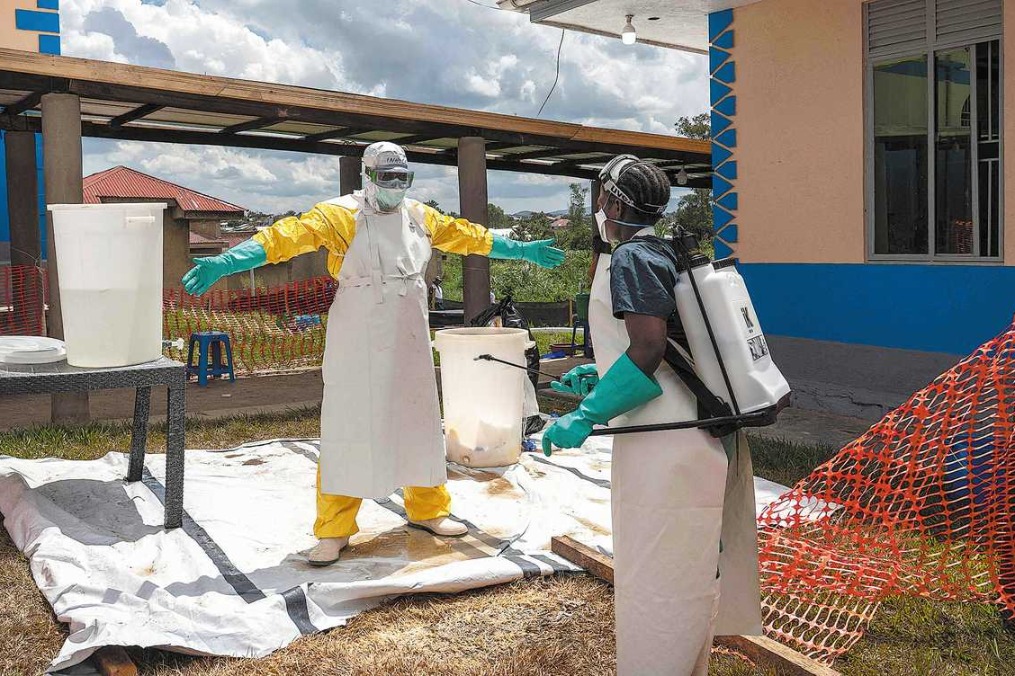
As a deadly Ebola outbreak spreads rapidly across the Democratic Republic of the Congo (DRC) and Uganda, pushing case counts past 490 and sparking global alarm, the World Health Organization (WHO) and Africa Centres for Disease Control and Prevention (Africa CDC) have issued an urgent call for coordinated international solidarity to contain the epidemic before it spills further across regional borders.
The current outbreak, caused by the less common Bundibugyo Ebola strain, has expanded at an alarming pace since it was first detected in mid-May. What began as a small cluster of infections in just three health zones across one eastern DRC province has grown to cover 25 health zones across three DRC provinces, with confirmed cases now reaching Uganda’s capital city of Kampala. As of early June 2026, official WHO data puts total confirmed cases at nearly 500, with Ituri Province in northeastern DRC remaining the crisis epicenter: the region accounts for 90 percent of all confirmed infections and 76 percent of recorded fatalities from the virus.
Health authorities confirm this outbreak is already the largest ever recorded for the Bundibugyo strain, outpacing previous outbreaks in Uganda in 2007 and the DRC in 2012. A key ongoing challenge, officials warn, is the absence of licensed vaccines or widely approved therapeutics specifically targeting this strain of the virus. While several promising candidate treatments and vaccines are currently in development, none have cleared regulatory approval for large-scale deployment to affected communities, leaving response teams without established preventive tools.
During a high-level emergency briefing held Friday, WHO Director-General Tedros Adhanom Ghebreyesus announced the launch of a joint six-month regional preparedness and response plan, developed alongside Africa CDC, to mount a unified fight against the outbreak. The plan, which runs from June through December 2026, carries an estimated price tag of $518 million and operates under the coordinating framework of “one plan, one budget, one team” to eliminate fragmentation in relief efforts. Core priorities outlined in the strategy include streamlined emergency coordination, expanded disease surveillance and contact tracing, scaled-up laboratory testing capacity, strict infection prevention protocols in healthcare settings, improved clinical care for infected patients, intentional community engagement, accelerated research into candidate treatments, logistics support for relief operations, and the preservation of routine essential health services that could otherwise be disrupted by the outbreak.
“The outbreak is moving fast and we are still playing catch-up,” Tedros said following a recent assessment trip to the DRC. “But my trip to the DRC also gave me real hope that together, under the government’s leadership, we can bring this outbreak under control. The only way to beat this outbreak is through close partnership, working together under the leadership of the affected countries in one coordinated effort.”
Africa CDC has already implemented a suite of urgent emergency measures to slow transmission, including high-level political engagement with regional heads of state and health ministers, deployment of multidisciplinary rapid response teams to affected zones, expansion of local laboratory testing capacity, and coordination of the delivery of more than 200 metric tons of critical medical supplies from global partners. Africa CDC Director-General Jean Kaseya highlighted China’s recent contribution to the response effort, noting that a multidisciplinary team of Chinese experts spanning epidemiology, clinical care, research, and traditional Chinese medicine arrived in Kinshasa last week to begin a three-month mission supporting capacity building for local Ebola response teams.
“China has joined a growing list of international partners supporting response efforts, highlighting the importance of global solidarity in tackling public health emergencies,” Kaseya said.
WHO’s Africa Regional Director Mohamed Yakub Janabi emphasized that building and maintaining community trust is a foundational pillar of any successful response. Misinformation spreading through affected communities, he warned, poses a threat nearly as dangerous as the virus itself, capable of undermining core public health measures.“Without community participation, contact tracing falters, safe care is delayed and transmission continues,” Janabi explained. “Misinformation is almost as dangerous as the virus itself and spreads just as fast.”
Global health leaders stress that immediate, coordinated international investment and partnership are critical to preventing the outbreak from becoming a sustained regional crisis that could spread to additional neighboring countries across central Africa.