作者: admin

  • Trump cites talks, pauses strikes on Iran energy sites

    Trump cites talks, pauses strikes on Iran energy sites

    In a significant de-escalation of Middle Eastern tensions, US President Donald Trump declared a five-day suspension of planned military strikes against Iranian energy facilities, citing “productive conversations” between the two nations. The announcement, made via social media on Monday, immediately influenced global markets, driving oil prices downward and boosting stock futures.

    The apparent diplomatic breakthrough represents a dramatic reversal from Trump’s previous ultimatum threatening strikes if Iran failed to reopen the Strait of Hormuz by Monday night. In subsequent interviews, the President expressed optimism about reaching a comprehensive agreement with Tehran “within five days or less,” specifically mentioning Sunday night discussions involving US envoys Steve Witkoff and Jared Kushner with their Iranian counterparts.

    However, Iranian officials swiftly contradicted the White House narrative. Through the semi-official Fars news agency, Tehran denied any negotiations—”direct or indirect”—had occurred with Washington. The conflicting accounts created uncertainty about the actual diplomatic status between the longstanding adversaries.

    The backdrop to these developments includes continued regional violence. Multiple explosions were reported across Iran early Monday, with Tasnim News Agency attributing strikes on residential areas in Khorramabad to US forces, claiming nine civilian fatalities. Al Jazeera documented additional strikes on a Bandar Abbas radio station and widespread activation of Iranian air defense systems.

    Meanwhile, the Islamic Revolutionary Guard Corps addressed what it termed false US allegations regarding planned attacks on Gulf water desalination plants. The IRGC clarified that any Iranian retaliation would specifically target Israeli power facilities and regional energy infrastructure with American ownership interests.

    The Iranian Foreign Ministry additionally issued a statement characterizing US-Israeli strikes as violations of the UN Charter, asserting Iran’s right to self-defense while denying any intention to completely close the vital Strait of Hormuz shipping lane. The ministry noted that insurance concerns stemming from the conflict had already created de facto restrictions on maritime traffic.

    Separately, regional tensions expanded as Israel faced accusations of escalating its ground offensive in southern Lebanon, destroying a critical bridge over the Litani River. Lebanese President Joseph Aoun condemned these actions as “collective punishment” against civilians and a dangerous escalation of the broader conflict.

  • Doula Emily Lal may be compelled to give evidence at Stacey Warnecke inquest

    Doula Emily Lal may be compelled to give evidence at Stacey Warnecke inquest

    A Victorian coroner is poised to compel testimony from a doula who witnessed the fatal freebirth of wellness influencer Stacey Warnecke, following the practitioner’s refusal to provide an official statement. The Coroners Court heard Tuesday that Emily Lal, known online as The Authentic Birthkeeper, has invoked self-incrimination concerns in declining to cooperate with the investigation into Warnecke’s September 2023 death.

    The 30-year-old nutrition influencer died at Frankston Hospital hours after delivering her son Axel during a homebirth attended only by her husband and Ms. Lal. Medical authorities believe she succumbed to postpartum hemorrhage after her condition deteriorated rapidly following the delivery. Paramedics were summoned at 4:13 AM when complications arose, but despite hospital staff’s efforts, Warnecke suffered multiple cardiac arrests and could not be revived.

    Coroner Therese McCarthy’s upcoming inquest, scheduled for June 15-19, will examine critical questions including whether earlier medical intervention might have prevented the tragedy and what information sources expectant mothers consult when choosing freebirth options. The investigation will also address how maternal health systems can better engage with individuals who distrust conventional medical care.

    Counsel assisting the inquest emphasized Ms. Lal’s status as a “highly relevant witness” in understanding the circumstances surrounding Warnecke’s deterioration. The court proposed issuing a witness summons with protective measures that would prevent her testimony from being used against her in other proceedings. Should she maintain her refusal, Coroner McCarthy possesses the authority to compel her evidence.

    The case has drawn attention to regulatory oversight of birth support practitioners. Victoria’s Health Complaints Commissioner issued an interim prohibition order in October 2023 barring Ms. Lal from providing health services in the state pending investigation outcomes through April 7.

    Warnecke’s husband Nathan described his wife as “the light of my life” in a heartbreaking social media tribute, noting hospital staff performed admirably despite the “unforeseen and extremely rare complication” that claimed her life just hours after she welcomed their first child.

  • ‘This war is not of their making,’ Omani foreign minister says of Iran

    ‘This war is not of their making,’ Omani foreign minister says of Iran

    In a significant diplomatic divergence, Oman’s Foreign Minister Badr al-Busaidi has publicly asserted that Iran cannot be held responsible for the ongoing military conflict initiated by the United States and Israel on February 28th. The senior Omani official, who played a pivotal role in mediating US-Iran negotiations until their final hours, made these declarations through his social media channels.

    ‘Whatever your view of Iran, this war is not of their making,’ Minister al-Busaidi stated emphatically. He further warned that the conflict is generating substantial economic disruptions throughout the region, with conditions likely to deteriorate significantly if hostilities continue. The minister revealed that Oman is actively developing safety protocols for maritime passage through the critically important Strait of Hormuz.

    This position marks a dramatic departure from other Gulf Cooperation Council members, including the United Arab Emirates and Saudi Arabia, who have expressed varying degrees of anger toward Tehran following retaliatory strikes that affected regional energy infrastructure and US military assets.

    The typically low-profile Omani diplomat has emerged as a visible advocate for diplomatic solutions, traveling to Washington just before the conflict escalation to appear on CBS News and advocate for continued negotiations. He emphasized that Iran had made substantial concessions during diplomatic talks with American representatives.

    In a subsequent editorial for The Economist, Minister al-Busaidi characterized Iran’s retaliatory measures as ‘an inevitable, if deeply regrettable and completely unacceptable, result’ of perceived existential threats from the US and Israel. He maintained that Tehran’s leadership faced limited rational options when confronted with what both nations described as a war aimed at terminating the Islamic Republic.

    Additional reporting indicates potential shortcomings in the negotiation process, with US mediators reportedly lacking technical expertise to fully comprehend the proposals under discussion. Meanwhile, regional tensions continue to escalate as the UAE has allegedly developed a coordinated media narrative targeting both Saudi Arabia and Oman for their reluctance to confront Iran directly in strategic waterways.

    Current casualty estimates indicate over 2,000 Iranian fatalities, alongside 13 American deaths and several dozen Israeli casualties, though official Israeli figures remain undisclosed. The conflict has additionally claimed 60 lives in Iraq and 25 throughout GCC nations, many being expatriates affected by intercepted missile debris.

  • Service station owner taken to hospital after attempting to stop alleged fuel thief

    Service station owner taken to hospital after attempting to stop alleged fuel thief

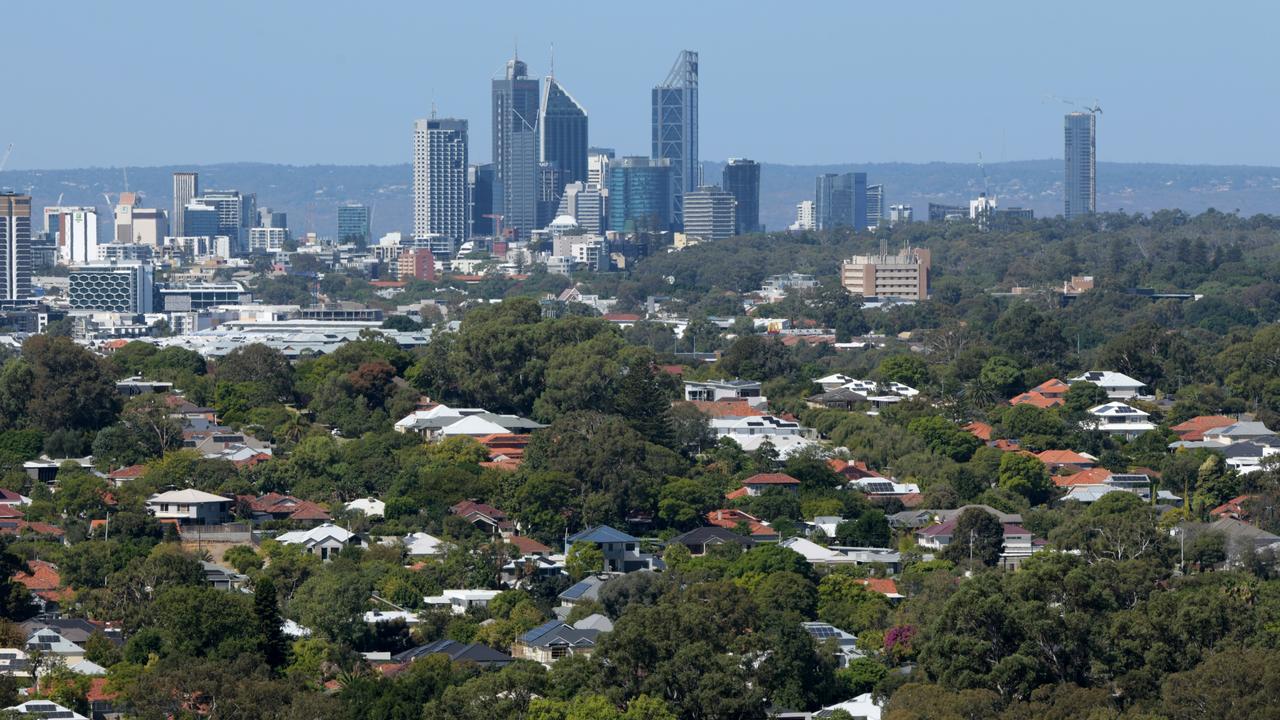
    A service station proprietor in Armadale, located in Perth’s southeastern suburbs, sustained serious injuries during a violent confrontation with an alleged fuel thief on Monday afternoon. According to Western Australia Police, the incident unfolded around 1:00 PM when a man driving a dark-colored sedan refueled his vehicle and subsequently attempted to depart without rendering payment.

    The station owner intervened in an effort to prevent the vehicle’s departure. It was during this confrontation that the driver allegedly struck the proprietor with the sedan, resulting in significant facial injuries before fleeing the scene. Emergency responders transported the injured business owner to a nearby hospital for treatment of his wounds.

    Stephen Visser, one of the first responders at the scene, described the severity of the injuries to local media. “I could just tell by the marks on his face … the car has struck him and he was dragged and then knocked over,” Visser told 9News.

    Law enforcement authorities subsequently apprehended a 39-year-old Armadale resident in connection with the incident. The suspect faces multiple charges including stealing, dangerous driving occasioning grievous bodily harm, failing to report an incident, and operating a vehicle with falsified registration plates. Additionally, he has been charged with failing to stop and ensure assistance was provided after an incident resulting in serious bodily harm.

    The accused is scheduled to appear before Armadale Magistrates Court on Tuesday. This incident occurs against the backdrop of rising fuel prices across Australia, which authorities attribute to ongoing geopolitical tensions in the Middle East affecting global oil markets.

  • UK must back North Sea oil and gas drilling, says trade body

    UK must back North Sea oil and gas drilling, says trade body

    Britain’s offshore energy sector has issued an urgent warning about the nation’s growing dependency on imported fossil fuels during a period of heightened global instability. Offshore Energies UK (OEUK), representing the industry, contends that without increased domestic production, the UK faces significant vulnerability to international market fluctuations and supply disruptions.

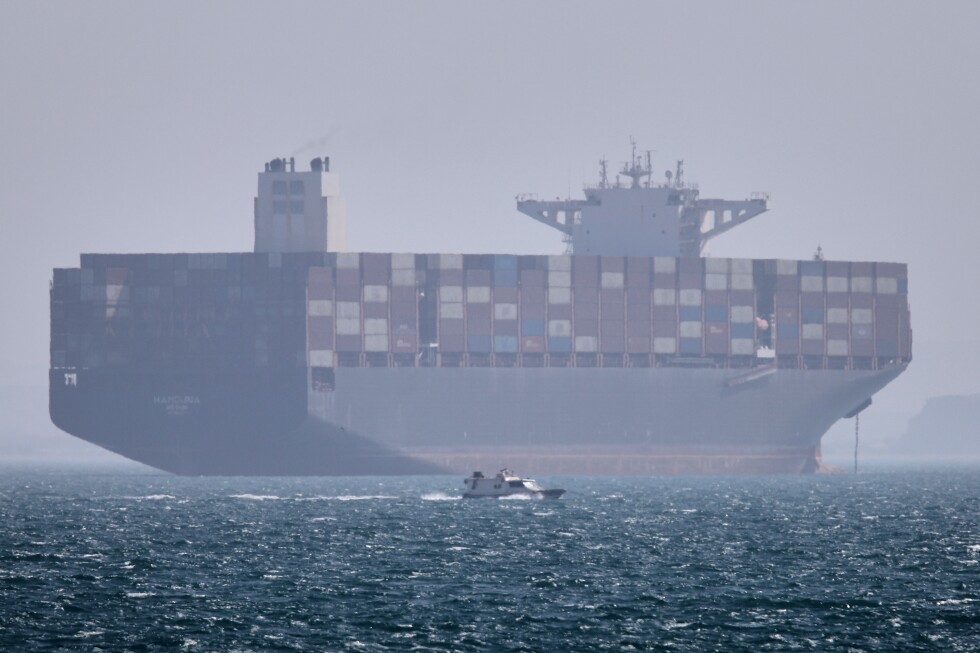
    The call for action comes amid sharply rising oil and gas prices following the US-Israel conflict with Iran and Tehran’s effective closure of the Strait of Hormuz—a critical chokepoint for global crude shipments. Industry leaders argue that recent events demonstrate how quickly energy markets can tighten and how cargoes can be diverted away from the UK when international buyers offer higher prices.

    This appeal places the offshore energy industry in direct opposition to current government policy. The Labour administration has implemented a ban on new oil and gas field licenses in the North Sea, maintaining that domestic extraction “cannot give us energy security and will not take a penny off bills” since prices are set on international markets regardless of production origin.

    Energy Secretary Ed Miliband recently emphasized to the BBC that the current crisis—which has seen oil prices surge by over 30%—reinforces the need for “home-grown, clean power that we control.”

    However, OEUK’s newly released report presents a contrasting perspective, revealing that oil and gas still supply approximately 75% of the UK’s energy needs and are projected to meet about one-fifth of demand by 2050. The industry organization emphasizes that this is “not an either renewables or oil and gas scenario,” advocating for a balanced energy transition approach.

    OEUK specifically calls for the government to reconsider its stance on offshore exploration licenses following last year’s ban. Currently, developers are restricted to increasing production only within existing licensed fields or adjacent areas to maintain viability.

    The industry group also proposes eliminating the Energy Profits Levy (windfall tax) by 2026—four years ahead of schedule—and replacing it with an Oil and Gas Price Mechanism that would impose a 35% tax only when prices exceed certain thresholds. This change, they argue, would unlock £50 billion in new investment for UK oil and gas projects.

    The political battle over energy policy intensifies as the Conservative Party prepares to use its Opposition Day debate in parliament to demand an end to both the windfall tax and the ban on new licenses. Additionally, they seek government approval for two Scottish oil and gas fields—Rosebank and Jackdaw—after a court blocked development last year due to inadequate environmental impact assessments.

    Shadow Energy Secretary Claire Coutinho characterized rejecting domestic gas resources during a supply crisis as “sheer lunacy.”

    Countering these arguments, University of Oxford researchers have challenged claims that increased domestic extraction would significantly reduce energy bills. Their findings indicate that even maximizing North Sea production and directly returning revenues to households would yield far smaller consumer savings than accelerating the transition to renewable energy.

    Environmental organizations including Greenpeace UK have accused the industry of seeking to maximize profits during periods of price spikes and conflict. Mel Evans, head of climate at Greenpeace UK, stated that while policy changes wouldn’t reduce consumer costs, they would enable fossil fuel companies to “profiteer more than ever” during oil wars.

  • ‘Proud to have him’: Luke Garner officially off the market after agreeing to new deal with the Panthers

    ‘Proud to have him’: Luke Garner officially off the market after agreeing to new deal with the Panthers

    In a significant retention victory, Penrith Panthers have successfully secured versatile forward Luke Garner with a contract extension that will keep the two-time premiership winner at the club through the 2028 season. The decision effectively blocks ambitious expansion franchises Perth Bears and Papua New Guinea Chiefs from acquiring the highly-valued player when they enter the NRL competition in 2027 and 2028 respectively.

    Garner, who joined the Panthers in 2023 after five seasons with Wests Tigers, has become an integral component of Penrith’s success machine. The 30-year-old’s exceptional versatility allows him to excel in multiple positions across the back row and centers, providing crucial defensive coverage and tactical flexibility. His contribution was instrumental in securing consecutive premiership titles in 2023 and 2024.

    Panthers management expressed unanimous enthusiasm about the retention. Shane Elford, Panthers General Manager of Football, praised Garner as “a true professional who prepares diligently and consistently delivers for the team. His work ethic, versatility and team-first attitude are highly valued within our group.”

    Beyond his on-field capabilities, club officials highlighted Garner’s community engagement and character. Panthers Rugby League CEO Matt Cameron emphasized: “Luke is not only a high-quality footballer, but a terrific person who represents our club with integrity. He genuinely invests in the community through charity work and fan engagement, consistently giving his time to make a positive difference.”

    The retention represents a strategic coup for the Panthers organization, ensuring continuity in their championship-winning squad while denying expansion teams access to an experienced premiership veteran.

  • Inside the alleged Russian operation to trigger anti-government protests in Angola

    Inside the alleged Russian operation to trigger anti-government protests in Angola

    Angola is preparing to try two Russian nationals and two Angolan citizens in a landmark case alleging foreign election interference, disinformation campaigns, and anti-government activities. The defendants—Russian political consultant Igor Ratchin, translator Lev Lakshtanov, Angolan sports journalist Amor Carlos Tomé, and political activist Francisco Oliveira—have been detained in Luanda for eight months facing charges ranging from terrorism and espionage to influence peddling.

    According to prosecution documents obtained by the BBC, the Russian defendants allegedly operated under Africa Politology, a shadow network emerging from the dissolved Wagner Group. The indictment claims they orchestrated a sophisticated operation to manipulate Angola’s political trajectory ahead of next year’s presidential election through disinformation dissemination and protest instigation.

    The defense teams vigorously challenge these allegations, arguing the indictment lacks concrete evidence and relies on conjecture. Russian counsel maintains their clients were merely establishing a cultural ‘Russian House’ in Luanda without state sponsorship or connections to Wagner operations.

    This case unfolds against shifting geopolitical alliances. Angola, a significant oil and diamond producer, has gradually distanced itself from Moscow under President João Lourenço’s administration. Russian entities like diamond miner Alrosa and bank VTB have exited Angola due to Ukraine-related sanctions, while Lourenço has strengthened ties with Western nations.

    Analysts interpret the alleged operation as reflecting Russian anxiety over Angola’s geopolitical reorientation. ‘This demonstrates Russian discomfort with Angola’s direction under Lourenço,’ noted Alex Vines of the European Council on Foreign Relations. ‘There’s clear disinformation intent to build sympathy toward Russia.’

    The prosecution alleges the network employed multiple tactics: recruiting local journalists, commissioning propaganda articles, and making payments exceeding $24,000 to influence Angolan media. They allegedly impersonated legitimate news sources, with one Facebook page mimicking Angola 24 Horas publishing content criticizing Western-backed infrastructure projects like the Lobito Corridor.

    Most seriously, prosecutors claim the group orchestrated July’s deadly protests—the worst since Angola’s civil war ended—that resulted in 29 deaths and 1,200 arrests. The indictment cites phone notes and photographs as evidence, though defense attorneys counter that Ratchin documented protests solely for personal safety.

    Local journalists and human rights researchers question the prosecution’s narrative, suggesting authorities may be using foreign defendants as scapegoats for organic discontent driven by poverty affecting 40% of Angolans. The indictment itself contains inconsistencies, including disputed timelines regarding Wagner-linked operative Maxim Shugalei’s whereabouts.

    Legal expert Rui Verde notes the prosecution must demonstrate deliberate coordination among the alleged activities to prove subversion intent. If convicted, the Russians face potential repatriation, though Russian diplomatic sources suggest limited official concern for ‘contractors’ not on state missions.

  • Kim vows to ‘irreversibly’ cement North Korea’s nuclear status, calls South ‘most hostile’

    Kim vows to ‘irreversibly’ cement North Korea’s nuclear status, calls South ‘most hostile’

    North Korean leader Kim Jong Un has unequivocally reinforced his nation’s position as an irreversible nuclear power while escalating rhetoric against South Korea, which he designated as Pyongyang’s “most hostile” state. During his address to the Supreme People’s Assembly on Monday, the authoritarian leader delivered a stark warning to adversaries while maintaining strategic ambiguity regarding future diplomatic engagements.

    Kim’s parliamentary speech, reported by state media Tuesday, demonstrated remarkable consistency with his previous declarations at last month’s Workers’ Party Congress. He intensified his criticism of the United States, accusing Washington of “state terrorism and aggression” in apparent reference to Middle Eastern conflicts. Despite these provocations, the North Korean leader carefully avoided direct confrontation with former President Donald Trump, stating that Pyongyang remains prepared to respond to either “confrontation or peaceful coexistence.”

    The parliamentary session concluded with the adoption of constitutional revisions, though specific amendments remain undisclosed. This development follows Kim’s groundbreaking January 2024 announcement abandoning decades-long pursuit of peaceful reunification with South Korea. Geopolitical analysts interpret these moves as strategic recalculations positioning Seoul not as an intermediary but as an obstacle to Pyongyang’s regional ambitions.

    Kim’s address highlighted significant pride in North Korea’s accelerated nuclear weapons program, characterizing these developments as essential countermeasures against “gangsterlike imperialists”—a thinly veiled reference to the United States and allied nations. “The dignity of the nation can only be guaranteed by the strongest of power,” Kim declared, vowing to “aggressively wage a struggle against hostile forces.”

    Recent geopolitical shifts have influenced Pyongyang’s strategic calculus. Kim’s growing alignment with Russia, demonstrated through substantial military support for Moscow’s Ukraine campaign, suggests potential exchanges of aid and technological transfers. Meanwhile, escalating Middle Eastern tensions, particularly joint U.S.-Israeli operations against Iran, may have raised Kim’s threshold for reengaging with Washington. Despite these complexities, analysts suggest North Korea maintains strategic flexibility, potentially preserving opportunities for future dialogue aimed at securing sanctions relief and tacit nuclear recognition.

  • UK universities flock to India – but will they succeed?

    UK universities flock to India – but will they succeed?

    Amidst the vibrant urban landscape of Mumbai, the University of York’s new campus nears completion along the serene shores of Powai Lake, marking a significant milestone in international education collaboration. This development positions York among nine UK institutions establishing footholds in India, following diplomatic announcements during Sir Keir Starmer’s recent visit. The pioneering University of Southampton has already inaugurated its Delhi campus, with Aberdeen, Bristol, Liverpool, Queen’s Belfast, and Coventry Universities similarly advancing Indian operations.

    This educational expansion stems from India’s 2020 National Education Policy, which established legal frameworks for foreign university operations by 2023. The initiative creates symbiotic opportunities: UK institutions gain access to India’s massive education market while Indian students obtain international-standard education domestically. According to government statistics, India requires 70 million university placements by 2035, presenting British universities with potential access to 25-30 million incremental seats.

    Lindsay Oades, Provost of University of York Mumbai, reveals initial enrollment targets of 270 students for the 2026-27 academic year, with planned expansion to 3,000-4,000 annually. The curriculum will emphasize business, management, and engineering programs, with tuition approximately half of UK campus rates. Students will have hybrid learning options between Indian and UK campuses.

    Despite apparent advantages, challenges persist. Aritra Ghosal of OneStep Global notes that while 11 million Indian students complete Grade 12 annually, only 200,000 secure placements in top-tier institutions. Approximately 4-5 million students can realistically consider programs exceeding £10,000 annually, representing an aspirational upper-middle class rather than mass market.

    Critical success factors include maintaining UK academic standards at Indian price points, requiring stringent cost discipline and strategic program selection. Infrastructure presents another hurdle—real estate consultancy Anarock estimates need for 30,000 acres of campus land and 2.7 billion square feet of academic infrastructure, requiring approximately $100 billion investment. Many institutions may initially adopt asset-light strategies through leased facilities.

    The model faces cultural considerations as well. Mumbai parent Ankita Kejriwal observes that international work exposure remains primary motivation for overseas study, suggesting India-delivered UK degrees may not fully substitute for abroad experiences. However, tighter immigration rules elsewhere could make domestic international education increasingly attractive for students seeking brand value with reduced financial and visa complications.

  • Iran denies having talks with US, calls them ‘meaningless’ in current conditions

    Iran denies having talks with US, calls them ‘meaningless’ in current conditions

    Iran has categorically rejected assertions by U.S. President Donald Trump regarding diplomatic engagement between the two nations, labeling potential talks as ‘meaningless’ under current circumstances. The denial comes amid heightened military tensions following recent joint U.S.-Israeli strikes on Iranian territory.

    Foreign Ministry spokesperson Esmaeil Baghaei clarified through state news agency IRNA that while friendly nations have conveyed Washington’s interest in initiating dialogue to conclude hostilities, Tehran has not responded to these overtures. The official emphasized that Iran’s fundamental positions regarding the Strait of Hormuz and its conditions for conflict resolution remain unchanged.

    Parliamentary leadership reinforced this stance, with Speaker Mohammad Bagher Ghalibaf publicly disputing negotiation claims on social media platform X. Ebrahim Rezaei, spokesperson for parliament’s National Security Committee, further characterized potential discussions with American officials as presently irrelevant.

    These developments contradict President Trump’s announcement of postponed strikes against Iranian energy infrastructure, which he attributed to productive diplomatic exchanges. Meanwhile, Reuters reported ongoing backchannel communications potentially involving third-party mediation in Islamabad.

    The diplomatic impasse persists against a backdrop of escalating regional violence that began with February 28th coalition strikes against Iran, prompting retaliatory measures from Tehran and allied forces against U.S. and Israeli interests throughout the Middle East.