作者: admin

  • Malinin and Sakamoto seek solace at figure skating worlds as Olympic champions absent

    Malinin and Sakamoto seek solace at figure skating worlds as Olympic champions absent

    The world figure skating championships commence in Prague this Wednesday under a distinctly post-Olympic atmosphere, with several newly crowned champions absent from the ice. This creates a pivotal opportunity for redemption and career-defining conclusions for a cadre of elite skaters.

  • ‘Perfect Japan’ posts spark Gen Z social media backlash

    ‘Perfect Japan’ posts spark Gen Z social media backlash

    A growing social media movement among Generation Z is actively deconstructing the romanticized digital portrayal of Japan that has captivated millions of international visitors. Dubbed the “Japan effect,” this trend utilizes satirical videos that transform mundane scenes—like ordinary subway rides—into dreamlike Japanese vacation fantasies through anime-style music and rosy filters.

    The backlash emerges as Japan experiences unprecedented tourism levels, with 42.7 million arrivals recorded in 2025 despite diplomatic tensions reducing Chinese visitors. Residents of cultural hotspots like Kyoto have expressed mounting frustration with overcrowding and intrusive tourist behavior, while online creators now highlight the disparity between Japan’s curated online image and its complex social reality.

    French internet culture analyst Rocky Louzembi, 25, describes this phenomenon as “glazing”—excessive praise that elevates Japanese culture while disparaging one’s own. The trend exposes how simple markers like “Tokyo, Japan” captions with cherry blossom emojis can artificially enhance otherwise ordinary content.

    Japanese contributors to social advocacy platform Blossom The Project note the concerning gap between anime-inspired expectations and actual societal challenges. Marketing professional Marika Sato, 29, and graphic designer Maya Kubota, 28, acknowledge appreciation for international interest but express discomfort with hyperbolic claims about Japanese superiority.

    Particular scrutiny falls on exaggerated cleanliness narratives, with content creators like The Hitobito demonstrating through experiments that Japan’s streets aren’t impossibly immaculate. The tourism surge has prompted official responses, including the cancellation of a prominent cherry blossom festival due to resident complaints about overtourism.

    Waseda University Professor Seio Nakajima attributes Japan’s viral appeal to its cultural emphasis on form and aesthetics, seen in detailed anime backgrounds and meticulous packaging traditions. However, he emphasizes that the curated online vision represents only a partial reality, as actual Japanese society encompasses broader complexities beyond its pristine image.

    Despite the critical discourse, many tourists report their experiences match expectations, with visitors like Tatiana Mokeeva from Russia maintaining unwavering enthusiasm for Japanese culture.

  • Ultimatums, diplomacy and a trip to Graceland as Trump eyes a deal with Iran

    Ultimatums, diplomacy and a trip to Graceland as Trump eyes a deal with Iran

    In a dramatic escalation of geopolitical tensions, President Donald Trump delivered a 48-hour ultimatum to Iran over the weekend, threatening devastating airstrikes if Tehran failed to reopen the Strait of Hormuz to international shipping. The warning signaled a potential intensification of the three-week conflict that has seen ongoing U.S.-Israeli airstrikes against Iranian targets and reciprocal missile attacks from Iran.

    The president’s Saturday night declaration—that America would ‘plunge Iran into darkness’ by targeting energy infrastructure—appeared to set the stage for catastrophic civilian consequences. Iran promptly countered with threats to regional energy and water systems, creating imminent fears of further escalation.

    Yet by Monday morning, Trump’s rhetoric underwent a remarkable reversal. Citing unspecified ‘constructive’ discussions with Iranian leadership—contacts unconfirmed by Tehran—the president announced a five-day suspension of threatened strikes. ‘We have major points of agreement,’ Trump stated before departing for a previously scheduled trip to Memphis. ‘They want very much to make a deal. We’d like to make a deal, too.’

    The diplomatic whiplash extended to financial markets, where oil prices dropped and U.S. stocks surged on hopes of de-escalation. This optimism persisted even as Iranian state media portrayed Trump’s pause as a retreat in the face of their threats.

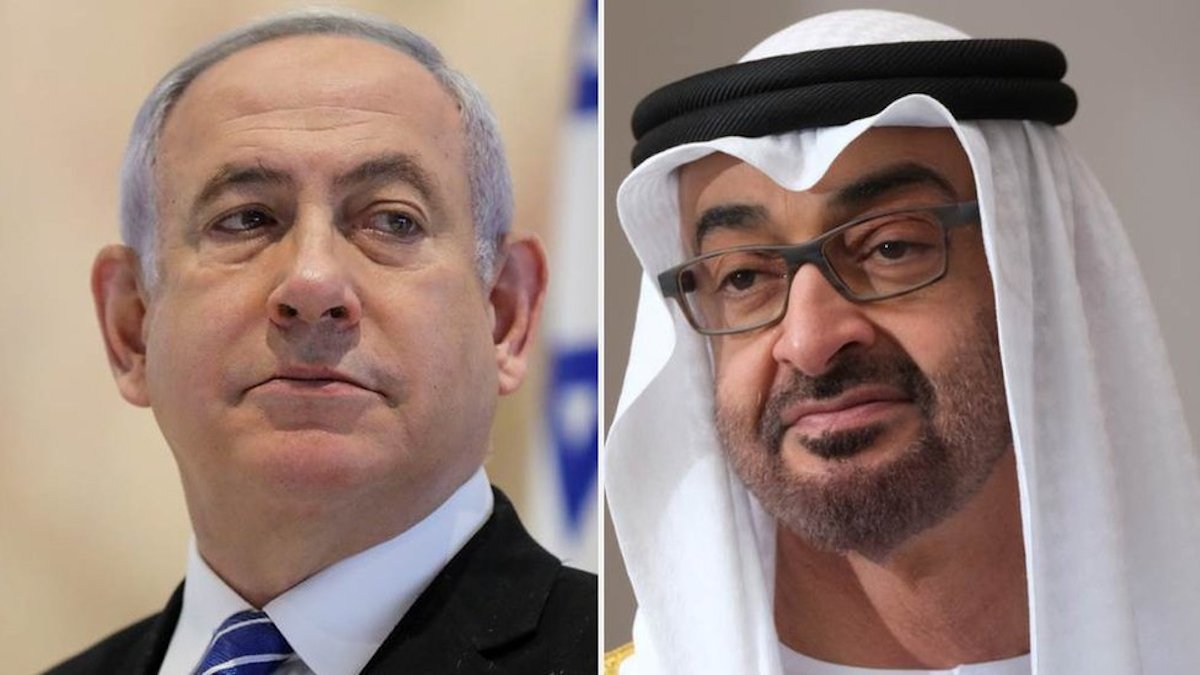
    Amidst the crisis management, Trump maintained a surreal schedule that included golfing in Florida, addressing National Guard personnel in Tennessee, and touring Graceland—Elvis Presley’s historic home. During his Memphis visit, the president curiously attributed reduced local crime rates to National Guard deployments while diplomatic channels buzzed with reports of calls with Israeli Prime Minister Netanyahu and potential direct talks with Iranian officials.

    The administration now operates under a new five-day deadline for military action, creating a tense window for diplomatic resolution. Trump’s oscillation between brinkmanship and optimism leaves allies and adversaries alike questioning whether this represents genuine progress or merely tactical delay from a president who may have overplayed his hand.

    As the world watches for concrete developments, the shadow of conflict looms alongside fragile hopes for negotiation. The coming days will determine whether this episode becomes a breakthrough toward peace or another chapter in a dangerous confrontation.

  • ‘How true the situation is’: Broncos players respond to shock Ben Te’o departure, Payne Haas set to miss Battle for Brisbane

    ‘How true the situation is’: Broncos players respond to shock Ben Te’o departure, Payne Haas set to miss Battle for Brisbane

    The Brisbane Broncos’ premiership defense has been plunged into chaos following a dual blow of coaching staff departure and a critical player injury. Defensive specialist Ben Te’o has reportedly resigned from his coaching position after a tactical disagreement with head coach Michael Maguire, just three rounds into the new season. The former premiership-winning player, who worked under Maguire at South Sydney Rabbitohs, tendered his resignation following disputes over defensive strategies ahead of last week’s grand final rematch.

    The coaching drama compounds existing troubles for the club, coming on the heels of last week’s public controversy involving Broncos legend Gorden Tallis, who criticized the team’s handling of captain Adam Reynolds’ rib injury. The off-field disruptions couldn’t come at a worse time, with the team preparing for Friday’s highly anticipated ‘Battle for Brisbane’ derby against the Dolphins.

    Adding to the crisis, superstar prop Payne Haas is likely to miss the crucial match due to a shoulder injury, creating a significant void in the team’s forward pack. Te’o’s departure leaves the defensive coaching structure in disarray, while Haas’ absence threatens to undermine the team’s forward dominance. Players including Brendan Piakura and Ben Talty acknowledged Te’o’s significant impact on their defensive development while expressing uncertainty about the coaching situation’s resolution. The team now faces the challenge of regrouping ahead of their local derby while managing both coaching instability and key personnel losses.

  • New European Union trade deal ‘constrains’ Australian meat exports, industry warns

    New European Union trade deal ‘constrains’ Australian meat exports, industry warns

    In a landmark move eight years in the making, Australia and the European Union have formally signed a historic free-trade agreement projected to boost Australia’s GDP by $10 billion. While the Albanese government hails the pact as a significant economic achievement, Australia’s meat industry has responded with fierce opposition, labeling the arrangement a devastating blow.

    The agreement, signed by Prime Minister Anthony Albanese and European Commission President Ursula von der Leyen, eliminates 98% of EU tariffs on Australian goods, providing substantial benefits for sectors including wine, nuts, fruits, vegetables, honey, olive oil, dairy, grains, and seafood. The government emphasizes that this opens access to a market of 450 million people in the world’s second-largest economy.

    However, the Australian Meat Industry Council (AMIC) has condemned the deal’s provisions for red meat exports. Chief Executive Tim Ryan characterized the outcome as ‘a kick in the guts,’ asserting that the negotiated terms fall severely short of industry expectations and lag behind concessions granted to Australia’s international competitors.

    Critical points of contention include a beef quota capped at just 10,200 tonnes for the first five years—approximately 30,600 tonnes less than the volume allocated to competitors, who can export up to 50,000 tonnes. Similarly, the sheep and goat meat quota of 25,000 tonnes is deemed inadequate, with AMIC citing 67,000 tonnes as the minimum acceptable threshold. This pales in comparison to New Zealand’s allocation of 125,000 tonnes under its separate EU agreement.

    Ryan criticized the deal for restricting rather than promoting trade, noting it fails to reflect the red meat sector’s substantial contribution to Australia’s export economy. The agreement arrives during a period of heightened pressure for the industry, which has recently faced significant geopolitical challenges, including reduced meat imports by China and restrictive licensing arrangements imposed by Indonesia.

    Opposition trade spokesman Matt Canavan expressed skepticism about the deal’s immediate benefits, acknowledging that initial details ‘don’t sound all that attractive.’ The agreement represents a complex balancing act between broad economic gains and specific sectoral disadvantages, highlighting the challenges of negotiating multinational trade partnerships.

  • Too old? The 92-year-old US judge handling Maduro case

    Too old? The 92-year-old US judge handling Maduro case

    The judicial proceedings against deposed Venezuelan president Nicolás Maduro on narco-terrorism charges have drawn unprecedented attention to presiding Judge Alvin Hellerstein, one of America’s oldest sitting federal jurists at 92 years of age. Appointed to the Southern District of New York by President Bill Clinton in 1998, Hellerstein brings decades of distinguished legal experience to what promises to be a complex and protracted trial.

    Legal experts are divided on whether nonagenarian judges should oversee lengthy, high-profile cases. Former federal judge Shira Scheindlin acknowledged that ‘the issue of age cannot be ignored,’ though she simultaneously praised Hellerstein as ‘very smart and savvy’ in courtroom operations. These concerns gained traction after The New York Times reported observers witnessed Hellerstein nodding off during a trial last year, requiring assistance from judicial colleagues.

    Hellerstein’s extensive career includes landmark rulings that demonstrate judicial independence and commitment to justice. He presided over the massive litigation following the September 11, 2001 terrorist attacks, frequently rejecting settlement agreements he deemed unfair to plaintiffs. In a significant 2015 decision, he compelled the U.S. government to release photographic evidence documenting detainee abuse in Iraq and Afghanistan.

    The jurist has repeatedly demonstrated willingness to challenge powerful figures, including former President Donald Trump. Hellerstein denied Trump’s attempt to move his New York hush money case to federal court and blocked the Trump administration from summarily deporting alleged Venezuelan gang members without proper hearings.

    University of Richmond law professor Carl Tobias noted Hellerstein possesses ‘a well-deserved reputation for seeking to do justice in every case and for being independent and fair-minded.’ This quality will be essential as the Maduro case progresses, with legal maneuvering between defense and prosecution teams expected to extend proceedings potentially for two years.

    Maduro and his wife, Cilia Flores, pleaded not guilty to drug trafficking charges during their January arraignment. The case represents the culmination of over a decade of investigation that already resulted in the conviction of Venezuela’s former intelligence chief, Hugo Armando Carvajal. Maduro’s dramatic arrest following a U.S. raid on his Venezuelan compound has intensified scrutiny on both the defendant and the aged judge overseeing his fate.

  • Eight people arrested in Brazil for ‘brutal’ attack on capybara

    Eight people arrested in Brazil for ‘brutal’ attack on capybara

    Brazilian law enforcement has apprehended eight individuals connected to a vicious assault on a capybara, the world’s largest rodent species renowned for its tranquil disposition and internet meme fame. The incident occurred in Rio de Janeiro’s Ilha do Governador district during early Saturday morning, where security footage captured multiple assailants striking the defenseless animal with metal bars and wooden sticks.

    Police Commissioner Felipe Santoro, leading the investigation, characterized the assault as ‘a brutal crime that shocks society’ in statements to O Globo newspaper. He emphasized that the capybara ‘posed absolutely no threat…yet was deliberately attacked nonetheless,’ describing the act as demonstrating extreme cruelty toward wildlife.

    The investigation progressed rapidly through analysis of surveillance evidence, resulting in the identification and Saturday detention of six adults and two minors. The victim, a 65-kilogram male capybara, was transported to Estacio University’s Wildlife Care Center (CRAS) in southwestern Rio for emergency treatment.

    Veterinarian Jeferson Pires, director of CRAS with 22 years of wildlife rehabilitation experience, reported this case represents the most severe aggression against a capybara he has encountered. The animal sustained critical injuries including cranial trauma, periorbital swelling with internal hemorrhage near its left eye, and multiple dorsal wounds. Despite these injuries, the capybara is showing signs of recovery under professional care.

    This incident follows January’s nationwide outcry over teenage brutality toward a stray dog, which drew commentary from First Lady Rosangela ‘Janja’ da Silva. Capybaras have achieved cultural significance in recent years through viral internet phenomena, particularly the ‘Comrade Capybara’ meme originating from their 2021 occupation of an Argentine luxury development constructed on their native wetlands. The species’ image now frequently appears on merchandise and social media content promoting serenity and adaptability.

  • US bans new foreign-made consumer internet routers

    US bans new foreign-made consumer internet routers

    In a significant move to bolster national cybersecurity defenses, the Federal Communications Commission (FCC) has officially prohibited the authorization of all new foreign-manufactured consumer internet routers. The decision, announced Monday by FCC Chairman Brendan Carr, classifies these devices alongside other high-risk equipment previously deemed security threats, such as foreign-made drones banned in late 2023.

    The updated FCC equipment list now explicitly excludes consumer-grade routers produced outside the United States, effectively blocking their import, marketing, and sale without prior agency approval. This regulatory shift responds to what officials describe as systematic exploitation of security vulnerabilities in foreign-sourced routers by malicious actors.

    “Malicious actors have weaponized security gaps in foreign-made routers to launch attacks against American households, disrupt critical networks, enable espionage operations, and facilitate large-scale intellectual property theft,” the FCC stated in its official announcement.

    While existing foreign-made routers remain operational for current users, the ban specifically targets all new device models entering the market. The ruling mandates that any newly developed router manufactured internationally must undergo rigorous FCC evaluation before gaining market access in the United States.

    Manufacturers seeking approval must now navigate a complex conditional authorization process that requires full disclosure of foreign investors and influences within their corporate structure. Additionally, companies must submit detailed plans for transitioning router production facilities to American soil.

    The regulatory action follows Friday’s interagency national security determination that overseas-produced internet routers present “unacceptable risks” to United States infrastructure. Government assessments cited three major cyberattacks between 2024-2025—codenamed Volt, Flax, and Salt Typhoon—that exploited router vulnerabilities to target critical infrastructure. Official investigations attributed these attacks to entities operating within or on behalf of the Chinese government.

    This policy creates substantial challenges for major router brands dominant in the American market, including TP-Link—a Chinese-manufactured product line that ranks among Amazon’s bestsellers—and even US-based companies like Netgear that manufacture products abroad. The regulation applies regardless of where routers are designed, focusing exclusively on production location.

    Limited exemptions may be granted for routers receiving approval from the Department of Defense or Department of Homeland Security, though neither agency has yet approved any specific router models for exception. Currently, Starlink’s Texas-manufactured routers represent one of the few consumer options produced entirely within the United States.

  • Global shares mostly rebound after Trump hints at a possible end to the Iran war

    Global shares mostly rebound after Trump hints at a possible end to the Iran war

    Financial markets worldwide exhibited a notable recovery on Tuesday, buoyed by cautious optimism following diplomatic developments between the United States and Iran. The positive sentiment emerged after former President Donald Trump announced that Washington had engaged in discussions with Tehran aimed at resolving ongoing hostilities in the Middle East.

    European indices opened with modest gains, with France’s CAC 40 climbing 0.4% to 7,759.97 and Germany’s DAX advancing 0.2% to 22,695.54. Britain’s FTSE 100 remained nearly flat, inching up less than 0.1% to 9,899.12. U.S. futures indicated a stable opening, with Dow futures rising marginally to 46,536.00 and S&P 500 futures showing minimal change at 6,634.50.

    Asian markets demonstrated particularly strong performance, with Japan’s Nikkei 225 surging 1.4% to close at 52,252.28, recouping previous losses. The rally was further supported by Toyota Motor Corporation’s announcement of a $1 billion investment in its Kentucky and Indiana manufacturing facilities, part of a broader $10 billion U.S. investment strategy unveiled last November. This development underscores Japanese manufacturers’ continued commitment to American economic growth and job creation.

    Other Asian markets followed the upward trend, with Australia’s S&P/ASX 200 gaining 0.2% to 8,379.40, South Korea’s Kospi advancing 2.7% to 5,553.92, and Hong Kong’s Hang Seng jumping 2.8% to 25,063.71. Shanghai Composite added 1.8% to reach 3,881.28.

    The market recovery comes after weeks of volatility driven by concerns over Middle Eastern tensions, particularly affecting Asian economies dependent on energy shipments through the strategically vital Strait of Hormuz. Energy markets responded positively, with benchmark U.S. crude rising $1.34 to $89.47 per barrel and Brent crude increasing $1.00 to $100.94.

    However, the diplomatic situation remains complex, as Iranian officials promptly denied the occurrence of any talks with the United States. Iranian Parliament Speaker Mohammad Bagher Qalibaf characterized the reports as ‘fakenews’ designed to manipulate financial and oil markets in a social media post.

    Market analysts expressed cautious optimism despite the contradictory statements. Michael Brown, senior research strategist at Pepperstone, noted that while significant progress toward a ceasefire remains distant, the developments represent a potential first step toward conflict resolution.

    Currency markets showed minimal movement, with the U.S. dollar strengthening slightly against the Japanese yen to 158.55, while the euro dipped marginally to $1.15941.

  • Activists face ‘extreme isolation’ in German prisons after Elbit break-in, families say

    Activists face ‘extreme isolation’ in German prisons after Elbit break-in, families say

    Five European activists opposing the arms trade have endured months of stringent pretrial detention in Germany under allegations of targeting an Israeli weapons manufacturing facility. The individuals—hailing from Germany, Spain, Ireland, and the UK—were apprehended on September 8 following a reported incursion into Elbit Systems’ premises in Ulm, where they are accused of property damage including shattered glass facades and destroyed office equipment.

    Charges extend beyond trespass and vandalism to include ‘membership in a criminal organization’ under Section 129 of Germany’s penal code—a provision traditionally reserved for organized crime syndicates, carrying potential five-year sentences. This legal application has sparked significant controversy regarding its proportionality.

    Families and legal representatives report extreme detention conditions: inmates subjected to solitary confinement for up to 23 hours daily, severely restricted family visits initially conducted behind plexiglass barriers, and comprehensive surveillance of all communications. One defendant reportedly endured six hours of detention wearing only a diaper during initial processing.

    Defense attorneys argue that authorities have failed to provide case-specific justifications for these restrictive measures, with bail repeatedly denied despite proposed compliance plans. The use of Section 129 has drawn criticism from human rights experts, including UN Special Rapporteur Mary Lawlor, who questioned the ‘necessity and proportionality’ of applying organized crime statutes to protest activities.

    This case occurs within a broader pattern of German authorities utilizing anti-organized crime legislation against direct action groups, following similar charges against climate activists from Letzte Generation in May 2024. The defendants are expected to remain in custody for approximately 11 months before trial conclusion, with their families decrying the lack of transparency and communication restrictions imposed throughout the process.