作者: admin

  • UAE’s national museum highlights Sino-Arab links, cultural exchanges

    UAE’s national museum highlights Sino-Arab links, cultural exchanges

    The United Arab Emirates unveiled its prestigious Zayed National Museum to the public on Wednesday, strategically timed to coincide with the nation’s 54th National Day celebrations. The inauguration ceremony featured captivating Emirati cultural performances within the museum’s architectural marvel in Abu Dhabi.

    Mohamed Khalifa Al Mubarak, Chairman of Abu Dhabi’s Department of Culture and Tourism, delivered a significant address emphasizing the profound historical connections between China and the Arab world. He highlighted how these centuries-old exchanges have substantially enhanced mutual understanding between Eastern and Western civilizations.

    The museum’s exhibits and narrative framework extensively document the Silk Road connections that facilitated not only trade but also intellectual and cultural exchanges between Arab and Chinese civilizations. Al Mubarak articulated that the wisdom derived from these historical interactions provides contemporary societies with practical insights for fostering harmonious civilizational engagement in the modern global landscape.

    This cultural institution stands as a testament to the UAE’s commitment to preserving and presenting its rich heritage while simultaneously acknowledging the international influences that have shaped its development. The emphasis on Sino-Arab relations reflects the growing importance of cultural diplomacy in strengthening international partnerships beyond economic and political dimensions.

  • Netflix reportedly closes in on Warner Bros deal

    Netflix reportedly closes in on Warner Bros deal

    In a potential industry-altering move, streaming titan Netflix has positioned itself as the leading contender to acquire Warner Bros Discovery’s film and streaming divisions. Multiple authoritative sources including Reuters and The New York Times confirm Netflix has tabled a $28 per share offer, surpassing competing bids from media conglomerates Comcast and Paramount Skydance.

    The acquisition battle intensified as Paramount submitted a revised offer approaching $27 per share on Thursday, according to CNN. This follows Paramount’s earlier $24 per share bid for the entire Warner Bros enterprise—including cable assets like CNN—which was rejected in October prior to Warner Bros formally initiating sale proceedings.

    Legal tensions have emerged with Paramount’s legal representatives questioning the “fairness and adequacy” of the sales process in correspondence obtained by CNBC. The lawyers alleged Warner Bros had conducted “a myopic process with a predetermined outcome that favors a single bidder.”

    Financial analyst Emma Wall of Hargreaves Lansdown characterized the situation as “a drama for people who make drama,” highlighting fundamental differences between the competing proposals. “Netflix’s bid targets only the high-performing segments—the film and streaming operations including HBO Max and valuable franchises like Harry Potter and Game of Thrones,” Wall explained to BBC’s Today programme. “Paramount’s offer encompasses the entire business, including components that have historically constrained profitability.”

    Wall further noted Paramount’s unusual strategy of publicly challenging the sales process potentially undermines their position: “You’re sort of tainting your offer if you go into a spat.”

    Regardless of the eventual outcome, regulatory scrutiny appears inevitable. Wall emphasized that “this will create a global megapower in broadcast entertainment which the regulator will want to look at,” suggesting the U.S. competition authority will likely examine any finalized deal for potential market concentration concerns.

    The involved parties—Netflix, Warner Bros, and Paramount—have not issued official statements regarding the ongoing negotiations.

  • China launched renovation projects at 25,100 urban residential communities from Jan-Oct

    China launched renovation projects at 25,100 urban residential communities from Jan-Oct

    China has successfully exceeded its annual urban renewal objectives by initiating comprehensive renovation projects across 25,100 aging residential communities during the first ten months of 2025. This achievement was confirmed by official data released by the Ministry of Housing and Urban-Rural Development on December 5, 2025.

    The substantial renovation effort, which forms part of China’s broader strategy to enhance urban livability, has already seen 16 provincial-level regions fulfill their annual renovation targets. The national program has now surpassed its goal of revitalizing 25,000 older urban residential communities this year.

    This initiative represents the continuation of an extensive urban renewal campaign that began in 2019. Historical data reveals that between 2019 and 2024, approximately 280,000 residential communities underwent significant upgrades, directly improving living conditions for over 120 million residents nationwide.

    The scope of these renovations extends beyond superficial improvements, addressing critical infrastructure needs including the replacement of 360,000 kilometers of aging pipelines, creation of 3.87 million new parking spaces, and establishment of 78,000 community-based facilities dedicated to elderly care and child care services.

    The current renovation drive aligns with directives issued during the Central Urban Work Conference in July 2025, which emphasized urban renewal as a crucial mechanism for optimizing urban structures, transforming growth patterns, enhancing quality of life, promoting green development, preserving cultural heritage, and improving governance efficiency.

    The accompanying photograph from October 31, 2025, depicts ongoing sewage pipeline renovation work in a Shanghai neighborhood, visually documenting the practical implementation of these nationwide improvements.

  • Chinese tech firms race to build AI computing capabilities in space

    Chinese tech firms race to build AI computing capabilities in space

    A technological revolution is unfolding in Earth’s orbit as Chinese companies lead the charge to deploy advanced artificial intelligence systems in space. This emerging frontier represents a strategic response to the growing computational constraints facing terrestrial AI development, including energy limitations, physical space shortages, and cooling challenges.

    The recent deployment of Starcloud-1 satellite equipped with Nvidia GPUs via SpaceX rocket in early November has brought space-based computing into international focus. Chinese enterprises have positioned themselves at the forefront of this movement, recognizing orbital platforms as a solution to Earth’s AI infrastructure bottlenecks.

    Among the pioneers is Zhongke Tiansuan (Comospace), established in 2024, which has achieved a significant milestone with its Aurora 1000 space computer logging over 1,000 operational days aboard a Jilin-1 satellite. The company is preparing to launch its next-generation Aurora 5000 system, featuring domestically developed high-performance GPUs, for orbital trials next year as part of an ambitious project to construct a ‘space supercomputer’ in low Earth orbit.

    According to Liu Yaoqi, CEO of Zhongke Tiansuan, orbital edge computing offers distinct advantages by positioning AI capabilities directly at the data source. ‘This approach enables processing petabytes of daily satellite imagery and traffic before transmission through constrained downlink channels,’ Liu explained to Xinhua. Additional benefits include global coverage through low-orbit constellations and nearly free computational power from abundant solar energy.

    China’s space computing initiative aligns with broader national ambitions. Beijing municipal authorities recently unveiled plans for a massive orbital data center positioned 700-800 kilometers above Earth in a dawn-dusk orbit. This project, spearheaded by an innovation consortium, targets a system with power capacity exceeding one gigawatt. The initial technology demonstration satellite, Chenguang-1, is scheduled for launch in late 2025 or early 2026, with computing power comparable to a single ground server.

    Zhang Shancong, president of Beijing Astro-future Institute of Space Technology (BAIST), which leads the project, acknowledged the modest beginning while emphasizing its significance: ‘Its scale is modest, but we are taking this first small step.’ The deployment strategy involves three progressive phases, culminating by 2035 in a megawatt-scale orbital data center expected to surpass China’s entire current ground-based computing capacity.

    In parallel developments, Hangzhou-based Zhejiang Laboratory has established a 12-satellite mini computing constellation named ‘Three-Body,’ equipped with an 8-billion-parameter space-borne AI model. Two satellites within this network carry X-ray polarimeters that combine their computational resources to detect transient gamma-ray bursts in real time. The laboratory projects that upon completion of its planned 1,000-plus satellite constellation, the system will process 100 quintillion operations per second.

    ‘With a computing constellation, part of the data can be processed in space and delivered straight to users,’ stated Li Chao from Zhejiang Laboratory.

    Critical to connecting these distributed orbital computers, China is advancing inter-satellite laser communication technology. Beijing startup Laser Starcom has achieved a breakthrough with a 400 Gbps laser link between its Guangchuan-01/02 satellites, launched aboard a Zhuque-2 rocket last November. Company founder Wu Shaojun emphasized that ‘Laser links are the bedrock that breaks the communication bottleneck and lets space-based computing fly.’

    Significant technical challenges remain, particularly regarding operation in extreme radiation environments and heat dissipation in the vacuum of space where conventional cooling methods are ineffective. The Tiansuan team has implemented redundant designs, error correction protocols, and recovery systems to address radiation-induced computational errors and system crashes in industrial-grade chips. They are also experimenting with fluid-loop cooling technology to manage thermal output from high heat-flux components in orbit.

    Liu Yaoqi outlined a developmental roadmap beginning with intelligent remote sensing to overcome data transmission limitations, progressing to enhanced communications through large satellite networks for increased capacity and reduced latency, and ultimately evolving toward sophisticated in-orbit AI providing real-time computational support for terrestrial applications. These could include perception systems for autonomous vehicles, drone traffic management, cross-border logistics coordination, and maritime navigation assistance.

    Envisioning practical applications, Liu suggested future fisheries might utilize a ‘Fish Finder’ application integrating real-time satellite imagery, environmental data, AIS signals, and on-orbit AI processing to direct fishing vessels precisely to optimal fishing locations.


  • Chinese vice-premier urges strengthened efforts to cultivate outstanding engineers

    Chinese vice-premier urges strengthened efforts to cultivate outstanding engineers

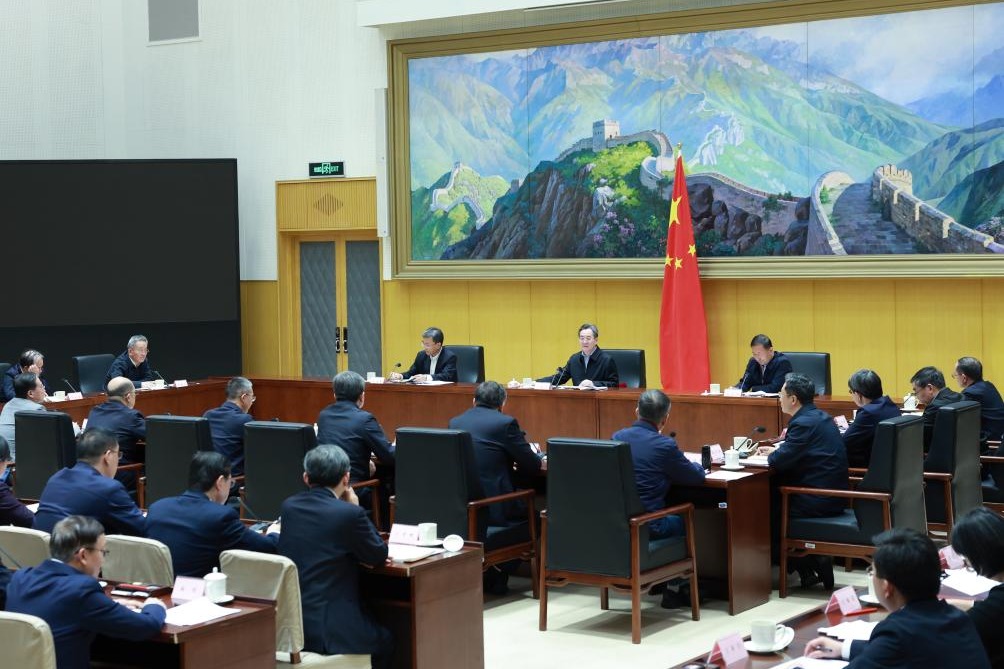
    Chinese Vice-Premier Ding Xuexiang has called for comprehensive reforms in engineering education to accelerate the cultivation of top-tier engineers essential for national development. The high-ranking official, who also serves on the Standing Committee of the Political Bureau of the Communist Party of China Central Committee, made these remarks during a December 4 symposium in Beijing addressing engineer cultivation reforms.

    Ding emphasized the critical need to align educational programs with the requirements of China’s modern industrial system and engineering advancement. He urged leading universities and corporations to strengthen their participation in developing future engineering talent through enhanced university-enterprise collaboration and deeper integration of production with education.

    The Vice-Premier specifically highlighted the importance of improving the quality and efficiency of talent development through these partnerships. Additionally, he stressed the significance of advancing bilateral and multilateral mutual recognition of engineer qualifications and educational standards to better support Chinese enterprises in their international operations and global expansion efforts.

  • Living allowance hiked to aid Tai Po blaze victims

    Living allowance hiked to aid Tai Po blaze victims

    The Hong Kong Special Administrative Region government has significantly escalated its financial support for victims of the devastating Wang Fuk Court fire, announcing a 100% increase in living allowances from HK$50,000 to HK$100,000 per household. The decision, disclosed by Secretary for Home and Youth Affairs Alice Mak Mei-kuen during her inspection of temporary housing facilities in Kai Tak, responds to urgent needs for warmer clothing and essentials during cold weather conditions.

    The November 26 tragedy, which resulted in 159 fatalities including one firefighter and 31 missing persons, has displaced approximately 2,000 households currently accommodated in hotels, youth hostels, and transitional housing. According to official statistics, 674 households have registered for the enhanced financial assistance, with 326 households that previously received HK$50,000 scheduled to obtain the balance shortly.

    Financial support mechanisms have expanded substantially, with the government-established relief fund reaching HK$2.8 billion, including an initial government allocation of HK$300 million. The fund has processed over 300 cases for living allowances and 52 cases providing HK$200,000 condolence payments plus HK$50,000 funeral support for families of deceased victims.

    Authorities have implemented comprehensive support measures including free shuttle services between temporary housing and Tai Po, waivers or deferrals for 2024-25 tax obligations, and suspended utility charges for water, sewage, electricity, and gas from July through November. A dedicated task force led by Deputy Financial Secretary Michael Wong Wai-lun is developing permanent resettlement strategies, with Chief Executive John Lee Ka-chiu emphasizing the government’s commitment to long-term support.

    The online donation platform has registered over 1,300 contributions from organizations (30%) and individual residents, with resource matching already underway. Mak issued stern warnings against fraudulent donation QR codes circulating online, clarifying that the official relief fund has never established such collection methods. Tax deduction receipts for legitimate donations will be issued next week, with donors advised to retain bank records for verification.

    In related developments, police reported recovering additional surviving animals from the affected buildings, including two cats, four turtles, one lizard, and more than 80 pet fish during ongoing search operations.

  • What’s the fighting in DR Congo all about?

    What’s the fighting in DR Congo all about?

    A new peace agreement brokered by the United States between Rwanda and the Democratic Republic of Congo aims to address one of Africa’s most persistent conflicts, though significant challenges remain. The mineral-rich eastern regions of DR Congo have endured over three decades of violence, with roots tracing back to the 1994 Rwandan genocide that killed approximately 800,000 people, primarily Tutsis.

    The conflict escalated dramatically in early 2025 when the M23 rebel group, composed primarily of ethnic Tutsis, captured several strategic cities including Goma—a vital trading hub of over one million people—and Bukavu. The group’s rapid territorial expansion displaced thousands and resulted in numerous casualties while threatening to push toward the distant capital Kinshasa.

    International observers and multiple governments including the US, UK, and France have presented substantial evidence indicating Rwanda’s military support for the M23 rebels, including up to 4,000 Rwandan troops allegedly fighting alongside them. Rwanda denies these allegations, claiming defensive measures are necessary against the FDLR—a Hutu militia group containing perpetrators of the genocide that remains active in eastern Congo.

    The Washington agreement requires both nations to cease support for armed groups, refrain from aggression, and facilitate disarmament. Notably absent from the deal is the M23 itself, though separate Qatar-mediated talks are underway between the rebels and Congolese government. The pact also includes economic provisions encouraging expanded foreign investment in critical mineral supply chains, raising concerns about potential resource exploitation.

    UN peacekeeping forces (Monusco) remain deployed despite local criticism and planned withdrawals, while regional military efforts from the Southern African Development Community have proven ineffective against the M23 advance. The success of this latest diplomatic initiative remains uncertain amid complex historical tensions and competing economic interests in this resource-rich region.

  • India travel chaos worsens as IndiGo cancels hundreds of flights

    India travel chaos worsens as IndiGo cancels hundreds of flights

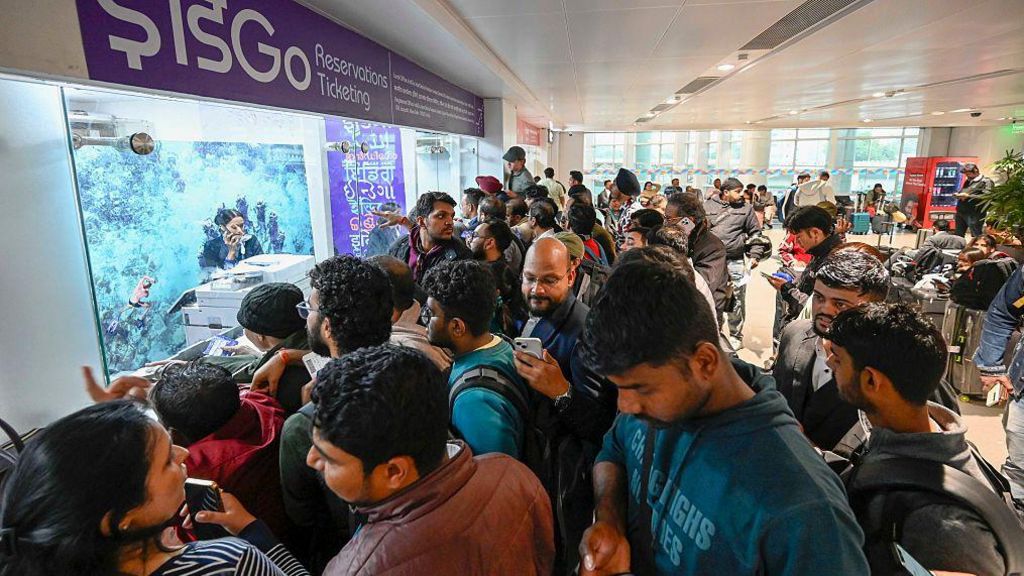
    India’s aviation sector is experiencing severe operational turmoil as the nation’s largest carrier, IndiGo, has been compelled to cancel hundreds of scheduled flights, including all departures from the capital city of Delhi. This disruption, now entering its fourth consecutive day, has created travel chaos during one of India’s peak travel seasons, leaving thousands of passengers stranded across multiple airports.

    The crisis stems from the airline’s failure to adequately adapt to recently implemented crew rostering regulations that mandate increased rest periods and restricted night-duty for pilots. With a dominant 60% market share and operating over 2,000 daily flights nationwide, IndiGo’s operational collapse has exposed significant planning deficiencies in its adaptation strategy.

    Government authorities have expressed strong dissatisfaction with the airline’s handling of the situation. The federal aviation minister has conveyed “clear displeasure” while the aviation regulator attributed the disruptions to “misjudgment and planning gaps” in implementing the new Flight Duty Time Limitation (FDTL) rules. The regulator has demanded immediate submission of a comprehensive corrective plan addressing crew recruitment, training enhancements, roster restructuring, and safety-risk assessments.

    The Airline Pilots Association of India has voiced serious safety concerns, arguing that any regulatory relief for IndiGo would compromise aviation safety standards. Meanwhile, affected passengers have taken to social media to express frustration over inadequate communication and support, with Singapore’s High Commissioner to India among those stranded, causing him to miss a staff member’s wedding.

    IndiGo has announced that full operational normalcy may not be restored until February 10th, with reduced flight schedules effective from December 8th to minimize further disruptions. Major airports have issued advisories urging passengers to verify flight status before traveling.

  • Which countries are boycotting Eurovision and why?

    Which countries are boycotting Eurovision and why?

    Four European nations have announced their formal withdrawal from the upcoming Eurovision Song Contest in a coordinated protest against the event’s inclusion of Israel. Ireland, Spain, the Netherlands, and Slovenia will boycott the international music competition following the European Broadcasting Union’s decision to permit Israel’s participation amid ongoing geopolitical tensions.

    The boycott represents one of the most significant political challenges to Eurovision’s traditional non-political ethos in recent years. The participating countries have cited ethical concerns regarding Israel’s military operations in Gaza as the primary motivation for their withdrawal. This collective action highlights how cultural events are increasingly becoming platforms for international political expression.

    Eurovision organizers have maintained their position that the contest should remain separate from political conflicts, emphasizing its mission to unite audiences through musical entertainment. However, the participating nations argue that allowing Israel’s involvement contradicts the spirit of cultural exchange and human rights principles that international events should uphold.

    The mass withdrawal could potentially influence other countries to join the boycott movement, creating substantial organizational and diplomatic challenges for the event’s hosts. This development marks a notable moment where cultural diplomacy intersects with international political disputes, testing the boundaries between artistic expression and geopolitical positioning.

  • China narrows US’ scientific research lead

    China narrows US’ scientific research lead

    A comprehensive analysis of global scientific research reveals a dramatically narrowing gap between China and the United States in fundamental research leadership. According to the latest annual report jointly produced by the Chinese Academy of Sciences’ Institutes of Science and Development, the National Science Library of CAS, and global analytics firm Clarivate, the two nations now compete head-to-head across 11 major scientific disciplines.

    The study, drawing on data from highly cited research papers published between 2019 and 2024, demonstrates China’s commanding position in six major fields: agricultural, plant and animal sciences; ecology and environmental sciences; chemistry and materials science; physics; information science; and economics, psychology and other social sciences.

    While the United States maintains leadership in five domains—geosciences, clinical medicine, biological sciences, astronomy and astrophysics, and mathematics—its overall advantage has diminished significantly. Notably, China has shown remarkable progress in traditionally weaker areas, climbing to fourth position in clinical medicine and fifth in astronomy and astrophysics.

    “The trend of parallel advancement between the U.S. and China is becoming increasingly pronounced,” the report observes, noting that the United Kingdom and Germany constitute a secondary tier in global research leadership.

    Emmanuel Thiveaud, Clarivate’s vice-president, acknowledged China’s remarkable scientific trajectory: “Over past decades, we have witnessed tremendous progress China has made and continues to make in research and development. China’s position at the forefront of numerous research fronts comes as no surprise.”

    The analysis identified 128 significant research fronts (110 active and 18 emerging), with artificial intelligence emerging as a critical cross-disciplinary force. More than half of emerging research fronts demonstrate AI integration, particularly within clinical medicine and life sciences.

    Professor Li Shao of Tsinghua University highlighted that four of seven emerging clinical medicine research fronts involve large language model applications in healthcare. “Targeted algorithms are revolutionizing disease mechanism research, early screening, and precision treatment,” Li noted, emphasizing AI’s growing role in traditional Chinese medicine and major disease prevention.

    Pan Jiaofeng, president of the Institutes of Science and Development, pointed to the evolving research landscape: “A new scientific revolution is underway with frontiers constantly expanding. High-throughput single-cell technologies, dark matter detection, and AI integration into scientific research are drawing widespread attention.”

    The report serves as both a measurement tool and strategic guide, helping policymakers and researchers navigate the rapidly changing global scientific ecosystem where East-West collaboration and competition are reshaping knowledge production.