作者: admin

  • Pakistan’s boycott of a game against India looms over cricket’s T20 World Cup

    Pakistan’s boycott of a game against India looms over cricket’s T20 World Cup

    The ICC Men’s T20 World Cup faces unprecedented diplomatic turmoil as Pakistan’s government has officially prohibited its national cricket team from competing against arch-rival India in their scheduled February 15 group stage encounter in Colombo. This development marks the first time in 14 years that an ICC tournament might proceed without the iconic India-Pakistan showdown, potentially forcing Pakistan to forfeit crucial competition points.

    The political standoff emerged after the International Cricket Council rejected Pakistan’s request to relocate its matches from India to Sri Lanka due to security concerns. The PCB had sought this accommodation following similar considerations granted to Bangladesh, whose games were moved to Sri Lanka while Scotland replaced them in the Indian-hosted segment of the tournament.

    Pakistan Cricket Board chairman Mohsin Naqvi condemned the ICC’s decision as demonstrating “double-standards,” prompting the government’s intervention. Team captain Salman Ali Agha, speaking after Pakistan’s 3-0 series victory over Australia, affirmed the squad would comply with governmental directives: “It’s not our decision. We can’t do anything about it. We will do whatever our government and the PCB chairman say.”

    The ICC has urgently appealed to cricket authorities in both nations to “explore a mutually acceptable resolution” that “protects the interests of all stakeholders.” While a potential meeting in semifinals or finals remains mathematically possible, uncertainty persists regarding whether the boycott would extend to knockout stages.

    Tournament structure remains unchanged with 20 teams divided across four groups, featuring matches across five Indian cities (New Delhi, Kolkata, Chennai, Ahmedabad, and Mumbai) and Sri Lankan venues in Pallekele and Colombo. The top two teams from each group will progress to Super Eights, followed by semifinals on March 4-5 and championship final on March 8.

    Defending champion India enters as favorite following impressive 4-1 series victory against New Zealand, while Pakistan must navigate challenging matches against Netherlands, Namibia, and the United States—the latter having eliminated Pakistan in their dramatic 2024 super-over encounter.

    Other groups feature strong contenders including Australia, England, West Indies, and Afghanistan, though the shadow of geopolitical tensions now threatens to overshadow sporting competition in cricket’s premier global event.


  • Is the evil empire back? How the Patriots rebuilt a broken dynasty

    Is the evil empire back? How the Patriots rebuilt a broken dynasty

    A seismic shift has occurred in the NFL landscape as the New England Patriots complete one of the most remarkable turnarounds in league history, reaching Super Bowl LX just seasons after their dynasty appeared permanently extinguished. This resurgence, engineered by Head Coach Mike Vrabel and rookie quarterback Drake Maye, has evoked haunting memories of the franchise’s previous era of dominance under Tom Brady and Bill Belichick.

    The Patriots’ collapse following the departures of their legendary quarterback-coach tandem was both swift and severe. After Brady’s exit and Belichick’s subsequent departure, the organization plummeted to 4-13 records in consecutive seasons, missing the playoffs for three straight years—their longest drought since the early 1990s. The team ranked near the bottom of the league in virtually every performance metric, appearing destined for prolonged mediocrity.

    Owner Robert Kraft’s strategic hiring of Mike Vrabel proved transformative. The three-time Super Bowl champion as a player, who previously led the Tennessee Titans to an AFC Championship game, brought both Patriots pedigree and proven head coaching experience. His appointment triggered a record-setting 10-win improvement that has returned New England to championship contention.

    Complementing Vrabel’s leadership, quarterback Drake Maye has demonstrated extraordinary poise and playmaking ability during his rookie campaign. The young signal-caller has shown particular proficiency in critical moments, with 12 of his 16 playoff runs resulting in either touchdowns or first downs—echoing the clutch performance DNA that defined the Brady era.

    The organization’s front office executed a comprehensive roster overhaul, investing $364 million in free agency while demonstrating exceptional draft acumen. This aggressive approach resulted in only 16 players remaining from the squad of two years ago, with newcomers including standout receiver Stefon Diggs, defensive leader Robert Spillane, and pass-rush specialist Harold Landry. The Patriots set a Super Bowl participant record with 416 regular-season games played by first-year Foxborough additions.

    Statistical parallels between the current partnership and the Brady-Belichick dynasty are striking. Maye could become the youngest quarterback to win a Super Bowl at just 23 years old, exactly as Brady reached his first championship in his second season. The team’s playoff path mirrors the 2001 championship run, with Maye joining Brady as one of only four quarterbacks since 2001 to win a championship game while generating 14 or fewer offensive points.

    As New England prepares for its record-extending seventh Super Bowl appearance—representing 20% of all Super Bowls ever played—the rest of the league watches with apprehension. The combination of a defense-first head coach, a precociously talented quarterback, strategic personnel acquisitions, and organizational stability has created a blueprint frighteningly familiar to those who endured two decades of Patriots dominance. Seattle faces not just a football team on Sunday, but the potential dawn of another NFL empire.

  • ‘I’ve never hit anything so hard’: What it’s like to be attacked by a shark

    ‘I’ve never hit anything so hard’: What it’s like to be attacked by a shark

    In a remarkable tale of survival and resilience, retired IT director Peter Smith from Hertfordshire recounts his harrowing encounter with a bull shark during what should have been a tranquil vacation in Tobago. The incident occurred in April 2024 during the final hours of his Caribbean holiday when he took a casual swim in waist-deep water.

    Without warning, a approximately 10-foot (3m) bull shark—one of the world’s most dangerous shark species known for hunting in shallow waters—launched a brutal attack. The predator bit Smith’s leg, arm, and stomach in rapid succession, causing severe blood loss and life-threatening injuries. “Your brain works at 1,000 miles an hour,” Smith recalls of the moment he recognized the species by its distinctive jaws.

    Displaying extraordinary presence of mind, the 66-year-old fought back aggressively, punching the shark repeatedly while friends in the water assisted in the struggle and raised the alarm. Bystanders eventually dragged the severely injured man to shore where his wife Joanna witnessed the devastating injuries. “I could see bones, it was just awful,” she remembers.

    Medical evacuation became necessary when Tobago’s sole hospital exhausted its blood supply treating Smith’s injuries, which included deep stomach lacerations and substantial tissue loss from his upper thigh. He was transported to Jackson Memorial Hospital in Miami, Florida, where he underwent dozens of surgical procedures during a prolonged recovery.

    In an ironic twist during treatment, medical staff used a shark-derived membrane to facilitate skin grafting—a detail that brought unexpected humor to his recovery process. Despite permanent nerve damage that affects hand function and mobility challenges requiring him to relearn walking, Smith maintains profound gratitude for his survival and the assistance he received.

    Shark experts note that this incident represents Tobago’s first recorded shark attack according to the International Shark Attack File. Recent bull shark incidents in Australia have raised concerns, but specialists emphasize that shark attacks remain extremely rare relative to human water recreation. Tom ‘The Blowfish’ Hird, a shark expert, explains that sharks typically don’t prey on humans and often retreat when encountering resistance.

    Remarkably, Smith bears no animosity toward sharks or Tobago, insisting he would return to the island and refusing to live in fear after his traumatic experience. His story stands as a testament to human resilience and the uncommon nature of such wildlife encounters.

  • Kenya unveils tax breaks for EV parts and charging stations to speed up shift to electrics

    Kenya unveils tax breaks for EV parts and charging stations to speed up shift to electrics

    NAIROBI, Kenya — The Kenyan government has unveiled comprehensive tax incentives as part of its newly launched National Electric Mobility Policy, aiming to dramatically accelerate the adoption of electric vehicles across the nation. The strategic measures include exemptions for value-added taxes and excise duties on EV components beginning this July, followed by a reduction in stamp taxes for charging stations in 2027.

    Transport Cabinet Secretary Davis Chirchir emphasized that electric mobility represents a critical pillar in Kenya’s broader climate strategy. “This transition is fundamental to reducing greenhouse gas emissions, decreasing our dependency on imported fossil fuels, and stimulating economic growth through domestic manufacturing and employment opportunities,” Chirchir stated.

    Kenya’s commitment to electric transportation builds upon previous initiatives, including zero value-added tax on electric buses, bicycles, motorcycles, and lithium-ion batteries. The government has set an ambitious target of deploying 3,000 electric vehicles within its ministries by the end of next year.

    This policy shift aligns with Kenya’s Paris Agreement pledge to cut greenhouse gas emissions by 32% before 2030. With transportation accounting for a substantial portion of carbon emissions, electrification has been identified as essential for meeting climate objectives.

    The market response has been remarkably positive, with registered electric vehicles skyrocketing from just 796 in 2022 to 24,754 in 2025—primarily driven by electric motorcycles, buses, and commercial fleet vehicles. Projections indicate that electric vehicle sales could equal those of traditional gasoline and diesel vehicles by 2042, signaling a profound transformation in Kenya’s transportation landscape.

    Mohammed Daghar, Principal Secretary for Transport, characterized the policy as “laying the foundation for a cleaner, more efficient, and sustainable transport system that fully aligns with our climate commitments.”

    While Kenya emerges as a regional leader in electric mobility, the transition presents fiscal challenges. The government anticipates a potential $693 million shortfall in fuel tax revenues by 2043—critical funding currently dedicated to road maintenance and transportation services. Authorities are exploring alternative revenue mechanisms, including road-use charges and electricity-based levies connected to charging stations.

    Across Africa, electric mobility policies continue to evolve, with Rwanda and Egypt implementing various fiscal incentives to encourage EV adoption. Most initiatives currently focus on electric buses and two-wheelers, incorporating tax exemptions for EV imports and investments in charging infrastructure.

  • Northern Japan hit by deadly snowfall, as warnings issued on more heavy snow

    Northern Japan hit by deadly snowfall, as warnings issued on more heavy snow

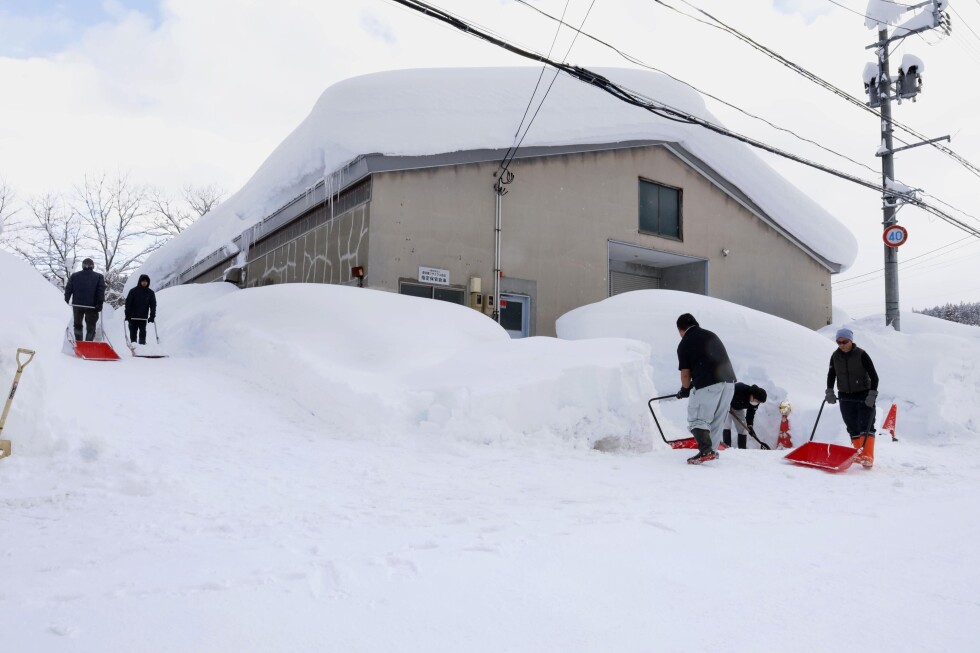
    TOKYO — A severe winter storm system has unleashed devastating snowfall across northern Japan over the past fortnight, resulting in at least 35 fatalities nationwide according to government reports released Wednesday. The tragic incidents primarily involved sudden cardiac events and fatal accidents occurring during snow removal operations.

    Official data indicates fifteen prefectures have been severely impacted, with snow accumulation reaching approximately 2 meters (6.5 feet) in the most affected zones. Niigata Prefecture, a prominent agricultural region, recorded the highest death toll with twelve casualties. Among these was a man in his fifties discovered collapsed on his residential rooftop in Uonuma city on January 21st.

    In a separate Niigata incident, emergency services transported a septuagenarian man after he was found unconscious near his residence. Medical authorities subsequently pronounced him dead at hospital facilities. Preliminary investigations suggest the victim fell from his roof while attempting to clear accumulated snow.

    Chief Cabinet Secretary Minoru Kihara issued urgent public warnings despite improving weather conditions, emphasizing that melting snow presents new hazards including potential landslides and dangerously slippery surfaces. “We implore citizens to prioritize safety measures including helmet usage and lifeline ropes during snow clearance activities,” Kihara advised during a press briefing.

    Regional task forces have been mobilized across Niigata and adjacent areas since January 20th to address the escalating crisis. Additional fatalities include seven deaths in Akita Prefecture and five in Yamagata Prefecture. Nationwide statistics document 393 weather-related injuries, including 126 severe cases, with Niigata accounting for 42 serious injuries. Structural assessments confirm fourteen residences sustained damage across affected regions.

    While meteorological experts haven’t determined the precise cause of the extreme precipitation, heavy snow-related casualties remain a recurrent seasonal challenge in Japan. Official records from the Fire and Disaster Management Agency indicate 68 snow-associated deaths occurred during the previous winter season. Forecast models predict additional heavy snowfall anticipated for the upcoming weekend.

  • Draco Malfoy becomes unlikely Lunar New Year mascot in China

    Draco Malfoy becomes unlikely Lunar New Year mascot in China

    In a fascinating cultural fusion, Tom Felton’s iconic Harry Potter character Draco Malfoy has emerged as an unexpected symbol of Lunar New Year celebrations across China. The actor’s portrayal of the cunning Slytherin student has taken on new meaning as Chinese households incorporate his image into traditional festive decorations.

    The phenomenon stems from the character’s Chinese name translation – Ma Er Fu (马尔福) – which contains the characters for ‘horse’ (马) and ‘fortune’ (福). This linguistic coincidence has made the character particularly auspicious for the upcoming Year of the Horse celebrations. E-commerce platforms like Taobao have reported surging sales of Malfoy-themed decorations, including door couplets, upside-down posters, and decorative magnets featuring the character’s signature smirk.

    Traditional Chinese New Year customs involve displaying auspicious writings and symbols to attract health and prosperity while warding off evil spirits. The practice of hanging square-shaped papers upside down – representing the arrival of good fortune due to the homophonic quality of ‘upside down’ (倒) and ‘arrival’ (到) in Chinese – has been creatively adapted with Malfoy’s imagery.

    The trend has gained substantial traction on Chinese social media platforms, with Weibo users sharing images of their Malfoy decorations accompanied by captions like ‘Share this image for good fortune.’ References to Harry Potter lore, including the Felix Felicis luck potion, have proliferated in discussions about this unique cultural crossover.

    Actor Tom Felton himself has acknowledged the phenomenon, resharing an Instagram story about his character becoming a ‘symbol of Chinese New Year in China,’ which further excited his substantial Chinese fanbase. The response included hashtags such as ‘Malfoy himself is 100% hilarious,’ demonstrating enthusiastic approval from local Potterheads.

    This development highlights the enduring popularity of the Harry Potter franchise in China, where hundreds of millions of books have been sold and film re-releases have generated significant revenue. Warner Bros Discovery’s plans to open the largest Making Of Harry Potter studio tour in Shanghai in 2027 further underscore the franchise’s substantial cultural footprint in the Chinese market.

  • Trump administration presses efforts to ensure supply of critical minerals outside of China

    Trump administration presses efforts to ensure supply of critical minerals outside of China

    The Trump administration is orchestrating a comprehensive strategy to reshape global critical mineral supply chains, responding to China’s overwhelming control over these essential resources. This multi-pronged approach includes establishing a $12 billion strategic reserve and forming international purchasing agreements with dozens of nations across Europe, Asia, and Africa.

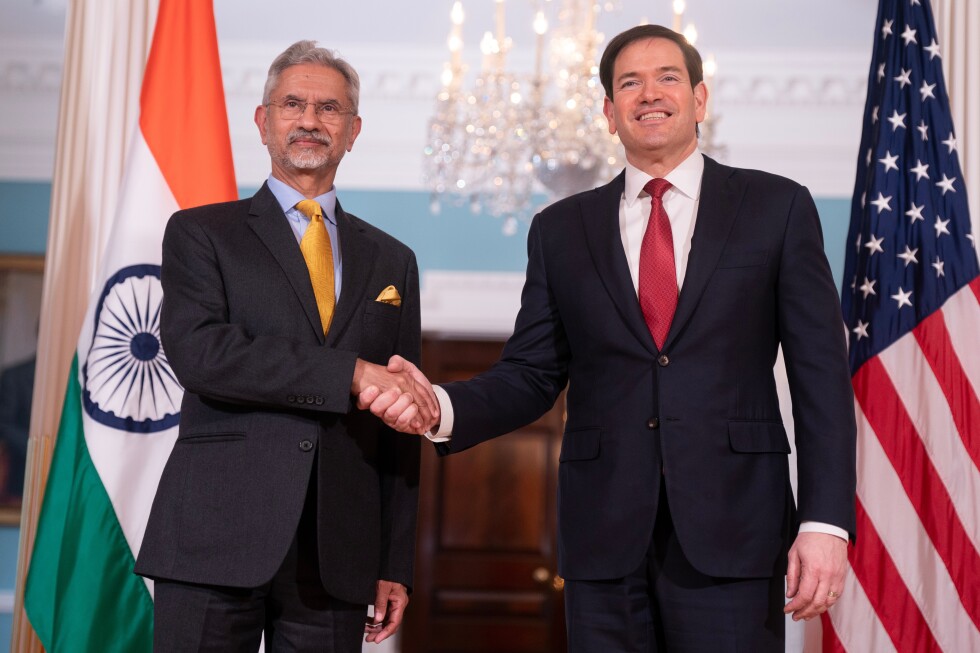
    Vice President JD Vance is poised to deliver a keynote address at a State Department meeting hosted by Secretary Marco Rubio, where officials will finalize supply chain logistics agreements with partner nations. This diplomatic initiative follows President Trump’s recent announcement of “Project Vault” – an ambitious stockpile program funded through a historic $10 billion loan from the U.S. Export-Import Bank supplemented by $1.67 billion in private capital.

    This strategic pivot comes after China, which controls 70% of global rare earth mining and 90% of processing capacity, weaponized its dominance during recent trade tensions. Although the two superpowers reached a temporary truce following October negotiations between Trump and Xi Jinping, China maintains tighter restrictions than before the trade conflict began.

    The administration’s approach combines public investment with private sector engagement. Recently, the government made its fourth direct investment in domestic production, extending $1.6 billion to Oklahoma-based USA Rare Earth in exchange for equity and repayment guarantees. According to industry executive Pini Althaus, the government now scrutinizes companies with the rigor of private equity investors, demanding taxpayer returns through loan repayments and stock appreciation.

    The Export-Import Bank’s unprecedented $10 billion loan will establish the U.S. Strategic Critical Minerals Reserve, ensuring supply for major manufacturers including Boeing, GE Vernova, Western Digital, and battery producer Clarios. Bank Chairman John Jovanico described the initiative as creating a scenario where “there are no free riders” as both government and private sector entities contribute to solving supply chain vulnerabilities.

    Industry experts note this stockpile strategy could establish pricing mechanisms independent of China’s market influence, which has historically used price manipulation to eliminate competition. The Pentagon has additionally allocated nearly $5 billion over the past year to secure military access to these materials.

    The effort has garnered bipartisan support, with lawmakers recently proposing a new $2.5 billion agency dedicated to stimulating rare earth production. Senators Jeanne Shaheen (D-N.H.) and Todd Young (R-Ind.) praised the administration’s steps toward reducing reliance on China and stabilizing markets, though experts caution that building sufficient reserves will require long-term commitment given current material scarcity.

  • Italy gets creative as it works to make art accessible for blind people

    Italy gets creative as it works to make art accessible for blind people

    ROME — As dusk settles over the Italian capital, a profound transformation occurs at the Colosseum. After the daytime crowds dissipate, a different kind of visitor emerges—those who experience one of history’s greatest monuments through touch, sound, and imagination rather than sight.

    Michela Marcato, blind since birth, recently traced her fingers across a tactile model of the ancient amphitheater, discovering through her fingertips what her eyes never could. ‘Walking around it, I personally would never have realized its elliptical shape,’ she remarked. ‘But with that little model in your hand, it’s obvious.’

    This nighttime tour represents part of Italy’s groundbreaking initiative to reimagine accessibility at its cultural treasures. Driven by requirements for EU pandemic recovery funds in 2021, the nation has accelerated efforts to make artistic heritage available to all visitors regardless of ability.

    From Pompeii’s new braille signage and QR-coded audio guides to Florence’s detailed accessibility maps for the Uffizi Gallery, Italy is systematically removing barriers. The economic incentive is clear: nearly half the global population over 60 experiences some disability, and disabled travelers typically bring multiple companions, according to the World Tourism Organization.

    Giorgio Guardi of the Radici Association, which has led disability-friendly tours since 2015, emphasizes creating inclusive experiences that engage all senses. His tours often occur at night when reduced crowds and noise enhance sensory perception. When touching original artworks isn’t possible—as with Rome’s elevated Giordano Bruno statue—Guardi creatively has visitors assume the philosopher’s hunched position while others feel the contours of their companion’s posture.

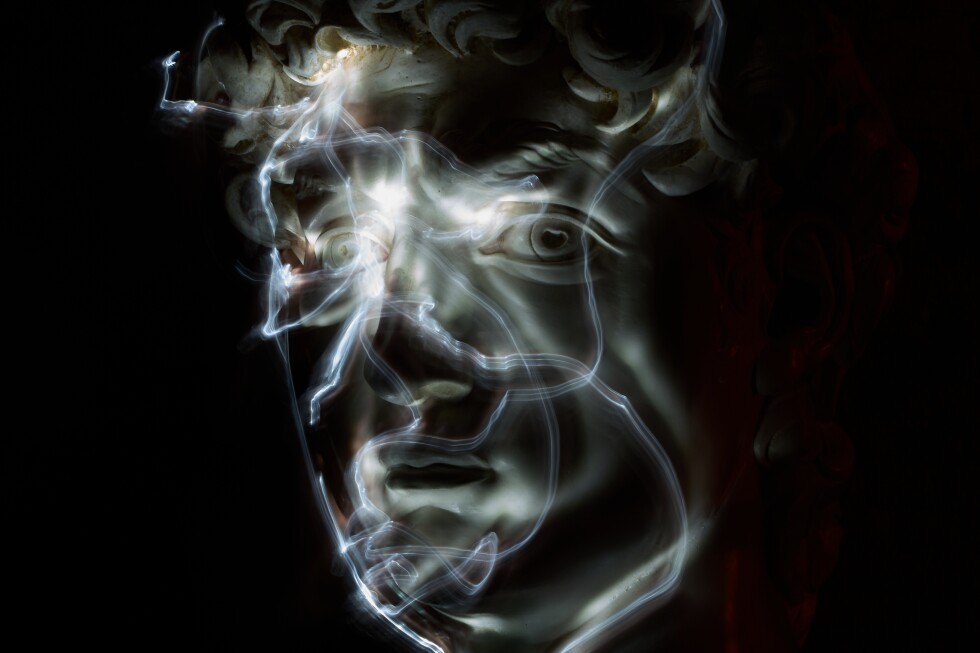
    The movement finds its philosophical home at the Museo Omero in Ancona, Italy’s only publicly funded tactile museum. Founded in the 1990s by blind art collectors Aldo and Daniela Grassini, the museum features life-sized replicas of masterpieces from Michelangelo’s David to contemporary works, all meant to be handled.

    ‘Touching isn’t like looking,’ reflects Aldo Grassini. ‘Sight tends to monopolize reality, whereas touch offers a different dimension of knowledge and emotion.’

    Blind sculptor Felice Tagliaferri, whose work appears at Museo Omero, creates marble busts informed by tactile memory. His sculpture of friend Angela emerged from caressing her bald head during her battle with cancer. ‘When she passed away, Angela remained in my hands,’ he shares.

    For visitors like Marcato and her partially sighted partner Massimiliano Naccarato, this sensory approach extends to their home where a large seascape painting dominates their living room. While Naccarato uses special lighting to see it, Marcato experiences it through memory—the ocean’s sounds, smells, and seasonal walks. Their dual appreciation demonstrates how Italy’s accessibility revolution isn’t about seeing differently, but about experiencing more completely.

  • Bangladesh’s Hindu minority in fear as attacks rise and a national election nears

    Bangladesh’s Hindu minority in fear as attacks rise and a national election nears

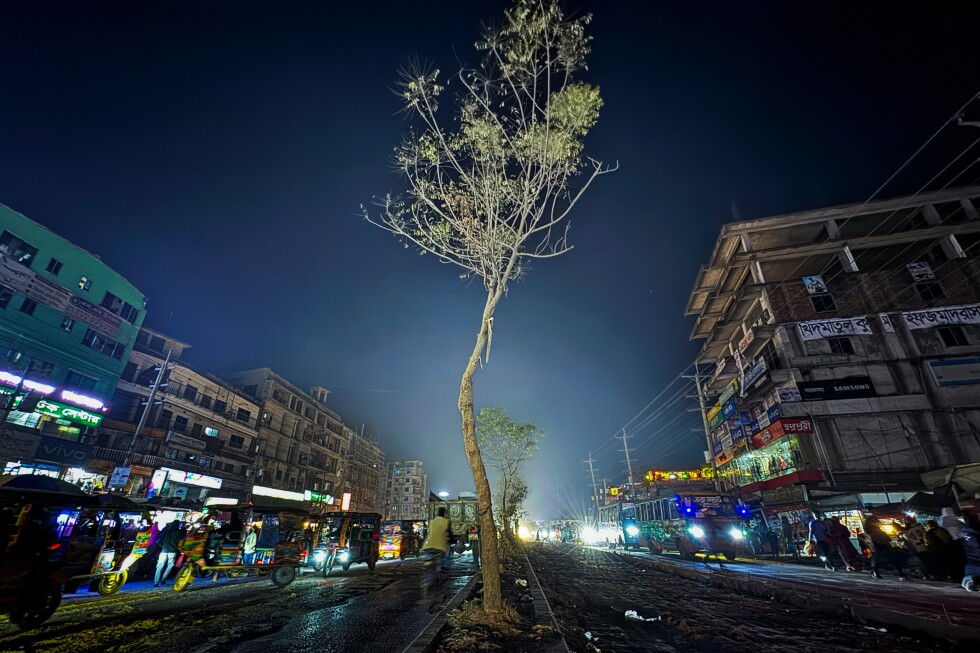
    In Bangladesh, escalating violence against religious minorities has created an atmosphere of pervasive fear as the nation approaches critical elections. The brutal killing of 27-year-old Hindu garment worker Dipu Chandra Das in December exemplifies the crisis—accused by Muslim colleagues of blasphemy, he was beaten to death, hanged from a tree, and set ablaze by a violent mob.

    This incident triggered widespread protests across Dhaka and other cities, with demonstrators demanding justice and enhanced protections. The interim government under Muhammad Yunus initiated an investigation resulting in approximately a dozen arrests. However, human rights organizations and Hindu leaders maintain this represents not an isolated event but a systematic pattern of violence fueled by rising polarization, resurgent Islamist influence, and a culture of impunity.

    Statistical evidence reveals alarming trends: The Bangladesh Hindu Buddhist Christian Unity Council has documented over 2,000 communal violence incidents since the ousting of former Prime Minister Sheikh Hasina in August 2024. These include at least 61 killings, 28 gender-based violence cases including rapes, and 95 attacks on places of worship involving vandalism, looting, and arson.

    The political landscape has significantly contributed to the crisis. With Hasina’s Awami League barred from elections and her exile in India, Hindus—historically perceived as aligned with her party—face increased vulnerability. The reemergence of Jamaat-e-Islami, Bangladesh’s largest Islamist party, alongside its student wing National Citizen Party, has further intensified tensions. Although these groups have attempted image rehabilitation through symbolic gestures like nominating Hindu candidates, analysts consider these moves largely superficial.

    The violence has transcended national borders, inflaming diplomatic tensions with India. New Delhi has accused Bangladesh of minimizing what it terms ‘disturbing patterns of recurring attacks,’ while Dhaka characterizes Indian criticism as systematic anti-Bangladesh sentiment. The dispute has expanded to include visa service suspensions and even affected sporting events, including cricket tournaments.

    For affected families like Das’s relatives in Mymensingh district, the trauma remains profound. As his mother Shefali Rani Das demands justice for her son’s horrific killing, the broader Hindu community confronts what human rights activist Ranjan Karmaker describes as ‘an existential crisis’ with many fearing the upcoming elections may unleash even greater violence.

  • New Indian budget proposals enhance NRI investment limits, offer tax exemptions for foreign firms

    New Indian budget proposals enhance NRI investment limits, offer tax exemptions for foreign firms

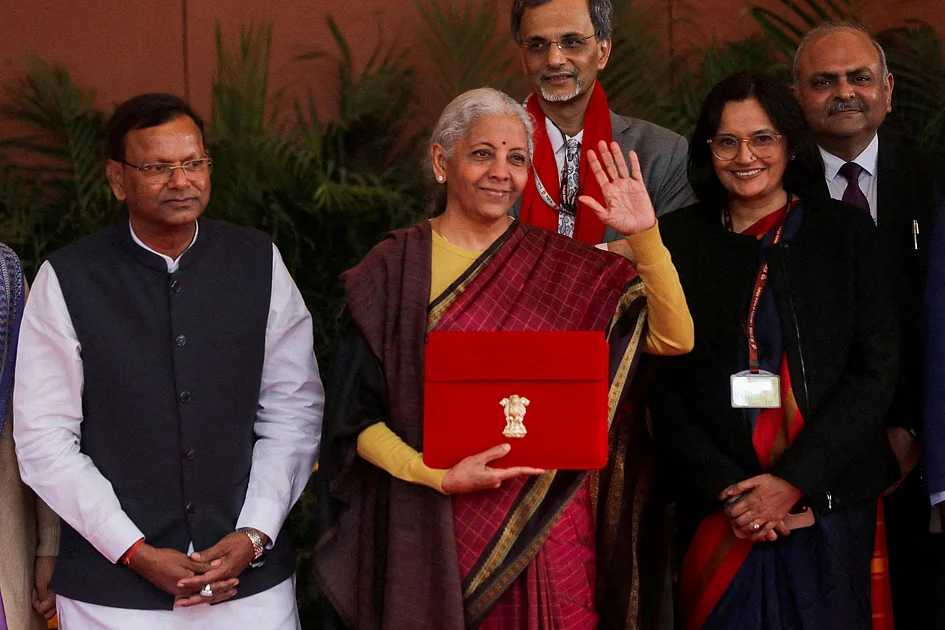
    In a landmark budgetary move, India has implemented transformative fiscal policies designed to position itself as a global investment hub while aggressively expanding its digital infrastructure capabilities. The 2026 budget proposals introduce unprecedented incentives for non-resident Indians (NRIs), overseas citizens of Indian origin, and foreign corporations seeking investment opportunities in the world’s fastest-growing major economy.

    Significant enhancements to the portfolio investment scheme now permit individual NRI investors to increase their equity holdings in listed Indian companies from 5% to 10%, while the aggregate investment ceiling for all NRIs and persons of Indian origin has been substantially raised from 10% to 24%. The government has simultaneously streamlined property transaction procedures, eliminating the cumbersome tax account number requirement in favor of simplified permanent account number documentation when non-residents sell immovable assets to Indian residents.

    Perhaps the most revolutionary measure involves a comprehensive 21-year tax exemption for foreign companies utilizing Indian data center services for global operations. This complete profit tax waiver, extending through 2047, is complemented by safe harbor provisions that establish 15% of gross receipts as deemed taxable income for Indian entities providing data services to related foreign corporations. Additionally, foreign technicians and experts working under notified schemes will enjoy complete exemption from Indian taxation on foreign income for five years, regardless of residential status under domestic tax laws.

    The digital infrastructure expansion strategy reveals ambitious targets to increase India’s data center capacity from the current 1.5 GW to 14 GW by 2035. Major technology conglomerates including Microsoft, Amazon, Google, and Meta have committed approximately $67.5 billion in combined investments toward AI-driven projects and data center development over the next five years. Hyderabad has emerged as the fastest-growing hub, offering operational costs at less than half of American electricity rates while maintaining multiple energy source connectivity.

    The hospitality sector simultaneously receives substantial stimulus through tax deductions for capital expenditures under Section 46 of the Income Tax Act, 2025. Pre-operative expenses for new hotel developments can now be deducted in the financial year when operations commence, with several state governments offering additional fiscal concessions to boost tourism employment opportunities. This comprehensive economic strategy aligns with projections that India’s digital economy will constitute 20% of GDP by 2030, supported by anticipated 7% annual GDP growth and expansion of the middle class by 400 million people within 15 years.