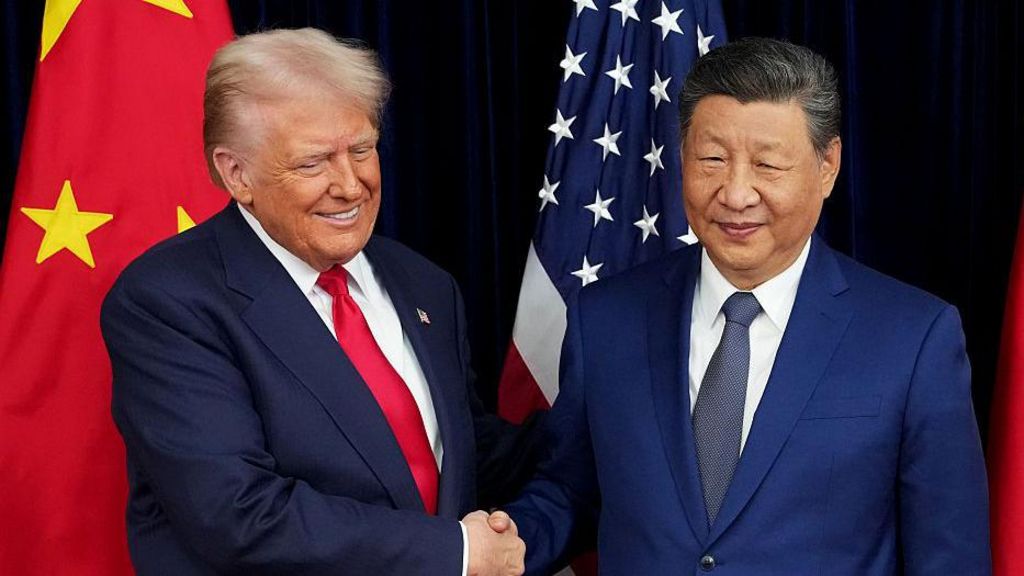
The decades-long dance of economic competition and cooperation between the world’s two largest economies is set to enter a critical new phase this week, as Beijing officially confirms U.S. President Donald Trump will travel to China for a high-stakes meeting with President Xi Jinping from May 13 to 15. This summit marks the first visit by a sitting U.S. president to China in nearly 10 years, arriving at a make-or-break moment for bilateral relations that ripple across global supply chains, financial markets, and international security. Trump will be accompanied by C-suite executives from top American corporations including Boeing, Citigroup, and Qualcomm, with many industry analysts expecting major new bilateral business deals to be announced during the trip. Beyond commercial agreements, the meeting stands as the most significant test yet of the fragile trade truce struck between Washington and Beijing last October.
The roots of the current trade standoff stretch back to Trump’s first 2016 presidential campaign, when he won office on a pledge to rewrite unfair trade terms for the United States and bring hundreds of thousands of manufacturing jobs back to American soil. In 2018, just a year into his first term, he followed through on that promise by imposing sweeping tariffs on $250 billion worth of Chinese imports, a move that most global trade analysts mark as the official start of the modern U.S.-China trade war. That same year, Trump extended tariffs to other major U.S. trading partners, including Mexico, Canada, and the European Union, arguing that all had exploited unfair trade practices to gain an edge over American workers.
Ning Leng, a policy researcher at Georgetown University, notes that the 2018 tariffs came as a major shock to Chinese policymakers, who had not anticipated Trump would follow through on his campaign threats. At the time, China’s economy was far more dependent on export sales to the U.S. market, which served as a critical lifeline for millions of Chinese manufacturing jobs. The tariffs added additional strain to long-running structural challenges already weighing on China’s economy, including sluggish domestic consumer spending, elevated youth unemployment, and a years-long property sector crisis. Ning explained, “It’s harder for one country to withstand a trade war with another that it has a trade surplus with,” highlighting the particular vulnerability China faced in the early stages of the conflict.
When Joe Biden took office in 2021, he opted to maintain the pressure on Beijing, choosing not to roll back any of Trump’s existing China tariffs. The Biden administration shared the bipartisan Washington consensus that maintaining trade pressure was necessary to curb China’s technological and economic expansion, Ning said. Beyond keeping existing tariffs in place, Biden introduced sweeping new restrictions on Chinese firms: tech giant Huawei was effectively barred from the U.S. market over national security concerns, TikTok was forced to separate its U.S. operations from its Chinese parent company ByteDance, and heavy new tariffs effectively blocked Chinese electric vehicle imports from accessing the U.S. market.
Tang Heiwai, an economist at the University of Hong Kong, argues that contrary to popular perception, the Biden administration was actually more protectionist on China than Trump’s first term. “We often think that Trump is tough on China, but there is an argument to say that Biden was even more protectionist than Trump was,” Tang noted.
After winning re-election and returning to the White House in 2025, Trump doubled down on his hardline tariff policy against China. He first imposed a 20% tariff on Chinese goods, accusing Beijing of failing to crack down on the flow of fentanyl precursor chemicals into the United States. On what the Trump administration dubbed “Liberation Day,” he raised tariffs on Chinese imports to 34%, pushing total U.S. duties on Chinese goods to among the highest levels applied to any U.S. trading partner.
The sweeping new tariffs triggered immediate tit-for-tat retaliation from Beijing, which imposed new duties on U.S. agricultural goods, directly targeting the American farm sector that forms one of Trump’s core political voter bases. But Trump’s tariff push hit an unexpected hurdle: China’s near-global monopoly on rare earth mineral supplies, which are critical inputs for everything from consumer smartphones to military fighter jets. With hundreds of major American industries dependent on Chinese rare earth exports, the Trump administration was forced to open negotiations for a truce.
The breakthrough came during a face-to-face meeting between Trump and Xi at Gimhae Air Base in South Korea last October. In the deal struck at that meeting, Beijing agreed to suspend temporary rare earth export controls implemented in retaliation for the new U.S. tariffs, a win that the White House framed as a major diplomatic victory for Trump. The agreement also saw China commit to immediately resume large-scale purchases of U.S. agricultural products, a key priority for the Trump administration. In exchange, Washington rolled back a portion of the tariffs imposed on China over the fentanyl dispute, paused planned reciprocal tariff increases, and relaxed restrictions on sales of advanced semiconductors to China (though restrictions on the most cutting-edge chip technology remain in place).
While that meeting produced an indefinite truce, negotiators on both sides failed to reach a permanent, comprehensive resolution to the core trade disputes that sparked the war. Tang notes that China’s economic model, which relies on heavy investment in manufacturing production, leaves Chinese firms heavily dependent on export sales due to persistently weak domestic consumer spending. “There’s no single country as big as [the U.S.] as a consumer market,” Tang explained, meaning China cannot afford to walk away from access to the American market entirely.
That said, Beijing enters this week’s summit from a far stronger negotiating position than it held just a few years ago. As trade ties with the U.S. weakened over the past decade, China has aggressively expanded trade relationships with new partners across Africa, Latin America, and Southeast Asia, pushing its total annual export volumes to record highs. Beijing has also poured billions of dollars into domestic research and development in advanced robotics and domestic semiconductor manufacturing, aiming to cut its long-term reliance on Western technology from firms like Nvidia.
For the Trump administration, key priorities for the summit are expected to include pushing Beijing to increase purchases of U.S. goods from strategically important sectors, including soybeans and commercial aircraft parts. But Trump enters the meeting facing major domestic political and legal headwinds for his trade agenda: just weeks before the summit, the U.S. Supreme Court struck down Trump’s “Liberation Day” tariffs as unconstitutional. Trump has since imposed a temporary 10% across-the-board tariff on all global imports using an alternate trade law, and launched a new investigation into alleged unfair trade practices by China and other major trading partners. Just last week, a U.S. trade court ruled that this new temporary global tariff was also unjustified, opening the door to additional legal challenges that could undermine Trump’s trade policy agenda.
Beyond trade, the ongoing war in Iran is expected to be a major topic of discussion during the Beijing summit. So far, China has weathered the economic fallout of the conflict far better than many of its regional neighbors, thanks to its own domestic oil production and its long-term reliance on Russian crude imports, which insulate it from global energy price volatility. Even though China is Iran’s largest single purchaser of crude oil, those factors have softened the blow of the war on China’s economy. However, as the conflict drags on, it has begun to put increasing pressure on Chinese growth, prompting senior Beijing officials to pledge new measures to protect the country’s energy security and global supply chain links, according to global security analysts.
Both Washington and Beijing share a core incentive to bring the Iran war to a swift end, but the two countries hold starkly differing policy positions on Iran’s future and regional security more broadly. The entire world will be watching closely this week to see if the two global powers can bridge their divides and move past years of escalating trade and geopolitical tension.