作者: admin

  • What to know about Trump-Xi summit with trade, Taiwan and Iran on the agenda

    What to know about Trump-Xi summit with trade, Taiwan and Iran on the agenda

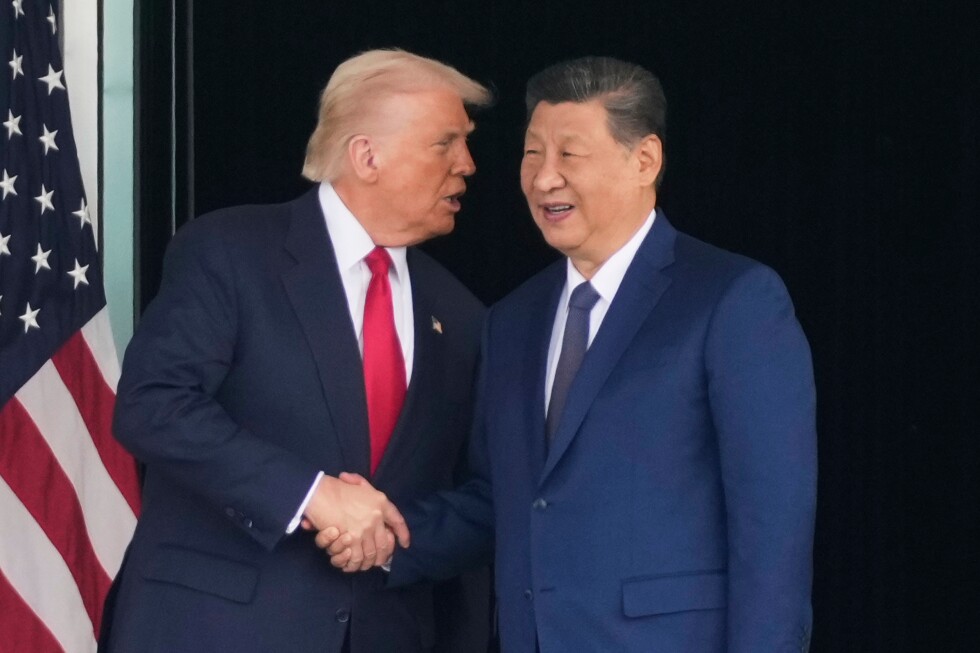
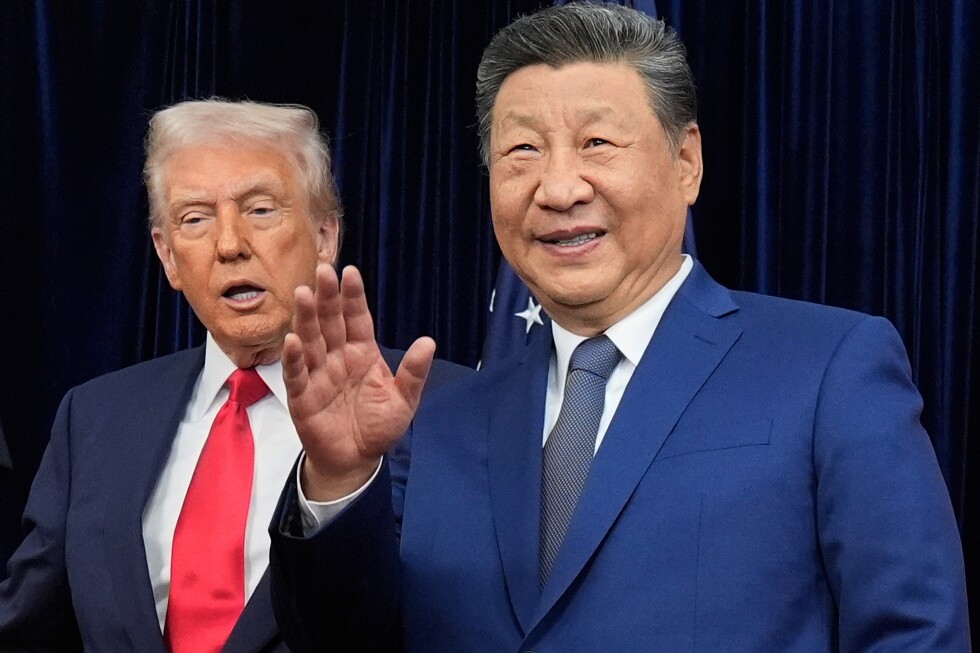
    WASHINGTON — Ahead of the much-anticipated bilateral summit between Chinese President Xi Jinping and U.S. President Donald Trump, officials from both major powers have emphasized that bilateral relations have held broadly steady in recent months, with both sides prioritizing the preservation of that stability going into the meeting. Yet even as consensus around stability holds, the world’s most consequential bilateral relationship faces a sprawling roster of intractable disputes with no clear path to quick resolution, leaving analysts skeptical that major breakthroughs will emerge from the talks. From tech competition to the long-simmering Taiwan issue, and now the Iran conflict, every topic on the agenda carries high global stakes.

    Henrietta Levin, a senior fellow at the Center for Strategic and International Studies’ Freeman Chair in China Studies, noted that both sides share a core agreement on the value of U.S.-China stability. Beyond that foundational consensus, however, the future of the relationship grows far more complex, she said, making limited progress the most likely outcome of the leaders’ meeting.

    ### Trade: A Fragile Truce Holds, But Core Issues Remain Unresolved
    The U.S.-China trade conflict first erupted during Trump’s first term, and escalated sharply last April when the U.S. president announced 34% tariffs on all Chinese goods in a move he labeled “Liberation Day.” China responded quickly with reciprocal tariffs and targeted countermeasures, including new restrictions on its rare earth exports. The tit-for-tat escalation pushed bilateral tariffs as high as 145% before both sides acknowledged the unsustainable economic damage and agreed to a trade truce, pausing most punitive economic measures.

    The two leaders first extended the truce for an additional year during an October meeting in South Korea, with China committing to increased soybean purchases from American agricultural producers and the U.S. cutting existing tariffs by more than half. Zhao Minghao, an international relations professor at Shanghai’s Fudan University, explained that China’s approach has centered on pushing back against U.S. tariffs while working to preserve overall bilateral stability.

    While some observers expect the two sides to announce a new comprehensive trade agreement during the summit, Zhao cautioned that such a deal would not mark a permanent end to the trade conflict, and would include conditional terms. Last year’s truce failed to resolve any core structural disputes, nor did it return bilateral economic relations to their pre-trade war status. China has since implemented new export permit requirements for rare earths, a regulation that allows Beijing to tighten shipments at any time.

    Wendy Cutler, vice president of the Asia Society and a former U.S. trade negotiator, noted that this summit lacks the intensive pre-meeting bilateral engagement that characterized past high-level talks. In April, Beijing introduced a new regulatory framework to counter foreign sanctions targeting Chinese companies, which instructs affected domestic firms to ignore extraterritorial U.S. restrictions — a directive already applied to a Chinese petroleum refinery processing Iranian crude in defiance of American sanctions. Cutler described the current trade arrangement as a “fragile truce,” noting that even if the truce is extended, both sides have continued to take targeted actions against one another’s economic interests. The White House has also confirmed that leaders will discuss a proposal for a new bilateral “Board of Trade” to maintain ongoing economic dialogue between the two powers.

    ### Advanced Semiconductors: Export Restrictions Push China Toward Self-Reliance
    U.S. restrictions on exports of advanced computer chips and related manufacturing technology to China were first introduced during Trump’s first term, and the issue remains a major point of friction ahead of the summit. Leading American chip designer Nvidia has lobbied the Trump administration to relax export curbs, with founder Jensen Huang arguing that continued access to American chips would leave Chinese artificial intelligence firms dependent on U.S. technology.

    However, growing export restrictions have only accelerated Beijing’s push to develop a domestic, self-sufficient semiconductor industry. In written comments, Zhao noted that China’s position has shifted subtly in recent years: Beijing now prioritizes advancing its domestic chip sector over continued reliance on American advanced semiconductor imports.

    ### Taiwan: Beijing Labels the Issue the ‘Biggest Risk’ to Bilateral Ties
    Two weeks before the summit, Chinese Foreign Minister Wang Yi told U.S. Secretary of State Marco Rubio that while overall bilateral relations remain stable, the Taiwan question remains the single biggest threat to U.S.-China ties. Beijing reaffirmed ahead of the meeting that Taiwan would be a top priority for discussions.

    The Taiwan issue has lingered since the 1949 Chinese civil war, which split the two sides. Beijing claims the self-ruled democratic island as part of its sovereign territory, and tensions have risen steadily since the election of Tsai Ing-wen from the independence-leaning Democratic Progressive Party (DPP) in 2016. Beijing cut off official communication with Tsai’s administration and has stepped up military pressure, conducting nearly daily naval and air patrols near the island in recent years. Current Taiwanese President Lai Ching-te, also a member of the DPP, has faced repeated criticism from Beijing, which has depicted him as a separatist in state propaganda accompanying large-scale military exercises around the island.

    The U.S. is legally required to provide Taiwan with defensive military hardware, but maintains a longstanding policy of “strategic ambiguity” over whether it would intervene militarily if China attempts to take the island by force. Recent comments from Trump confirming he discussed arms sales to Taiwan with Xi have renewed uncertainty over U.S. policy toward the island. Zhao suggested a limited pragmatic compromise could be on the table: a framework of reciprocal restraint, under which the U.S. would reduce arms sales to Taiwan in exchange for China cutting back military drills targeting the island. Few analysts expect a permanent resolution to the issue to emerge from the summit.

    ### The Iran Conflict: U.S. Pushes for Chinese Influence, Beijing Remains Cautious
    As the international community awaits a ceasefire in the Iran conflict that has disrupted global energy markets, the issue is set to be added to the summit agenda. Beijing has positioned itself as an unofficial mediator in the conflict thanks to its close political and economic ties to Tehran, but has so far avoided deep direct involvement. China has publicly criticized the U.S. and Israel over the ongoing war.

    Levin argued that Beijing has little incentive to resolve a regional crisis that Washington created: “I don’t think China has any interest in solving the problems the U.S. has created for itself in the Middle East,” she said. Ahead of the summit, U.S. Treasury Secretary Scott Bessent publicly called on China to pressure Iran to reopen the Strait of Hormuz, a critical global energy chokepoint, and accused Beijing of funding terrorism through its purchases of Iranian crude. Speaking to Fox News, Bessent said: “Iran is the largest state sponsor of terrorism, and China has been buying 90% of their energy, so they are funding the largest state sponsor of terrorism. Let’s see if China steps up with some diplomacy and get the Iranians to open the strait.”
  • Uganda’s longtime president will be sworn in for another term as his son emerges as de facto ruler

    Uganda’s longtime president will be sworn in for another term as his son emerges as de facto ruler

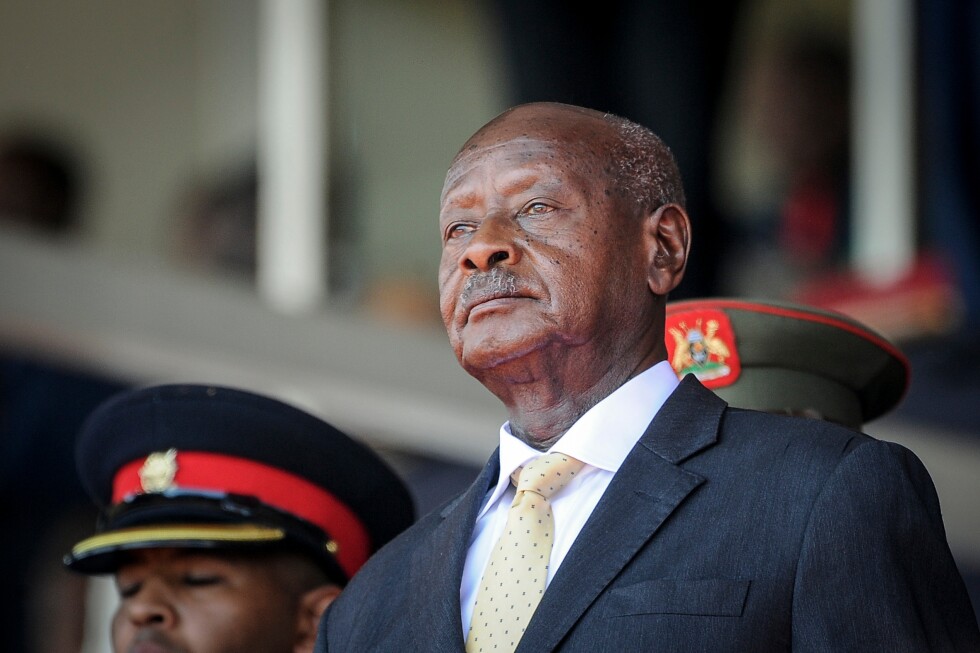
    As the Ugandan capital Kampala prepares for Tuesday’s inauguration of 81-year-old Yoweri Museveni for an eighth five-year term, the East African nation turns its focus to a question that will define its future: how will power transition when the leader who has ruled for four decades finally steps down?

    For millions of Ugandans, Museveni’s presidency is the only national leadership they have ever known. While most accept his time in office is drawing to a close, the path forward remains deeply unclear, with growing speculation that the presidency could pass to his son, army chief General Muhoozi Kainerugaba, who has openly declared his ambition to succeed his father.

    Kainerugaba, 52, the widely presumed heir apparent, has already taken a prominent public role in the lead-up to the inauguration, overseeing days of military parade rehearsals that saw Russian-made Sukhoi fighter jets roar over Kampala’s ceremonial grounds. Two potential paths to the presidency have emerged for the general, though both carry significant questions. The first is an unconstitutional but peaceful handover of power directly to Kainerugaba, while the second would rely on the ruling party’s overwhelming parliamentary majority to pass a constitutional amendment clearing his path to the nomination. A straight electoral victory is widely seen as a major challenge: opposition leader Bobi Wine, a popular former entertainer who has already run for president twice and rejected the results of January’s election that extended Museveni’s tenure, is expected to mount a strong challenge if Kainerugaba runs.

    Top ruling party figures have already lined up to back Kainerugaba’s bid. Parliamentary Speaker Anita Among told a gathering of lawmakers celebrating the general’s birthday last month that the ruling party’s majority in parliament would clear any obstacle for him, noting that the opposition was already marginalized in the 11th parliament and would be soundly defeated in the 12th. “For the sake of MK, just assure MK that we will do whatever it takes,” Among said, using Kainerugaba’s initials.

    The rush of senior politicians to pledge allegiance to Kainerugaba not only reflects their own calculations for political survival but also confirms his growing status as Uganda’s de facto authority as his father ages and relies increasingly on military leadership to govern. Andrew Mwenda, a close associate of Kainerugaba, wrote last month in online publication The Independent that “Many Ugandans close to power have learned this lesson. That the president is old and exhausted, both intellectually and physically. He has a limited ability to monitor many things across a large spectrum of sectors.”

    Kainerugaba’s rise through the military ranks, which began after he joined the armed forces in the late 1990s, has long been controversial, with critics labeling the planned succession the “Muhoozi Project.” While Museveni and Kainerugaba have repeatedly denied any pre-planned hereditary transfer of power, observers say it has become increasingly clear over the past two years that this is Museveni’s preferred outcome. With no viable rivals to Museveni within the ruling National Resistance Movement, many analysts agree the military will ultimately wield decisive influence over the selection of the next president.

    “While people are waiting for the legal transition from Museveni, the de facto transition has already happened,” said Angelo Izama, an analyst with Uganda-based think tank Fanaka Kwawote. “Kainerugaba, more than the president, is the final voice on defense and security matters.”

    Unlike his father, who cultivated a charismatic, pragmatic populist style that allowed him to co-opt rivals and retain power for decades, Kainerugaba is known for a more confrontational approach. Associates describe him as a disciplined career military officer, educated at elite military institutions in the United States and United Kingdom, who avoids ostentatious displays of wealth. He also founded the Patriotic League of Uganda, a political activist group that draws support from across the ruling establishment, including sitting government ministers and prominent business figures. But he lacks Museveni’s ability to build cross-factional alliances, and has drawn criticism for provocative, offensive public posts on social media. He has also pursued a high-profile anti-corruption crackdown that has led to the arrest of several senior generals, including former allies.

    Museveni first seized power in 1986 at the head of a guerrilla movement, promising to bring democracy to Uganda after years of civil war and political chaos. At the time, he famously criticized Africa’s problem of leaders clinging to power long after they had lost public support. Later, he revised his stance, arguing his criticism only applied to leaders who extended their rule without winning an electoral mandate.

    Over his four decades in office, Museveni, a key U.S. ally in regional counterterrorism and security efforts, has been widely credited with delivering sustained relative peace and economic growth to Uganda. But in recent years, he has drawn growing international criticism for an increasingly authoritarian turn that contradicts his early democratic promises. Term and age limits for the presidency have been scrapped, leading political opponents have been jailed or sidelined, and new legislation has raised alarms about shrinking space for civil society and opposition activity.

    Most recently, Ugandan lawmakers passed a bill framed as a measure to counter foreign interference in domestic politics. The legislation caps annual funding from foreign sources for any local actor at roughly $110,000, requiring government approval for any funding above that limit. Critics warn the law will cripple the work of independent non-governmental organizations and opposition groups. Wine’s National Unity Platform condemned the legislation as “unconstitutional, irrelevant and brought in bad faith to further persecute those with divergent views.”

  • Almost 200 sanctioned Russia-linked ships have entered UK waters despite warning

    Almost 200 sanctioned Russia-linked ships have entered UK waters despite warning

    Nearly seven weeks after UK Prime Minister Keir Starmer vowed to deploy British military forces to board sanctioned Russian vessels operating in UK maritime territory, an independent investigation by BBC Verify has uncovered that almost 200 blacklisted ships linked to Russia’s shadow oil fleet have traversed UK waters, with zero publicly confirmed interceptions or boardings carried out to date.

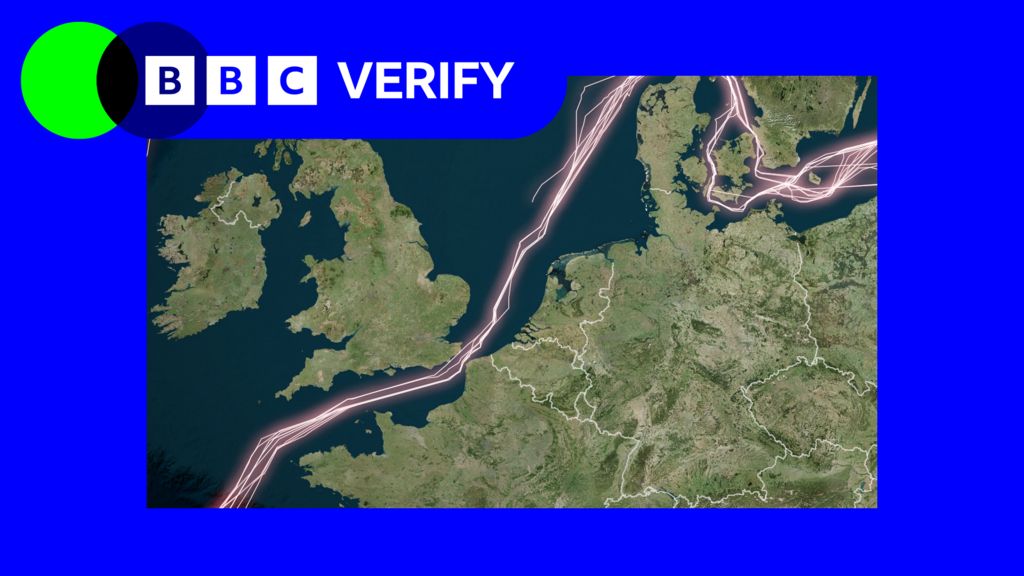
    Starmer first announced the aggressive new enforcement policy in March, stating that British armed forces had been granted authority to intercept and board any sanctioned vessels passing through the UK’s maritime zones. But between March 25 and 15:00 BST on May 11, BBC Verify’s analysis of publicly available ship tracking data from MarineTraffic identified 184 UK-sanctioned vessels making a total of 238 separate trips through UK waters. As of the investigation’s publication, the UK government has not released any public statement or evidence confirming that any of these vessels have been boarded, despite Starmer’s high-profile pledge.

    All 184 vessels in question appear on the UK Foreign Office’s official sanctions list, with documented ties to Russia. The shadow fleet, a loose network of vessels with deliberately obscured ownership and registration structures, was established by Moscow to evade harsh international sanctions imposed on its crude oil and energy exports following its full-scale invasion of Ukraine. The UK’s sanctions regime bars these vessels from entering UK ports, and prohibits British businesses and individuals from offering financial, insurance or brokerage services to any ship involved in transporting Russian oil. The government has framed this pressure on Russian oil revenues as a core measure to cut off funding for Moscow’s military campaign in Ukraine.

    Of the tracked vessels, 173 were oil tankers, 10 were liquefied natural gas (LNG) carriers, and one was classified as a multi-purpose offshore vessel. Every vessel tracked entered the UK’s Exclusive Economic Zone (EEZ), a maritime area extending up to 200 nautical miles off the UK’s coastline, with the vast majority of transits occurring through the busy English Channel. In at least 94 of those journeys, the vessels crossed briefly into UK territorial waters, the 12-nautical-mile zone directly adjacent to the UK coast. BBC Verify confirmed that Starmer’s announced interception policy explicitly applies to both territorial waters and the EEZ.

    MarineTraffic gathers its location data from vessels’ onboard Automatic Identification System (AIS) transponders, a mandatory tracking technology for most large commercial ships. However, AIS signals can be intentionally disabled by crews to hide a vessel’s true identity and location. The data shows significant gaps in tracking for many of the sanctioned vessels west of Scotland and Ireland, a common pattern for shadow fleet vessels attempting to avoid detection.

    The investigation also uncovered one notable incident: satellite imagery analyzed by experts from intelligence firm MAIAR confirms that a sanctioned oil tanker named *Universal* was escorted through UK waters by a Russian frigate, almost certainly the Russian warship *Admiral Grigorovich*, in early April. Ship tracking data shows *Universal* entered UK waters in the early hours of April 8 before transiting the English Channel.

    The complete lack of confirmed boardings has drawn sharp criticism from defense and maritime experts. Tom Sharpe, a former Royal Navy warship commander, described the inaction as “utterly confusing” and “pathetic.” Sharpe told BBC Verify that the UK possesses all the necessary military assets to carry out the pledged interceptions, including warships, specialized boarding teams, and customs enforcement capabilities. “We’ve got no maritime spine in us,” he said. “I see it time and time again with the way we operate our warships. We are risk averse, we’re poorly coordinated.”

    However, legal experts note that significant international maritime law constraints may explain the government’s reluctance to carry out boardings. James M Turner KC, a leading shipping lawyer at Quadrant Chambers, explained that under standard international law, coastal states are generally prohibited from seizing or boarding vessels that are legally flying the flag of another sovereign nation, regardless of sanctions status. “The position with very few exceptions is that you can’t seize vessels that are flying the flag of another country,” Turner said. “If a ship travels through UK waters under a flag it is entitled to fly then there is very little a coastal state can do – regardless of whether the vessel has been sanctioned or is carrying sanctioned goods.”

    Turner added that the policy appears to be unenforceable in all but a small number of edge cases, such as vessels sailing without a flag or falsely reporting their registration. “This is a case where rhetoric and reality do not coincide,” he said.

    Alessio Patalano, professor of war and strategy at King’s College London, noted that while no boardings have occurred, the policy has already had a measurable deterrent effect. The investigation found that multiple sanctioned vessels have altered their standard routes to avoid UK waters entirely. For example, the *Yi Tong*, an oil tanker registered to a Chinese shipping firm based in Shandong province, previously made regular trips between Russia’s Port of Ust-Luga and China via the English Channel. In the weeks following Starmer’s announcement, the vessel took a far longer route around the west of Ireland and north of Scotland, completely avoiding the Channel and UK territorial waters. Longer routes increase fuel costs and transit time for cargo operators, cutting into the profits of Russian energy sales.

    “The Russians are probably already thinking how to test the UK more, and we should expect ships taking a longer route bringing some measure of challenge to UK defences and infrastructure,” Patalano said. He also noted that the Russian naval escort of *Universal* could be interpreted as a sign that the UK’s policy is already putting Moscow under pressure.

    The Kremlin has already condemned the UK’s interception policy as “another deeply hostile step directed at Russia” and warned that such aggressive actions “have consequences.”

    When approached by BBC Verify for comment on its findings, the UK Ministry of Defence (MoD) declined to directly answer whether any interceptions or boardings had been carried out since March 25. Instead, the MoD stated it is “disrupting and deterring” shadow fleet vessels, and claimed that more than 700 suspected vessels have been “challenged” since October 2024. The department added that it would not comment on specific operational details “as this could compromise our ability to successfully take action against these ships.” Follow-up questions asking the MoD to clarify what constitutes a “challenge” were not answered with additional detail. The Royal Navy has confirmed it continues to monitor Russian vessels transiting UK maritime territory.

  • Firefighters battle to contain Florida Everglades brush fire

    Firefighters battle to contain Florida Everglades brush fire

    Firefighting crews across southern Florida have been locked in an intensive battle to halt the spread of a large brush fire that has torn through large swathes of the iconic Everglades ecosystem. As of Monday evening, official updates from state emergency management authorities confirmed the wildfire has already expanded across more than 7,000 acres of protected marsh and brushland, with containment efforts only reaching 40% completion.

    The Everglades, one of the United States’ most unique wetland habitats, hosts dozens of endangered plant and animal species, raising concerns among environmental officials about the potential long-term impact of the blaze on the region’s fragile ecosystem. Fire management teams have deployed air tankers, bulldozers, and ground crews to create firebreaks and slow the blaze’s advance, particularly as dry seasonal conditions and wind patterns have created favorable conditions for rapid fire spread. Local authorities have not yet issued mandatory evacuation orders for nearby residential communities, but have urged residents to remain alert to changing conditions and follow guidance from emergency response teams. Investigators have not yet released details on the cause of the fire, which is standard protocol for ongoing wildfire response efforts.

  • Little respite in Ukraine as air strikes ring out during Russia truce

    Little respite in Ukraine as air strikes ring out during Russia truce

    More than four years into Russia’s full-scale invasion of Ukraine, a US-brokered three-day ceasefire set to expire Monday has failed to deliver the broad relief that war-exhausted Ukrainians had hoped for, with reports of persistent air strikes, artillery fire, and mutual violation accusations lingering across frontline regions.

  • EU agrees long-stalled sanctions on Israeli settlers

    EU agrees long-stalled sanctions on Israeli settlers

    After months of political deadlock, European Union foreign ministers reached a landmark agreement Monday to impose new targeted sanctions on Israeli settlers responsible for growing violence against Palestinian communities in the occupied West Bank. The breakthrough came only after a recent change in government in Hungary, which had blocked the measure for months under nationalist former prime minister Viktor Orbán, a staunch ally of Israel.

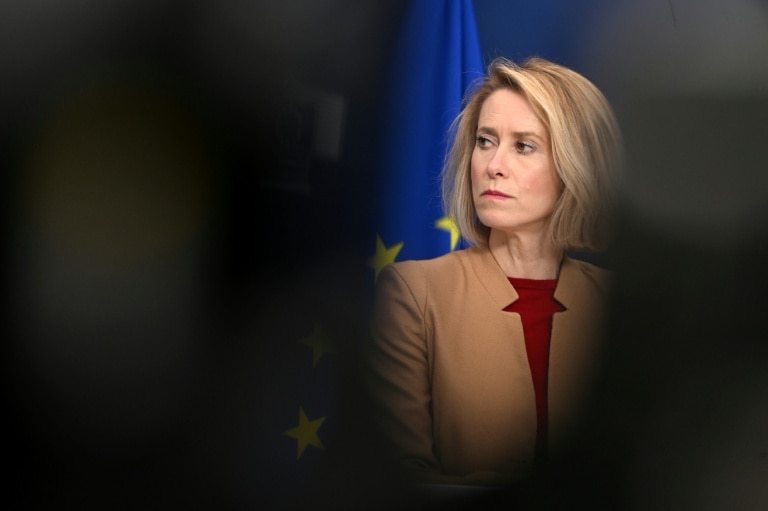
    High Representative of the European Union for Foreign Affairs and Security Policy Kaja Kallas, the bloc’s top diplomat, framed the vote as a long-overdue step to confront escalating unrest. “It was high time we move from deadlock to delivery,” Kallas stated following the announcement of the green light for sanctions. “Extremisms and violence carry consequences.”

    French Foreign Minister Jean-Noël Barrot added clarity to the scope of the measures, noting the EU is targeting leading Israeli organizations and their leaders found responsible for supporting the violent, extremist expansion of settlements in the West Bank. “These most serious and intolerable acts must cease without delay,” Barrot wrote on social media.

    EU officials confirmed that seven individual settlers and settler-linked organizations will be added to the bloc’s sanctions blacklist. In a parallel move, the bloc also agreed to impose new sanctions on representatives of the Palestinian militant group Hamas.

    The approval drew immediate sharp condemnation from Israeli leadership, who have lashed out at the measure as unfair and morally flawed. In an official post on X, Israeli Prime Minister Benjamin Netanyahu’s office argued that the EU had exposed “its moral bankruptcy by drawing a false symmetry between Israeli citizens and Hamas terrorists”, adding that Israel and the United States were “doing Europe’s dirty work” by combating extremist jihadist forces across the Middle East.

    Israel’s far-right National Security Minister Itamar Ben-Gvir went further, labeling the European Union “antisemitic” and claiming the bloc was “trying to tie the hands of those who defend themselves”. Israeli Foreign Minister Gideon Saar echoed the criticism, writing on X that the sanctions were “arbitrary and political”, imposed on Israeli citizens and entities “because of their political views and without any basis”.

    Escalating violence in the Israeli-occupied West Bank has been a growing point of international concern since the outbreak of the Gaza war in October 2023, with near-daily clashes between Israeli forces, settlers and Palestinian residents occurring across the territory. Palestinian officials and United Nations investigators have recorded a sharp surge in deadly attacks carried out by Israeli settlers against Palestinian communities since February 2025.

    While the EU has broken its deadlock on settler sanctions, deep divisions remain among member states on pursuing more sweeping punitive measures against Israel, such as restrictions on trade with settlements. Foreign ministers gathered in Brussels discussed growing calls for an EU-wide ban on goods produced in Israeli West Bank settlements, but no final agreement was reached on the proposal.

    Italian Foreign Minister Antonio Tajani explained that the European Commission will now draft a formal proposal for the ban, after which member states will assess whether the measure can gather enough support to pass. “This is an issue that has been discussed, but no decision has been taken, pending the proposals that will come,” Tajani said.

    Under international law, all Israeli settlements built in the West Bank are considered illegal. Excluding East Jerusalem, more than 500,000 Israeli settlers currently reside in these settlements alongside roughly three million Palestinians living in the occupied territory. A recent United Nations report found that settlement expansion in 2025 reached its highest annual level since the UN began tracking expansion data in 2017.

  • A South Korean startup captures workers’ techniques to develop AI brains for robots

    A South Korean startup captures workers’ techniques to develop AI brains for robots

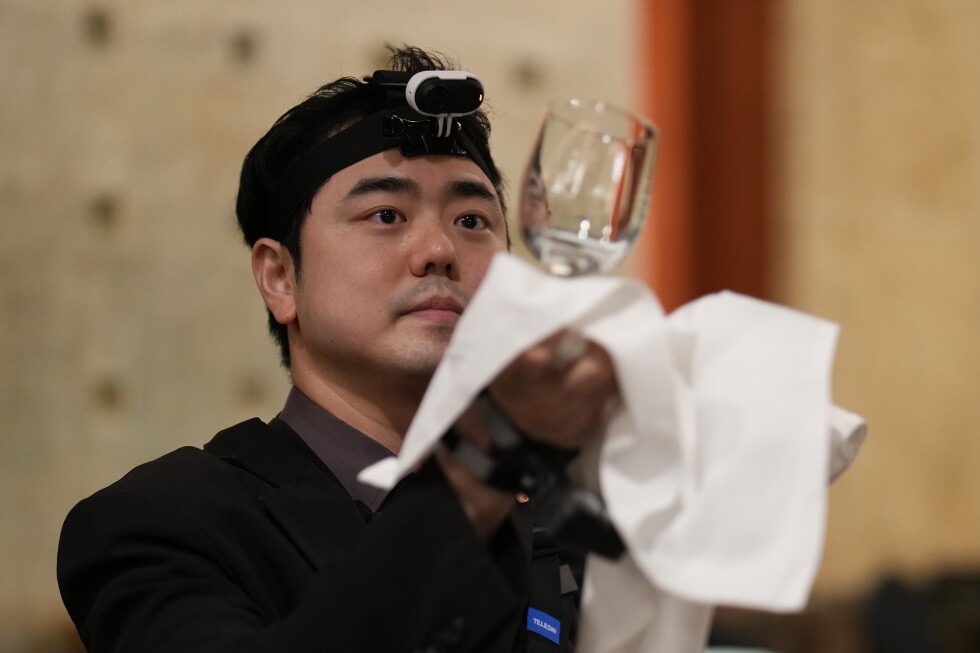
    In a sprawling banquet hall at Seoul’s five-star Lotte Hotel, veteran banquet worker David Park goes through a routine he has mastered over nine years: folding a crisp linen napkin, polishing cutlery, and arranging table settings. What makes this routine different from his thousands of previous shifts is the array of body cameras strapped to his head, chest, and hands — every subtle movement, every fine adjustment of his fingers is being recorded and stored in a growing database. This data will not go to waste; it will one day teach a robot to perform the same exact tasks.

    Park is one of roughly 10 skilled Lotte Hotel food and beverage staff contributing their expertise to RLWRLD, a South Korean artificial intelligence startup building a comprehensive library of human manual skills to power the next generation of AI-driven robots. The young company is not only working with hospitality giants like Lotte: it also collects motion data from logistics employees at South Korea’s CJ Group, tracking how workers grip, lift, and move goods in busy warehouses, and from staff at Japanese convenience chain Lawson, mapping the precise movements staff use to arrange in-store food displays.

    The end goal of RLWRLD’s work is to build a universal AI software layer that can be integrated into robots deployed across a wide range of workplaces, from manufacturing floors to commercial service sites, with an eventual expansion into domestic home environments. For the startup’s engineers, the top priority is replicating the manual dexterity of human hands — a core capability they believe will unlock the full potential of humanoid robots, the technology they expect to define the future of physical AI.

    RLWRLD sits at the forefront of a growing wave of South Korean high-tech firms and manufacturers racing to capture a share of the unproven but intensely competitive global physical AI market. Unlike traditional factory robots built to perform a single repetitive task, physical AI describes autonomous machines that combine AI processing and sensor technology to perceive, make decisions, and adapt to unpredictable real-world environments. While experts still debate whether these machines will live up to the hype of transforming global industries, physical AI sits at the center of South Korea’s national ambition to turn its existing strengths in semiconductor manufacturing and industrial production into a leadership position in the global AI economy.

    South Korea’s bet on physical AI comes after the country concluded it could not easily compete with U.S. firms in generative chatbot technology, where American companies hold a huge advantage thanks to dominance in English-language digital data and language research. By contrast, physical AI relies on vast datasets of human manual skill — a resource South Korea has in abundance thanks to its deep base of skilled manufacturing and service workers. The national government doubled down on this strategy just last month, launching a $33 million initiative to digitize the tacit, instinctive expertise of veteran master technicians into a training database for manufacturing robots, a move designed to boost productivity and counter the challenges of the country’s aging and shrinking workforce.

    Major South Kong conglomerates have already laid out clear timelines for rolling out AI-powered robots. RLWRLD, which just unveiled its first general-purpose robotics foundation model last week, projects that industrial AI robots will reach large-scale deployment by roughly 2028. Hyundai Motor, for example, plans to roll out humanoids built by its subsidiary Boston Dynamics to its global production facilities starting with its new Georgia plant in 2028. Samsung Electronics, the country’s chip and electronics giant, aims to transition all of its manufacturing sites to AI-driven operations with humanoids and specialized robots across production lines by 2030.

    “South Korea has a highly developed manufacturing sector and the focus is squarely on humanoids tailored specifically for those industries,” explained Billy Choi, a professor at Korea University’s Center for Human-Inspired AI Research.

    Despite the widespread optimism from government and industry leaders, South Korea’s push into AI-powered robotics has sparked significant pushback from national labor groups. Unions warn that widespread robot adoption could displace human workers and erode the skilled workforce that has long been the backbone of South Korea’s economic competitiveness — the very asset the country is relying on to train its AI robot systems. In January, after Hyundai’s union raised alarms that robots could trigger a widespread “employment shock,” South Korean President Lee Jae Myung struck back, framing AI as an unstoppable “massive cart” that requires workers to adapt to changes arriving “faster than expected.”

    “Mastery of skills is ultimately a human achievement — even if AI can replicate existing abilities, the continuous development of craft will remain fundamentally human,” said Kim Seok, policy director at the Korean Confederation of Trade Unions. He warned that mass robot deployment would risk “severing the pipeline” for new skilled labor, and called on policymakers and employers to collaborate with workers to address job security concerns and win buy-in for the AI transition.

    While humanoid robots developed by U.S. and Chinese firms have already demonstrated impressive physical capabilities — from backflips to long-distance running — RLWRLD business strategy lead Hyemin Cho argues that mastery of fine, delicate manual tasks with human-like hands is what will unlock widespread adoption of humanoids across industrial and domestic settings.

    “Capturing motion data in real-world settings is extremely important and the quality of that data matters greatly,” Cho noted.

    After the company collects raw footage of skilled workers performing tasks, RLWRLD engineers repeat the same movements while outfitted with cameras, VR headsets, and motion-tracking gloves to capture additional granular data. This combined dataset is then used to train test robots, which are often guided by RLWRLD “pilots” operating wearable control devices. The process captures minute details that are critical for dexterous movement, including joint angles and the exact amount of force a human applies when handling an object, according to RLWRLD robotics team member Song Hyun-ji.

    One of the startup’s test labs is tucked into a cluttered 34th-floor suite inside the Lotte Hotel itself, tangles of wires and computing equipment covering worn carpet, with infrared laser tracking poles standing in the corners. Under an original crystal chandelier, the only remaining trace of the room’s former luxury use, a wheeled test robot with black, human-shaped metal hands moves back and forth with a low mechanical whir. During a recent demonstration, the robot slowly lifted and repositioned cups in a mock minibar setup, though it did knock over one small dish. More recent test footage shows a far more advanced prototype: a full humanoid carefully opening a box, placing a computer mouse inside, closing the lid, and setting the finished box on a conveyor belt.

    Most industrial robots, including Boston Dynamics’ well-known Atlas humanoid, use task-specific gripper hands with two or three fingers. RLWRLD is among a small cohort of companies developing AI systems for five-fingered hands designed to closely mimic human touch. While five-fingered designs may not be necessary for all factory tasks, they will be critical for robots operating in home environments where close interaction with humans and everyday human objects is required, professor Choi explained.

    Hospitality workers like Park turn out to be ideal sources of training data for robots learning precise, nuanced manual tasks, and the skills captured in this data can also be transferred to industrial robot use, Cho said. Even today, humanoids still struggle with speed: a full humanoid would need several hours to clean a hotel guest room that a human worker completes in roughly 40 minutes. Even so, Lotte Hotel expects robots will be ready to handle cleaning and other back-of-house banquet tasks by 2029. The hotel chain also plans to launch a robot rental service for other hospitality and service businesses, with a potential future expansion into residential home use.

    Park, who has contributed his own skills to training the robots, says he does not fear being replaced entirely. “If you look at the entire process of preparing for an event in back-of-house areas, we think humanoids might be able to take over about 30% to 40% of that workload,” he explained. “It will be difficult for them to replace the remaining 50%, 60% and 70%, which involves actual human-to-human interaction.”

    With heavy competition from global players including Tesla and a flood of Chinese firms pouring billions of dollars into humanoid development, South Korea is betting its deep pool of skilled human expertise will give it an edge in turning the promise of physical AI into a commercial and industrial reality.

  • China should stop hoarding food and fertiliser, says former World Bank chief

    China should stop hoarding food and fertiliser, says former World Bank chief

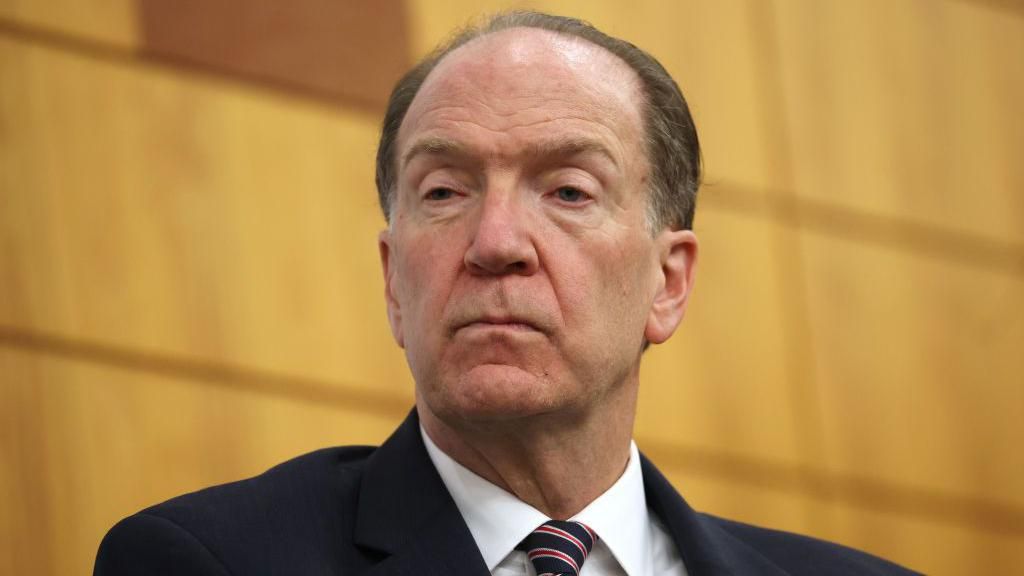
    In an exclusive interview with the BBC’s World Business Report, held just one day before the scheduled Trump-Xi summit in Beijing, former World Bank President David Malpass has laid out a series of bold demands for China, arguing that easing the spiraling global food and fertilizer supply crisis sparked by the ongoing Iran conflict requires Beijing to halt its accumulation of emergency stockpiles.

    Malpass, who previously held the post of U.S. Treasury Under Secretary for International Affairs during the Trump administration between 2017 and 2019, and led the World Bank from 2019 to 2023, pointed out that China currently holds the world’s largest reserves of both food staples and key fertilizer inputs. “They can stop building their stockpiles,” Malpass stated, pushing for China to release excess supplies to the tight global market.

    The call for action comes at a critical juncture for global agricultural production, as countries across the world rush to lock in fertilizer supplies ahead of the upcoming spring planting season. The ongoing conflict has disrupted critical shipping routes, with the closure of the Strait of Hormuz — a major chokepoint for global fertilizer and energy trade — causing severe shipping delays and skyrocketing prices. China, for its part, implemented a full ban on fertilizer exports back in March, framing the policy as a necessary measure to safeguard its own domestic supply security.

    Beyond the supply crisis, Malpass also challenged China’s long-standing self-identification as a developing country in multilateral forums such as the World Trade Organization and the World Bank. He argued that this designation is no longer credible given China’s status as the world’s second-largest national economy. “They present themselves as a developing country when they’re the second biggest economy in the world and in many ways rich,” Malpass said. “And yet they still have the pretence of being a developing country in the WTO and in the World Bank, and they could suspend that,” he added. The BBC has reached out to the Chinese Embassy in Washington D.C. to request a response to Malpass’s comments, and no statement has been released as of the report.

    Turning to the fragile Iran ceasefire, which former U.S. President Trump recently described as being on “massive life support,” Malpass urged the global community to align with the United States to push for a permanent diplomatic resolution to the conflict. He emphasized that the international community cannot tolerate a scenario where a rogue state gains access to plutonium or maintains control over critical global shipping chokepoints. “You can’t have a rogue state with plutonium, and you can’t block the Strait of Hormuz,” he said.

    Malpass also expressed hope that Beijing would use its diplomatic influence to help break the deadlock over the Strait of Hormuz, noting that unimpeded maritime trade aligns directly with China’s own economic interests. “China benefits from open waterways worldwide,” he explained. “They run the shipping lines, own the containers, and make huge profit from trade with the rest of the world. So, they would be a big loser if Iran in some way had control of the Strait of Hormuz.”

    Ahead of the release of U.S. April inflation data, Malpass also shared his outlook for American consumers, predicting that broad price increases will continue across most product categories. “I expect some up, yes, prices will go up on many products,” he said. Even so, he noted that recently released robust U.S. employment data signals that the overall American economy remains far more resilient than many analysts have predicted.

  • After backlash, Mexico cancels plan to cut school year for World Cup

    After backlash, Mexico cancels plan to cut school year for World Cup

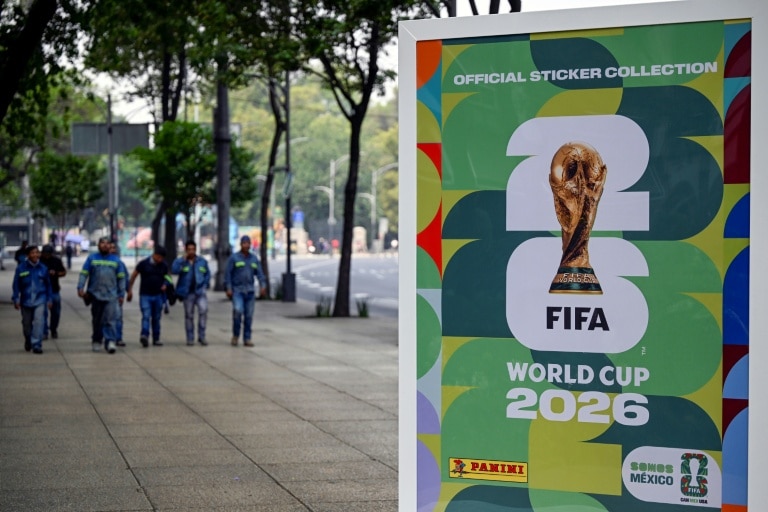
    Just days after a controversial proposal to slash nearly six weeks off the 2026 academic year sparked national outcry, Mexican authorities have reversed the policy, walking back a plan tied to the upcoming co-hosted 2026 FIFA World Cup that drew fierce pushback from parents, policy experts and regional governments.

    A government insider confirmed the cancellation to Agence France-Presse on Monday, marking a rapid policy reversal that unfolded over less than a week. The proposal first emerged Friday, when Education Secretary Mario Delgado announced the school year would wrap up on June 5 — a full 40 days ahead of the scheduled July 15 end date. Delgado framed the move as a dual adjustment for both the World Cup and an ongoing severe heat wave impacting much of the country.

    But the announcement triggered immediate backlash from across the political and social spectrum. Two major host states outright rejected the plan before the federal reversal. In Jalisco, where Guadalajara will host four World Cup matches, regional officials only agreed to suspend classes for the four days of matches, sticking to the original academic calendar for all other dates. Nuevo Leon, home to match host Monterrey (also set to host four games), similarly confirmed it would ignore the federal proposal and keep its original school schedule intact.

    Parents across the country raised alarms over lost learning time, while independent education think tank Mexico Evalua published a critical warning that the cut would exacerbate existing learning gaps for the nation’s 23.4 million primary and secondary students. The organization noted the reduction would cut already limited effective learning time even further, setting a generation of students behind academically.

    By Monday, President Claudia Sheinbaum signaled the policy was headed for reversal, announcing that education and senior government officials would launch a new round of consultations to collect parent feedback and re-evaluate all available options. Sheinbaum reaffirmed that the academic year would proceed to its scheduled end on July 15, with the standard six-week summer vacation running from that date through August 31, when the next school year is set to begin.

    Sheinbaum had previously noted that any adjusted schedule moving forward would be built around consensus, telling reporters, “The goal is for it to be a consensus decision. Now we need to listen.” She added that officials were open to minor adjustments that would allow some students to start the next year early while keeping the existing schedule for others, but no major cuts to instructional time would move forward without broad buy-in.

    In addition to the academic calendar reversal, the President also moved to reassure the public that all necessary security measures will be in place for the tournament, and that all ongoing public infrastructure upgrades tied to the event remain on track. Key projects include renovations to the iconic Azteca Stadium in Mexico City and expansions to Mexico City International Airport, both of which Sheinbaum confirmed will be completed before the tournament kicks off.

    The 2026 FIFA World Cup is a historic joint tournament hosted by Mexico, the United States and Canada, with the opening match scheduled for June 11 in Mexico City, where the Mexican men’s national team will face South Africa in the tournament’s first game.

  • Trump and Xi dialed down the trade war, but challenges lurk at their China summit

    Trump and Xi dialed down the trade war, but challenges lurk at their China summit

    As U.S. President Donald Trump prepares to depart Washington for a high-stakes summit with Chinese leader Xi Jinping in Beijing on Tuesday — the first of potentially four scheduled meetings between the two leaders this year — he has struck an upbeat tone about bilateral economic ties, framing the world’s two largest economies as reaping growing mutual benefits from trade while downplaying escalating frictions over rare earth minerals, tit-for-tat tariffs, and cutting-edge technologies like artificial intelligence.

    “We’re doing a lot of business with China and making a lot of money,” Trump told reporters last week. “We’re making a lot of money — it’s different than it used to be.”

    The summit’s core agenda centers on preserving stability in the bilateral economic relationship, with analysts and administration officials signaling that only incremental policy announcements are expected. The temporary trade truce reached by the two leaders during an October meeting in South Korea last year is widely projected to be extended, and China is reportedly preparing to unveil new purchase commitments for key U.S. exports including soybeans, beef, and commercial aircraft from Boeing. U.S. officials have also publicly floated the creation of a new bilateral Board of Trade to sustain ongoing dialogue on economic issues.

    Brett Fetterly, managing principal at global consultancy The Asia Group who specializes in China policy, notes that many within the Trump administration view stable, continued engagement as a more critical outcome than a sweeping immediate policy deal. “The outcome that matters more than any set of deliverables is stability and space for continued engagement, both to build domestic resilience and to facilitate future deal-making,” Fetterly explained.

    Yet even as diplomatic preparations frame the summit as a step toward smoother relations, deep-seated competition continues to shape the bilateral relationship, with multiple flashpoints ranging from lingering tariff disputes to the AI arms race and the ongoing Iran war capable of upending fragile progress. Official trade data also undermines Trump’s optimistic framing of growing U.S. gains from trade with China: U.S. Census Bureau figures show China purchased nearly $50 billion less in American goods last year than it did in 2022, a drop driven in part by Beijing’s pause of soybean purchases during a 2024 flare-up of trade tensions. The Trump administration has made expanding Chinese imports of U.S. goods a core priority to support American farmers and manufacturers and narrow the 2024 bilateral trade deficit, which hit $202 billion.

    Wider trade shifts have also reshaped economic ties in recent years: for the first time, the United States now imports more goods from Taiwan than from mainland China, a shift largely driven by surging demand for AI-related semiconductors and server hardware from the self-governing island that Beijing claims as its own. Analysis by Chad Bown, senior fellow at the Peterson Institute for International Economics and co-author of *How to Win a Trade War*, shows China’s share of total U.S. goods imports has plummeted from 22% at the start of Trump’s first term in 2017 to just 7.5% in the first three months of this year, as both sides have rerouted trade through third-party economies and U.S. firms have shifted electronics supply chains to Vietnam and India.

    The proposed new bilateral Board of Trade lies at the center of U.S. negotiating priorities for the summit. U.S. Trade Representative Jamieson Greer told Chinese Vice Premier He Lifeng during an April 30 call that the body would focus on facilitating trade in non-sensitive goods — such as agricultural products, but excluding advanced semiconductors and other technology deemed critical to national security — and streamline dispute resolution to help boost U.S. exports to China. The initiative also offers the Trump administration a politically and legally viable alternative to large-scale tariff hikes, after the U.S. Supreme Court ruled that Trump lacked the authority to unilaterally impose the sweeping 145% tariff increases on Chinese goods he enacted last year, and a federal court recently deemed the replacement temporary tariffs illegal last week.

    Administration officials confirmed that both sides will need to secure domestic approval to launch the board, which would oversee tens of billions of dollars in annual trade. The U.S. is also pushing for a parallel bilateral investment forum to facilitate cross-border financing of commercial operations. A 17-member delegation of major U.S. corporate CEOs, including Tesla’s Elon Musk, Apple’s Tim Cook, and Boeing’s Kelly Ortberg, will accompany Trump on the trip, the White House confirmed.

    Despite the push for dialogue, fundamental misalignment of priorities between Washington and Beijing threatens to limit progress at the summit. Trump has framed the bilateral trade imbalance as the core issue to resolve, betting that the U.S. can retain its technological lead in artificial intelligence. By contrast, Xi’s administration frames a rapidly shifting global landscape shaped by climate change and the Iran war as an opportunity to expand global market share for Chinese clean energy technologies including solar panels and electric vehicles.

    “Washington and Beijing are competing at different levels and different domains, with different theories of victory,” explained Michael Sobolik, senior fellow for U.S.-China relations at the conservative Hudson Institute. “President Trump leveraged tariffs not as a weapon against China but as leverage to secure a trade deal. Xi Jinping is angling to win a cold war with the United States.”

    The ongoing U.S.-Israel conflict in Iran has also created a new inflection point in global energy that deepens structural divides, according to Ali Wyne, senior research and advocacy adviser on U.S.-China relations at the International Crisis Group. The Trump administration is betting on continued global reliance on fossil fuels, while China frames recent energy price spikes triggered by Strait of Hormuz shipment disruptions as validation of its long-term strategy to lead the global green energy transition. “The structural frictions between the United States and China, they are growing in number and severity,” Wyne noted.

    Beneath the upbeat diplomatic rhetoric ahead of the summit, a host of unresolved flashpoints continue to threaten bilateral stability. These include China’s near-total global dominance of rare earth mining and processing — critical inputs for consumer electronics and clean energy technology — which the Trump administration is working to break through years of new investment and alternative supply chain partnerships. The U.S. also continues to push sweeping restrictions on Chinese access to cutting-edge AI semiconductors produced by U.S. firms including Nvidia and AMD. Other sticking points include China’s growing global dominance as an auto exporter, with Chinese vehicle exports rising 21% last year and Chinese EV manufacturers undercutting global competitors on price. The administration is also pursuing new tariffs on Chinese goods under a 1974 Trade Act national security provision, after earlier tariffs were struck down by the courts, targeting excess industrial capacity and alleged forced labor practices. Most recently, U.S. sanctions on a Chinese oil refinery and dozens of Chinese tankers and shipping firms for transporting Iranian crude have sparked a public backlash from Beijing, which has demanded international actors ignore the penalties, and the two countries are also locked in a dispute over Panama Canal management.