作者: admin

  • Trump sees ‘America First’ opportunity in Nasa mission to Moon

    Trump sees ‘America First’ opportunity in Nasa mission to Moon

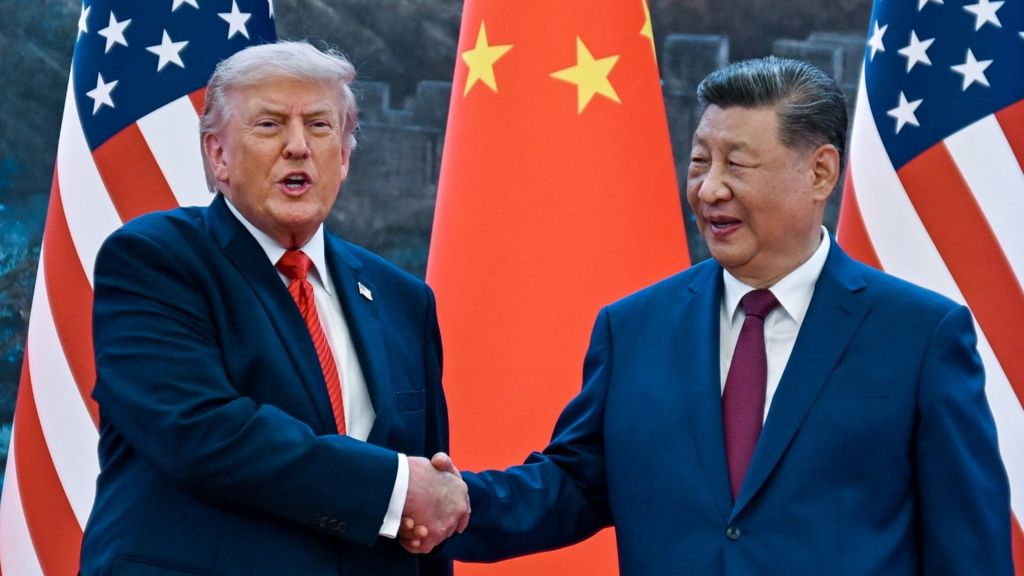
    As NASA prepares to launch the Artemis II mission—marking humanity’s first return to deep space since 1972—the endeavor carries profound geopolitical implications for the Trump administration and broader US strategic interests. This historic flight, carrying three American and one Canadian astronaut, represents more than technological achievement; it symbolizes a critical juncture in global space dominance competitions.

    The mission’s timing coincides with heightened domestic divisions within the United States regarding foreign policy, economic concerns, and immigration. A successful lunar operation could provide the Trump administration with substantial political capital, potentially fostering rare national unity while demonstrating American technological prowess.

    President Trump’s space policy evolution reveals strategic recalibration. Initially focused on Martian exploration during his first term, his administration now prioritizes lunar presence through Executive Order 12102, mandating US return to the Moon by 2028 and establishing permanent lunar infrastructure by 2030. The order explicitly frames space superiority as reflecting national vision and willpower, directly linking cosmic exploration to terrestrial power dynamics.

    NASA Administrator Jared Isaacman contextualizes the mission within contemporary geopolitical realities: ‘We face a genuine geopolitical rival challenging American leadership in space. This endeavor transcends symbolic planting of flags; it represents permanent establishment of presence. America will never again relinquish the Moon.’

    The modern space race differs fundamentally from Cold War competitions with the Soviet Union. Whereas the Apollo program primarily served ideological demonstration, Artemis incorporates substantial economic considerations. Lunar resources including helium-3 (valued exceeding $20,000/kg), water ice for propulsion, and rare earth minerals like lithium and platinum present unprecedented economic opportunities.

    Former NASA Administrator Sean O’Keefe emphasizes the resource dimension: ‘After decades considering the Moon a mere dust bowl, we now recognize its substantial helium-3 deposits, potentially enabling compact nuclear fusion reactors with extended operational lifetimes.’

    Space policy experts draw historical parallels to nineteenth-century western expansion. Clayton Swope, former CIA Directorate of Science and Technology veteran, compares lunar exploration to the Lewis and Clark expedition: ‘We cannot precisely quantify the Moon’s value, but we recognize its strategic necessity amidst competition with China.’

    The White House explicitly connects space achievement to national identity. Spokesperson Liz Huston states: ‘Through President Trump’s America-First policies, the United States will lead humanity into space, inaugurating unprecedented achievements in cosmic exploration.’

    Historical precedent suggests space exploration’s unifying potential. The Apollo 11 mission captivated 125-150 million Americans during the tumultuous Vietnam War era, providing collective pride amid social fragmentation. Experts like Council on Foreign Relations senior fellow Esther Brimmer note: ‘Space remains among the few domains transcending political polarization, representing shared national pride for most Americans.’

    As astrophysicist David Gerdes—who witnessed the Apollo landing as a child—reflects: ‘The technological boldness and astronaut spirit inspired generations across political spectra. A diverse contemporary crew returning to the Moon could potentially reunite the nation amidst current divisions.’

  • Inflation increases to 2.5% in Europe as Iran war boosts energy prices

    Inflation increases to 2.5% in Europe as Iran war boosts energy prices

    FRANKFURT, Germany — Escalating geopolitical tensions in the Middle East have triggered a significant surge in European inflation, with official data revealing a jump to 2.5% in March from February’s 1.9%. The conflict involving Iran has severely disrupted energy supplies, precipitating a sharp increase in fuel costs that is now permeating the broader economy.

    The statistical office of the European Union, Eurostat, reported a dramatic reversal in energy price trends, with March witnessing a 4.9% increase compared to February’s 3.1% decline. This energy shock has created immediate ripple effects across consumer markets, particularly affecting transportation and agricultural sectors.

    At Rome’s Trionfale market, vendors are experiencing firsthand the economic consequences of the conflict. Anna Caruso, a vegetable stand operator, explained the direct correlation between fuel costs and produce pricing. “When transportation expenses rise, these increases are inevitably passed along to consumers through higher prices for vegetables like zucchini, eggplant, and seasonal fruits,” she noted, adding that customers are increasingly opting for more affordable alternatives.

    Market merchant Paola Ianzi confirmed that while seasonal factors contribute to some price increases, the conflict has significantly exacerbated the situation through its impact on diesel and transportation costs that suppliers must recoup.

    Beyond energy, the inflation picture shows varied sector performance with food prices rising at a relatively moderate 2.4% while services—encompassing healthcare to personal services—increased by 3.2%.

    European Central Bank President Christine Lagarde has expressed concern that businesses might be quicker to implement price increases during this inflationary episode, drawing from recent memories of the 2022 inflation crisis when prices reached double digits following Russia’s energy supply reductions.

    The current crisis stems from Iran’s obstruction of tanker traffic through the Strait of Hormuz, a critical maritime passage for approximately 20% of global oil and gas shipments. This blockade has created expectations of substantially tighter fuel markets in the coming months.

    Financial analysts are now anticipating monetary policy responses, with many predicting the ECB will implement interest rate increases to prevent inflationary expectations from becoming entrenched in the economy. ABM AMRO’s Head of Macro Research Bill Diviney stated: “We expect the ECB to raise rates already at the April and June governing council meetings to pre-empt any de-anchoring of inflation expectations.” This sentiment is echoed by Oxford Economics analysts, who similarly forecast two rate increases this year. The ECB maintained its key rate at 2% during its most recent meeting on March 19, with rate hikes remaining the central bank’s primary anti-inflation instrument.

  • Experts hail China’s role in Asian energy security

    Experts hail China’s role in Asian energy security

    At the 2026 Boao Forum for Asia Annual Conference held in Hainan last week, regional and international experts united in highlighting China’s decades-long investments in renewable energy development as a game-changing asset to buffer Asian economies against growing global energy volatility, triggered by recent U.S.-Israeli strikes on Iran that have disrupted critical Middle Eastern supply routes.

    The conflict has effectively closed the Strait of Hormuz, a chokepoint that underpins a large share of Asia’s energy imports. According to 2025 data from the International Energy Agency, nearly 90 percent of all liquefied natural gas (LNG) exported through the strait was destined for Asian markets, accounting for more than a quarter of the continent’s total annual LNG imports. This sudden disruption has laid bare Asia’s longstanding structural vulnerability: decades of reliance on fossil fuel imports from the Middle East have left most regional nations exposed to sudden price swings and supply cutoffs driven by geopolitical conflict.

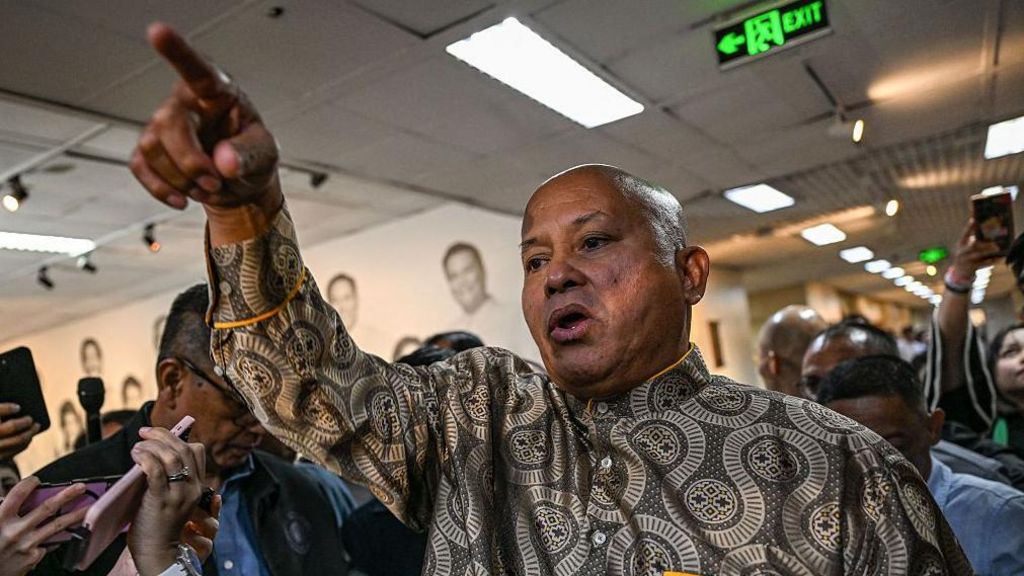
    Mohd Faiz Abdullah, executive chairman of Malaysia’s Institute of Strategic and International Studies, framed the current energy turmoil not as a standalone crisis, but as a symptom of broader systemic instability in the global economy. He noted that China’s advanced research and development in alternative energy positions it uniquely to lead a regional transition away from fossil fuel dependence. “This is where China can come in… to further advocate for the implementation of alternative energy resources,” Faiz explained, adding that China can set a critical example for other nations looking to reorient their national energy strategies.

    Li Xing, a Yunshan Leading Scholar at the Guangdong Institute for International Strategies and adjunct professor at Denmark’s Aalborg University, echoed this assessment, emphasizing that the ongoing crisis has created unexpected new opportunities to deepen energy collaboration across Asia. China made a strategic pivot to renewable energy more than a decade ago, Li pointed out, leaving it far less vulnerable to Middle Eastern supply shocks than most other regional economies. He cited the country’s 15 consecutive years of global leadership in installed wind power capacity as a clear demonstration of this successful transition. “Asian countries should step up their cooperation with China to address infrastructure challenges in renewable energy,” Li said. “In this way, they will not need to rely so heavily on oil imports from the Middle East.”

    Building regional energy resilience through the transition away from volatile fossil fuels emerged as a central topic of discussion across forum panels. Armida Salsiah Alisjahbana, executive secretary of the United Nations Economic and Social Commission for Asia and the Pacific (UNESCAP), framed the current crisis as a catalyst for long-term systemic change. She noted that the turmoil creates a urgent opening to build more resilient regional energy systems and reduce exposure to wild swings in global fossil fuel prices.

    Alisjahbana highlighted China’s outsized capacity to support this transition, from creating new market opportunities and connecting regional business ecosystems to driving inclusive economic growth and job creation through the expansion of clean energy infrastructure. Still, she cautioned that meaningful regional progress requires addressing disparities in development across Asian nations, particularly for smaller, lower-income economies that face greater barriers to scaling renewable energy. Ensuring that energy diversification and regional cooperation help narrow these development gaps, she said, must be a core priority.

    Gao Haichun, co-chair of Jiangsu-based global renewable energy firm Trina Solar Co, added that China has already demonstrated that a large-scale transition to renewable energy is achievable. Today, she noted, 100 percent of China’s annual new electricity demand is met by renewable energy sources, setting a clear benchmark for other Asian nations to follow. Echoing the traditional Chinese proverb that “it is better to teach a person to fish than to give them a fish,” Gao framed renewable energy cooperation as a sustainable model for long-term energy independence. Renewable energy infrastructure such as solar power stations can operate for more than 30 years, she explained, enabling energy self-sufficiency not just for entire countries, but for individual cities, industrial parks, and even households. “If we want to develop renewable energy, especially for Asia, we must form closer cooperation,” Gao emphasized.

  • Family last safety net in dementia care

    Family last safety net in dementia care

    As China confronts an escalating Alzheimer’s epidemic, families across the nation are becoming de facto nursing homes for their loved ones, operating without professional support or institutional respite. The country’s rapidly aging population has created a healthcare crisis where familial devotion has become the primary defense against a disease affecting nearly 17 million citizens.

    Wei Qiang’s morning ritual exemplifies this national challenge. Each day at dawn, he assists his 80-year-old mother—once celebrated for her sharp memory—through the meticulous routine of feeding, bathing, and positioning that dementia care demands. His home has transformed into a full-time medical facility, operating without nursing shifts or professional assistance.

    The recently published China Alzheimer’s Disease Report 2024, a collaborative study led by Renji Hospital of Shanghai Jiaotong University School of Medicine, reveals the staggering scale of this health emergency. With formal care options remaining severely limited, culturally stigmatized, and unevenly distributed, the burden of long-term dementia care falls overwhelmingly on family members.

    Adult children and elderly spouses now serve as frontline healthcare providers, undertaking complex medical decisions, emotional labor, and moral responsibilities with minimal institutional support. This care model reflects China’s deep-rooted filial ethics, which dictate that children should provide comprehensive care for aging parents regardless of personal sacrifice.

    The situation represents a collision between traditional values and modern demographic realities. As China’s population ages at an unprecedented rate, the healthcare system struggles to adapt, leaving families to navigate the physically and emotionally exhausting journey of dementia care largely alone. The crisis highlights the urgent need for expanded institutional support, professional training for family caregivers, and destigmatization of external care options.

  • AI dispute reveals US hegemony

    AI dispute reveals US hegemony

    A high-stakes legal clash between leading American artificial intelligence firm Anthropic and the U.S. federal government has pulled back the curtain on the hegemonic logic that shapes Washington’s approach to AI development and global governance, according to international policy experts. The confrontation began earlier this month when the Biden administration labeled Anthropic a “national security supply chain risk” after the company refused to grant U.S. government agencies unfettered, unrestricted access to its proprietary large language models—access Anthropic argued could enable dangerous misuse of the technology in autonomous weapons systems and mass surveillance programs.

    Last Thursday, federal Judge Rita Lin of the U.S. District Court for the Northern District of California issued a preliminary injunction temporarily blocking the administration’s actions, pausing both the supply chain risk designation and a White House order forcing all federal agencies to discontinue use of Anthropic’s AI tools. The ruling delays enforcement of the government’s ban for seven days to give the Biden administration time to file an appeal, while the court weighs the full merits of Anthropic’s lawsuit against the federal government. In her decision, Lin explicitly ruled that punishing Anthropic for drawing public attention to the government’s contracting demands amounted to unlawful retaliation against the company’s First Amendment rights. Anthropic welcomed the court’s ruling, saying in a statement that it was grateful for the court’s swift action and confident it would ultimately prevail on the full legal claims brought against the government.

    The AI safety-focused firm’s co-founder and CEO Dario Amodei has long warned of the risks of concentrating advanced AI power in the hands of a small, unaccountable group of decision-makers, noting in a January blog post that he sees major danger in allowing a small cohort of actors to gain control over an autonomous army of drone systems.

    Chinese policy experts who study global technology governance say the dispute lays bare a troubling expansion of U.S. national security framing that weaponizes economic and technological competition to advance geopolitical goals. He Yun, a researcher at Tsinghua University’s Belt and Road Institute and associate professor of public administration at Hunan University, argues that the U.S. government’s use of the “supply chain risk” label to pressure a private company over its ethical stances reflects a deliberate trend of expanding and instrumentalizing the concept of national security. In recent years, Washington has fully integrated economic competition and technological dominance into its national security strategy, meaning any corporate action that deviates from its military or geopolitical priorities can be instantly reclassified as a threat, He explained. “When the so-called principle of American freedom clashes with Washington’s geopolitical hegemonic objectives, it is readily sacrificed in favor of the latter,” she added.

    Lang Ping, head of security studies at the Chinese Academy of Social Sciences’ Institute of World Economics and Politics, notes that the conflict underscores the U.S. government’s increasingly assertive unilateral posture in the global AI space. As a leading global AI power, the U.S. frames competition in this sector as a winner-takes-all economic and geopolitical race, Lang explained. “The US has persistently pursued a monopoly position in the global AI sector, rallying allies to develop a coordinated technological ecosystem while promoting the export of full-stack systems, with the aim of shaping a market structure centered on its own leadership,” she said.

    In contrast to the U.S.’s unilateral, monopoly-seeking approach, experts highlight the inclusive governance framework China has put forward for the global AI sector. As the world’s second-largest economy and a major leader in AI innovation, China has actively worked to shape multilateral cooperative AI governance, launching the Global Initiative on AI Governance and the Global Action Plan on AI Governance to offer an inclusive alternative that centers shared benefits rather than great power competition.

    China adheres to a people-centered approach and the core principle of “AI for good”, seeking to balance technological innovation, regulatory oversight and power distribution to deliver stable, inclusive AI development that benefits the entire global community. All nations, regardless of size or economic power, hold an equal right to develop and access AI technology, He Yun emphasized. China advocates building an inclusive, equitable global AI governance system under the framework of the United Nations, with a specific focus on expanding representation and capacity-building for developing nations to close the global digital divide.

    By comparison, U.S. AI policy is marked by a heavy shift toward securitization and bloc-based exclusionary strategies, He noted. This reliance on unilateral action and geopolitical division risks fragmenting global AI supply chains and splitting global innovation ecosystems, exacerbating global technological inequality and raising the risk of great power confrontation over the future of AI development.

  • Czech police arrest a man who claimed responsibility for attack on a Russian center in Prague

    Czech police arrest a man who claimed responsibility for attack on a Russian center in Prague

    PRAGUE — Czech law enforcement authorities have apprehended a foreign citizen who voluntarily surrendered and confessed to orchestrating a Molotov cocktail assault against the Russian House cultural center in Prague. The suspect, whose identity and nationality remain undisclosed by police, turned himself in on Monday.

    According to official statements, the individual admitted to planning the attack since summer 2023. The incident occurred last Thursday evening when multiple incendiary devices were launched at the Russian-state-funded facility. While photographic evidence shows significant window damage and smoke residue on the building’s exterior, the structure avoided catching fire.

    Igor Girenko, director of the cultural center, provided details to Russian state media, indicating that six Molotov cocktails were deployed during the attack, with three failing to detonate. The center, which organizes cultural, educational, and scientific programs while offering Russian language courses, does not hold diplomatic status despite its Russian government funding.

    The incident has triggered diplomatic responses from both nations. Russian Foreign Ministry spokeswoman Maria Zakharova characterized the assault as “barbaric,” while Russia’s embassy in Prague formally requested enhanced security measures for Russian institutions and personnel within the Czech Republic. The Czech Foreign Ministry has simultaneously issued condemnation of the violent act.

    Investigation into the motives and precise circumstances surrounding the attack continues as authorities process evidence and evaluate potential security implications.

  • Beijing schools push banchao with eye on physical education

    Beijing schools push banchao with eye on physical education

    Beijing’s educational landscape is undergoing a transformative shift as primary and secondary schools across the capital implement the groundbreaking ‘banchao’ initiative—a comprehensive sports competition program designed to integrate physical education into daily academic life. This citywide movement, aligned with Beijing’s health-first educational strategy, anticipates hosting approximately 400,000 sporting events annually with participation exceeding 10 million students.

    The Beijing Hepingjie No 1 Middle School Group, comprising 11 campuses throughout Chaoyang district, exemplifies this commitment with 8,300 students engaged in competitions extending through December. President Yang Yan emphasized the institution’s dedication to promoting over 20 distinct sports disciplines through their 38 specialized clubs covering soccer, basketball, volleyball, and handball.

    ‘Banchao represents more than mere physical training or health enhancement,’ Yang explained. ‘We’re pioneering an educational model that integrates athletic development with academic curricula, currently testing innovative approaches including our sports-psychology fusion program.’

    Diverse implementation strategies emerge across Beijing’s educational institutions. Jiangfu Experimental School plans April parent-student running competitions in the scenic Jiangfu Park, while the primary school attached to Chaoyang’s education science academy offers platforms in softball, soccer, table tennis, and basketball. Principal Wang Yi noted these programs enable ‘skill acquisition, interest development, team spirit cultivation, character building, and physical fitness improvement.’

    The initiative receives enthusiastic student endorsement. Thirteen-year-old Li Yiren expressed how soccer competitions have provided pathway to advanced tournaments and career aspirations: ‘These games bring me joy and opportunity—I hope to eventually perform on international stages.’

    Muntizar Mammitimin, a senior high student from Xinjiang Uygur Autonomous Region at Hepingjie No 1 School’s Lianpayuan campus, organized a 16-member soccer club, believing the events ‘strengthen emotional bonds between Xinjiang and local teachers and students.’

    The program’s tiered structure identifies and nurtures exceptional talents through club activities while providing personalized development pathways, representing a significant advancement in holistic education methodology.

  • Wolf bites woman in a shopping area in Germany’s 2nd-biggest city

    Wolf bites woman in a shopping area in Germany’s 2nd-biggest city

    In an unprecedented incident that has captured national attention, a wolf attacked a woman in Hamburg’s commercial district near Altona station before being subsequently retrieved from the city’s Binnenalster lake. The event, which occurred on Monday evening, represents the first documented wolf attack on a human since the species’ reintroduction to Germany nearly three decades ago.

    According to Hamburg authorities, emergency services transported the injured woman to a local medical facility following the unusual confrontation. While specific details regarding her condition and the precise nature of her injuries remain undisclosed, the incident has prompted significant concern among wildlife experts and urban planners alike.

    The wolf, believed to be the same specimen sighted previously in the suburban Blankenese area over the weekend, was extracted from the urban waterway by police officers responding to multiple public reports. Wildlife specialists hypothesize that the animal was likely a young wolf displaced from its natural habitat while searching for territorial boundaries, inadvertently venturing into the metropolitan environment.

    Hamburg’s regional government emphasized that wolf behavior typically involves avoiding human interaction, suggesting the high-stress urban setting may have contributed to the anomalous attack. The animal has since been relocated to a secured enclosure on the city’s outskirts for further observation and assessment.

    This incident occurs against a backdrop of evolving wildlife management policies across Europe. Recently, the German parliament enacted legislation facilitating the controlled hunting of wolves responsible for livestock predation, reflecting growing tensions between conservation efforts and agricultural interests. The European Parliament similarly voted last year to reclassify wolves from ‘strictly protected’ to ‘protected’ status in response to increasing concerns from farming communities.

  • ‘Felt close to death’: Indian seafarers detained in Iran return home

    ‘Felt close to death’: Indian seafarers detained in Iran return home

    Eight Indian seafarers have finally returned home following a perilous evacuation from Iran, where they were detained for months under allegations of fuel smuggling. Their ordeal highlights the complex intersection of geopolitical tensions and human resilience in conflict zones.

    The sailors were part of an 18-member multinational crew aboard MT Valiant Roar, a vessel operated by Dubai-based Prime Tankers LLC. Iranian authorities seized the ship on December 8th in international waters, claiming it was involved in illicit fuel transportation—an accusation the operating company vehemently denied.

    While eight Indian crew members managed to return home on February 10th, the remaining eight faced extended detention amid escalating Middle East conflicts. Their release orders came on February 27th, coinciding with the onset of military strikes between the US, Israel, and Iran. This timing triggered regional security disruptions that trapped the sailors in Bandar Abbas port, dangerously close to Iranian naval facilities.

    Captain Vijay Kumar described the terror of witnessing missile attacks: ‘We could only watch helplessly as missiles fell around us through the night.’ The situation worsened as Iranian authorities had removed crucial navigation equipment during the seizure, preventing the vessel from relocating to safer waters.

    On March 3rd, the Indian embassy in Tehran executed a daring evacuation, transporting the crew to a hotel in the capital. However, safety concerns persisted as crew members reported buildings shaking from nearby explosions. Chief engineer Anil Kumar Singh revealed, ‘Every moment felt close to death.’

    Their escape route involved a hazardous overland journey to Armenia through active conflict zones, followed by flights via Dubai to Mumbai. The multinational nature of the operation saw coordinated efforts from Indian, Sri Lankan, and Bangladeshi diplomatic missions.

    Personal stories emerged from the trauma, including crew member Masood Alam’s postponed wedding following Eid celebrations. The sailors also raised concerns about unpaid wages and uncertain employment futures with Prime Tankers LLC, whose owner remained unresponsive to inquiries.

    The incident underscores the vulnerabilities of international maritime workers caught in geopolitical crossfires and the critical role of diplomatic intervention in resolving transnational crises.

  • Suriname’s former president Santokhi dies – media

    Suriname’s former president Santokhi dies – media

    The Republic of Suriname has entered a period of national mourning following the announcement of former President Chandrikapersad Santokhi’s passing at age 67. The South American nation’s government confirmed the news through an official statement published on its website this Monday.

    Santokhi, who previously led the country as president, leaves behind a complex political legacy that spanned decades of public service. His tenure coincided with significant economic and social developments within the former Dutch colony, which maintains a unique cultural blend of Caribbean and South American influences.

    The circumstances surrounding his death have not been immediately disclosed, though the government’s formal announcement suggests a peaceful passing. The news has triggered an outpouring of condolences from across the political spectrum, with current government officials praising his dedication to national development.

    Santokhi’s political career was notable for its focus on judicial reform and economic stabilization during challenging periods in Suriname’s history. His administration navigated complex international relationships while addressing domestic concerns about sustainable development in the resource-rich nation.

    The former president’s passing marks the end of an era in Surinamese politics, coming at a time when the country continues to forge its path as one of South America’s smallest but most culturally diverse nations. Memorial arrangements are expected to be announced in the coming days as the country prepares to honor his contributions to public life.