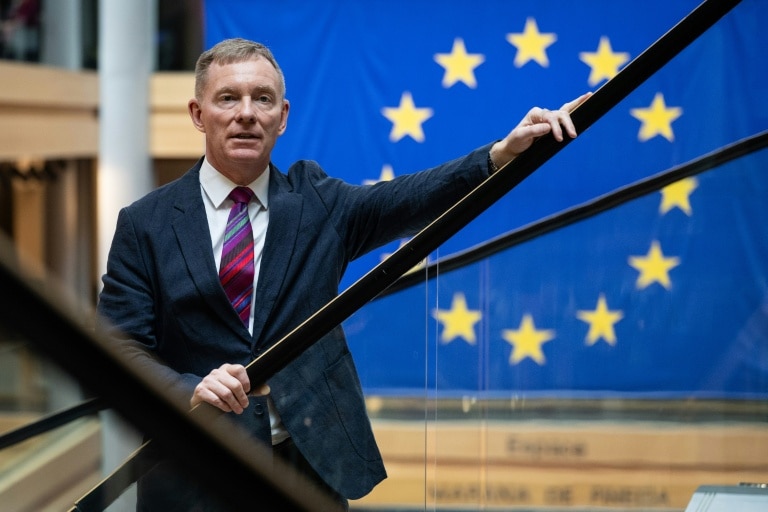
In a historic unanimous vote held in Hanoi on Tuesday, April 7, 2026, Vietnam’s National Assembly has formally confirmed To Lam, the General Secretary of the Communist Party of Vietnam Central Committee, as the country’s state president for the 2026 to 2031 tenure. All 499 sitting deputies registered for the session were present, and every single legislator cast a vote in support of the election resolution confirming Lam’s appointment. This outcome marks a key step in consolidating Vietnam’s national leadership as the country enters a new five-year development cycle. To Lam is no stranger to the role of state president: he previously held the position from May to October 2024, before being elected CPVCC General Secretary in August of that same year. During the first plenary session of the 14th Central Committee held on January 23 this year, Lam was re-elected to the top party post for the 2026-2031 term. After his confirmation as head of state, To Lam delivered a policy-focused address to the National Assembly, laying out core priorities for his upcoming tenure. He emphasized that building a highly skilled domestic workforce is a critical prerequisite to meet the evolving development demands of Vietnam’s new era. Beyond workforce development, Lam also highlighted the need to continue refining national governing institutions and administrative frameworks, with the goal of building a modern, socially inclusive, and environmentally and economically sustainable Vietnamese society. To Lam also stressed that Vietnam will continue aligning its national development trajectory with evolving global trends in politics, economics, and human civilization, maintaining the country’s active and constructive role in the international community. The vote was held during an official session of Vietnam’s National Assembly in the capital Hanoi, with Lam taking the official oath of office during the proceedings. A photo from the swearing-in ceremony was distributed by international news agencies following the event.
作者: admin
-

US fund Pershing Square launches takeover bid for Universal Music
In a bold move that has sent ripples through global financial and entertainment markets, activist investor Bill Ackman’s US-based hedge fund Pershing Square has launched a public takeover bid for music industry giant Universal Music Group (UMG), arguing that the iconic label’s share price has failed to reflect its massive underlying growth potential.
Announced this Tuesday, the offer proposes a cash-and-stock deal worth 30.40 euros ($35.15) per UMG share, valuing the company – home to A-list recording artists including Taylor Swift, The Weeknd and Lady Gaga – at a total of approximately 55 billion euros. Pershing Square confirmed it has formally submitted the proposal to UMG’s board of directors, with a targeted timeline to close the merger transaction by the end of 2026.
Under the terms of the plan, UMG would merge with Pershing Square SPARC Holdings, a special purpose acquisition firm created by the hedge fund, and the combined new entity would trade publicly on the New York Stock Exchange.
In his official statement accompanying the bid, Ackman emphasized that UMG’s underperformance on public markets stems entirely from external factors unrelated to the core strength of its music operations. He cited three key issues dragging down the stock: ongoing market uncertainty surrounding the future of French conglomerate Bollore’s 18 percent ownership stake in UMG, delays to UMG’s planned listing on US exchanges, and what Pershing Square calls the “underutilisation of UMG’s balance sheet.”
Pershing Square is already a major UMG stakeholder: the firm acquired a 10 percent stake in the music group from French media conglomerate Vivendi – also controlled by the Bollore family – back in August 2021.
In a detailed letter to UMG’s board outlining the proposal’s long-term financial framework, Pershing Square laid out key commitments for the merged company: annual dividend increases of at least 2 percent, and a sustained leverage ratio of 2.5 times operating profit (EBITDA). The letter also confirmed that all remaining free cash flow, after covering required business investments, would be allocated to share repurchase programs to boost shareholder value.
Market reaction to the bid announcement was immediate: UMG shares listed on the Amsterdam stock exchange jumped more than 11 percent in early trading, reaching just over 19 euros by 0950 GMT, as investors digested the long-awaited move for the undervalued media asset.
-

One dead as high-speed train collides with lorry in France
A deadly early-morning collision between a high-speed TGV passenger train and a heavy truck hauling military equipment has left the train’s operator dead and 13 other people injured in northern France, authorities confirmed this week.
The crash unfolded just before 7 a.m. local time on Tuesday along the route between the towns of Béthune and Lens, located in the Pas-de-Calais region, according to local officials. The TGV was operating a scheduled passenger service from Dunkirk to the French capital of Paris when it struck the lorry at an unsecured level crossing.
French regional president Xavier Bertrand was among the first officials to confirm the fatality, identifying the victim as the TGV’s driver and calling the incident a devastating “terrible tragedy.” “My thoughts are with his family, his loved ones and all the staff who are mourning his loss,” Bertrand posted on social media platform X Tuesday morning.
Of the 13 injured passengers and crew, two people remain in critical condition while 11 others have been treated for minor wounds, French national media outlet Franceinfo reported, citing preliminary emergency response data.
Hours after the crash, French Transport Minister Philippe Tabarot announced he was traveling to the collision site alongside Jean Castex, chief executive officer of state-owned national rail operator SNCF and former French prime minister. Castex had not issued a public statement on the incident as of Tuesday afternoon, and the BBC confirmed it had reached out to SNCF for additional comment on the investigation.
Rail worker union SUD-Rail has already called for full public disclosure of all findings from the official probe into the crash, demanding “total transparency” from regulators and SNCF leadership.
Regional rail operator TER Hauts-de-France has confirmed that all rail traffic between Béthune and Lens was suspended immediately after the collision, with disruptions expected to last through mid-morning Tuesday. Limited service on alternate routes began rolling out gradually as emergency crews cleared the crash site.
This latest incident comes less than two weeks after another fatal train-truck collision in southeastern France’s Var region, which claimed one life. While level crossing collisions are relatively uncommon across Europe, official data shows such incidents are far more frequent in France than in neighboring the United Kingdom.
Preliminary 2024 figures recorded 89 level crossing collisions across France this year, resulting in 20 total deaths. By comparison, the UK recorded just six such incidents in the same period. Between 2021 and 2023, France averaged more than 100 recorded level crossing collisions per year, according to national transport safety data.
-

Air India CEO steps down early as losses mount
India’s legacy carrier Air India is facing a leadership transition as chief executive Campbell Wilson has announced his resignation, departing the role earlier than his 2027 contract end date amid ongoing operational, financial and safety challenges that have stalled the airline’s post-privatization turnaround. Wilson will remain in the top position until the airline’s board-appointed search committee confirms a permanent replacement, a process expected to conclude within the next several months.
A veteran former Singapore Airlines executive, Wilson was handpicked by Tata Group when the Indian conglomerate acquired Air India from the national government in 2022, following decades of persistent underperformance and mounting losses under state ownership. Tasked with steering a full corporate and operational reset, Wilson oversaw several key milestones during his tenure: the airline added more than 100 new aircraft to its fleet, completed nearly all of the planned interior refits for its older narrow-body jets, began rolling out new wide-body aircraft with upgraded cabins, modernized core operational systems, launched new customer-facing products, and lifted service standards across both ground and in-flight operations.
In a statement shared internally with Air India staff, Wilson noted that he first notified Air India Chairman N Chandrasekaran of his plan to step down in 2024, and had spent the subsequent period positioning the airline for a smooth leadership handover. “The time is right for me to hand over the reins for the next phase of Air India’s rise,” Wilson said in his message, adding that the transformation the airline has completed over the past three years leaves it on “stable footing” for future growth.
Even with these incremental improvements, however, Wilson’s tenure was marked by persistent headwinds that have complicated the turnaround effort. Since Tata took control four years ago, Air India and its low-cost subsidiary have remained in the red, recording a combined net loss of approximately 98 billion Indian rupees (equivalent to $1.18 billion) in the 2024-25 fiscal year alone. The most significant setback came in June last year, when Air India flight AI171, operating an Ahmedabad-to-London service, crashed shortly after departure, claiming 260 lives. The disaster sparked heightened regulatory scrutiny and amplified safety concerns at the carrier, with Indian aviation regulators currently finalizing their accident investigation, targeting a final report release by the one-year anniversary of the crash in June.
The leadership shakeup at Air India comes against a broader backdrop of mounting pressure across India’s fast-growing aviation sector. Industry-wide challenges include spiking fuel and operating costs, service disruptions on key Middle Eastern international routes tied to ongoing regional conflict, global supply chain delays that have slowed new aircraft deliveries, and tighter safety oversight from regulators. Just last week, IndiGo—India’s largest domestic carrier and Air India’s primary competitor—also announced a leadership change, appointing industry veteran Willie Walsh as its new chief executive to help navigate these sector-wide headwinds and support continued expansion.
-

Train driver killed, two critically injured as French TGV collides with truck
A deadly collision between a French TGV high-speed passenger train and a truck carrying military equipment at a northern France level crossing has left the train’s driver dead and multiple passengers and crew injured, according to French local and national officials. The incident unfolded shortly after 7 a.m. local time on Tuesday, as the train, en route from the northern coastal city of Dunkirk to Paris with 243 people on board, struck the lorry in the town of Bully-les-Mines. In an updated casualty report, the regional prefecture confirmed the train driver was killed, two people remain in critical condition, and 11 others have been treated for minor to moderate injuries, revising an earlier preliminary count that had reported 27 injuries. The truck driver, who survived the crash, is currently in police custody as judicial authorities open an investigation into the incident. Hundreds of emergency personnel have been deployed to the crash site, including 88 firefighters, 10 police officers, and dozens of technical and support staff. Footage and on-site reporting show emergency and investigative teams examining the crumpled, mangled front nose of the TGV, which sustained heavy damage in the impact. French Transport Minister Philippe Tabarot announced via social media platform X that he was traveling to the crash site alongside the CEO of SNCF, France’s national state-owned railway operator, to oversee the response. The Sud-Rail railway workers union, which has released a statement following the accident, said frontline railway staff have been left reeling from the tragedy. “Railway workers are in shock following this tragic accident,” the union posted on X, adding that it is demanding full transparency from authorities and a firm commitment to investigate all contributing factors to the crash. Fabien Villedieu, a representative for Sud-Rail, also noted that this incident marks the second time in one week a heavy vehicle has become stranded at a French level crossing, a pattern that has raised alarm among rail worker representatives. The crash has already disrupted regional rail services: SNCF confirmed that all services between the northern towns of Bethune and Lens will be suspended through late Tuesday while investigators work to clear the site and conduct their examination. As of Tuesday morning, neither SNCF nor regional authorities have released a definitive account of how the collision occurred, including whether the truck was stranded on the tracks for mechanical reasons, failed to stop at warning signals, or if any other mechanical or human error contributed to the incident. Tuesday’s collision is the latest in a string of level crossing accidents involving heavy vehicles across France in recent months. Just last week on March 25, a regional passenger train collided with a truck at a crossing in the southeastern coastal town of Saint-Raphael, killing the 60-year-old truck driver. In an incident near the northern town of Arras in March 2025, two French soldiers died when their military vehicle was struck by a regional train at a level crossing. While serious accidents on France’s high-speed rail network are far less common than on conventional regional and local lines, the country has seen rare fatal high-speed incidents in recent decades. The deadliest TGV accident on record occurred in November 2015, when a test train traveling between Paris and Strasbourg derailed after navigating a corner at nearly three times the recommended speed, killing 11 people onboard. More recently, on Christmas Eve 2024, a TGV driver died by suicide after jumping from a moving train; the train’s automated safety systems brought the consist to a safe stop without causing any additional injuries. First launched in 1981, France’s TGV network revolutionized intercity rail travel across Europe, setting a new world speed record for conventional rail and cutting travel times between major French cities from full-day or overnight journeys to just a few hours. The first-generation TGV trains reached a top operational speed of 380 kilometers per hour, and the technology has since been exported to more than a dozen countries, including South Korea, Spain, the United States, and Italy, becoming a globally recognized symbol of French engineering and industrial expertise.
-

New strikes in Tehran as deadline looms for Trump threat to infrastructure
As a high-stakes deadline set by former President Donald Trump hangs over the Middle East, fresh explosions have shaken Iran’s capital Tehran, escalating an already five-week-long conflict that threatens to upend global energy security and trigger wider regional instability. Trump has issued an explicit ultimatum to Iran: reopen the strategic Strait of Hormuz to unimpeded global maritime traffic by midnight GMT, or face the total destruction of the country’s critical civilian infrastructure.
The US leader has doubled down on his threat, dismissing warnings that targeting public infrastructure could amount to war crimes. In blunt remarks at a recent press briefing, he warned that every major bridge across Iran would be destroyed, and every power plant would be rendered permanently inoperable if Tehran refused to comply with his demands. Iran’s military has already rejected Trump’s warning as arrogant, empty rhetoric that will not alter the course of its military operations, amid deep divisions within the Iranian public over how seriously to take the ultimatum.
For many ordinary Iranians, the threat of further attack carries a devastating personal weight. “I’m terrified and so should everyone else in the country be,” Metanat, a 27-year-old university student who lost a classmate to a strike two weeks prior, told Agence France-Presse. While some Iranians dismiss Trump’s threats as empty posturing, she noted, “Death is not a joke.” Other Iranians have grown numb to repeated threats: 62-year-old pensioner Morteza Hamidi said he has watched Trump back down from past escalations, adding that while he no longer fears the rhetoric, he remains deeply gloomy about the country’s future after months of conflict.
Diplomatic efforts to de-escalate the crisis, led by Pakistan acting as a neutral mediator between Washington and Tehran, have hit a critical sensitive stage, Iran’s ambassador to Islamabad confirmed Tuesday on social media platform X, though he offered no further details on the status of negotiations. A proposed 45-day ceasefire, brokered by a coalition of Pakistan, Egypt and Turkey, has been rejected by both sides. Trump initially called the plan significant, but ultimately rejected it as insufficient, while Iranian officials said the country rejects any temporary pause and insists on a permanent, definitive end to hostilities that protects its core national interests. Under the terms of the draft proposal, Iran would reopen the strait in exchange for the right to charge a $2 million transit fee per vessel, a portion of which would be shared with neighboring Oman, according to reporting from The New York Times.
Military activity ramped up across the region on Tuesday. Israel Defense Forces confirmed it launched a new wave of airstrikes targeting what it describes as Iranian “terror regime infrastructure” across Tehran and other inland areas. Local Iranian media reported that the strikes completely destroyed Tehran’s historic Rafi-Nia synagogue, and that explosions were recorded across northern Tehran and the nearby city of Karaj. Following the Israeli strikes, Israel’s military confirmed it had detected multiple missile launches from Iran targeting Israeli territory, and that its air defense systems were actively intercepting incoming projectiles. Israel also issued an urgent advisory for Iranian civilians to avoid rail travel until 17:30 GMT amid the ongoing strikes.
The threat of Iranian retaliation has forced precautionary disruptions across the Gulf region. Authorities temporarily closed the King Fahd Causeway, the key overland route connecting Saudi Arabia to Bahrain, as a security measure Tuesday. Air raid sirens sounded across Bahrain on Tuesday morning, while the United Arab Emirates confirmed its air defense systems engaged and intercepted incoming Iranian drones and missiles targeting the country. Overnight, a witness told AFP that an Iranian attack struck a major petrochemical complex in the Saudi industrial city of Jubail, just hours after similar energy infrastructure in Iran was hit in US-Israeli strikes.
Iran has blocked all commercial traffic through the Strait of Hormuz, one of the world’s most critical energy chokepoints, since the outbreak of the war on February 28. The closure has already driven sharp spikes in global oil and natural gas prices, as roughly 20 percent of the world’s daily crude oil supplies transit through the waterway. Analysts warn that the conflict has already moved beyond a looming infrastructure war to an active one. “Infrastructure war is not looming. It is already underway,” wrote Sina Toossi, a senior fellow at the Washington-based Center for International Policy, in a Substack newsletter. Toossi noted that Iran’s demonstrated resilience throughout the conflict suggests Tehran will not back down on its core demand to maintain control over the strait, regardless of the military cost.
On the multilateral diplomatic front, the United Nations Security Council is scheduled to vote on a weakened draft resolution addressing the closure of the strait on Tuesday, diplomatic sources told AFP. Earlier, more robust versions of the resolution were sidelined after key Council members threatened to veto the text, leaving negotiators to water down the language to secure a vote.
-

Gunmen attack police near building housing Israeli Consulate in Istanbul
On a Tuesday in central Istanbul, a brazen armed assault targeting police outside a high-rise building that hosts the Israeli Consulate left one attacker dead and two others wounded and in custody, senior Turkish government officials have confirmed. The incident, which unfolded in Levent, Istanbul’s bustling core commercial district, sparked an intense shootout between the three assailants and responding law enforcement, leaving two officers with minor injuries.
Istanbul Governor Davut Gul confirmed to reporters that the attackers were armed with long-barreled weapons, with one attacker fatally shot during the exchange of fire. The two surviving suspects, who were wounded in the clash, have been taken into Turkish custody. According to Turkey’s Interior Ministry, the pair are brothers identified only as Onur C. and Enes C., with Onur holding a prior criminal record related to drug offenses. Both are currently undergoing interrogation by law enforcement authorities.
Details of the attackers’ movements and backgrounds have begun to emerge in the hours after the assault. Interior Minister Mustafa Cifti revealed in a post on the social platform X that the three suspects traveled to Istanbul from Izmit, a city located roughly 100 kilometers (60 miles) east of the country’s largest metropolis, in a rented vehicle. Cifti also noted that one of the assailants had ties to a group that “exploits religion,” though he stopped short of naming the specific organization. Turkey has faced repeated deadly terrorist attacks from extremist groups in recent years, most notably the Islamic State group, which has carried out multiple high-profile assaults across the country.
Notably, no Israeli diplomatic personnel were present in the consulate building at the time of the attack. Israel withdrew all of its diplomats from its Turkish missions earlier amid growing security concerns and rapidly deteriorating bilateral relations tied to the ongoing war in Gaza.
Eyewitness accounts from people working and moving through the normally busy business district paint a chaotic picture of the 10-minute shootout. Omer Dilki, a 34-year-old local resident, told reporters that the repeated gunfire stood out in the normally noisy district. “In general, this is a noisy area, so initially we thought this might be something else. But the gunshots continued,” he said, adding that he saw officers taking cover behind parked vehicles and coordinating with one another during the clash. Ali Rıza Arpacı, who works at a business near the consulate building, described witnessing “serious clashes” unfold directly in front of him, saying “We were almost inside the clashes.”
Mobile footage from the scene captured one armed assailant, armed with what appeared to be an assault rifle and wearing a brown backpack, hiding behind a public bus while exchanging gunfire with police. The footage also shows one officer fall to the ground after apparently being struck by gunfire, before rolling to cover behind a nearby tree. Turkish officials later clarified that the two injured officers sustained only minor wounds: one was hit in the leg, while the other suffered a wound to the ear.
In the aftermath of the attack, Turkish law enforcement quickly sealed off the entire building and closed multiple surrounding roads to through traffic. Forensic investigators in white protective hazmat suits have since combed the attack site, collecting shell casings, DNA samples, and other potential evidence to build their case. Turkish Justice Minister Akin Gurlek announced that three top prosecutors, including one deputy chief prosecutor, have been appointed to lead the ongoing criminal investigation into the assault.
Turkish President Recep Tayyip Erdogan issued a sharp condemnation of what he called a “treacherous” attack, reaffirming the country’s unwavering counter-terrorism stance. “We will resolutely continue our fight against all forms of terrorism, and we will not allow the climate of security in Turkey to be harmed by vile and timed provocations like today’s,” he said.
International condemnation of the assault followed quickly. U.S. Ambassador to Turkey Tom Barrack condemned the attack, praising Turkish authorities for “their swift and decisive response.” Israel’s Foreign Ministry also issued a statement condemning the assault, and commended Turkish security forces for their rapid action that prevented the attack from causing greater harm.
This report includes a correction to an earlier version of the story, which incorrectly cited Turkish outlet Haberturk to claim two attackers had been killed. Turkish officials have confirmed only one of the three assailants was killed, with the other two wounded and taken into custody. Suzan Fraser reported from Ankara, with additional contribution from Mehmet Guzel in Istanbul.
-

Roadside shops showcase Shanghai’s vibrant street life
Established as one of China’s leading English-language media outlets, China Daily holds full intellectual property rights over all content distributed through its official website, a position formally outlined in the site’s legal documentation. Dating back to 1994, China Daily Information Co (CDIC) retains exclusive ownership of every form of content hosted on the platform, ranging from written articles and photographic imagery to audio and video multimedia materials. Per the site’s terms of use, no party is permitted to republish or utilize any of this content in any format without first obtaining explicit written authorization from CDIC. Beyond intellectual property regulations, the platform also includes a technical recommendation for end users, suggesting that visitors access the site using a web browser configured to a screen resolution of 1024*768 or higher to ensure optimal browsing performance. Additional administrative records listed on the site include an online multimedia publishing license, issued under registration number 0108263, and a general operating registration number 130349. To increase transparency and accessibility for audiences and partners, the site also provides a dedicated menu of navigation links for core institutional information and outreach opportunities. These sections cover an institutional overview of China Daily, guidelines for brands and organizations interested in purchasing advertising space on the platform, contact information for general inquiries, current open employment positions, and dedicated resources for expatriate job seekers. Visitors are also invited to connect with China Daily’s social media channels to follow the outlet’s latest updates and engage with its content across digital platforms.
-

France’s Sarkozy says ‘innocent’ at trial over Libya funding
Paris, France – In a highly anticipated legal proceeding that has gripped French political discourse, former French President Nicolas Sarkozy took the stand at his appeals trial this Tuesday to publicly reiterate his innocence against long-standing allegations that he sought illegal campaign financing from the regime of former Libyan leader Muammar Gaddafi during his successful 2007 presidential bid.
The accusations against Sarkozy center on claims that his team arranged a secret deal with Gaddafi: illicit financial backing for his 2007 election campaign in exchange for a pledge to rehabilitate the Libyan government’s international reputation, which had been shattered after the country was linked to two deadly plane bombings in the late 1980s. The 1988 bombing of Pan Am Flight 103 over Lockerbie, Scotland, claimed 259 lives on board plus 11 people on the ground, while the 1989 bombing of UTA Flight 772 over Niger killed 170 passengers and crew.
Last September, a lower-level Paris court found Sarkozy, who held the French presidency from 2007 to 2012, guilty of criminal conspiracy related to the alleged funding scheme. While the court did not convict him of actually receiving or using the illicit Libyan funds for his campaign, it handed down a three-year prison sentence to be served out of a total five-year term. As a result, the 69-year-old right-wing politician became the first former French president in modern history to be incarcerated, serving 20 days in prison before being granted release on bail to await his appeal.
In his opening remarks from the witness stand this week, with his wife, former model and singer Carla Bruni, seated in the courtroom gallery, Sarkozy addressed the gravity of the case directly. Acknowledging the deep grief of relatives of the bombing victims, who testified about their decades of suffering during proceedings last week, Sarkozy stated that only truth can respond to such profound loss. “But you cannot repair suffering with an injustice: I am innocent,” he emphasized, rejecting all prosecution claims against him.
Prosecutors have maintained that Sarkozy’s close aides, acting with his full knowledge and approval, negotiated the financing agreement with Gaddafi’s regime. Sarkozy has consistently denied any wrongdoing throughout the entirety of the investigation and legal process.
The current appeal trial is scheduled to continue through June 3, with a final verdict expected to be delivered by the appellate court in the autumn of this year. If the appeals court upholds his conviction and increases the penalty, Sarkozy could face up to 10 years in prison. This case is just one of multiple high-profile legal troubles Sarkozy has faced since leaving office in 2012; he has already been definitively convicted in two separate unrelated corruption and influence-peddling cases.
-

Clean energy transition speeds up across nation
Against the global backdrop of urgent carbon reduction and sustainable development, China is advancing its clean energy transformation at an unprecedented pace, with breakthrough projects and technological innovations reshaping the nation’s energy ecosystem from coastal waters to abandoned underground mines.
In Tai’an, a resource-dependent city in East China’s Shandong Province, a pioneering energy infrastructure project has breathed new life into a long-abandoned rock salt mine. What was once a void left by decades of extraction has been reborn as a large-scale compressed air energy storage facility, the first commercial project of its kind developed by China Energy Engineering Group Co. Liu Shaoyong, the project’s manager, outlined the facility’s impressive technical specifications: designed to store energy for eight hours and deliver four hours of continuous power generation, it can produce up to 460 million kilowatt-hours of electricity annually, enough to meet the annual residential demand of more than 200,000 households. The facility leverages existing underground salt caverns to create grid-scale energy storage, a solution that repurposes retired mining infrastructure while addressing one of renewable energy’s biggest challenges: inconsistent output. During periods of low grid demand, excess electricity is used to compress air and store it underground; when demand peaks, the compressed air is released to drive turbines, delivering reliable power to the grid.
This innovative storage project is just one example of the rapid progress China has made in renewable energy development in recent years. Driven by continuous technological innovation, renewable energy installations accounted for more than half of China’s total national power generating capacity by 2025, crossing a historic milestone that has accelerated the global clean energy transition. In Tai’an specifically, new renewable energy technologies are not only rolling out novel energy storage models, they are also strengthening the grid’s capacity to integrate variable renewable output, guaranteeing a stable and secure energy supply for local residents and industries. An official from the dispatching center of State Grid Tai’an Power Supply Company explained that the authority has streamlined grid integration services, actively monitoring demand fluctuations and providing end-to-end technical support for project commissioning and grid connection. Projections show that Tai’an’s total installed capacity of new-type energy storage will reach nearly 5 million kilowatts by 2030.
Across Shandong, another groundbreaking clean energy milestone went into operation late last year: the world’s largest 26-megawatt offshore wind turbine, fully independently developed by China’s Dongfang Electric Corporation, has been successfully connected to the grid in Shandong’s coastal waters. The turbine sets new global records for both single-unit power generation capacity and rotor diameter. Under full-load operation, a single rotation of the turbine produces 62 kilowatt-hours of electricity. At an average wind speed of 10 meters per second, one turbine can generate 100 million kilowatt-hours of clean power annually enough to supply 55,000 households with electricity. This output translates to an annual reduction of 30,000 metric tons of standard coal consumption and 80,000 metric tons of carbon dioxide emissions.
Beyond Shandong, similar integrated clean energy projects are emerging across China, including clean energy-powered data centers under development in the country’s northwest and southwest regions. These projects allow China to expand its fast-growing digital economy while simultaneously cutting carbon emissions, aligning two key national development goals.
China’s push for clean energy is guided by ambitious national climate pledges. In September 2025, China reaffirmed its commitment to cut net greenhouse gas emissions across the entire national economy by 7 to 10 percent below peak levels by 2035. To meet this target, the country has already passed a critical threshold: total installed capacity of renewable energy now exceeds that of coal-fired power.
As China builds out its domestic clean energy infrastructure, it is also sharing the benefits of its technological advancements with the global community. At the Solar and Storage Live Africa 2026 exhibition held in Johannesburg this past March, photovoltaic equipment and smart energy solutions developed by Chinese companies drew extensive international attention. Qhakazile Mathebula, general manager for digital energy at South Africa’s City Power, praised the contributions of Chinese firms to Africa’s ongoing energy transition. “We welcome the participation of Chinese renewable energy companies, whose investments and technologies are helping accelerate Africa’s shift toward cleaner and more sustainable energy,” Mathebula said, noting that China’s ability to deliver cost-effective, scalable solutions is particularly critical for African nations working to expand universal energy access and resolve persistent energy supply constraints.
From repurposed underground storage facilities to record-breaking offshore wind turbines, China’s accelerating clean energy transition is not only transforming its own energy landscape but also creating new opportunities for sustainable development across the globe.