
Newly released data from the Israel Defense Forces (IDF) confirms a notable increase in reports of sexual harassment and assault within its ranks over the 2025 calendar year, Israeli media outlets confirmed this Tuesday. The data, published by the Gender Affairs Advisor unit to the IDF Chief of Staff, records 2,420 formal complaints of sexual violence filed by service members in 2025, an increase of roughly 350 complaints compared to the year prior. Further breakdown of the figures, released by the unit that oversees female soldier welfare, shows that only 42 complaints have resulted in formal criminal indictments, while another 21 cases were resolved through internal military disciplinary measures. In more than 700 of the reported incidents, the IDF’s response was limited to what the institution labels “command-level discussions,” in which accused perpetrators receive only formal warnings or reprimands. Meirav Ben Ari, an opposition lawmaker from the centrist Yesh Atid party who called for a special hearing on the issue before the Knesset’s Foreign Affairs and Defense Committee, described the newly published statistics as deeply alarming. Ben Ari stressed that the IDF is obligated to deploy every available resource to curb the prevalence of sexual violence within the ranks, prevent incidents wherever possible, and provide consistent, long-term support to survivors throughout their military service. IDF officials have pushed back on framing the rising complaint numbers as a sign of growing crisis, arguing instead that the steady upward trend in reports over the last decade reflects increasing trust among soldiers in the military’s reporting systems, and a growing willingness of survivors to come forward with their experiences. The military reiterated its long-stated policy of “zero tolerance” for all forms of abuse, and added that it remains committed to building and maintaining a safe service environment for all personnel. A safe environment, the IDF noted, is a foundational requirement for operational effectiveness, trust between command and troops, and the overall resilience of the fighting force. This release of official complaint data comes just one week after a high-ranking IDF officer was suspended from duty over allegations that he sexually assaulted a female soldier under his command, Israeli national newspaper Israel Hayom first reported. The outlet further confirmed that complaints of sexual violence within the military have risen steadily since October 2023, when the Gaza war began. Experts and officials cited by the paper link the increase to two key factors: growing public and institutional awareness of sexual harassment in the armed forces, and a dramatic surge in total troop numbers following the mass mobilization of hundreds of thousands of reserve soldiers after the outbreak of hostilities. The rising trend of sexual violence is not limited to the IDF, however. Data collected by the Association of Rape Crisis Centres in Israel, a leading non-governmental organization working to combat sexual violence across the country, shows that incidents have been increasing across Israeli society for years. The organization recorded more than 16,000 requests for help in 2024, over 85 percent of which came from women. In 2023, the group’s crisis centers received more than 17,000 calls for support, marking a 26 percent jump compared to call volumes in 2018. While the Knesset Foreign Affairs and Defense Committee, the parliamentary body tasked with overseeing military activity, held a formal debate on rising sexual violence within the IDF’s ranks last week, the committee did not address a separate set of explosive allegations: widespread claims of systemic sexual abuse against Palestinian detainees held by Israeli soldiers and security forces, which have been documented by multiple international and independent outlets. One week prior to the committee hearing, The New York Times published an in-depth investigation detailing what it described as systematic sexual abuse of Palestinian detainees by Israeli security forces that began after October 2023. The publication sparked immediate outrage from Israeli officials, who have pushed back aggressively against the findings. Israel’s Foreign Ministry confirmed that Prime Minister Benjamin Netanyahu and Foreign Minister Gideon Sa’ar have instructed government legal teams to file a defamation lawsuit against the American newspaper. Allegations of sexual violence against Palestinian people held in Israeli detention facilities since the start of the Gaza war have been widely verified and documented by multiple human rights organizations and independent media outlets, including the London-based Middle East Eye. In December 2024, two Palestinian detainees spoke to Middle East Eye on the record, describing being raped while held in Israeli detention. One detainee reported being raped by a military dog, while a second recounted that Israeli officers raped him with sharp objects while he was held blindfolded. A United Nations independent inquiry published last year went further, formally accusing Israel of using sexualized torture and rape as an official method of war, employed to destabilize, dominate, oppress, and destroy the Palestinian people.
作者: admin
-

Arsenal win Premier League after Man City held by Bournemouth
After more than two decades of near misses and unfulfilled promise, Arsenal have finally reclaimed the English Premier League crown, their first top-flight title since 2002. The historic milestone was sealed not on the Gunners’ own pitch, but on the south coast of England, where Bournemouth held treble-chasing Manchester City to a dramatic 1-1 draw that mathematically ended Pep Guardiola’s side’s bid to retain the league crown.
The result means Mikel Arteta’s young Arsenal side cannot be caught at the top of the table with one match still remaining, bringing a close to a six-year trophy drought for the north London club. The Gunners had edged one step closer to the title 24 hours earlier, grinding out a narrow 1-0 victory over already-relegated Burnley that stretched their lead over City to five points. Having led the table for the vast majority of the 2024-25 campaign, Arteta’s men showed impressive mental resilience to bounce back from a costly defeat to City last month, reeling off four consecutive clean sheet victories to cruise over the finish line.
For City and Guardiola, the draw marks an underwhelming end to what was already a historic season. Just 48 hours before Bournemouth hosted City, Guardiola’s side had secured a domestic FA Cup and League Cup double, beating Chelsea in the FA Cup final at Wembley to bring the Catalan manager’s trophy haul at the club to 20 major honors. But the final week of the season has been overshadowed by widespread reports that Guardiola will depart the Etihad Stadium at the end of his 10-year reign this weekend, ending the most successful managerial spell in the club’s modern history.
Guardiola had pre-emptively warned that fatigue and Bournemouth’s own high motivation would make the clash a major challenge. The Cherries came into the match on a 16-game unbeaten run, and already guaranteed their first ever spot in European football, with a potential Champions League place still on the table if results go their way on the final matchday.
The match played out exactly as the City boss feared: his side produced a flat, lifeless first half, with their only clear goal chalked off for offside. Bournemouth broke the deadlock in the 39th minute, when teenage forward Eli Junior Kroupi curled a sensational strike into the top corner, his 13th goal of the campaign – a new record for a teenager in their debut Premier League season.
City came closest to an equalizer just moments into the second half, but Nico O’Reilly’s close-range effort was saved by Cherries goalkeeper Djordje Petrovic, leaving Guardiola watching pensively as his side’s title bid faded. Travelling City fans, desperate to convince Guardiola to reverse his decision to leave and extend his contract another year, chanted “One more year” early in the match, but their side could not find the spark needed to deliver the farewell win they craved.
Bournemouth twice hit the woodwork in the second half, and could have sealed all three points long before the final whistle. Erling Haaland finally found the net for City deep into stoppage time, but the equalizer came far too late to save their title challenge. The draw means Guardiola will finish his final season without a league title, the first time he has gone two consecutive campaigns without winning the top flight in his entire managerial career.
While the result ends City’s title hopes, it also has major ripple effects across the European qualification race. The point for Bournemouth cements their place in the Europa League next season at minimum, but moves Liverpool into a strong position to claim the final Champions League spot: the Merseyside club now hold a three-point lead and a six-goal advantage over the Cherries heading into the final matchday.
-
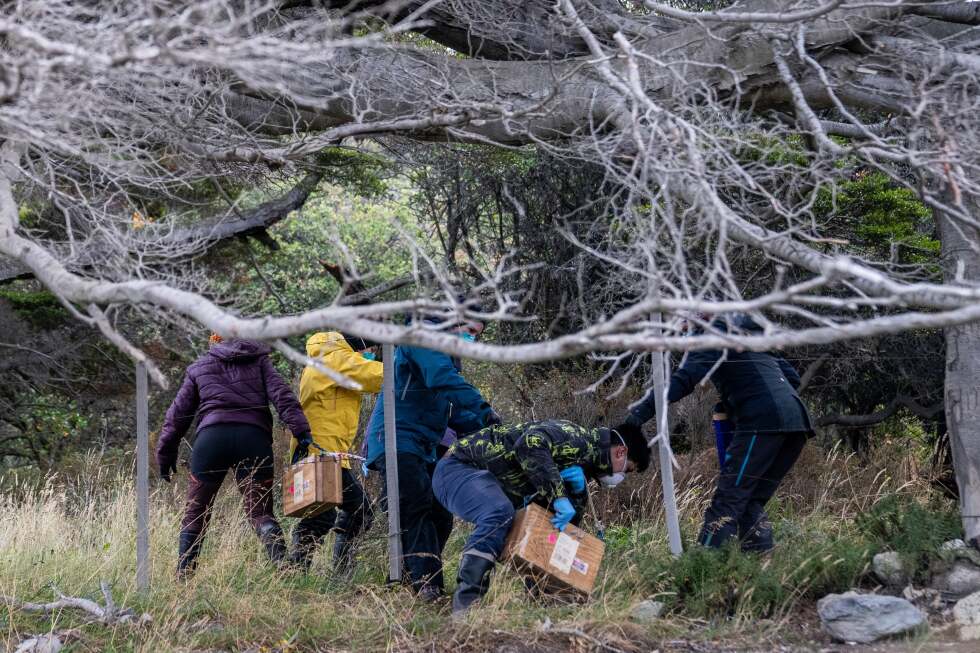
Argentines hunting for source of hantavirus outbreak trap rats in southernmost city
Nearly two weeks after launching a national probe into a fatal hantavirus outbreak that killed three passengers on an Antarctic cruise that departed from Argentina’s iconic “end of the world” destination, scientific teams are on the ground in Ushuaia, conducting the first systematic field testing for the pathogen in the region’s rodent population. The outbreak, which unfolded on the MV Hondius last month, not only claimed three lives and left multiple other passengers ill, it also triggered an urgent global contact tracing effort as authorities worked to contain potential spread to travelers who returned to their home countries around the world.
On Tuesday, the research team, brought in from Argentina’s national Malbrán Institute — the country’s leading infectious disease research agency — entered the forests surrounding Ushuaia, the southernmost city on the globe located on the Tierra del Fuego archipelago. Decked out in protective blue gloves and surgical masks, the scientists checked 150 box traps set overnight, collecting euthanized rodents in sealed black plastic bags. The specimens were transported via pickup truck to a temporary on-site laboratory, where researchers will draw initial blood samples before moving the collection to the institute’s main testing facility in Buenos Aires. Local authorities confirmed the trapping protocol will repeat for three consecutive days to collect a robust sample size, and comprehensive testing for hantavirus could take up to 30 days to complete. Researchers on the ground declined to comment on ongoing work, and national officials have not released additional details on investigation timelines beyond initial confirmation.
Martín Alfaro, spokesperson for Tierra del Fuego’s local department of health, confirmed the team captured the expected volume of specimens during the first day of field work. This trapping mission marks an expansion of the original investigation, which has centered on identifying where the first known case of the outbreak — a Dutch birdwatching couple who boarded the cruise on April 1 — contracted the virus. The couple, who completed a months-long road trip across Chile and northern Argentina before finishing their journey with several days of trekking and birdwatching in Ushuaia, both died from the infection, eliminating key witness testimony that would help investigators retrace their exposure path.
From the start of the investigation, a sharp disagreement has persisted between national and local health authorities over the origin of the outbreak. National officials initially hypothesized the couple was exposed at a Ushuaia landfill, a claim local authorities have categorically rejected. Critically, hantavirus has never been officially recorded in the Tierra del Fuego archipelago, and the primary carrier of Andes hantavirus — the common colilargo, or long-tailed pygmy rice rat, which is endemic to northern Patagonia — has never been documented this far south, as the Strait of Magellan was long thought to act as a natural barrier, and the region’s colder climate was considered uninhabitable for the species. A subspecies of the rodent does live in the forests surrounding Ushuaia, however, and until this investigation, no formal research has ever been conducted to test whether this local subspecies carries or can transmit hantavirus.
Northern Patagonian provincial health officials, who regularly record hantavirus cases carried by the common colilargo, have confirmed the Dutch couple never visited their endemic region during the exposure window before boarding the ship. This contradiction has pushed the investigation into uncharted territory, with researchers now tasked not just with solving the outbreak’s origin, but answering a larger public health question: does hantavirus exist in Tierra del Fuego at all, amid shifting ecological conditions driven by global warming?
The team is currently targeting two high-density areas for the local rodent subspecies: Ushuaia’s nearby national park and the forested hillsides that overlook the city’s popular main pebble beach. For the tourism-dependent province, this research carries long-term public health benefits regardless of its findings on the cruise outbreak. “The province has never done this kind of testing before,” Alfaro noted. “It’s important that we rule out the possibility of transmission occurring here.”
Public health data across Argentina has already documented a steady rise in hantavirus cases across the country in recent years, a trend that infectious disease researchers link to the expanding range of the colilargo rat. Ecologists say climate shifts and growing human encroachment into wild habitats have allowed the rodent to move further south than ever recorded before, bringing the pathogen it carries into new, previously unexposed regions. Andes hantavirus, the strain circulating in southern South America, spreads most commonly when humans inhale air contaminated by rodent feces and urine, though rare cases of person-to-person transmission have also been recorded.
-
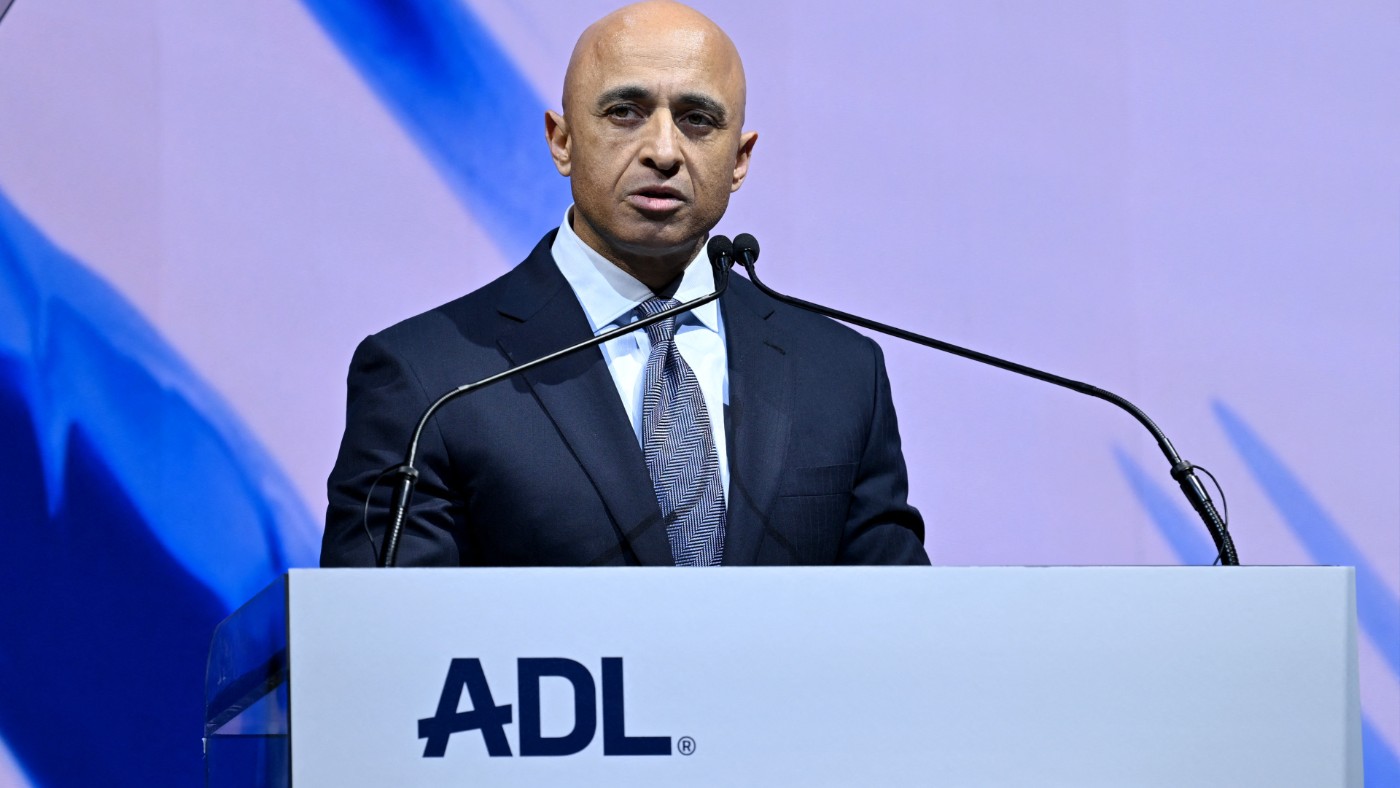
UAE paid $6m to bury damaging report on US ambassador Otaiba
An explosive New York Times investigation published Monday has pulled back the curtain on a multi-million-dollar secret reputation management operation run by the United Arab Emirates (UAE) to bury an unflattering 2017 report linking its long-serving U.S. ambassador Yousef al-Otaiba to sex workers and human traffickers. The operation, which has cost UAE taxpayers more than $6 million since 2020, leveraged aggressive search engine optimization tactics and opaque digital tradecraft to push the damaging reporting far down Google’s search rankings, according to internal records and interviews with former insiders.
Al-Otaiba, who has held the post of UAE ambassador to Washington since 2008 and is widely regarded as one of the most well-connected foreign diplomats in the U.S. capital, personally oversaw parts of the years-long campaign to suppress the 2017 article originally published by The Intercept. That reporting, headlined an exploration of the “sordid double life of Washington’s most powerful ambassador,” once appeared among the top results whenever users searched the ambassador’s name on Google.
According to official filings under the U.S. Foreign Agents Registration Act, which requires disclosure of work done on behalf of foreign governments, the UAE contracted New York-based digital reputation firm Terakeet for the project starting in July 2019. The firm’s initial public mandate included promoting UAE tourism, but the secondary, unstated core task was cleaning up al-Otaiba’s public image. Four former Terakeet employees who spoke to the NYT on condition of anonymity confirmed the secret nature of the work: to avoid leaving a detectable digital paper trail, a senior Terakeet account manager permanently relocated to Washington for more than a year to coordinate the campaign in person with the ambassador.
The campaign relied on a suite of common but controversial search engine optimization tactics to displace the damaging article. Terakeet built an official standalone website for al-Otaiba, edited his Wikipedia entry to frame him positively using an anonymous sock puppet account, and drafted glowing profiles highlighting the ambassador’s purported leadership qualities. Those profiles were then submitted to institutions that al-Otaiba maintains formal affiliations with — including Harvard University’s Kennedy School, the Milken Institute, and the Special Olympics — which published the content with embedded links to pro-UAE blogs secretly written by Terakeet staff. The linked structure boosted the positive profiles in Google’s algorithm, pushing the older negative reporting further down search results.
Payment records show the UAE paid Terakeet more than $6 million for this work between 2020 and 2022, and the campaign remains active as of 2024. The effort has delivered on its core goal: by 2023, the original Intercept story had dropped to the second page of Google search results for al-Otaiba, and today it rests on the fifth page for most users, outside the view of the vast majority of people searching the ambassador’s name. When contacted by the New York Times for comment, al-Otaiba did not address the details of the campaign beyond confirming that Terakeet had completed contracted work for the UAE.
The NYT’s investigation also uncovered a second high-profile reputation cleanup campaign by Terakeet that ended in failure, involving former Goldman Sachs chief legal officer Kathryn Ruemmler and her ties to disgraced convicted sex offender Jeffrey Epstein. Ruemmler, who previously served as White House counsel under former President Barack Obama, was caught up in the 2023 Epstein Files document release, which exposed her close personal and professional connections to the financier, a convicted child sex trafficker. The released records showed Ruemmler referred to Epstein as “sweetie” and “Uncle Jeffrey,” discussed planning a trip to France with him, thanked him for expensive lavish gifts, provided him informal legal advice, and expressed interest in attending private meetings with former Israeli Prime Minister Ehud Barak, one of Epstein’s closest associates.
After the damaging documents became public, Goldman Sachs — a Terakeet corporate client — hired the firm to contain the reputational fallout for Ruemmler. The NYT reports that Terakeet deployed the same furtive, algorithm-focused digital tactics that made it one of the most expensive and exclusive players in the booming global reputation management industry. But unlike the UAE ambassador campaign, the effort to repair Ruemmler’s image failed. Ruemmler announced her resignation from Goldman Sachs in February 2024 and is set to depart the firm in June.
In a formal statement to the New York Times, Terakeet CEO Mac Cummings defended the firm’s work, noting that Cummings has previously referenced his close personal ties to Ruemmler and has played golf with Goldman Sachs CEO David Solomon. “Terakeet’s technology is built on a simple mandate: organizations must tell their own story,” the statement read. “If they do not, third-party bias combined with generative AI will shape it for them.”
Terakeet is no stranger to high-profile political and corporate clients: the firm previously worked on reputation and search campaigns for former President Barack Obama and 2016 Democratic presidential nominee Hillary Clinton, and counts major corporate brands including MetLife, JPMorgan Chase, Oracle, Target, Walmart, Disney, and Bain Capital among its clients.
-
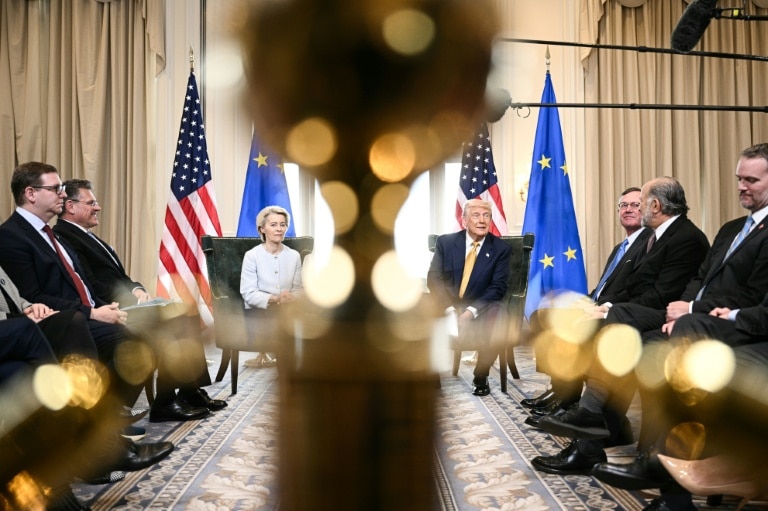
Under Trump pressure, EU seeks deal to end trade standoff
Facing mounting pressure from U.S. President Donald Trump, European Union negotiators convened late-night closed-door talks on Tuesday in a high-stakes push to finalize a long-delayed transatlantic trade agreement, with a hard July 4 deadline hanging over the negotiations. If no deal is reached by the deadline, Trump has threatened to impose steep new tariffs that could reignite a full-blown transatlantic trade conflict.
The framework for this trade pact was first struck nearly a year ago in Turnberry, Scotland, between Trump and European Commission President Ursula von der Leyen. That initial agreement set a 15 percent tariff on most European goods exported to the U.S., but finalizing the binding legal text on the EU side has dragged on for months, drawing growing frustration from the White House.
Negotiations between representatives of the European Parliament and EU member state capitals got underway just after 9 p.m. GMT, with discussions expected to extend through the night. The core goal of the talks is to hash out a compromise that will allow the bloc to meet Trump’s deadline and close out more than 12 months of disruptive trade tensions between the world’s two largest economic partners.
Ahead of the negotiating session, the U.S. Mission to the EU issued a blunt reminder on social media platform X, writing that “A deal is a deal” and that the bloc must uphold the commitment struck between Trump and von der Leyen last year. If the EU fails to deliver, Trump has already warned that the bloc will face “much higher” tariffs, including a planned hike on duties for European passenger vehicles and heavy trucks from the current 15 percent to 25 percent.
The initial wave of tariffs Trump imposed before the Turnberry framework agreement — including steep levies on European steel, aluminum and auto parts — pushed the EU to aggressively expand trade partnerships with other regions across the globe. But Brussels has long recognized that it cannot risk alienating its largest single trade partner: the EU-U.S. trade relationship is worth a staggering 1.6 trillion euros ($1.9 trillion), making it irreplaceable for European economies.
Cyprus, which currently holds the rotating EU Council presidency, reaffirmed Tuesday that the bloc’s top priority remains the “swift implementation of the EU-U.S. joint statement” agreed last year. To get a deal across the finish line, the European Parliament is under heavy pressure from member states to roll back several controversial amendments it added to the text back in March, amendments that U.S. negotiators have already labeled unacceptable.
Bernd Lange, chair of the European Parliament’s trade committee, struck an optimistic tone ahead of the talks, telling reporters he remained hopeful negotiators could reach a workable compromise. But even before the session began, Lange was still working to unify divergent positions across the parliament’s competing political factions, with internal haggling continuing right up to the start of negotiations.
Delays in finalizing the accord have stemmed from multiple outside factors in recent months, including a diplomatic row sparked by Trump’s reported interest in purchasing Greenland, and a U.S. Supreme Court ruling that struck down broad portions of the president’s tariff authority. The European Parliament gave conditional preliminary approval to the text after those delays were resolved, but major sticking points remain between the institution, member states, and U.S. negotiators.
The European People’s Party (EPP), the parliament’s largest political grouping and the party von der Leyen belongs to, has emerged as the most forceful backer of rapid implementation of the deal. EPP leaders argue that resolving the trade uncertainty has become critical for European businesses that have faced unstable market conditions for more than a year. Zeljana Zovko, an EPP lawmaker, told the Agence France-Presse she was “confident that we will get it done” by the deadline. The EPP already secured firm backing for the deal from the hard-right European Conservatives and Reformists group, but several smaller factions have not yet publicly announced their positions, leaving the size of the pro-deal majority and its willingness to compromise unclear.
The Socialists and Democrats, the parliament’s second-largest political bloc, said it would approach negotiations “constructively” but would fight to add robust safeguards to protect European businesses and workers, guaranteeing long-term stability and predictability in trade relations. Two major sticking points remain on the EU side, even as negotiators work to find common ground. The first is a strengthened suspension clause added by parliament, which would revoke favorable tariff terms for U.S. exporters if Washington violates the terms of the agreement in the future. The second centers on “sunrise” and “sunset” provisions: the clauses would keep the EU’s side of the deal from taking effect until the U.S. meets all its existing commitments, and would automatically terminate the entire agreement in 2028 unless it is explicitly renewed by both sides.
Anna Cavazzini, a Green Party lawmaker involved in the negotiations, noted that “the odds are good” for a last-minute compromise, but warned that EU member states would need to compromise on the parliament’s core priorities to get a deal done. “These past weeks have shown time and again that Trump is not to be trusted, so the EU needs stronger tools at hand,” Cavazzini said, in defense of parliament’s proposed safeguards.
-
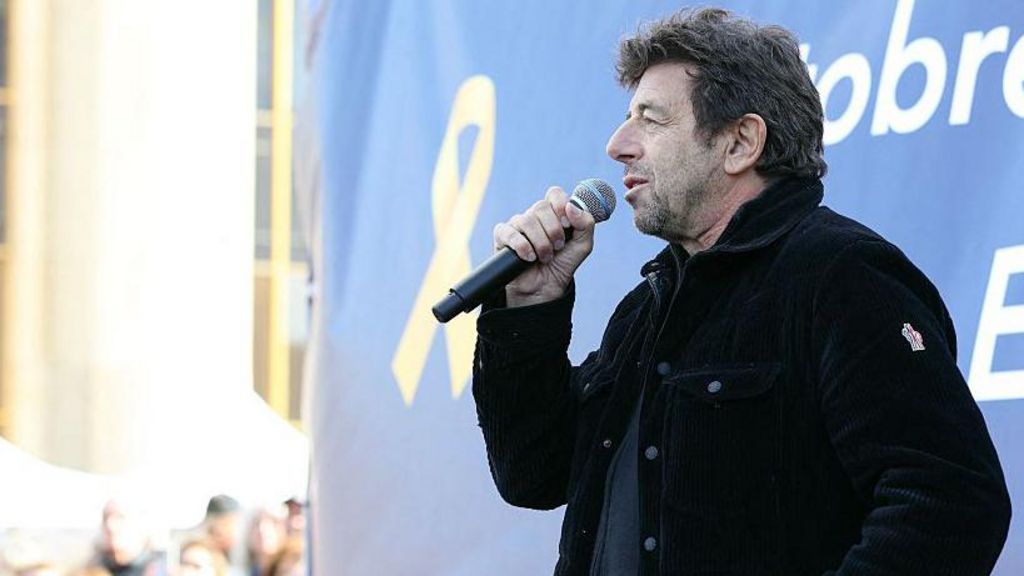
Singer Patrick Bruel denies wave of sexual assault allegations in France
One of France’s most enduring entertainment figures, 67-year-old singer and actor Patrick Bruel, is at the center of a growing national sexual assault scandal that has roiled the country’s ongoing post-#MeToo reckoning, with more than 30 women coming forward to accuse him of sexual misconduct spanning his five-decade career.
The allegations, which first gained widespread media traction in recent weeks, have triggered official judicial reviews across multiple French jurisdictions and a public campaign to cancel Bruel’s upcoming cross-continental tour. Among the highest-profile accusers is prominent French television and radio presenter Flavie Flament, who claims Bruel drugged and raped her at his Paris residence in 1991, when she was 16 years old and he was 32.
In a public statement shared to his Instagram, Bruel has forcefully pushed back against all claims. “I have never forced myself on a woman in my life,” he wrote. “Nor have I ever drugged, manipulated or tried to subjugate anyone… nor used my fame to abuse or obtain non-consensual relations.” Bruel, who remains active in professional productions and is currently performing at a Paris theater, has not shied away from the public eye amid the accusations, which have dominated front-page headlines across France.
Born Patrick Benguigui in Algeria in 1959, Bruel rose to stardom in the early 1980s with hit tracks including *Marre de cette nana-là*, earning a massive, fanatical following that media dubbed “Bruelmania” for the public obsession surrounding his distinct baritone and brooding on-stage presence. He has maintained his status as a household name in French entertainment for more than 40 years, and is scheduled to launch a multi-country concert tour in June spanning France, Belgium, Switzerland, and Canada. A French feminist group has already launched an online petition calling for tour organizers to scrap all scheduled dates.
According to independent French investigative outlet Mediapart, which first broke the full scope of the allegations, Flament is one of more than 30 women to have lodged formal complaints against Bruel. Around 10 of these cases are currently under review by prosecutors in Nanterre, a suburb of Paris. One of these cases was initially dismissed in 2020 due to insufficient evidence, but has since been reopened for further examination. Two additional separate allegations are also being assessed by authorities in the Brittany town of Saint-Mâlo and in Belgium.
The latest back-and-forth between legal teams and accusers centers on Flament’s claim. On Tuesday, Bruel’s defense attorney Christophe Ingrain told French broadcaster BFMTV that Flament’s account is entirely fabricated, arguing that any interaction between his client and the presenter was consensual. “Patrick Bruel is very clear: he never forced himself on or drugged Flavie Flament. There was no rape,” Ingrain said. “They were two people who liked each other and might from time to time have sex when they met.”
Flament issued an immediate, categorical denial of the lawyer’s claim, telling reporters: “I never had any relationship of any kind with Patrick Bruel.” Flament has long been a leading voice in French movements to address sexual violence against minors: in 2016, she first publicized an allegation that she had been raped at age 13 by prominent British nude photographer David Hamilton on the French Riviera. After her claim was corroborated by multiple other accusers, Hamilton died by suicide. Flament’s activism directly contributed to a landmark change in French law, extending the statute of limitations for sexual crimes against minors from 20 to 30 years after the alleged offense.
French government spokeswoman Maud Bregeon weighed in on the unfolding scandal this Tuesday, reaffirming the state’s position that survivors of sexual violence should be supported to speak out, regardless of how much time has passed since the alleged abuse. “Even decades later, [victims] should be encouraged to speak out,” she said, adding that “it is up then to the justice system to establish the truth of the facts.”
For anyone affected by the issues of sexual violence raised in this reporting, support and confidential guidance is available via the BBC Action Line.
-

San Diego mosque shooting: Social media decries ‘dehumanising’ coverage and anti-Muslim rhetoric
On a sacred holy day in the Islamic calendar, just days ahead of Eid al-Adha, a horrific mass shooting left three people dead at the Islamic Center of San Diego — the largest Muslim place of worship in Southern California — in what authorities have confirmed is an investigated as a hate crime.
Two teenage attackers opened fire at the mosque on Monday, striking congregants gathered for worship and triggering an emergency evacuation of students at the adjacent Al Rashid School, which hosted ongoing classes at the time of the assault. Among the three victims was Amin Abdullah, a long-serving mosque security guard who local law enforcement and community leaders confirm undoubtably saved dozens of lives by intercepting the gunmen before they could reach the school’s children and crowded prayer halls. Following the attack, responding police located both teenage suspects dead inside a vehicle from self-inflicted gunshot wounds, investigators confirmed.
Preliminary investigations uncovered writings tied to one of the suspects filled with generalized hate rhetoric targeting Muslims, cementing the hate crime classification for the attack. The violence comes at a time of documented nationwide spike in anti-Muslim assaults across the United States, with recent academic research linking the upward trend in Islamophobic violence to shifting U.S. foreign policy tensions and hostile political rhetoric targeting Muslim communities.
News of the attack quickly spread across social media, sparking a wave of grief, tribute, and anger from community members, activists, and public figures. Abdullah has been widely hailed as a martyr and hero across online platforms, with countless users sharing reflections on his final public Facebook post, in which he wrote of his desire to return to God with the same pure soul he was gifted at birth.
Beyond mourning, much of the public outrage has centered on what many describe as a long-standing pattern of normalized anti-Muslim rhetoric in mainstream American media and politics, as well as inconsistent institutional responses to hate crimes targeting Muslim communities. Controversy erupted just one day after the shooting when the New York Post, a prominent right-wing tabloid, published a article headlined that tied the mosque to the 9/11 hijackers, a choice that was widely condemned across social media as a blatant act of victim-blaming and dehumanization. One user noted the headline effectively implied the Muslim community deserved the attack, while progressive commentator Hasan Piker argued that while anti-Semitism is widely recognized as an institutional stigma, anti-Muslim bigotry is actively encouraged by major American institutions.
Further criticism fell on conservative media, after a Fox News contributor pushed an unsubstantiated claim that the attack could be tied to Iran, drawing pushback from Iranian-American analysts who condemned the rushing to blame Muslim and Iranian actors even when the perpetrators were homegrown American teenagers. Activists pointed to a long trail of mainstream political rhetoric that normalizes anti-Muslim hatred, naming high-profile figures including Donald Trump ally Laura Loomer and Republican lawmaker Randy Fine, both of whom have a well-documented history of making inflammatory anti-Muslim public remarks.
Local and state political leaders have issued formal condemnations of the violence: San Diego Mayor Todd Gloria stated that “Islamophobia has no home in San Diego,” while California Governor Gavin Newsom emphasized that the state would not tolerate acts of terror or intimidation against faith communities. Speaking at a press conference shortly after the attack, Imam Taha Hassane of the Islamic Center of San Diego described the religious intolerance and hate fueling the shooting as unprecedented in modern U.S. history. “My community is mourning,” he said, adding that “all of us are responsible for spreading the culture of tolerance, the culture of love.”
-

Estonia says Nato jet shot down drone over its territory
A NATO-patrolled Baltic airspace incident has underscored rising regional tensions after a Romanian F-16, operating as part of the alliance’s Baltic air policing mission, shot down an off-course drone over central Estonia this Tuesday. According to Estonian Defense Minister Hanno Pevkur, the drone’s debris landed in a marshy, forested area between Lake Võrtsjärv and the town of Põltsamaa, roughly 30 meters from the closest residential building. No structural damage or injuries were reported following the crash.
Estonian defense officials confirmed they had received early advance warning from Latvia about the wayward drone, and tracked the object continuously before authorizing the shootdown. Local public broadcaster ERR released witness accounts from area residents, who described hearing a loud explosion before watching the craft plunge from the sky. Photographs of purported drone fragments recovered from the crash site have since been circulated by local media.
Establishing the drone’s origin and route has quickly become a point of geopolitical dispute. Estonian authorities suspect the drone was originally a Ukrainian projectile launched at legitimate military targets inside Russia, but was knocked off its intended flight path by Russian electronic jamming operations. Ukraine has echoed this account, with Foreign Ministry spokesman Heorhii Tykhyi accusing Moscow of deliberately diverting the drone to trigger incidents in NATO territory as part of a deliberate propaganda campaign.
“We apologize to Estonia and all of our Baltic friends for such unintended incidents,” Tykhyi stated in an official release, adding that Ukrainian forces only use Russian airspace to reach their planned targets. Pevkur also confirmed that he received a direct apology from his Ukrainian counterpart during an immediate discussion of the incident shortly after the shootdown, and reaffirmed that Estonia has never granted permission for any non-allied actor to use its airspace – a permission Ukraine never requested.
This latest incident is only the most recent in a string of drone incursions across the Baltic states of Estonia, Latvia and Lithuania, all eastern flank NATO members that have repeatedly denied Russian accusations that they allow Ukraine to use their territory and air corridors for strikes inside Russia. Just weeks earlier, two stray Ukrainian drones hit an unoccupied oil storage facility in Latvia, an incident Ukraine also blamed on Russian electronic interference. That event triggered a political crisis that ultimately forced Latvian Prime Minister Evika Silina to resign from office last week. A similar cross-border incursion was recorded by both Estonia and Latvia back in March.
Hours after Tuesday’s shootdown, Russia’s foreign intelligence service SVR released a claim that Ukraine was preparing to launch drone strikes against Russian targets from bases in the Baltic states, falsely asserting that Ukrainian drone operators had already been deployed to Latvian military facilities. Both Riga and Kyiv have immediately dismissed the allegation as disinformation. “There is no truth in Moscow’s latest set of falsehoods accusing Ukraine of preparing attacks against Russia from the territory of Latvia,” Tykhyi said.
Regional security analysts warn that the growing frequency of these incursions reflects deliberate Russian efforts to test the cohesion and resolve of the NATO alliance along its eastern border. Following a spate of more than a dozen drone incursions into NATO member Poland last year, the alliance responded by moving additional troops and fighter aircraft to its eastern flank to bolster deterrence. Russia has yet to issue an official comment on the latest Estonian incident. The full-scale Russian invasion of Ukraine, which triggered this ongoing regional security crisis, entered its third year in 2024 after launching in February 2022.
-
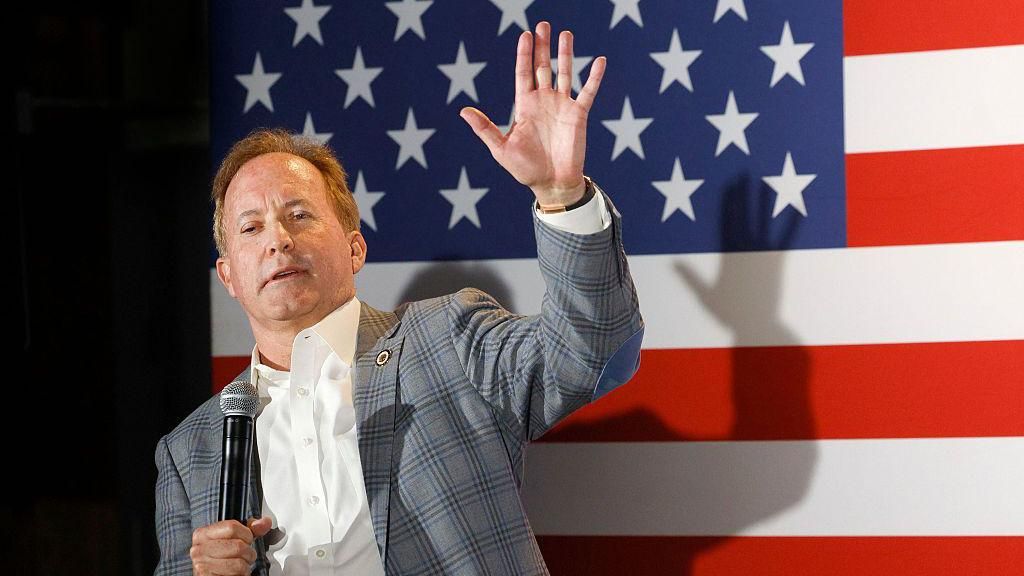
Trump endorses Paxton in Texas, gambling on a challenger with baggage in a crucial race
With just one week remaining until Texas’ critical Republican Senate primary runoff, former President Donald Trump has thrown his full weight behind state Attorney General Ken Paxton, launching a direct challenge to three-term incumbent Senator John Cornyn, a longstanding fixture of the Republican Party establishment.
The endorsement marks the latest chapter in Trump’s ongoing effort to purge the GOP of lawmakers who do not align unwaveringly with his political movement. While Paxton has been one of Trump’s most loyal allies throughout his political career, he also carries a decades-long trail of ethical controversies and legal battles that have made him a deeply polarizing figure even within his own party.
As the state’s top law enforcement officer, Paxton famously threw his weight behind Trump’s failed 2020 bid to overturn the presidential election results. More recently, he traveled to New York City to rally in support of Trump during the former president’s 2024 hush-money criminal trial, which ended in a conviction on all counts. Like Trump, Paxton has built a political brand as a scandal survivor: he faces a lingering reputation for ethical misconduct, having settled a high-profile federal corruption indictment in 2024 without admitting any wrongdoing, survived a 2023 impeachment by the Republican-controlled Texas House of Representatives over allegations of fraud and obstruction of justice, and was recently caught up in a public divorce after his wife filed for separation amid revelations of multiple extramarital affairs.
“I know Ken well, have seen him tested at the highest and most difficult levels, and he is a winner!” Trump shared in a post on his Truth Social platform. “John Cornyn is a good man, and I worked well with him, but he was not supportive of me when times were tough.” His endorsement hinges on resentment over Cornyn’s delayed endorsement of Trump’s 2024 presidential bid: the incumbent waited until January 2024, more than a year after Trump entered the race, to publicly back his candidacy.
Cornyn, who has served in Senate Republican leadership from 2012 to 2024 and boasts a voting record that aligns with Trump’s agenda more than 99% of the time, pushed back against the attack in a post on X. “It is now time for Texas Republican voters to decide if they want a strong nominee to help our GOP candidates down ballot and defeat Talarico in November, or a weak nominee who jeopardizes everything we care about,” he wrote.
During the campaign, Paxton has attacked Cornyn for his past votes in favor of expanded gun safety regulations and accused him of failing to take aggressive enough action to enforce immigration controls along the U.S.-Mexico border. Cornyn’s campaign has in turn centered its messaging on Paxton’s long list of legal and personal scandals, framing him as too toxic to win the general election in November.
This endorsement is not an isolated incident: it fits into a broader pattern of Trump backing primary challengers against incumbent Republican senators who have broken with him. Just days before, Louisiana Senator Bill Cassidy, who voted to convict Trump during his 2021 second impeachment trial, lost his renomination bid to a Trump-endorsed challenger. On the same day Trump announced his Paxton endorsement, voters in Kentucky were heading to the polls to choose between incumbent Congressman Thomas Massie – who irked Trump by opposing key parts of his legislative agenda – and a challenger personally recruited by the former president.
Cornyn’s candidacy has drawn broad support from sitting Senate Republicans, who have served alongside the Texan for decades and view him as a reliable ally. The endorsement of Paxton has sparked widespread dismay among the Senate GOP caucus, with multiple high-profile senators openly criticizing the choice. Maine Senator Susan Collins labeled Paxton “ethically challenged,” while Alaska Senator Lisa Murkowski said she was “supremely disappointed” by Trump’s decision.
For Democratic operatives across the country, the prospect of a Paxton nomination is widely viewed as a rare opportunity to flip a longtime Republican Senate seat in Texas. It has been 32 years since a Democratic candidate won a statewide election in the deep-red state, but former Congressman Beto O’Rourke came within just 215,000 votes of unseating Senator Ted Cruz in 2018, and polling ahead of the 2026 general election already points to a competitive race. Democrat James Talarico, a state legislator who secured his party’s nomination outright earlier this spring, is already positioned to face the runoff winner. While Trump carried Texas by 14 percentage points in 2024, public polling suggests the general election will be a tight contest regardless of which Republican advances.
Early voting is already underway across Texas, and polling has consistently shown the runoff race is a dead heat. In the initial March primary, Cornyn finished a fraction of a percentage point ahead of Paxton, but fell just short of the 50% threshold needed to avoid a runoff, despite outspending his challenger by more than $65 million. Political analysts now widely believe that Trump’s late endorsement could deliver a decisive blow to Cornyn’s chances of holding onto his seat, reshaping the balance of power in the U.S. Senate ahead of the 2026 general election.
-
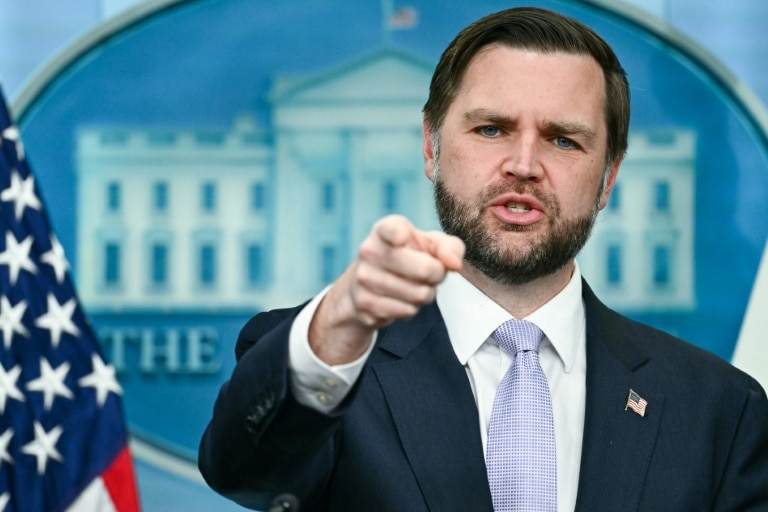
Iran talks making ‘good progress’: US VP Vance
In a public press briefing held at the White House on Tuesday, United States Vice President JD Vance offered an updated assessment of ongoing diplomatic negotiations with Iran, confirming that discussions have yielded meaningful positive momentum while reaffirming Washington’s readiness to launch new military action if a final agreement cannot be reached.
Vance’s remarks came just hours after President Donald Trump disclosed that he had been just one hour away from authorizing fresh military strikes against Iranian targets just days earlier, and had set a short deadline of two to three days for Tehran to reach a consensus on core terms of the negotiation. When addressing reporters at the briefing, Vance emphasized that while productive headway has been made in the talks, diplomatic efforts will continue regardless of current momentum, and the outcome will ultimately hinge on whether both sides can bridge remaining differences.
A known skeptic of military conflict with Iran who previously led a U.S. diplomatic delegation to Pakistan for related talks back in April, Vance pointed out that a non-negotiable core condition of any final deal is that Iran must abandon all ambitions to develop and possess a nuclear weapon.
“We’re in a pretty good spot here — but there’s an option B, and the option B is that we could restart the military campaign,” Vance told reporters. “We’re locked and loaded. We don’t want to go down that pathway, but the president is willing and able to go down that pathway if we have to.” The comments add clarity to the current high-stakes standoff between Washington and Tehran, as global stakeholders watch closely to see whether diplomatic channels can resolve the long-running nuclear dispute without escalating into open conflict.